
About this worksheet
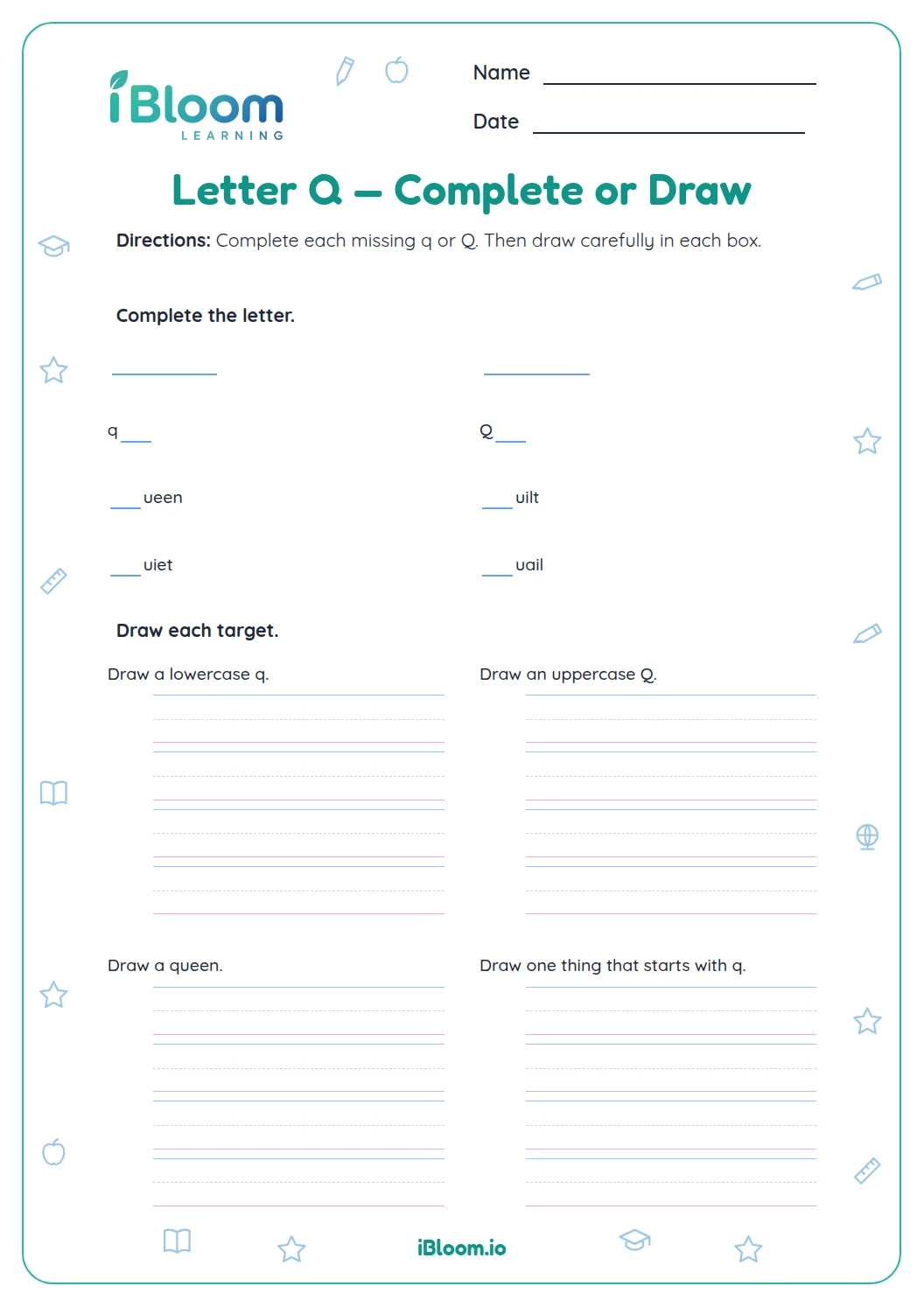
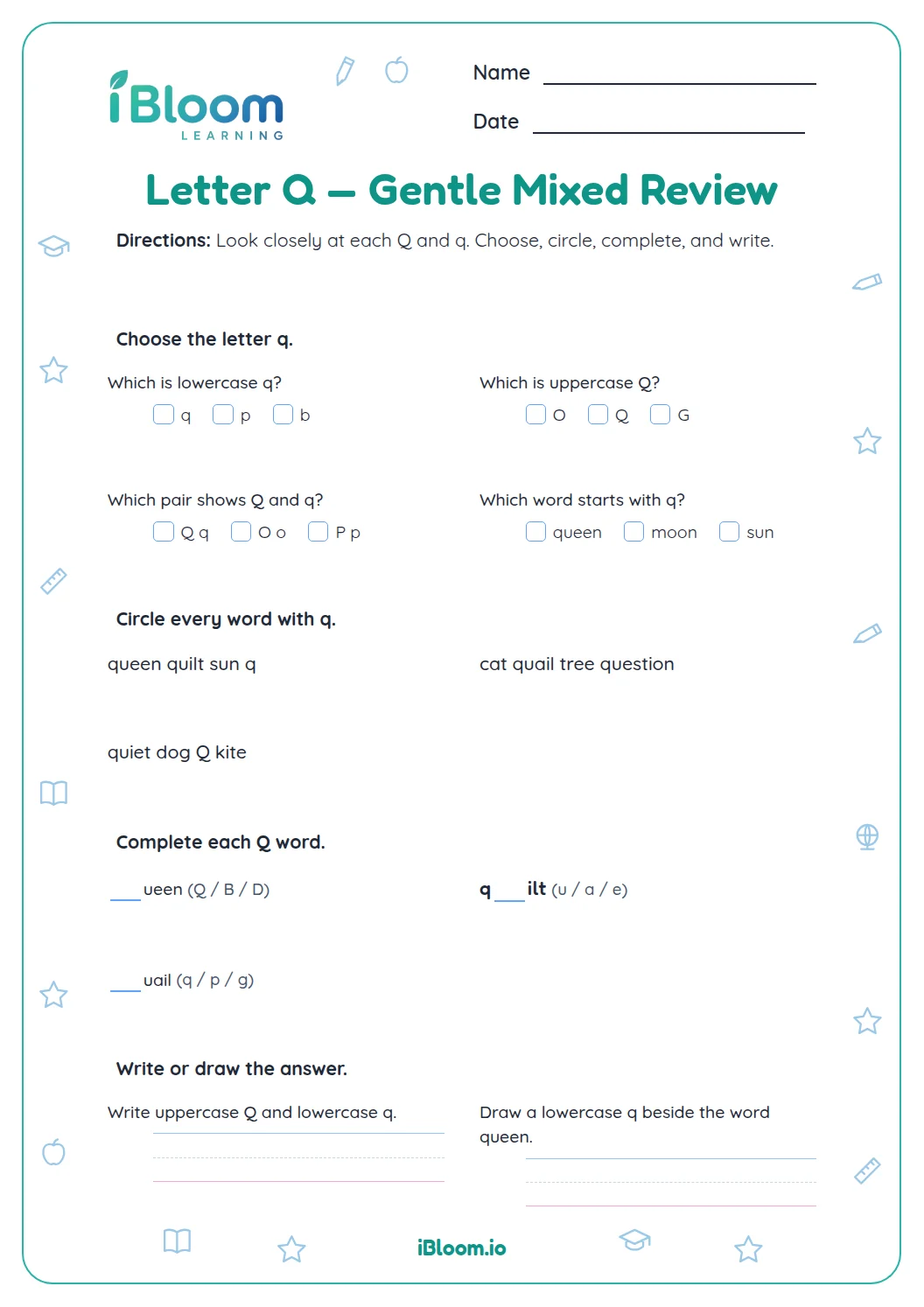
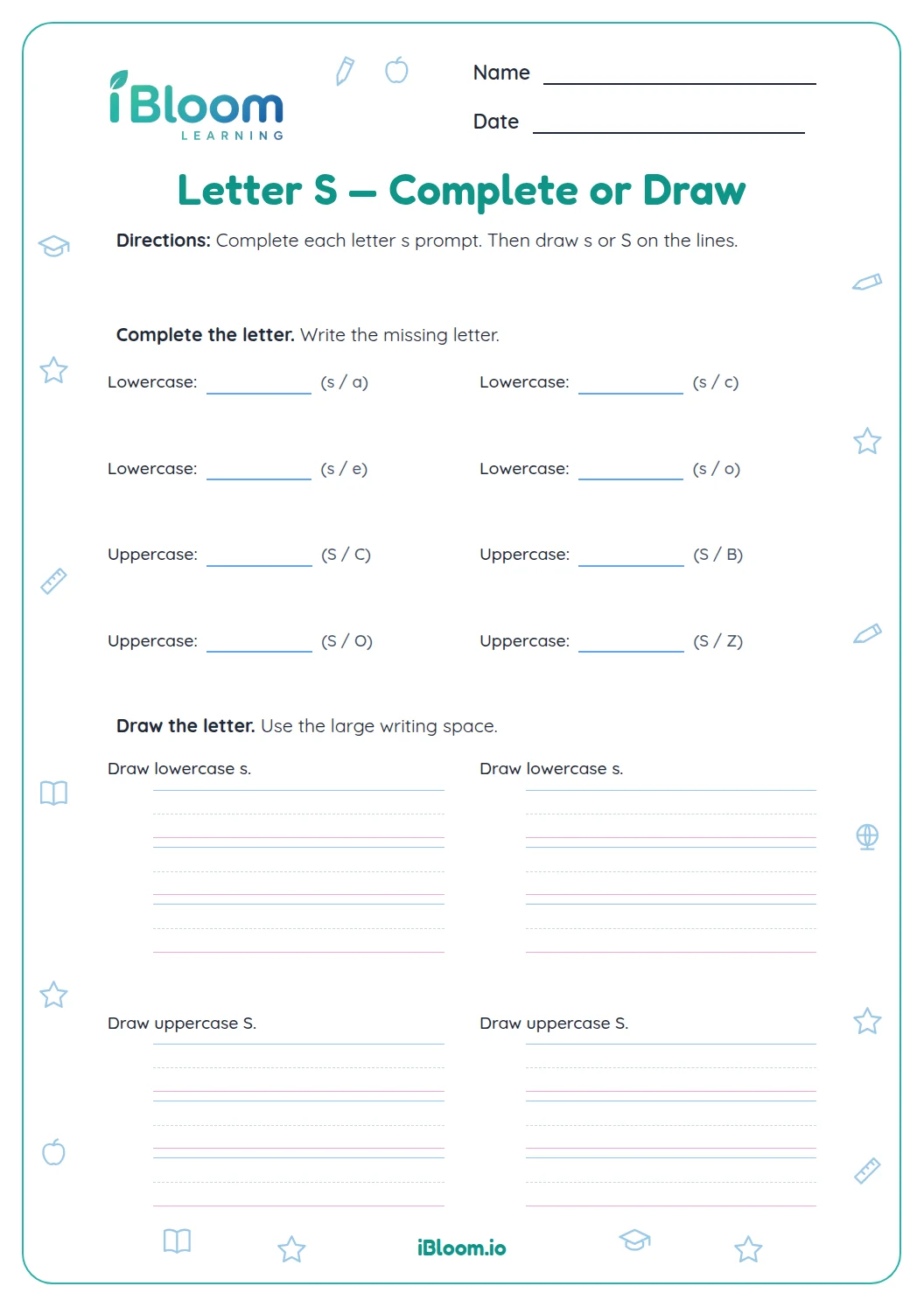
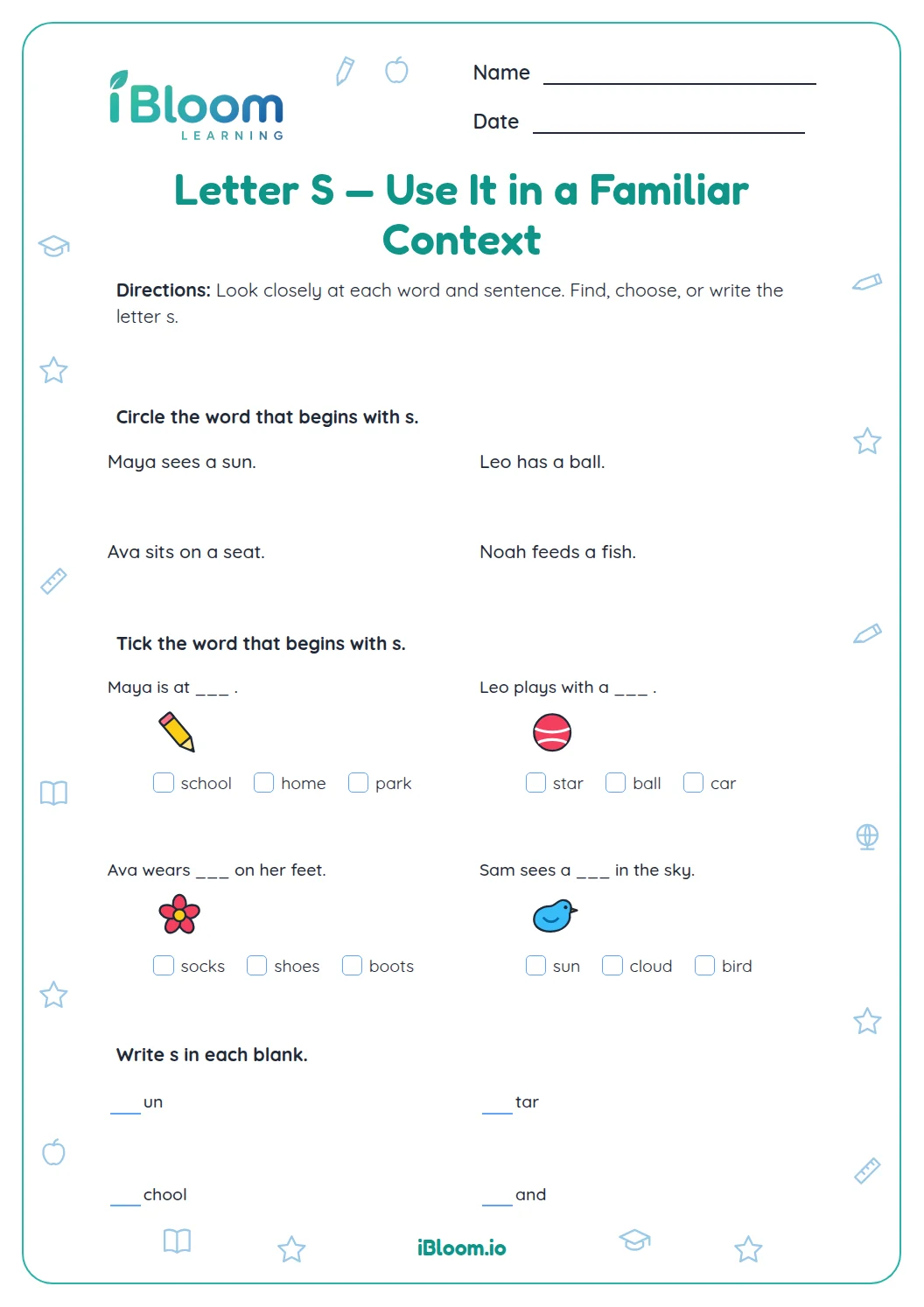
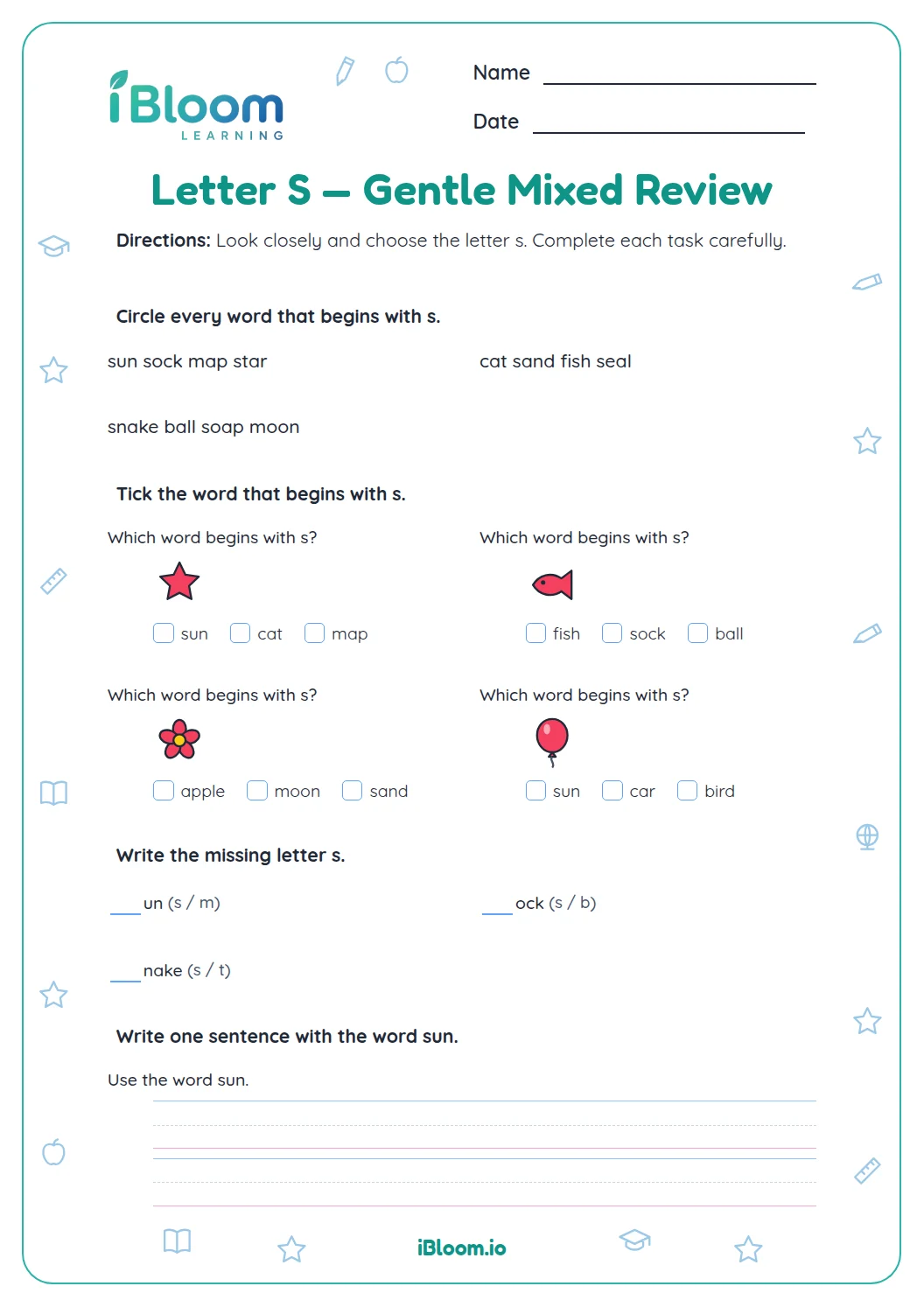
This preschool and kindergarten printable practices the letter Q through familiar words and sentence clues. Children complete words such as quail and quilt, choose a Q word that matches a picture clue, then circle Q words in short sentences. Two final items distinguish uppercase Q and lowercase q. The answer key lists the missing letters and words to circle. The practice supports recognizing and naming uppercase and lowercase letters in familiar contexts.
Aligned to RF.K.1.d
How do children finish each Q word?
Say the familiar word aloud and listen for its first sound. In “___uail,” the word is quail, so write q in the blank.
- 1A bird that begins with q: ___uail.
- 2Say quail and listen for /kw/ at the beginning.
- 3Write q to complete the word.
How do picture clues help with Q words?
Use the picture to think of the object or idea, then choose the matching word that starts with q. A bed clue points to quilt, while a pencil clue points to quiz.
How can children find Q words in sentences?
Read the whole sentence and look for the word that starts with q. The page uses familiar words including quail, quilt, quiz, and question, then asks children to write both forms of the letter.
How to use this worksheet
- 1Name the familiar picture and say its word.
- 2Listen for the first sound and choose Q.
- 3Scan each row of the word search for one target word.
- 4Circle each word and check it off the list.
- 5Use uppercase Q or lowercase q as the prompt requests.
Common mistakes and quick fixes
The mistake
Choosing a letter from the picture alone without saying the word.
The fix
Name the object first, then say queen, quack, or quilt aloud.
The mistake
Looking for a Q word without checking all its letters.
The fix
Match the full word from left to right before circling.
The mistake
Using uppercase Q when the prompt asks for lowercase q.
The fix
Read whether the prompt asks for uppercase or lowercase, then write Q or q.
Common Core alignment
Recognize and name uppercase and lowercase Q in familiar words.
On this sheet: Students identify uppercase Q in familiar picture-word clues and trace uppercase and lowercase Q.
Show the official wordingHide the official wording
Recognize and name all upper- and lowercase letters of the alphabet.
What to practice next
Make more practice
Further reading
Questions parents and teachers ask
Which words begin with Q?
This worksheet uses quail, quilt, question, quiz, and quack in familiar contexts. Children complete some words, choose Q words from picture clues, and circle Q words in sentences. The answer key lists the missing letters, selected words, and words to circle.
How do picture clues help with the letter Q?
The pictures cue a familiar context: a bird for quail, a bed for quilt, a pencil for quiz, and a duck for quack. Say the intended word aloud, then listen for its first sound. The picture helps identify the word while the printed choices keep attention on its initial letter.
Does the worksheet practice lowercase q too?
Yes. Most word prompts use lowercase q, and the final two questions ask children to write uppercase Q in Queen and lowercase q in quilt. The key gives both forms. An adult can model the starting stroke before the child writes the letter in the blank.
How can my child use a Q word after finishing?
After finishing, ask your child to say one Q word from the page and use it in a new sentence, such as “I saw a quail.” That short conversation extends the familiar word practice without adding another written task. Children can choose a word they already know or point to one from the worksheet.
What does the answer key show?
The key gives the missing q for each completion, the correct Q word for each picture choice, and the words to circle in the sentences. It also shows uppercase Q and lowercase q for the final items. Review one answer at a time and ask the child to say the word aloud.
What letter can we practice after Q?
The linked Letter R page is a reasonable next step after Q, and the other letter pages let learners review familiar alphabet names and sounds. Keep the same routine: say the word, listen to its first sound, then point to or write its first letter.