





About this worksheet
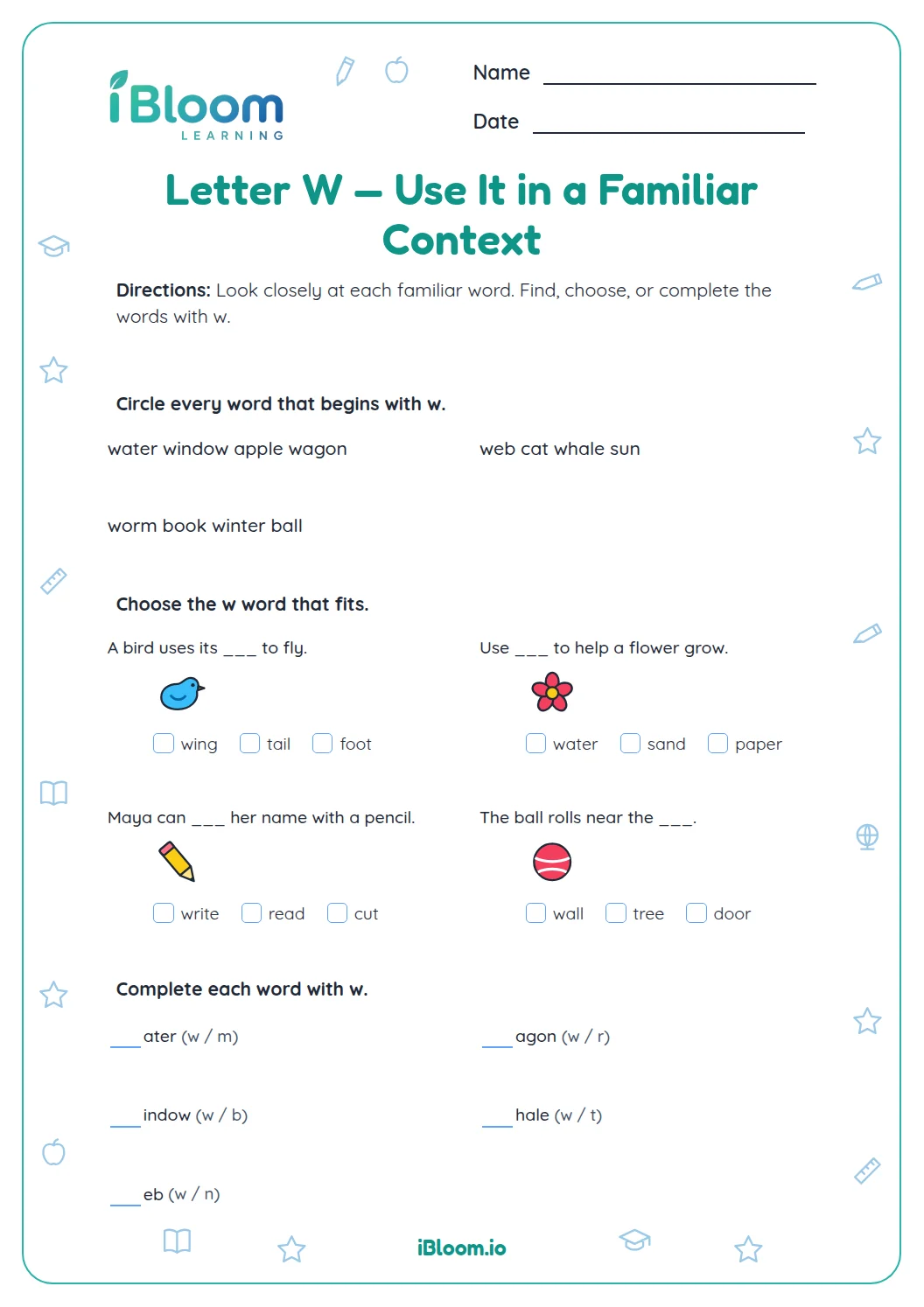
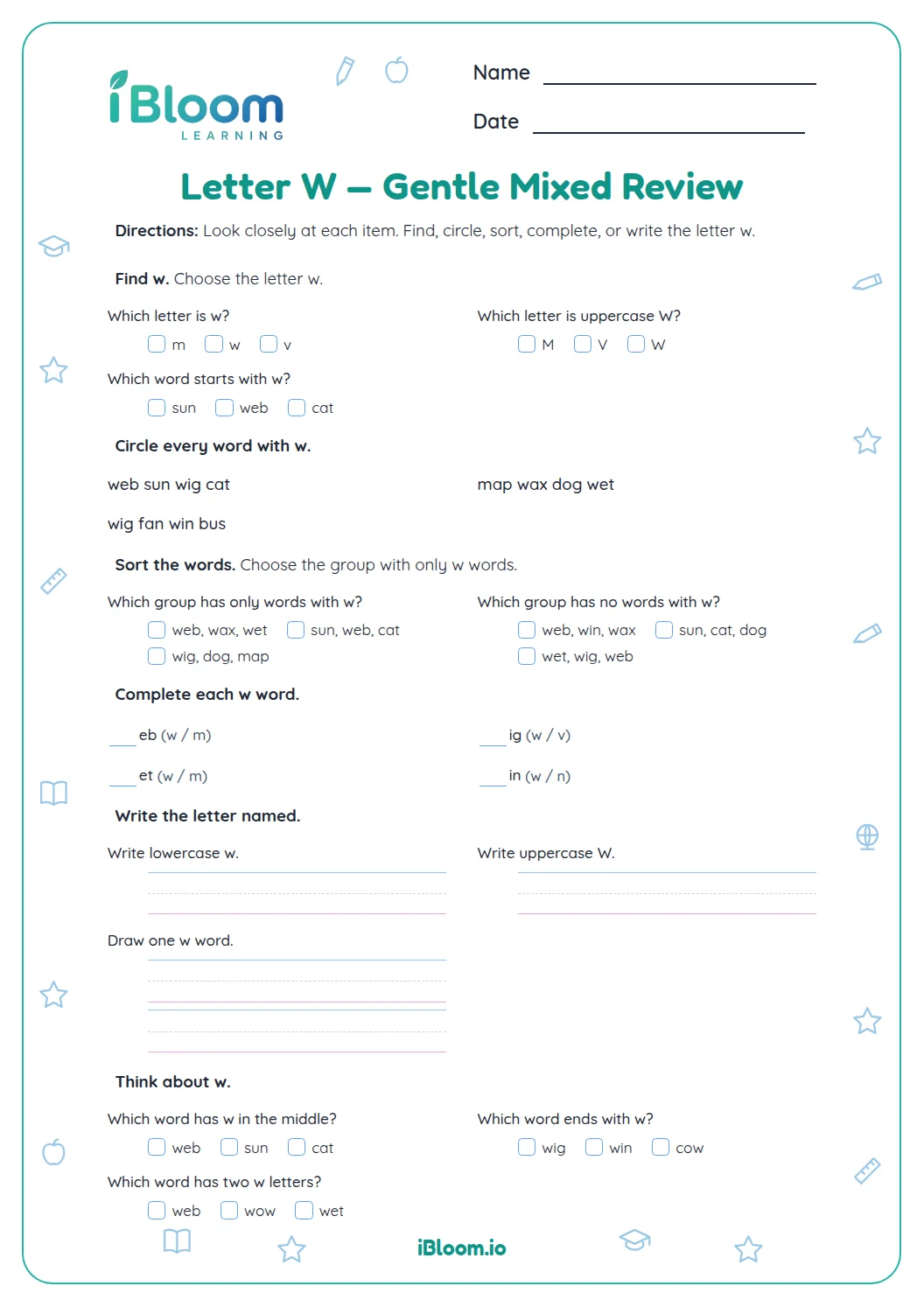
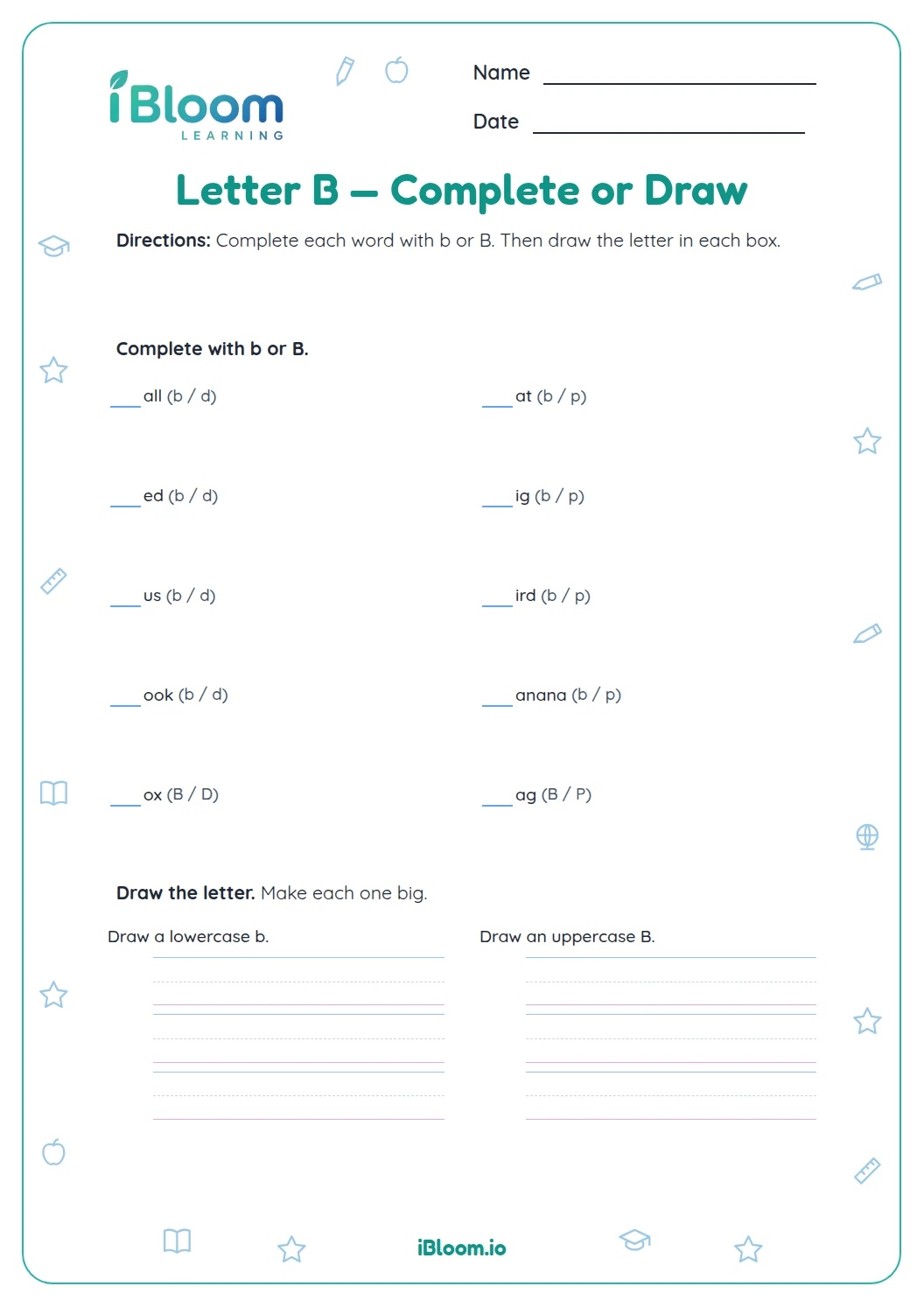
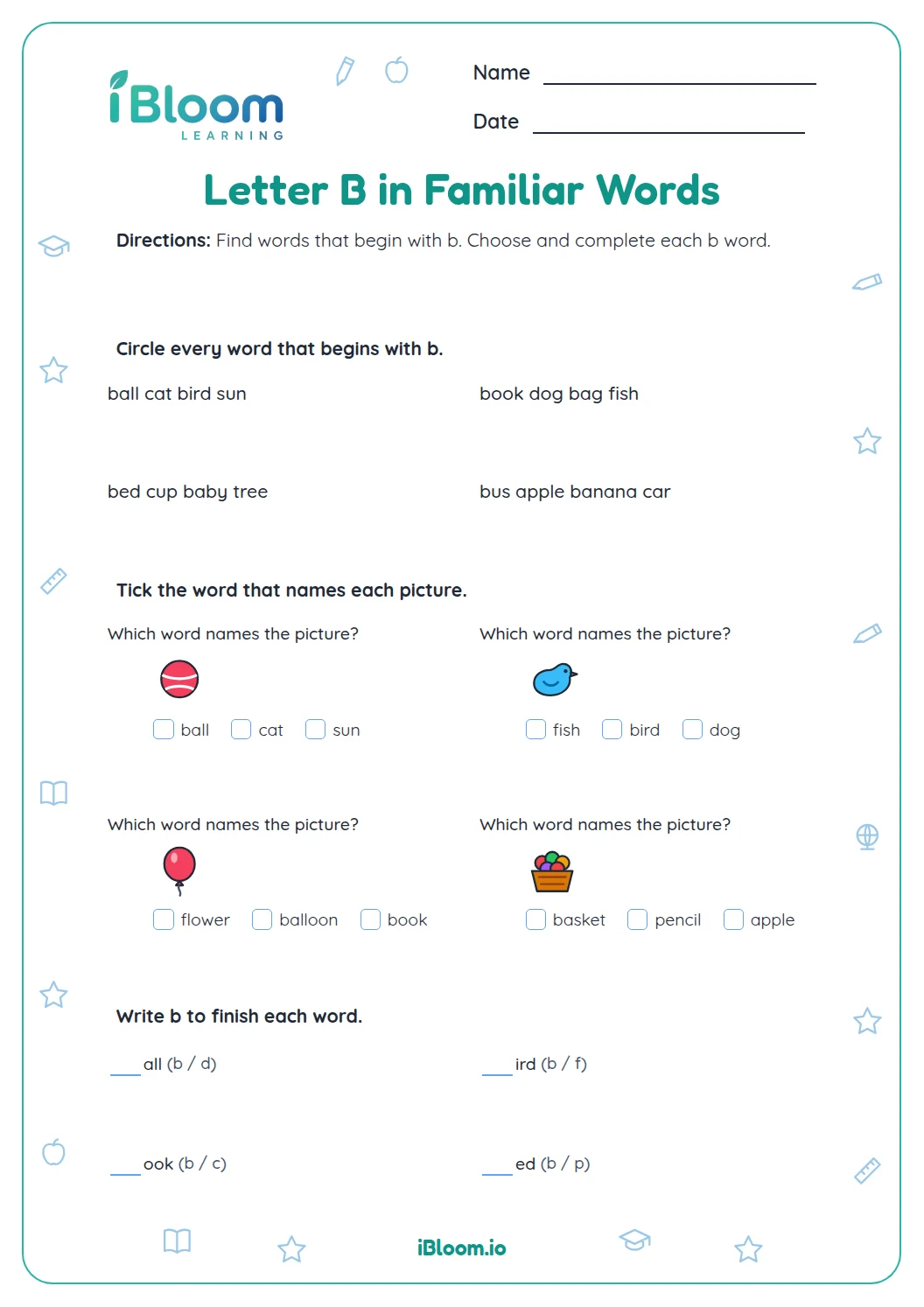
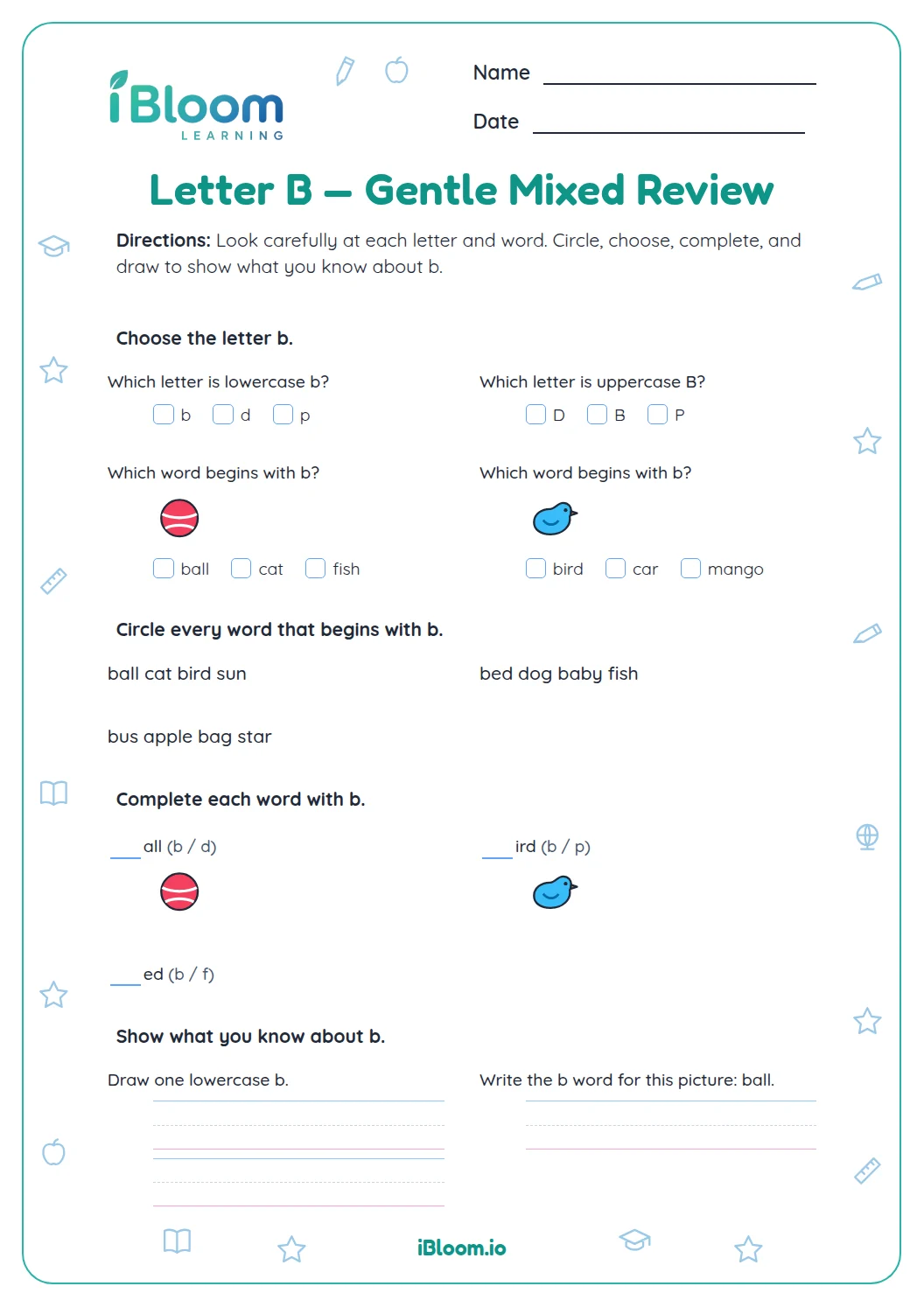
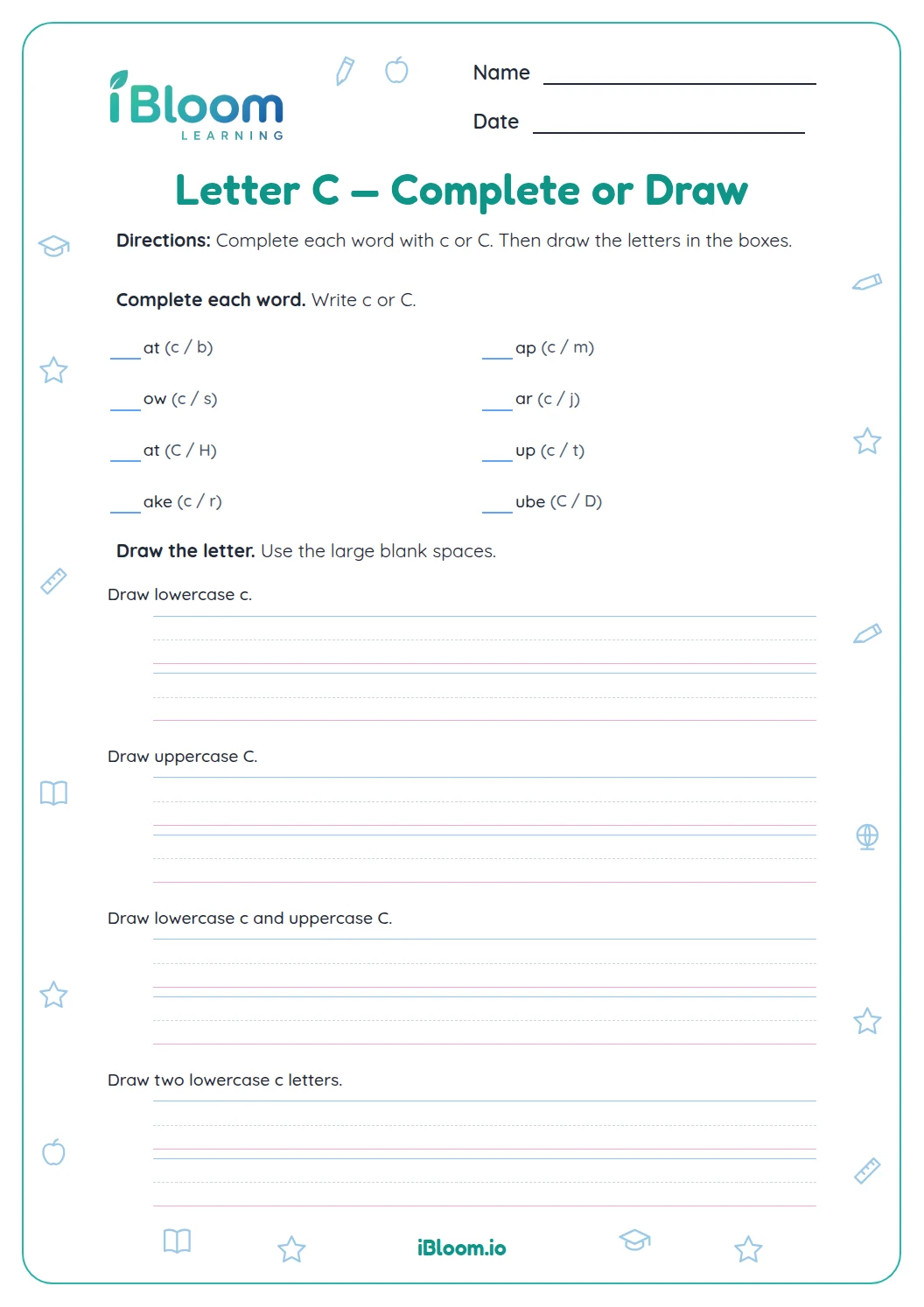
This preschool and kindergarten printable centers on uppercase W and lowercase w. Learners name pictured words, identify W at the beginning of a word, trace both letter forms, and draw a familiar W word. The pictured choices keep the sound activity concrete, while the tracing and drawing give children practice seeing and forming the letter.
What will learners practice?
The first set uses picture-supported beginning-sound choices with W words. The next set traces uppercase and lowercase W; the last task invites a drawing of a familiar word that begins with W.
- 1Look at the whale, sun, and cat pictures.
- 2Say each name and listen to its first sound.
- 3Whale begins with /w/, so choose whale.
How does the practice progress?
After seven picture-supported beginning-sound choices, four short clues ask children to write a familiar word beginning with W. The final tasks trace uppercase and lowercase W, then draw a familiar W word.
How can learners check their work?
Complete the full worksheet before opening the key. Check both the answer and the detail this skill depends on, such as units, punctuation, or the clock hands.
How to use this worksheet
- 1Read each prompt and name the skill it asks you to use.
- 2Work through the questions in order, showing a calculation or rereading the sentence when helpful.
- 3Check your answers with the separate key and correct any missed item.
Common mistakes and quick fixes
The mistake
Choosing a word because it contains w later
The fix
Say the word and listen to its first sound.
The mistake
Mixing uppercase W with lowercase w
The fix
Notice that uppercase W is taller and lowercase w is smaller.
The mistake
Starting the letter at the bottom
The fix
Trace the model from the top, following the letter’s strokes.
What to practice next
Make more practice
Questions parents and teachers ask
What letter forms does this page practice?
The page practices uppercase W and lowercase w. Learners identify W words from picture choices, complete four words with a missing first letter, trace each form, and draw a familiar object whose name begins with W. Adults can say the picture names aloud together.
What words begin with W on the sheet?
The picture choices include familiar W words such as whale, watch, and water. Four additional prompts ask children to complete words such as web, wig, wet, and win by choosing the missing first letter. Say each word aloud to hear its beginning sound.
Is this a word search activity?
This replacement sheet uses pictured word choices, missing-letter word completion, letter tracing, and drawing to practice W. The old page focused on completing W words and drawing the letters; the new page retains word completion and adds picture-supported sound choices.
How can an adult support the tracing?
Point out the uppercase and lowercase models, then invite the child to trace slowly from the top. For the word completions, say each word and ask what sound comes first. Encourage recognizable letter shapes rather than speed. The child may point, say the word, or trace it with a finger before writing.
Is an answer key included?
Yes. A separate answer key shows the correct beginning-sound choices and missing letters, and notes the expected letter forms and drawing. The drawing can vary as long as it represents a familiar word that begins with W. The child may point, say the word, or trace it with a finger before writing.