





About this worksheet
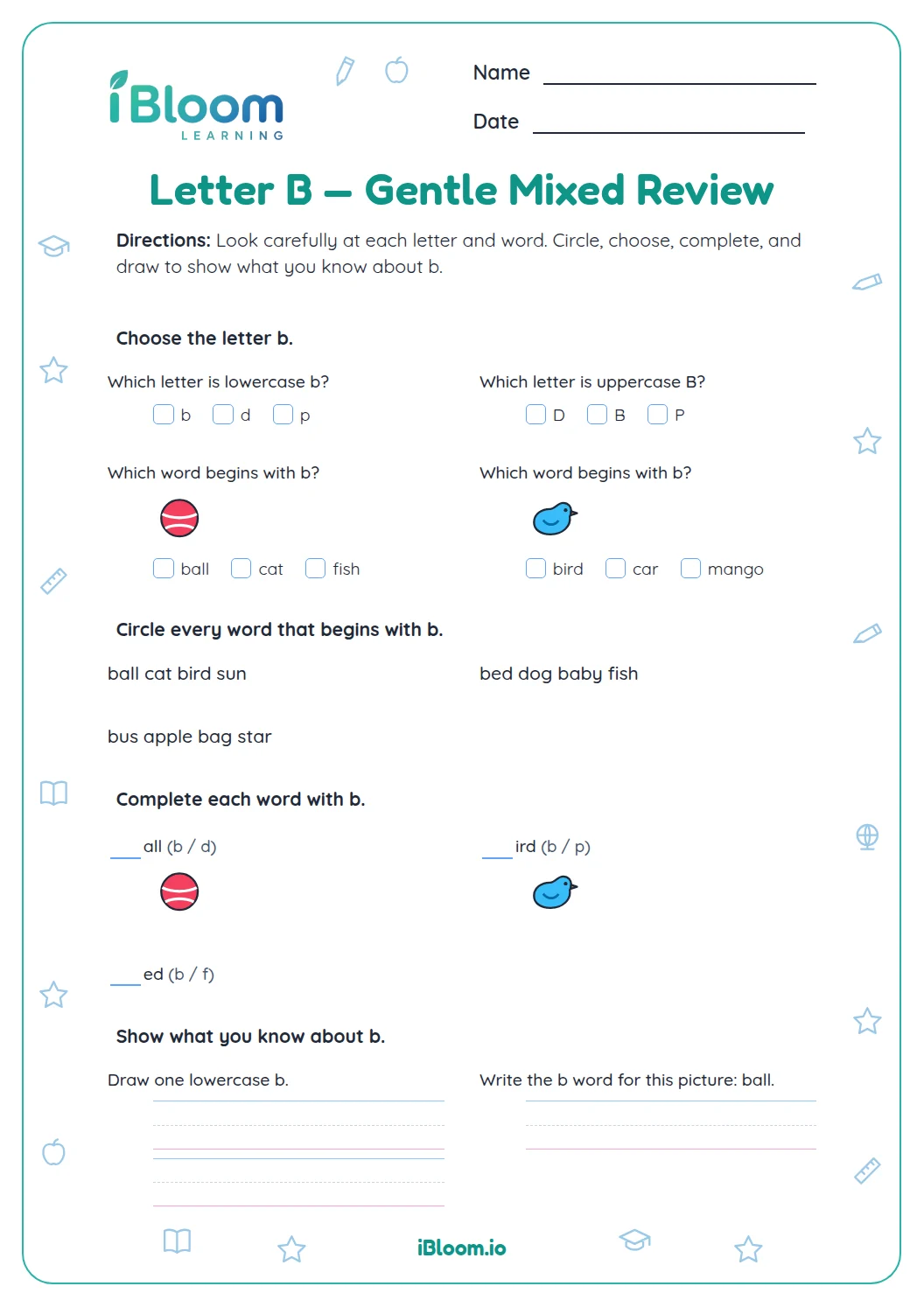
This gentle Kindergarten printable reviews uppercase Z, lowercase z, and familiar words that begin with the /z/ sound. Picture choices include a zebra and contrasting objects, followed by short letter-recognition rows and a draw-and-label task. It has 14 questions on two student pages and a separate two-page answer key. The letter-sound practice aligns with CCSS.ELA-Literacy.RF.K.3.a.
Aligned to CCSS.ELA-Literacy.RF.K.3.a
How does the page practice Z and z?
Children first identify uppercase Z and lowercase z, then find them among other letters. The worksheet also connects the letter to familiar words that begin with /z/, including zebra.
- 1Which letter is uppercase Z?
- 2Answer: Z
- 3Look for the capital form, not lowercase z.
Which pictures begin with the /z/ sound?
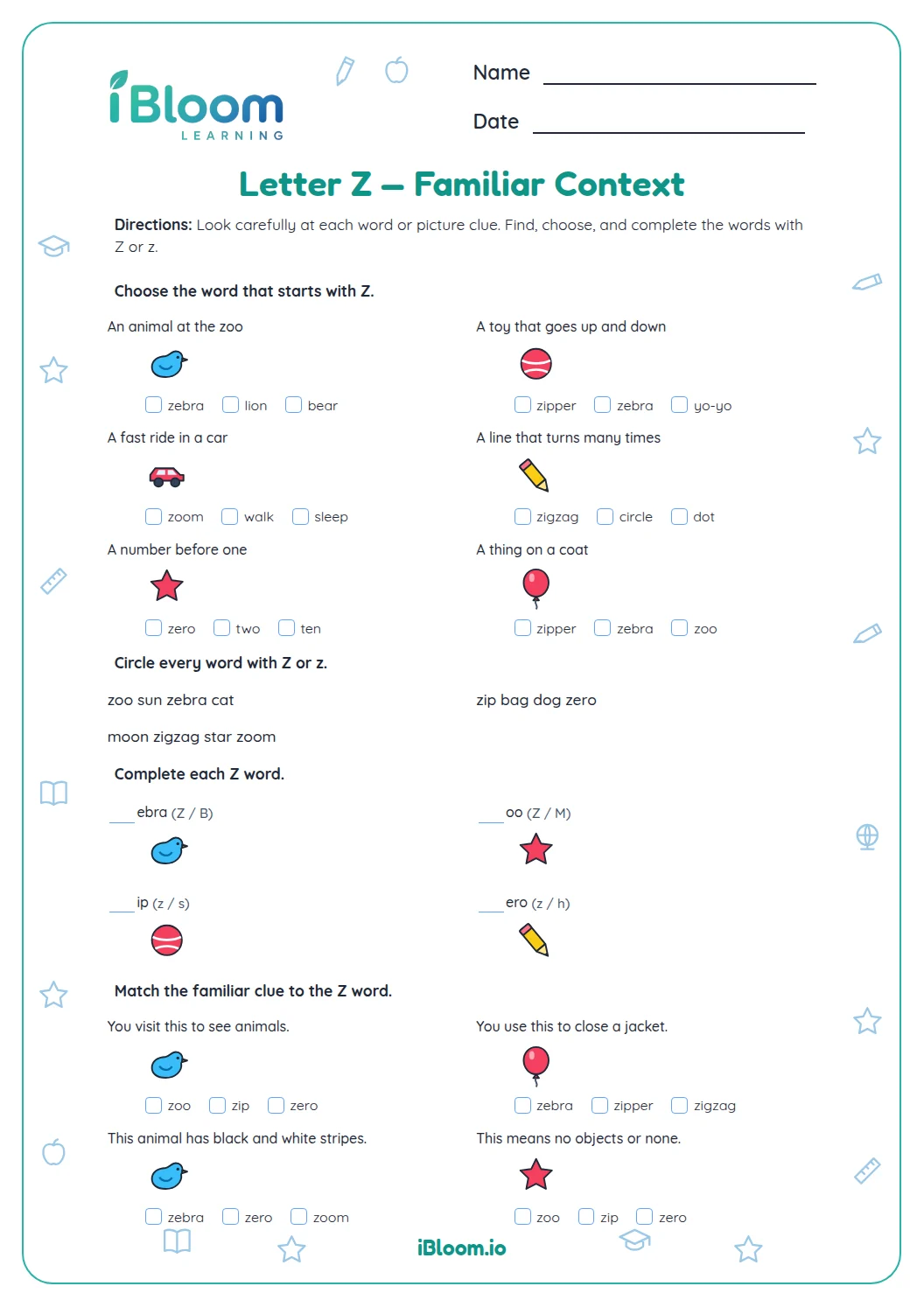
Picture choices help children connect the printed letter to a spoken word. Say each pictured word aloud and listen to its first sound. Zebra and zoo begin with /z/; sun and cat begin with different sounds.
What activities are on the two pages?
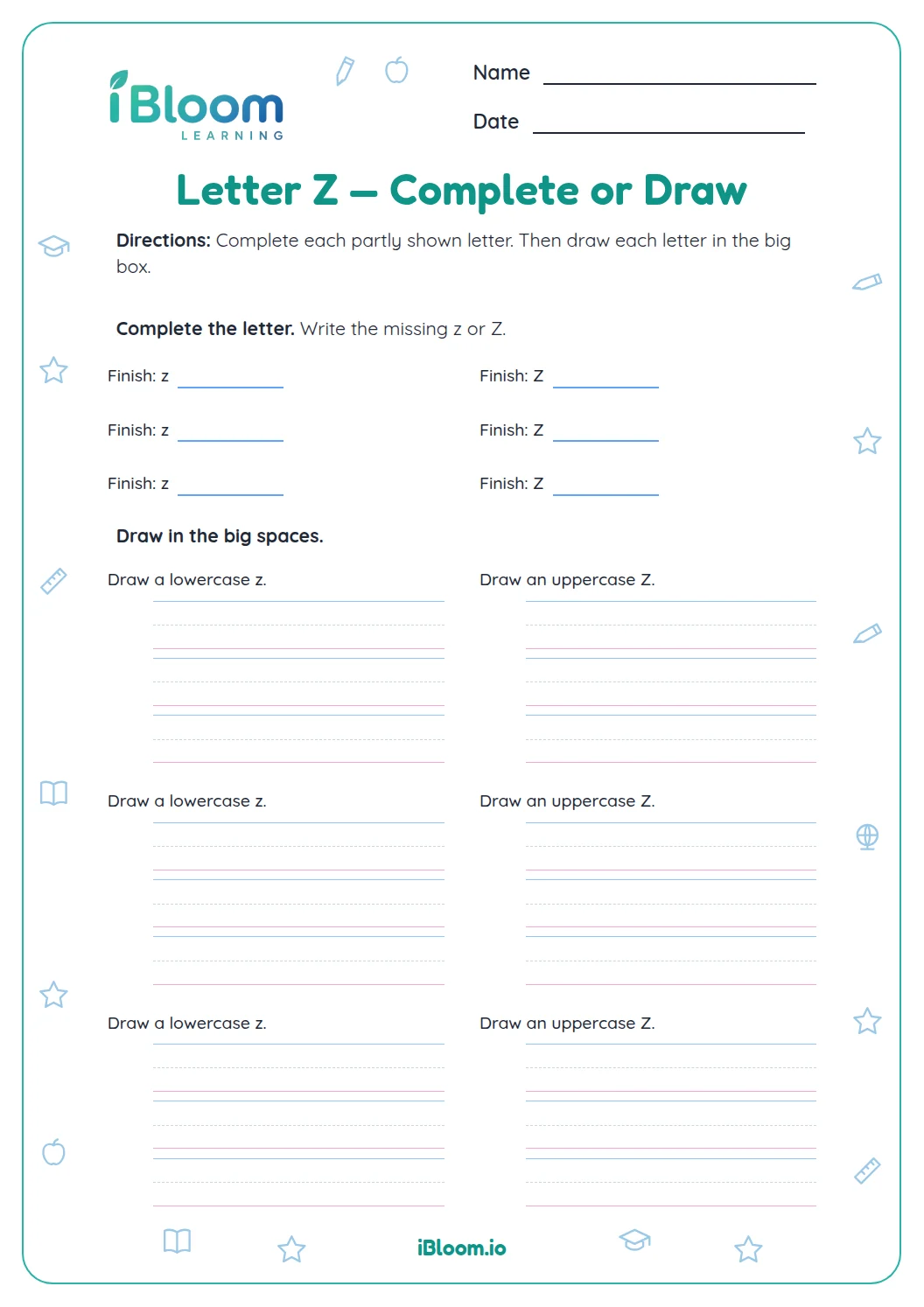
The worksheet has 14 short questions for early readers. It moves from letter and word choices to finding Z/z in rows, then finishes with a zebra drawing and label.
- Choose uppercase Z and lowercase z
- Recognize pictured words that begin with /z/
- Find Z/z in letter rows, complete letter prompts, and draw and label a zebra
How can an adult support the practice?
Say each pictured word clearly and invite the child to listen for its first sound. Point out the two forms, Z and z, and let the child trace them in the air before finding them on the page.
How to use this worksheet
- 1Read the directions together and name the skill in your own words.
- 2Complete the first few items slowly, explaining each choice.
- 3Work through the remaining questions independently or in a small group.
- 4Use the answer key to check each response and discuss any mismatch.
- 5Return to missed items and solve them again with the key covered.
Common mistakes and quick fixes
The mistake
Mixing uppercase Z with lowercase z.
The fix
Compare the capital Z and small z, then name each form before choosing.
The mistake
Choosing a picture because it is an animal, not because its word starts with /z/.
The fix
Say each pictured word aloud and listen to its first sound.
The mistake
Writing the wrong letter under the zebra drawing.
The fix
Say zebra slowly, hear /z/ at the start, and write lowercase z beneath the drawing.
Common Core alignment
This page connects the practice activities to the following Common Core standard.
Connect uppercase and lowercase consonant Z with its common /z/ sound.
On this sheet:
Show the official wordingHide the official wording
Demonstrate basic knowledge of one-to-one letter-sound correspondences by producing the primary sound or many of the most frequent sounds for each consonant.
What to practice next
Make more practice
Further reading
Questions parents and teachers ask
What does this worksheet teach about Z?
It helps children recognize uppercase Z and lowercase z and connect the letter to familiar words that begin with /z/. The 14 questions include picture-supported choices, letter rows, and a final zebra drawing with a lowercase z label. Read the answer aloud with the completed example to check that it fits.
Why are there pictures on the page?
Pictures make the beginning-sound choices concrete for Kindergarten learners. Children can name each pictured object, listen to its first sound, and decide whether it begins with /z/. This keeps the sound activity tied to recognizable words. The illustrations are paired with printed labels, so the child can connect the spoken word with its first letter sound.
What is the difference between Z and z?
Z is the uppercase form and z is the lowercase form of the same letter. The worksheet asks children to identify both forms in answer choices and in short rows of mixed letters. Both versions appear in the choices and in the mixed-letter rows on this page.
What should the child draw at the end?
The last task asks the child to draw one zebra and write z under it. The drawing can be simple; the key idea is to connect the pictured animal’s name with the lowercase letter that represents its first sound. Read the answer aloud with the completed example to check that it fits.
Is an answer key included?
Yes. A separate two-page answer key marks the letter and word choices and describes what the zebra drawing should include. For open-ended drawing, accept a recognizable zebra and a lowercase z label. The key also describes the expected label for the open-ended drawing so adults can check the skill without requiring artistic detail.