



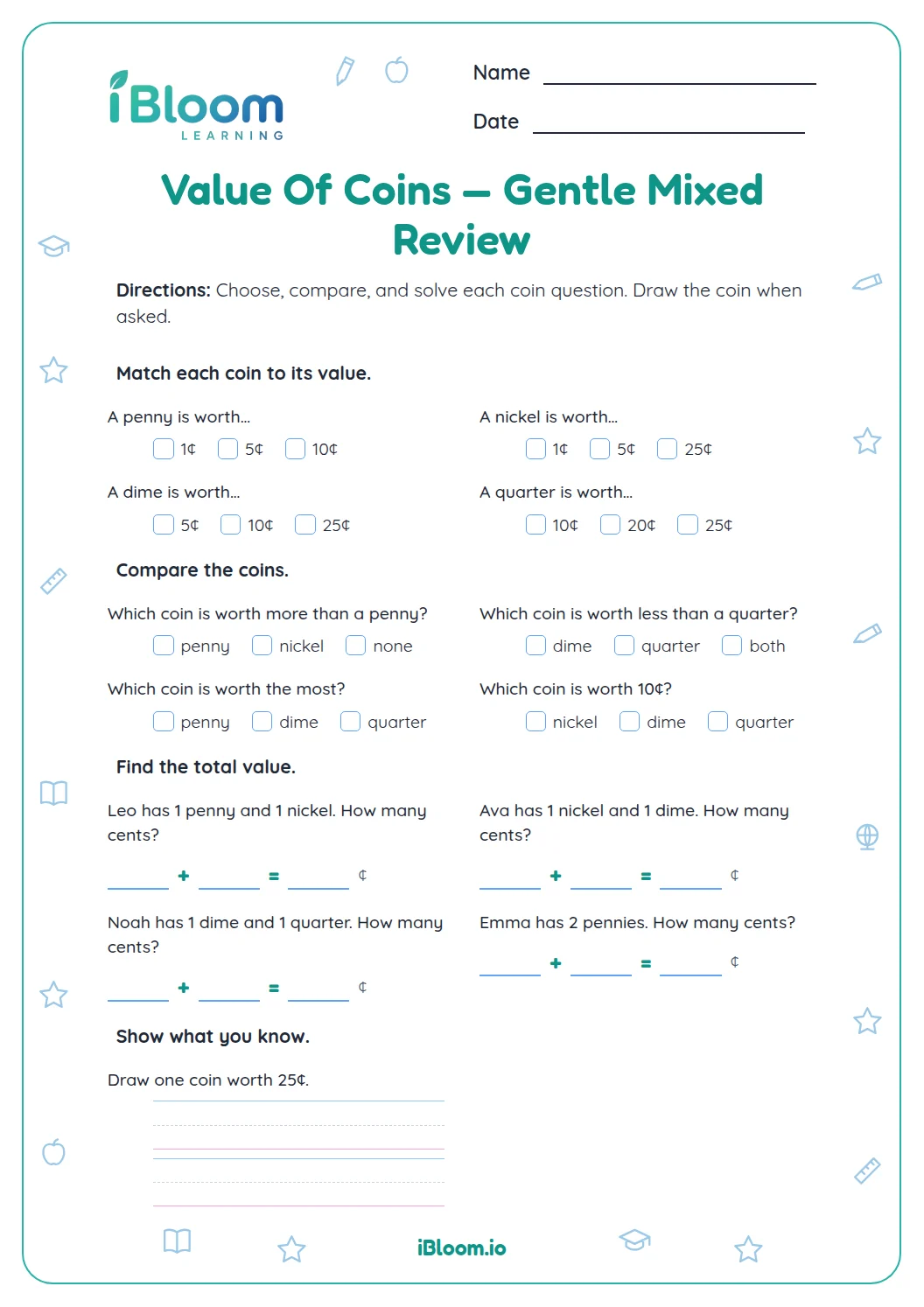
About this worksheet
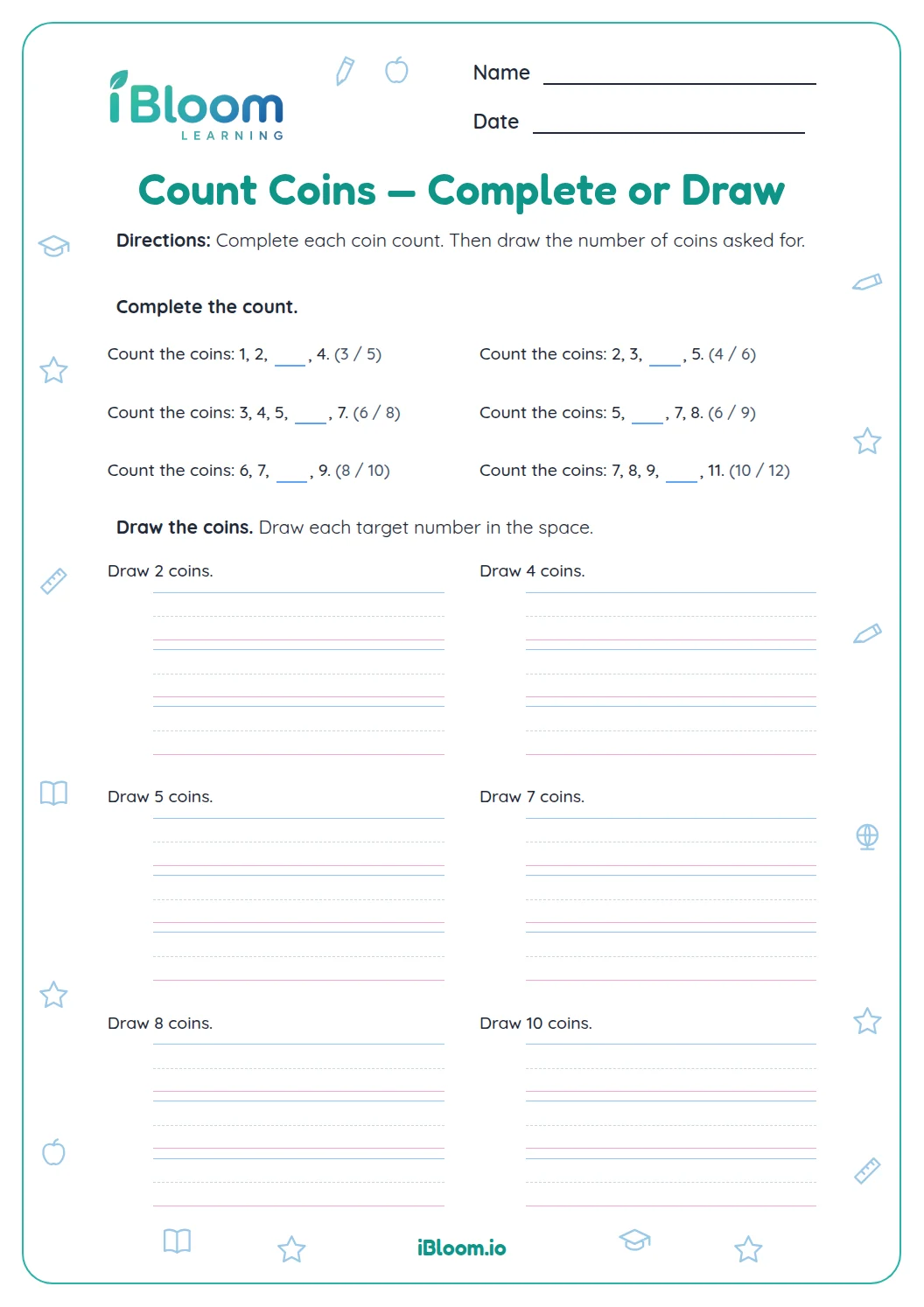
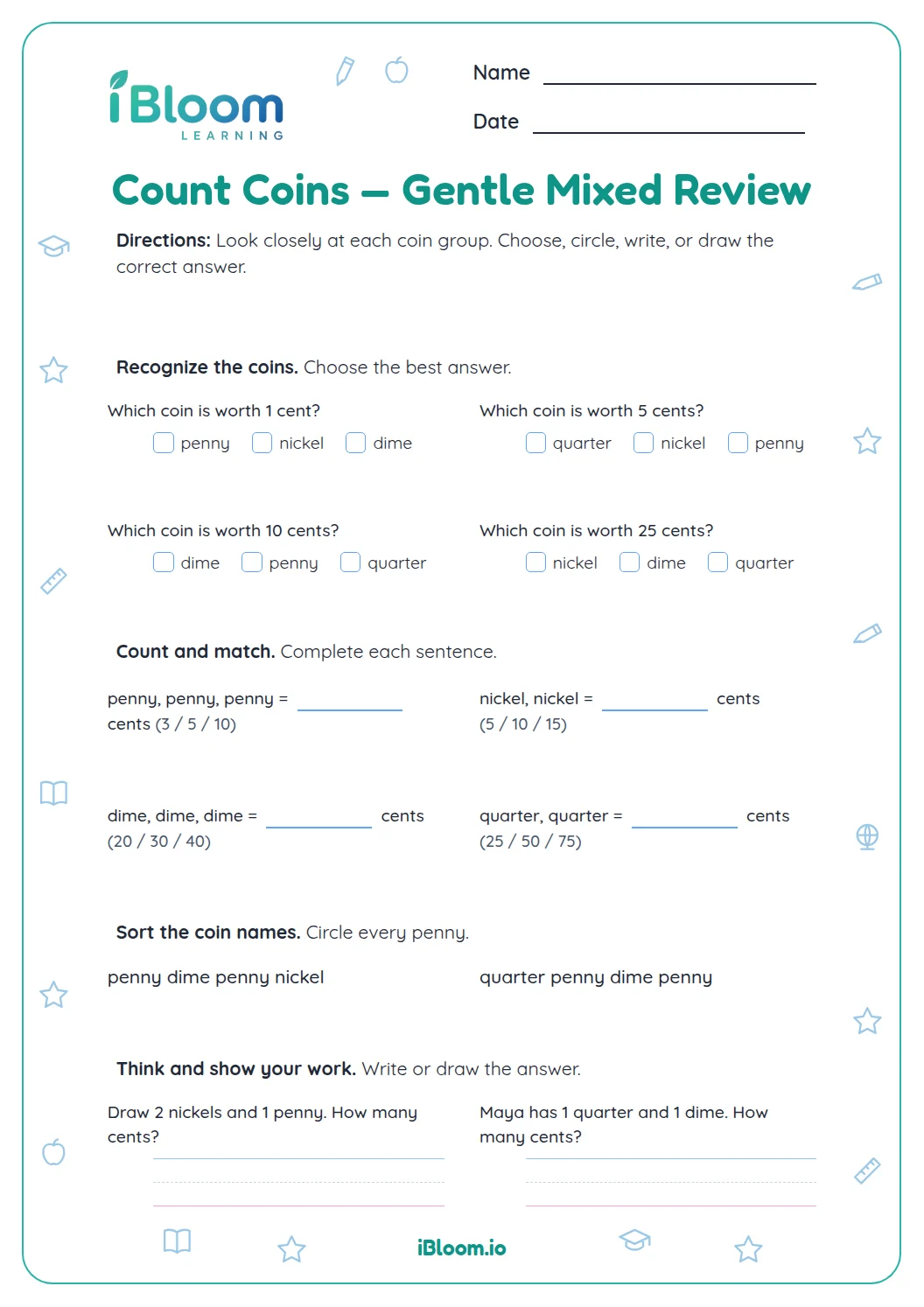
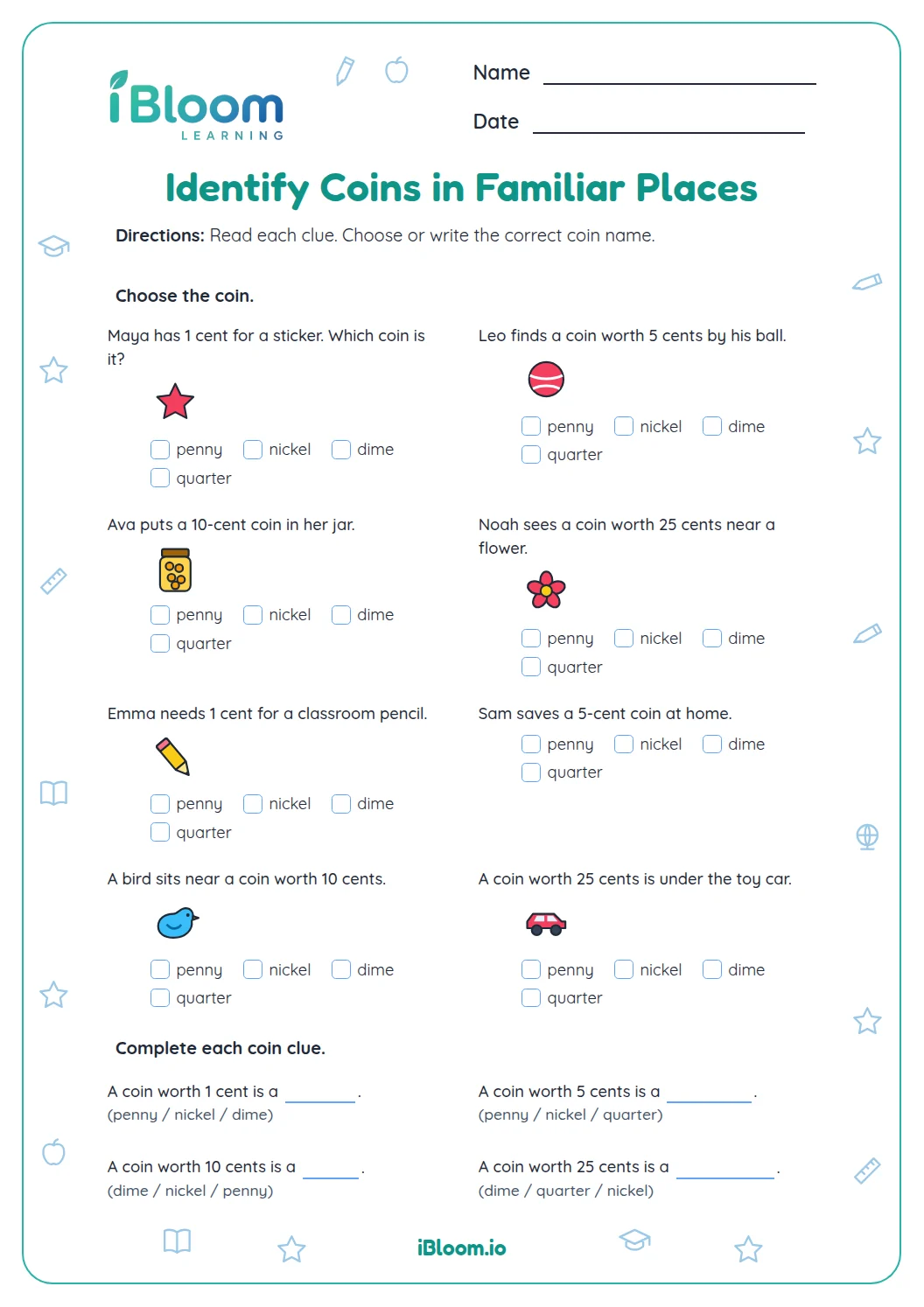
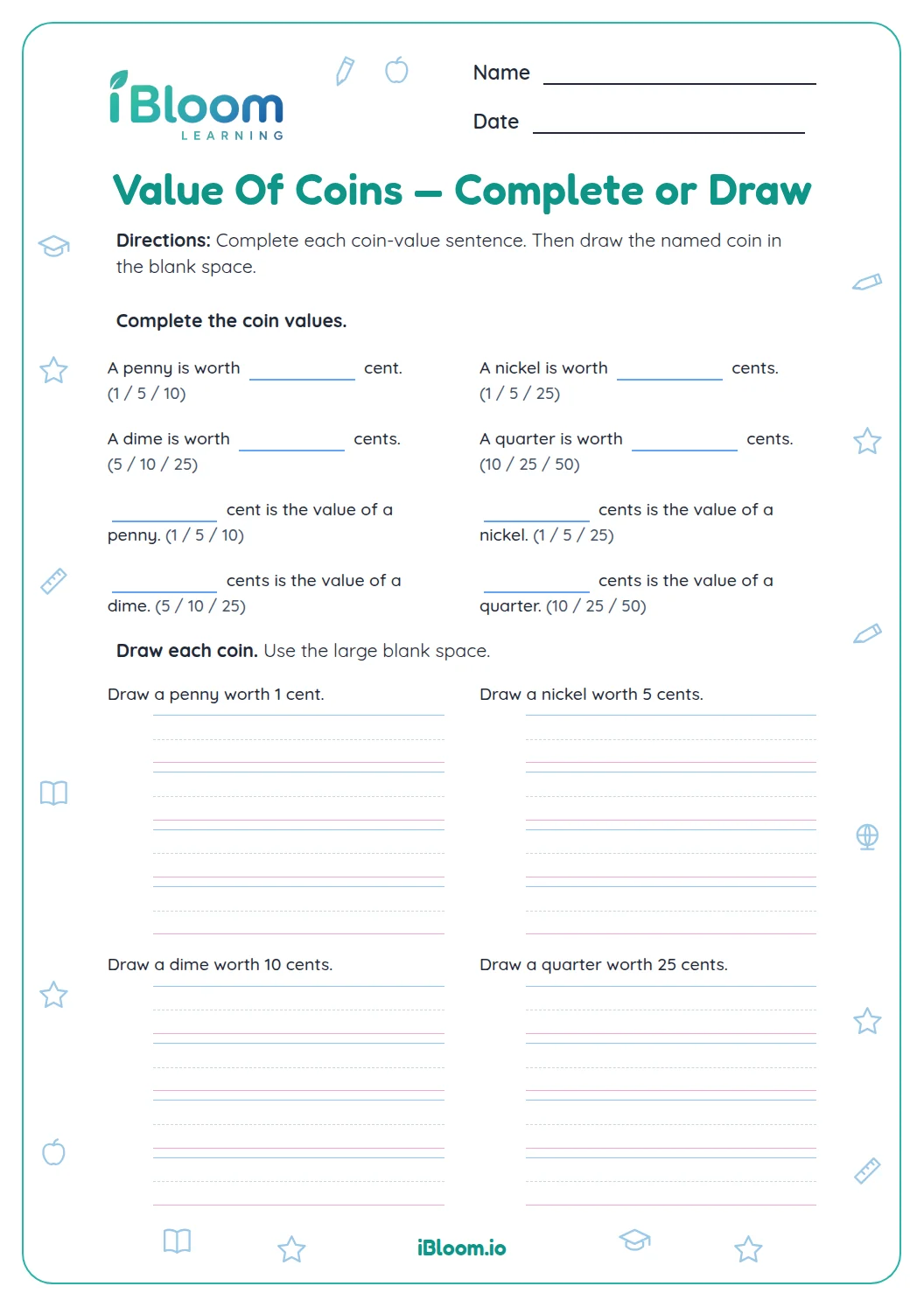
This free printable money worksheet gives preschool and kindergarten learners a familiar pretend-market setting for coin counting. Children look at real-colored penny, nickel, and dime drawings, name each coin, and count the cents in the group. The 16 questions move from one or two coins to small combinations, with a separate answer key. Adult support can help children connect each coin’s name with its value.
How do children name the coins?
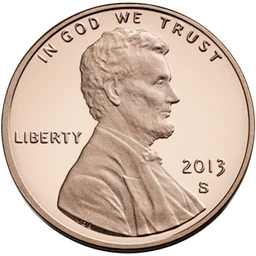
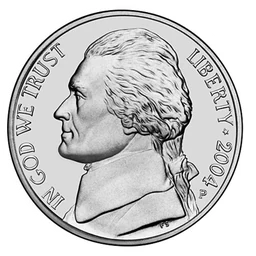
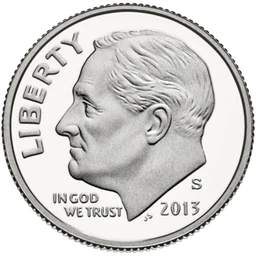
Look at the color, size, and edge of each drawing, then name the coin before counting. A penny is worth 1 cent, a nickel is worth 5 cents, and a dime is worth 10 cents. Question 1 has two pennies, so count 1 cent and 1 cent for 2 cents.
These are practice drawings; an adult can also show safe real coins and help children compare the names and values.
- 1Two pennies
- 21¢ + 1¢
- 3The group is worth 2¢
What is an easy way to count a mixed group?
Start with the coin worth the most, then count on by its value. For a dime and a penny, say 10, then 11. For a nickel and a penny, say 5, then 6. This keeps the count connected to the value of each coin.
Children who are still learning may count one coin at a time with an adult naming each value.
How does the market theme support practice?
A pretend market gives the coin groups a familiar purpose: a child can imagine counting coins to pay for a small item. Each question shows the coins to count, without asking children to make change or compare prices. The 16 groups use pennies, nickels, and dimes.
How to use this worksheet
- 1Name the coin you see before saying its value.
- 2Begin with the coin worth the most in a mixed group.
- 3Count on by 1, 5, or 10 as each coin is included.
- 4Say the total in cents; an adult can model the cent sign.
- 5Check by naming every coin one more time.
Common mistakes and quick fixes
The mistake
Calling a nickel a dime because both are silver-colored.
The fix
Compare the coin’s size and ask an adult to name it.
The mistake
Counting a nickel as one cent.
The fix
Say “five cents” for each nickel, then count on five.
The mistake
Counting the number of coins instead of their value.
The fix
Name the coins and add the cents each coin is worth.
What to practice next
Make more practice
Questions parents and teachers ask
Which coins appear on this worksheet?
The questions show pennies, nickels, and dimes in small groups. Children can name each coin and count its value in cents. The groups use no quarters, so practice stays with three familiar coin values and totals no greater than 20 cents.
How many coin-counting questions are included?
There are 16 illustrated questions. Each shows one coin group, from a single nickel or dime to a small mixture of pennies, nickels, and dimes. A separate answer key lists every total, so an adult can check each response with the child.
What is the answer when there is a dime and a penny?
A dime is worth 10 cents and a penny is worth 1 cent, so together they are worth 11 cents. Children can begin at 10 and count one more. Question 7 uses this pair to practice counting on from the larger value.
How can an adult help a child who is new to coins?
Name each coin and its value aloud before adding the group. If available, compare the worksheet drawing with a real coin under adult supervision. Count on by the coin’s value, and let the child repeat the name and total.
Does this sheet ask children to make change?
No. Each question asks for the total value of the coins in one group. The familiar market setting gives the practice a simple purpose, while children focus on recognizing the coin pictures and counting cents. The key lists the total for each group.