

About this worksheet
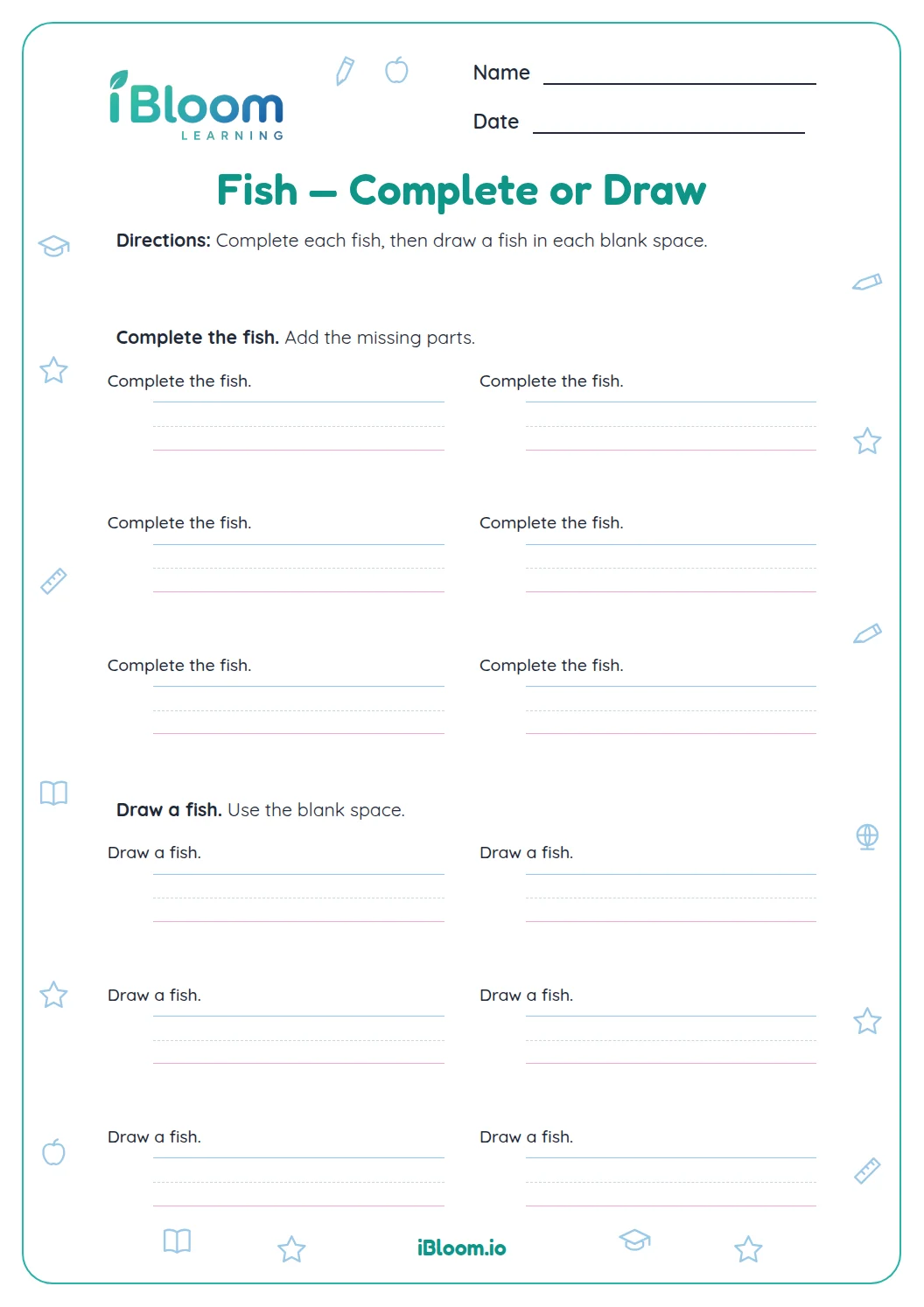
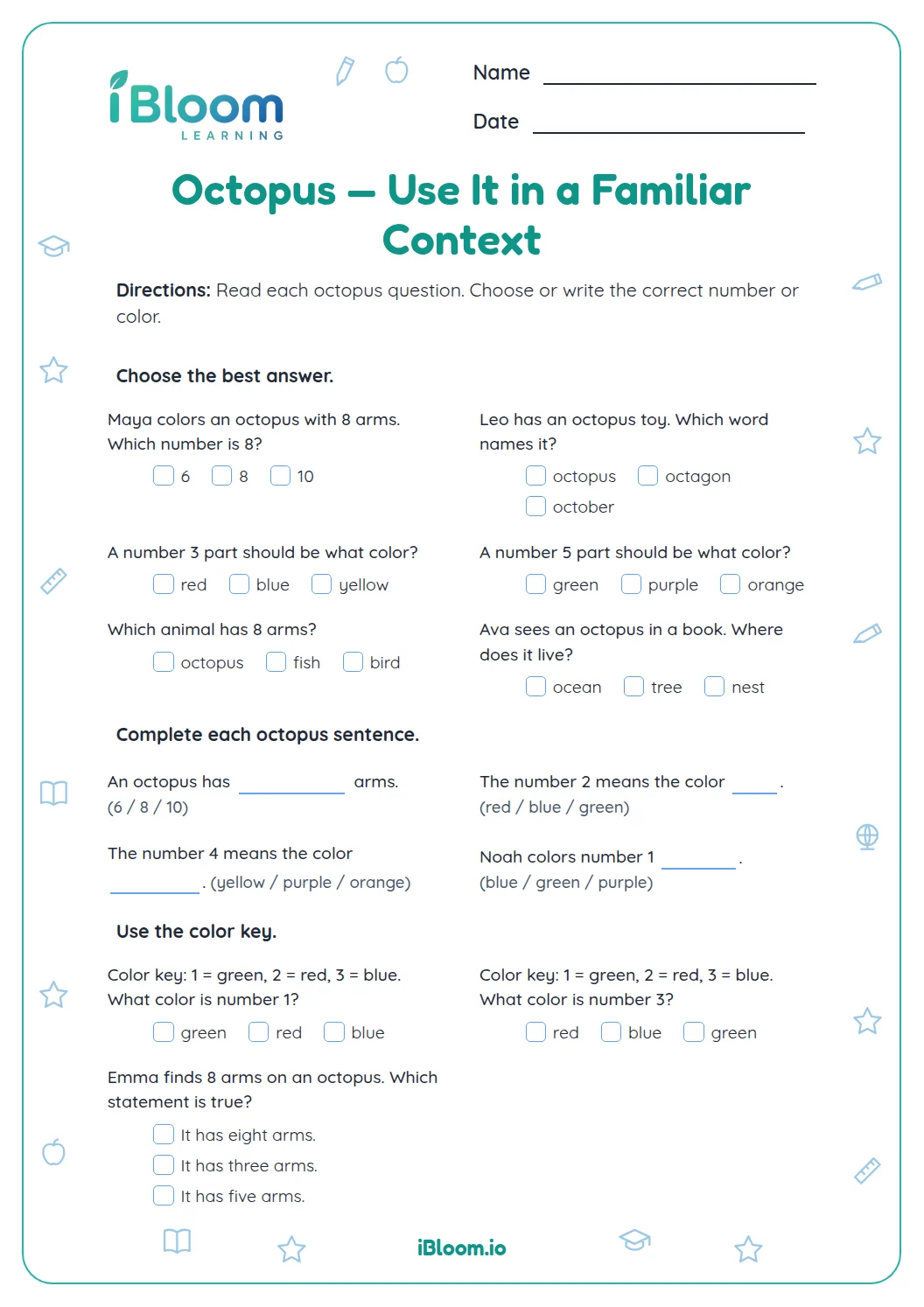
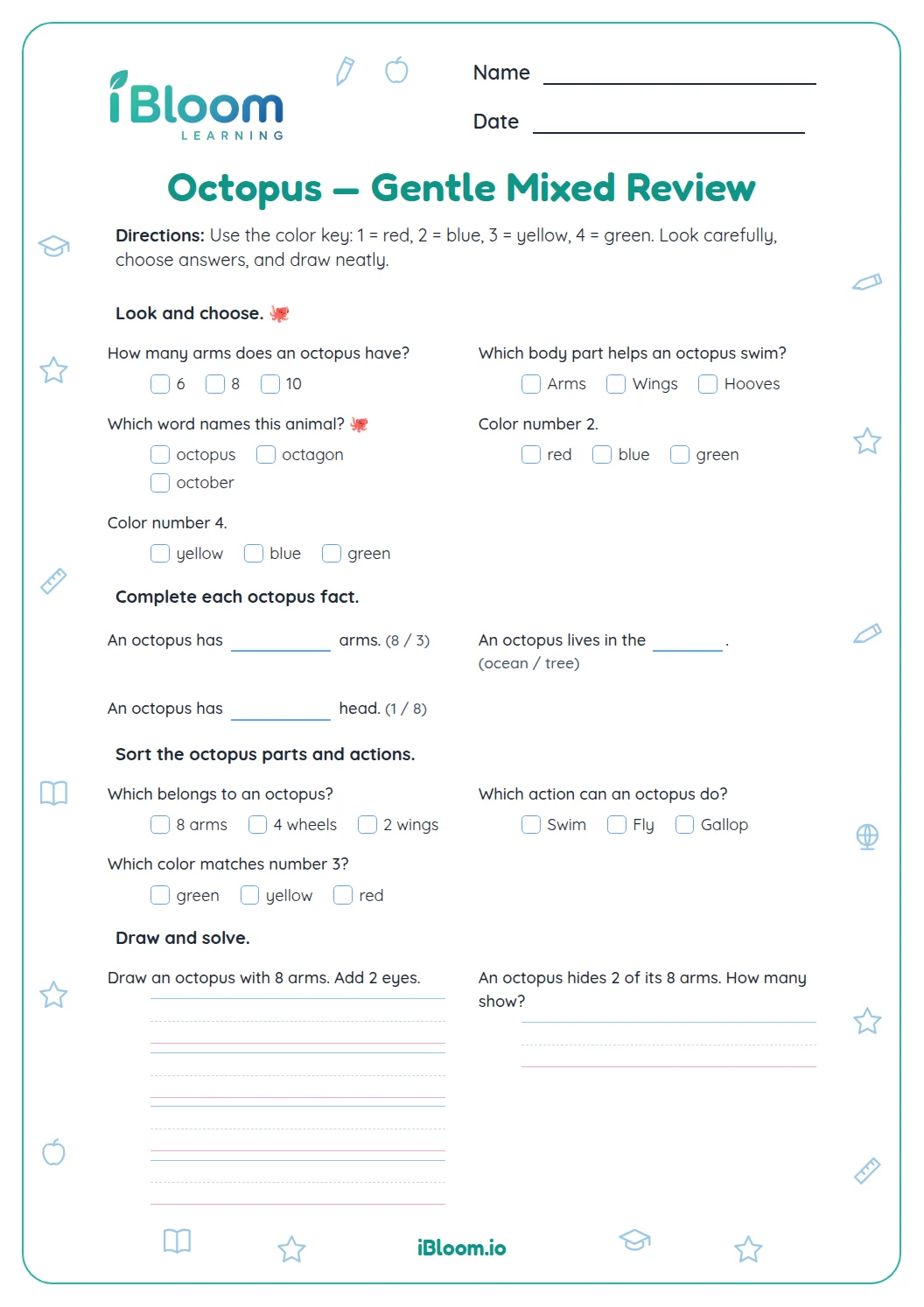
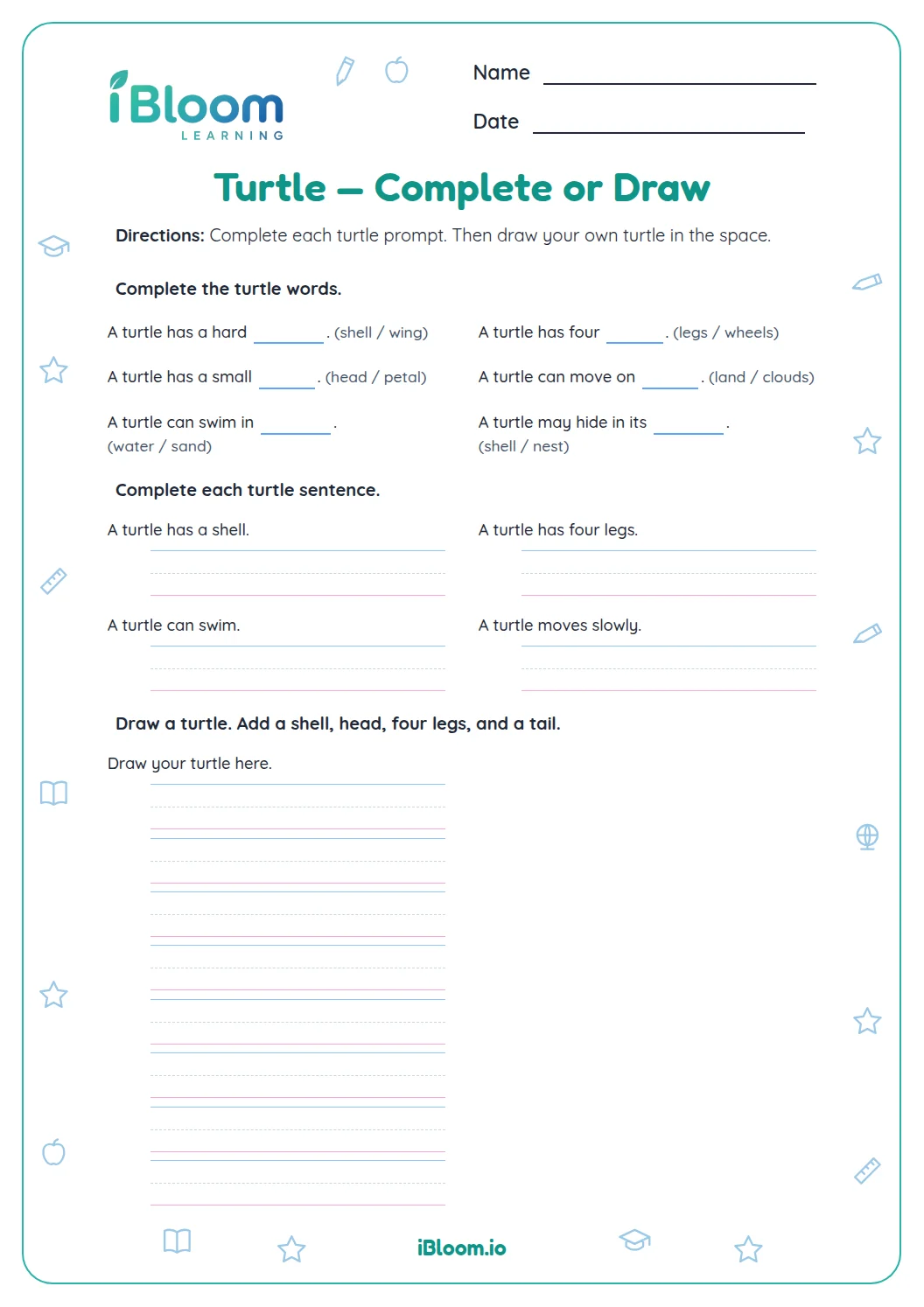
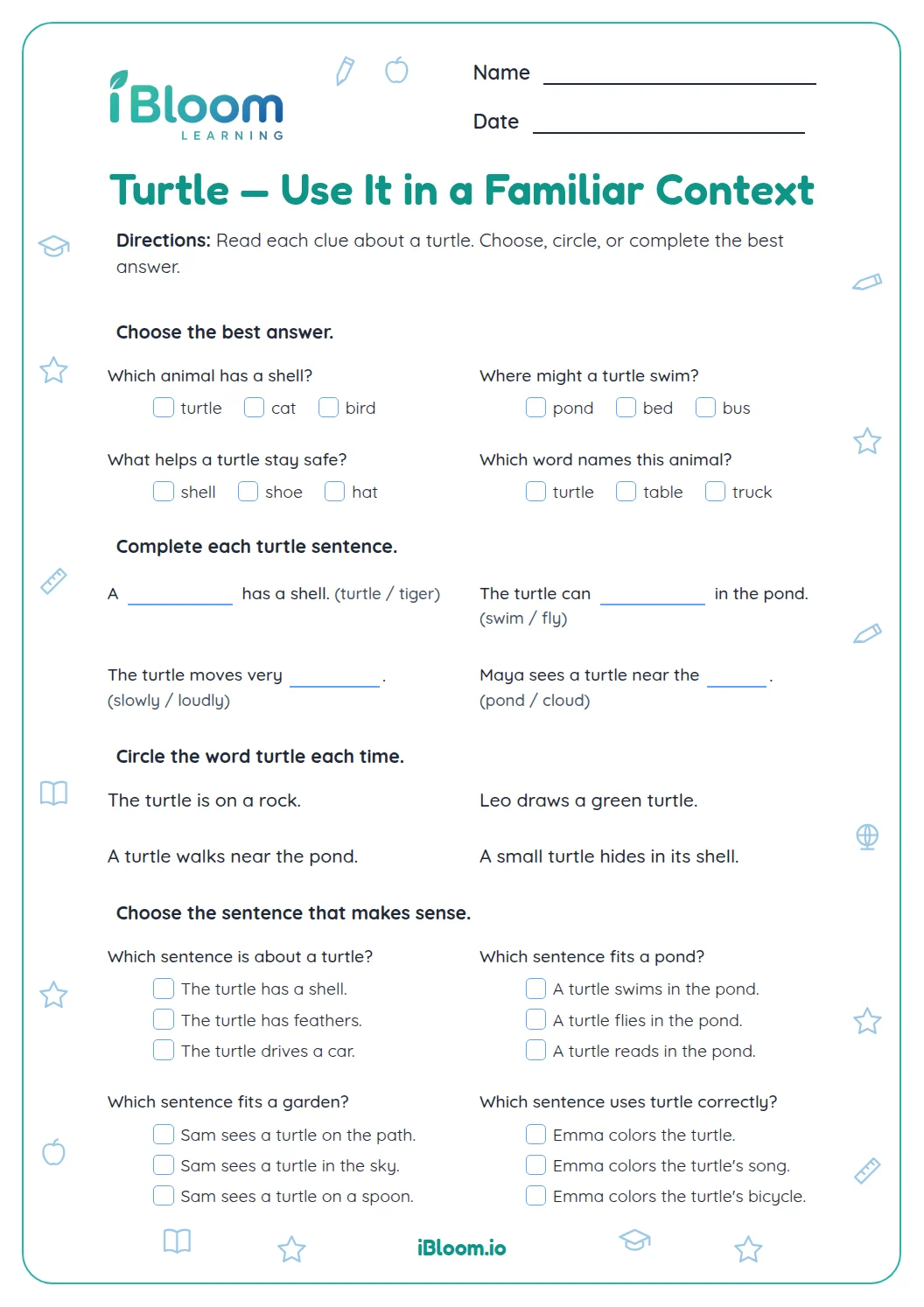
This printable helps preschool and kindergarten learners connect fish with familiar animals, habitats, body parts, and actions. Seven picture-supported choices ask about water, fins, scales, and fish sentences; seven sentence completions use varied answers. The two parts move from recognition to context clues. A separate answer key gives expected choices.
How can children use the clues?
Connect fish with familiar places, body parts, and actions using short picture-supported choices.
This printable helps preschool and kindergarten learners connect fish with familiar animals, habitats, body parts, and actions. Seven picture-supported choices ask about water, fins, scales, and fish sentences;
- 1Read: “Which animal swims in water?”
- 2Compare cat, fish, and bird.
- 3Choose fish.
How can families check the work?
Read the full question, choose or write one response, then check the separate answer key. Ask the child to point to the clue that supports the answer.
How to use this worksheet
- 1Look at the fish picture beside each Part A clue.
- 2Read all choices before selecting one.
- 3For Part B, read the full sentence with each choice.
- 4Use familiar facts to check the answer.
Fish-word mix-ups to notice
The mistake
Choosing an animal just because it is familiar.
The fix
Return to the clue and ask which choice swims or lives in water.
The mistake
Choosing a word that fits the blank only when read by itself.
The fix
Read the whole sentence with each choice and listen for the one that makes sense.
The mistake
Missing the second fish in a word row.
The fix
Move from left to right and check every word once.
What to practice next
Make more practice
Questions parents and teachers ask
What fish ideas appear on the worksheet?
Children connect fish with water, ponds, fins, scales, gills, swimming, and eggs. The first part uses a fish picture beside each clue, while the second part asks children to complete sentences. The key lists a distinct response for each question.
Can I read the questions aloud?
Yes. Read each prompt and choice aloud if that helps your child take part. For a sentence completion, say the whole sentence with each option inserted. This lets a young learner listen for meaning while using familiar vocabulary as support.
What does my child do in Part A?
Part A has seven picture-supported multiple-choice questions. Children connect fish with a habitat, body features, actions, or a sentence. Each item includes a fish picture and three choices, so the learner can consider the clue before selecting a response.
What does my child do in Part B?
Part B has seven short sentences with two choices each. Children choose a word that makes the sentence sensible, such as water, swim, gills, or pond. The answers vary across the part, and the separate key gives the intended word.
How should I check the answers?
Use the answer key to review selected choices and completed words. Ask the child to point to a clue or name a related fish fact. The key lists one intended response for every item, making it straightforward to revisit a missed question.