


About this worksheet
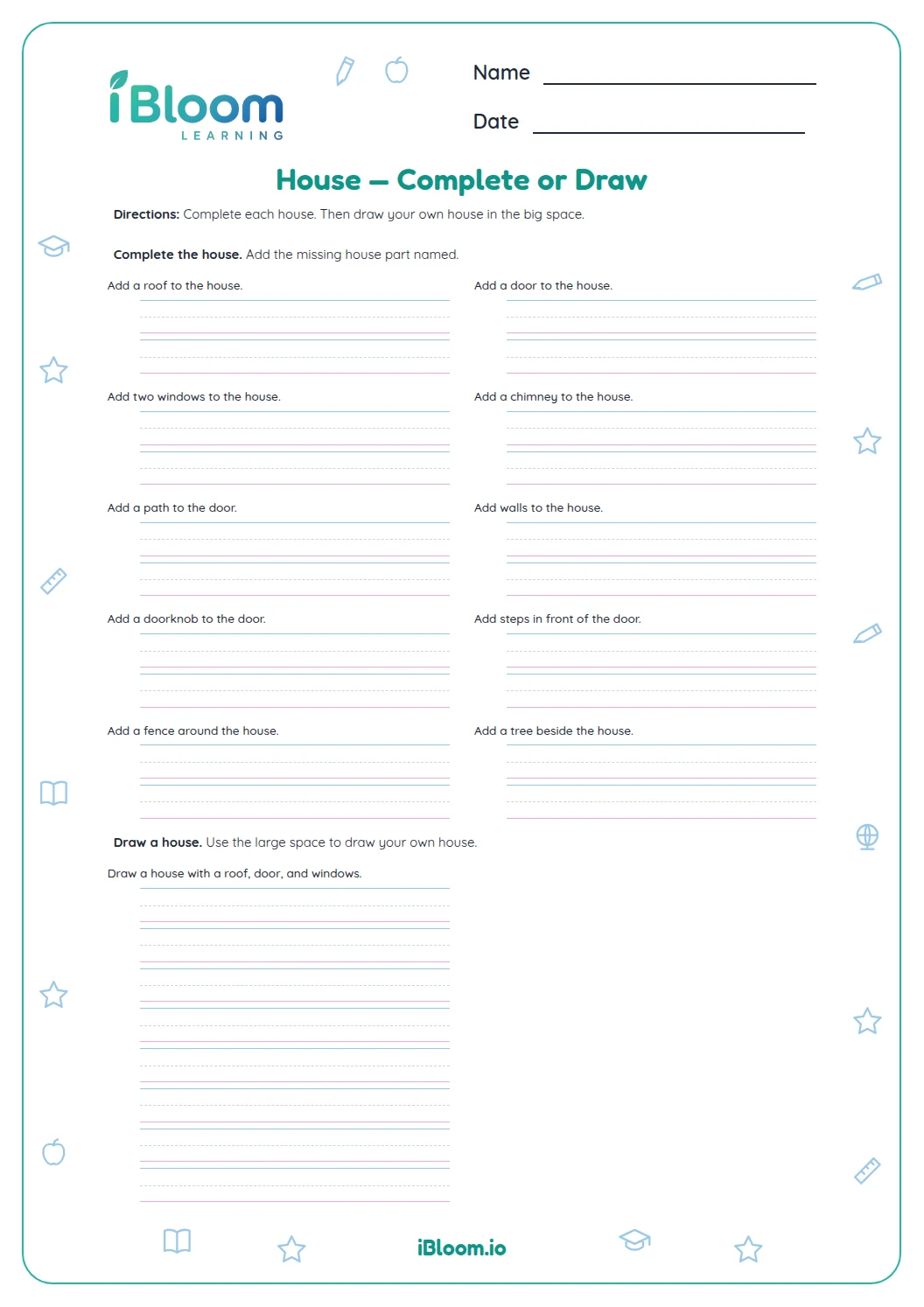
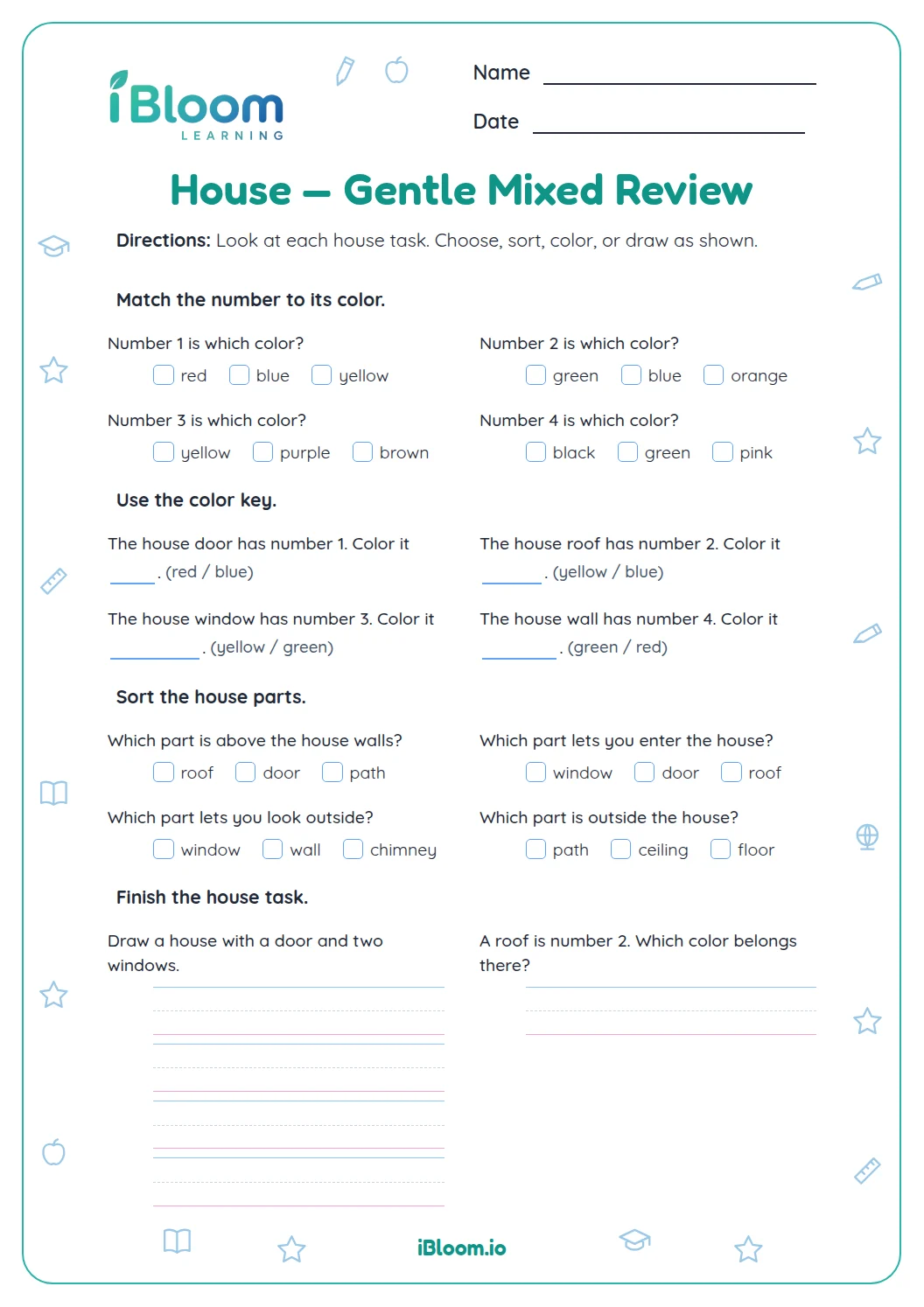
This preschool and kindergarten worksheet uses familiar sentences about homes, roofs, doors, and windows. Children choose house-related words that fit each question, then check their responses with the answer key.
Which words describe a home?
A house has parts such as a roof, door, and window. The surrounding sentence helps a child choose a word that makes sense.
- 1Maya walks through the ___ to come inside.
- 2Door makes sense because people use a door to enter a home.
How does a sentence help you choose a word?
A sentence can give a clue about a word. “What do people walk through to enter a home?” points to the door because people use it to go inside.
- 1What do people walk through to enter a home?
- 2Choose door.
Which words name parts of a home?
Roof, door, and window name common parts of a house. Other choices can describe animals or places, so think about the home context in each question.
How to use this worksheet
- 1Say each shape name as you look at its outline.
- 2Think about which shape matches the named house part.
- 3Choose one answer for every question.
Check your work
The mistake
Choosing a shape by color instead of its outline.
The fix
Look at the sides and corners to identify the shape.
What to practice next
Make more practice
Questions parents and teachers ask
What does this worksheet practice?
Children read short questions and sentences about a familiar home, then choose words such as roof, door, window, and house. The word choices help them connect each word to its meaning in context. Children read short questions and sentences about a familiar home, then choose words such as roof, door, window, and house; each sentence gives context for the word.
How many questions are included?
There are 14 questions in two worksheet pages. Each item asks the child to choose a house word or a word that completes a simple sentence about a home. The 14 questions appear across two worksheet pages. Each asks the child to choose a house word or complete a simple sentence about a home.
How can a child use context to choose a word?
Read the whole question aloud and think about what belongs in a home. For example, a door is something a person walks through to enter a house. Read the whole question aloud and think about what belongs in a home; for example, a door is something people walk through to enter.
Is this a color-by-number activity?
The supplied old sheet is a house-word activity with choices and sentence blanks. This replacement keeps that familiar-house vocabulary focus in a clean printable format with a separate answer key. The supplied old sheet is a house-word activity with choices and sentence blanks; this replacement keeps the same home vocabulary focus in a printable format.
How can an adult support early readers?
Read each prompt and choice aloud, then ask the child which word fits the meaning. Point to a door or window nearby to connect the printed word with a familiar object. Read each prompt and choice aloud, then ask which word fits the meaning; pointing to a door or window nearby connects print with a familiar object.