Free printable practice
Printing Numbers Practice Activities
Printable preschool and kindergarten worksheets for tracing, copying, and writing numbers 1 through 20 with careful number formation practice.
Explore Printing Numbers
Free printable worksheet PDFs
Preview every available page, then download the free worksheet PDF for home, homeschool, tutoring, or classroom practice.
Preview the exact activity before downloading it.
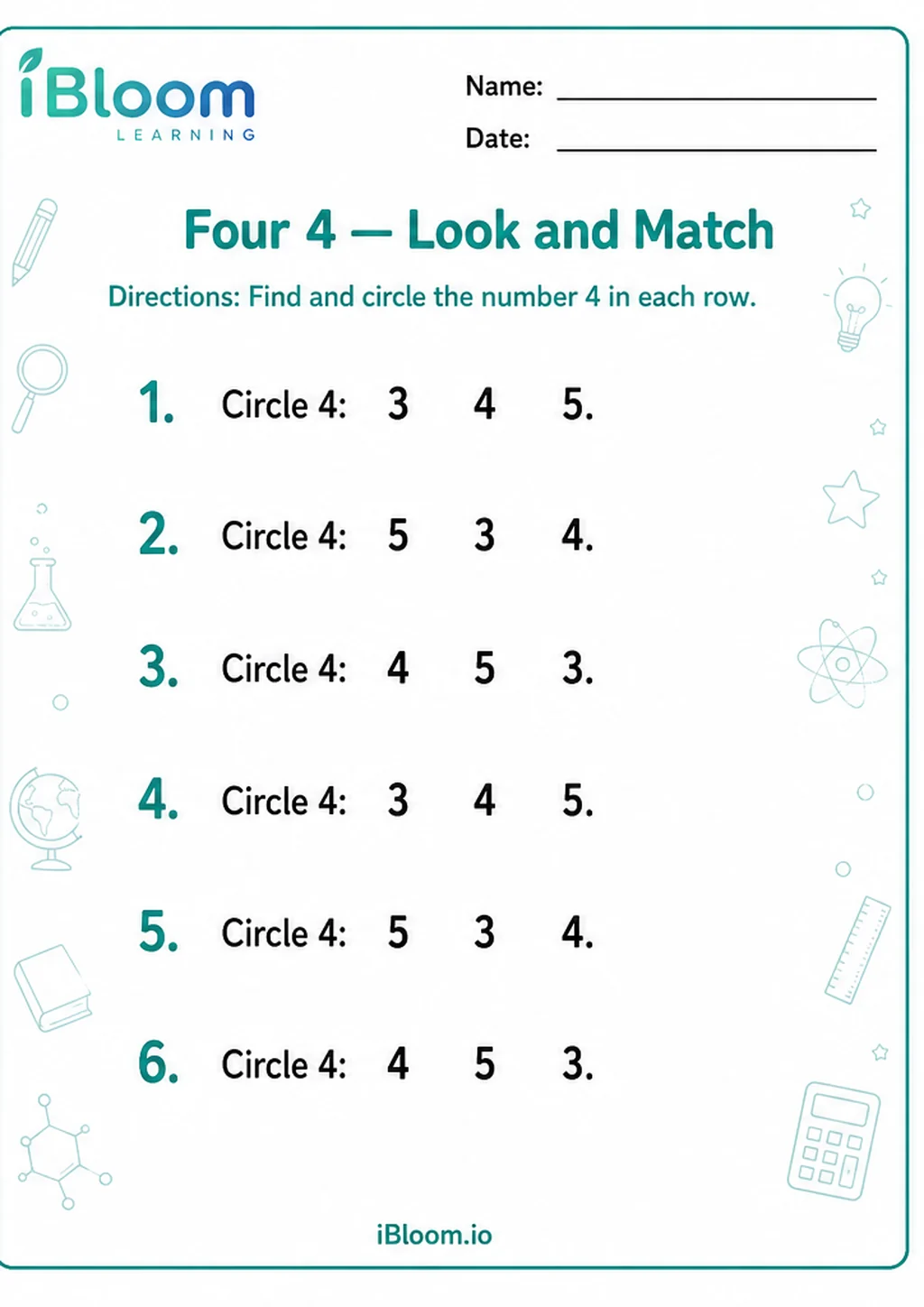
Practice that builds confidence
What children learn
These printing numbers worksheets help preschool and kindergarten children practise forming numerals from 1 to 20. Children trace, copy, and write numbers such as 1, 5, 10, 12, 16, and 20 while building pencil control and number recognition.
The printable activities focus on one number at a time, so learners can notice each numeral’s shape before moving on. Pages may include guided tracing lines, independent writing space, and simple visual practice that connects the written numeral to counting.
Printing numbers is more than handwriting. Children learn that each numeral has a fixed shape and represents a quantity. These pages cover numbers 1 through 20, including early single-digit numerals such as 2, 3, 4, 6, 7, 8, and 9, then teen numbers such as 11, 13, 14, 15, 17, 18, and 19. The steady sequence helps children see how number writing grows from familiar digits into two-digit numbers.

How the practice progresses
A child usually begins by tracing a large numeral, following its start point and direction. Next, they copy the number with less support. Finally, they try writing it independently. For numbers like 12, 16, and 20, children also practise placing two digits side by side without reversing or crowding them. This supports both handwriting fluency and early place-value awareness.
A simple parent routine
Choose one number page and say the number aloud together. Have your child air-write the numeral with a finger, trace it on the page, then write it in the blank spaces. After writing, ask them to count that many small objects, such as buttons or blocks. End by pointing to the numeral again and saying, “This is 14,” or “This is 7,” so the written symbol and the spoken number stay connected.

Classroom and center ideas
Teachers can use these printables for morning work, fine-motor centers, number-of-the-day lessons, or small-group intervention. A page for 10 can support a counting collection, while pages for 11 to 20 can reinforce teen-number recognition. Finished sheets can be placed in a number-writing folder so children can revisit earlier numbers and see their handwriting improve.

Common errors to watch for
Young learners may reverse 2, 3, 5, 6, 7, or 9, start numbers from the bottom, write teen numbers in the wrong order, or make the two digits in 20 uneven. Gently model the motion instead of simply marking it wrong. Use language such as “start at the top,” “curve around,” “straight line down,” and “leave a small space.”
Free printable PDF download
Use this printing numbers worksheet page to preview the activity, print it, or download it as a PDF for quick practice. It works well for homework, homeschool lessons, tutoring, morning work, revision, and classroom centers.
Answers and answer key support
After the child completes the worksheet independently, parents and teachers can use the answer support or answer key information to check the work, review mistakes, and choose the next practice step.
Why iBloom worksheets help
Each iBloom worksheet keeps the focus on a single printable number skill, reducing distraction for early learners. The child-friendly layout gives enough repetition for practice without turning number writing into copying only. A helpful strategy for children is: say it, trace it, write it, count it. This simple pattern builds confidence with every number from one to twenty.
Helpful answers
Frequently asked questions
What numbers are included in these printing practice worksheets?
The collection covers numbers 1 through 20, including single-digit numbers, 10, and the teen numbers 11 through 19.
Are these worksheets for preschool or kindergarten?
They are suitable for both. Preschool children can use them for tracing and early numeral recognition, while kindergarten children can practise copying and writing the numbers more independently.
How can I help my child stop reversing numbers?
Model the writing path slowly, name the starting point, and have your child trace before writing alone. Short cues such as “start at the top” and “curve around” are often more helpful than repeated erasing.
Should children practise the numbers in order from 1 to 20?
Working in order is helpful, but it is also fine to repeat tricky numbers such as 5, 7, 12, or 19. The goal is accurate formation and recognition, not just finishing the sequence.
How can teachers use these pages in class?
Teachers can use them in math centers, morning tubs, small-group handwriting support, number-of-the-day activities, or as follow-up practice after counting collections.
Is this printing numbers worksheet free?
Yes. You can preview it for free and use the printable worksheet for home or classroom practice.
Can I download this printing numbers worksheet as a PDF?
Yes. Use the worksheet download option to save a printable PDF, or print the worksheet directly from the page.
Does this printing numbers worksheet include answers or an answer key?
When the activity has fixed answers, iBloom includes answer support so parents and teachers can check the completed worksheet.