Free printable practice
Sizes Words Practice Activities
Printable preschool and kindergarten activities for learning size words such as big, small, tall, short, long, and little through picture-based practice.
Free printable worksheet PDFs
Preview every available page, then download the free worksheet PDF for home, homeschool, tutoring, or classroom practice.
Preview the exact activity before downloading it.
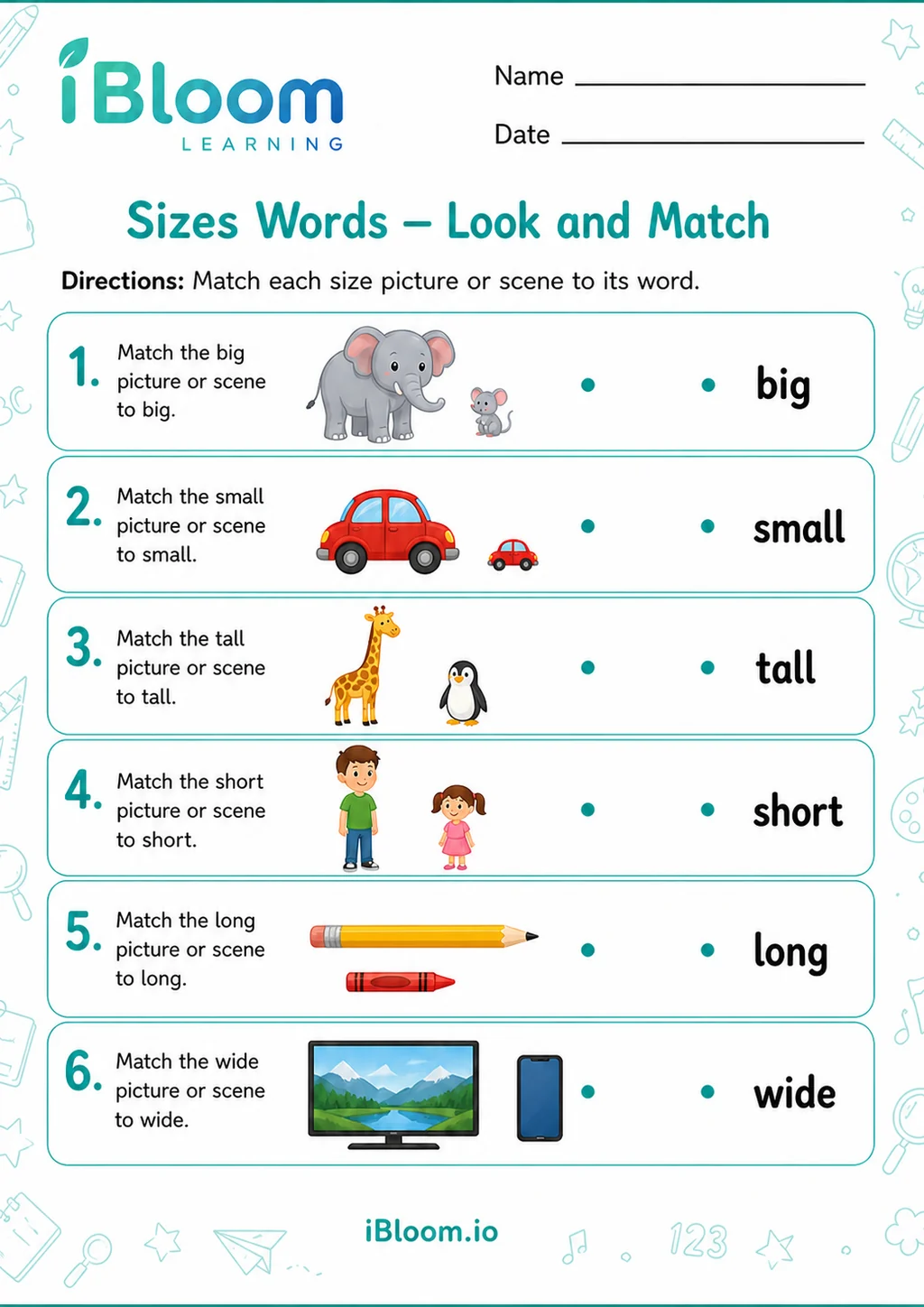 Sizes Words — Look and MatchPrintable preschool and kindergarten activities for learning size words such as big, small, tall, short, long, and little through picture-based practice. This look and match worksheet provides a distinct, age-appropriate way to practise the same lesson.Preschool, KindergartenFree PDF preview
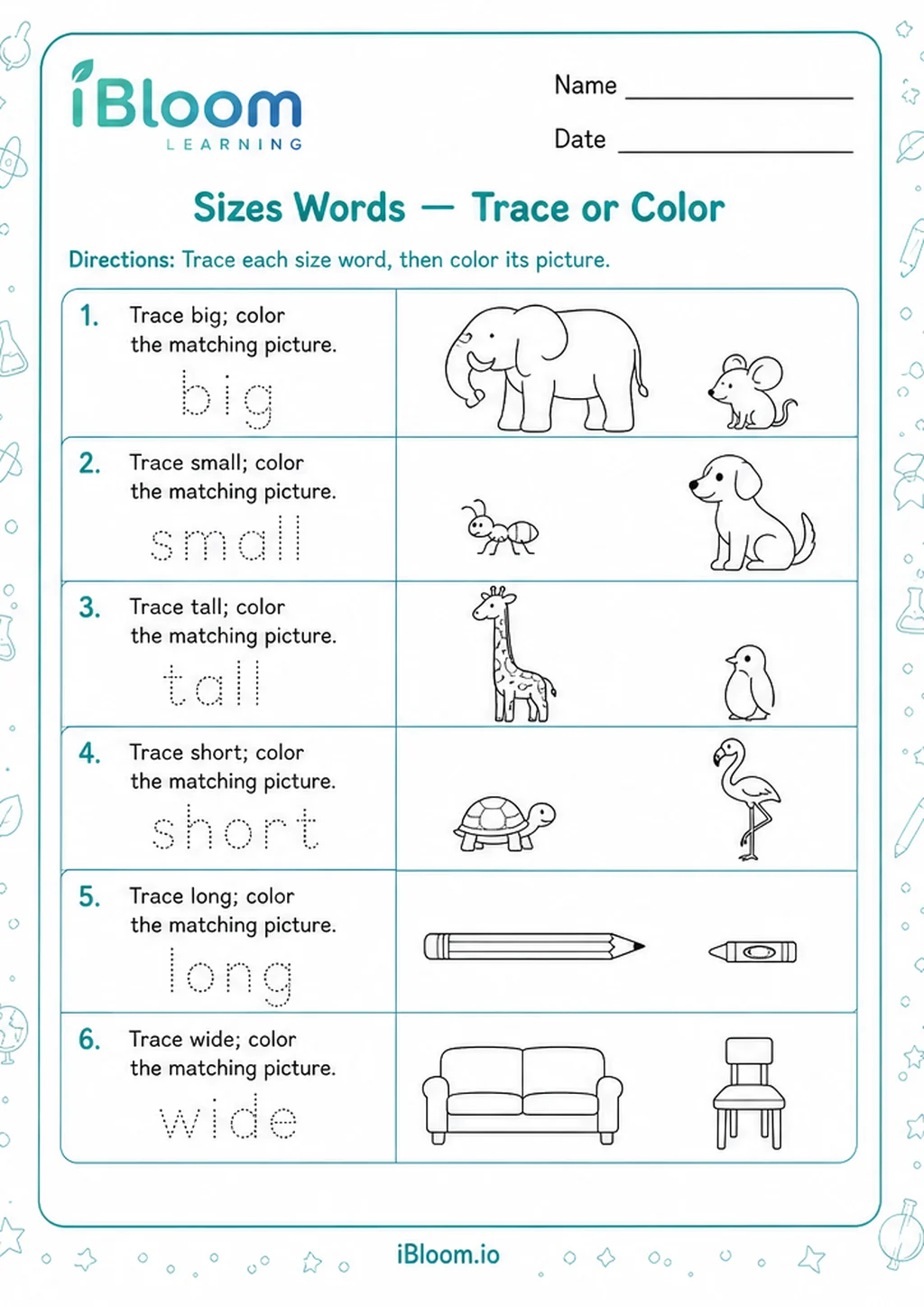 Sizes Words — Trace or ColorPrintable preschool and kindergarten activities for learning size words such as big, small, tall, short, long, and little through picture-based practice. This trace or color worksheet provides a distinct, age-appropriate way to practise the same lesson.Preschool, KindergartenFree PDF preview
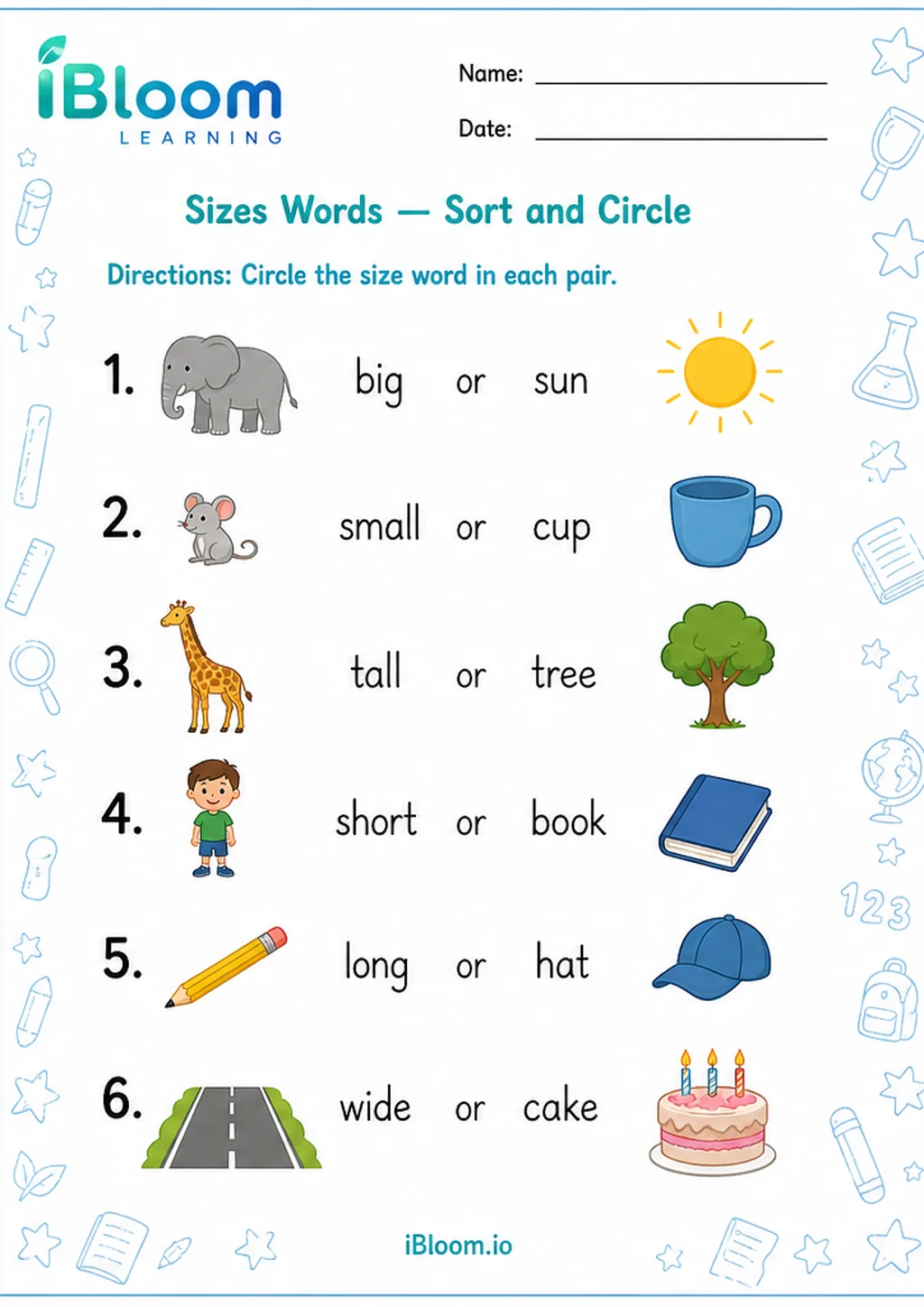 Sizes Words — Sort and CirclePrintable preschool and kindergarten activities for learning size words such as big, small, tall, short, long, and little through picture-based practice. This sort and circle worksheet provides a distinct, age-appropriate way to practise the same lesson.Preschool, KindergartenFree PDF preview
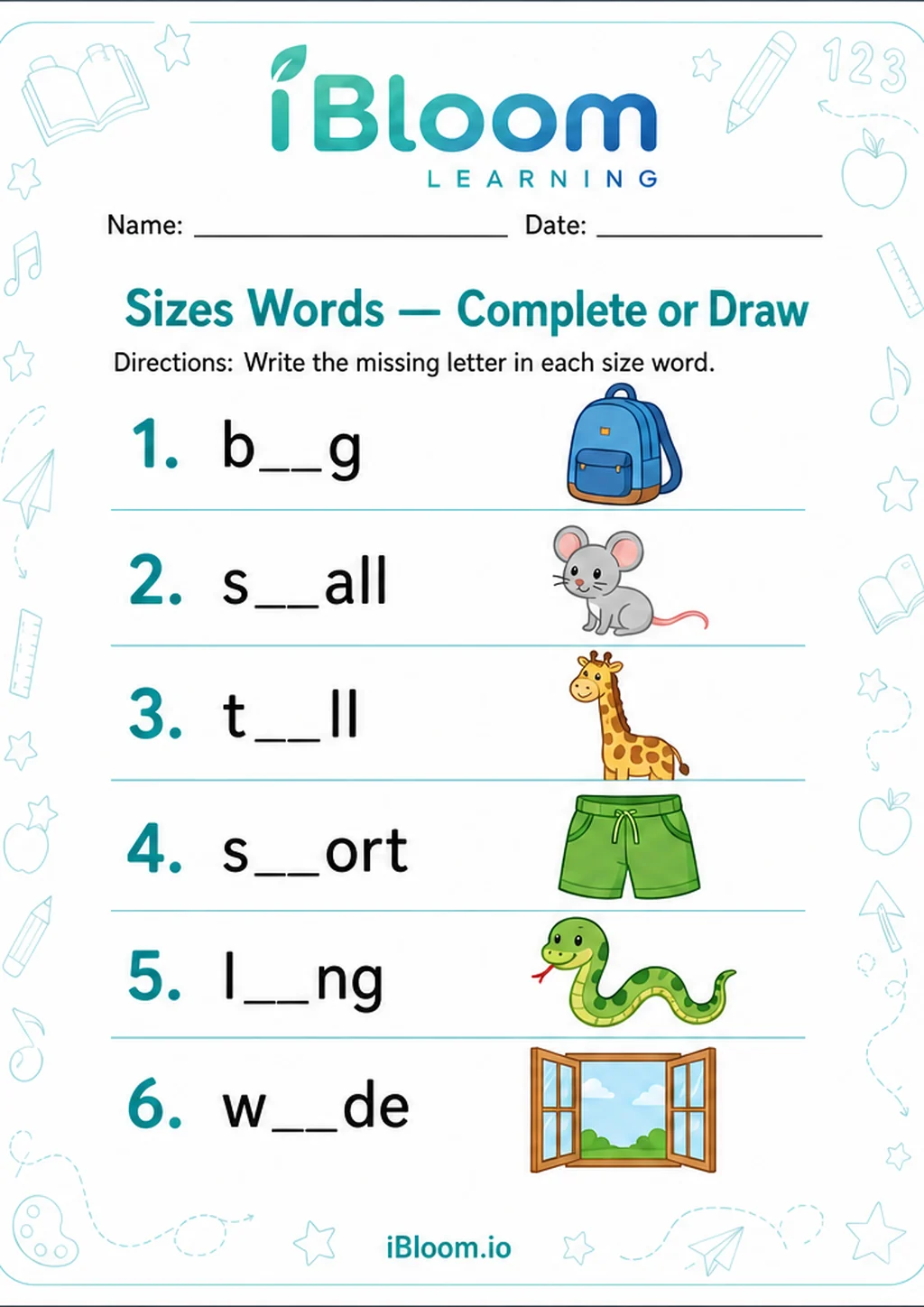 Sizes Words — Complete or DrawPrintable preschool and kindergarten activities for learning size words such as big, small, tall, short, long, and little through picture-based practice. This complete or draw worksheet provides a distinct, age-appropriate way to practise the same lesson.Preschool, KindergartenFree PDF preview
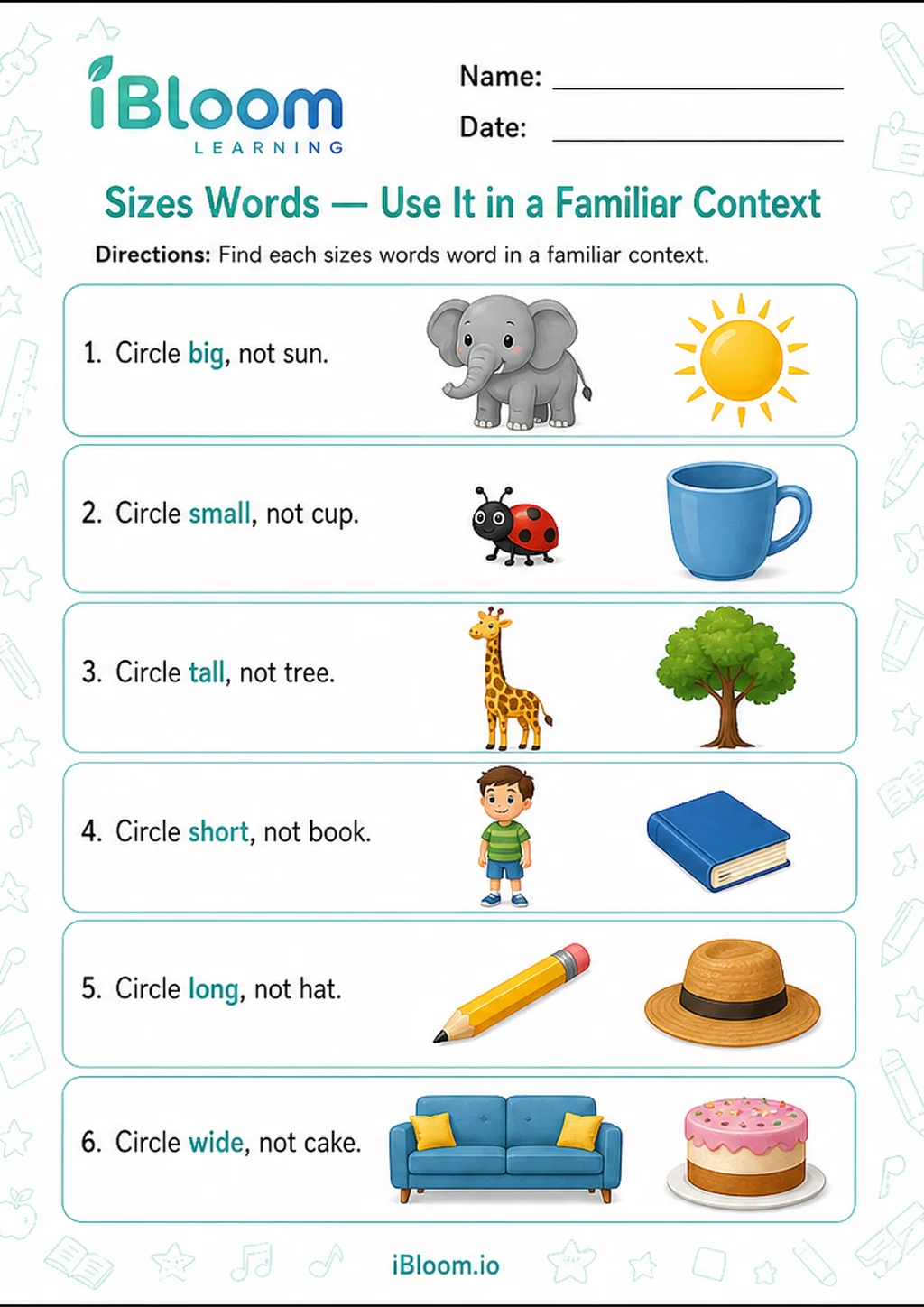 Sizes Words — Use It in a Familiar ContextPrintable preschool and kindergarten activities for learning size words such as big, small, tall, short, long, and little through picture-based practice. This use it in a familiar context worksheet provides a distinct, age-appropriate way to practise the same lesson.Preschool, KindergartenFree PDF preview
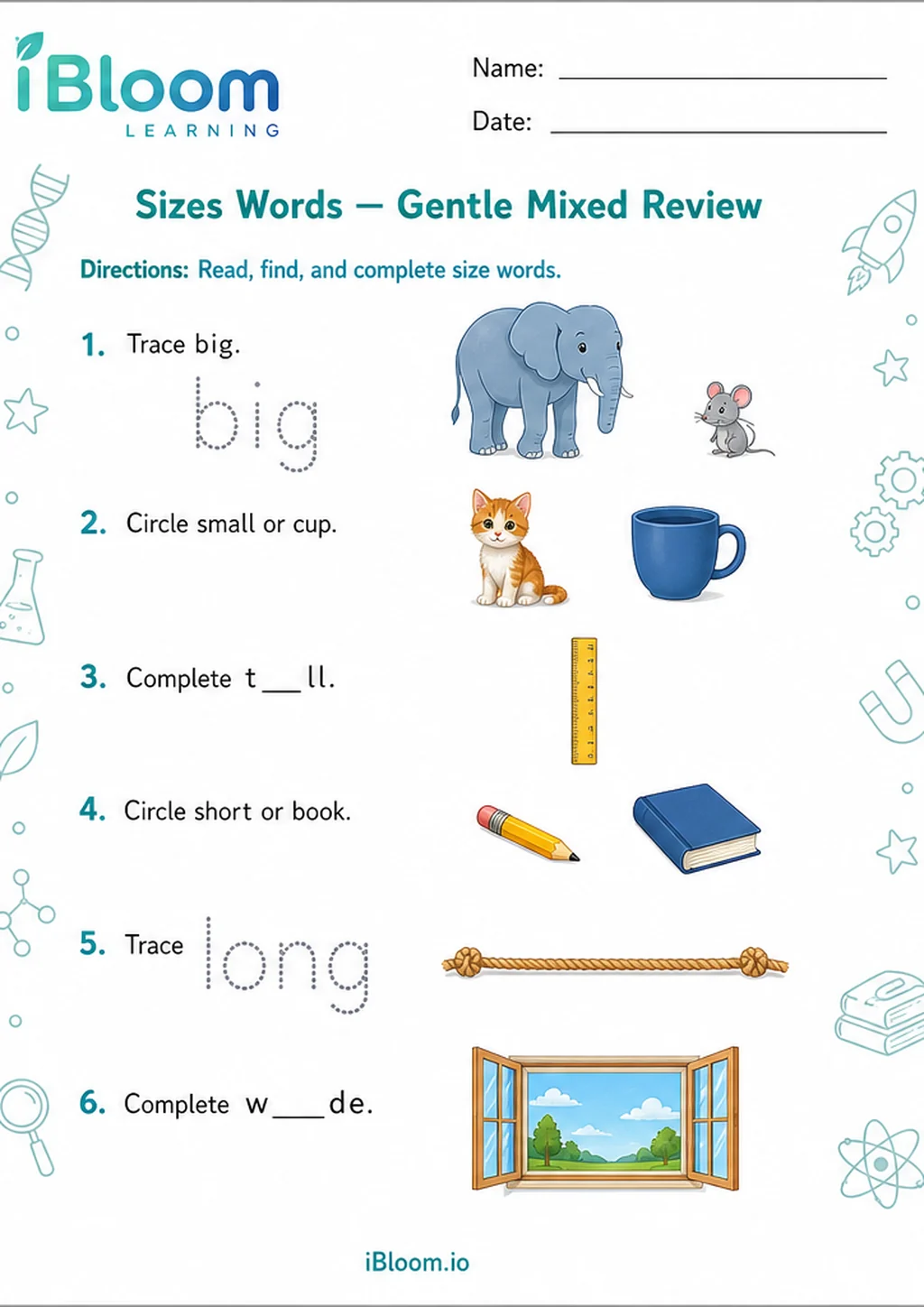 Sizes Words — Gentle Mixed ReviewPrintable preschool and kindergarten activities for learning size words such as big, small, tall, short, long, and little through picture-based practice. This gentle mixed review worksheet provides a distinct, age-appropriate way to practise the same lesson.Preschool, KindergartenFree PDF preview
Practice that builds confidence
What children learn
These size words worksheets help preschool and kindergarten children connect everyday comparison words with clear pictures. Children practise recognizing and using words such as big, small, little, tall, short, long, and short in simple visual contexts.
The printable activities include matching, circling, colouring, tracing, and choosing the object that fits a size word. Each page builds early vocabulary, observation, and listening skills while supporting beginning reading readiness.
Size words are some of the first describing words children use to talk about the world. In these practice activities, children look closely at objects and decide which word fits: a big ball, a small cup, a tall tree, a short pencil, a long snake, or a little cat. The focus is not measurement with numbers, but language for comparing what children can see.

How the activities progress
The worksheets begin with simple picture choices, such as identifying the big item or the small item. Children then move toward matching a size word to a picture, tracing the word, and using the vocabulary in short spoken answers. This progression supports both early literacy and concept development: children see the object, hear or read the word, and connect meaning to print.
A parent routine to try
At home, start with one worksheet and read the size word aloud together. Ask your child to point before writing or colouring: “Which one is tall?” or “Show me the little one.” After the page, repeat the same word with real objects nearby, such as spoons, shoes, blocks, or stuffed animals. Keep the language natural: “This block is long. This block is short.”

Classroom uses for teachers
Teachers can use these printables during morning work, small-group vocabulary lessons, literacy centers, or a unit on describing words. They also work well after a read-aloud: children can find objects in the story that are big, small, tall, or short. For oral language practice, invite students to explain their choice in a complete sentence, such as “The giraffe is tall.”

Common errors to watch for
Young children may mix up size words that depend on the object’s shape, especially tall and long or little and short. Some may choose the object they like best instead of comparing the pair. Encourage children to compare only the two pictures shown and to use the exact word on the page. If needed, demonstrate with hands: stretch wide for big, pinch fingers close for little, move hands upward for tall, and sideways for long.
Free printable PDF download
Use this sizes words worksheets preschool kindergarten page to preview the activity, print it, or download it as a PDF for quick practice. It works well for homework, homeschool lessons, tutoring, morning work, revision, and classroom centers.
Answers and answer key support
After the child completes the worksheet independently, parents and teachers can use the answer support or answer key information to check the work, review mistakes, and choose the next practice step.
Why iBloom worksheets help
The pages are designed with clean pictures, familiar objects, and focused prompts so children can concentrate on the meaning of each word. A helpful child-friendly strategy is “look, compare, say, choose”: look at both pictures, compare their size, say the word aloud, then choose or mark the answer. This simple habit builds careful observation and confident use of size vocabulary.
Helpful answers
Frequently asked questions
What size words do these worksheets practise?
They focus on early comparison vocabulary such as big, small, little, tall, short, and long, using clear pictures children can compare visually.
Are these worksheets for preschool or kindergarten?
They are suitable for both preschool and kindergarten. Preschool children can answer by pointing, circling, or colouring, while kindergarten children can also trace or read the words.
Do children need to measure objects for these activities?
No. These worksheets introduce size language through visual comparison, not rulers or number measurement.
How can I help if my child confuses tall and long?
Use gestures and real objects. Show that tall usually goes upward, like a tower, while long stretches across or along, like a rope or pencil.
Can these pages be used in a literacy center?
Yes. They fit well in vocabulary, describing words, or picture-word matching centers, especially when children are encouraged to say the size word aloud.
Is this sizes words worksheets preschool kindergarten free?
Yes. You can preview it for free and use the printable worksheet for home or classroom practice.
Can I download this sizes words worksheets preschool kindergarten as a PDF?
Yes. Use the worksheet download option to save a printable PDF, or print the worksheet directly from the page.
Does this sizes words worksheets preschool kindergarten include answers or an answer key?
When the activity has fixed answers, iBloom includes answer support so parents and teachers can check the completed worksheet.