Free printable practice
Exclamation Mark Practice Activities
Printable preschool and kindergarten worksheets help children recognize, trace, and use exclamation marks in excited or strong-feeling sentences.
Practice that builds confidence
Understanding the exclamation mark
These exclamation mark practice activities help preschool and kindergarten children notice how punctuation changes the way a sentence sounds. Children learn that an exclamation mark can show excitement, surprise, strong feeling, or a call for attention.
The printable worksheets include simple sentence reading, punctuation choosing, tracing, matching, and picture-based writing tasks. Activities stay age-appropriate, with short sentences, clear visuals, and repeated chances to compare a period with an exclamation mark.
An exclamation mark is a punctuation mark that tells the reader to use a stronger voice. In early writing, children may see it after sentences such as “Wow!” “Look out!” or “I did it!” These worksheets keep the focus on meaning first: the mark is not just a symbol to copy, but a clue about how the speaker feels.

From noticing to using
Practice usually begins with recognition: finding the exclamation mark at the end of a short sentence. Children then trace or write the mark, choose between a period and an exclamation mark, and complete simple sentences connected to pictures. This progression supports young learners who are still building print awareness, sentence direction, and fine motor control.
A simple parent routine
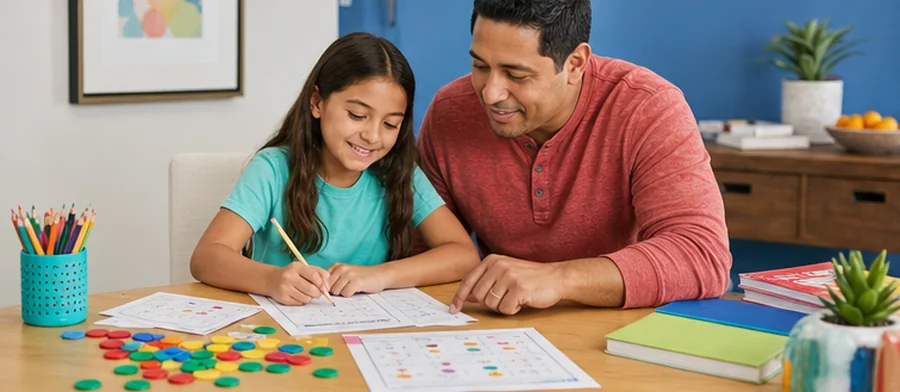
At home, read one sentence aloud two ways: first in a calm voice, then with excitement. Ask, “Which voice needs the exclamation mark?” Let your child point to the mark, trace it with a finger, and read the sentence again. Keep examples concrete, such as “Happy birthday!” or “The dog is running!” so the punctuation connects to real expression.
Classroom uses
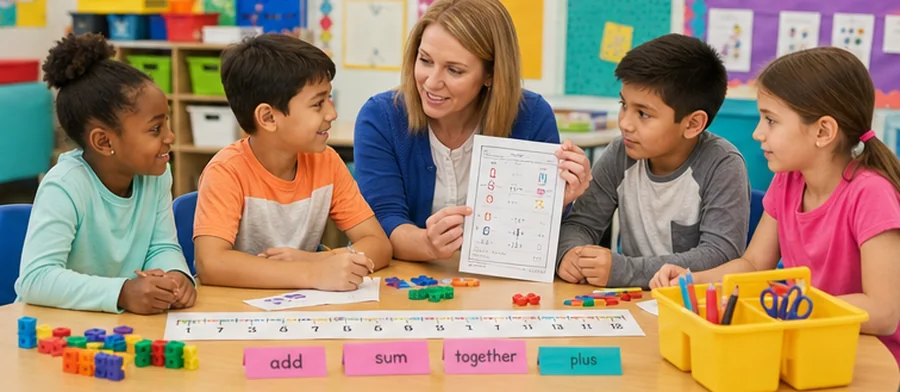
Teachers can use these pages during morning work, literacy centers, small-group punctuation lessons, or writing conferences. A useful extension is a sorting activity: place sentence cards under “period voice” and “excited voice.” Children can also add speech bubbles to picture prompts and decide whether the speaker needs an exclamation mark.
Common errors to watch for
Young writers often put exclamation marks after every sentence because the symbol feels fun. Remind them that it is saved for strong feelings, surprise, warnings, cheers, or loud calls. Some children also reverse or float the mark; tracing from top to bottom and adding the dot underneath helps. A child-friendly strategy is: “Read it, feel it, mark it.” If the sentence sounds extra excited or urgent, use !.
Free printable PDF download
Use this exclamation mark worksheets for kindergarten page to preview the activity, print it, or download it as a PDF for quick practice. It works well for homework, homeschool lessons, tutoring, morning work, revision, and classroom centers.
Answers and answer key support
After the child completes the worksheet independently, parents and teachers can use the answer support or answer key information to check the work, review mistakes, and choose the next practice step.
Why iBloom worksheets help
The pages give repeated, varied practice without overwhelming early learners. Children see the exclamation mark in context, not only as an isolated symbol. Clear layouts, familiar sentence patterns, and picture support help preschool and kindergarten children build confidence with punctuation while strengthening early reading and writing habits.
Helpful answers
Frequently asked questions
What does an exclamation mark show for young children?
It shows that a sentence has strong feeling, excitement, surprise, urgency, or a loud call, such as “Wow!” or “Stop!”
Are these worksheets suitable for preschool children?
Yes. The activities use short sentences, tracing, matching, and picture support so preschool children can begin recognizing the mark before writing full sentences independently.
How can I explain the difference between a period and an exclamation mark?
Read the same sentence in a calm voice and then in an excited voice. Explain that a period ends a normal telling sentence, while an exclamation mark ends a sentence with extra feeling.
Should children use exclamation marks in every fun sentence?
No. Children should learn that exclamation marks are special. They are best used when the sentence sounds excited, surprised, urgent, or very expressive.
How do these worksheets support early writing?
They help children connect punctuation to meaning, practise placing a mark at the end of a sentence, and build confidence reading sentences with expression.
Is this exclamation mark worksheets for kindergarten free?
Yes. You can preview it for free and use the printable worksheet for home or classroom practice.
Can I download this exclamation mark worksheets for kindergarten as a PDF?
Yes. Use the worksheet download option to save a printable PDF, or print the worksheet directly from the page.
Does this exclamation mark worksheets for kindergarten include answers or an answer key?
When the activity has fixed answers, iBloom includes answer support so parents and teachers can check the completed worksheet.