




About this worksheet
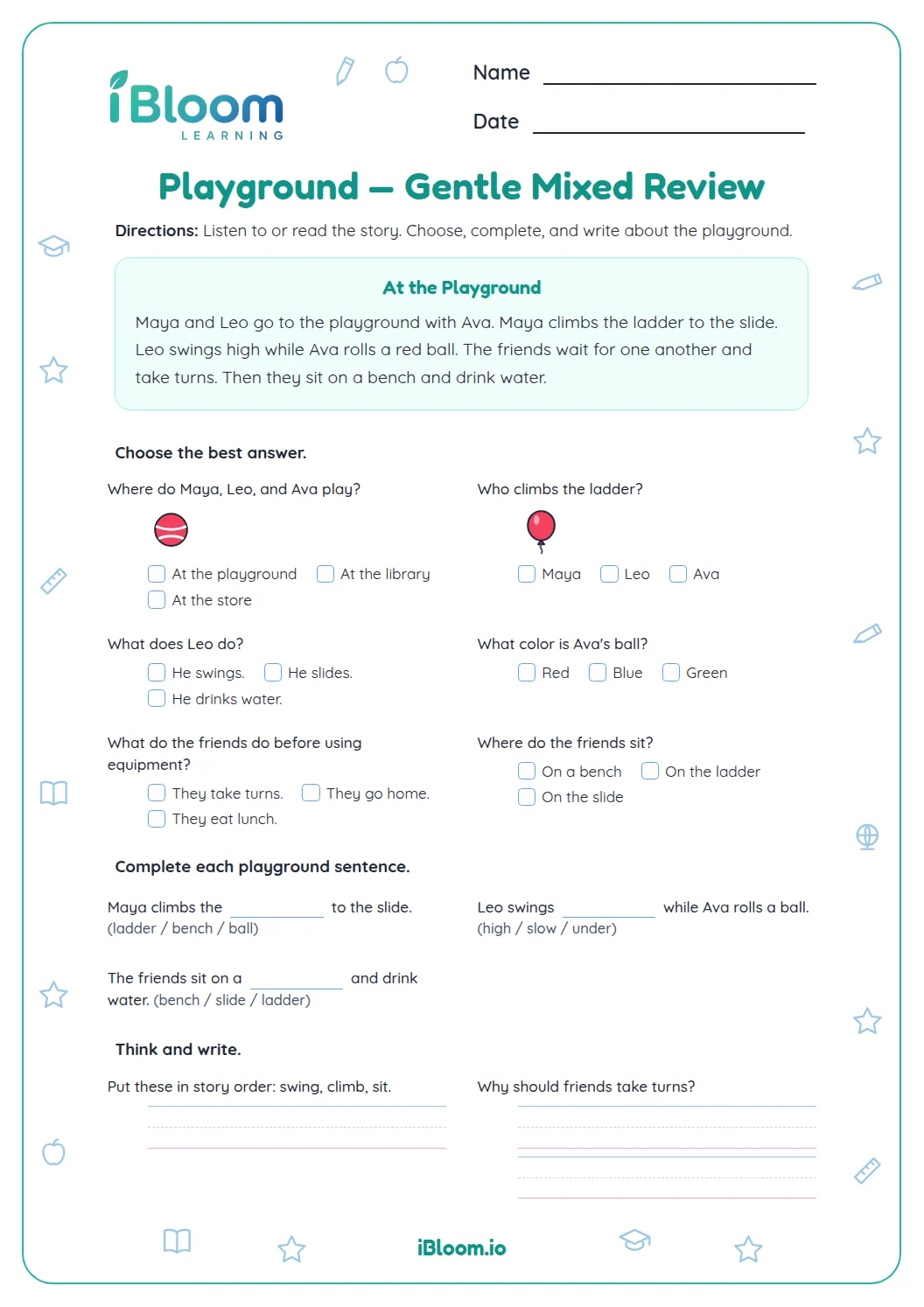
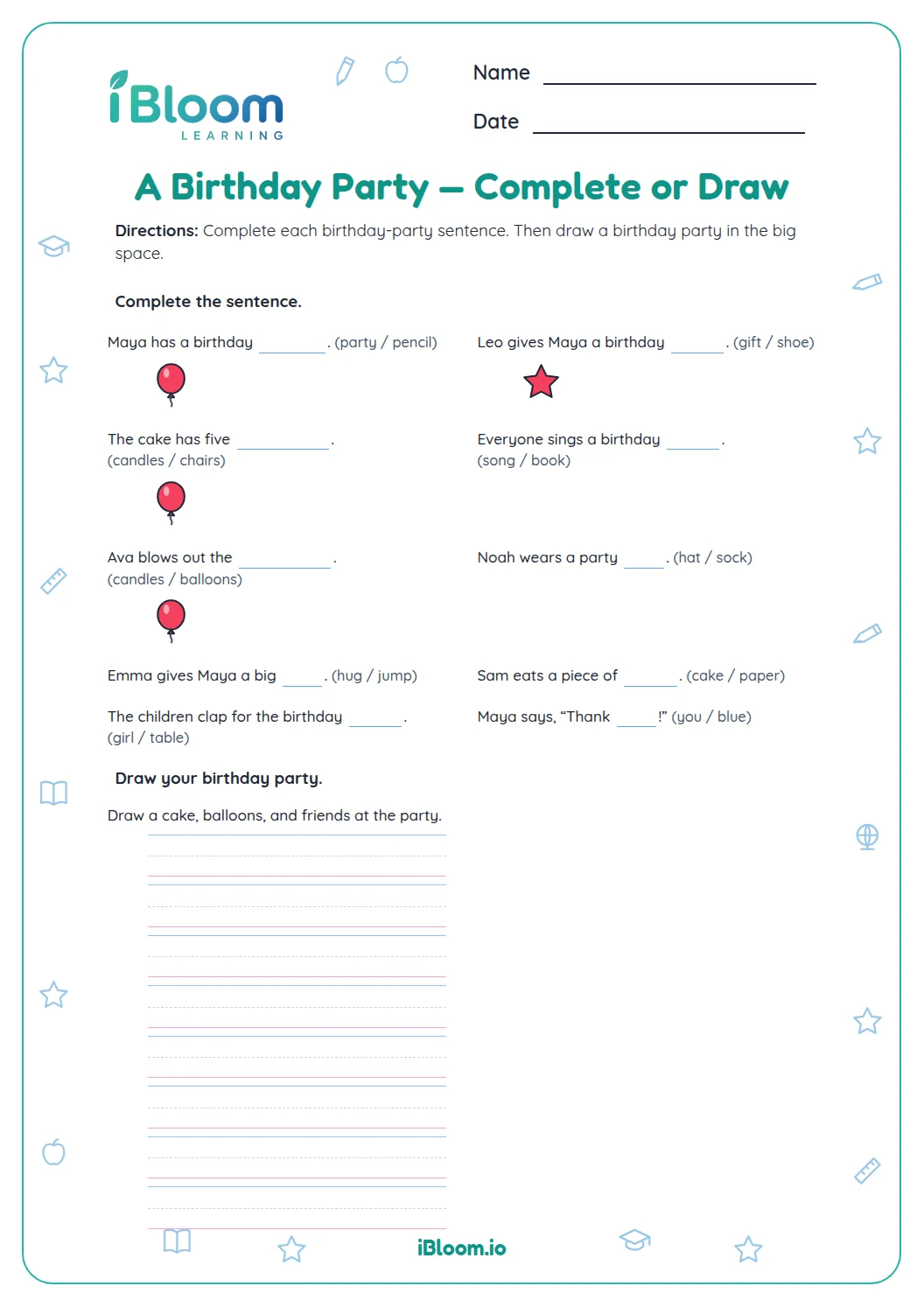
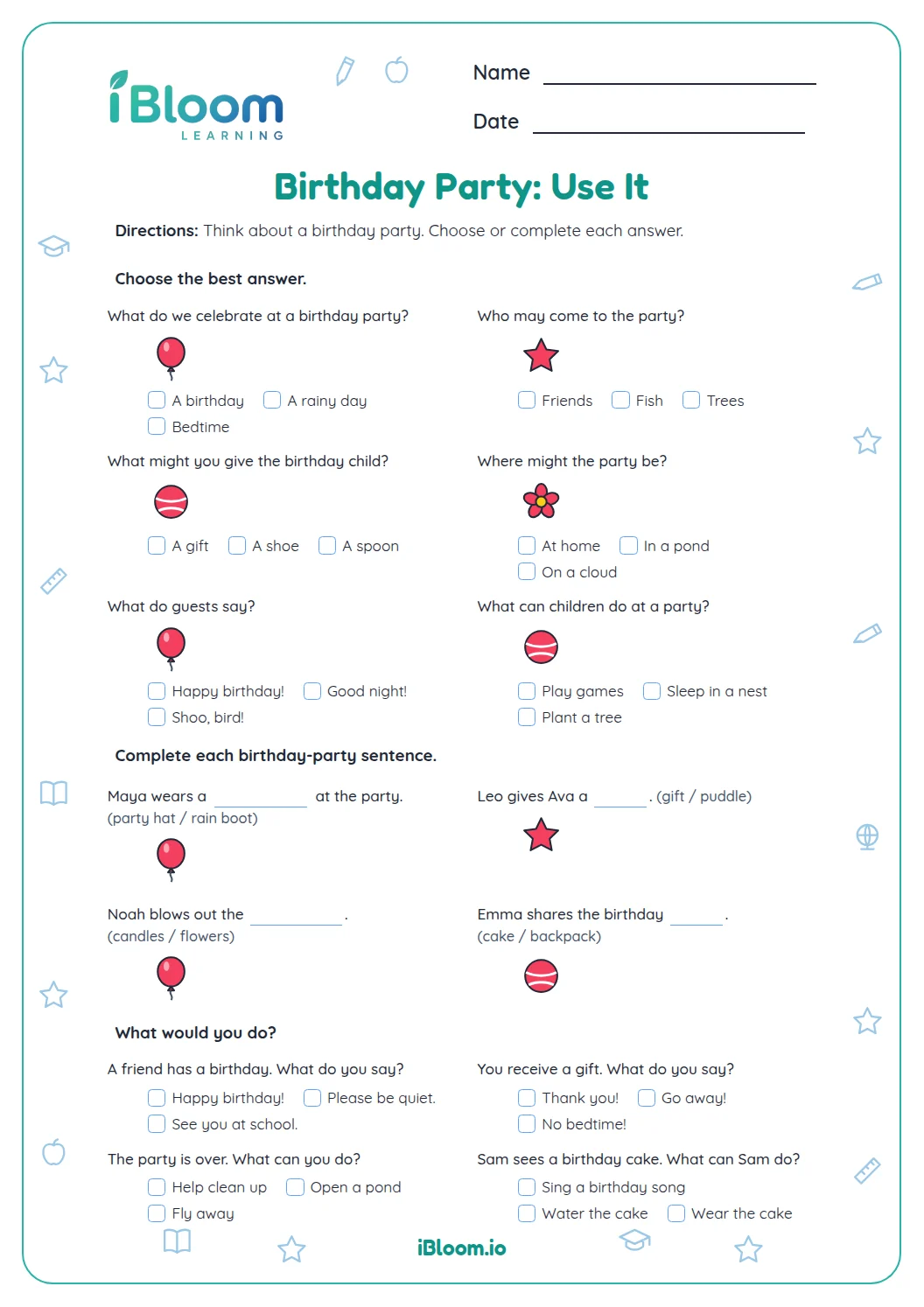
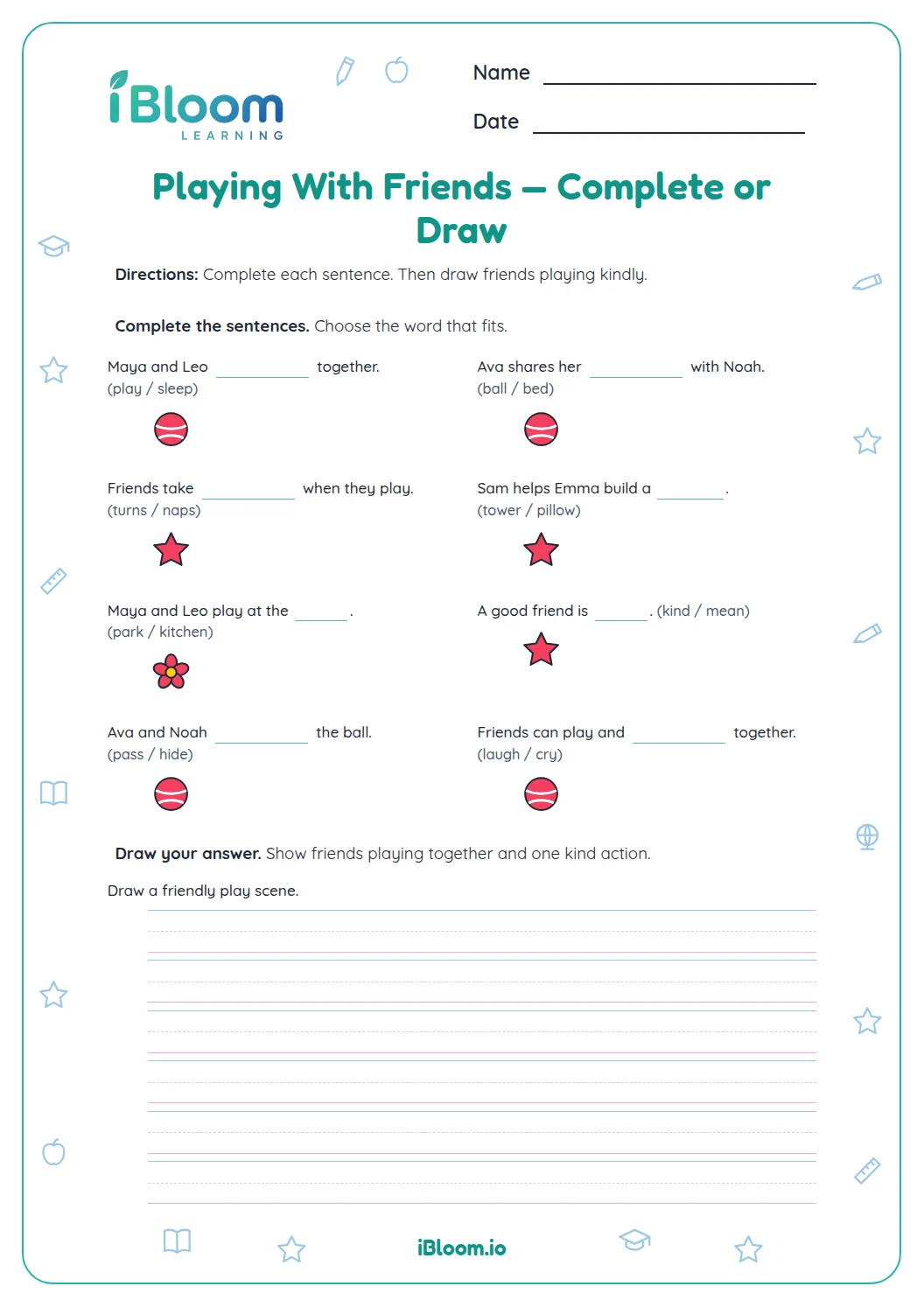
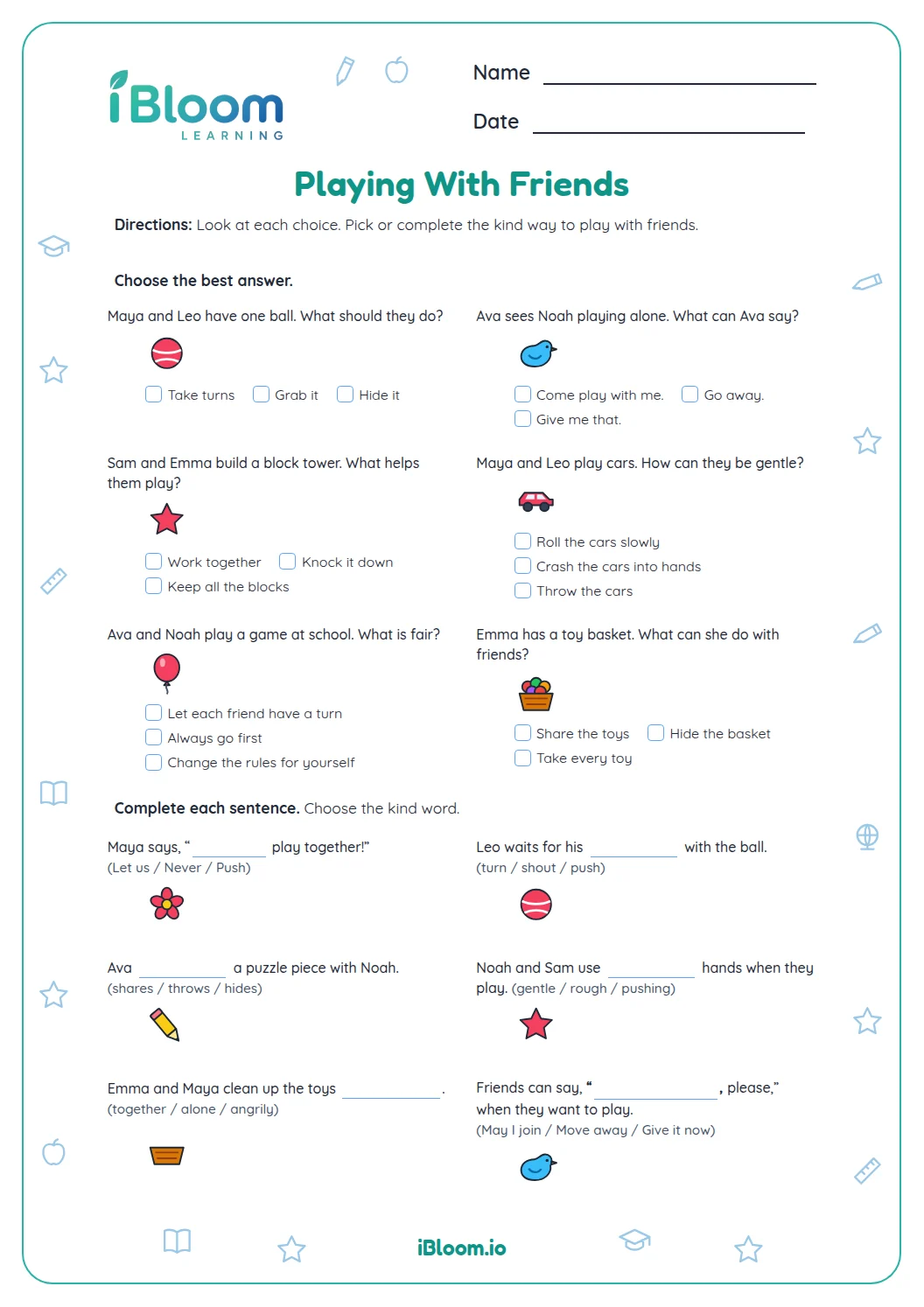
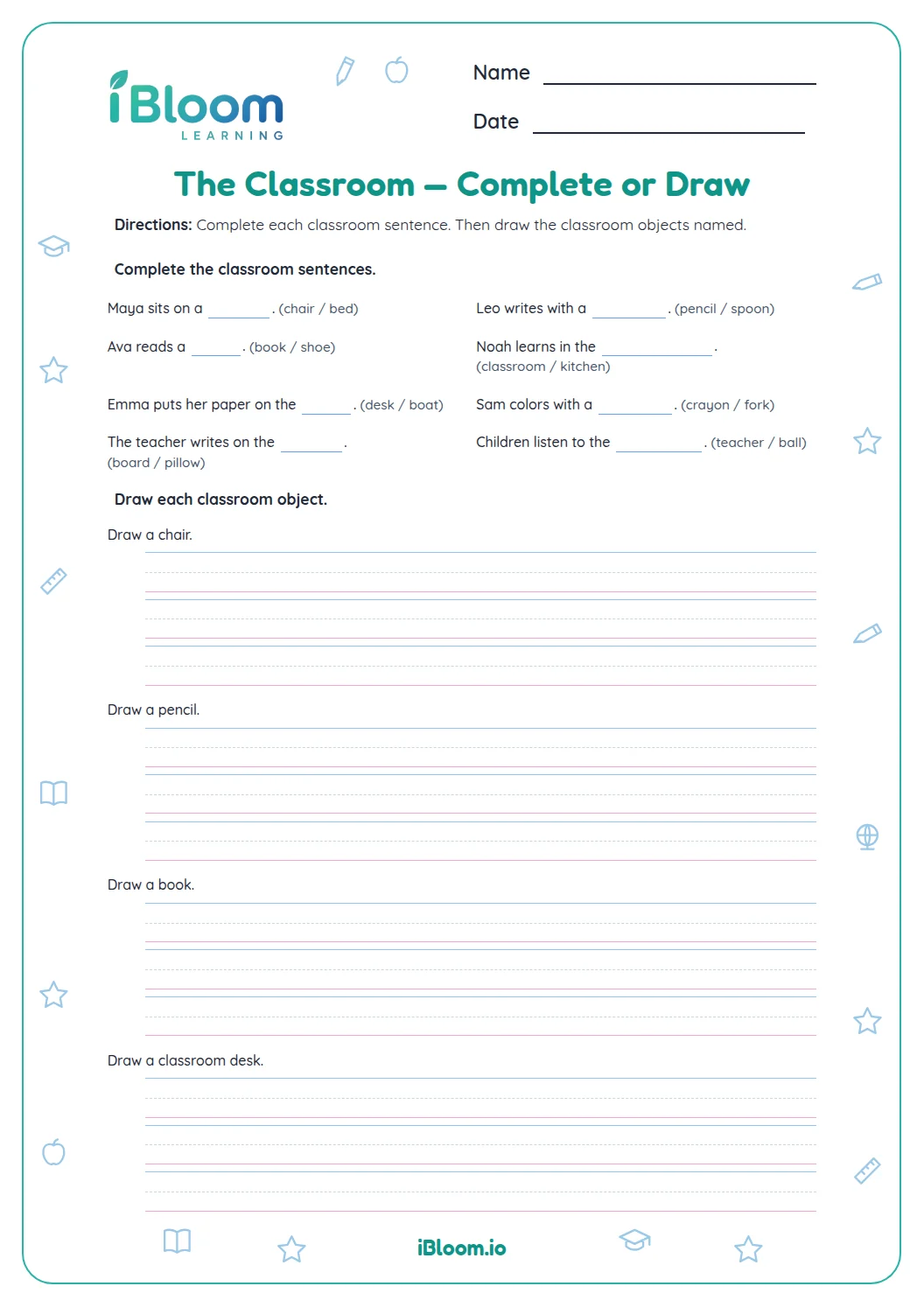
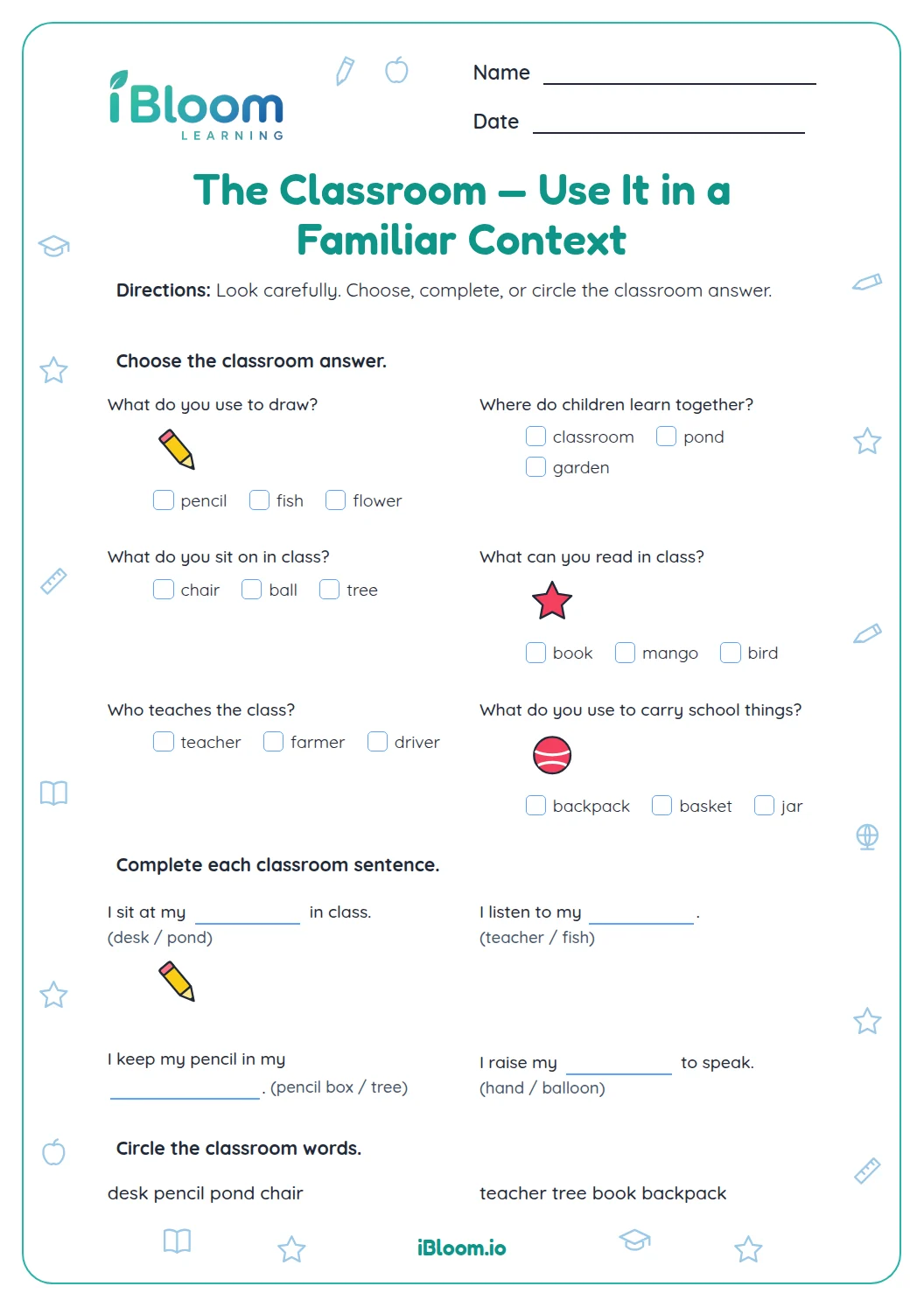
This printable gives preschool and kindergarten learners 14 questions about a playground setting. Children match familiar picture clues to story details, then choose sensible actions and objects for the setting. The compact answer key supports quick review of each item.
How do picture clues help?
Learners connect a pictured object with a sentence about playground play. Each question has a clear setting clue.
How can a child answer one item?
Listen to the sentence, name each pictured choice, and decide which one completes the idea.
- 1Maya climbs the ___ at the playground.
- 2Choose the ladder because it is something a child can climb.
How can we review the answers?
Ask the learner to say why an object or action fits the setting. A spoken explanation can make picture matching more meaningful.
How to use this worksheet
- 1Name each picture before choosing.
- 2Read the sentence aloud together.
- 3Point to the choice that makes sense.
- 4Ask what clue helped with the answer.
Common mix-ups and quick fixes
The mistake
Choosing a familiar object that does not fit the sentence.
The fix
Read the whole sentence with each choice.
The mistake
Guessing before naming both pictures.
The fix
Say each picture name aloud first.
The mistake
Treating every object as playground equipment.
The fix
Ask whether children could use it safely in that setting.
What to practice next
Make more practice
Questions parents and teachers ask
How many questions are included?
There are 14 short questions about playground objects, actions, and setting clues. Picture choices keep the task concrete for preschool and kindergarten learners. The matching answer key makes it easy to review every response together after the child finishes the activity.
Does the worksheet include picture clues?
Yes. Several questions show small picture groups, and the choices also include familiar pictured objects. Children can name what they see and connect it to the sentence before selecting an answer. This gives adults a natural chance to talk about clues.
What skills does this practice?
The page practices noticing details and using context to decide what belongs in a playground scene. Children also say familiar words and connect objects with actions such as climbing, sitting, and playing ball together. They can explain a choice aloud.
How should an adult support a learner?
Read each sentence aloud if needed, then invite the learner to name both choices. Ask which one makes sense in the whole sentence. Keep the focus on the clue rather than speed, and celebrate a clear explanation. Let the child point first.
What is in the answer key?
The answer key lists the correct picture or phrase for each of the 14 questions. Use it after the learner responds, and ask them to explain one or two choices in their own words to reinforce the setting clues.