






About this worksheet
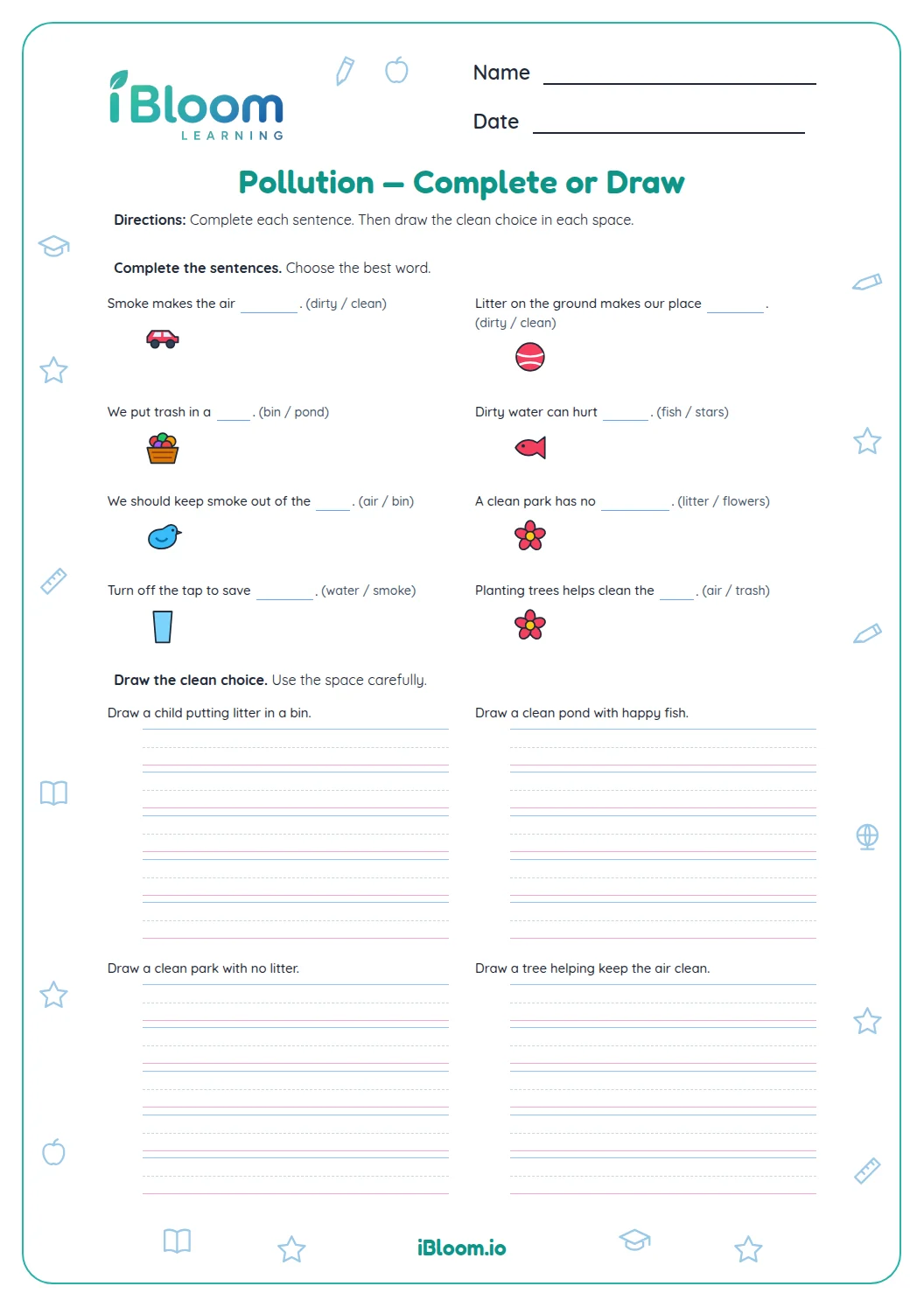
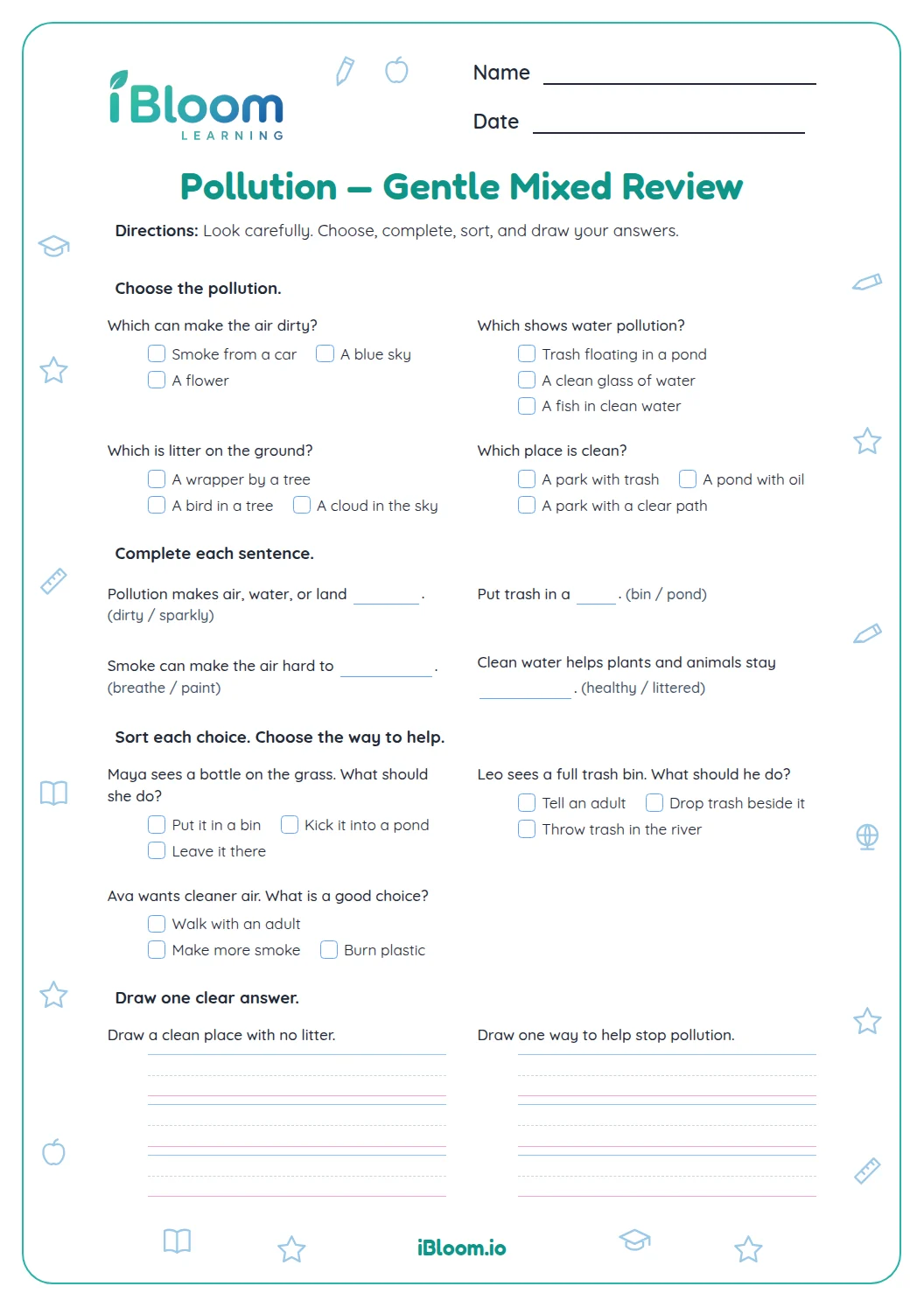
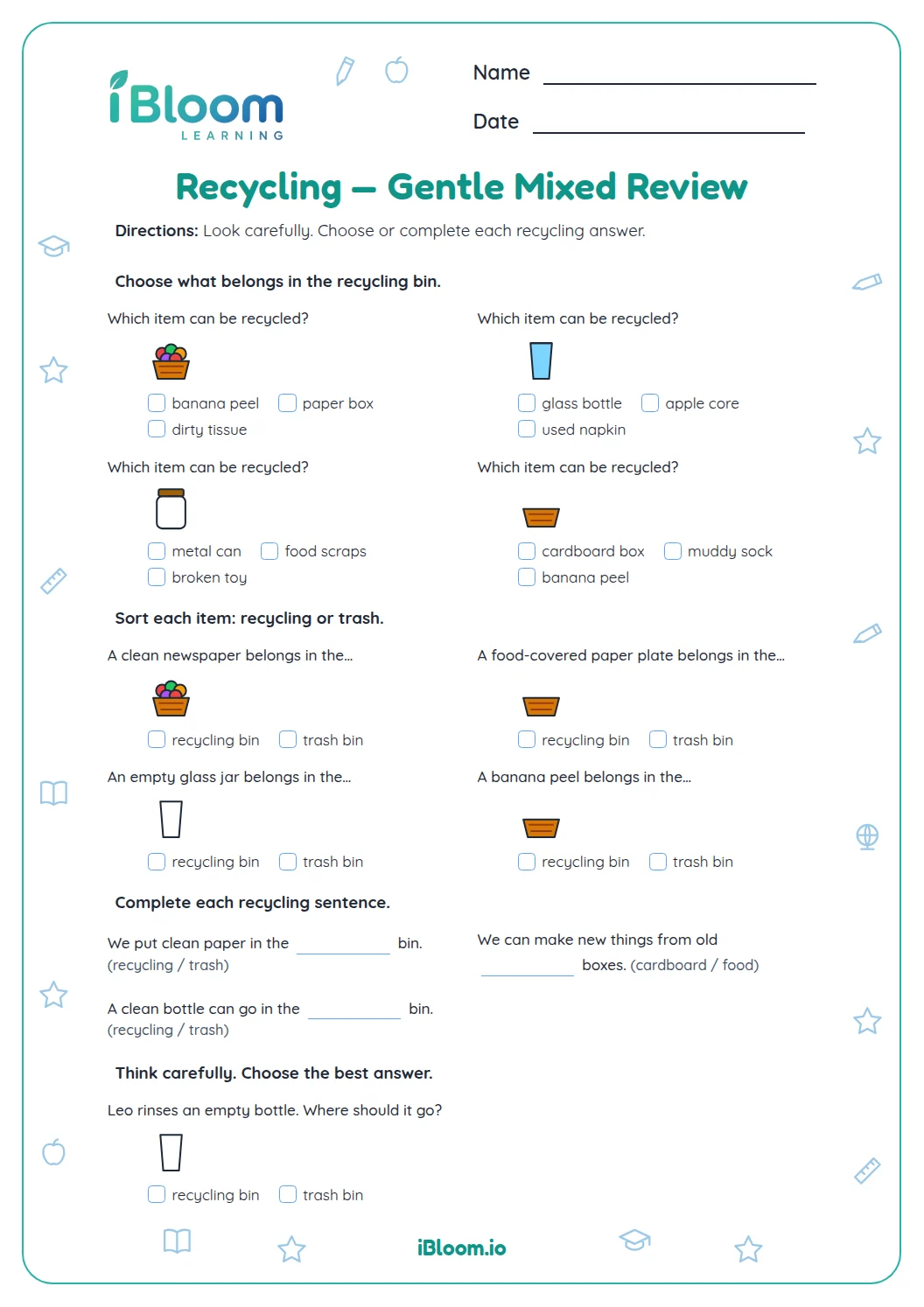
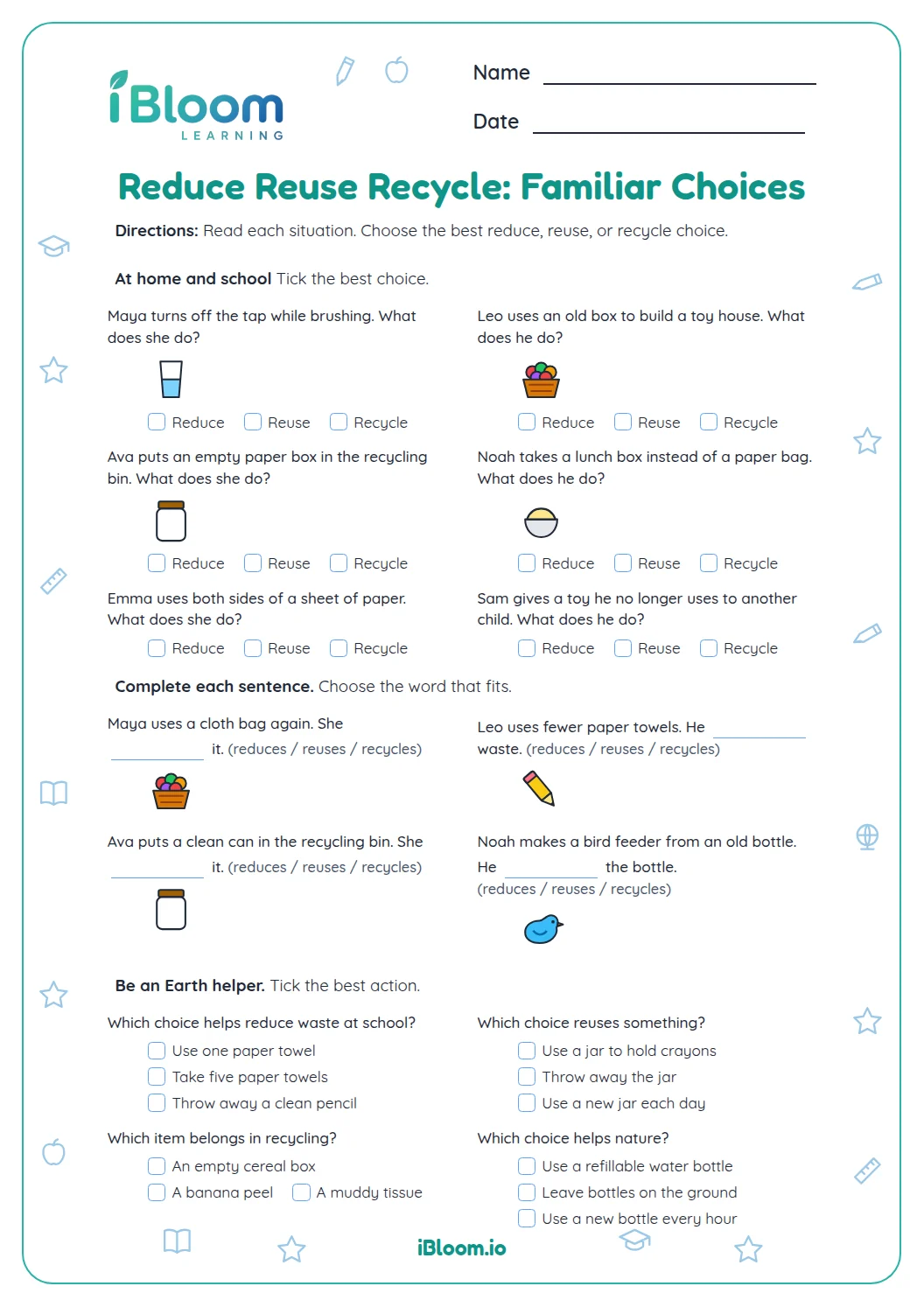
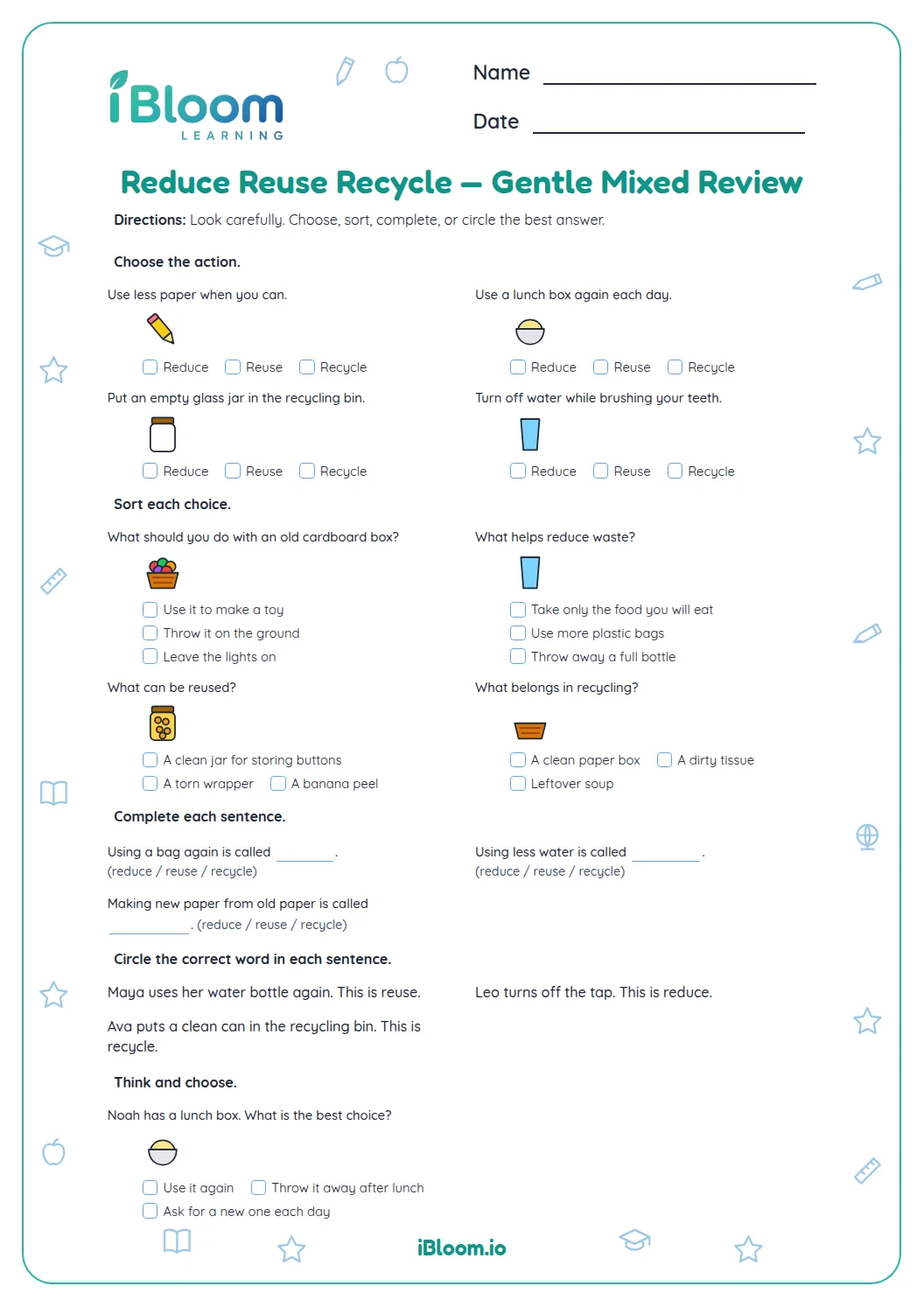
This preschool and kindergarten science worksheet connects pollution to places children know: a pond, park, street, and home. Fourteen picture-supported choices ask learners to select helpful actions such as putting litter in a bin, reusing paper, and keeping plastic away from animals. The answer key supports discussion about why each choice helps land, water, or air. It aligns with NGSS K-ESS3-3.
Aligned to K-ESS3-3
How can everyday choices help the environment?
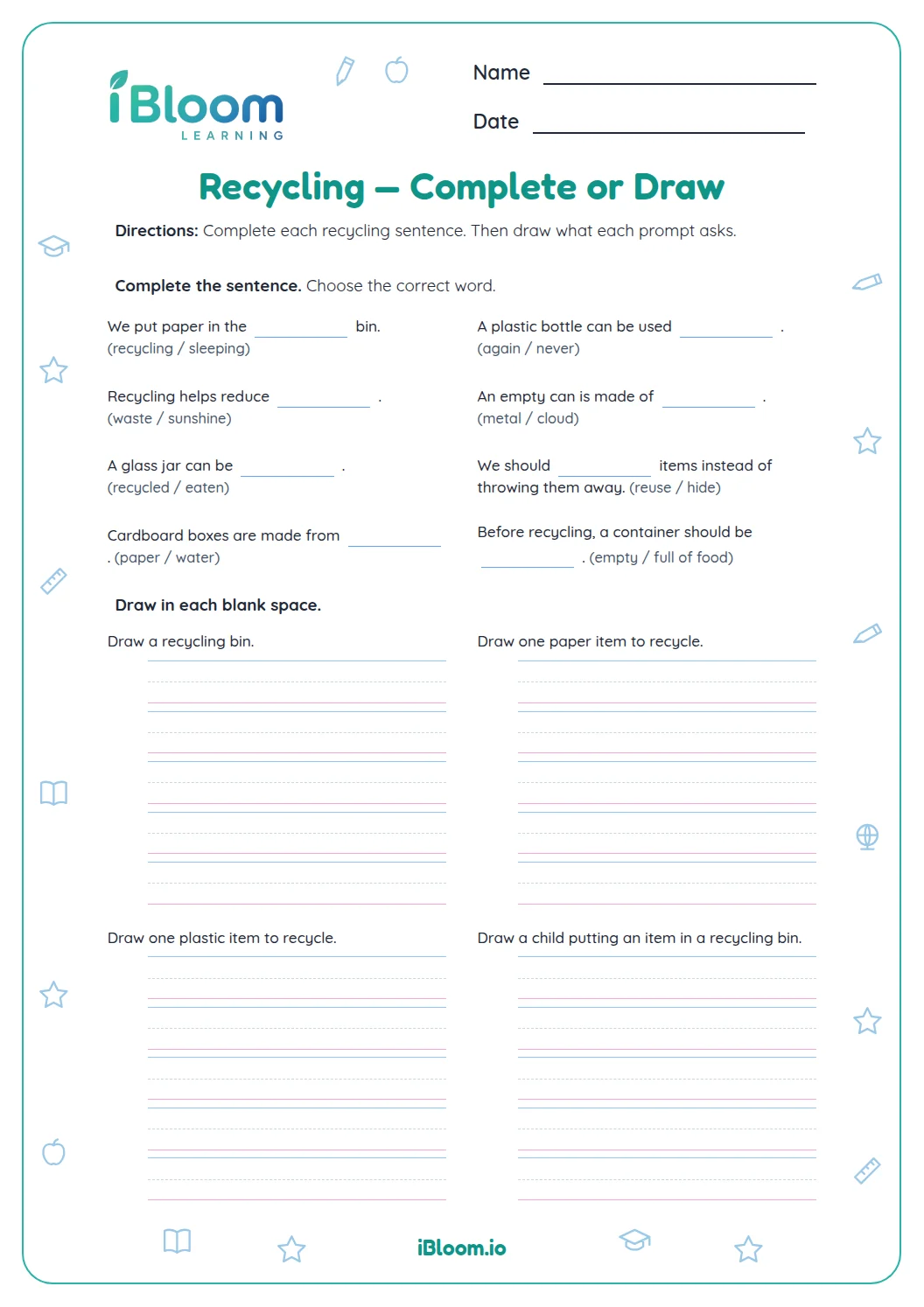
Pollution can happen when trash gets left on land or in water, or when smoke makes the air dirty. Small choices such as reusing paper and placing bottles in recycling help reduce impacts.
- 1When a bottle is empty near a pond, put it in a bin instead of leaving it by the water.
How can an adult support this practice?
Invite the child to name the place in each picture, then compare the two actions. Keep the focus on a helpful choice they can explain.
How to use this worksheet
- 1Name the place or object in the picture.
- 2Read both choices aloud.
- 3Ask which choice keeps trash in the right place or prevents waste.
- 4Choose one answer and say why it helps.
- 5Talk about a similar choice your family can make.
Common mistakes and quick fixes
The mistake
Thinking litter is harmless when it is only one wrapper.
The fix
Explain that wrappers can blow into water or animal homes.
The mistake
Putting every empty container in regular trash.
The fix
Ask an adult whether it belongs in recycling.
The mistake
Thinking only grown-ups can help.
The fix
Children can reuse paper or put litter in a bin with adult guidance.
Curriculum alignment
This Grades Pre-K–K practice connects each activity to the skill named in NGSS K-ESS3-3.
Choosing familiar actions that reduce pollution
On this sheet: Choosing familiar actions that reduce pollution
Show the official wordingHide the official wording
Communicate solutions that will reduce the impact of humans on the land, water, air, and/or other living things in the local environment.
What to practice next
Further reading
Questions parents and teachers ask
Which skill does this page practice?
This page asks young learners to choose familiar actions that reduce litter and pollution. Picture-supported questions use places such as parks, streets, and water, with examples like putting a bottle in a bin or reusing paper. The included key makes a later review quick and clear.
How should a learner use the answer key?
Let the child name the objects in a picture before reading the two choices. After each answer, talk about how the action affects land, water, air, or an animal home. The key helps adults check each selected action. The included key makes a later review quick and clear.
Can this worksheet be used at home?
Yes. Read the choices aloud and let the child point to an answer. An adult can help explain unfamiliar ideas such as recycling or smoke, then connect the choice to a place the child knows. The included key makes a later review quick and clear.
What should I do when an answer is incorrect?
Ask where the trash or smoke might go and who could be affected. Then compare the two actions and choose the one that keeps the environment cleaner. Encourage the child to explain the choice in their own words. The included key makes a later review quick and clear.
How long will the practice take?
The questions are short, but discussion may take extra time. Plan about 15 minutes to name each picture, choose an action, and talk about why it helps keep land, water, air, or animal homes cleaner. The included key makes a later review quick and clear.