




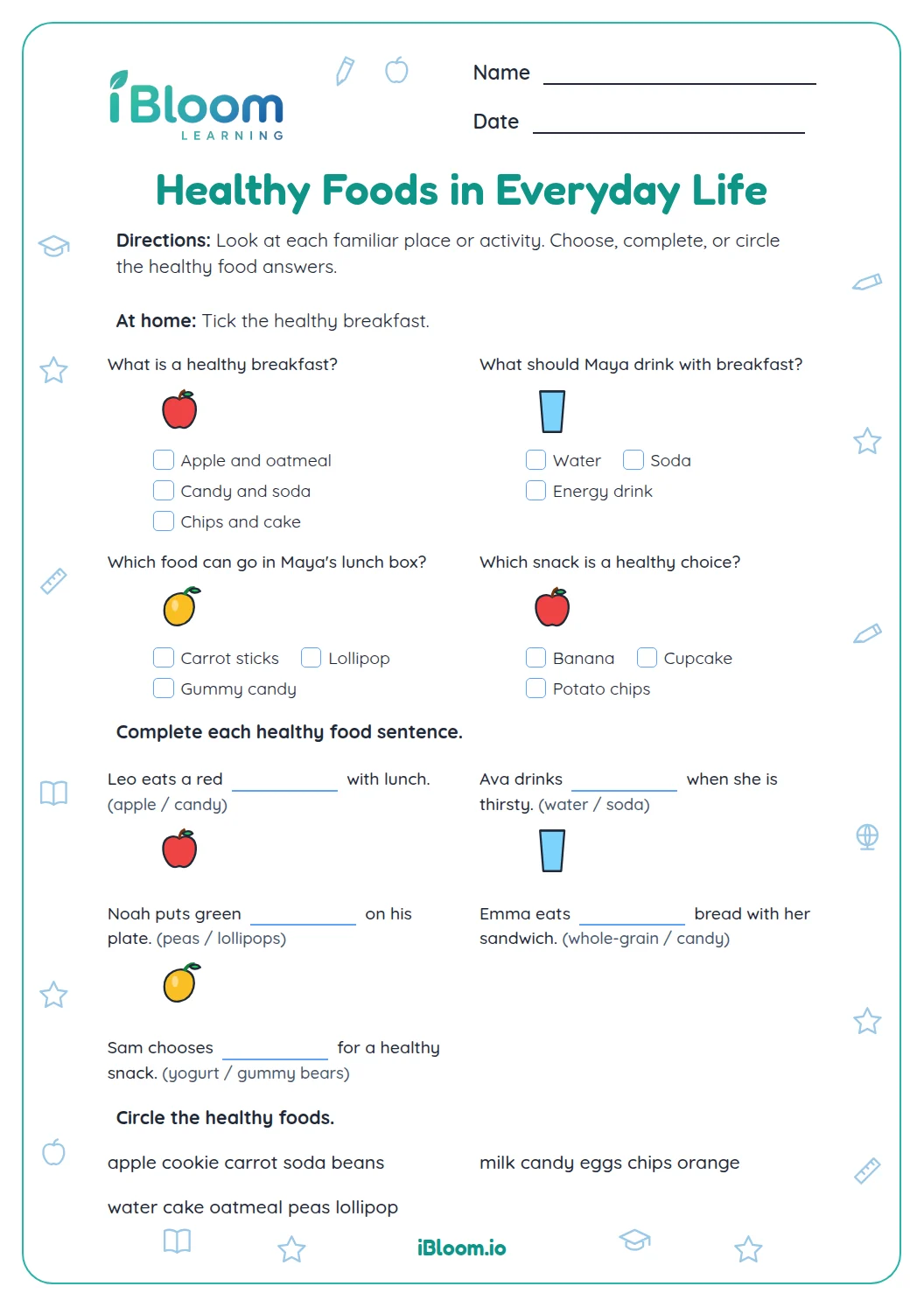
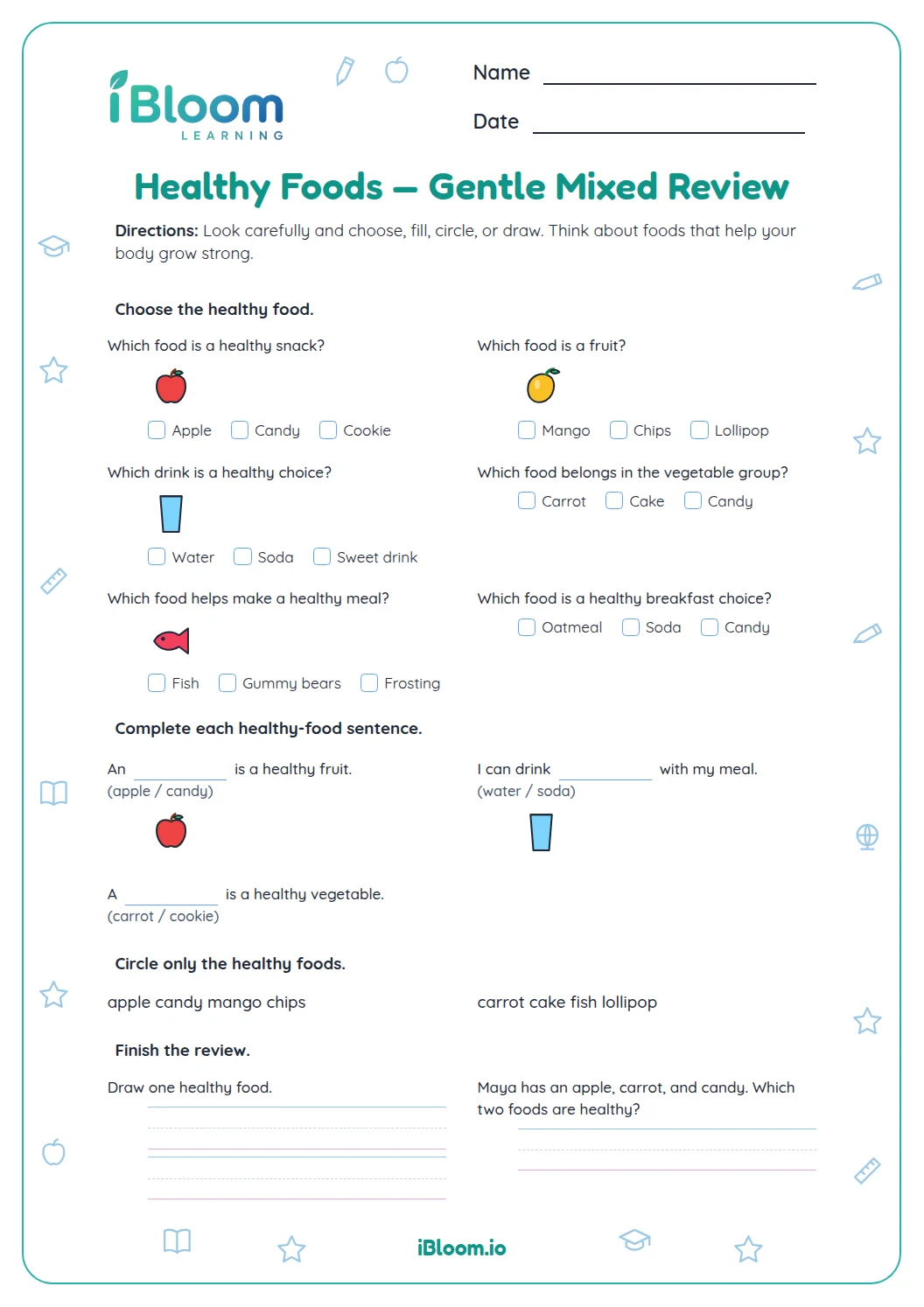
About this worksheet
This free printable worksheet is for Kindergarten learners practicing food groups. It includes 14 questions in 2 parts, with an answer key. Children practice the skill through the specific questions and examples printed on the sheet.
What is on this food groups page?
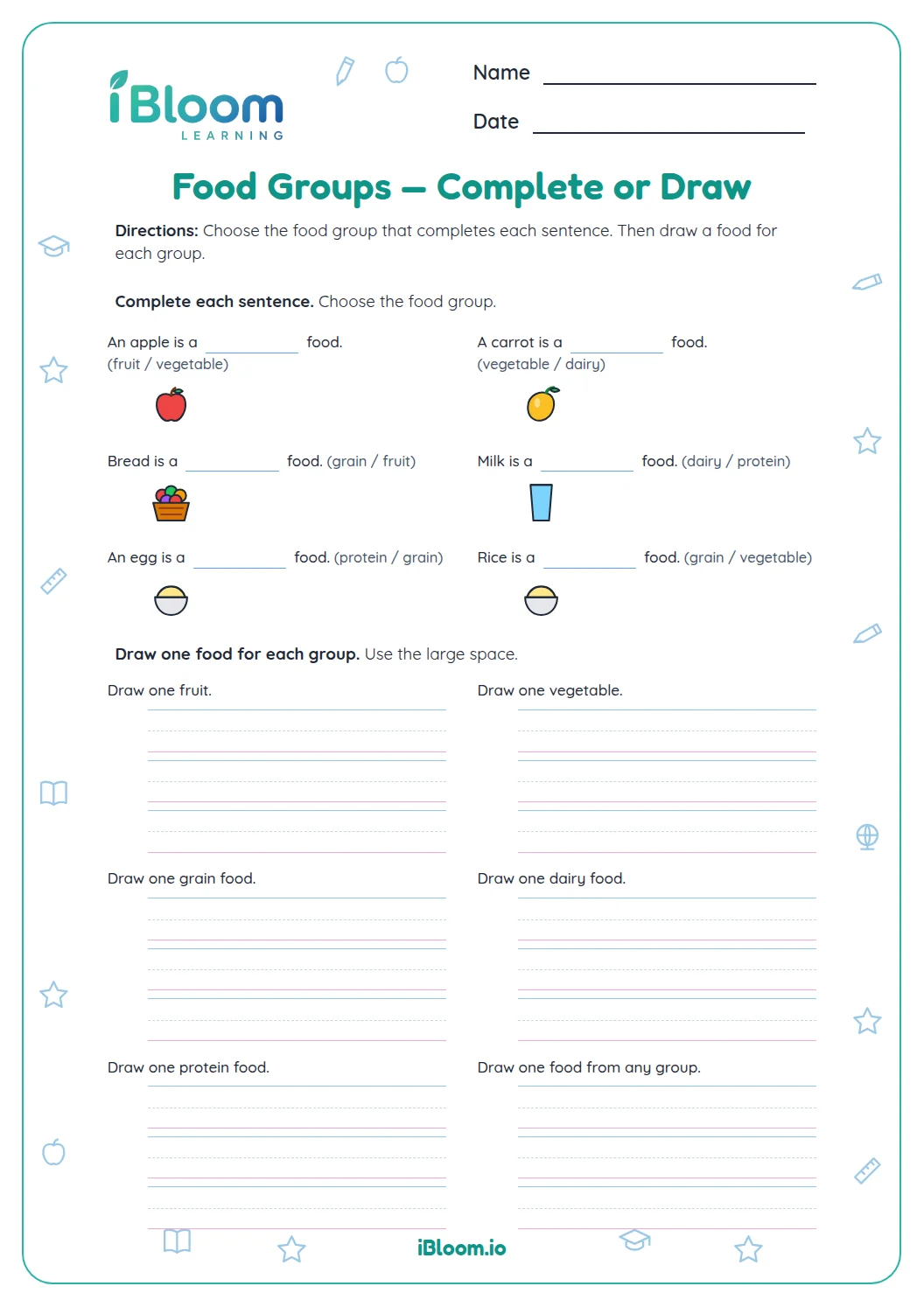
Children identify pictured foods and match them with fruit, vegetable, grain, dairy, or protein groups. The key gives the intended group for every item.
The worksheet has 14 questions; the answer key follows the practice pages.
- Part A: choose the food group (questions 1–10)
- Part B: name the group for each familiar food (questions 11–14)
- Separate answer key included.
How should a child approach the questions?
This page practices sorting familiar foods into five broad groups: fruit, vegetables, grains, dairy, and protein. Children use pictures and familiar examples to connect each food with the group name used in the worksheet. An adult can point to the clue with the child before choosing an answer.
Ask the child to point to each pictured food and say its group name. Comparing two examples, such as bread and rice, can make the shared group easier to remember. An adult can point to the clue with the child before choosing an answer.
- 1Which food is a fruit?
- 2Key answer: apple
How can an adult support this practice?
Ask the child to point to each pictured food and say its group name. Comparing two examples, such as bread and rice, can make the shared group easier to remember. An adult can point to the clue with the child before choosing an answer.
Use the separate key after the child finishes a part. It shows the intended group name or pair, so you can return to the pictured foods and talk through the feature that guided the match. An adult can point to the clue with the child before choosing an answer.
How to use this worksheet
- 1Read the direction at the start of each part.
- 2Answer each question using its wording and choices.
- 3Reread the completed response to check that it fits.
- 4Use the answer key to check the work and discuss an answer that needs another look.
Common mistakes and quick fixes
The mistake
Answering before reading the whole prompt.
The fix
Read the complete sentence or situation, then choose a response that fits.
The mistake
Confusing a word or digit with its role in the question.
The fix
Check the clue named in the prompt before answering.
The mistake
Skipping a final check.
The fix
Reread the response and compare it with the answer key.
What to practice next
Make more practice
Questions parents and teachers ask
What does this worksheet ask children to do?
Children identify foods that belong to fruit, vegetable, grain, dairy, and protein groups. They use picture clues in selected items, choose among food names, and finish by naming a group for familiar foods. Naming the group aloud gives children a chance to connect the food with its category.
How many questions are included?
There are 14 questions in two parts. Part A has 10 multiple-choice items about food groups; Part B has four short completions that ask children to name a group for each food. The answer key lists the intended response for every numbered item.
How can I use the answer key?
Check the chosen food or group name against the key after a child completes a part. Talk about the food named in the prompt and why it fits that group; some foods can be described in more than one everyday way, so follow the group categories used here.
Can a preschooler use this page?
A preschooler may benefit from an adult reading each question and food choice aloud. Point to the pictures when they appear, then let the child select or say the answer; the page is labeled for Kindergarten practice. Read each option aloud if the food name is unfamiliar.
What is a useful way to practice together?
Sort a few familiar foods aloud before starting. For example, compare bread with cheese and ask which food is a grain and which is dairy, then invite the child to use the same group names on the worksheet. This simple question keeps attention on the source of shade.
What could we practice next?
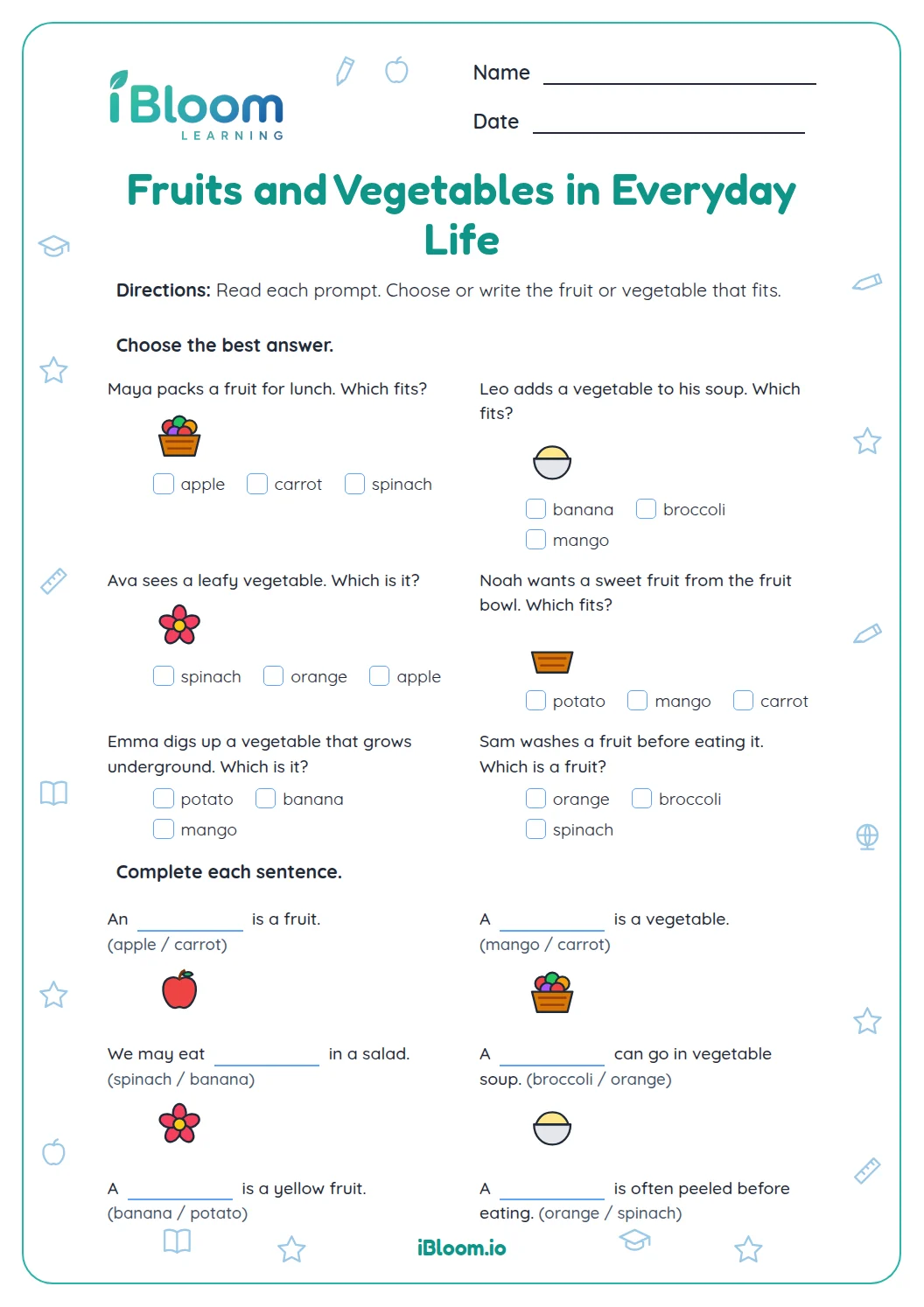
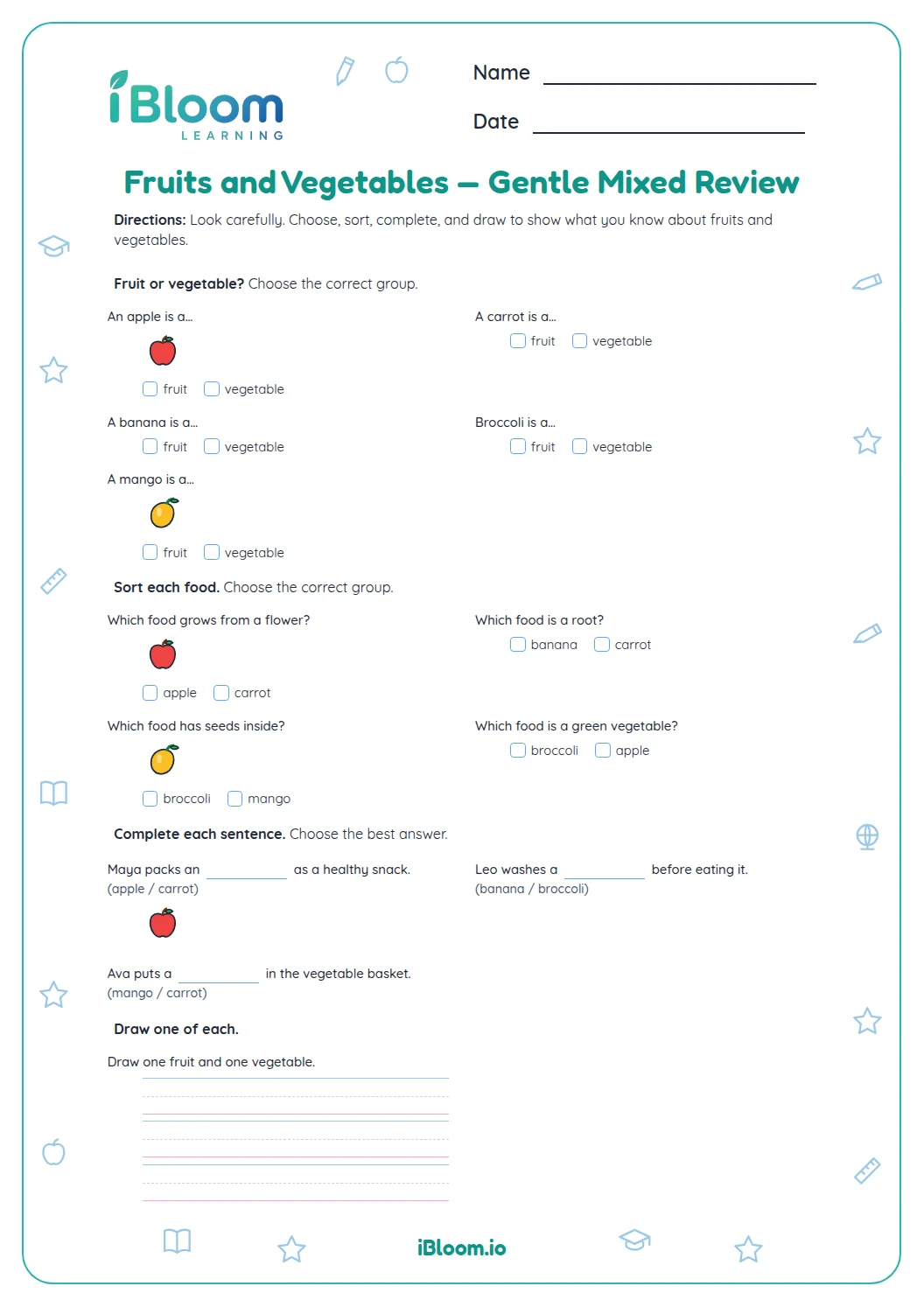
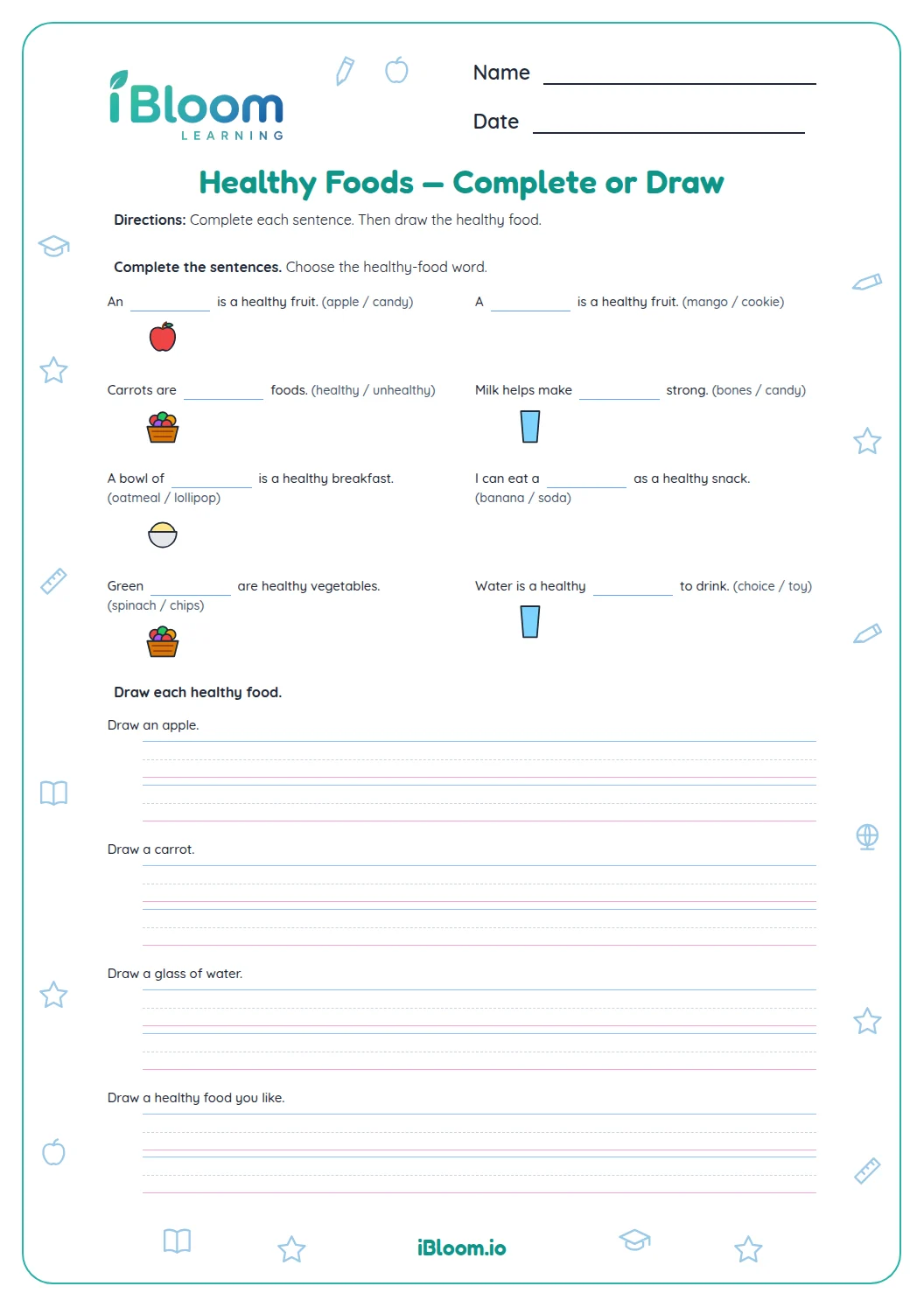
The related fruits and vegetables and healthy foods pages continue the food and nutrition topic. They offer another way to talk about familiar foods and notice how foods can be sorted by a shared feature. These examples keep the practice close to everyday settings.