




About this worksheet
This preschool and kindergarten printable gives children picture-based practice connecting clothing with weather and naming familiar seasons. They choose items for cold, warm, rainy, and outdoor conditions, complete nine season or clothing clues, and draw an outfit for a chilly, windy fall day. The 14 questions appear in three parts, with a separate answer key.
What clothes fit different weather?
The four picture choices connect clothing with weather clues: a scarf for cold, a shirt for warm, an umbrella for rain, and shoes for feet. Ask the child to explain one choice using the clue.
What weather clues fit each season?
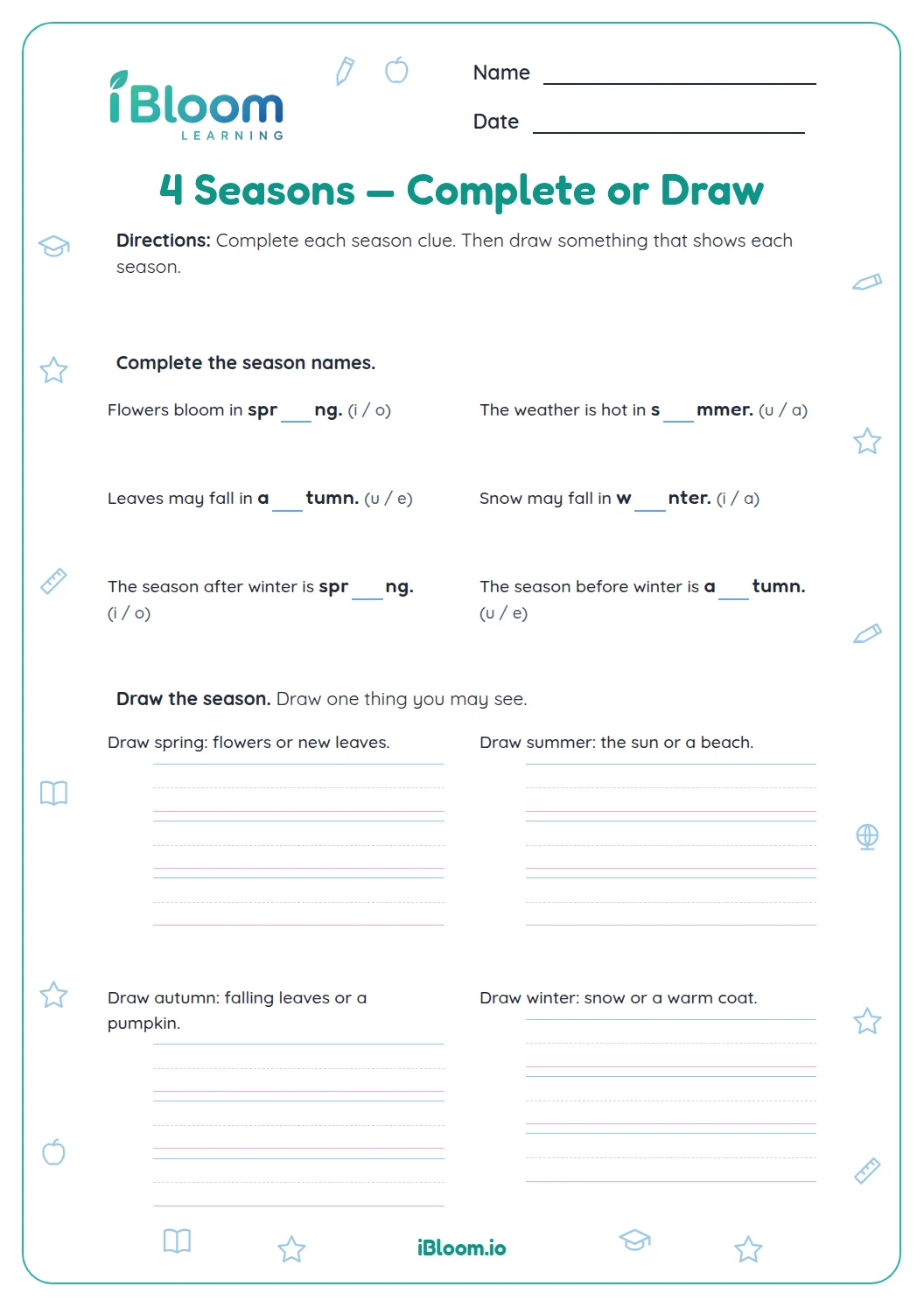
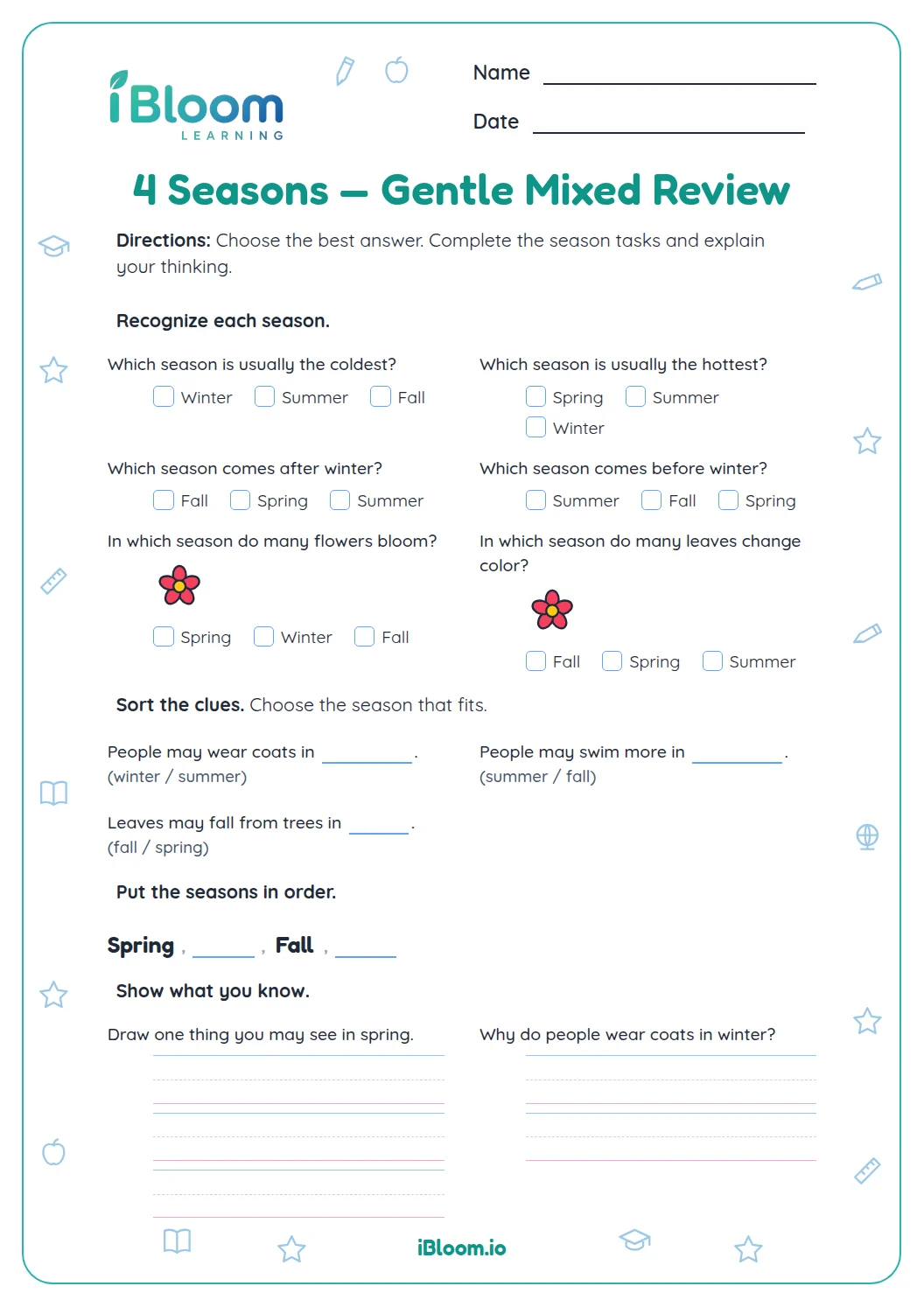
The questions use common seasonal patterns: winter is often cold, spring brings many flowers, summer is often warm, and fall often has chilly days and falling leaves. Weather can vary from day to day, so use the clue in each prompt.
- 1Clue: snow and cold days
- 2Winter is commonly connected with cold, snowy weather.
- 3Answer: winter
How can children finish the drawing?
For the final question, let the child choose clothing that makes sense for a chilly, windy fall day. A jacket, long pants, or scarf are reasonable. There can be several sensible outfits, so the key gives one sample.
How to use this worksheet
- 1Read the directions before starting each part.
- 2Complete one question at a time and say the clue aloud.
- 3Use a drawing, count, or number strategy where helpful.
- 4Review each response before moving to the next part.
- 5Check the finished page with the separate answer key.
Common mistakes and quick fixes
The mistake
Choosing an item that does not fit the weather clue.
The fix
Name the weather first, then choose clothing that suits it.
The mistake
Mixing up the season names.
The fix
Use the clue words, such as snow for winter or falling leaves for fall.
The mistake
Treating the sample drawing as the only correct outfit.
The fix
Accept any clearly drawn outfit that suits a chilly, windy day.
What to practice next
Questions parents and teachers ask
What clothing ideas does the worksheet practice?
Picture choices connect clothing with cold, warm, rainy, and outdoor weather. Later clues ask for season names and familiar items such as an umbrella or gloves, followed by a drawing for a chilly, windy fall day.
How many questions are included?
There are 14 questions in three parts: four picture choices, nine season or clothing fill-ins, and one drawing prompt. The answer key gives expected words and sample ideas for the drawing.
Why do some season clues say “often”?
Weather changes from day to day and across places. The clues use common patterns, such as snowy cold weather in winter and falling leaves in fall, while “often” leaves room for real-world variation.
What can count as a good answer for the drawing?
A child can draw clothes suited to a chilly, windy fall day, such as a jacket and scarf. Other sensible clothing choices can also work; the key offers one example rather than a single required outfit.
Can a child answer without reading alone?
Yes. An adult can read each clue aloud and name the clothing pictures. The child can then choose, say a season or clothing word, or draw an outfit that fits the final weather clue.