




About this worksheet
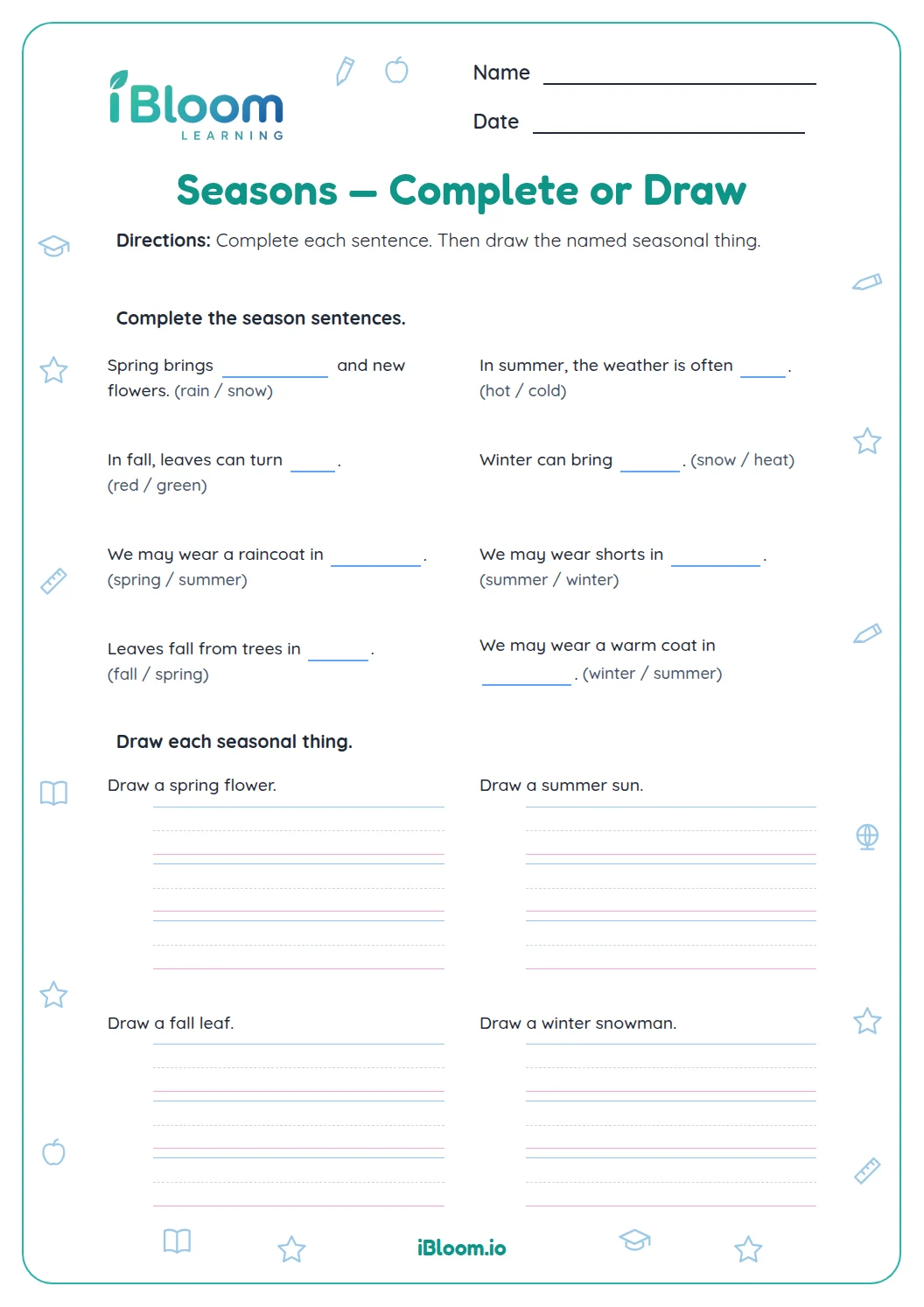
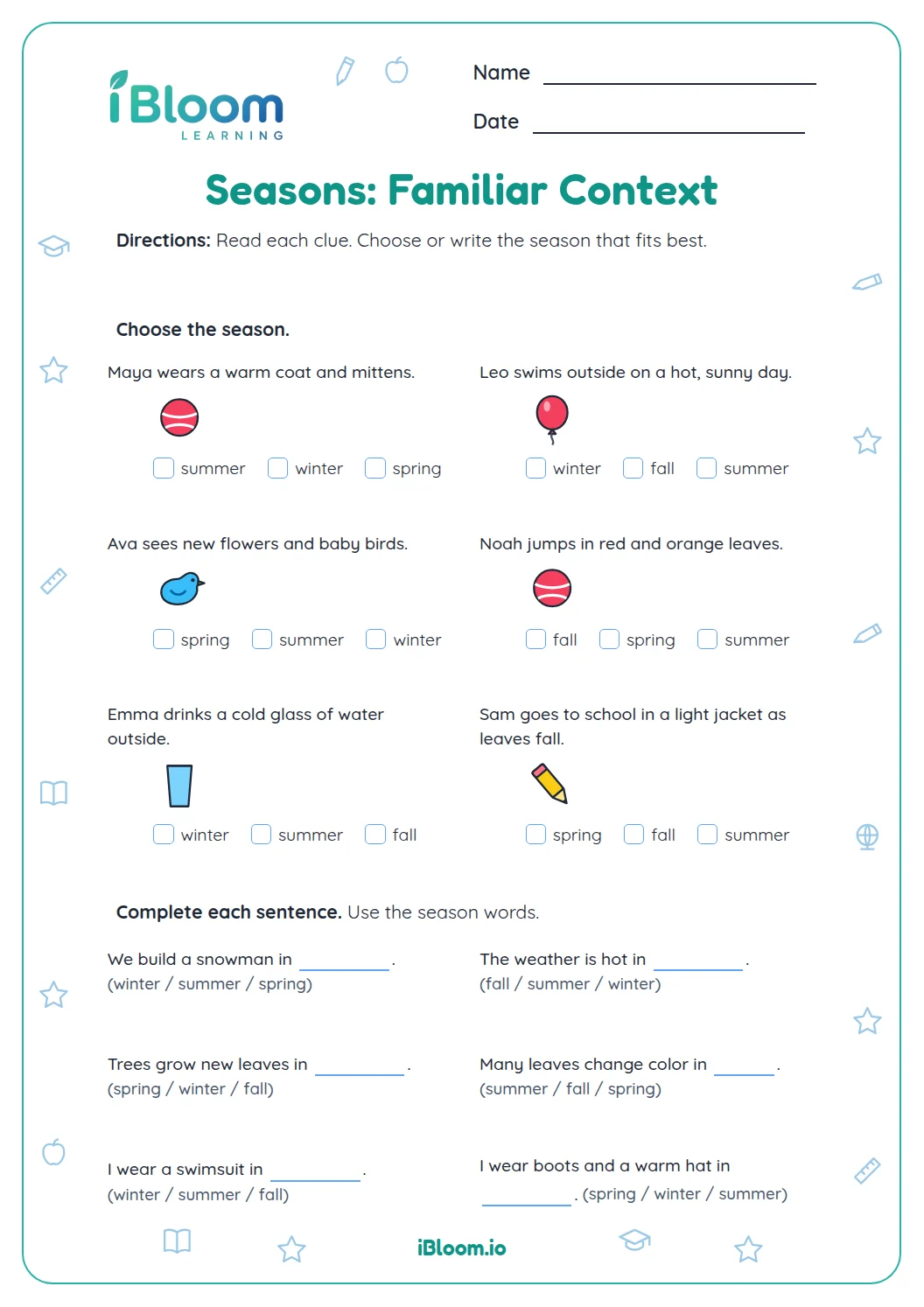
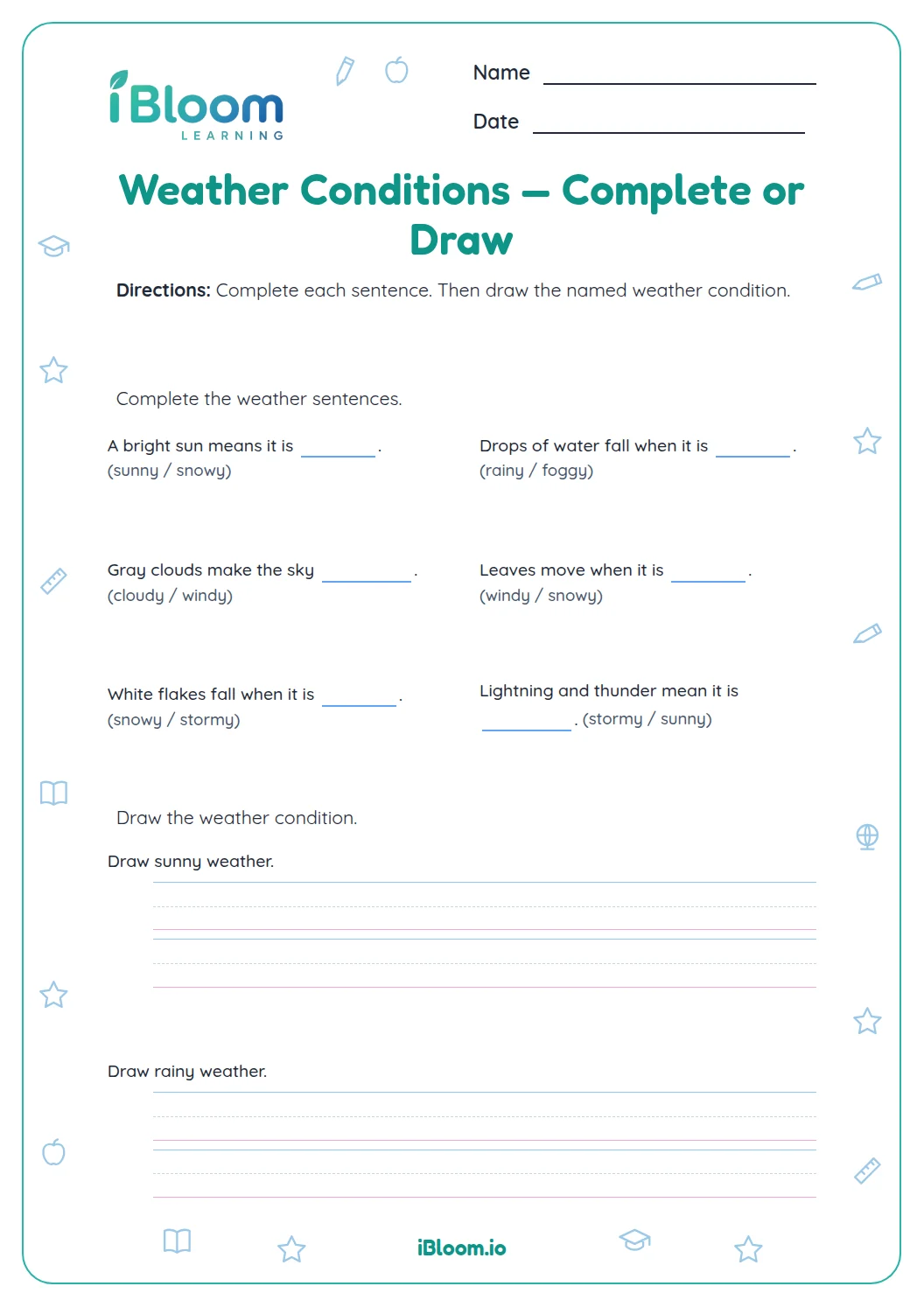
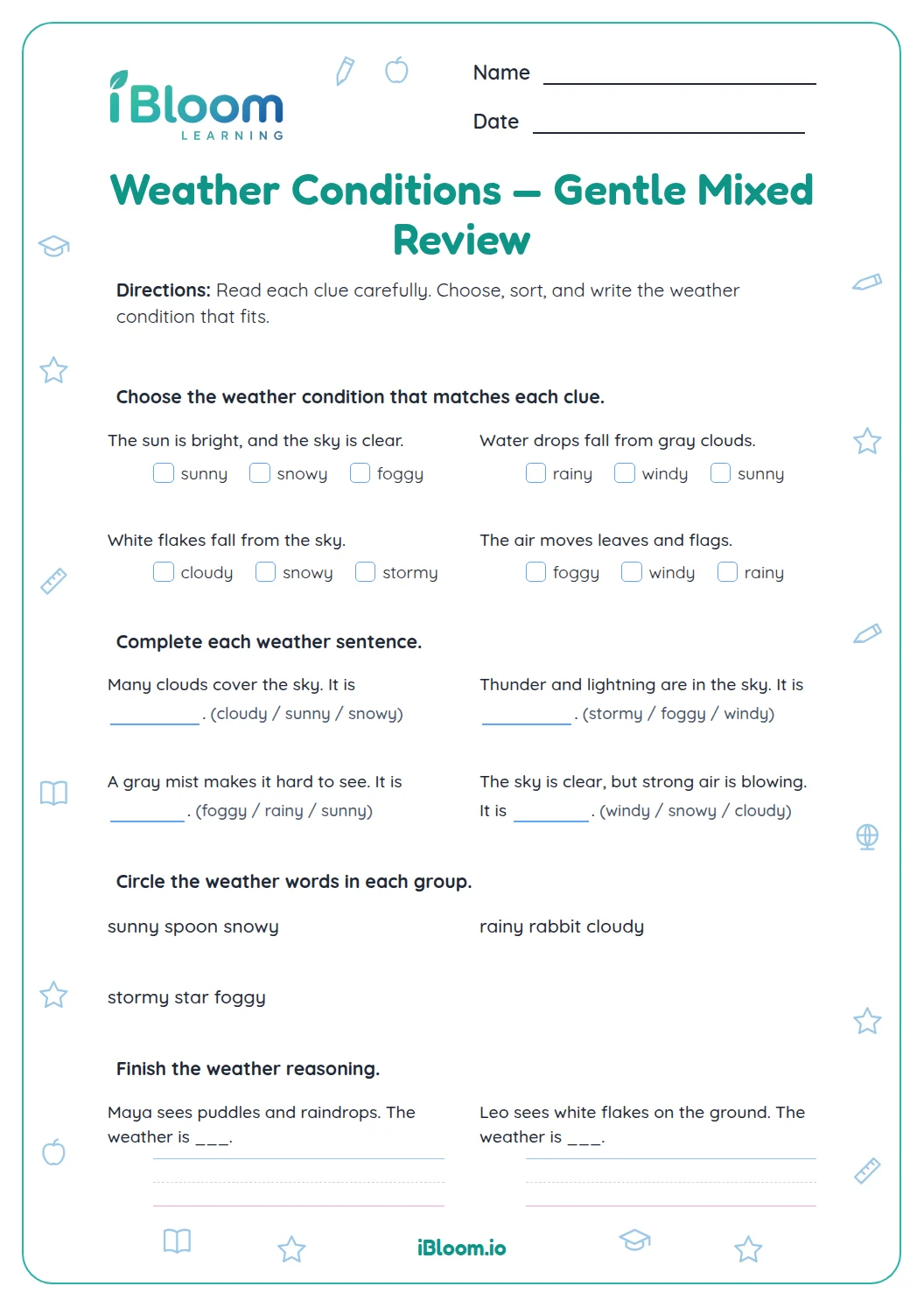
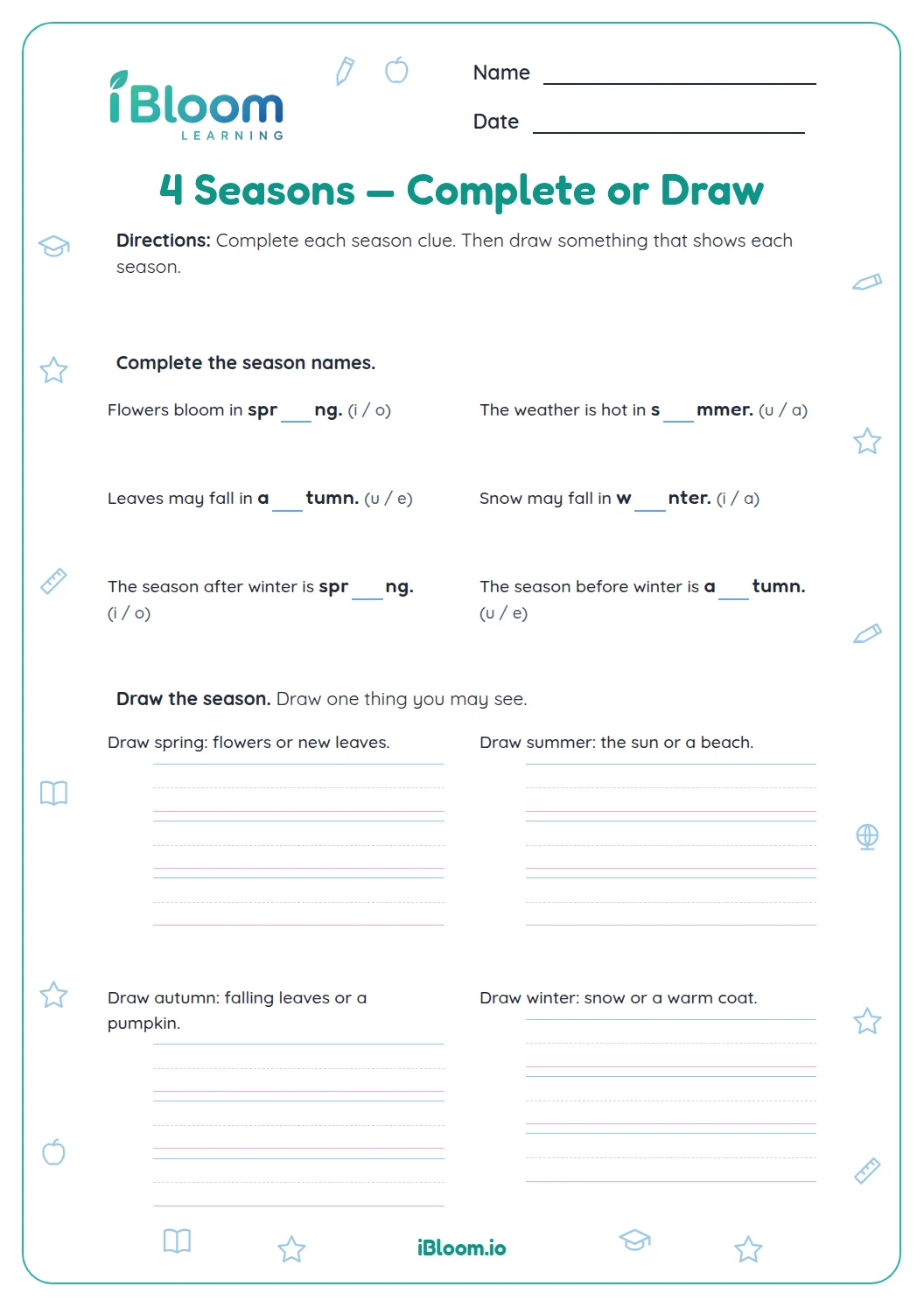
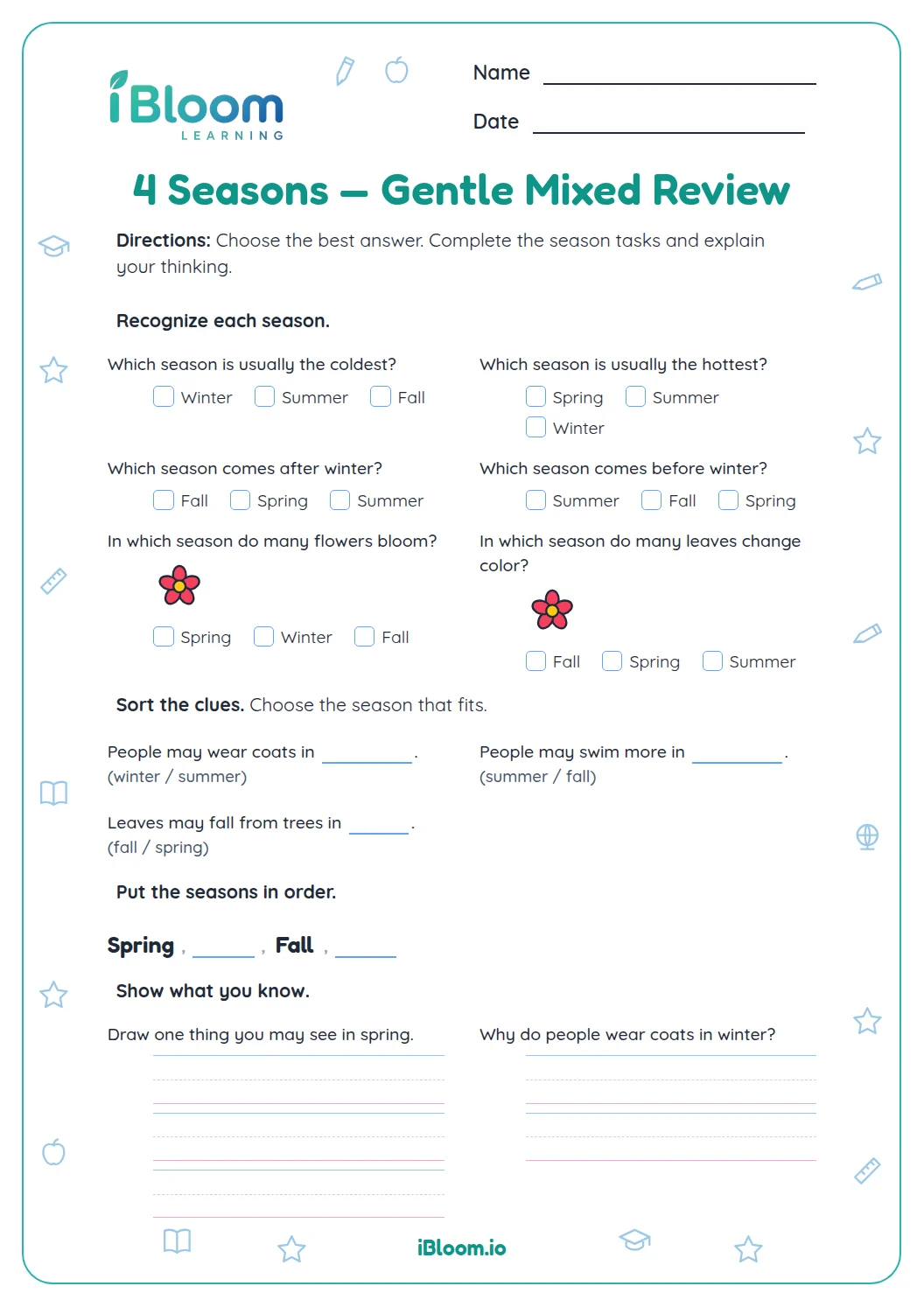
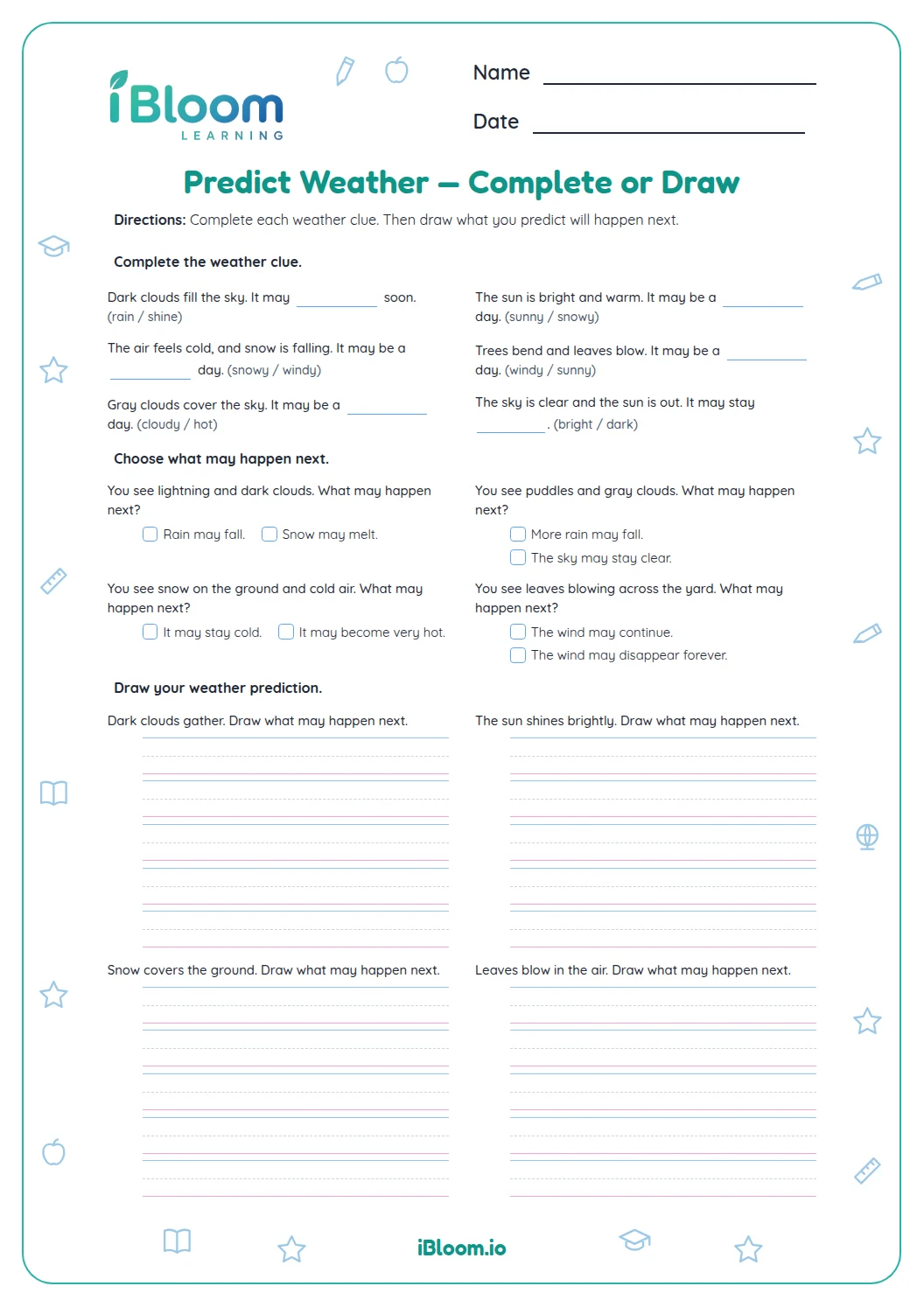
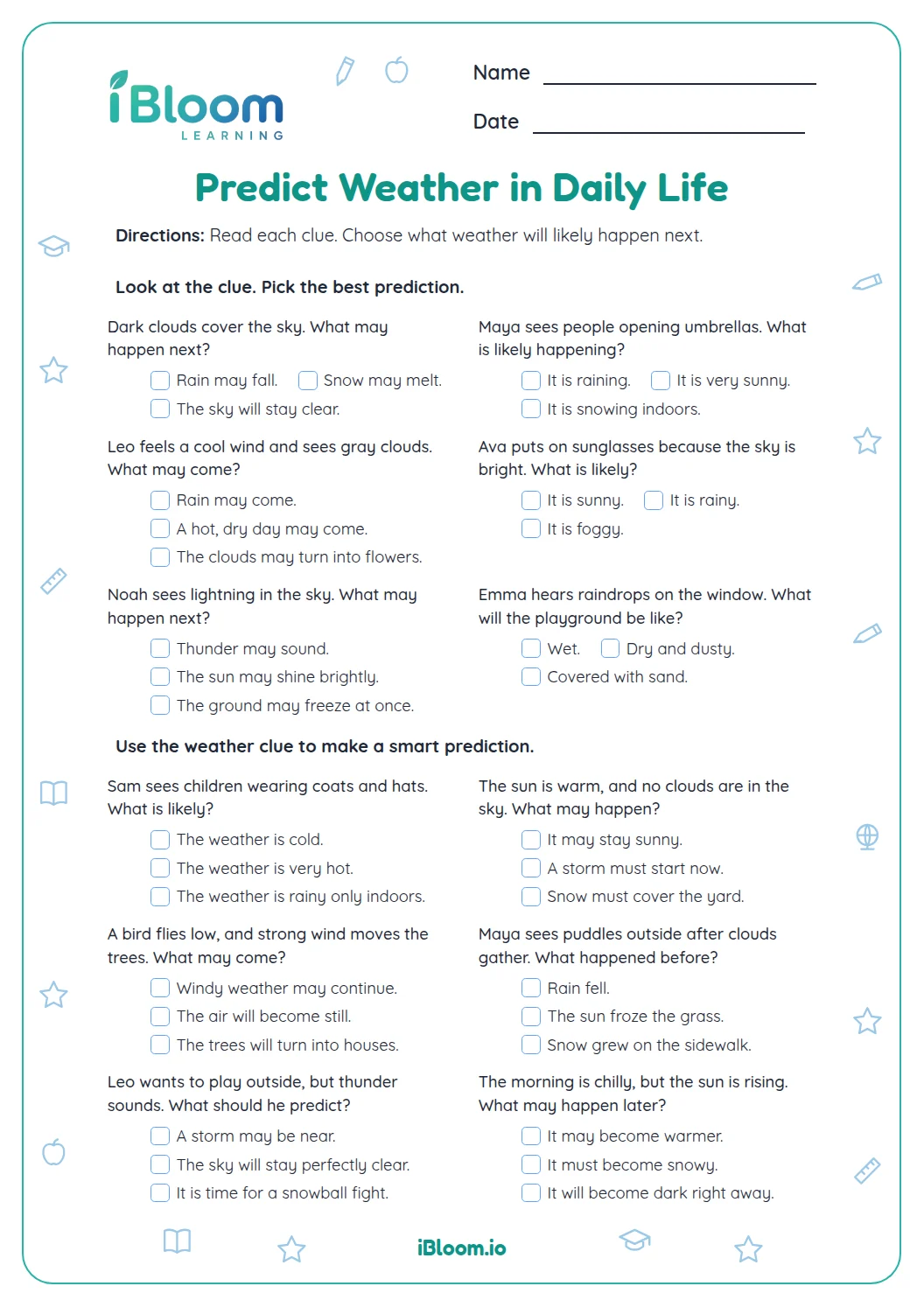
This gentle seasons worksheet is designed for preschool and kindergarten learners. Children match pictures such as a snowflake, flower, leaf, and sun to familiar season clues, then use a four-day weather table to notice what repeats. Two drawing prompts invite them to share weather and outdoor changes they have observed locally; a separate answer key is included.
What seasonal picture clues appear?
Children match familiar pictures to season clues: snow and a snowflake for winter, flowers for spring, sunshine for warm summer days, and leaves for fall. These are examples to talk about together; children can share what they notice in their own area.
How can children spot a weather pattern?
A pattern becomes easier to see when observations from several days are compared. The table shows sunny weather on Monday and Wednesday, with rain on Tuesday and clouds on Thursday. Sunny weather repeats in this small set.
- 1Monday: sunny
- 2Tuesday: rain
- 3Wednesday: sunny
- 4Thursday: clouds
- 5Sunny weather appears twice.
What will children do?
Ten picture-choice questions connect objects and weather with season clues. Two questions use the four-day table, and the final two invite drawings of local weather and an outdoor seasonal clue. An adult can read prompts aloud.
How to use this worksheet
- 1Name each picture before choosing an answer.
- 2Talk about why the clue fits the season or weather.
- 3Read the four days in the table from top to bottom.
- 4Find which weather repeats and which two days match.
- 5Invite the child to draw local observations and describe them aloud.
Helpful ways to talk about seasons
The mistake
Treating one picture as the only weather a season can have.
The fix
Use the picture as one familiar clue and invite local examples.
The mistake
Mixing up a weather condition with a season.
The fix
Name the weather first, then decide which season clue the question asks about.
The mistake
Missing a repeated observation in the table.
The fix
Read each day once and point to the weather word that appears again.
What to practice next
Make more practice
Questions parents and teachers ask
Do seasons look the same everywhere?
No. Local weather and outdoor changes vary by place. The worksheet uses familiar pictures as examples, then invites children to draw weather and an outdoor clue they have actually noticed. Talk about what is true where you live as well as what appears in the pictures.
What pattern is in the four-day weather table?
Sunny weather appears on Monday and Wednesday, so it repeats twice. Rain appears on Tuesday and clouds on Thursday. Children can point to the matching weather entries to show how they found the repeated condition, then compare it with local observations.
Can an adult read the worksheet aloud?
Yes. An adult can name each picture and read the prompts aloud while the child points to a choice. For the table, read the days from top to bottom and ask the child which weather word appears more than once.
What can children draw for the last questions?
The first drawing prompt asks for weather the child notices locally, such as rain, clouds, or sunshine. The second asks for an outdoor seasonal clue, such as a changing leaf or a flower. Accept clear drawings that the child can explain.
How many questions and pages are included?
The worksheet has 14 questions: ten picture choices, two questions that use the four-day weather table, and two drawing prompts. The answer key is separate and accepts reasonable local drawings when the child can connect the picture to the prompt.