




About this worksheet
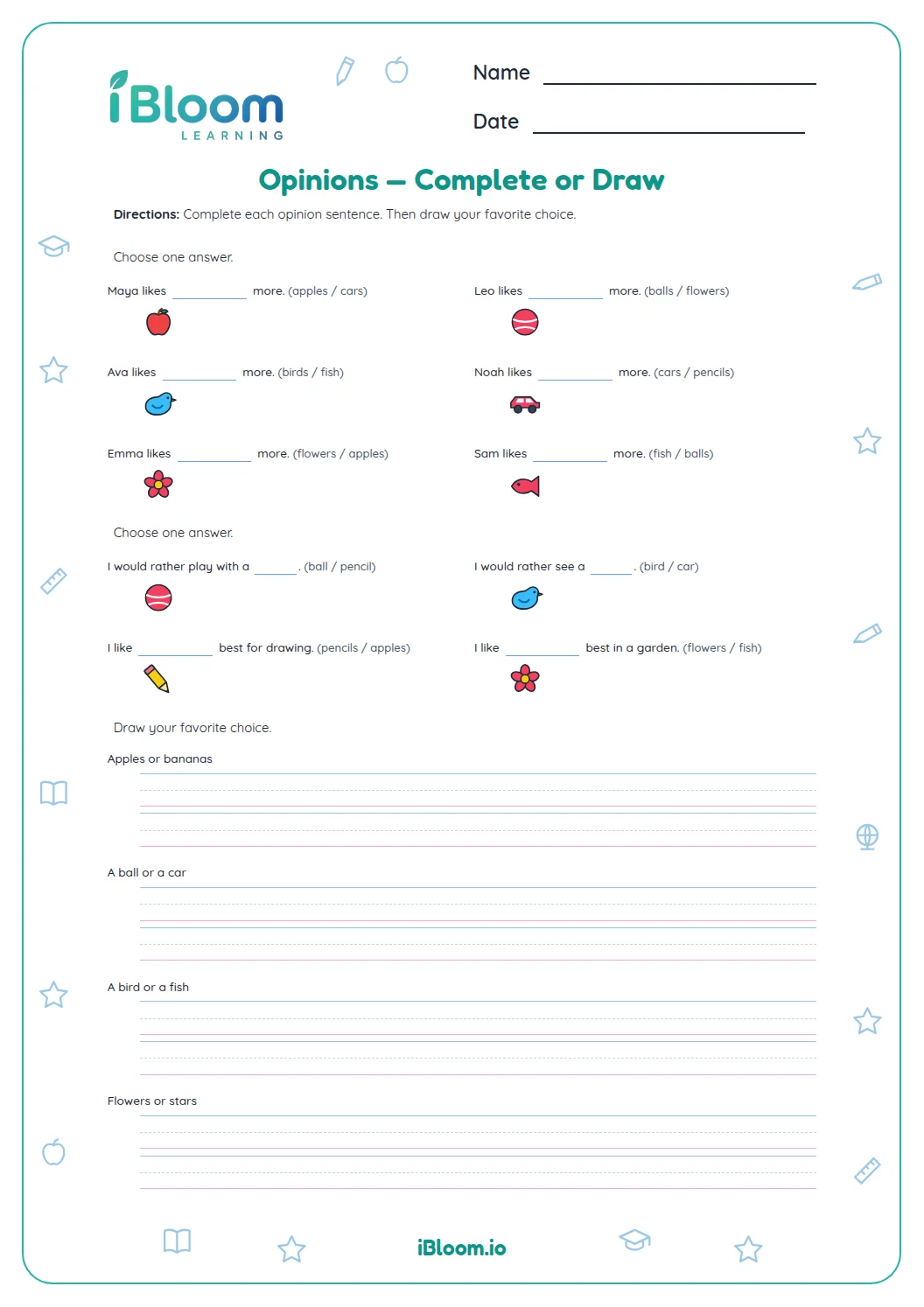
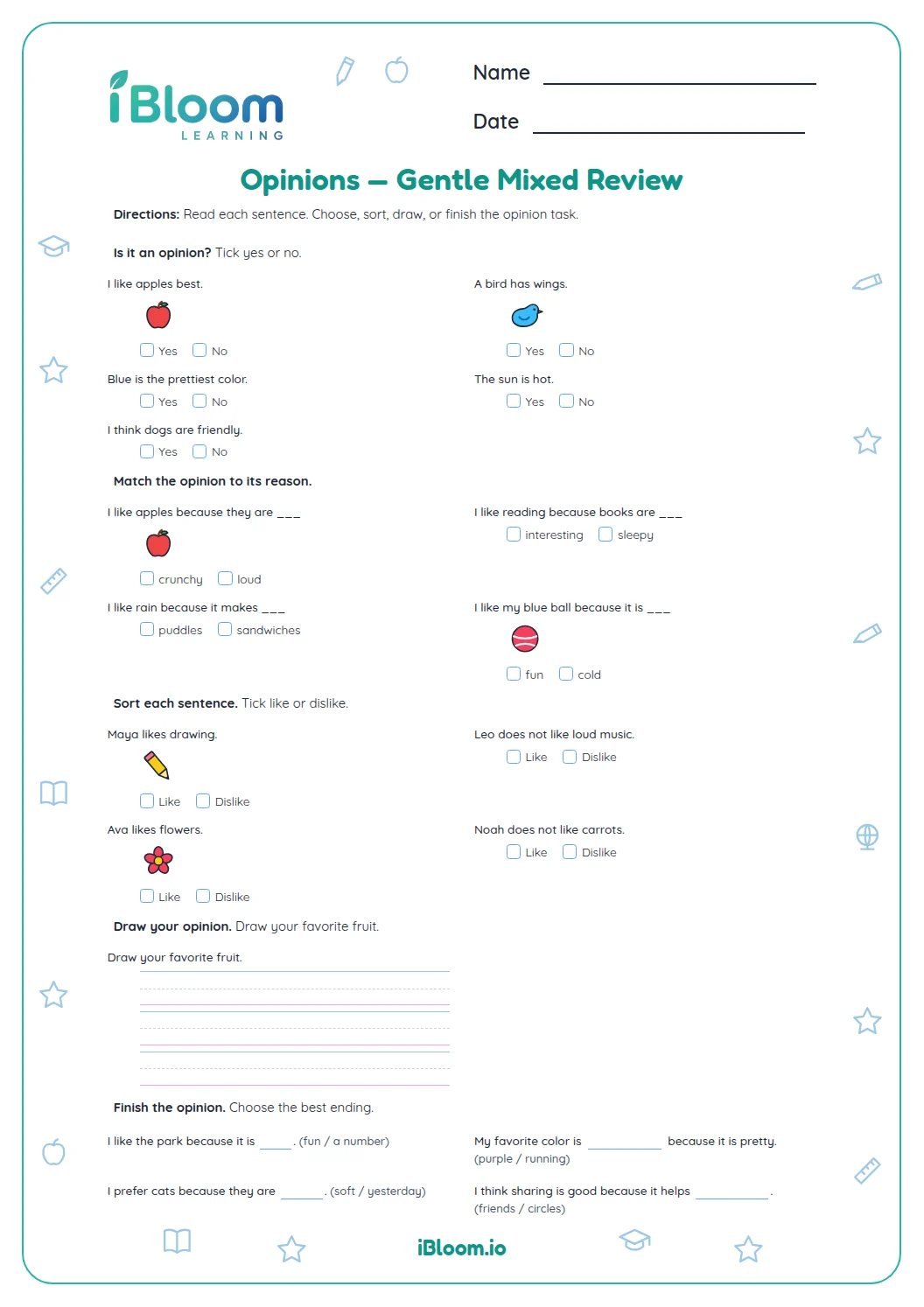
This free printable opinion worksheet is for Preschool and Kindergarten children who are learning to share a preference and a reason. Fourteen familiar picture prompts—from snacks and pets to play and places—help a child choose an idea, then explain why they like it by drawing, dictating, or writing. A separate answer key gives sample responses; children may have different opinions and reasons.
What does this worksheet ask children to do?
Each prompt pairs familiar picture choices with a question about what the child would choose. The child picks one, then shares a reason by drawing, dictating, or writing. The answer key offers one sample for each prompt; a child’s own choice and reason can differ.
The first seven prompts ask about everyday choices. The next seven explore art, play, nature, and familiar places.
- Part A: prompts 1–7, everyday choices
- Part B: prompts 8–14, more familiar choices
- Every item includes picture cues
- Accept a child’s own choice and sensible reason
What makes an answer an opinion?
An opinion tells what someone likes, wants, or would choose. A reason gives a personal explanation. For example, a child might choose the apple and say, “I like its crunch.” Another child could choose the cookie and give a different reason. Both can be good opinion responses.
- 11) Which snack would you pick? Tell why.
- 2Sample: I would pick the apple because I like its crunch.
- 3The answer names a preference and gives a personal reason.
How should children use the picture choices?
Invite the child to look at both pictures and decide which one fits their own preference. There is no need to guess what an adult would choose. Ask “What do you like about it?” if the reason needs a little support.
A drawing can show the choice or its reason. An adult may write down the child’s dictated words, and children who are ready can try the sentence themselves.
What can children do after finishing?
Choose a new familiar topic together, such as a favorite bedtime story or playground activity. Have the child name the topic, state a preference, and add a reason. Keep the conversation focused on the child’s own idea rather than correcting spelling during the first try.
How to use this worksheet
- 1Read each prompt aloud and name both pictures if needed.
- 2Let the child point to the idea they prefer.
- 3Ask, “Why do you like that one?” and give the child time to answer.
- 4Accept a drawing, dictated response, or early writing.
- 5Use the sample key to discuss ideas; accept other sensible personal reasons.
Helpful reminders for opinion practice
The mistake
Naming a choice without saying why.
The fix
Ask a gentle follow-up: “What do you like about it?” A word or short phrase can be a starting reason.
The mistake
Thinking there is one correct picture to choose.
The fix
Remind the child that the prompt asks for their preference. Either picture can work when it is their real choice.
The mistake
Expecting a beginning writer to spell every word independently.
The fix
Invite the child to draw or dictate the idea, then write the child’s words nearby if helpful.
What to practice next
Make more practice
Further reading
Questions parents and teachers ask
How many prompts are on this opinion worksheet?
There are 14 picture prompts in two parts. Each asks the child to choose between familiar ideas and share why they prefer one. The answer key gives a sample for each prompt, but a child’s personal answer may be different.
Does my child have to write a complete sentence?
No. A child can draw the choice, tell an adult the reason, or write as much as they are ready to write. You can record dictated words alongside a drawing. The main goal is to help the child share a preference and an idea about why.
Are the sample answers the only correct answers?
No. They show one possible choice and reason. For the snack prompt, a child might choose an apple because it is crunchy or a cookie because it tastes sweet. Accept a different personal choice when the child can explain it.
What counts as an opinion?
An opinion tells what someone thinks, likes, or would choose. “I would pick the kite” states a preference. “I like watching it fly” adds a personal reason. The child does not need to prove that the choice is best for everyone.
How can I help if my child is unsure what to say?
Read the two picture choices aloud and let the child point first. Then ask a simple question such as “What do you like about that one?” You can offer time to think, accept a drawing, or write down the child’s dictated words.
Can we use this worksheet more than once?
Yes. A child can respond orally or draw on one copy, then try writing on another. You can also revisit a prompt and ask whether the child has a new reason. Keep the sample key for checking that each response includes a preference and a reason.