
About this worksheet
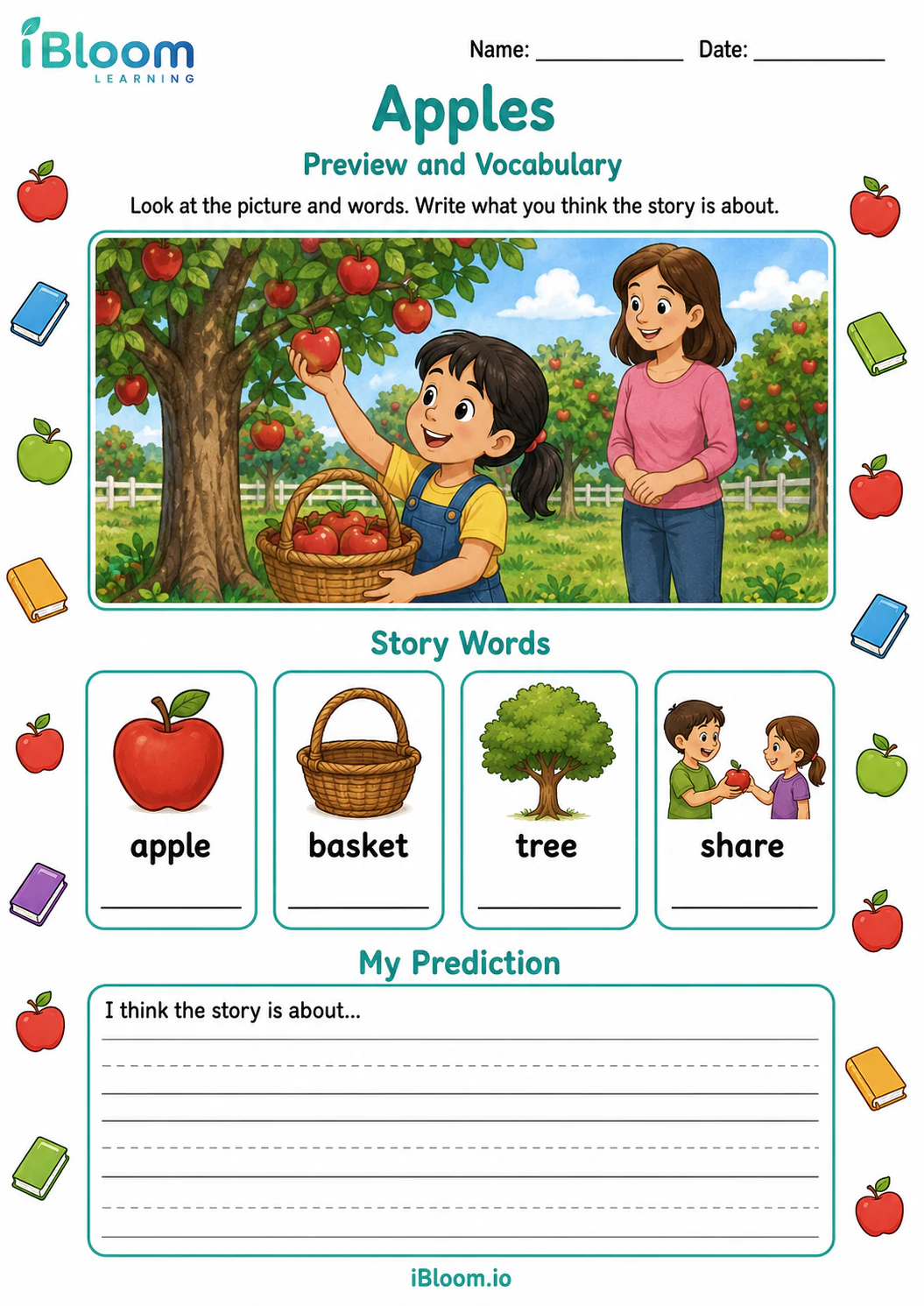
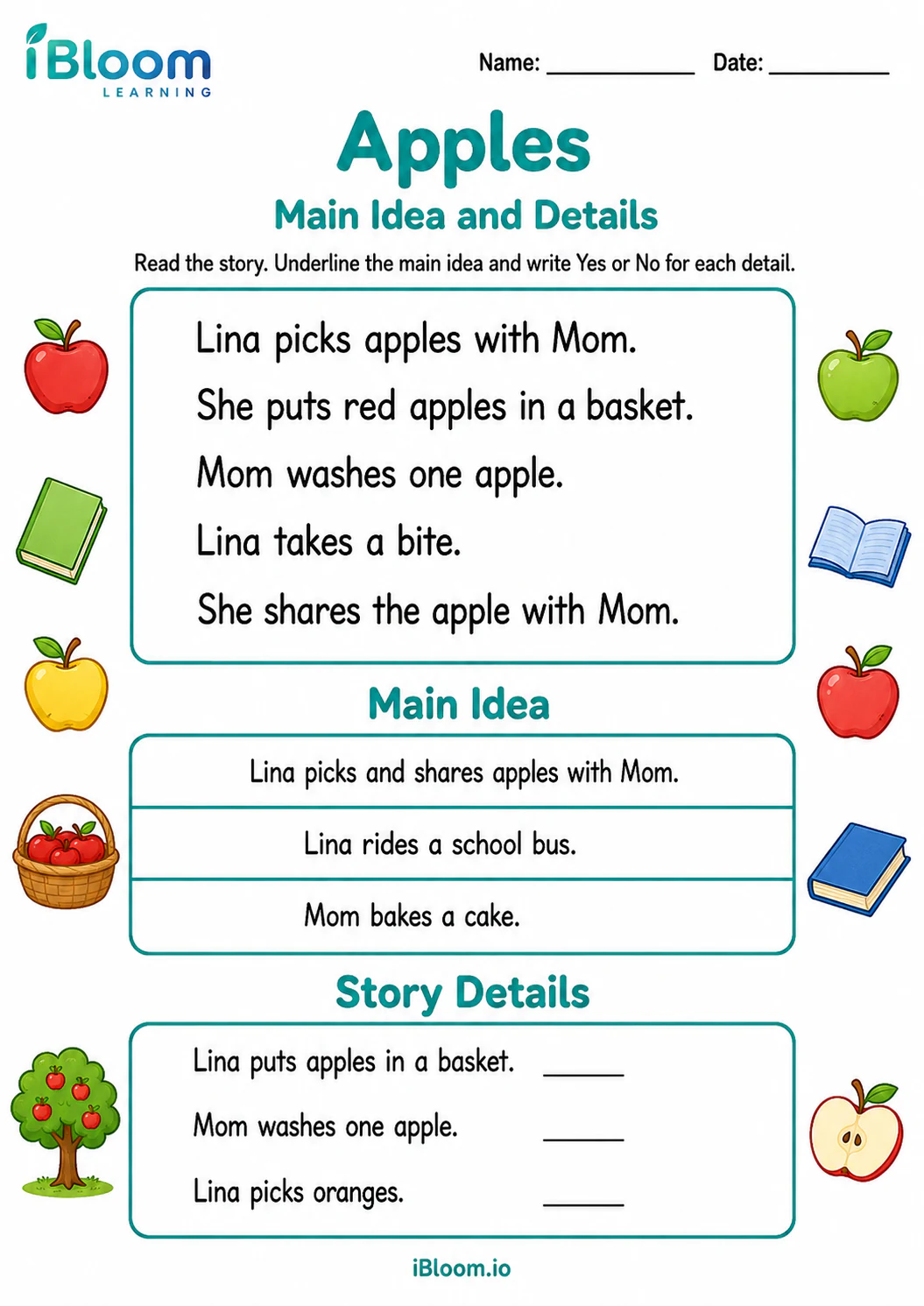
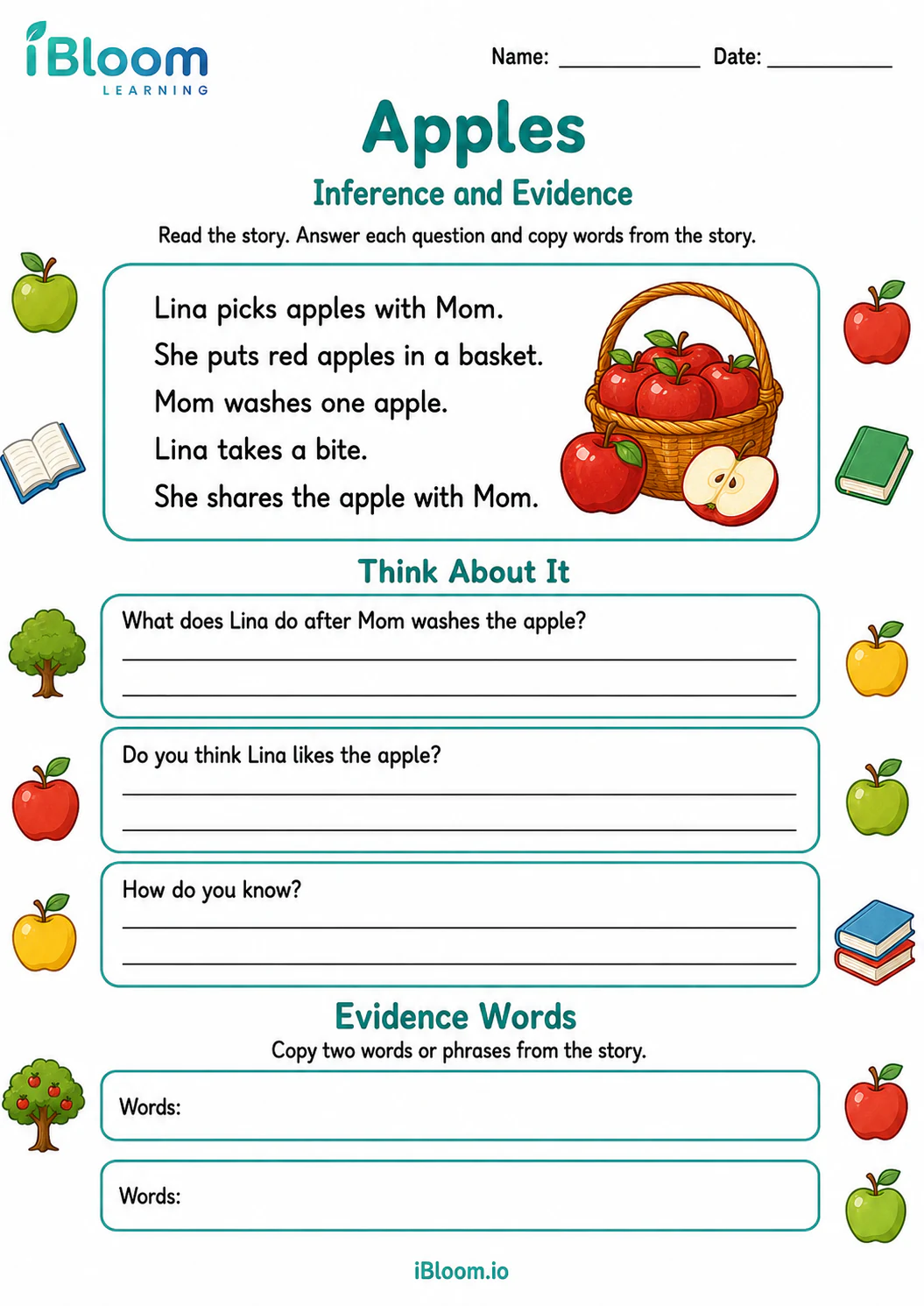
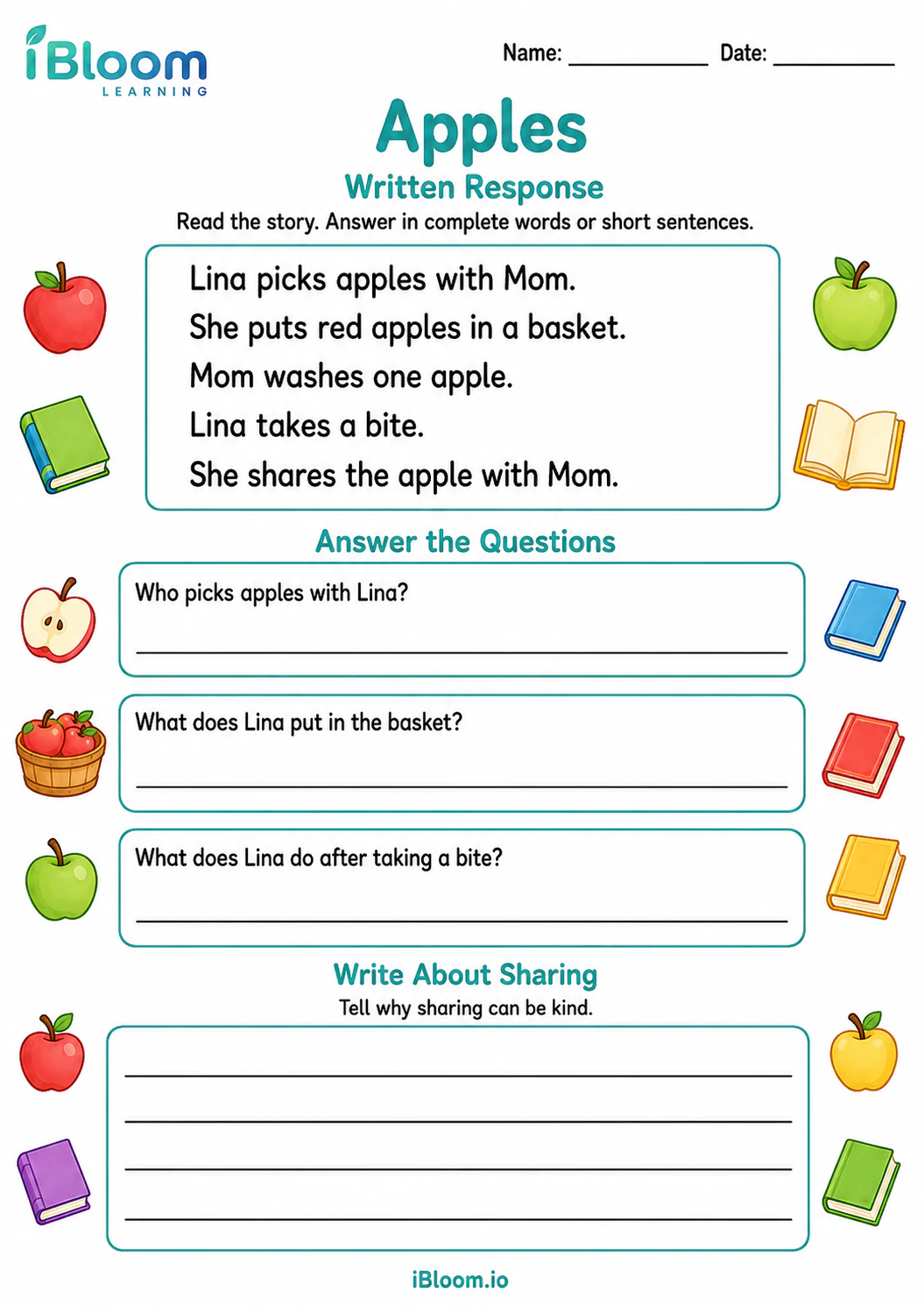
The original passage, “Apples with Mom,” follows Lina and her mother from picking apples at an orchard to sharing one at home. Questions move from story details to sequence, main idea, evidence, and a reasonable inference. The page practices CCSS RI.1.1 by asking and answering questions about key text details.
Aligned to RI.1.1
What will learners practice?
Lina picks apples with Mom, brings them home in a basket, and shares one after Mom washes it. The questions practice details, sequence, main idea, evidence, and inference.
The parts progress from direct recognition or conversion to applying the skill in a story, comparison, or written response.
How can a learner solve one question?
Read exactly what the prompt asks, identify the useful detail or relationship, and show the matching reasoning before checking the answer.
- 1Lina picks apples and puts them in a basket. → apples
How can families use the answer key?
Check the result and the reasoning together. For open responses, treat the key as a model: another answer is acceptable when it meets the prompt and is supported by the worksheet.
How to read and answer the questions
- 1Read the passage once to understand Lina’s trip to the orchard.
- 2Reread the sentence that matches a detail question.
- 3For the sequence item, put picking before washing and sharing last.
- 4For an inference, point to a story clue and connect it to a reasonable idea.
- 5Compare answers with the key and accept clear wording supported by the story.
Common reading slips and fixes
The mistake
Answering from what usually happens instead of the passage.
The fix
Find the sentence that gives the detail.
The mistake
Putting the shared apple before Lina picks the apples.
The fix
Use the passage’s time clues: picking happens at the orchard before the family gets home.
The mistake
Making an inference without a clue.
The fix
Name a detail, then explain what it suggests.
This worksheet gives students direct practice with the listed Common Core skill.
Apples story comprehension.
On this sheet:
Show the official wordingHide the official wording
Ask and answer questions about key details in a text.
What to practice next
Make more practice
Further reading
Questions parents and teachers ask
What happens in “Apples with Mom”?
Lina visits an apple orchard with Mom, picks apples, and puts them in a basket. At home, Mom washes one, Lina tastes it, and the two share it. The short passage gives details children can reread while answering the questions.
Which questions ask children to use story clues?
Questions 7 and 8 ask children to explain why Lina shares the apple and to find words that describe its taste. The passage says it was crisp and sweet, giving a clear clue for the response. The prompt and answer key make this check straightforward.
How can a child put the events in order?
Look for the sequence from the orchard to home: Lina picks the apples first, Mom washes one at home, and Lina shares it afterward. Question 9 lists events out of order so readers must use the passage to arrange them.
What does the answer key provide for written questions?
The key gives model responses for questions with more than one reasonable wording. For example, a child may explain that Lina shares the apple so Mom can taste it. Accept another answer when it uses a clear story detail. The prompt and answer key make this check straightforward.
How many questions are on the printable?
There are 14 questions after the passage, arranged in four parts. The story and questions use three worksheet pages, and the separate answer key uses three pages. The page includes details, sequence, main idea, and inference practice. The prompt and answer key make this check straightforward.