
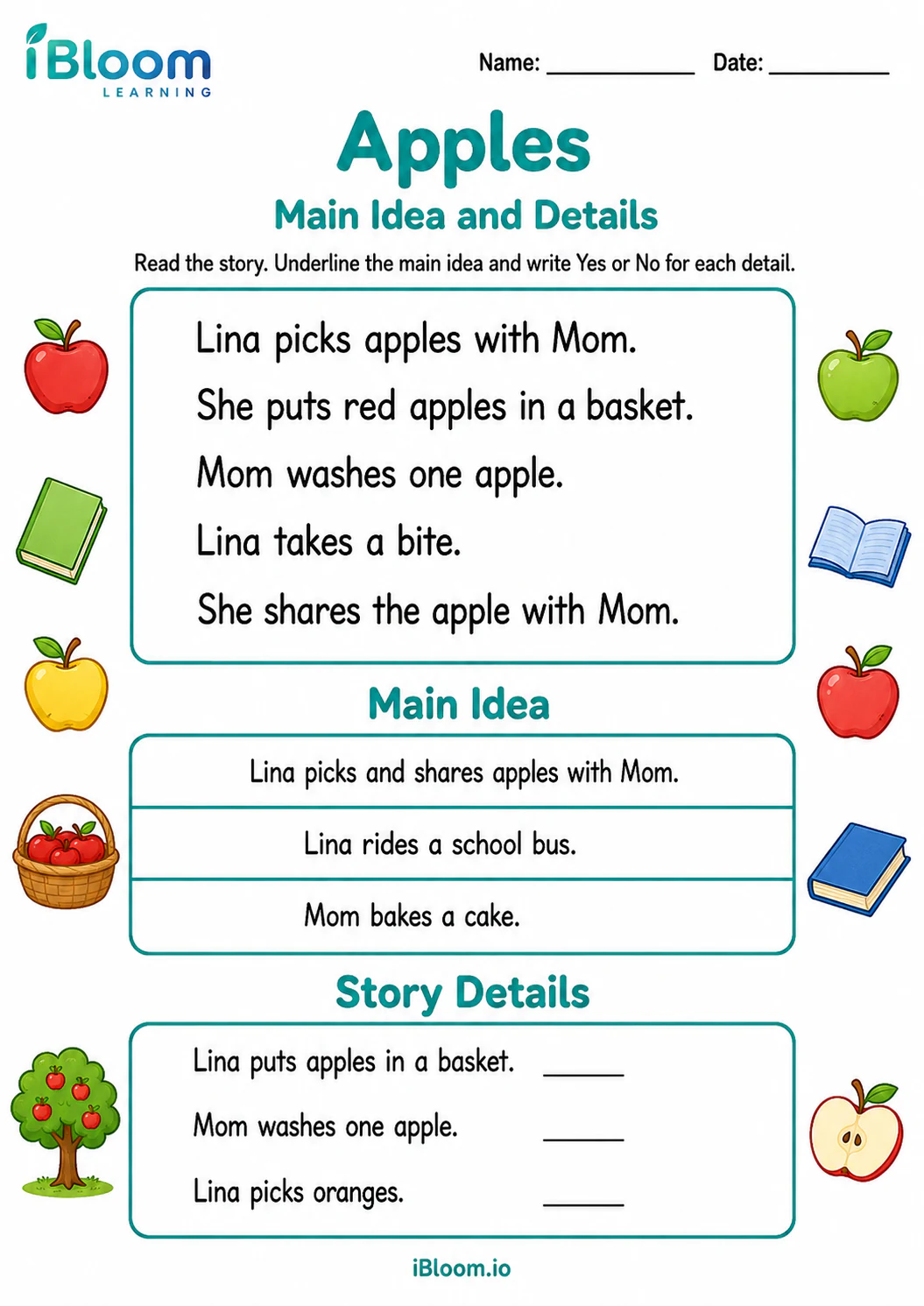
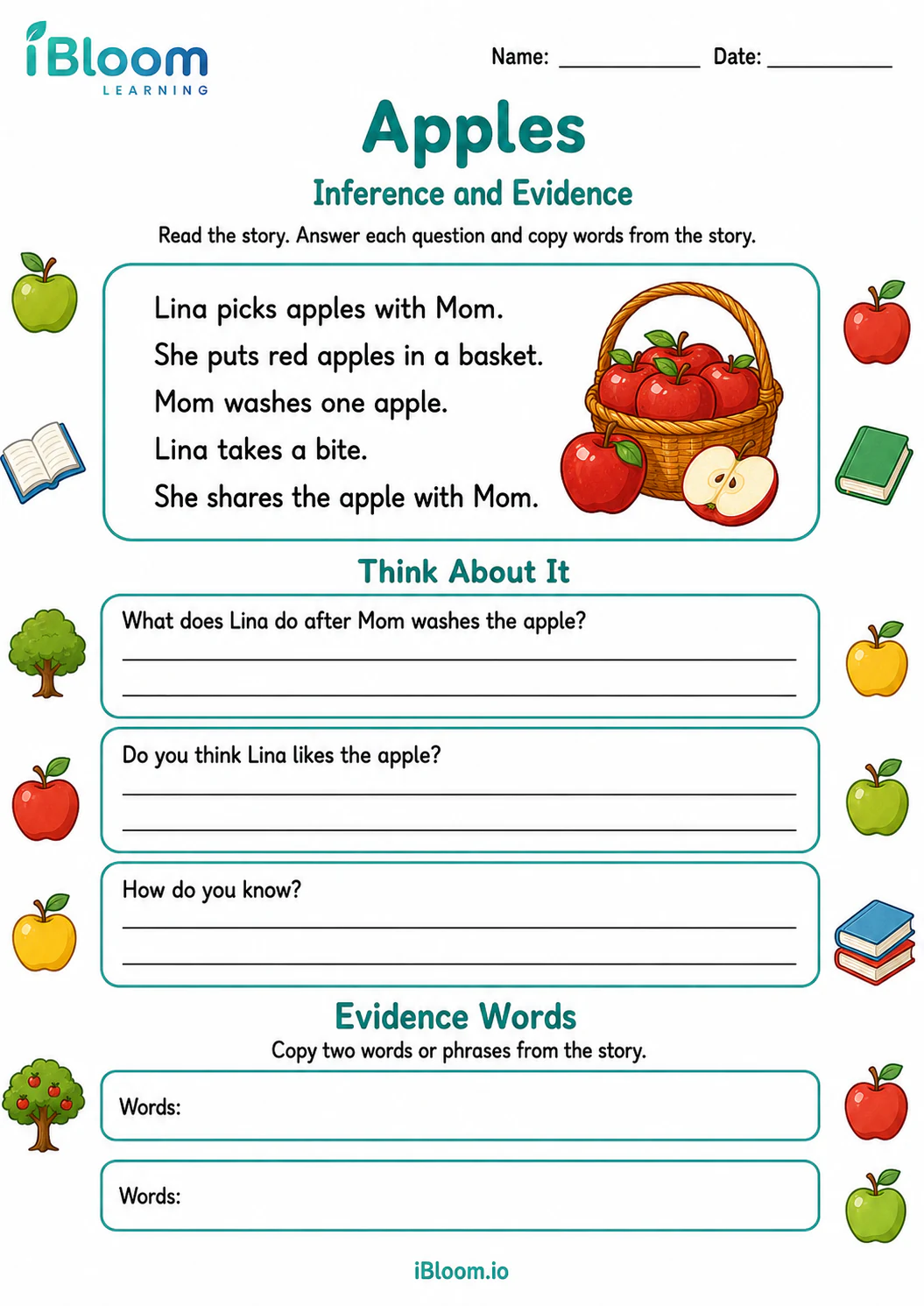
About this worksheet
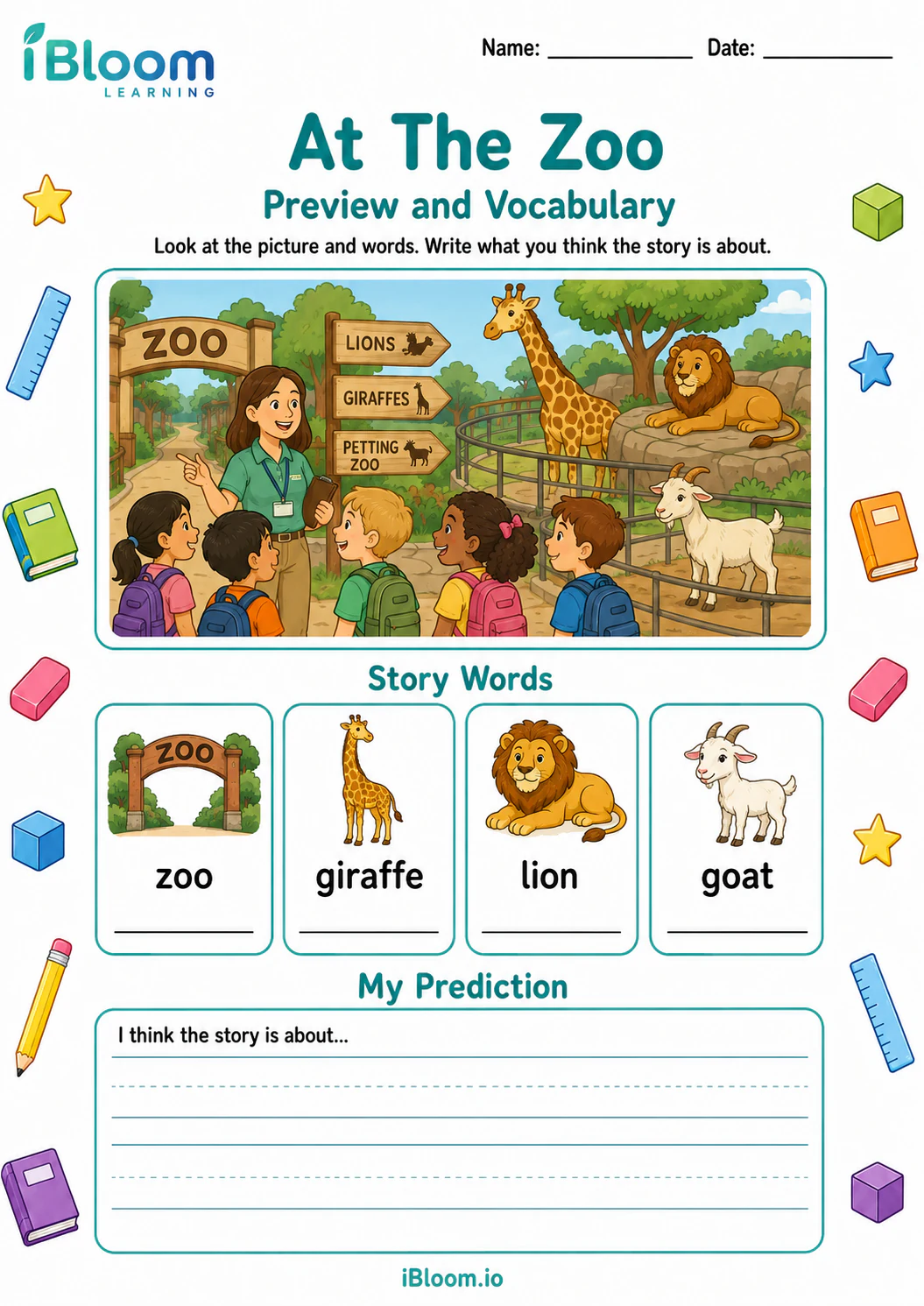
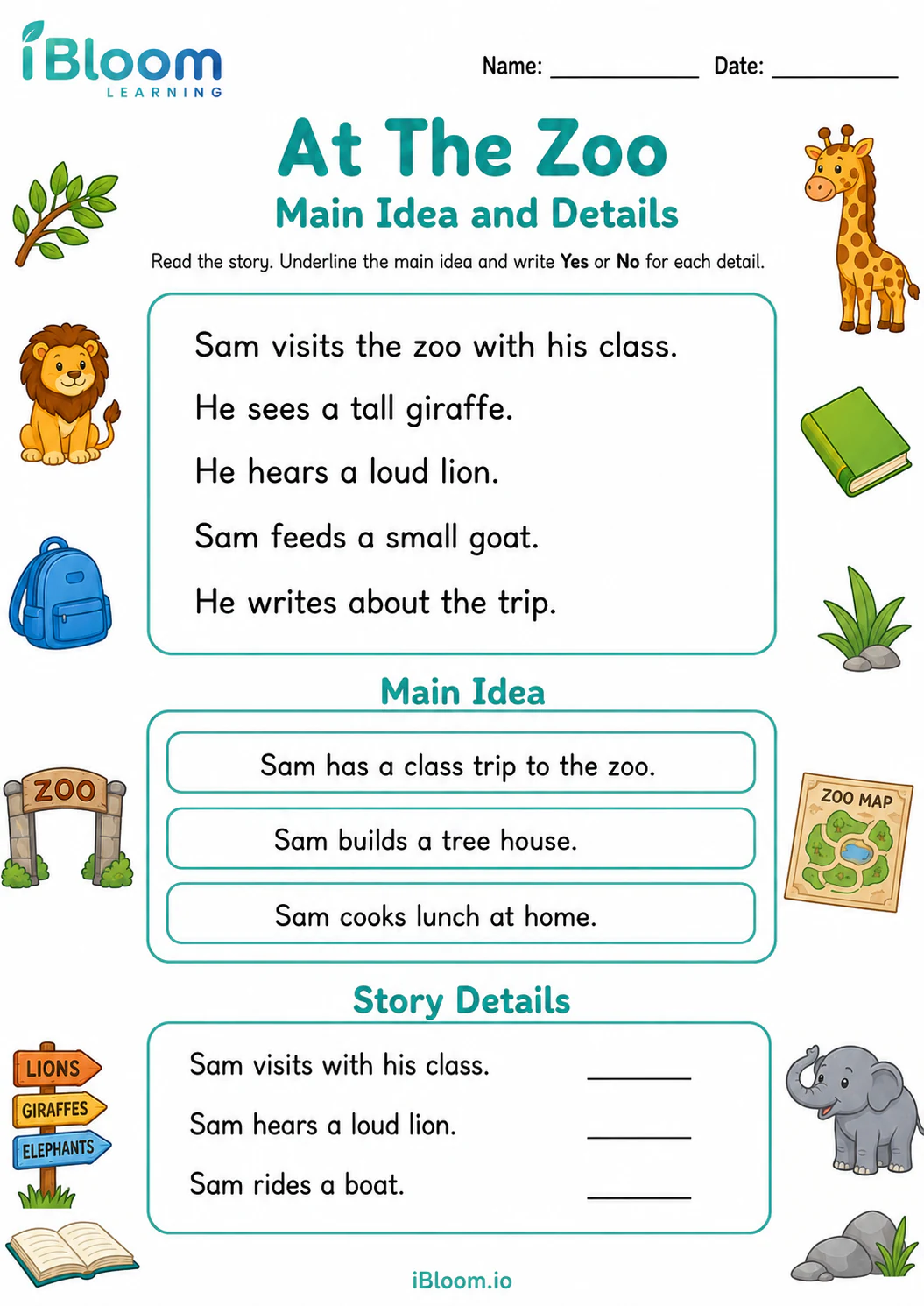
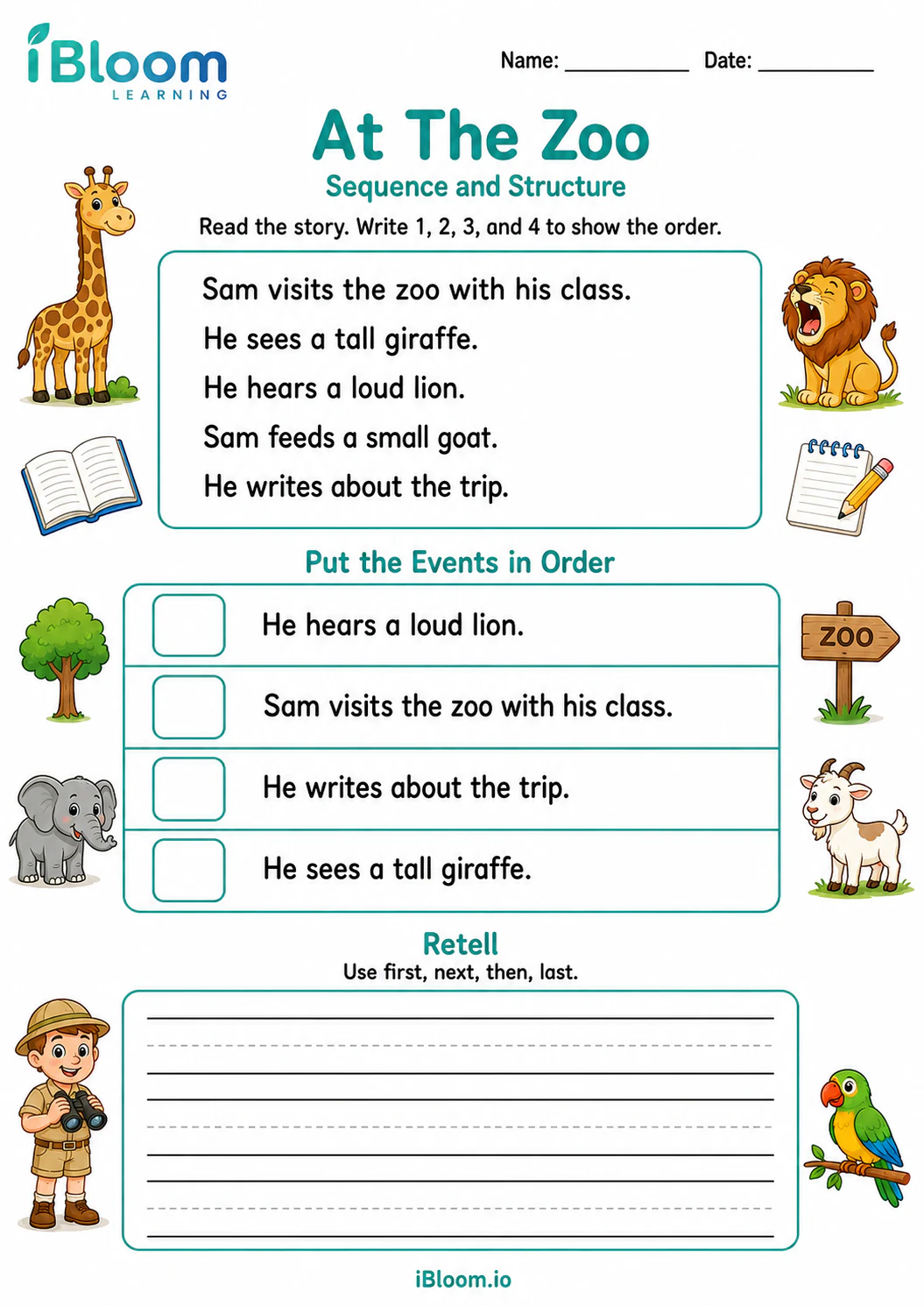
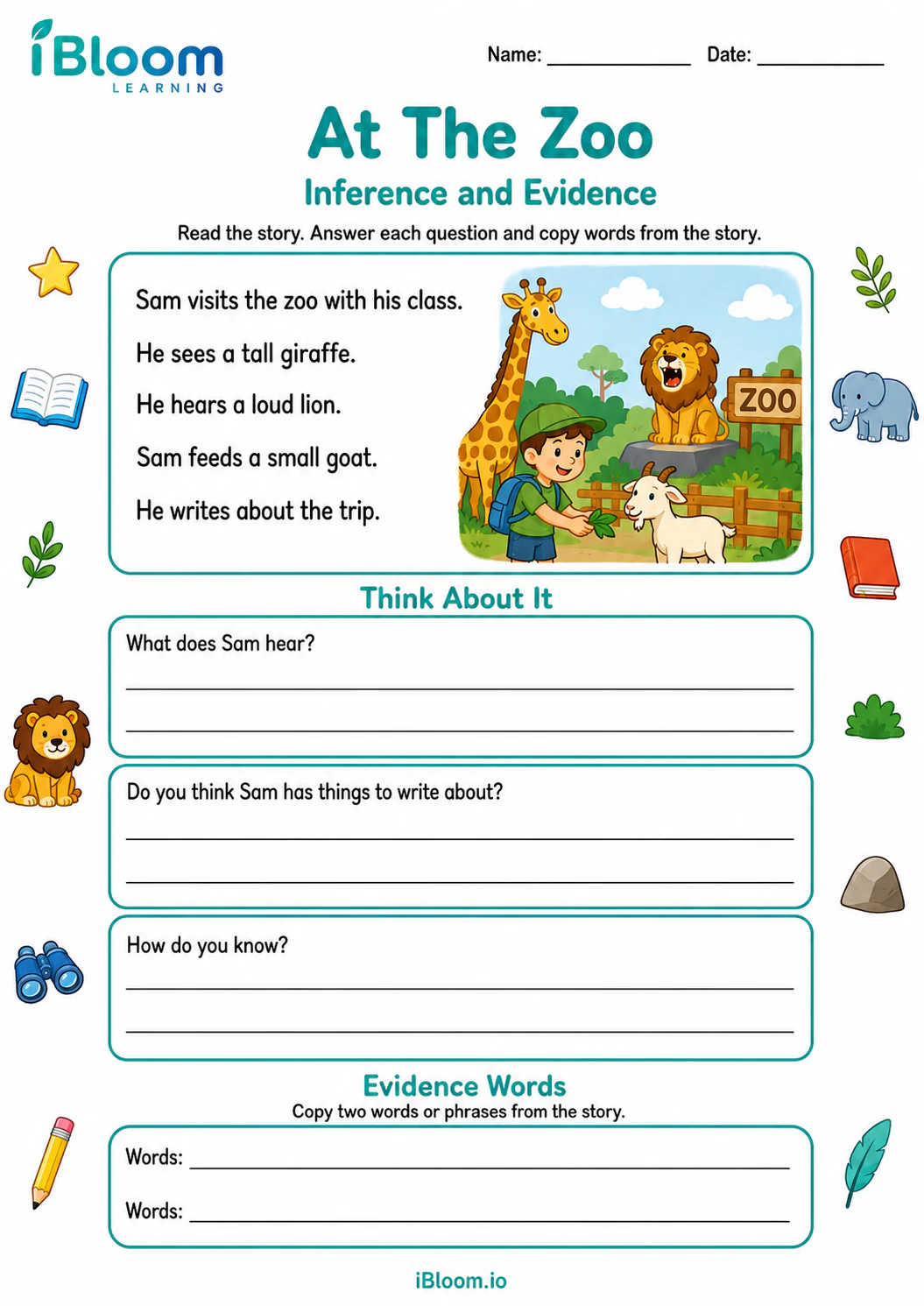
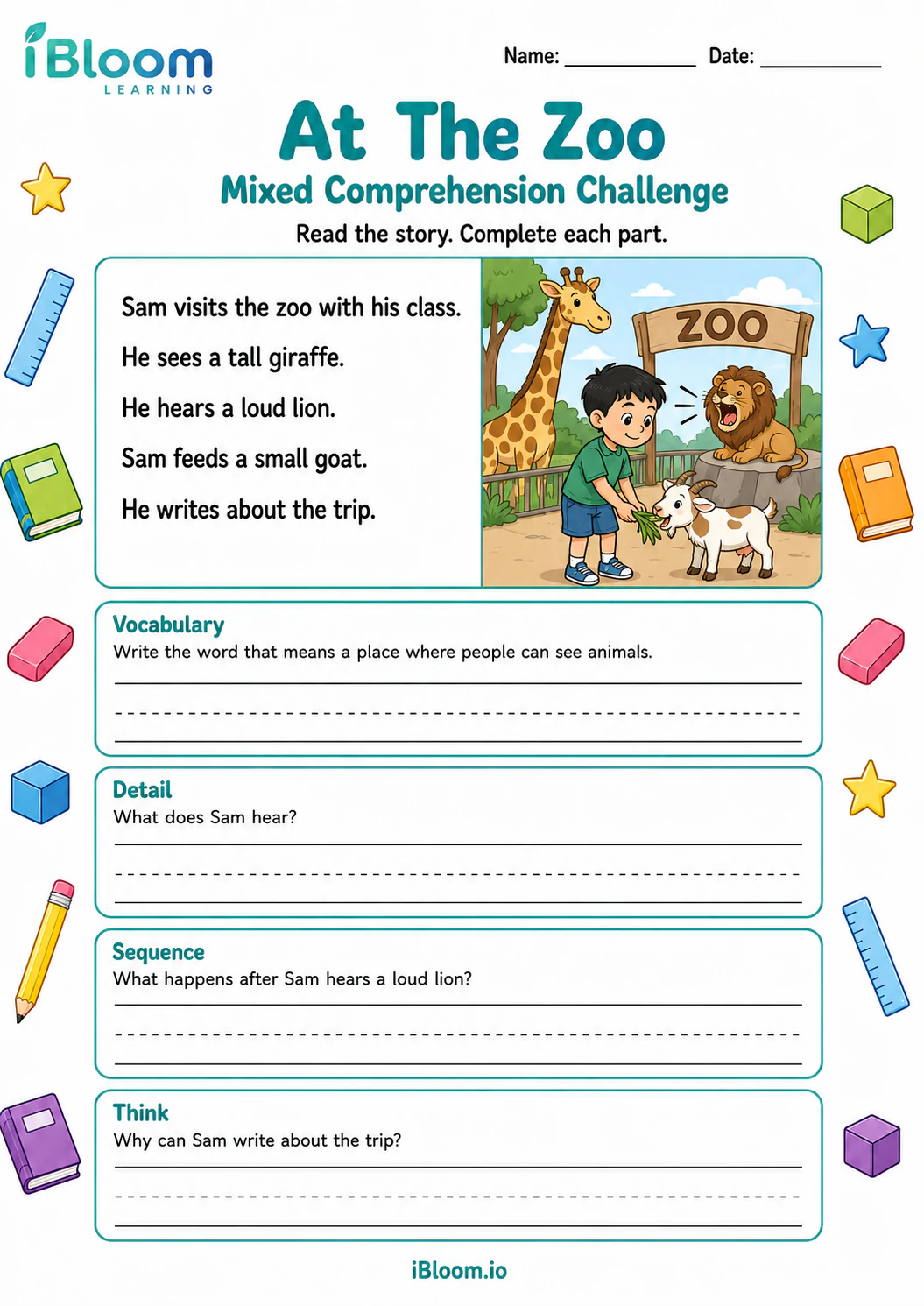
This Grade 1 printable pairs a short original zoo story with 14 questions. Children find details about Sam’s class, the giraffe, lion, and goat, then answer sequence and short-response questions using information from the story. The separate answer key includes sample wording for responses that can vary. The questions practice Common Core RL.1.1 by asking readers to answer questions about key details.
Aligned to RL.1.1
What happens in the zoo story?
Sam visits the zoo with his class, sees a giraffe, hears a lion, and feeds a goat a leaf. The questions return to those exact details and ask children to recall what Sam does before leaving.
- Part A: read the zoo passage
- Part B: choose who visited with Sam
How can a child write from the story?
Look for time clues such as “before the class leaves” and “on the bus.” They help distinguish when Sam writes about the trip from when he tells his teacher which animal he liked best.
- Part C: answer detail and sequence questions
- Use the passage to check each answer
How can you check a response?
A complete response can use the passage’s words or a clear sentence. For example, Sam feeds the goat a leaf, and the goat nibbles it.
- Part D: write short story responses
- The key gives sample wording for open responses
How to use this worksheet
- 1Read the passage once for the main events.
- 2Reread the sentence near the name or action in the question.
- 3Answer short questions with the requested detail.
- 4For written responses, include one accurate fact from the story.
- 5Check sequence answers against the order in the passage.
Common mistakes and quick fixes
The mistake
Saying Sam feeds the giraffe or lion.
The fix
Reread the passage: Sam sees the giraffe, hears the lion, and feeds the goat.
The mistake
Mixing up when Sam writes and when he speaks to his teacher.
The fix
Use “before the class leaves” and “on the bus” to track the order.
The mistake
Writing an opinion without a story detail.
The fix
Add an action from the passage, such as Sam feeding the goat a leaf.
Common Core alignment
The questions use the story as a source and ask students to write from its details.
Answer questions about details in the zoo story.
On this sheet: Questions ask who, what, where, when, and why about events in the story.
Show the official wordingHide the official wording
Ask and answer questions about key details in a text.
What to practice next
Make more practice
Further reading
Questions parents and teachers ask
How long is the zoo story?
The passage is 69 words and the worksheet has 14 questions. Children read about Sam’s class visit, then answer detail, sequence, and short-response questions. A separate answer key gives concise answers and sample wording for responses that can be phrased in more than one way.
Does the worksheet include written answers?
Yes. Several questions ask children to write a short phrase or sentence using a detail from the story. Other questions can be answered briefly. This mix lets Grade 1 readers practice locating information and expressing an answer in their own words.
Which animal does Sam like best?
Sam tells his teacher on the bus that he liked the goat best. He gives a reason: the goat nibbled the leaf gently. Both details appear near the end of the passage, so children can reread those lines to answer.
Should my child reread the passage?
Yes. Have your child find the sentence that answers the question, especially when it asks what happened first or later. Rereading helps distinguish the goat-feeding scene from Sam writing in his notebook before the class leaves. The key follows the same sequence.
How can my child retell the zoo visit?
Ask your child to name an animal Sam sees, one he hears, and what happens with the goat. Then ask what Sam does before leaving. These prompts follow events in the passage and give a simple way to practice retelling in order.