
About this worksheet
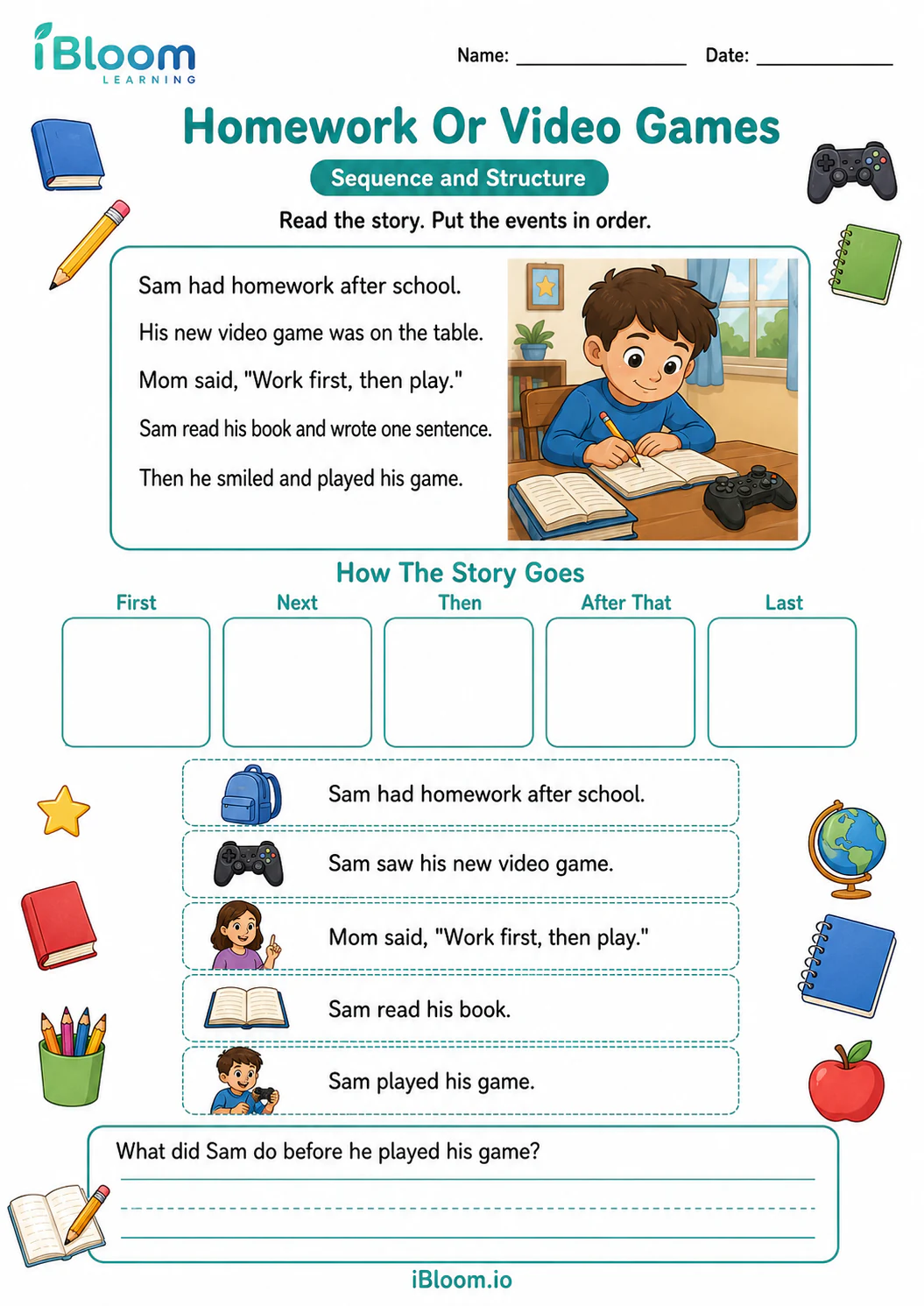
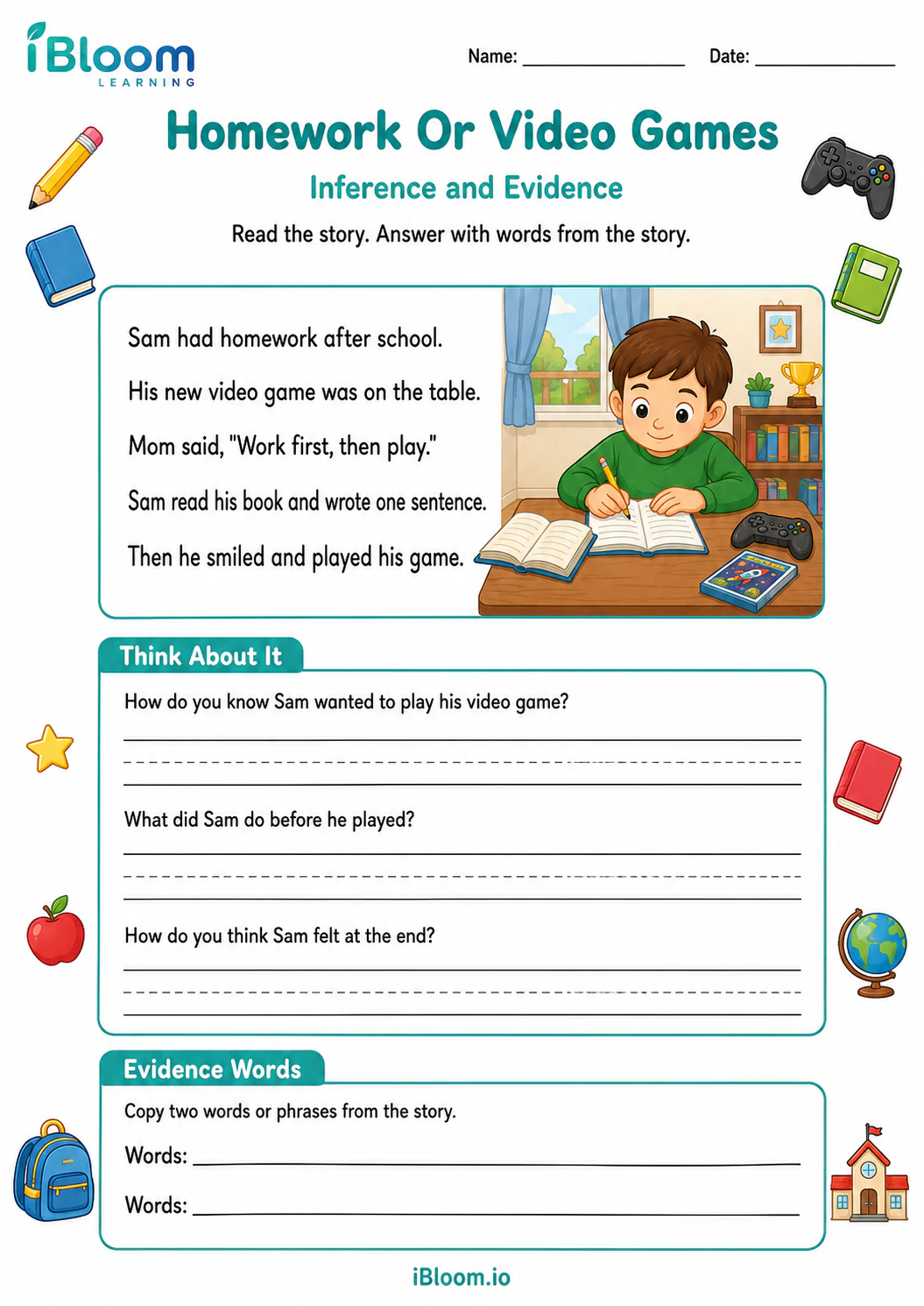
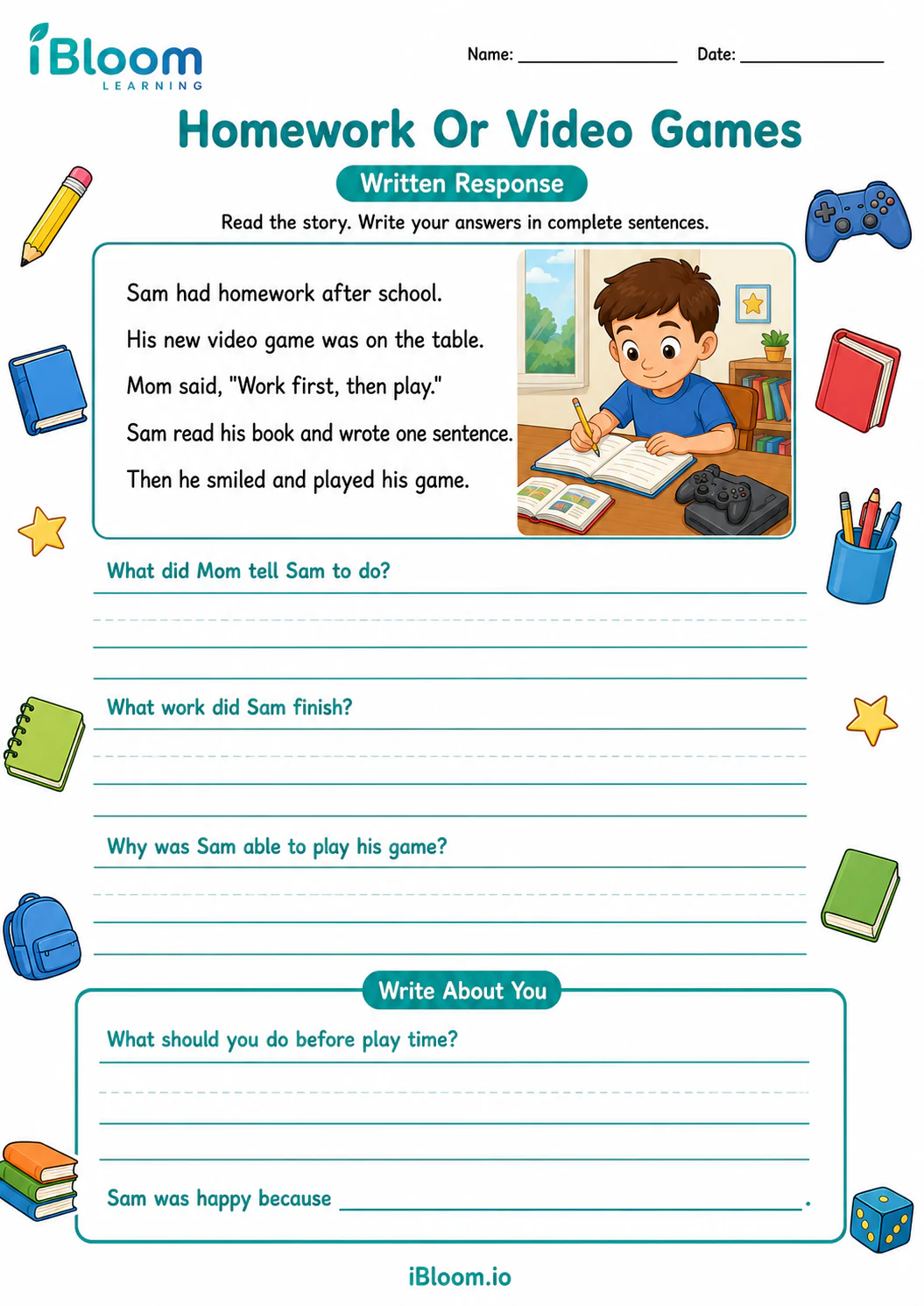
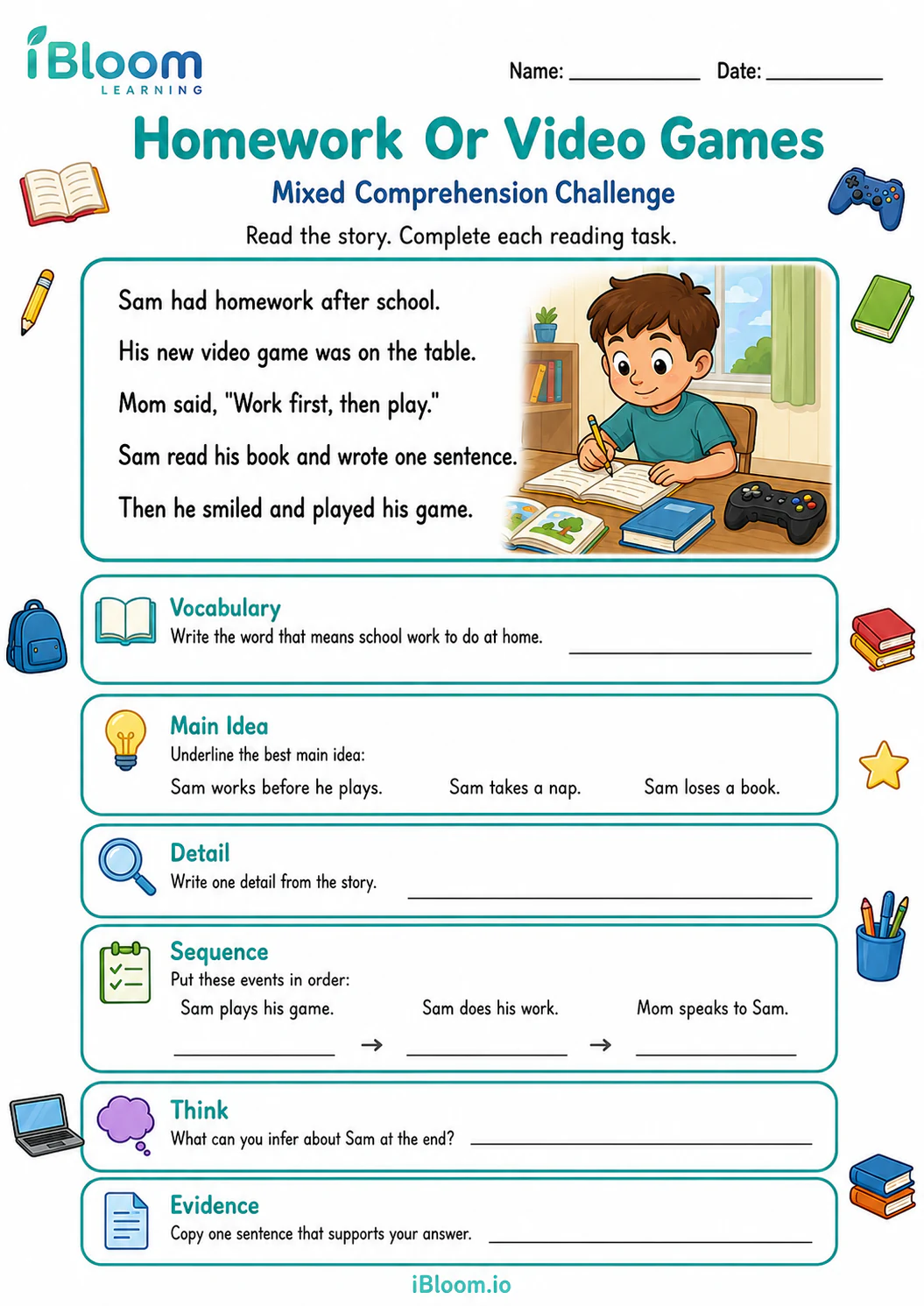
This free Grade 1 printable uses the story “Sam Finishes First” to practice reading for details and using story clues. Children answer eight multiple-choice questions and six short responses about Sam’s homework, game, and seed. An answer key supports checking the details in the passage. The questions practice asking and answering about key details in a text.
Aligned to RL.1.1
How can a reader find a story detail?
Return to the sentence that gives the answer. In question 1, Sam waters a seed in a pot, so “a seed” is the matching detail.
- 1Sam watered a seed in a pot. → He watered a seed.
How does a story help explain a new word?
Use nearby words to understand a word or phrase. Sam reads and writes after school before he plays, so homework means schoolwork to finish.
How can a reader tell events in order?
Time clues help readers put events in order. Sam finishes homework before playing, then waters the seed before dinner.
How to use this worksheet
- 1Read the direction for each part together.
- 2Complete one question at a time, pointing back to the sentence or drawing when useful.
- 3Pause after each part and ask the learner to explain one answer.
- 4Use the answer key to review answers and talk through any changes.
Mistakes to watch for
The mistake
Choosing an answer that sounds right but is not in the story.
The fix
Point to the sentence that gives the detail.
The mistake
Guessing a word meaning without reading nearby sentences.
The fix
Reread the sentence and connect the word to Sam’s actions.
The mistake
Mixing up which event happened first.
The fix
Look for time clues such as “after school” and “before dinner.”
Common Core State Standards for English Language Arts alignment
This worksheet gives children practice with the named skill.
Questions ask and answer about key details in Mia’s story.
On this sheet: Questions ask and answer about key details in Mia’s story.
Show the official wordingHide the official wording
Ask and answer questions about key details in a text.
What to practice next
Make more practice
Further reading
Questions parents and teachers ask
What does this Grade 1 worksheet include?
The worksheet includes Sam’s story, eight multiple-choice questions, and six written responses. Children look for details about homework, play, and the seed he plants. The answer key follows the worksheet so an adult can check each response against the passage.
Can an adult read the directions aloud?
Yes. An adult may read the directions or passage aloud, then invite the child to point to the sentence that supports an answer. The questions still ask children to use details from Sam’s story, including what he does before and after playtime.
How should we use the answer key?
Check the key after the child completes a few questions. For a missed detail, reread the related sentence in Sam’s story and compare it with the answer choices or written response. This keeps the discussion tied to what the passage actually says.
Can this be used in a classroom?
Yes. Use the passage for a brief whole-group read, partner rereading, or independent practice. The eight choice questions and six responses give children several chances to return to story details and explain what happened in Sam’s story. together. together. together.
What should we do after finishing?
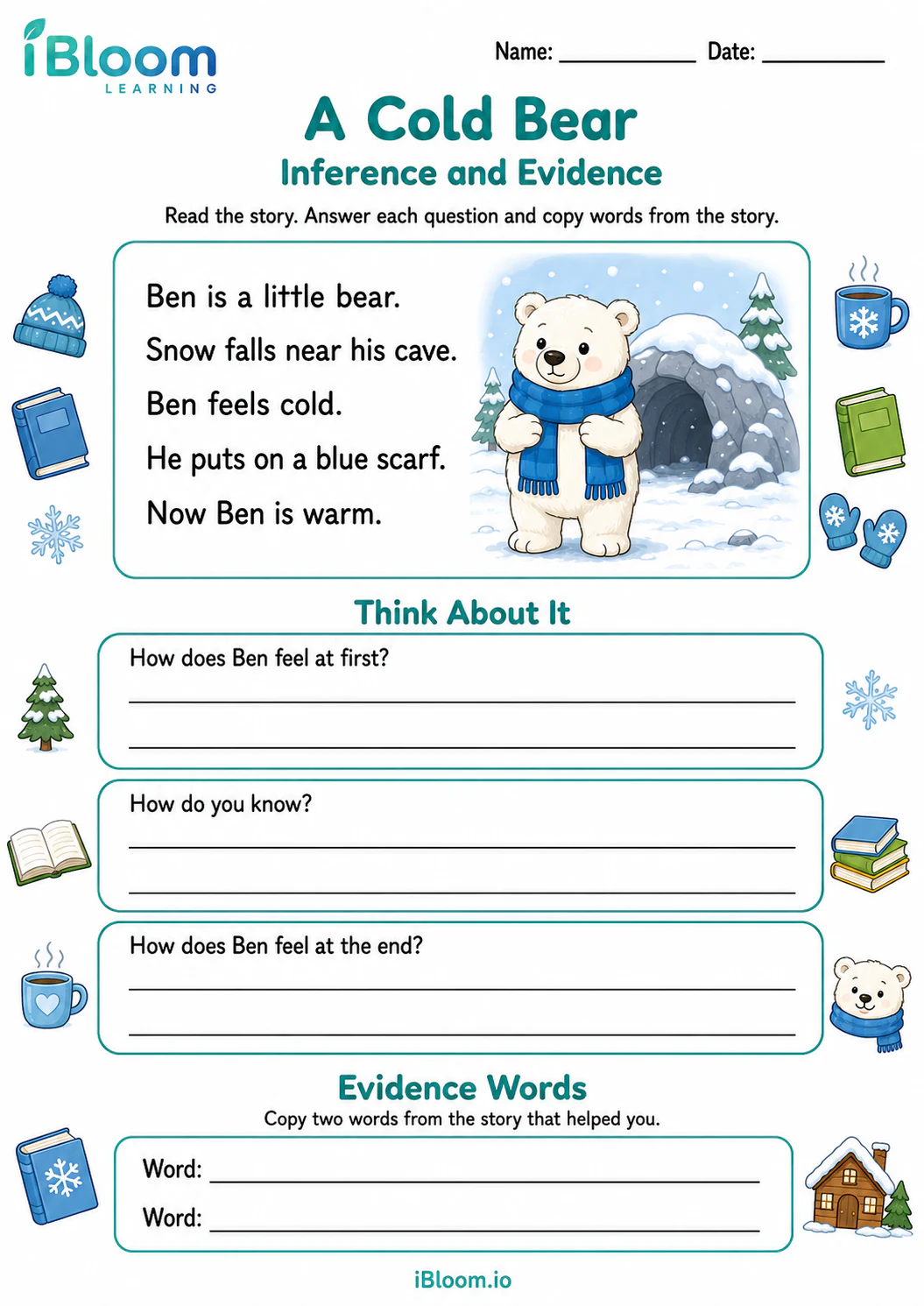
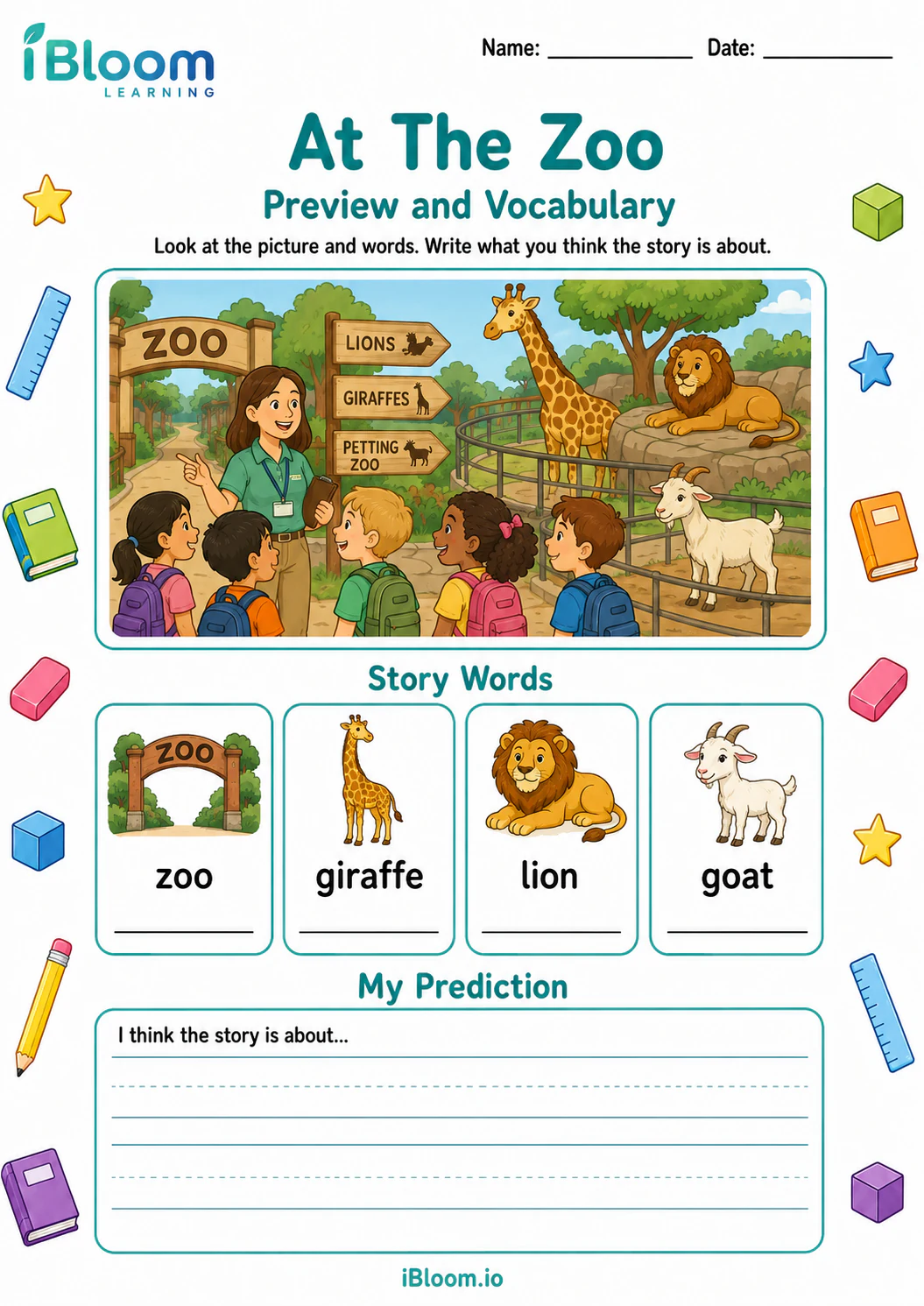
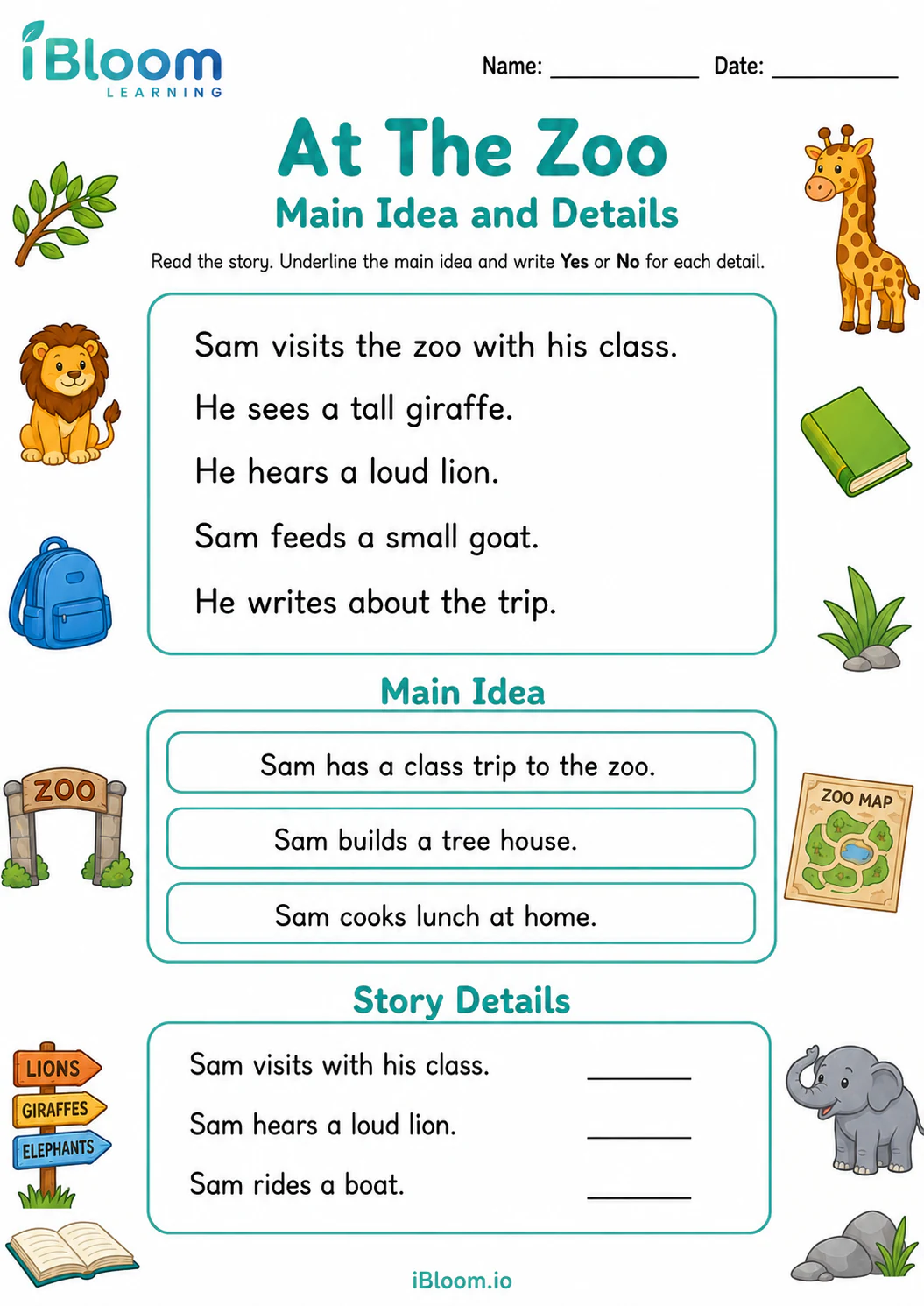
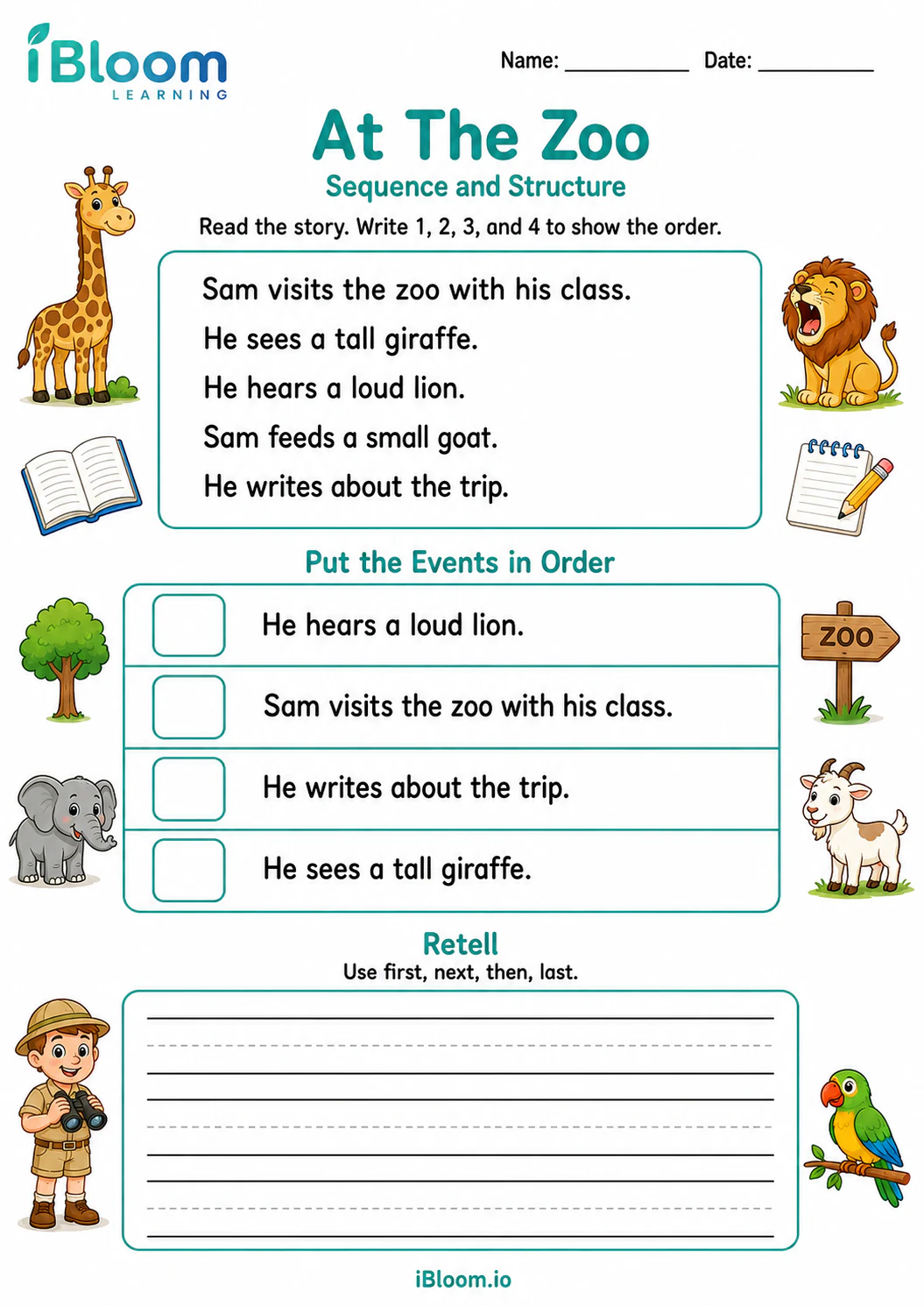
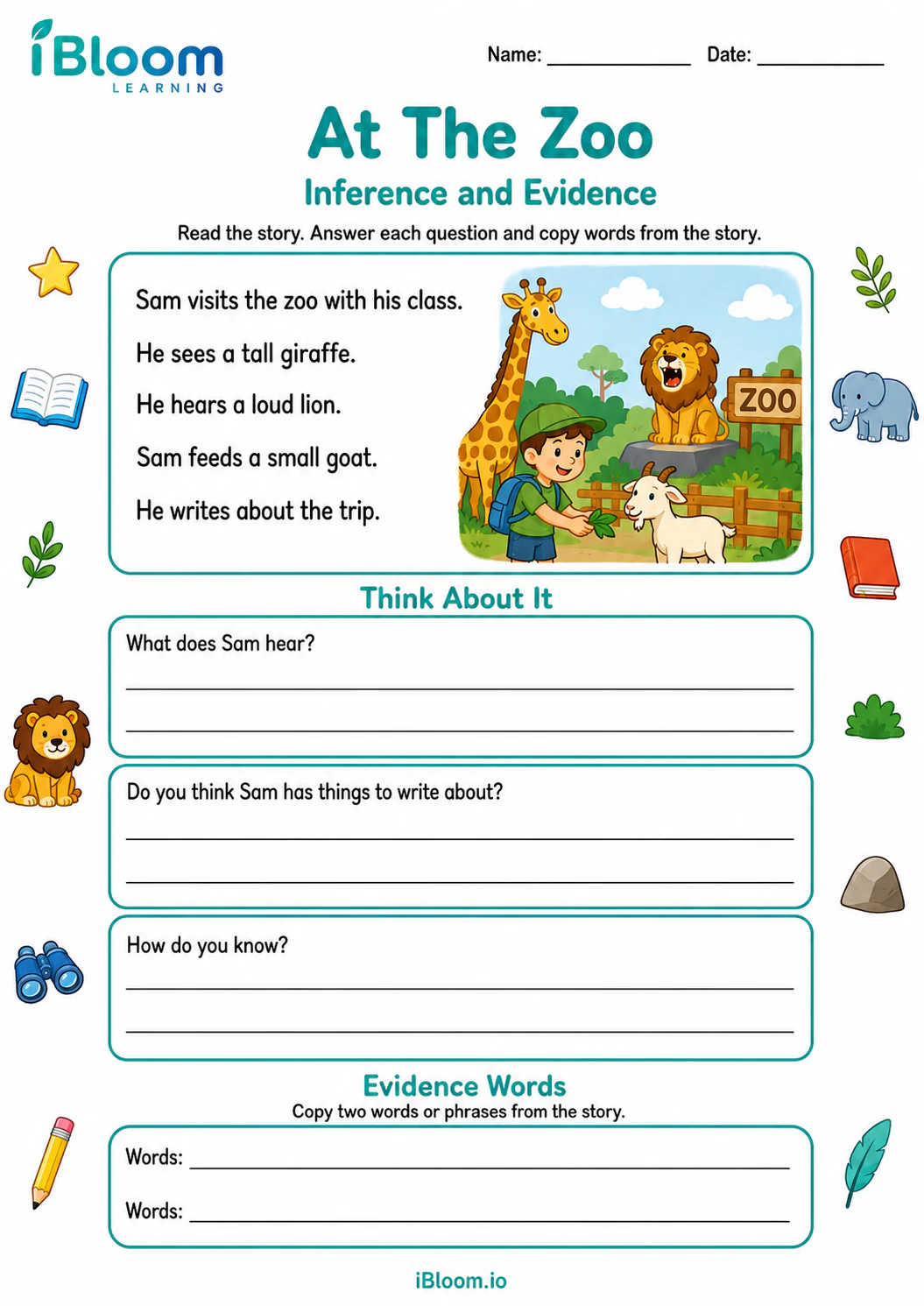
Ask the child to name the story clue behind one answer. Then continue with another Grade 1 story page, such as A Cold Bear or At the Zoo, to practice finding and explaining details in a new passage. together. together.