
About this worksheet
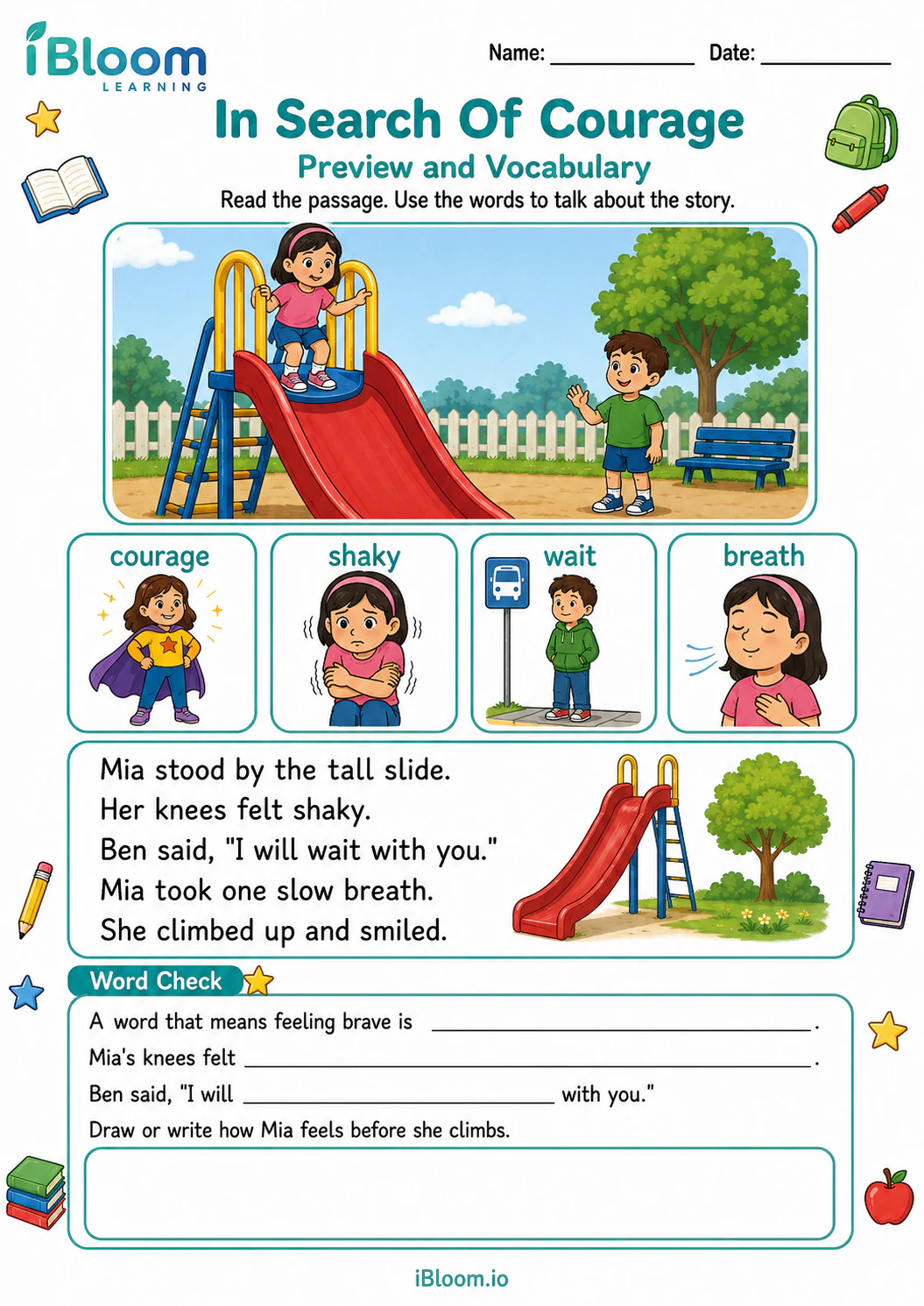
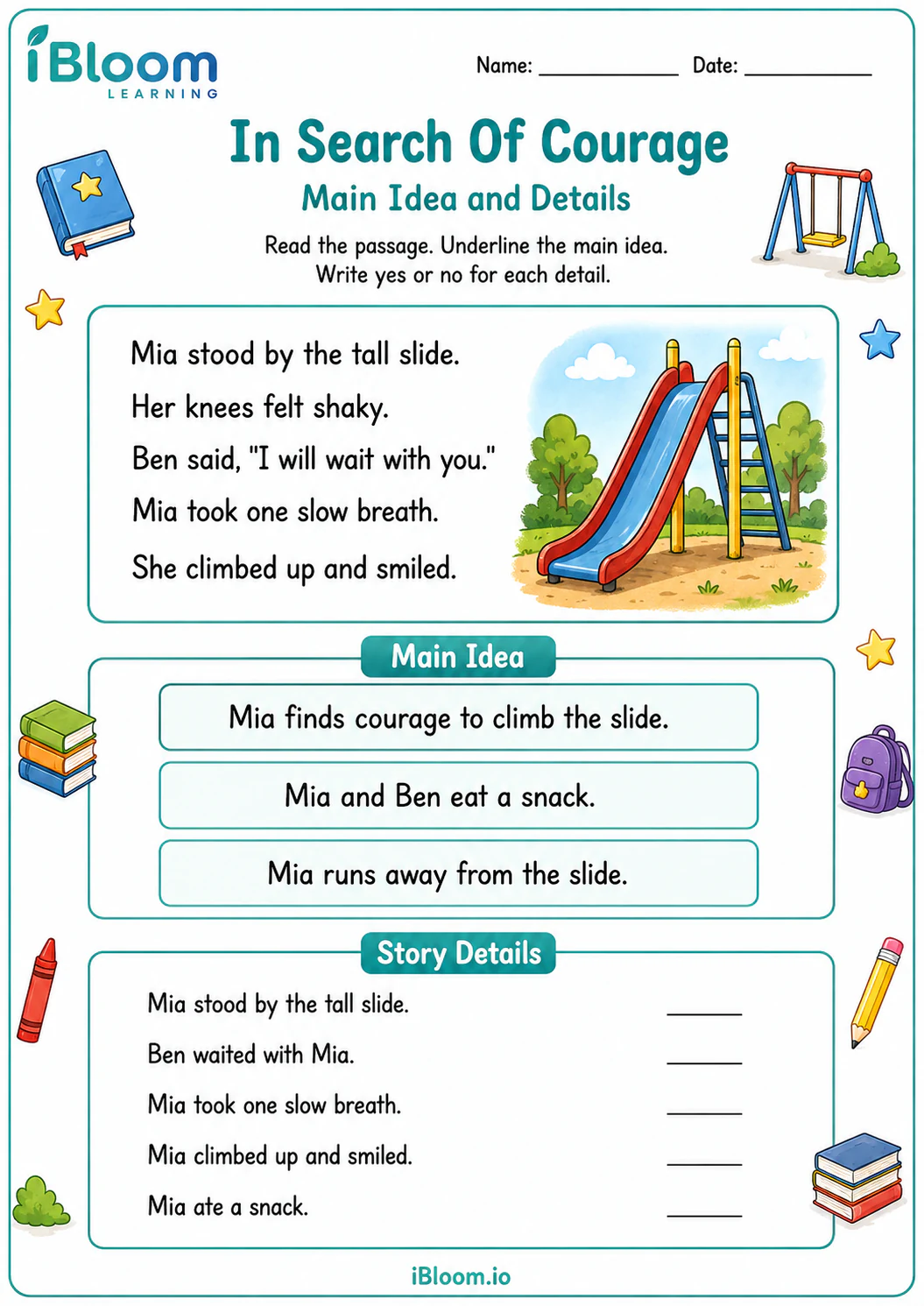
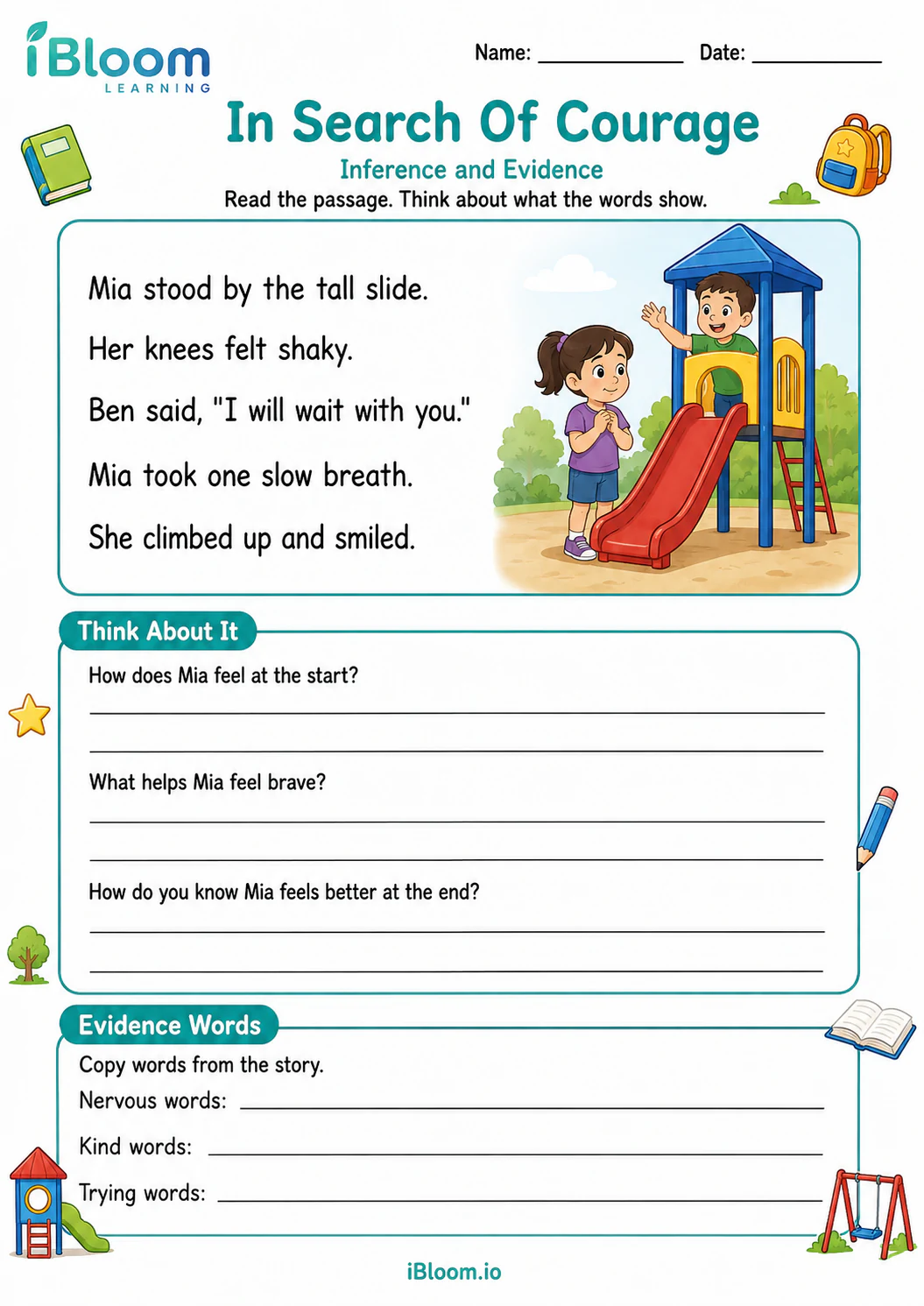
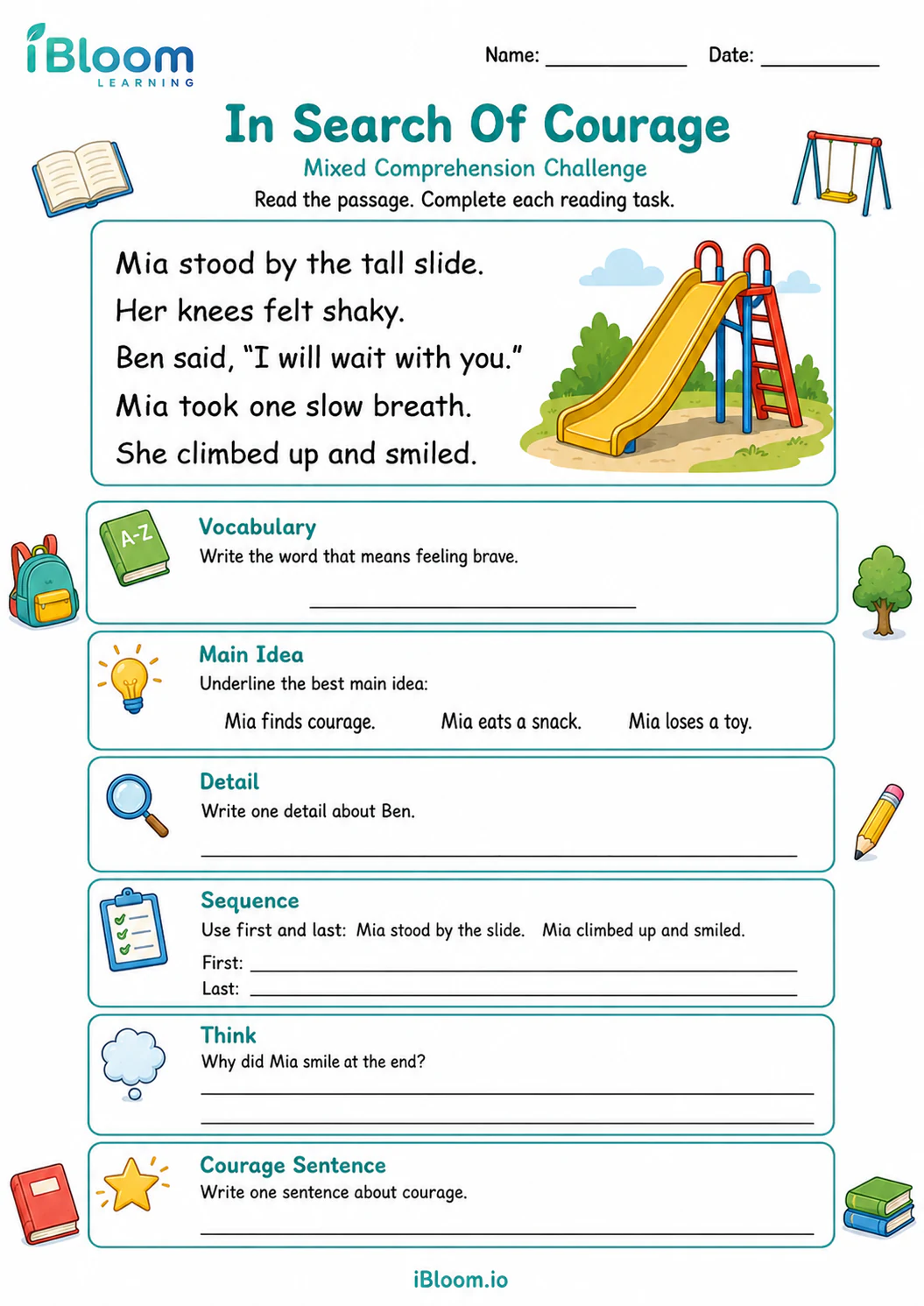
This Grade 1 worksheet pairs a short story about Mia and a tall slide with questions about story details and written responses. Children recall what Mia and Ben do, then use a detail to explain Mia’s feelings and courage. The passage is about 75 words and the sheet has 14 questions across three worksheet pages. It practices Common Core RL.1.1 by asking and answering questions about key details.
Aligned to RL.1.1
What is on this worksheet?
The passage follows Mia as she feels nervous about a tall slide, takes a slow breath, climbs the steps and slides down. Ben waits with her.
Questions 1–8 check story details. Questions 9–14 ask children to explain a feeling or action and suggest what Mia might tell herself next time.
- Part A: read the story about Mia and the tall slide
- Part B: answer questions about the story’s characters, actions and feelings (questions 1–8)
- Part C: write short responses using story details (questions 9–12)
- Part D: explain bravery with a detail and make a personal connection (questions 13–14)
How can a first grader answer with a story detail?
A helpful response names an idea and adds a detail from the passage. For example, Mia felt nervous because her knees felt shaky.
Children can say an answer aloud before writing it. Accept different wording when it matches the story.
- 1Question: What made Mia feel nervous?
- 2Sample: Her knees felt shaky.
How does Mia show courage?
The story gives clues about Mia’s feelings and choices. Her shaky knees show that she is nervous; taking a breath and climbing the steps show that she is willing to try.
Invite your child to point to a line from the passage before answering a “how” or “why” question.
- 1Feeling: Mia is nervous.
- 2Action: She climbs the steps and slides down.
How to use this worksheet
- 1Read the story once to learn what happens.
- 2Read the part directions before answering each group.
- 3For a written response, find the sentence that gives a useful clue.
- 4Say the response aloud, then write a short complete thought.
- 5Use the answer key to check details and discuss responses that use different wording.
Common mistakes and quick fixes
The mistake
Giving an answer that does not match the story.
The fix
Find the sentence that tells what Mia did or felt, then use that detail.
The mistake
Naming a feeling without pointing to a clue.
The fix
Add the story detail that shows the feeling, such as Mia’s shaky knees.
The mistake
Answering “why” with only “because.”
The fix
Finish the thought with a reason from the passage.
Common Core alignment
This page gives Grade 1 practice with reading comprehension and written response. The cited Common Core standard describes the skill practiced here.
Ask and answer questions about a story’s key details.
On this sheet: Children answer questions about what Mia does and feels, using details from the story.
Show the official wordingHide the official wording
Ask and answer questions about key details in a text.
What to practice next
Make more practice
Further reading
Questions parents and teachers ask
What is the story about?
Mia feels nervous about trying a tall slide. Ben says he will wait with her, and Mia takes a slow breath before climbing. She slides down, laughs and feels proud that she tried. The questions ask children to recall events and explain what shows courage.
What does written response mean in Grade 1?
A child answers in their own words instead of choosing an option. A short phrase or sentence is enough when it answers the question. The answer key provides a model, and children may give a different response that still fits the story.
Can my child use a different answer from the key?
Yes. The written-response key gives sample answers, not the only acceptable wording. Accept another response if it makes sense and matches the story. For example, a child might say Mia was brave because she climbed even though her knees felt shaky.
How can I help without giving the answer?
Invite your child to find the sentence that tells what Mia did, then say the answer aloud before writing. If a question asks why, ask which story detail supports the idea. This helps children connect an answer to evidence in a simple way.
How many questions are on the worksheet?
There are 14 questions. The first eight use multiple-choice answers to check story details; the final six ask for short written responses. The separate answer key gives correct choices and sample responses, which can help an adult check answers while allowing children to use their own words.