
About this worksheet
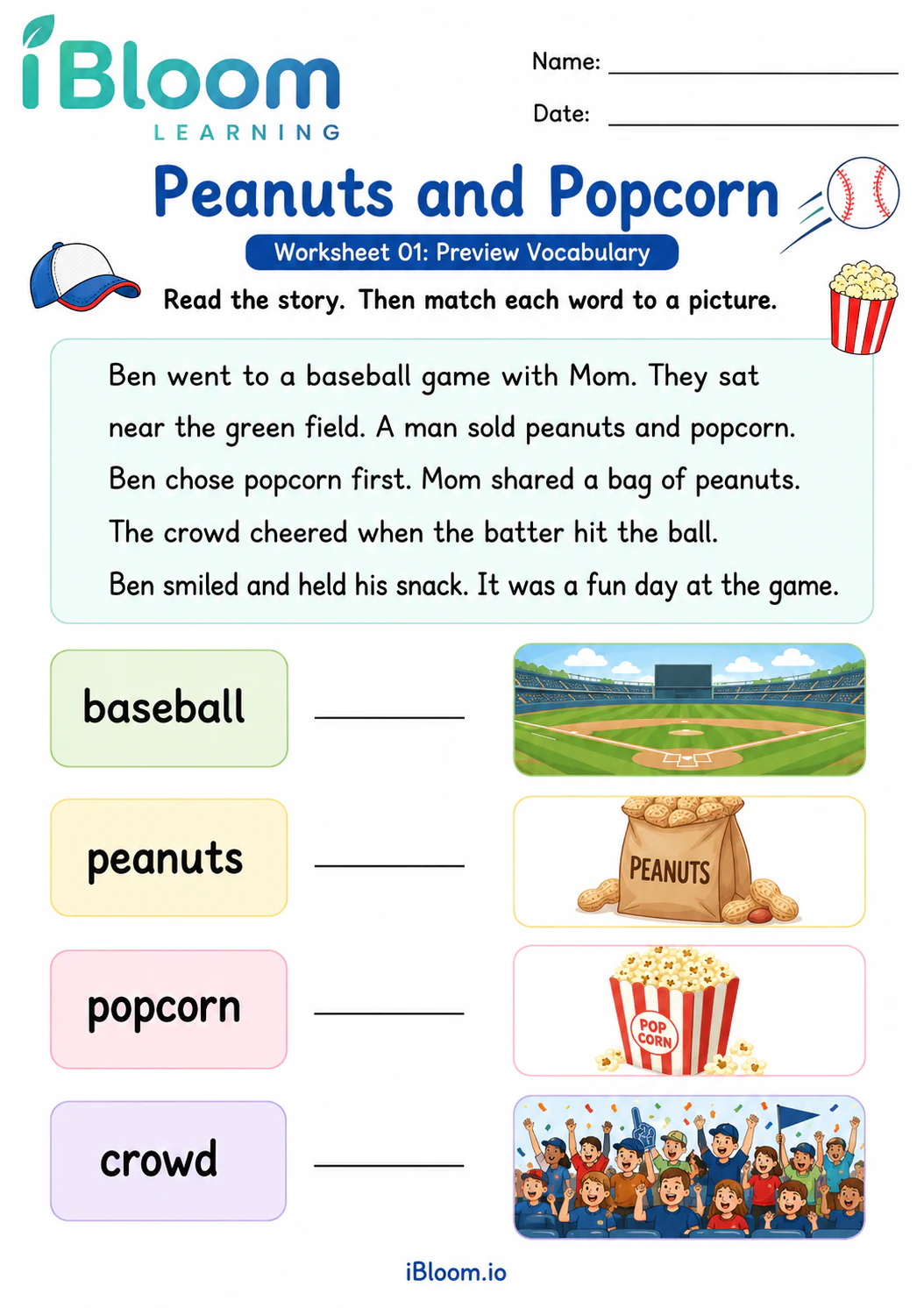
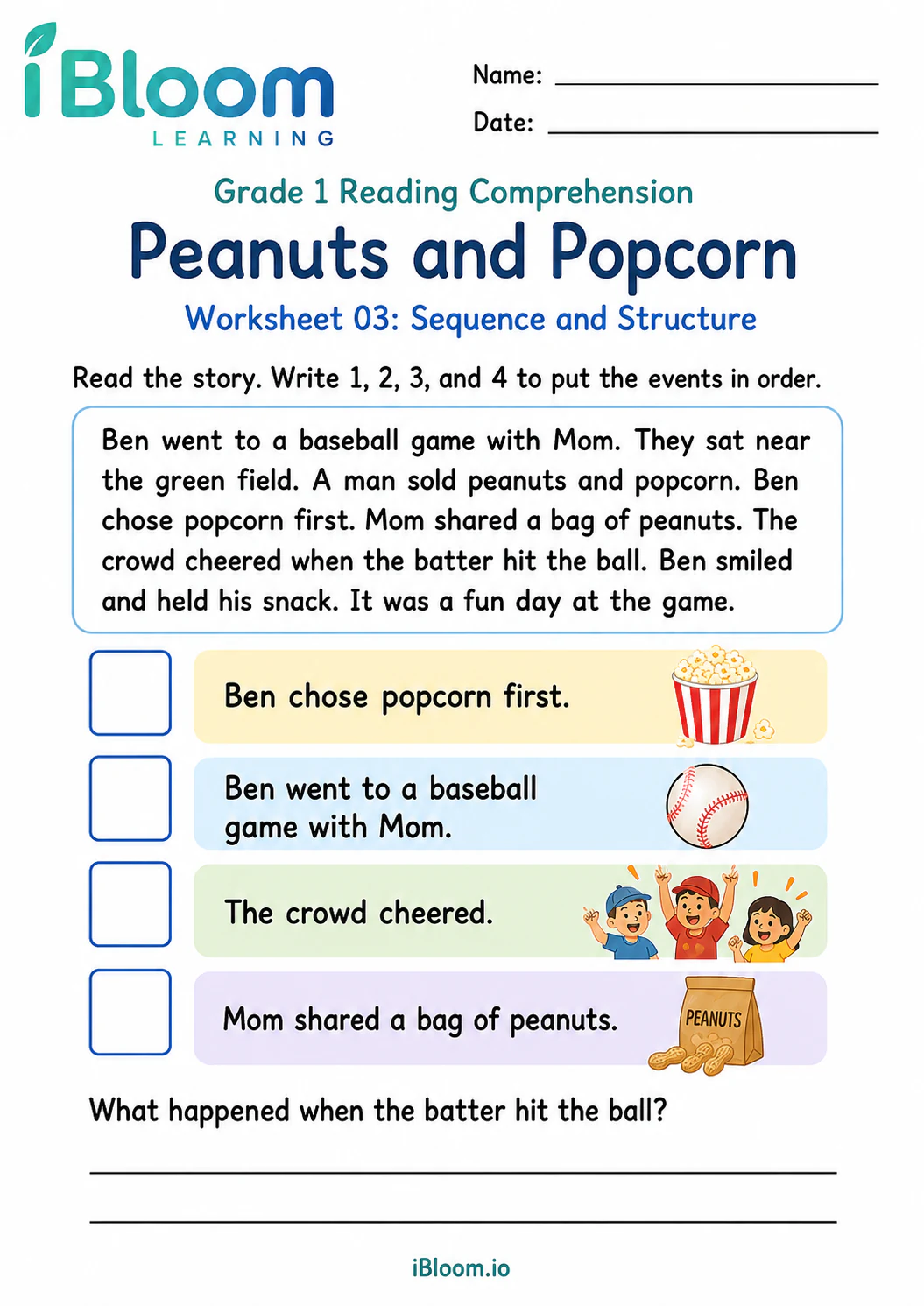
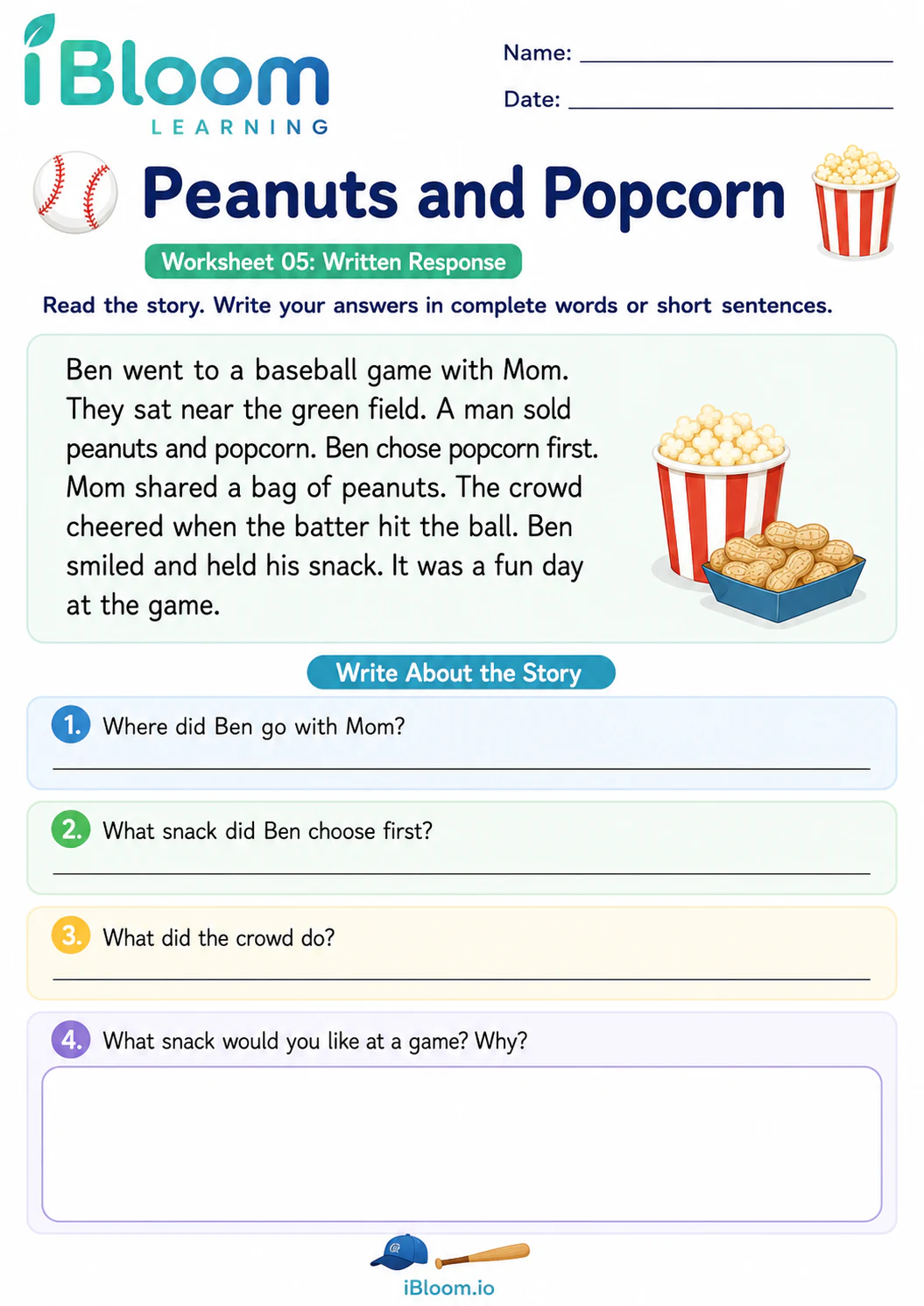
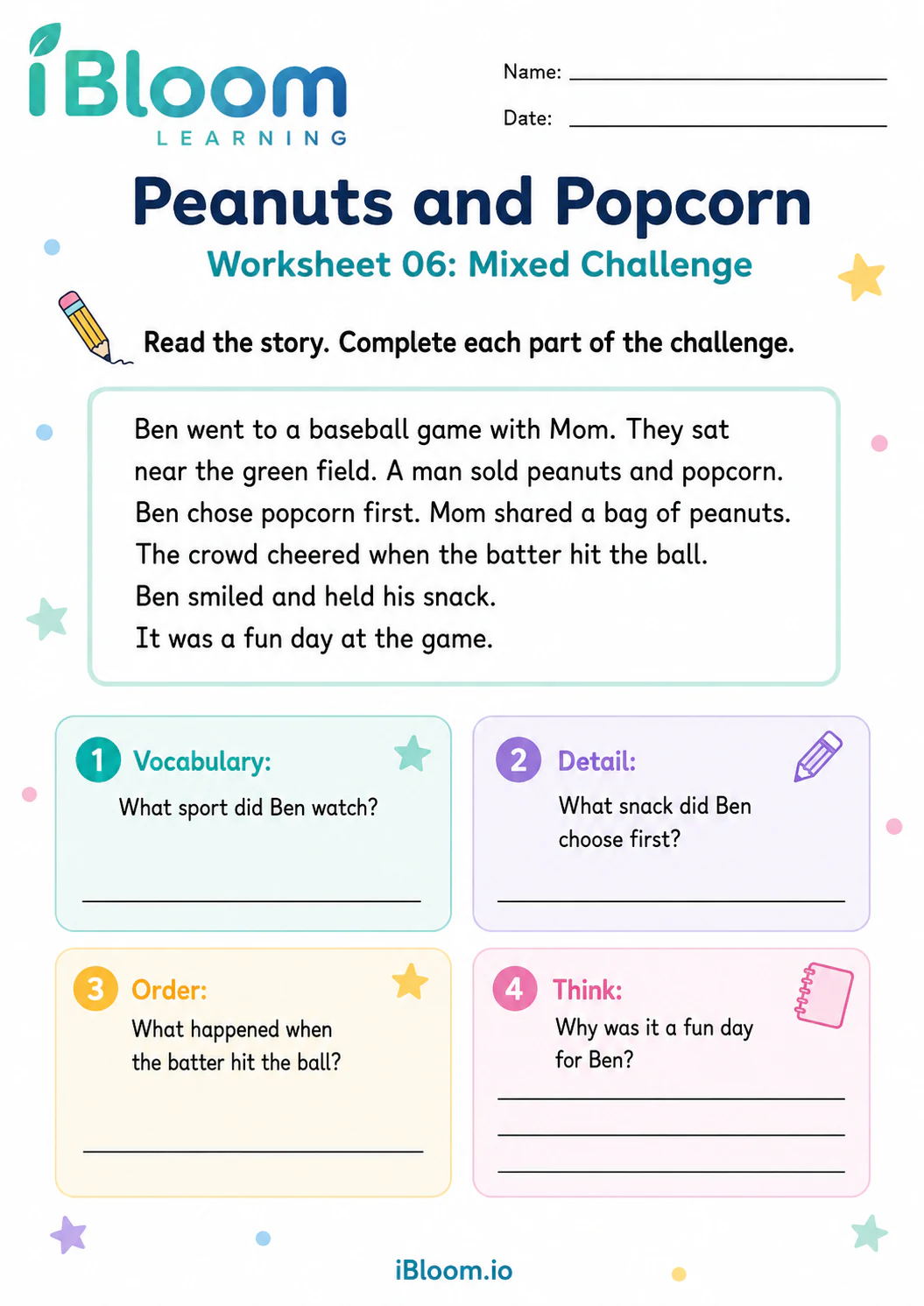
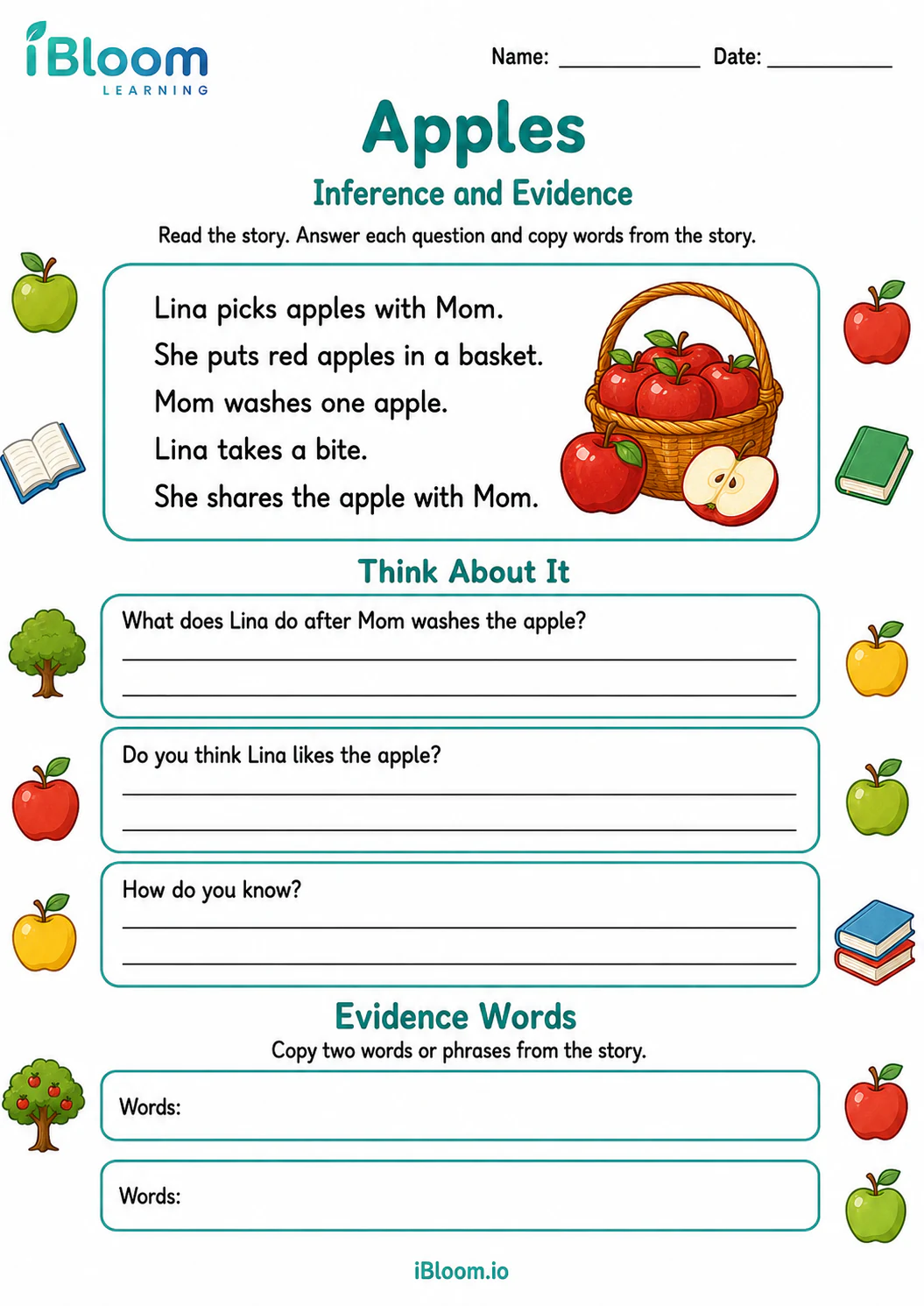
This free Grade 1 printable reading worksheet uses an original story about Ben, Mom, peanuts, popcorn, and a baseball game. Children infer how Ben and Mom feel, why characters act as they do, and what happens next, then choose a detail that supports each idea. Sixteen multiple-choice questions practice reading for clues. A separate answer key is included. It practices CCSS RL.1.1 through questions about key story details.
Aligned to RL.1.1
How do readers make an inference?
An inference is an idea a story hints at. Combine a story clue with what you already know. Ben smiles and likes hearing the cheers, so readers can infer that he is enjoying the game.
Questions 1 and 2 pair an inference with a clue: Ben probably feels happy because the passage says he smiled.
- 1Clue: Ben smiled.
- 2Think: People often smile when they feel pleased.
- 3Infer: Ben feels happy at the game.
- 4Evidence: “Ben smiled.”
What counts as story evidence?
Evidence is a detail the passage states. The crowd cheered loudly after the batter hit the ball. That detail supports the idea that the hit excited the crowd. The inference is the idea; the evidence is the sentence that supports it.
What will children practice here?
Sixteen questions ask children to infer feelings, reasons, and likely events, then select a story detail that supports an idea. Each answer is a choice, so readers can focus on linking an inference to the text.
How to solve an inference question
- 1Read the question and identify the idea it asks about.
- 2Find a sentence in the passage that gives a clue.
- 3Combine that clue with what you know about the situation.
- 4Choose the inference that fits the clue.
- 5For an evidence question, choose the detail stated in the passage.
Common reading mix-ups
The mistake
Picking an answer that sounds possible but has no story clue.
The fix
Point to a sentence that supports the idea before choosing.
The mistake
Calling a story detail an inference.
The fix
A detail is stated in the passage; an inference is an idea you figure out from it.
The mistake
Choosing evidence about the right character but the wrong idea.
The fix
Check that the detail explains the feeling, reason, or prediction in the question.
Common Core alignment
Students answer questions about key details and use those details to support simple inferences.
Ask and answer questions about key details in a text.
On this sheet: Students answer questions about the story and select details that support their inferences.
Show the official wordingHide the official wording
Ask and answer questions about key details in a text.
What to practice next
Make more practice
Further reading
Questions parents and teachers ask
What is an inference?
An inference is an idea a reader figures out from story clues and what the reader already knows. Ben smiles and enjoys hearing the crowd cheer. Readers can infer that he is having a good time because the passage gives those details.
How is evidence different from an inference?
Evidence is a detail stated in the passage, such as “Ben smiled.” An inference is the idea drawn from that detail, such as Ben feeling happy. The worksheet asks children to choose an idea and, in paired questions, a story clue that supports it.
What story does this worksheet use?
The passage follows Ben and Mom at a baseball game. Ben chooses popcorn, Mom shares peanuts, and the crowd cheers after a batter hits the ball. These details give children clues to use when answering questions about feelings, actions, and events.
How many questions are included?
There are 16 multiple-choice questions in two question parts after the passage. Children infer feelings, reasons, and likely events, then find details that support those ideas. The separate answer key gives the correct choice for each item. Encourage the reader to find the matching sentence.
How can I help my first grader use evidence?
Ask your child to point to a sentence before choosing an answer. Then ask how that clue helps the reader know. This keeps the answer connected to the story and gives a simple way to explain the difference between a stated detail and an inference.