
About this worksheet
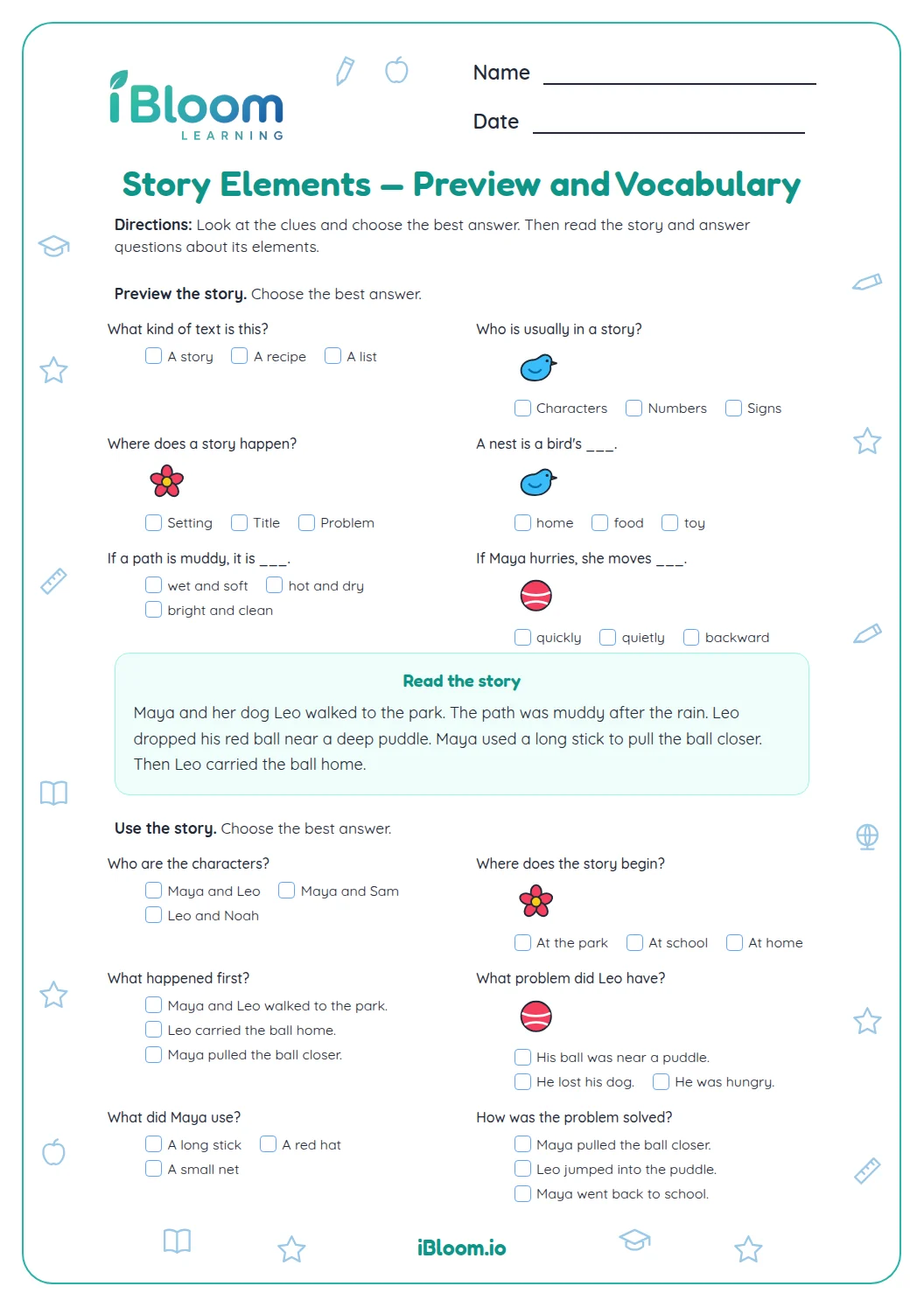
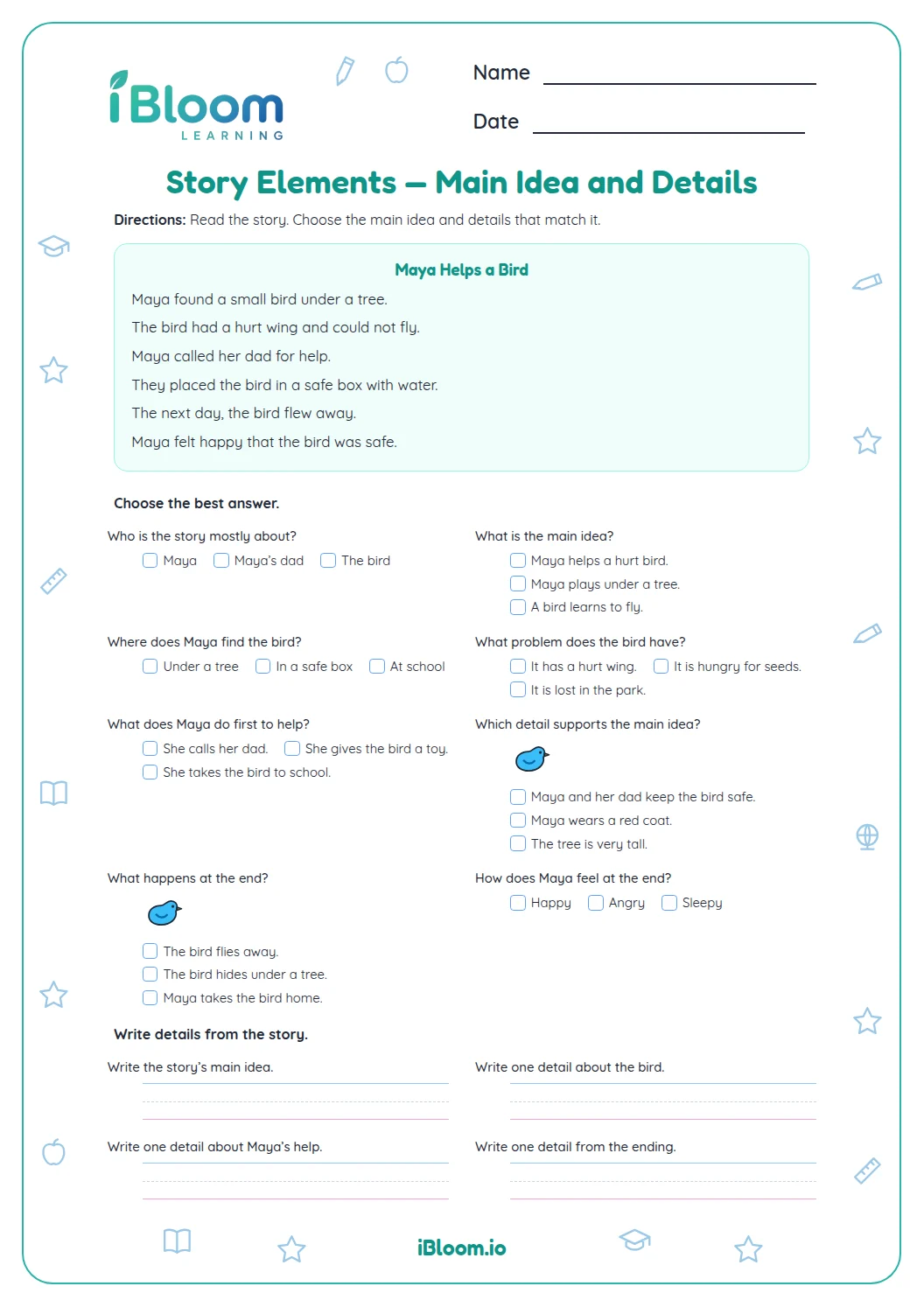
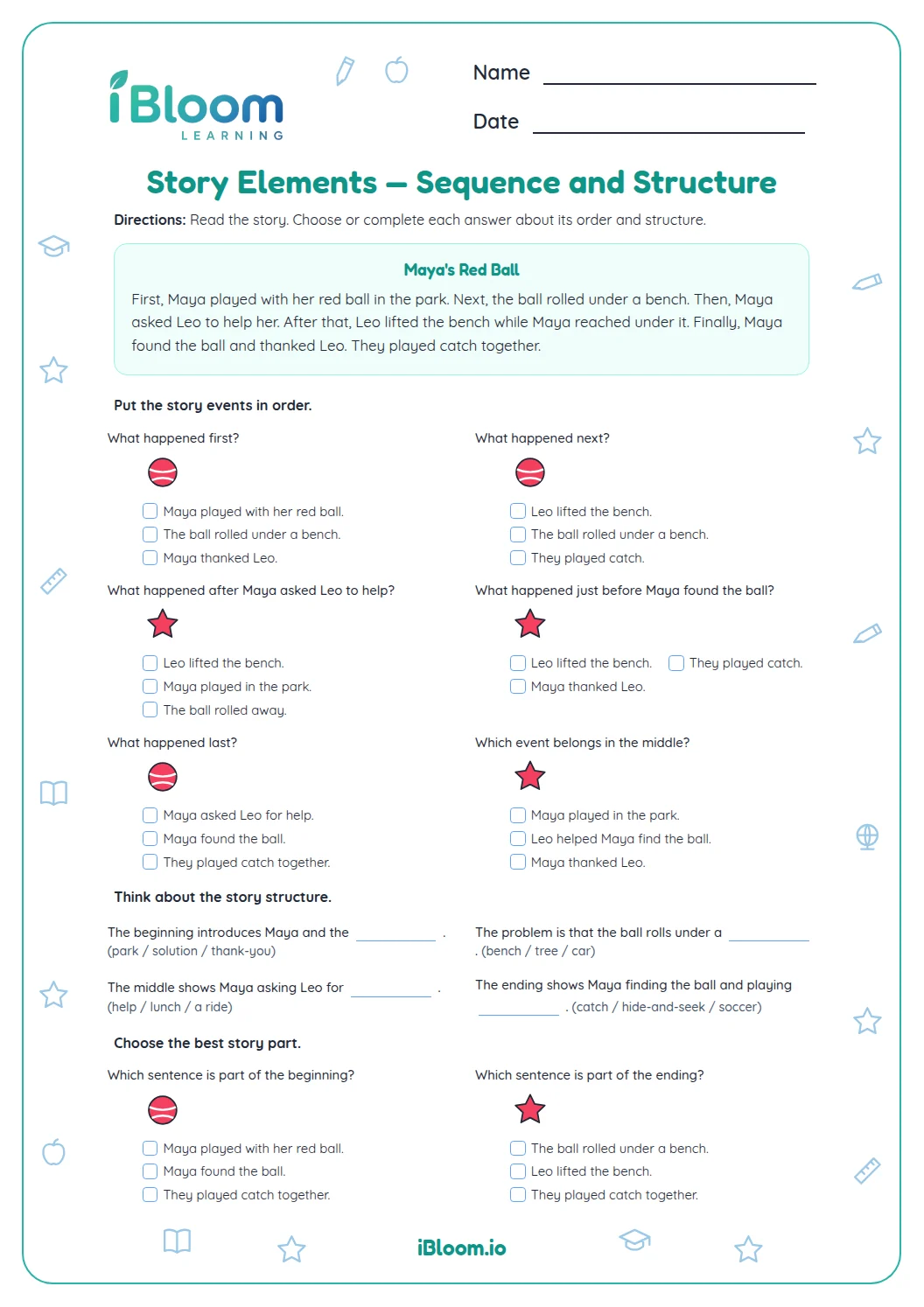
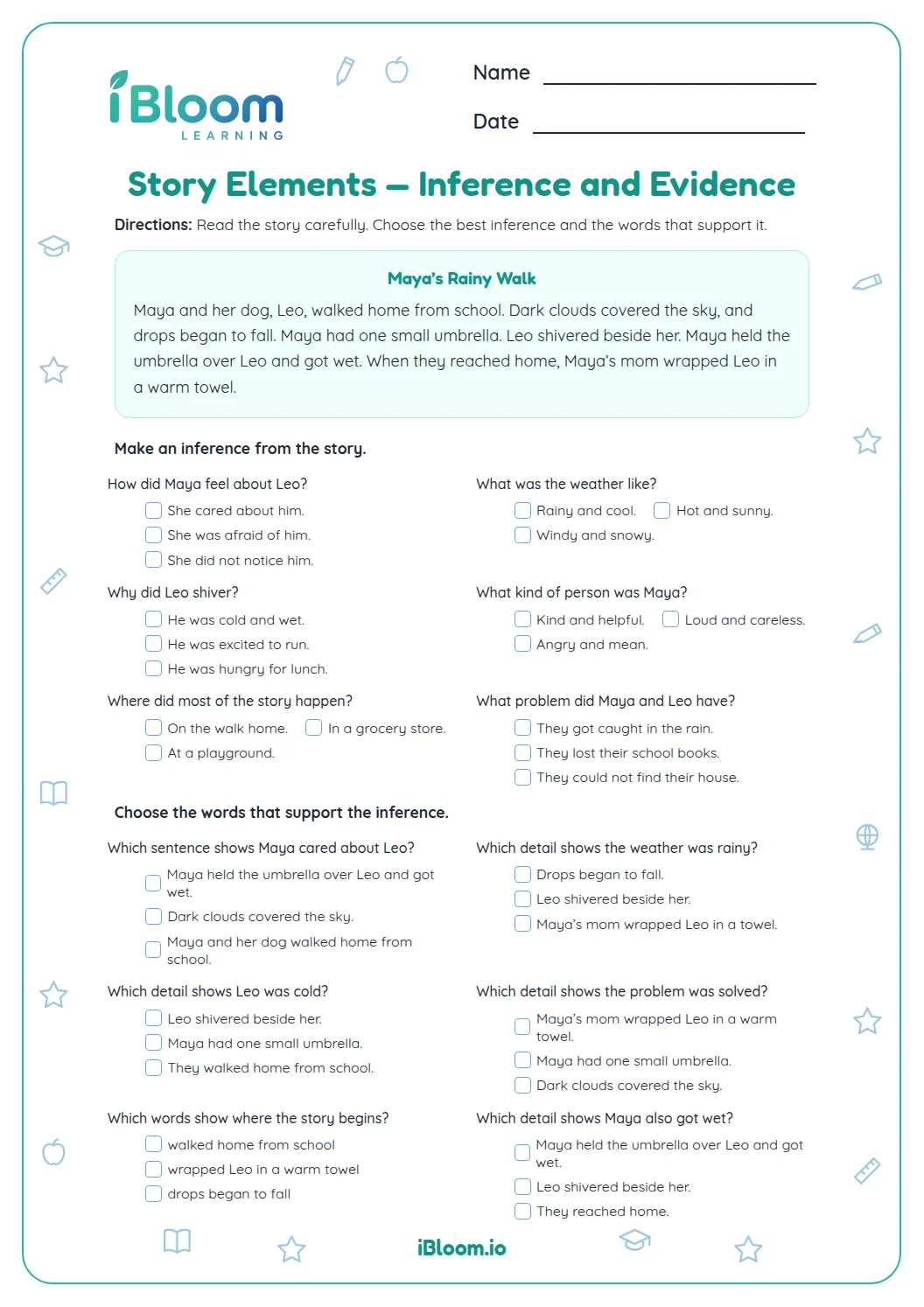
This Grade 1 printable pairs an original story about Maya and Leo with 14 questions on story elements. Children name the characters and setting, retell what happened, and support an idea with a detail from the text. The sequence moves from direct recall to simple reasoning and written responses. It practices CCSS RL.1.3 by asking students to describe characters, settings, and major events using key details. The separate answer key includes sample responses where more than one answer can work.
Aligned to RL.1.3
What is in the garden story?
Maya and Leo plant beans with Grandma. When wind carries their paper labels away, the children make a new sign together. The story ends with a small clue that their plants are growing.
The questions revisit the story’s people, place, and important events.
How can a reader support an answer?
A strong answer points to a detail the story actually gives. For question 12, “Tiny green leaves peeked through the soil” shows that the garden was growing.
Some questions accept more than one sensible response. The answer key gives a sample and children can check whether their own answer fits the story.
- 1Question: Name one detail that shows the garden was growing.
- 2Sample answer: Tiny green leaves peeked through the soil.
How do the questions build comprehension?
The first questions ask who, where, and what. Later questions ask children to put events in order, infer how a character feels, and explain an idea with evidence.
How to use the worksheet
- 1Read the story aloud once, or let the child read it independently.
- 2Ask the child to point to the sentence that helps with each answer.
- 3Complete the event-order questions by checking what happened first, next, and last.
- 4For written answers, encourage a short complete thought and a story detail.
- 5Compare responses with the answer key and accept other answers that match the text.
Common story-reading slips
The mistake
Mixing up which child watered the seeds.
The fix
Return to the sentence that names Leo and the blue watering can.
The mistake
Retelling events in the order they were mentioned in a question.
The fix
Use the story itself to find the first, next, and final events.
The mistake
Giving an opinion without a story detail.
The fix
Point to a word or sentence that supports the answer, such as the new sign or tiny leaves.
Common Core alignment
This page asks readers to describe story characters, setting, and events with details.
Use key details to describe the characters, setting, and major events.
On this sheet: Questions ask children to name characters and setting and recount important events using story details.
Show the official wordingHide the official wording
Describe characters, settings, and major events in a story, using key details.
What to practice next
Make more practice
Further reading
Questions parents and teachers ask
What does the story-elements worksheet include?
It includes one original 71-word story about two children helping in a garden and 14 questions. The questions cover characters, setting, events, simple inference, and text details. A separate answer key gives exact answers and sample responses for open-ended items.
Can a first grader complete this independently?
A child who reads short Grade 1 passages can try it independently, though an adult may want to read the story aloud first. The early questions use direct details, while the later questions ask for a short written explanation or prediction.
How should I check a written response?
Check that the response answers the question and matches something in the story. The key gives sample wording, but a different response is acceptable when it uses a true story detail. For predictions, look for an idea that reasonably follows from the ending.
What does question 12 teach?
Question 12 asks a child to find evidence that the garden is growing. The story says that tiny green leaves peek through the soil, so this is a detail that supports the answer. Children practice returning to the text rather than guessing.
How long does the worksheet take?
Plan for about 15 minutes, depending on whether the child reads the passage alone and how much time written answers take. The passage is short, and the questions progress from quick recall to responses that need a sentence or detail.