
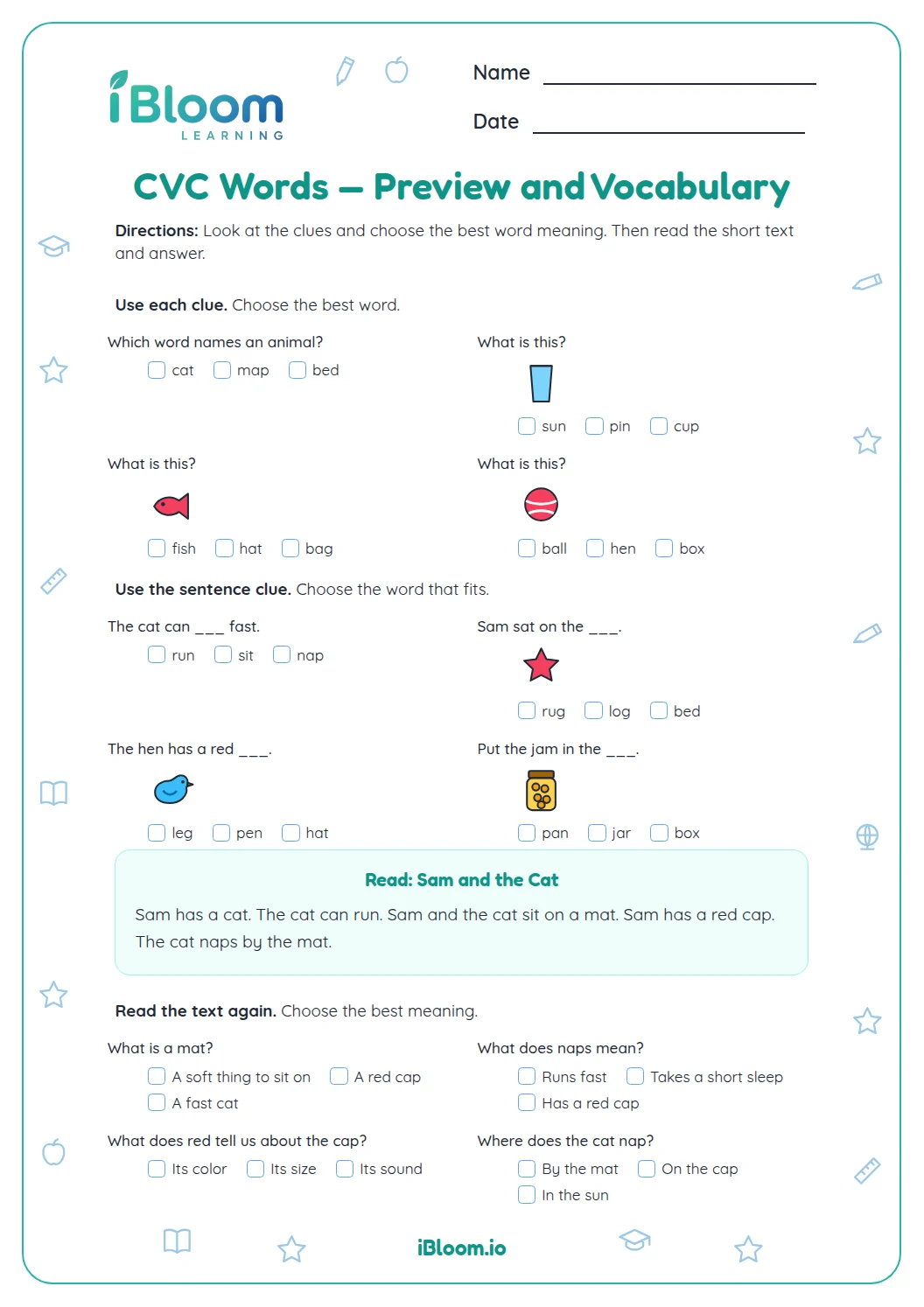
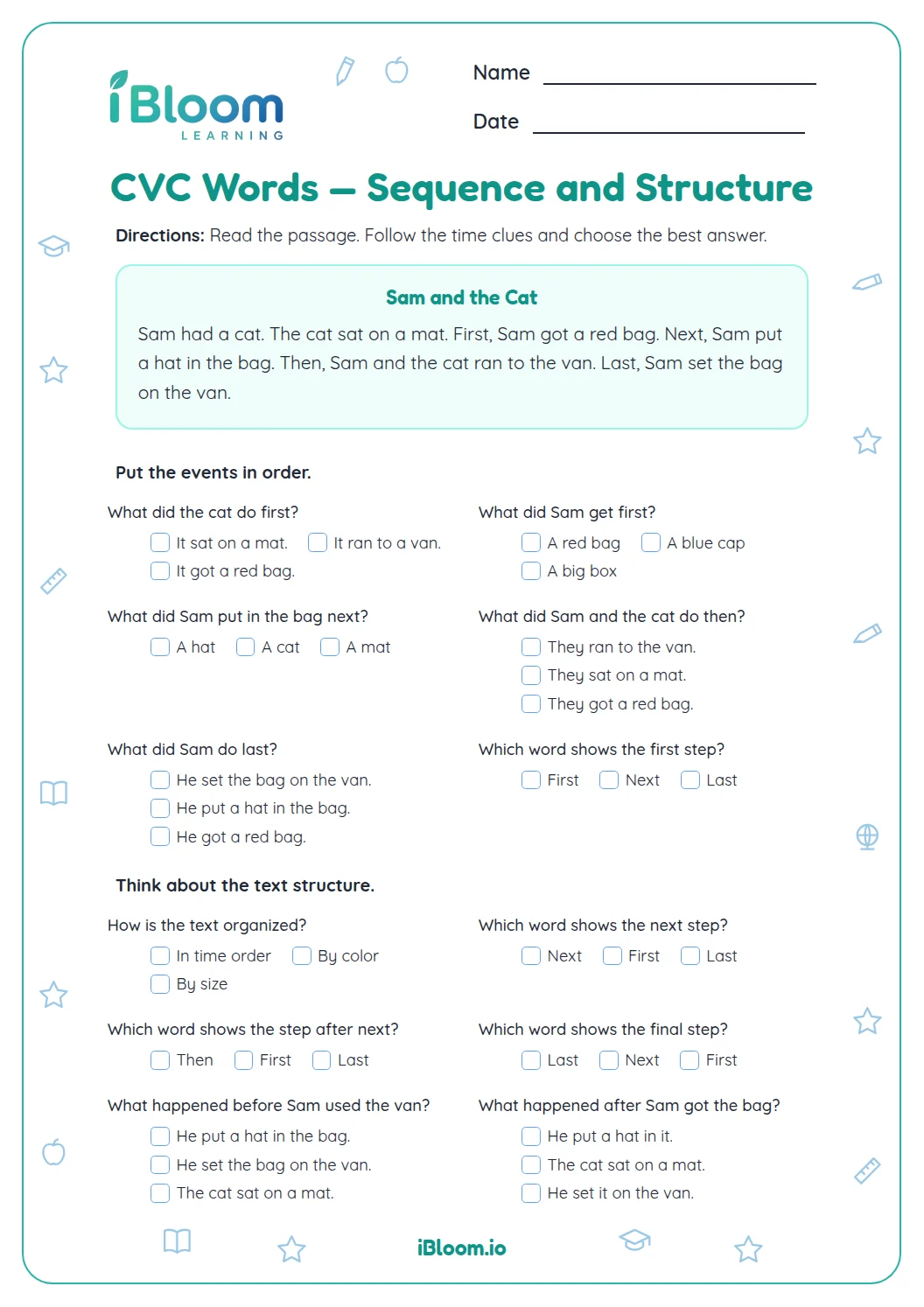
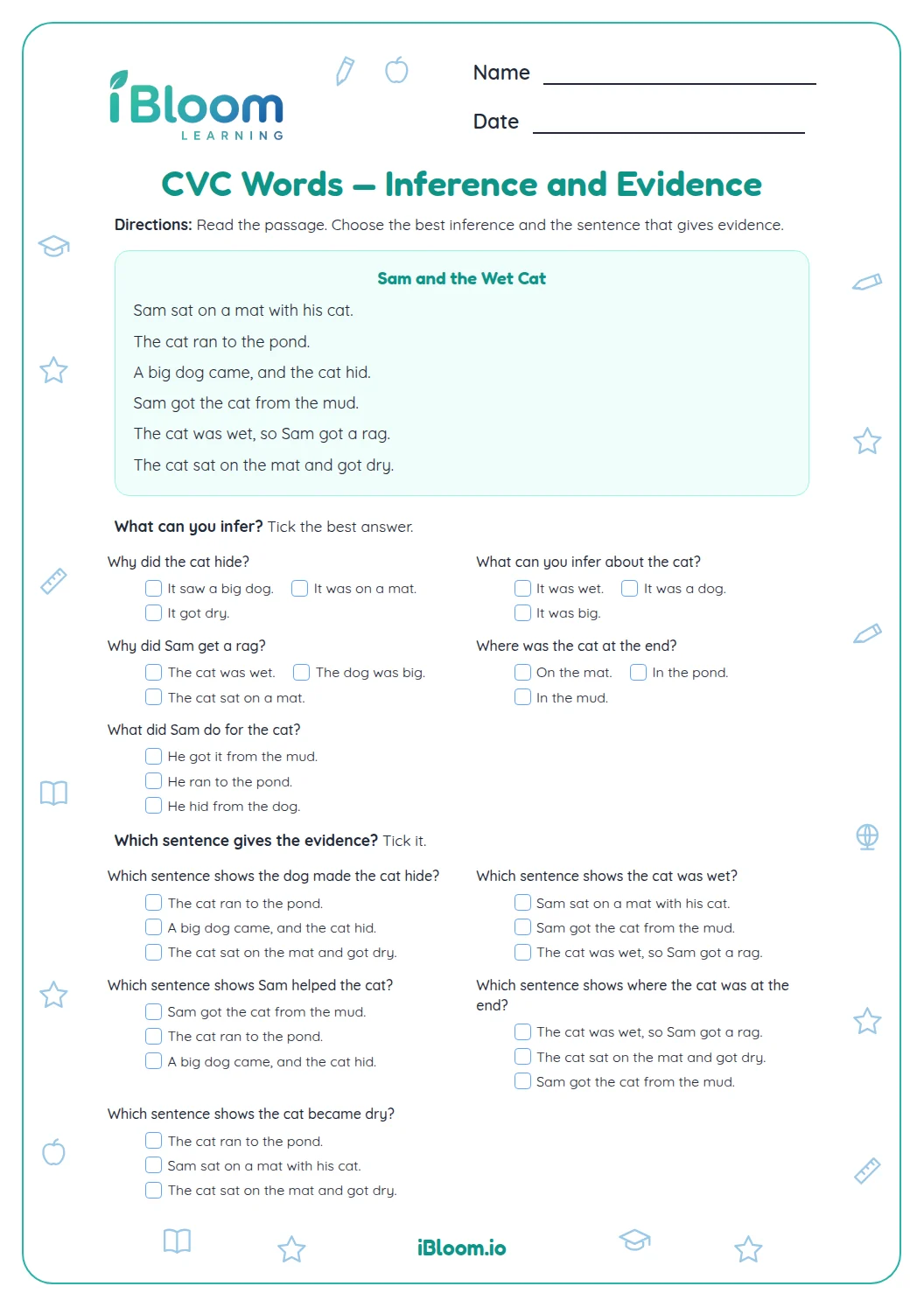
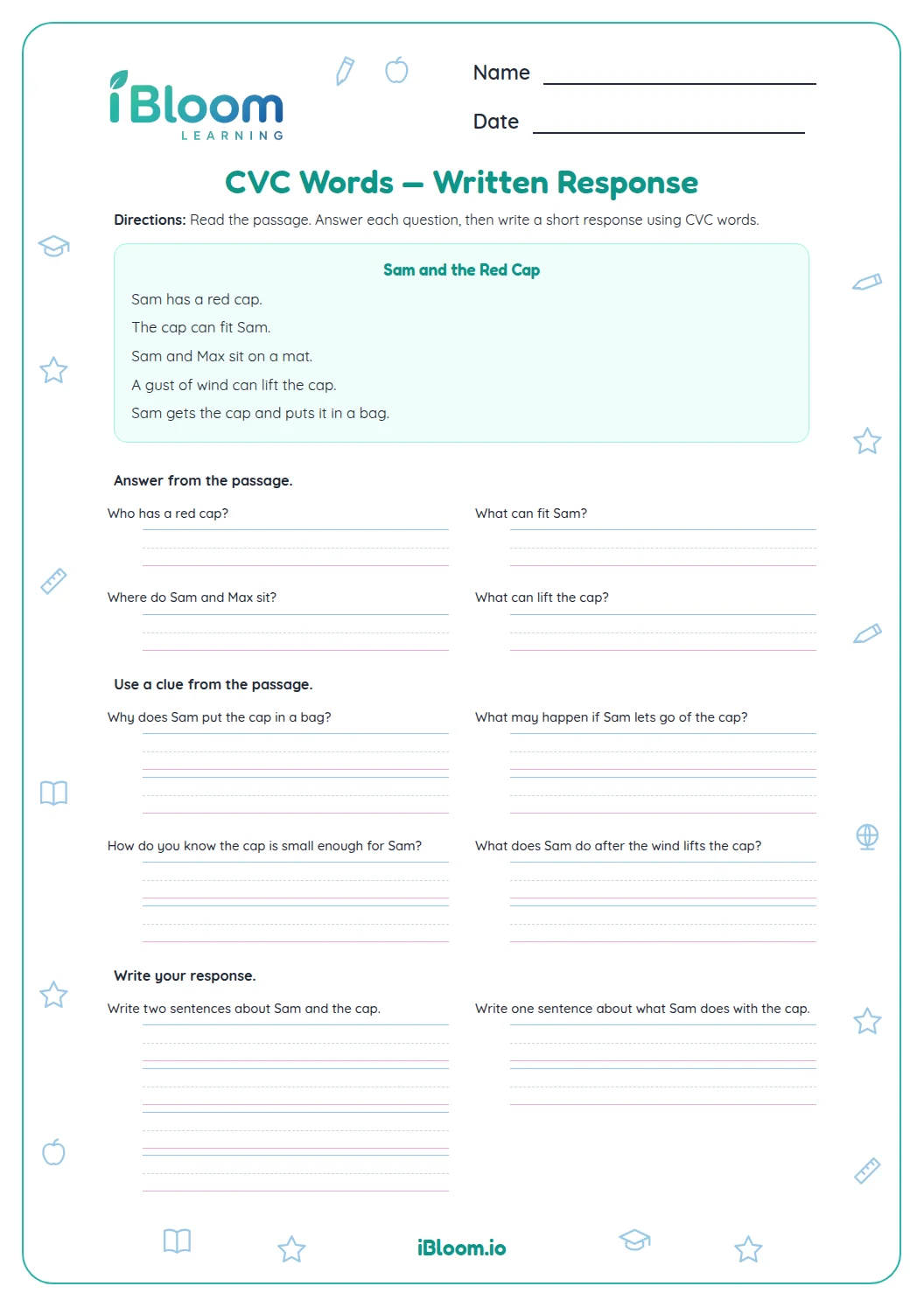





About this worksheet
This Grade 1 reading printable pairs a short passage about Meg and her hen Pip with 14 questions. The passage uses simple CVC words such as hen, red, pen, sun, and sit. Students choose a main idea, find details, and write brief responses using the text. It practices CCSS RI.1.2; a separate key includes sample answers.
Aligned to CCSS RI.1.2
What is the key idea for this skill?
A main idea covers the whole passage; a detail tells one specific thing. Reread the text and choose a detail that supports the broad idea.
- 11) Meg cares for Pip and helps her grow.
How can you check your answer?
The passage tells how Meg looks after Pip, so details about seed, water, and the pen support its main idea.
- 17) Pip pecks a bit of corn.
What should you look for as you work?
Use the passage to check each detail and to support a short written response.
- 112) Sample: Meg sets the pan up again.
How to use this worksheet
- 1Read the title and passage aloud.
- 2Ask what the whole passage is mostly about.
- 3Find details that tell what Meg and Pip do.
- 4Reread before writing a response.
- 5Check written answers against the passage.
Common mistakes and quick fixes
The mistake
Choosing one small event as the main idea.
The fix
Choose an idea that covers the whole passage.
The mistake
Adding a detail that is not in the text.
The fix
Reread and point to the sentence that gives the fact.
The mistake
Writing a detail without naming what happened.
The fix
Use a short sentence with the person or animal and action.
Common Core alignment
This worksheet practices CCSS RI.1.2 through its questions and examples.
Name the passage’s main topic and use details to retell what happens.
On this sheet: Students choose the passage’s main idea and use details from it in their answers.
Show the official wordingHide the official wording
Identify the main topic and retell key details of a text.
What to practice next
Further reading
Questions parents and teachers ask
What is the passage about?
“Meg and Pip” is about Meg caring for her red hen. Meg puts seed in the pen, gives Pip water after the pan tips, and stays by the pen at dusk. Students use these events to identify the main idea and select supporting details.
How many questions are included?
The worksheet has 14 questions after the passage. Four ask about the main idea, five ask students to find details, and five invite short written responses tied to the text. The answer key gives sample wording for responses that may vary.
What does CVC mean here?
CVC describes a consonant-vowel-consonant spelling pattern, as in hen, red, pen, sun, and sit. Those short words appear in the passage, while the questions focus on its main idea and details. Read the story aloud together if needed. The examples use the same skill throughout.
How should children answer the detail questions?
They should return to the passage, locate the sentence that tells the event, and answer with the same information. For a written item, a brief sentence such as “Meg gives Pip water” is enough when it matches the text. The examples use the same skill throughout.
What does the answer key provide?
The key marks the correct choices and gives sample short answers for the final written-response items. Wording can vary as long as the response names an accurate event or detail from “Meg and Pip.” The examples use the same skill throughout.