
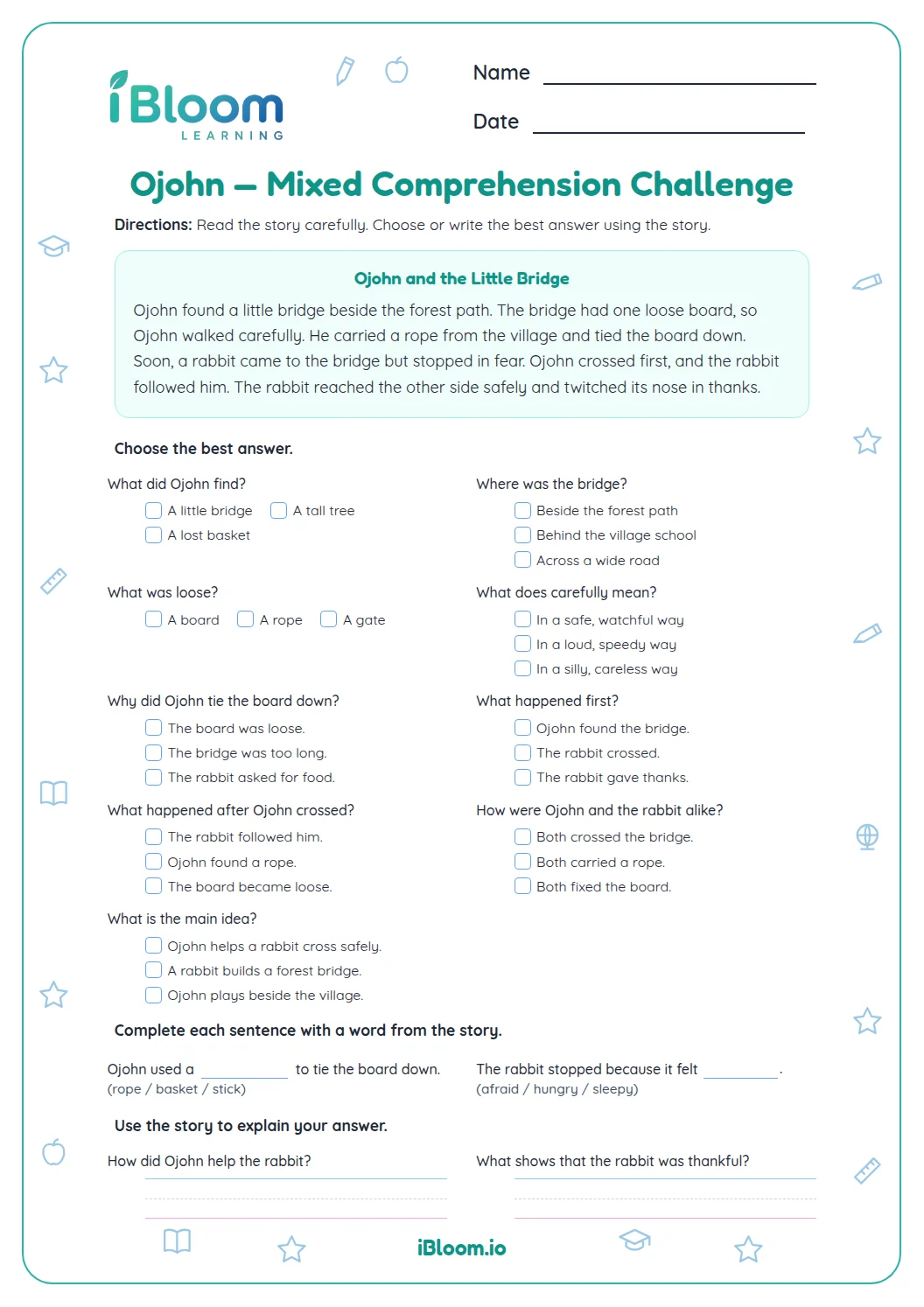
About this worksheet
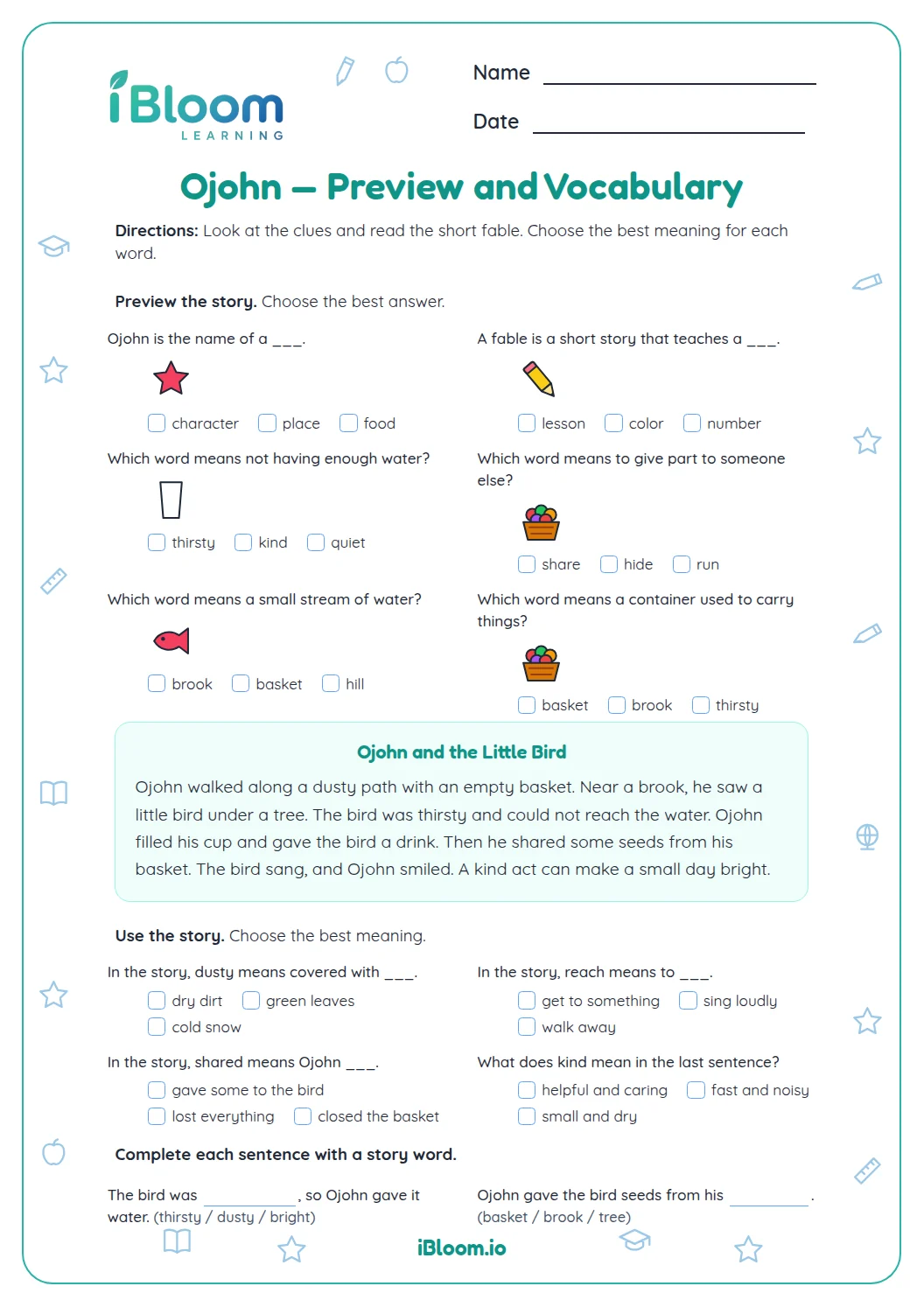
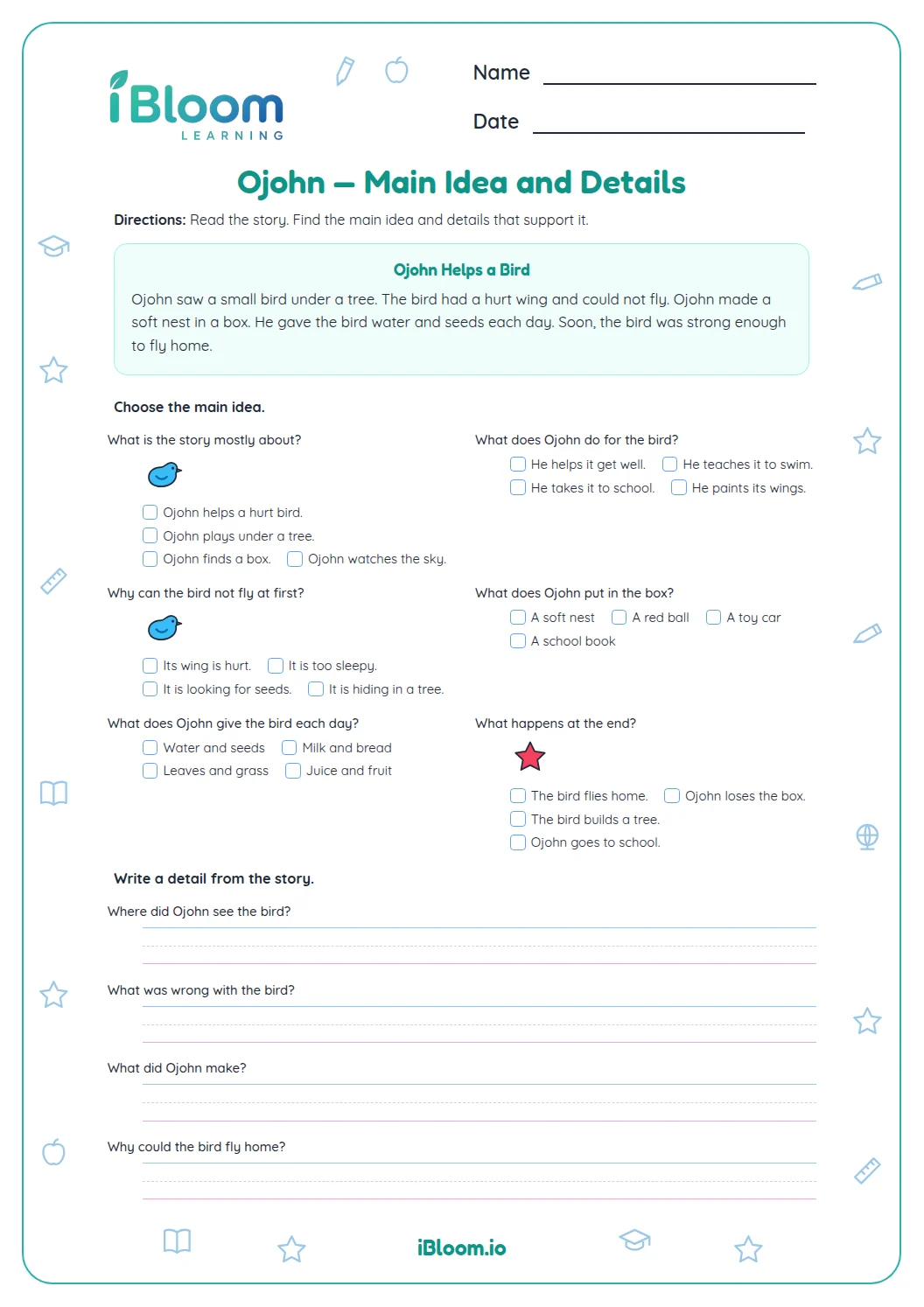
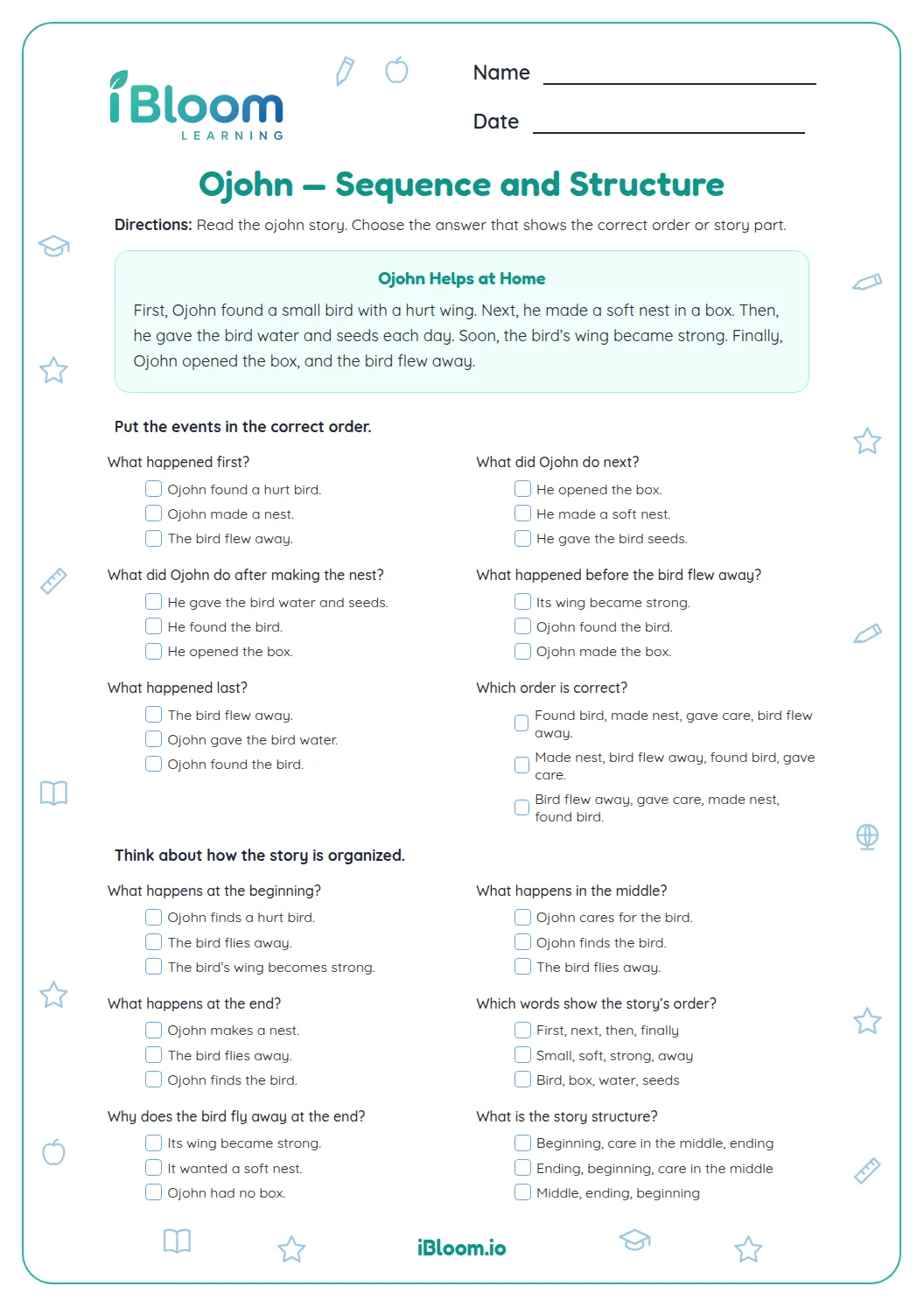
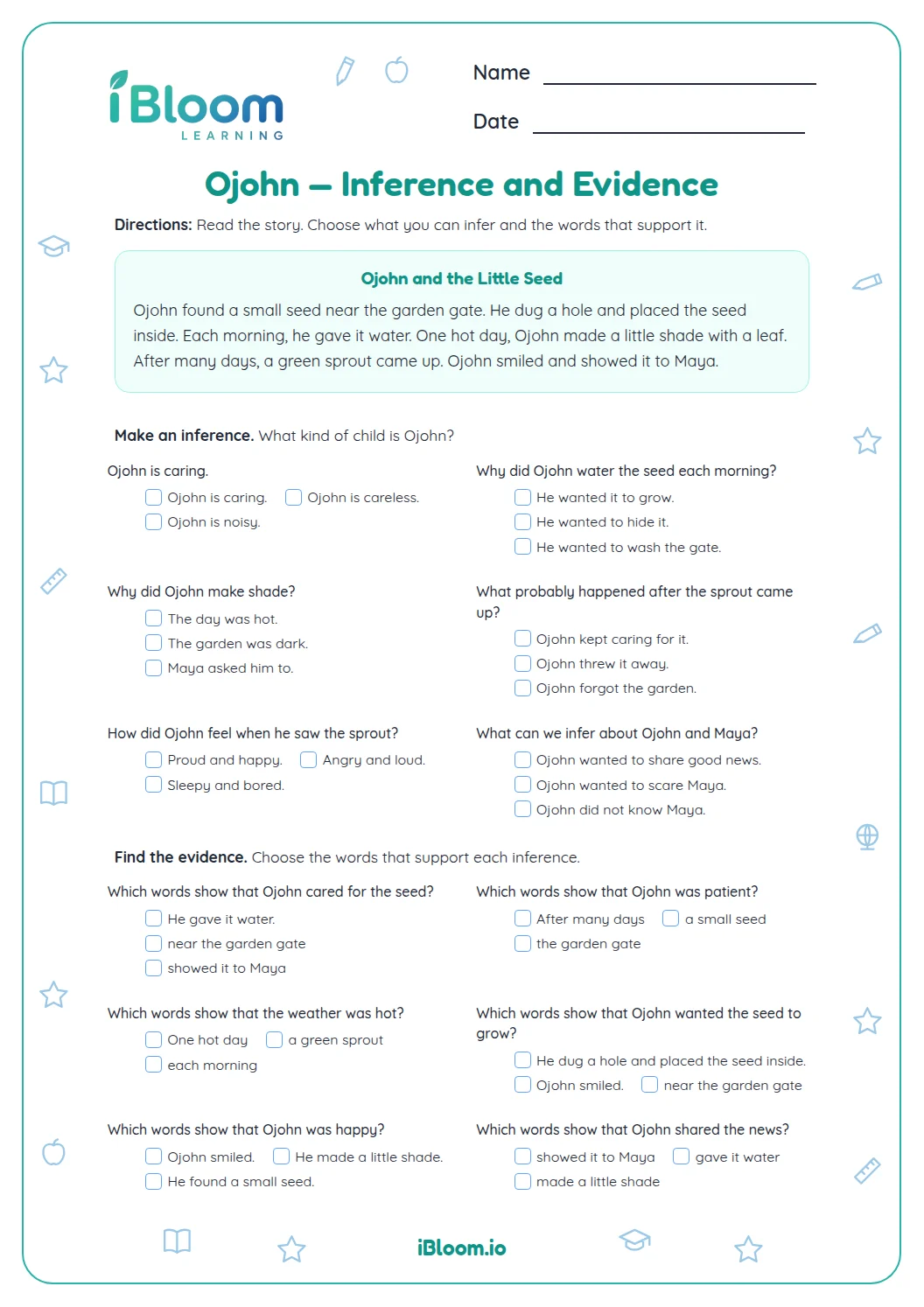
Children read Ojohn Helps a Friend, a short Grade 1 story about Ojohn helping Maya pick up her books. This printable has 13 questions: story details, supported choices, and short written responses. It practices answering questions about key details in a text, with a separate answer key and sample responses.
Aligned to RL.1.1
What happens in the fable?
Ojohn notices Maya drop her books near the school gate. He helps her gather them, and Maya thanks him by sharing her apple. Children reread details, make a simple inference, and explain why Ojohn smiles.
How can children support an answer?
Ask your child to point to the sentence that supports an answer. For question 11, Maya dropped her books near the gate; that detail identifies her problem.
How should written answers sound?
A short complete thought is enough. The answer key gives sample responses for open-ended questions; wording may differ when the story detail is accurate.
How to use this worksheet
- 1Read the title and look at the illustration-free text together.
- 2Read the fable aloud once, then invite a second reading.
- 3Answer detail questions by finding the matching sentence.
- 4For the inference questions, connect two story clues.
- 5Write one clear sentence for each response and compare with the key.
Common mistakes and quick fixes
The mistake
Guessing from real-world knowledge alone.
The fix
Ask which sentence in this fable supports the idea.
The mistake
Mixing up what Ojohn thought with what was true.
The fix
Check what Maya observed in the sky.
The mistake
Writing a response with no story detail.
The fix
Add a character, action, or object from the passage.
Common Core alignment
This practice connects the worksheet activity to the following Common Core skill.
Answer questions about key details in the fable.
On this sheet: Questions ask readers to recall and explain details from the fable.
Show the official wordingHide the official wording
Ask and answer questions about key details in a text.
What to practice next
Make more practice
Further reading
Questions parents and teachers ask
What is the story about?
Ojohn sees Maya drop her books near the school gate and helps her pick them up. Maya thanks him and shares her apple. The story gives Grade 1 readers clear details to recall and discuss. Readers can retell the problem, action, and outcome in order.
What reading skills do the questions practice?
The questions ask readers to remember characters and events, select an inference supported by the story, and write about details. Children can reread the short passage to find evidence before answering. Ask the learner to point to the sentence that supports a response.
How should a child answer the written questions?
A complete, focused sentence is enough. The answer key provides sample responses for questions that allow different wording. A child’s answer can vary as long as it accurately uses a detail from the fable. Mention what Ojohn did or how Maya responded.
Can an adult read the passage aloud?
Yes. An adult may read the passage aloud and then invite the child to answer using story details. Rereading together can help children locate evidence and explain why Ojohn smiled after helping Maya. Pause to let the child find a matching sentence.
Is a separate answer key provided?
Yes. The key lists factual answers and offers sample responses for open-ended questions. Use the story itself to discuss other reasonable responses that correctly explain what happened. Children can check the key after trying each answer on their own.