
About this worksheet
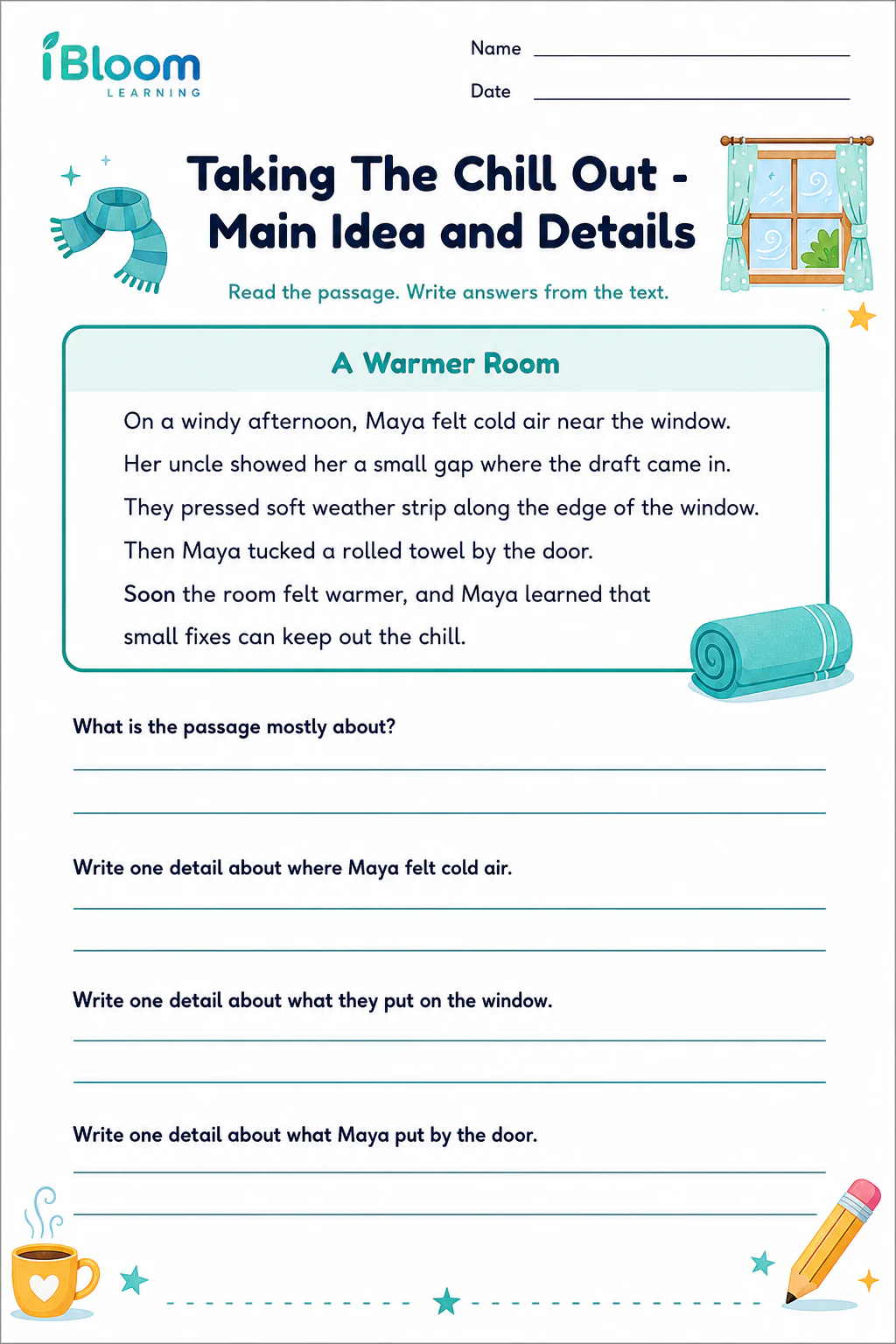
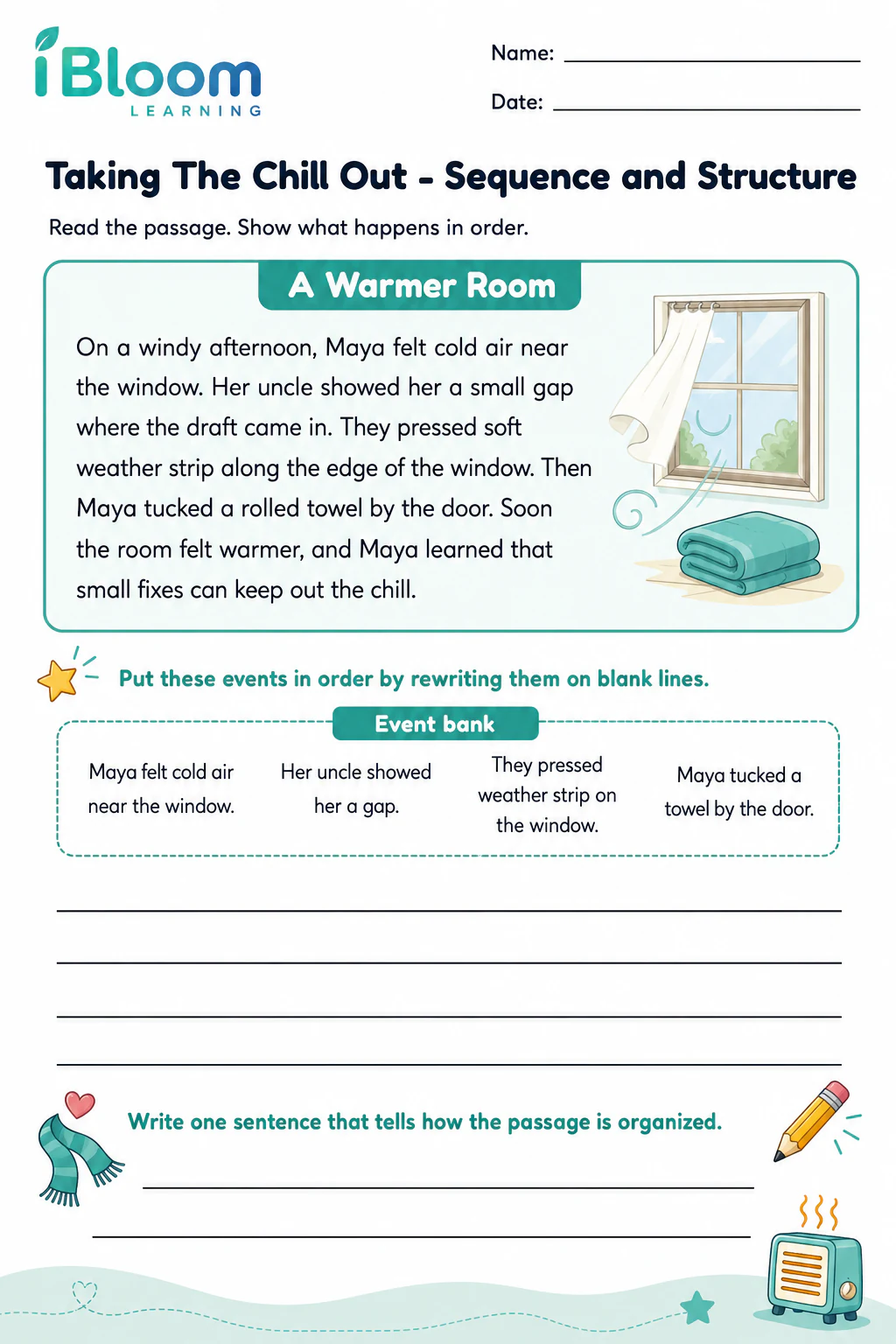
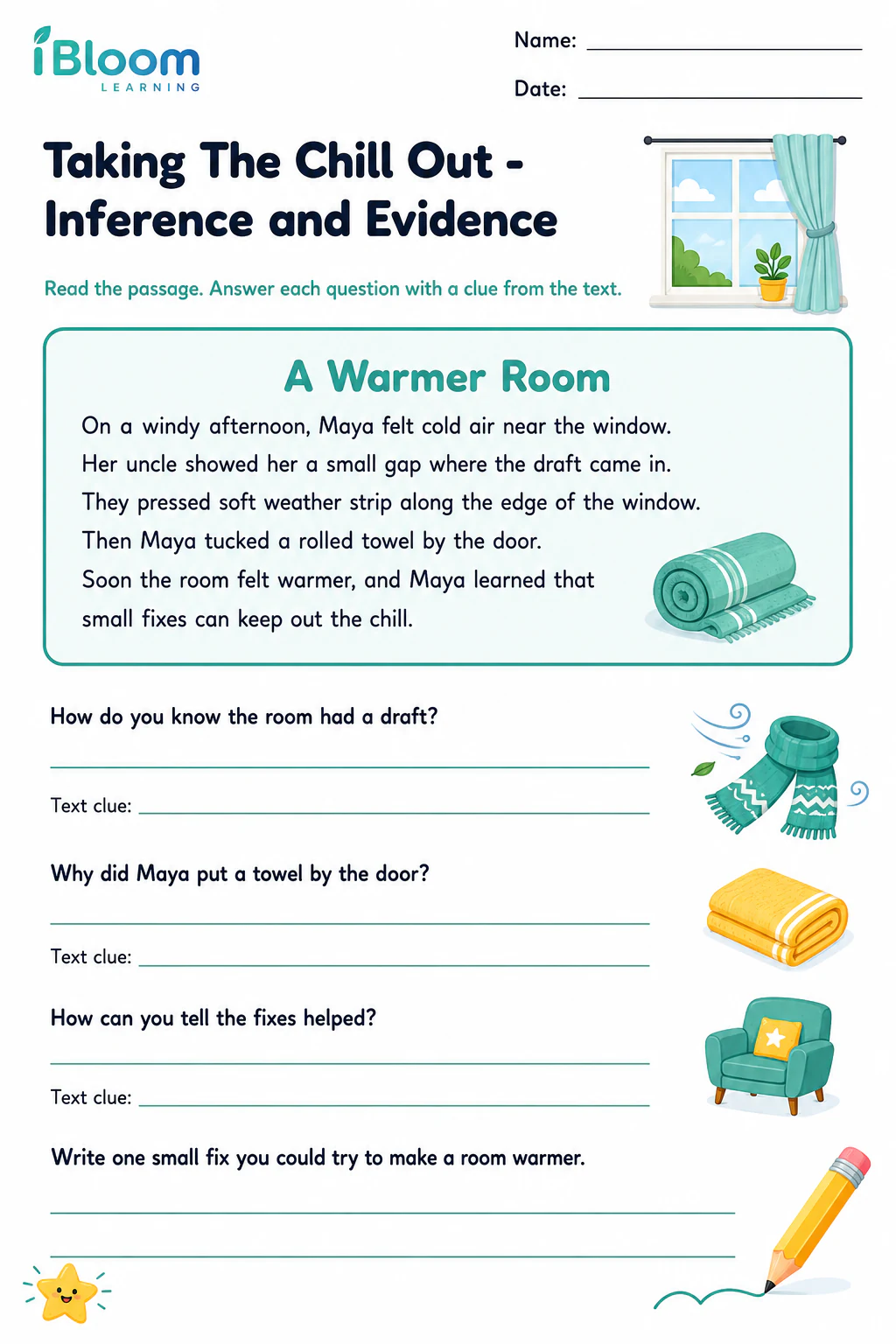
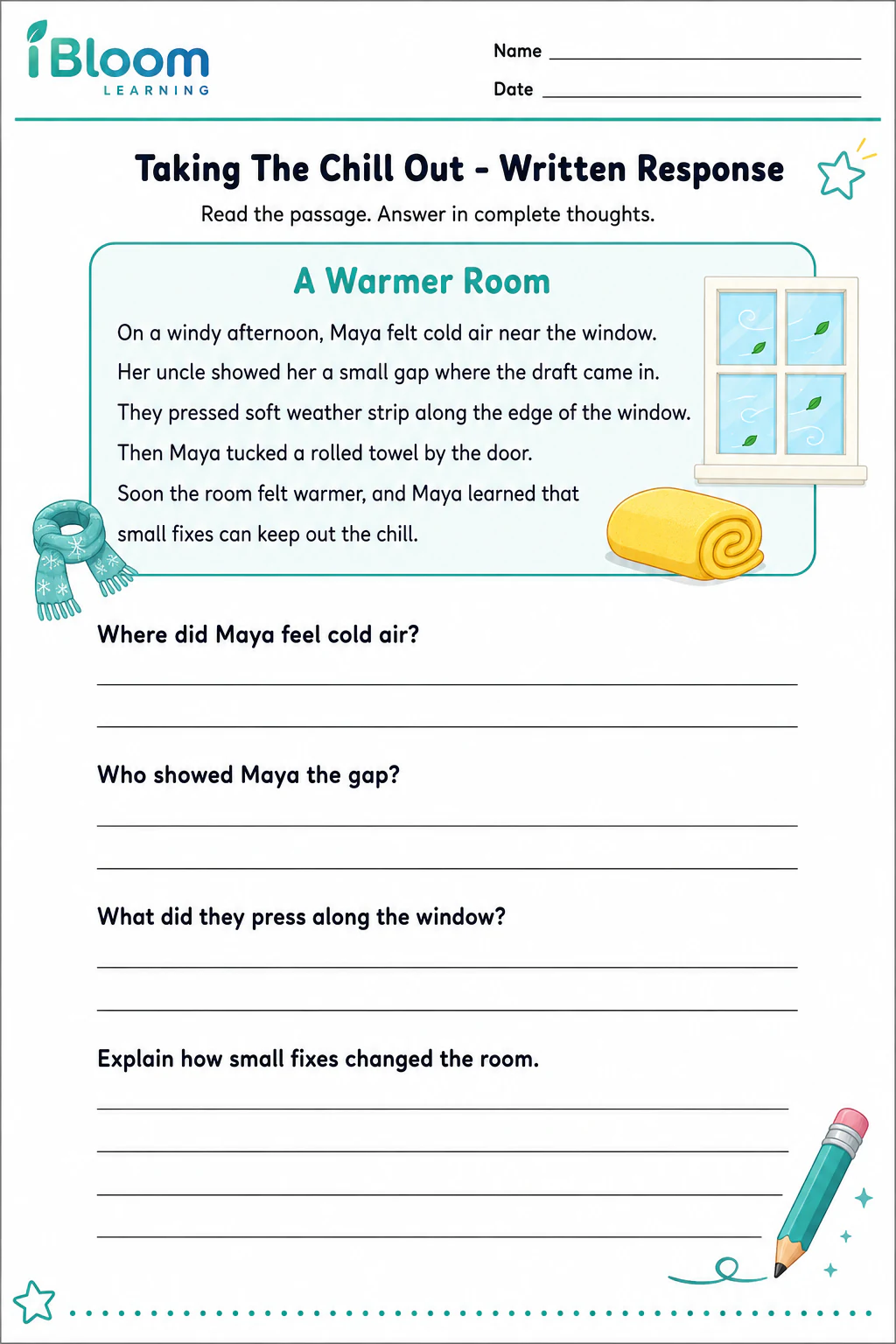
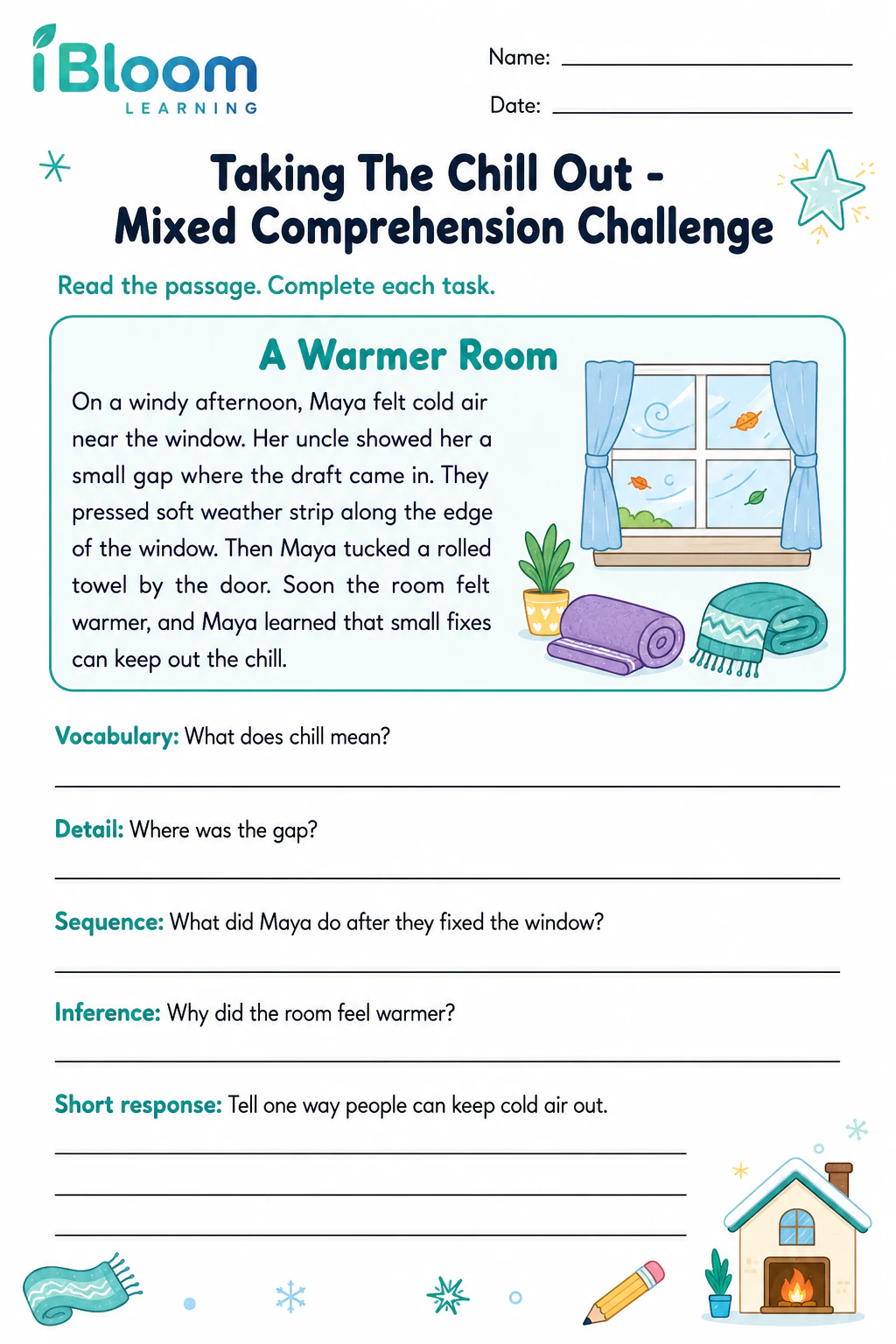
This Grade 2 worksheet uses the original “A Warmer Room” passage: Maya feels cold air by a window, learns what a draft is, and helps her uncle use weather strip and a rolled towel. Children answer story-detail questions and use nearby clues to explain draft, gap, weather strip, and chill. The vocabulary questions practice using sentence-level context as a clue to meaning (CCSS L.2.4.a); a separate answer key is included.
Aligned to L.2.4.a
What happens in “A Warmer Room”?
Maya feels cold air near a window on a windy afternoon. Her uncle points out a gap where the draft comes in. Together, they press weather strip along the window edge, and Maya places a rolled towel by the door. The room feels warmer afterward.
How do context clues explain “draft” and “gap”?
Look at what happens near each word. The draft comes through a gap, and Maya feels cold air by the window. These details suggest that a draft is moving cold air and a gap is a small opening.
- 1Word: draft
- 2Clues: cold air near a window; a gap where it came in
- 3Meaning: a current of cold air entering through an opening
What will readers practice?
Questions 1–5 check passage details. Questions 6–10 focus on vocabulary in context. The final four ask children to connect a word or idea with a supporting story clue. Each item has one best choice, and the key lists all answers.
How to read the passage for meaning
- 1Read the story once to follow Maya’s problem and the fixes.
- 2For detail questions, find the sentence that names the person or object.
- 3Reread the words around a vocabulary word.
- 4Use those clues to explain the word in this story.
- 5Check each answer against the separate key; matching ideas can use different wording.
Common context-clue slips
The mistake
Guessing a familiar meaning for draft without reading the sentence.
The fix
Use the gap, window, and cold-air clues from this passage.
The mistake
Treating gap as the whole window.
The fix
Notice that the air came through a small opening near its edge.
The mistake
Explaining weather strip as a strip of weather.
The fix
Use the action: Maya and her uncle press it along the window edge to close a space.
Common Core alignment
The vocabulary questions use details from the story to work out word meaning.
Use sentence context as a clue to a word’s meaning.
On this sheet: Children use the nearby story details to explain draft, gap, weather strip, and chill.
Show the official wordingHide the official wording
Use sentence-level context as a clue to the meaning of a word or phrase.
What to practice next
Make more practice
Further reading
Questions parents and teachers ask
What does “draft” mean in the passage?
A draft is a current of air that moves through an opening. In the story, Maya feels cold air near the window, and her uncle points out the gap where it enters. The weather strip helps close that space so less cold air comes inside.
What does Maya use to make the room warmer?
Maya and her uncle press soft weather strip along the window edge, and Maya tucks a rolled towel by the door. The passage says the room feels warmer soon afterward. The questions ask readers to connect these details with the word chill and the room’s change.
How many questions are on the worksheet?
There are 14 questions in three parts. The first five check story details, the next five focus on vocabulary, and the final four connect meaning with story clues. The separate answer key includes direct answers and sample responses for open questions.
How many questions are included?
There are 14 multiple-choice questions in three parts. The first five check story details, the next five focus on vocabulary, and the final four connect a word or idea with a passage clue. The separate answer key lists the best choice for every item.
What does “weather strip” mean here?
Weather strip is a narrow material pressed along an edge to close a small space. The passage says Maya and her uncle place it along the window edge after they find a gap. Readers can use that action to understand why it helps keep out a draft.