




About this worksheet
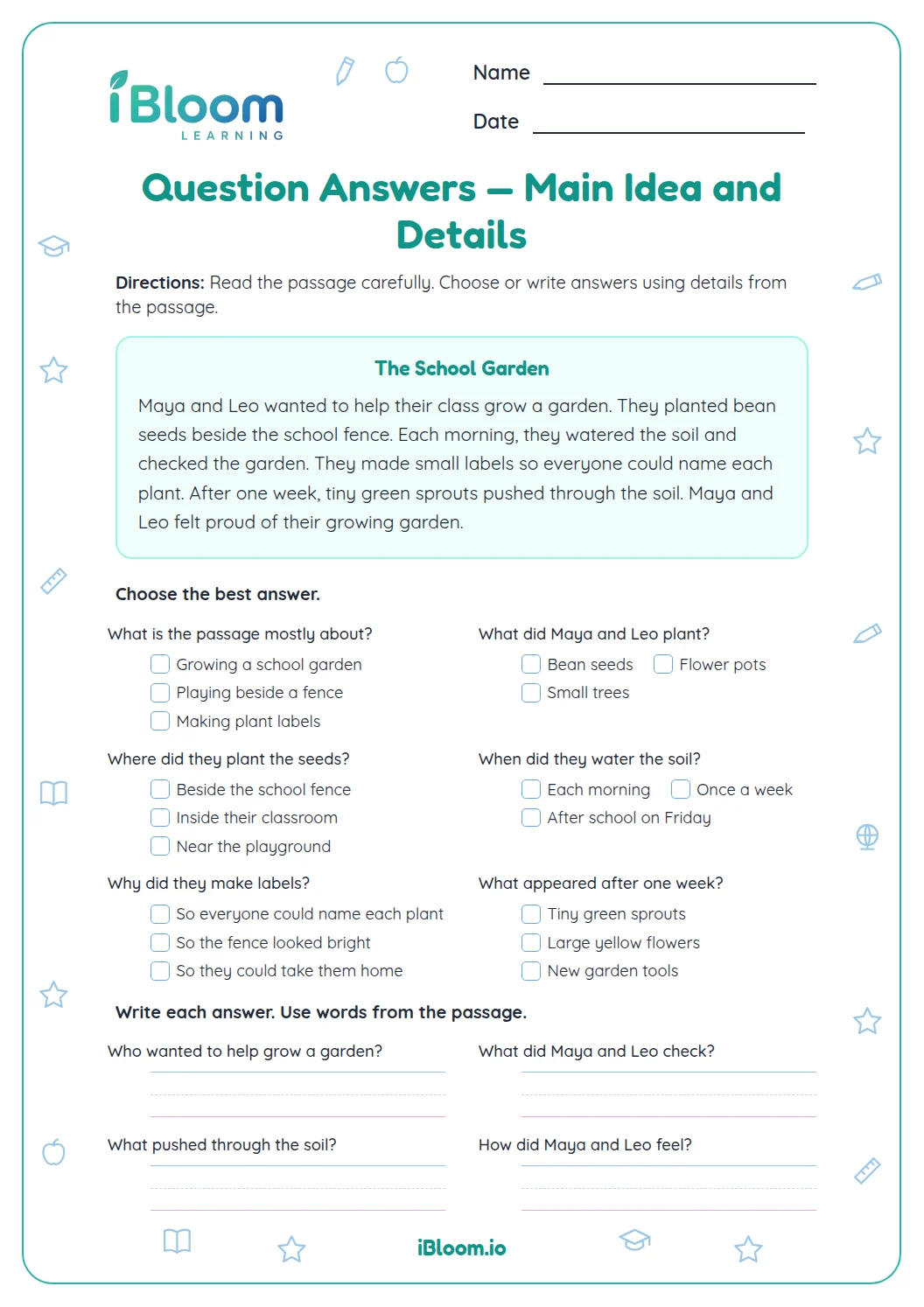
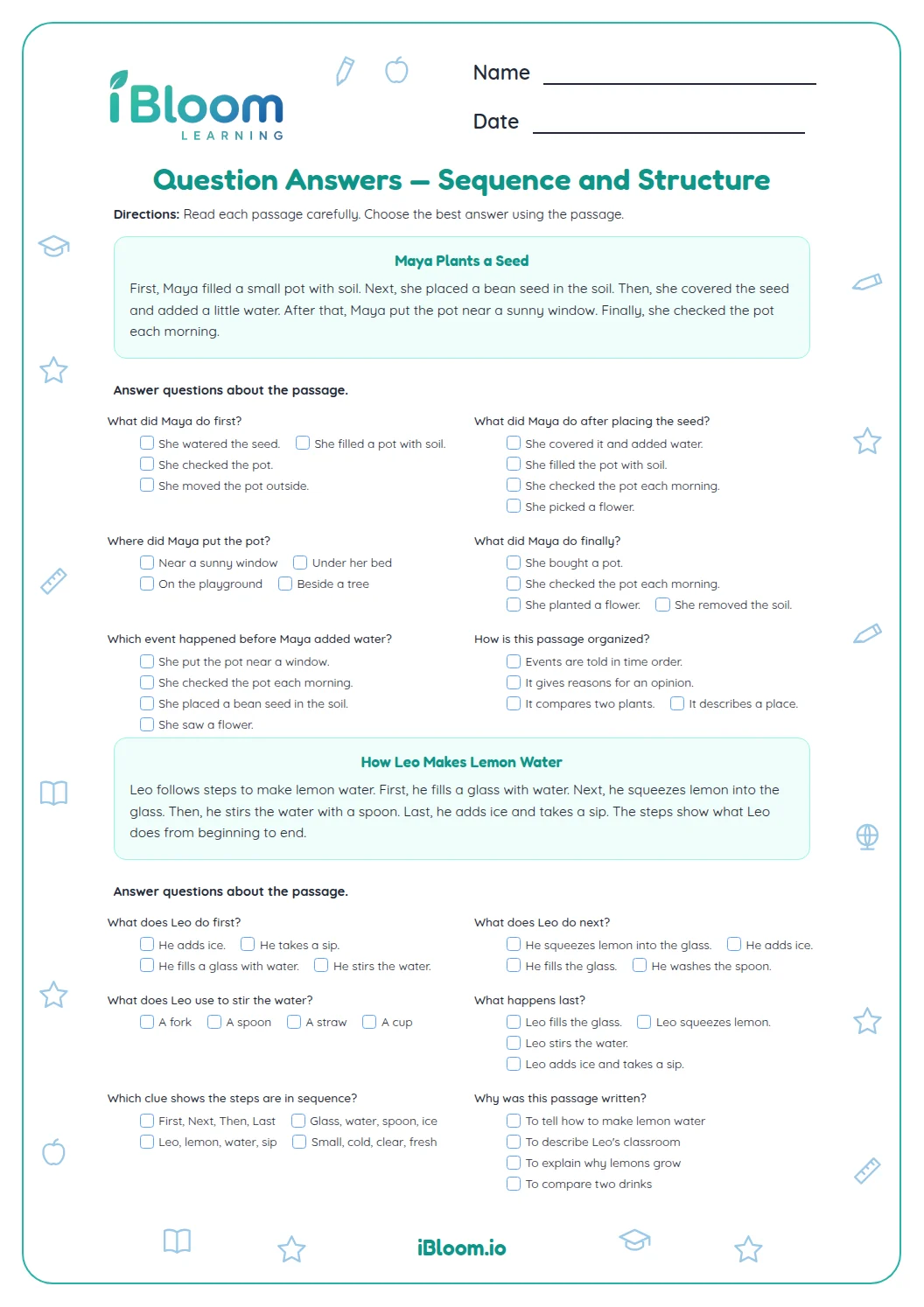
This free Grade 2 printable pairs a short garden passage with questions about event order and the sight words that signal it. Students identify what happened first, next, and at the end, then use sequence clues to answer questions about the story. The worksheet includes 15 questions in three parts and a separate answer key. This practice also asks readers to describe how a story begins, develops, and ends.
Aligned to CCSS.ELA-LITERACY.RL.2.5
How do sight words help readers follow events?
Words such as “first,” “then,” and “at last” signal when events happen. In the passage, the children first prepare the soil, then plant and water seeds, and at last see flowers open. For example, question 7 asks students to order pulling weeds, watering, and flowers opening.
How to use this worksheet
- 1Read the garden passage once for the main events.
- 2Reread time words such as “first,” “then,” and “at last.”
- 3Answer Part A with details from the story.
- 4Put the three events in Part B in time order.
- 5Use the story clues for Part C, then compare with the key.
Common sequence slips
The mistake
Mixing up the order of planting and flowering.
The fix
Find the time words and check what must happen before a seed can grow.
The mistake
Choosing a detail that is not in the passage.
The fix
Reread the sentence that describes the event.
The mistake
Treating “each day” as a one-time event.
The fix
Notice that “each” tells the class repeated the action daily.
Curriculum alignment
Students track how the passage begins, develops, and concludes.
On this sheet:
Show the official wordingHide the official wording
Describe the overall structure of a story, including describing how the beginning introduces the story and the ending concludes the action.
What to practice next
Further reading
Questions parents and teachers ask
What sight words appear in the practice?
The passage uses “first,” “then,” “each,” and “at last” to signal when events happen. Students notice these words while reading about Maya and her class, then use them to explain the order of planting, watering, and seeing flowers. Ask the student to point to that word in the passage.
How does the worksheet practice sequence?
Students first answer questions about what happened in the garden story. They then put three events in order and use time words to identify the beginning, next event, repeated actions, and ending. This moves from recalling details to noticing how the passage is organized.
How many questions are included?
The printable has 15 questions in three question parts, along with the passage. Students answer passage-detail questions, write a three-event sequence, and choose answers about sight words and story structure. The answer key includes the sequence and a sample explanation.
Is an answer key included?
Yes. A separate answer key lists the correct choices and the expected order for the three events. It also gives a sample response about why the class watered the soil, so an adult can discuss the idea if a student words it differently.
What grade is this worksheet for?
This worksheet is written for Grade 2. The passage describes familiar classroom and garden events, and the questions ask students to follow a clear beginning-to-end sequence, notice time words, and find details that support their answers. Ask the student to point to that word in the passage.