

About this worksheet
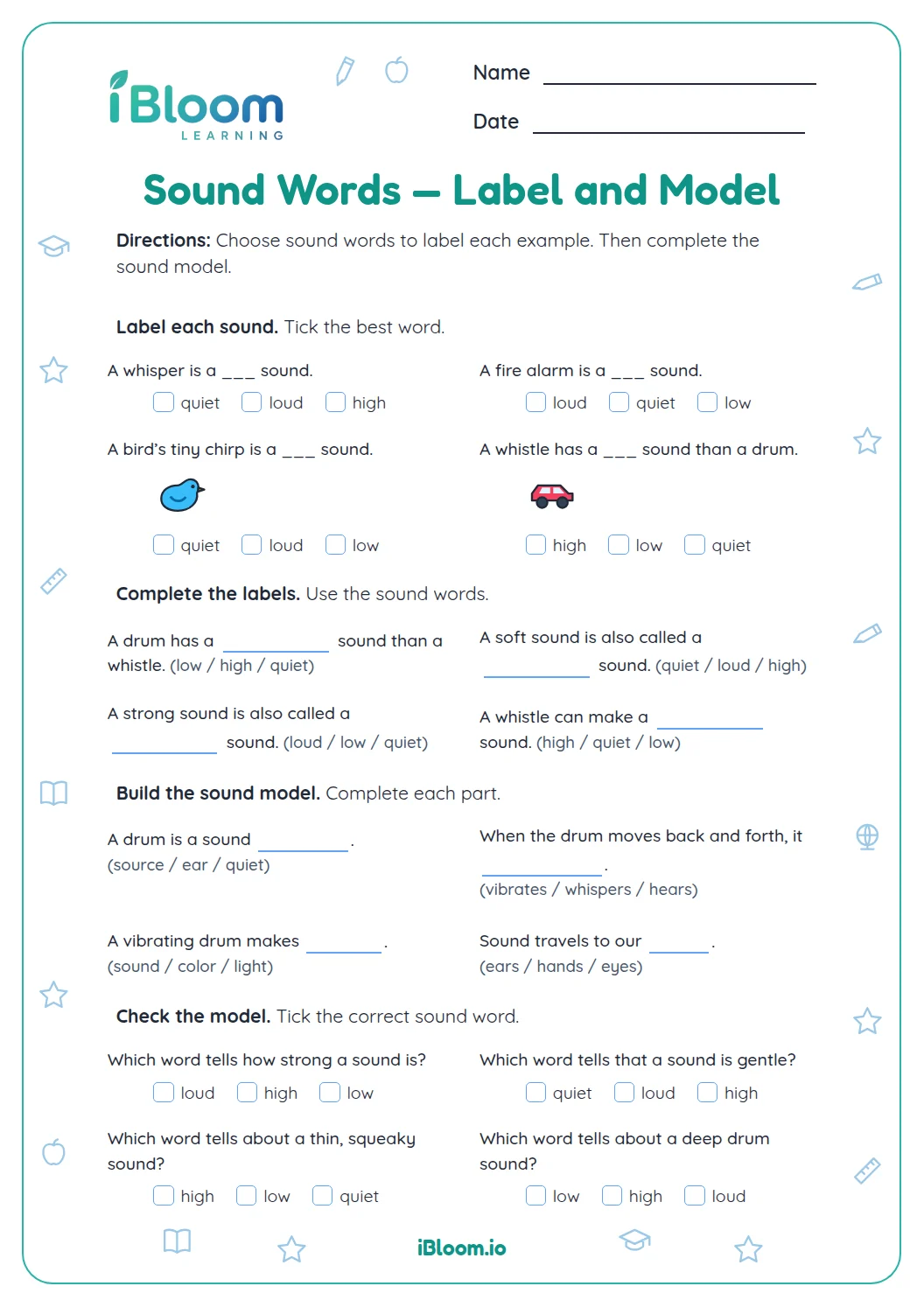
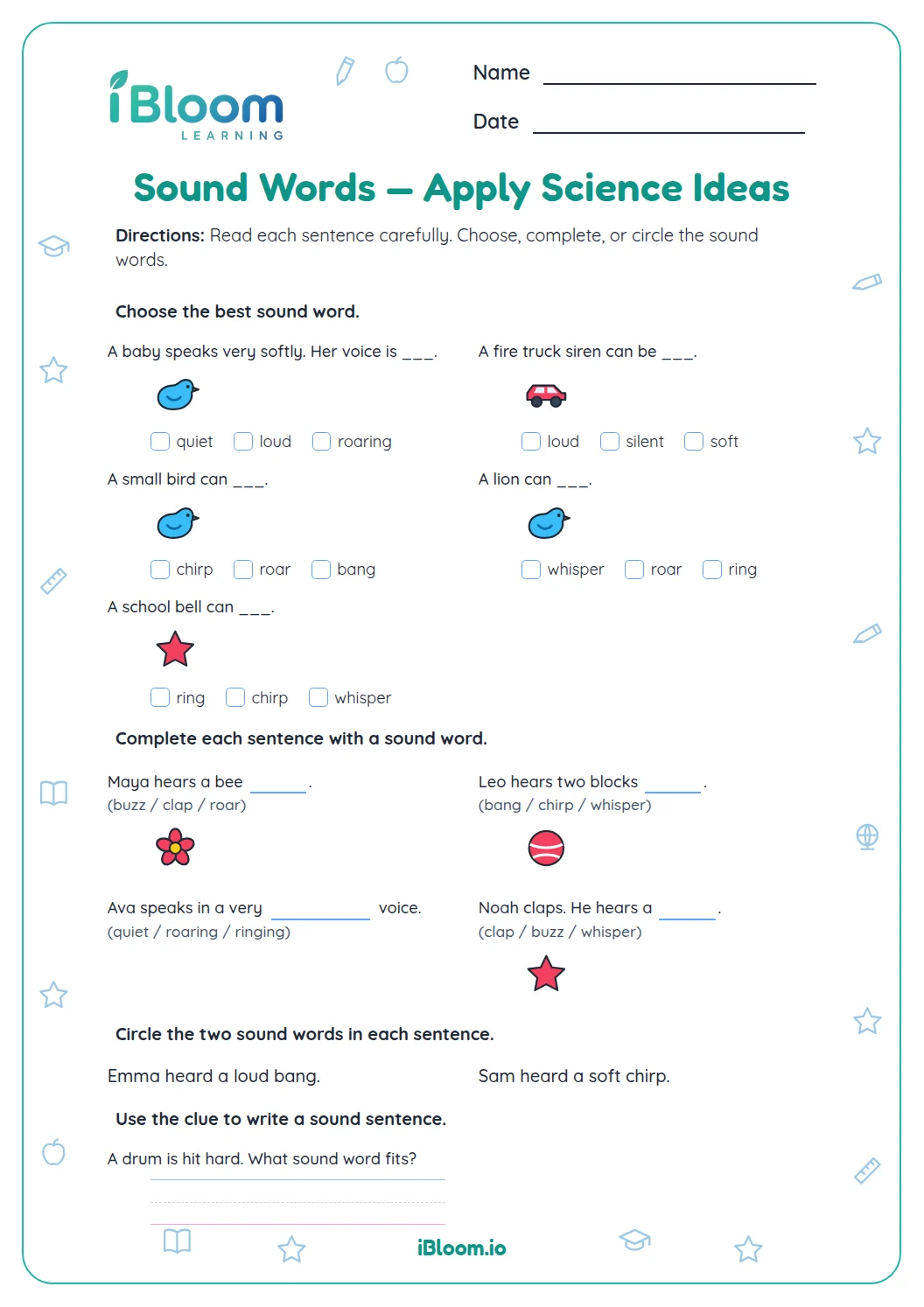
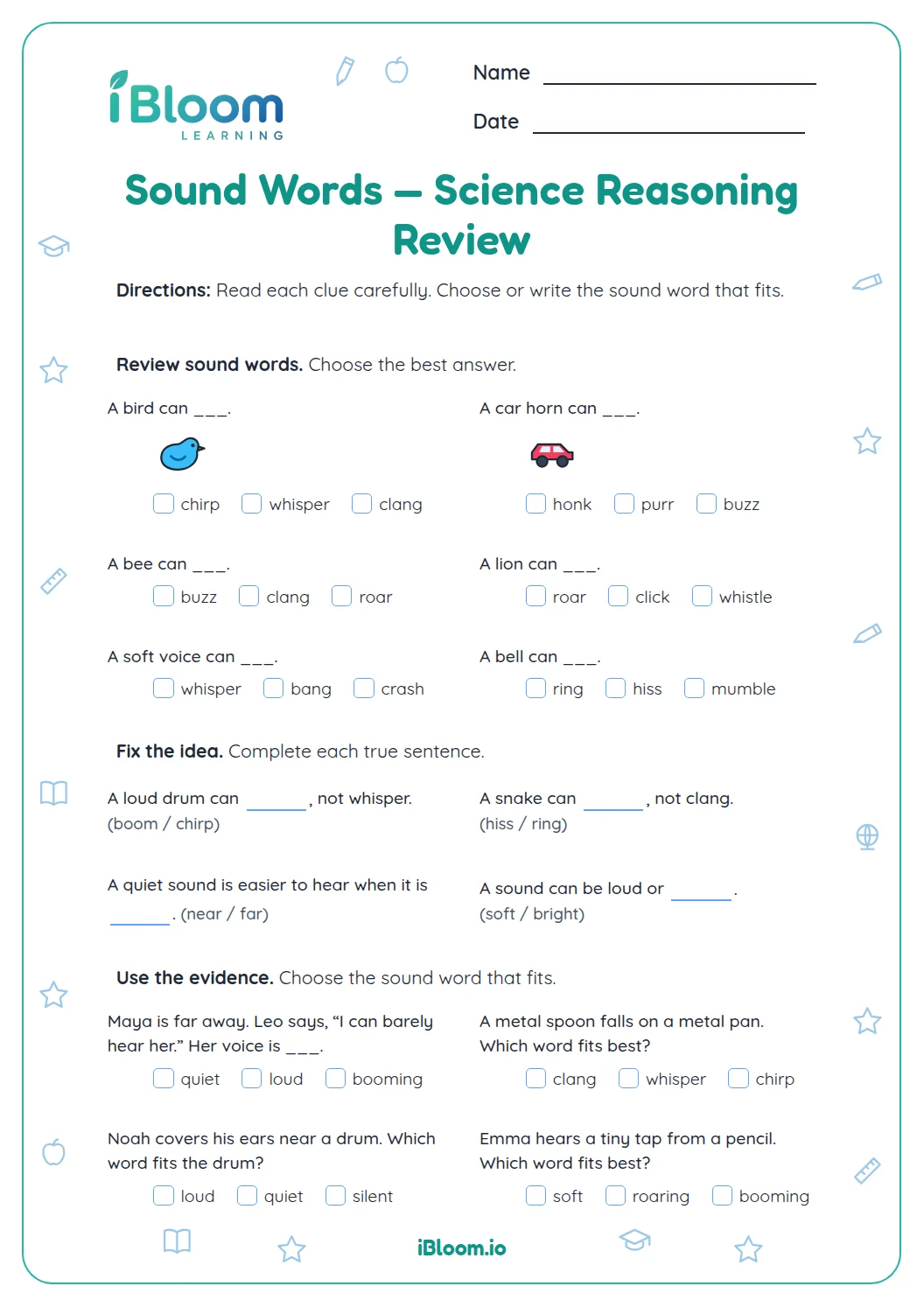
This Grade 1 science worksheet uses familiar examples—a bell, rain, a drum, a bird, and a guitar—to practice sorting sound sources and describing sound. Children connect a struck drum, a plucked string, and a vibrating ruler with the sounds they produce. It includes 16 questions in four parts and a separate answer key.
How do students sort and describe sounds?
This Grade 1 science worksheet uses familiar examples—a bell, rain, a drum, a bird, and a guitar—to practice sorting sound sources and describing sound. Children also connect a struck drum, a plucked string, and a vibrating ruler with the sounds they produce. It includes 16 questions in four parts and a separate answer key. The activities connect with NGSS 1-PS4-1.
What connects vibration and sound?
The worksheet has 16 questions in 4 parts: source sorting, sound words, vibration questions, application choices. A separate answer key supports checking each response.
How does motion make a sound?
A vibrating object can produce sound. The guitar question asks students to identify the part that moves when a string is plucked.
- 1What vibrates when a guitar string is plucked?
- 2The string moves back and forth.
- 3Answer: the string
How to use this worksheet
- 1Read each sound source sentence and choose who or what makes the sound.
- 2Use loud or quiet for volume and high or low for pitch.
- 3For the vibration items, name the object or part that moves.
- 4Check the key after finishing and point to the clue for each correction.
Common mistakes and quick fixes
The mistake
Sorting a bird call as a sound made by people.
The fix
Ask who or what produces the sound; birds and weather are natural sources.
The mistake
Calling a whistle loud when the question asks about pitch.
The fix
Listen for high or low pitch separately from loud or quiet volume.
The mistake
Naming the sound instead of the vibrating object.
The fix
For the drum, name the drum; for the guitar, name its string.
What to practice next
Make more practice
Questions parents and teachers ask
What sound features appear?
Children sort sounds by source and describe loudness and pitch. Items use familiar examples such as a shout, whisper, whistle, and bass drum. The final parts connect vibrations to sounds from struck or plucked objects. Sound sorting starts with the source named in each sentence, then compares the result with the answer key.
What does vibration have to do with sound?
The sheet asks students to identify what moves when a drum is struck or a guitar string is plucked. A vibrating object can produce sound, which links the examples to the core idea practiced. For a missed answer, ask the child to point to the word or motion clue that supports the corrected choice.
Is an animal sound natural or human-made?
A bird call is a sound from nature, while a bell or drum is made by people. Students classify each sound by its source rather than by whether it is loud or quiet. Use one correct item from each part to recap source, loudness, pitch, and vibration in the student’s own words.
How should a child check an answer?
Use the exact clue in the prompt: source, loudness, pitch, or motion. Then compare the response with the separate key and say what clue supports it. The key is a check after the work; children can explain one correction aloud to connect the clue and answer.