


About this worksheet
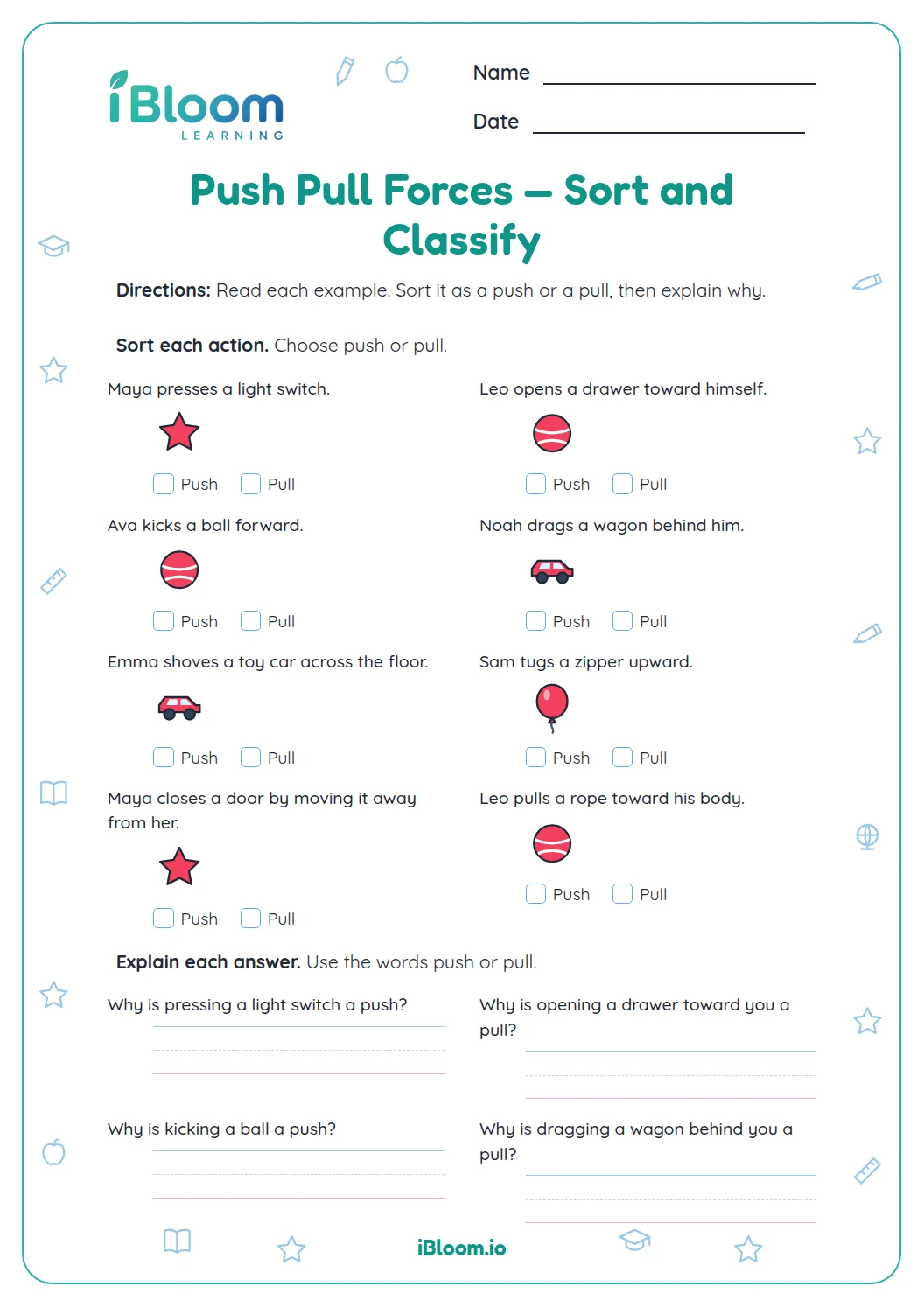
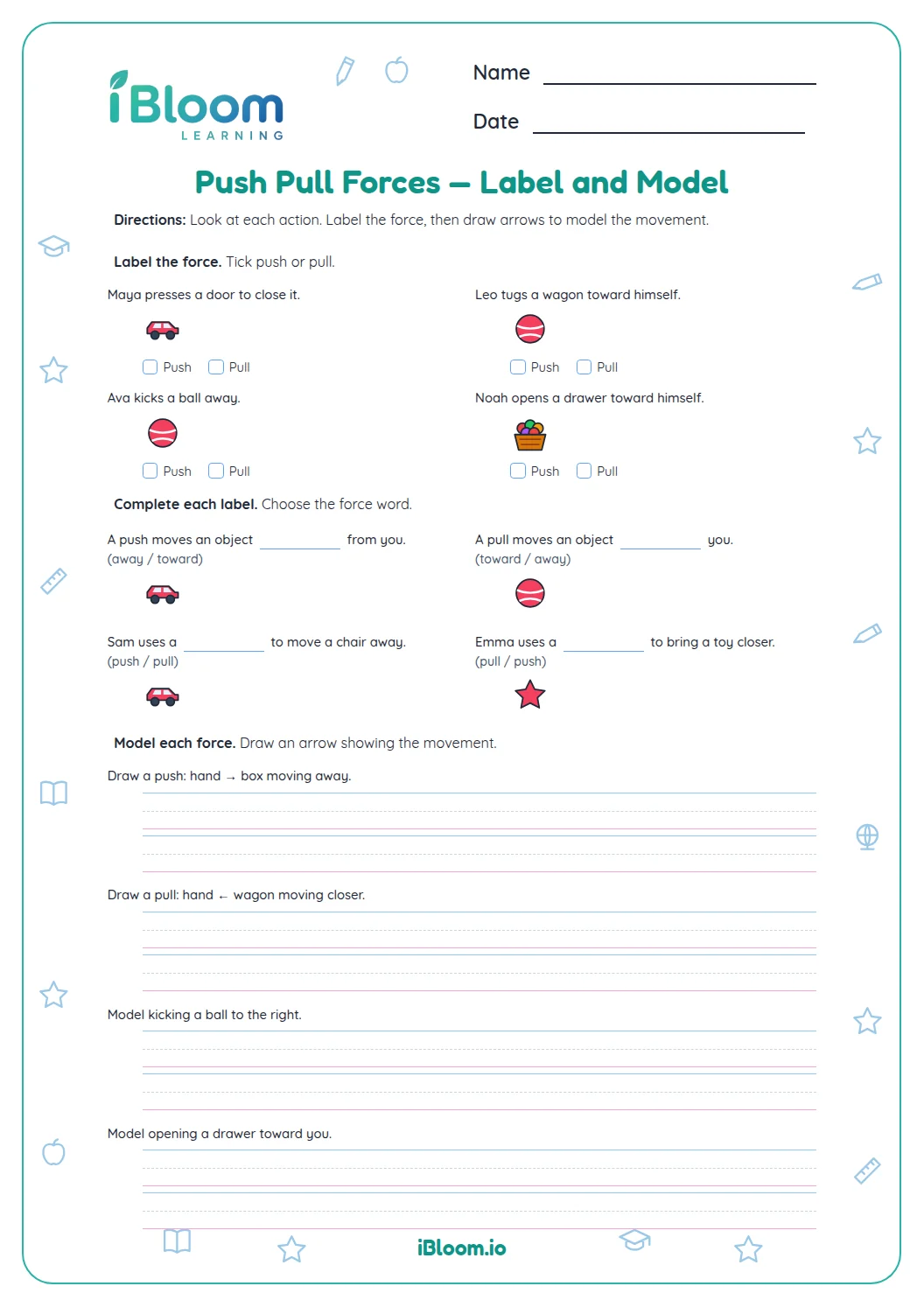
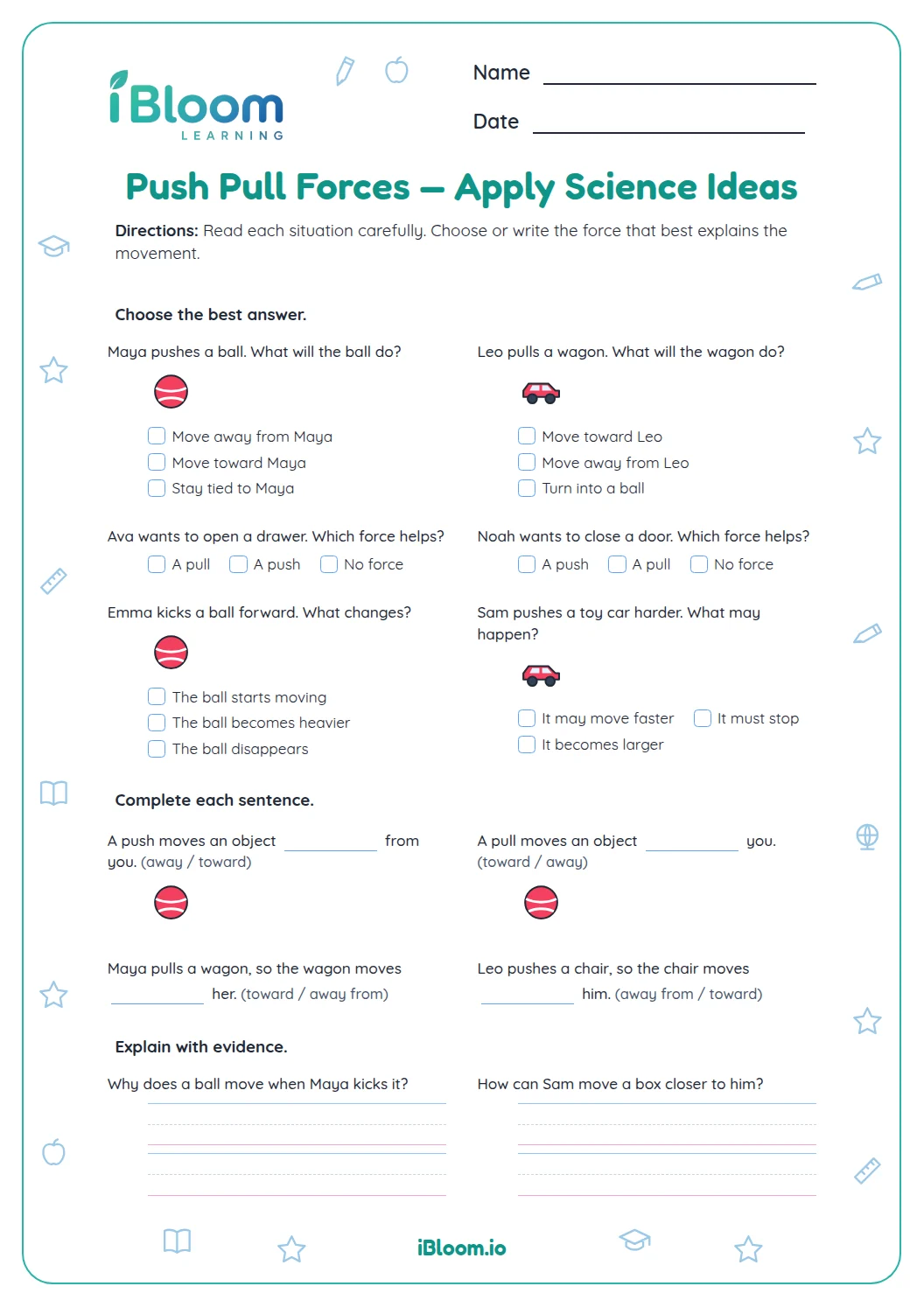
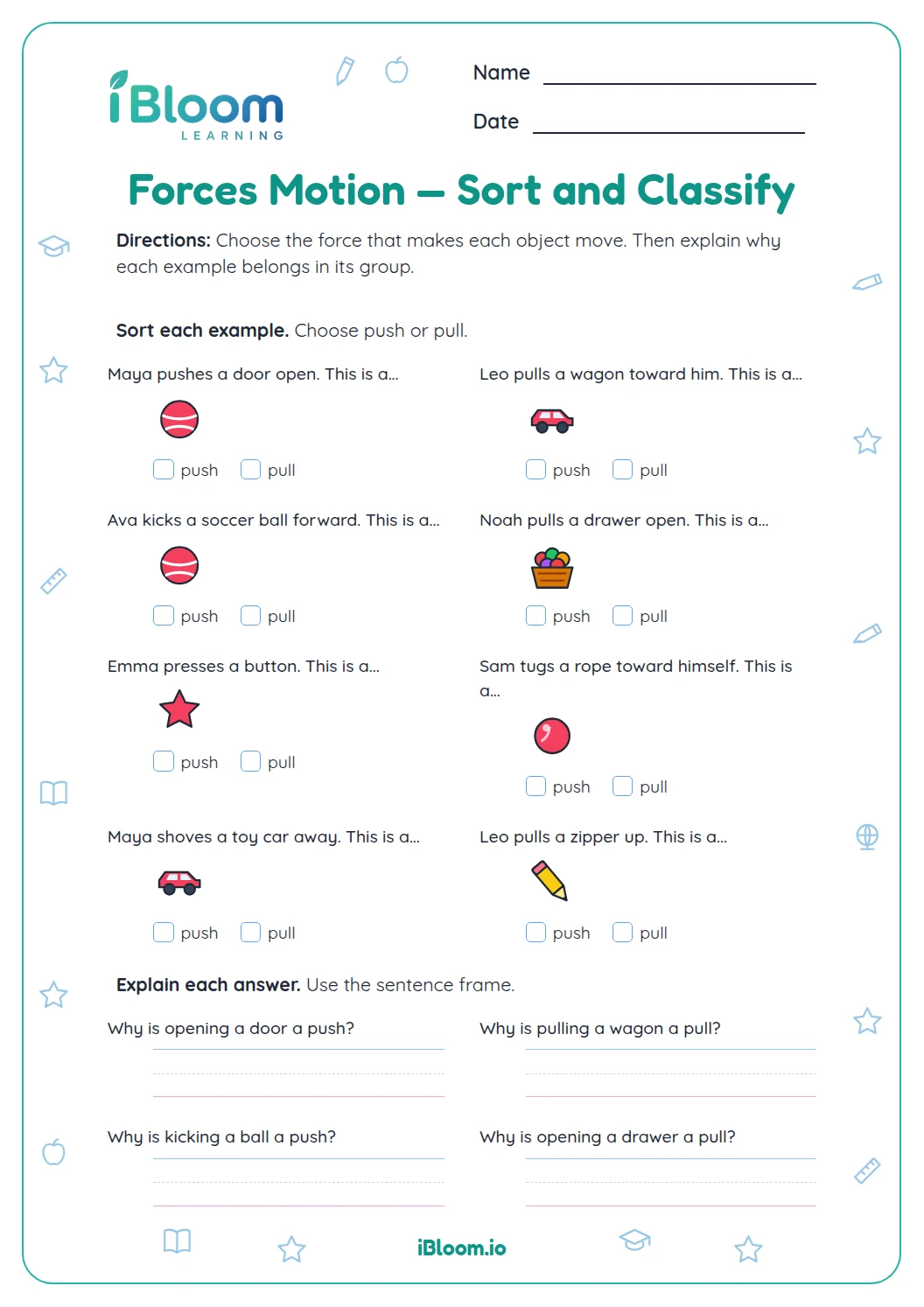
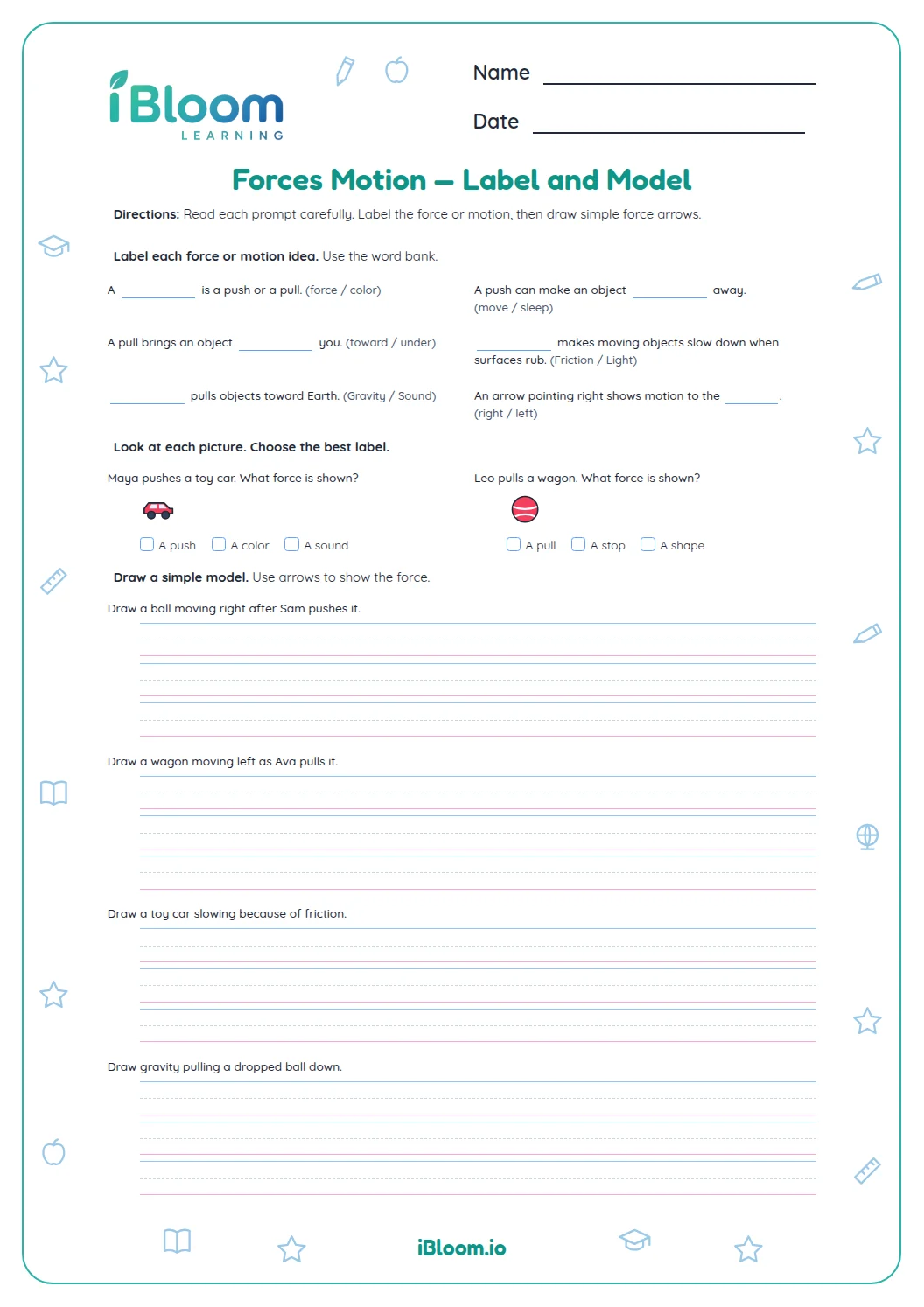
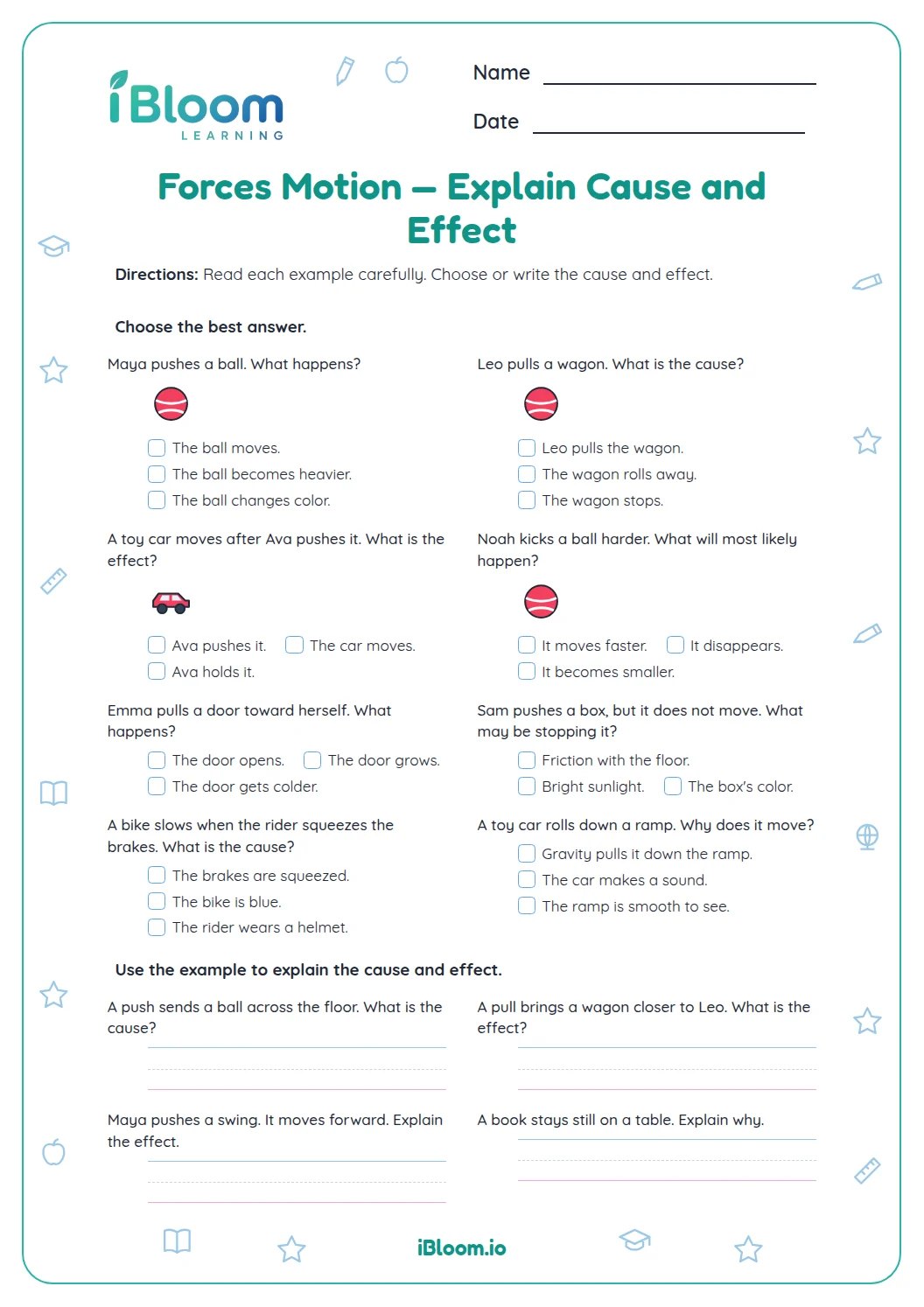
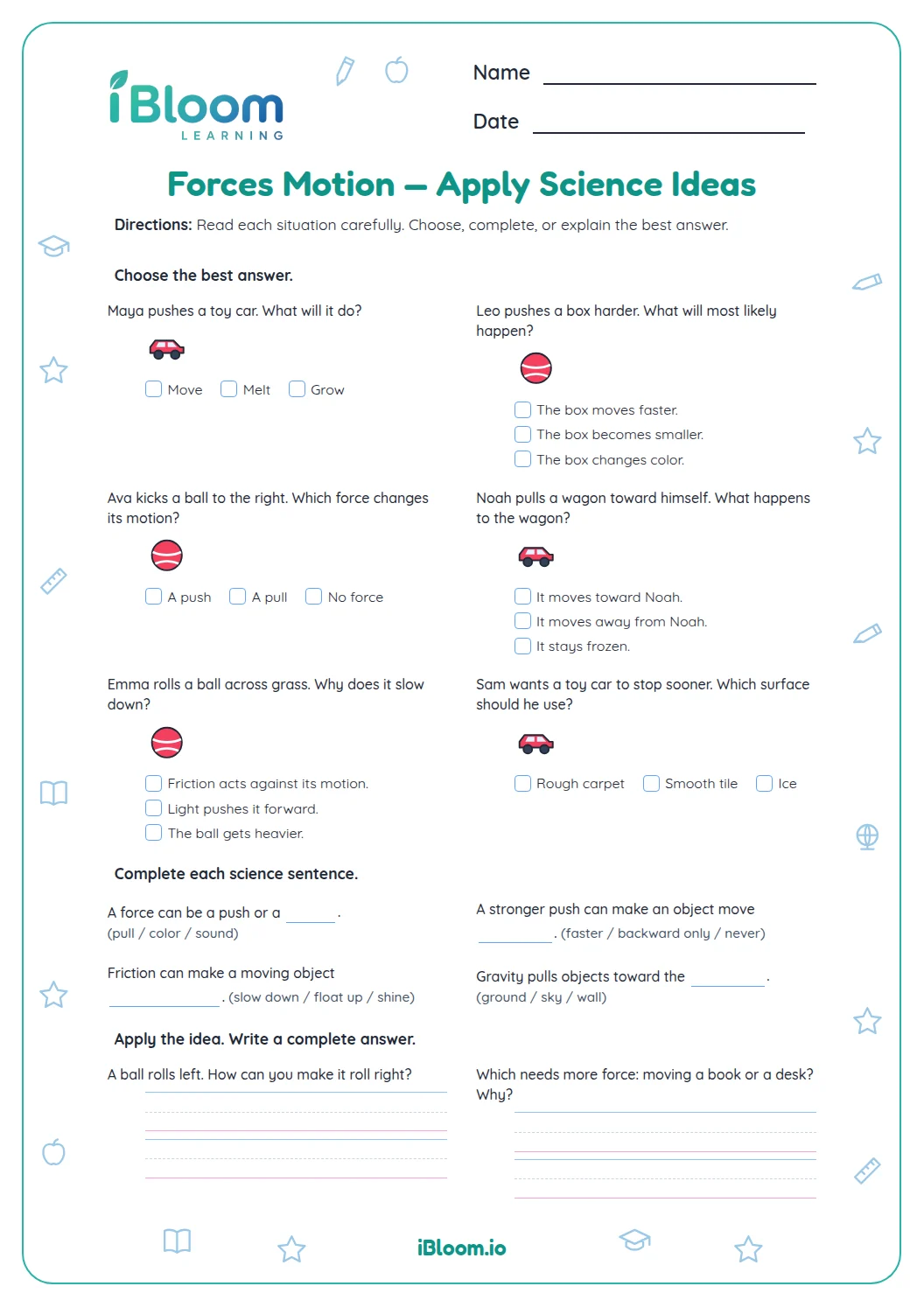
This Grade 2 science review uses everyday events to help children identify pushes and pulls and describe their effects on motion. Part A offers seven choices about force direction and motion. Part B asks students to name the force or motion change in seven short events, including a ball slowing, a toy car turning, and an object staying still. The separate answer key gives a concise response for each event.
How can you tell a push from a pull?
Notice how the object moves relative to the person applying the force. Pressing a toy car away is a push; drawing a wagon closer is a pull.
- 1Maya presses a toy car away from her. → push
- 2Eli tugs a wagon toward himself. → pull
What changes in motion can a force cause?
A force can start or stop motion, make an object move faster or slower, or change its direction. In Part B, use the action described rather than guessing at an unstated force.
How can a push start motion?
Question 14 describes a child pushing a ball that was still. The push starts the ball moving.
How to use this worksheet
- 1Find the person or object applying the force.
- 2Notice whether the object moves toward or away.
- 3Name the push or pull.
- 4Check whether motion starts, stops, speeds up, or turns.
Common mistakes and quick fixes
The mistake
Calling every force a push.
The fix
Ask whether the object is being pressed away or drawn closer.
The mistake
Confusing motion with color or appearance.
The fix
Describe what the object does: start, stop, speed up, slow down, or turn.
The mistake
Naming a force when no action is described.
The fix
Use only the evidence in the event.
What to practice next
Make more practice
Questions parents and teachers ask
What is a push?
A push is a force that moves an object away from the person or thing applying it. In question 1, Maya presses a toy car away from herself, so the force is a push. A pull brings an object toward the person or thing applying the force.
Can a force stop a moving object?
Yes. A push or pull can slow or stop motion, as well as start movement or change direction. Question 10 describes a hand stopping a rolling ball; the key accepts a push or pull because the event does not specify how the hand applies the force.
What changes in motion does the sheet cover?
The sheet includes starting, slowing, and changing direction. For example, question 14 describes a push that starts a ball rolling; the key identifies that change in motion. Students also identify push or pull from the direction of an action.
How is this sheet organized?
Part A has seven multiple-choice questions about force direction and motion effects. Part B has seven short events where students name the force or motion change. A separate answer key lists a response for every item so an adult can review the set.
How does this sheet connect forces with motion?
The events show that pushes and pulls can affect whether an object starts, stops, speeds up, slows down, or changes direction. Students identify only the action supported by each sentence, such as a kick starting a ball or a tap turning a toy car.