Free printable practice
Weather Forecast Practice Activities
Grade 3 science worksheets that help children read, compare, and explain weather forecasts using symbols, data, and everyday weather vocabulary.
Free printable worksheet PDFs
Preview every available page, then download the free worksheet PDF for home, homeschool, tutoring, or classroom practice.
Preview the exact activity before downloading it.
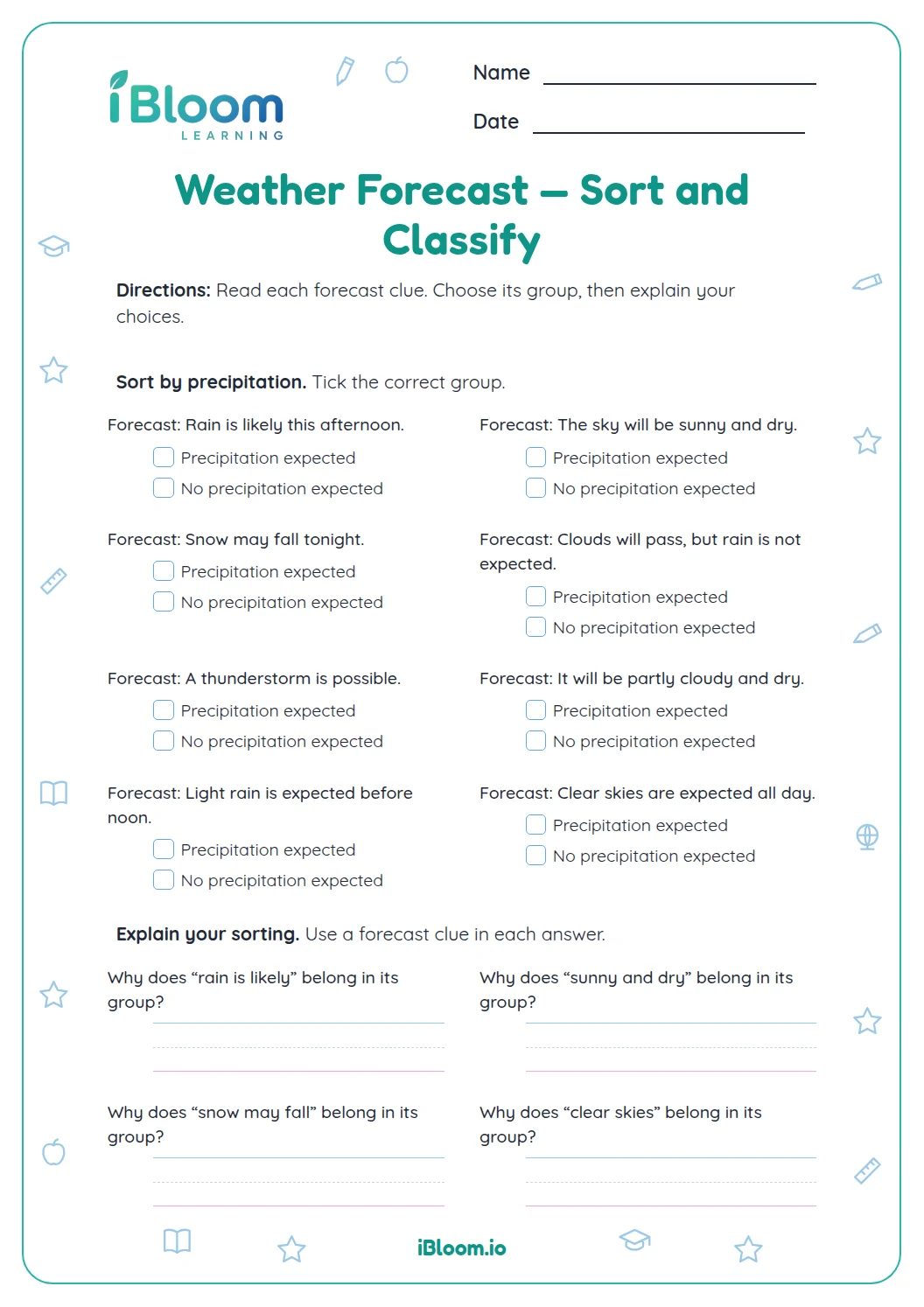 Weather Forecast — Sort and ClassifyGrade 3 science worksheets that help children read, compare, and explain weather forecasts using symbols, data, and everyday weather vocabulary. This sort and classify worksheet provides a distinct, age-appropriate way to practise the same lesson.Grade 3Free PDF preview
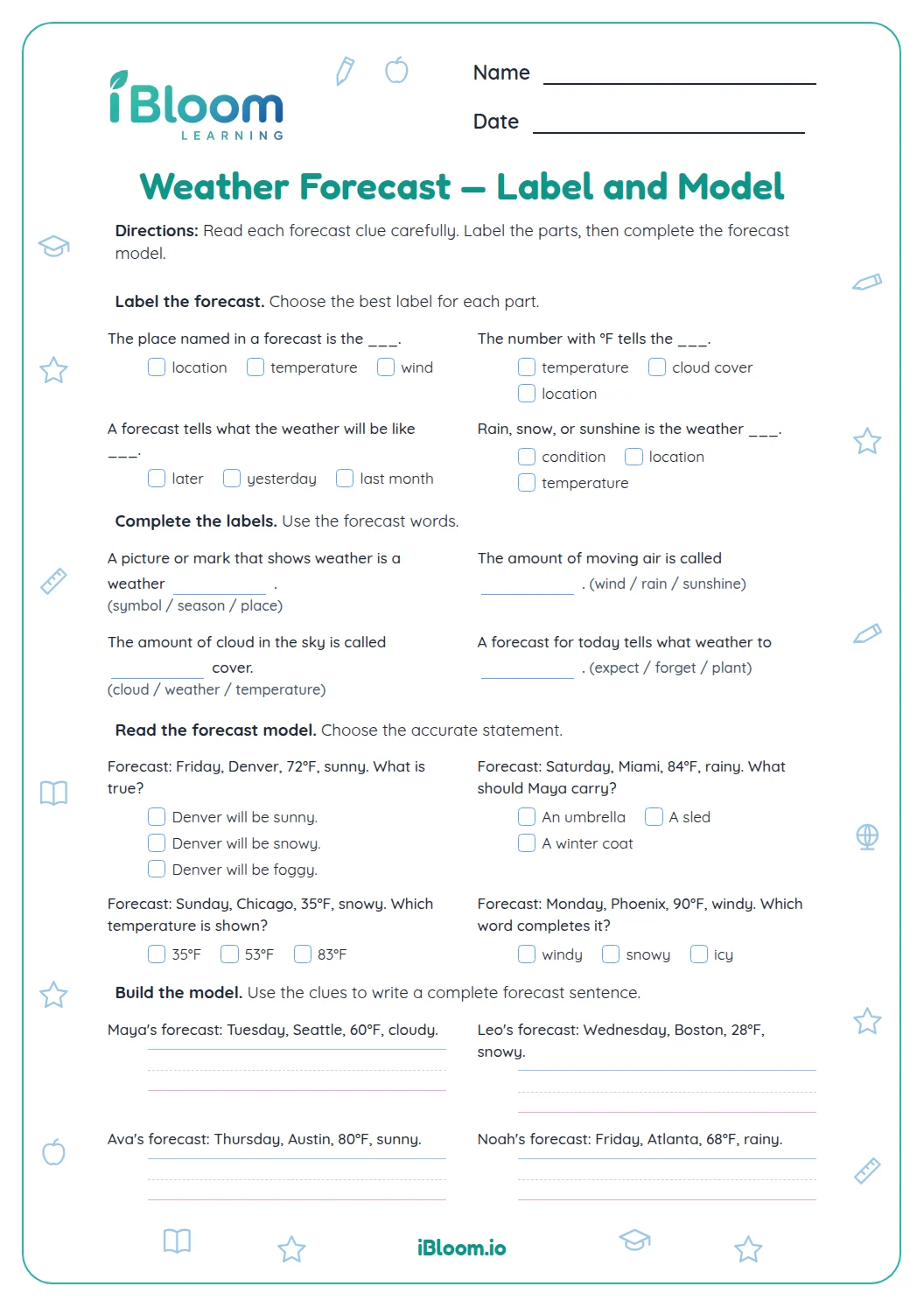 Weather Forecast — Label and ModelGrade 3 science worksheets that help children read, compare, and explain weather forecasts using symbols, data, and everyday weather vocabulary. This label and model worksheet provides a distinct, age-appropriate way to practise the same lesson.Grade 3Free PDF preview
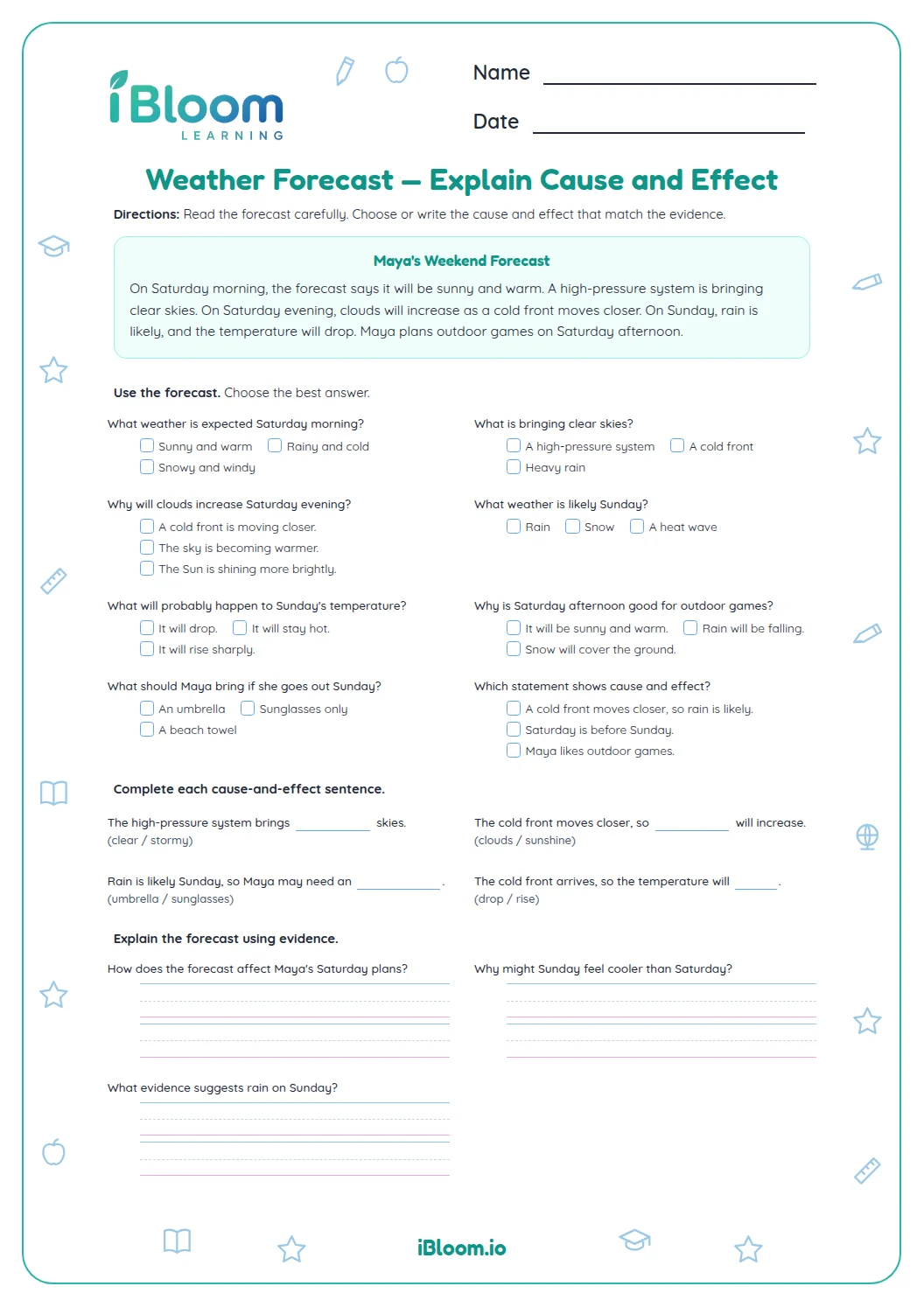 Weather Forecast — Explain Cause and EffectGrade 3 science worksheets that help children read, compare, and explain weather forecasts using symbols, data, and everyday weather vocabulary. This explain cause and effect worksheet provides a distinct, age-appropriate way to practise the same lesson.Grade 3Free PDF preview6 pages
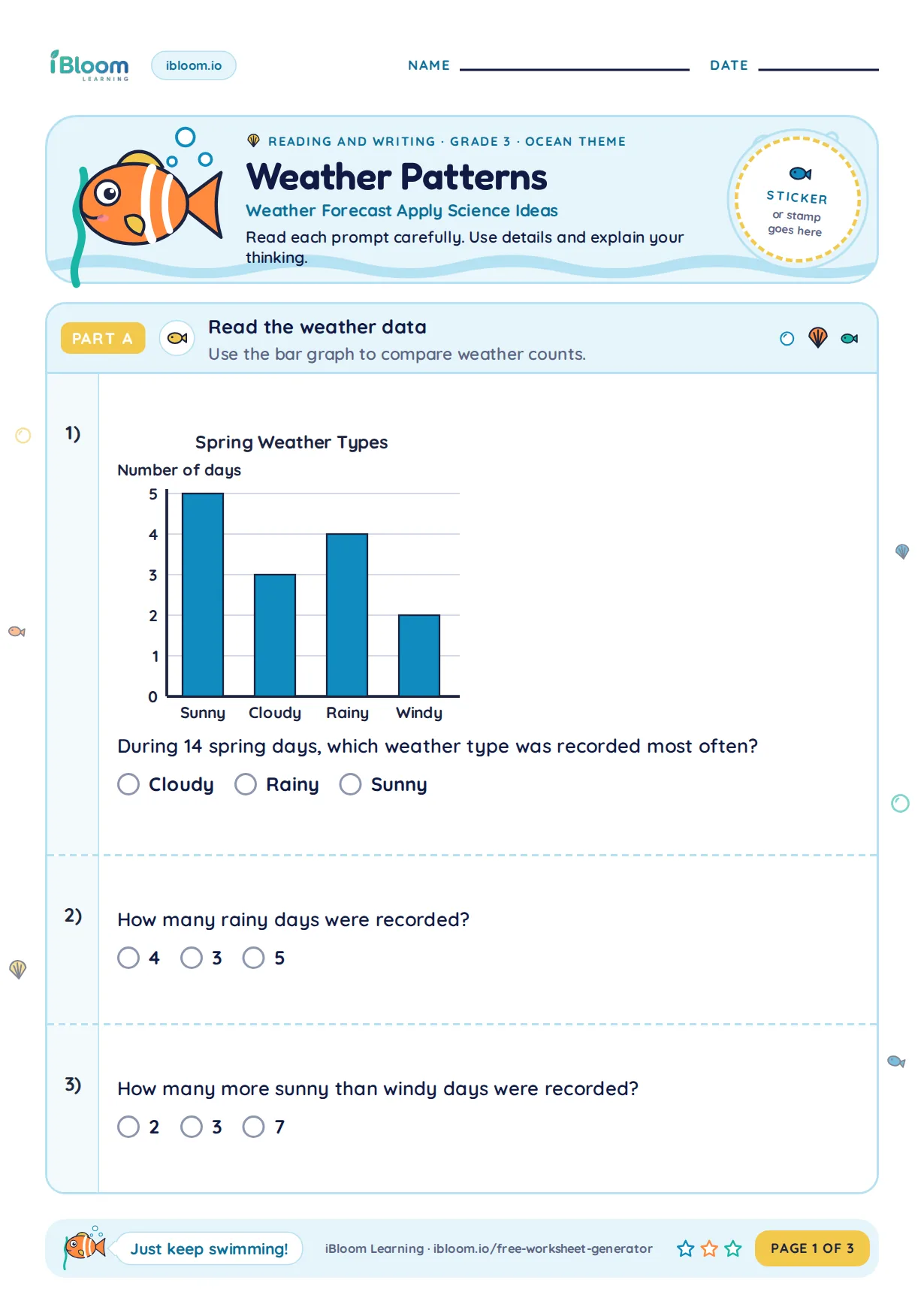 Weather Forecast — Apply Science IdeasGrade 3 science worksheets that help children read, compare, and explain weather forecasts using symbols, data, and everyday weather vocabulary. This apply science ideas worksheet provides a distinct, age-appropriate way to practise the same lesson.Grade 3Free PDF preview
 Weather Forecast — Science Reasoning ReviewGrade 3 science worksheets that help children read, compare, and explain weather forecasts using symbols, data, and everyday weather vocabulary. This science reasoning review worksheet provides a distinct, age-appropriate way to practise the same lesson.Grade 3Free PDF preview
Practice that builds confidence
Building forecast vocabulary
These Grade 3 Science worksheets focus on weather forecast practice within the Weather Climate topic. Children read forecast information, identify weather symbols, compare daily conditions, and connect words such as temperature, precipitation, wind, cloudy, sunny, and stormy to real situations.
The printable activities include forecast charts, short weather reports, picture-based questions, map-style symbols, and prompts that ask children to explain what people might wear, carry, or plan based on the forecast. The aim is to build careful reading and evidence-based thinking, not guessing.
Weather forecasts combine science words, symbols, and numbers. These worksheets give children repeated practice with terms such as temperature, rain, snow, wind, partly cloudy, thunderstorm, and chance of precipitation. Instead of memorizing words in isolation, students use them inside short forecasts and practical questions.

Connecting forecasts to evidence
Grade 3 learners are ready to move beyond “sunny means nice weather.” The activities ask them to notice details: Is the day warm or cool? Is rain likely? Is the wind strong enough to affect outdoor plans? Children compare forecast entries and explain which clue helped them decide. This supports the science habit of using information from a source before making a claim.
A simple parent routine
At home, choose one worksheet item and then look at a local weather forecast together. Ask, “What does the symbol show?” “What temperature is listed?” and “What should we do differently because of this forecast?” Children can circle the clue that helped them answer, then say the forecast in a complete sentence: “It may rain in the afternoon, so I would bring an umbrella.”

Classroom uses for teachers
Teachers can use these printables during a weather and climate unit, science centers, morning work, or small-group review. They also work well before a class weather journal because students first learn how forecasts are organized. Pair work is useful: one student reads the forecast aloud while another points to the evidence in the chart or symbol.

Common errors to watch for
Some children mix up weather and climate, treat every cloud symbol as rain, or answer from personal preference instead of the forecast. Others ignore units or skip key words such as “chance,” “likely,” or “afternoon.” A child-friendly strategy is: Look, Link, Predict. Look at the symbol and words, link them to temperature or precipitation clues, then predict a sensible action.
Free printable PDF download
Use this grade 3 weather forecast worksheet page to preview the activity, print it, or download it as a PDF for quick practice. It works well for homework, homeschool lessons, tutoring, morning work, revision, and classroom centers.
Answers and answer key support
After the child completes the worksheet independently, parents and teachers can use the answer support or answer key information to check the work, review mistakes, and choose the next practice step.
Why iBloom worksheets help
iBloom weather forecast practice is designed to be clear, visual, and purposeful for Grade 3 students. The questions progress from identifying symbols to comparing forecasts and explaining choices. This helps children see forecasts as useful science information they can read, discuss, and apply in everyday life.
Helpful answers
Frequently asked questions
What do Grade 3 students practise in these weather forecast worksheets?
They practise reading forecast charts, identifying weather symbols, using weather vocabulary, comparing conditions, and explaining simple decisions based on forecast evidence.
Do these activities require live weather data?
No. The worksheets include printable forecast examples, symbols, and questions. You can also extend the activity by comparing them with a local forecast.
How do the worksheets help children tell weather and climate apart?
They focus on short-term daily forecasts, which helps children understand that weather describes conditions for a specific time, unlike climate patterns over longer periods.
Are weather symbols included in the practice?
Yes. Children work with common forecast symbols such as sunny, cloudy, rainy, snowy, and stormy, then connect each symbol to written forecast details.
What mistakes should I look for while my child works?
Watch for guessing from pictures only, overlooking words such as chance or likely, confusing cloudy with rainy, and making plans that do not match the forecast clues.
Is this grade 3 weather forecast worksheet free?
Yes. You can preview it for free and use the printable worksheet for home or classroom practice.
Can I download this grade 3 weather forecast worksheet as a PDF?
Yes. Use the worksheet download option to save a printable PDF, or print the worksheet directly from the page.
Does this grade 3 weather forecast worksheet include answers or an answer key?
When the activity has fixed answers, iBloom includes answer support so parents and teachers can check the completed worksheet.