


About this worksheet
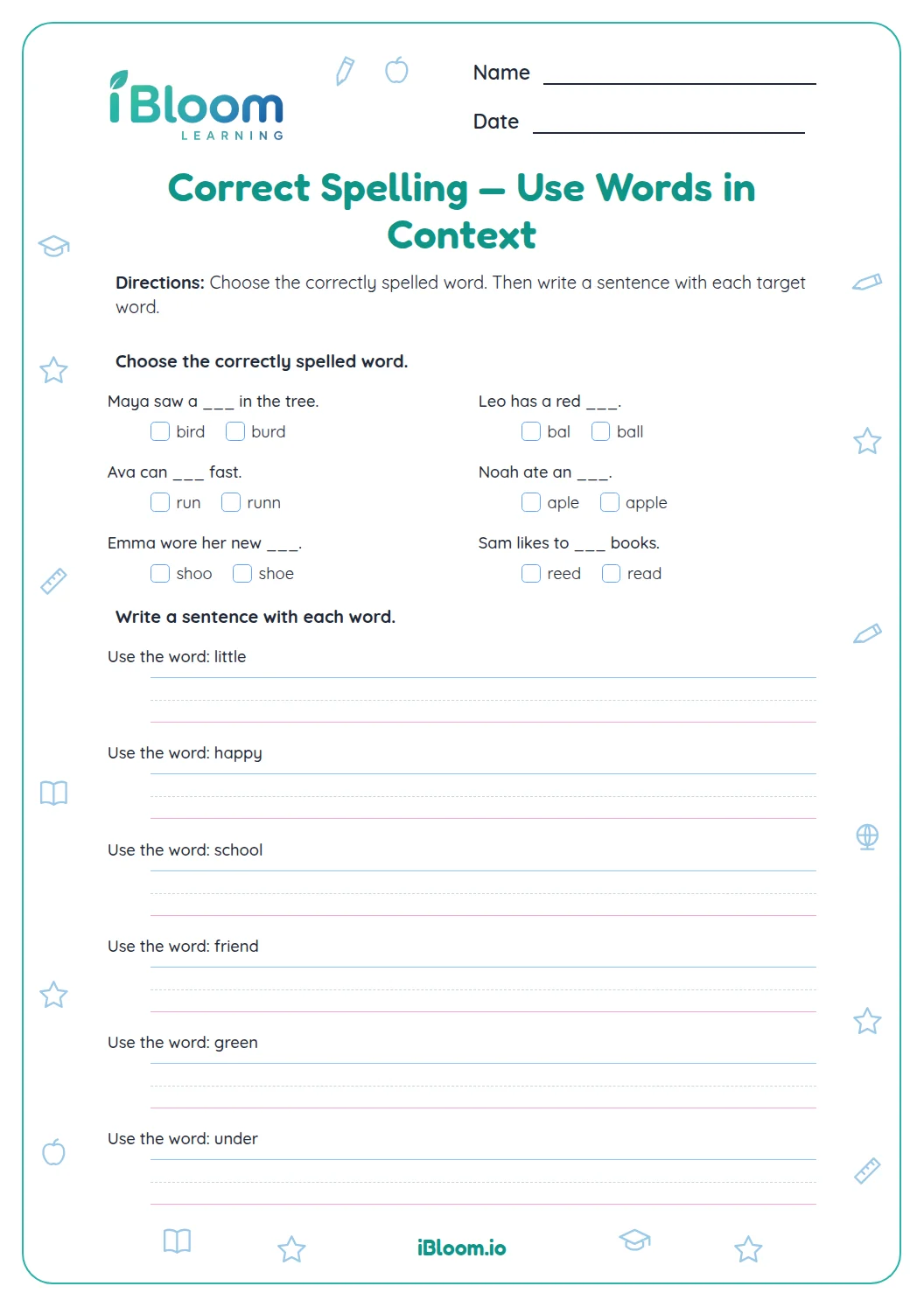
This Grade 1 spelling worksheet pairs eight correct-spelling choices with eight rhyme matches. Learners compare familiar word forms, then listen for the ending sounds that match. Part A practices conventional spellings; Part B practices rhyming words. A separate key gives all 16 answers.
Aligned to L.1.2d
What does the spelling part ask learners to notice?
Part A presents three spellings of a familiar word. Learners choose the conventional form, such as ship, by checking the letters in the whole word.
How do the rhyme matches work?
Part B gives a word and three choices. Say the words aloud and listen to the ending sound: cake rhymes with lake because both end with the same sound.
How can families review a choice?
For spelling, compare the chosen form with the familiar word. For rhyme, say both words aloud and listen to the ending sounds. Then use the answer key to check each response.
Compare spelling and sound
- 1Read each spelling choice carefully.
- 2Say the familiar word and find its conventional spelling.
- 3For a rhyme item, say the prompt word and each choice aloud.
- 4Listen for matching ending sounds.
- 5Check the selected answers with the key.
Word checks
The mistake
Choosing a spelling that looks familiar at first glance.
The fix
Check every letter in the whole word.
The mistake
Choosing a rhyme because the words start with the same sound.
The fix
Listen to the ending sounds instead.
The mistake
Matching words that share letters but sound different at the end.
The fix
Say both words aloud and compare how they finish.
Common Core alignment
Use conventional spellings for familiar words with common patterns.
On this sheet: Part A asks children to identify conventional spellings among familiar word forms.
Show the official wordingHide the official wording
Use conventional spelling for words with common spelling patterns and for frequently occurring irregular words.
What to practice next
Make more practice
Further reading
Questions parents and teachers ask
What does “correct spelling” mean on this sheet?
Children compare three written forms and choose the familiar word with its conventional spelling, such as ship rather than shipp or sip. Reading each choice aloud can connect the letters with the word they know. Part A includes eight spelling choices.
How does the matching part work?
Each item gives a word and three choices. Children select the word with the same ending sound, such as lake for cake or bed for red. Saying the words aloud can help learners hear the rhyme. Part B has eight of these matching items.
How many questions are included?
There are 16 items in two parts: eight correct-spelling choices and eight rhyme matches. The answer key is provided separately and lists the correct response for each item. Learners can complete one group at a time and check both parts afterward.
Should children sound out every choice?
Yes. Saying the choices slowly can help children connect letters and sounds. For rhyme items, listen to the ending sound rather than only looking at the first letter. The answer key can help check the selected word and review the sound match.
Can an adult read the choices aloud?
Yes. An adult can read the short choices aloud while the child selects a spelling or listens for a rhyme. This lets the learner focus on comparing the letters or sounds. Families can review the answers together with the separate key.