


About this worksheet
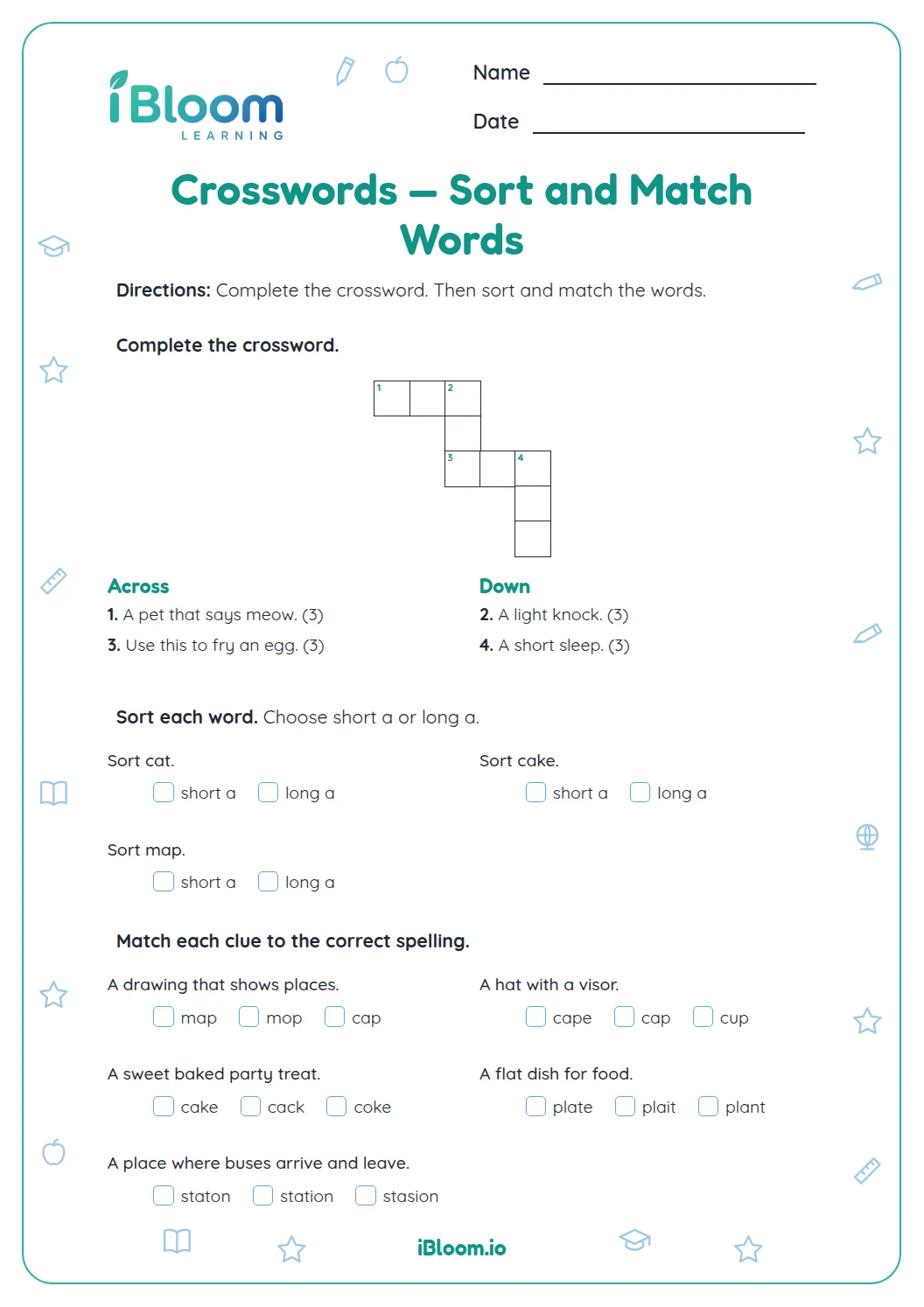
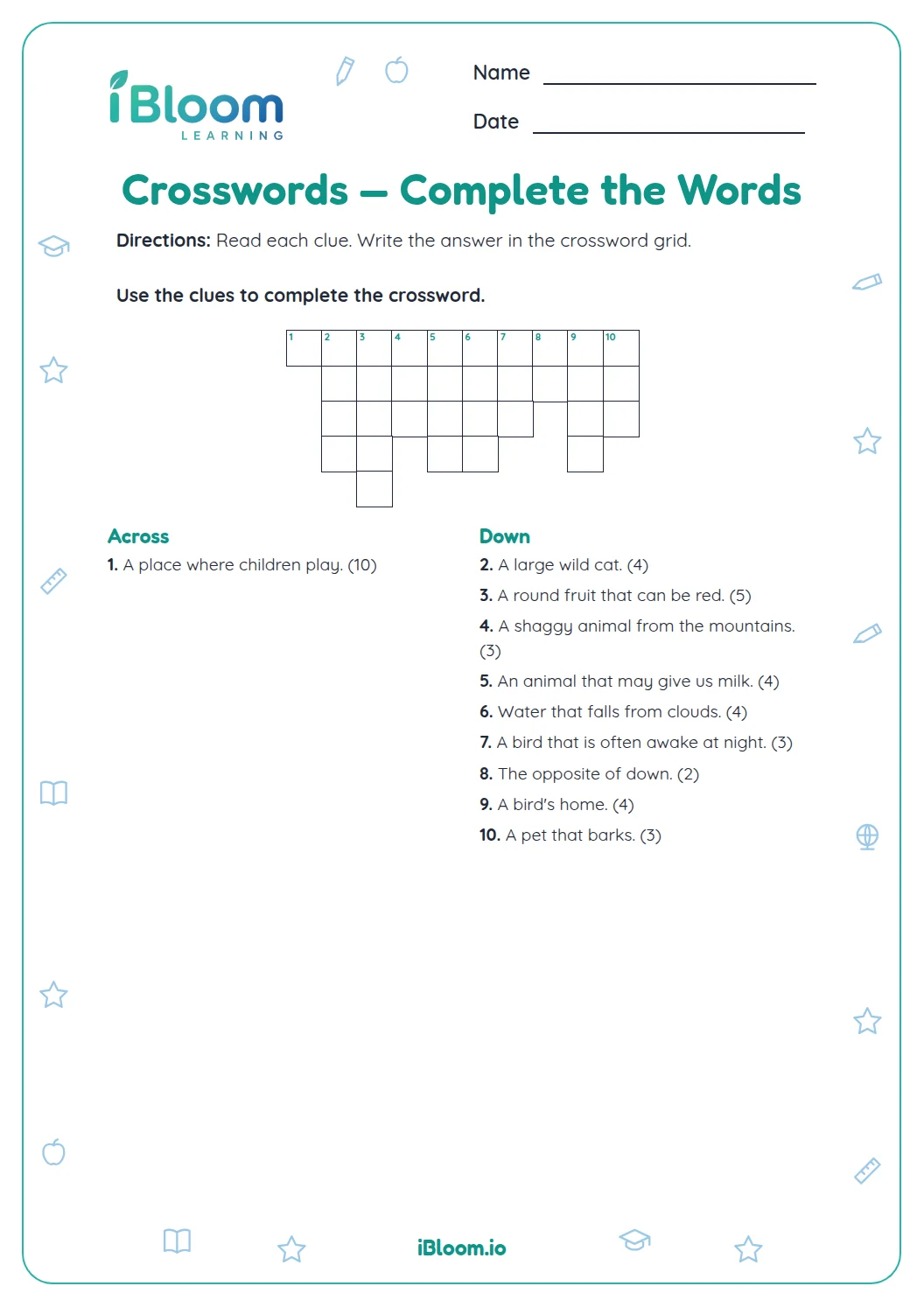
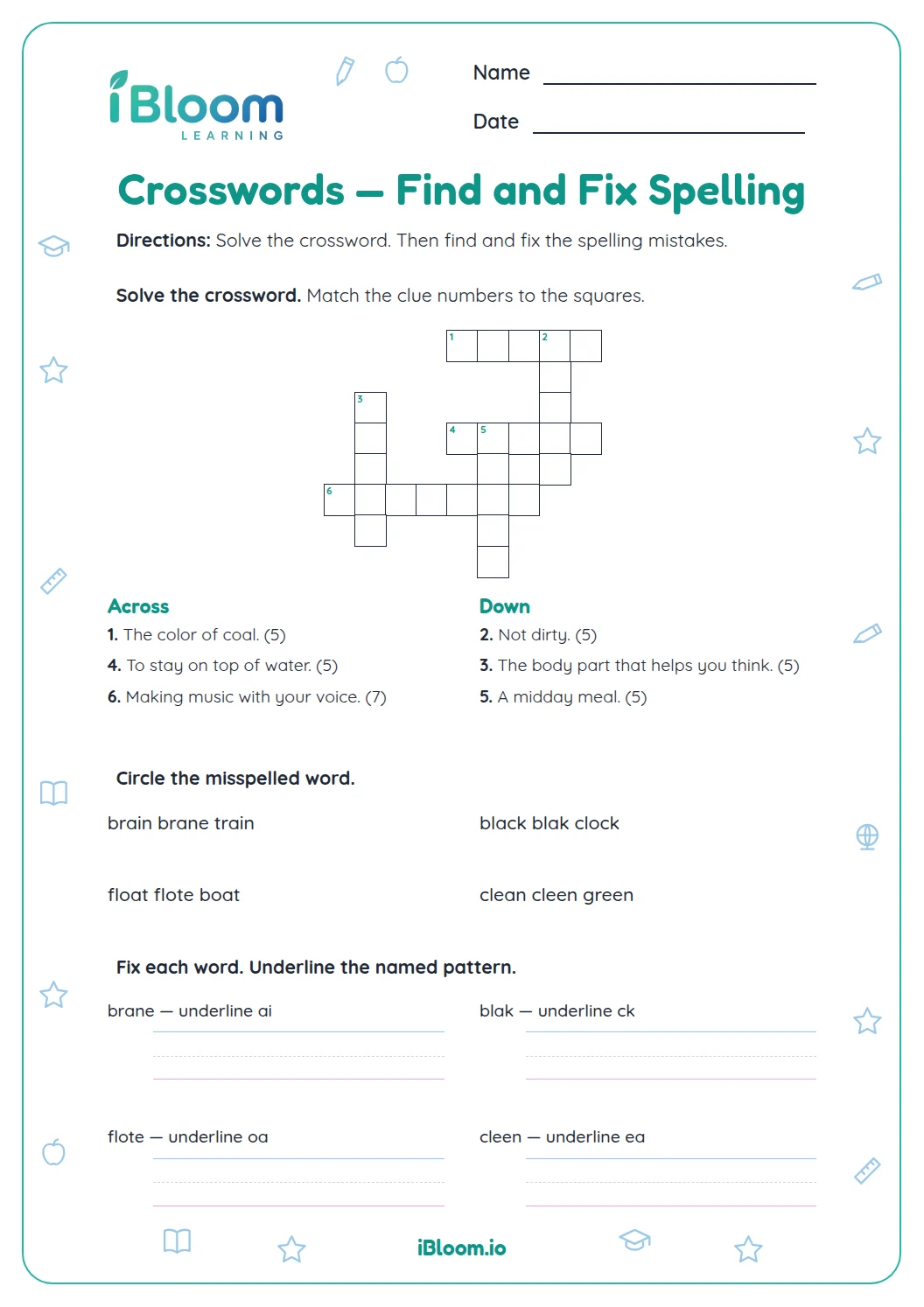
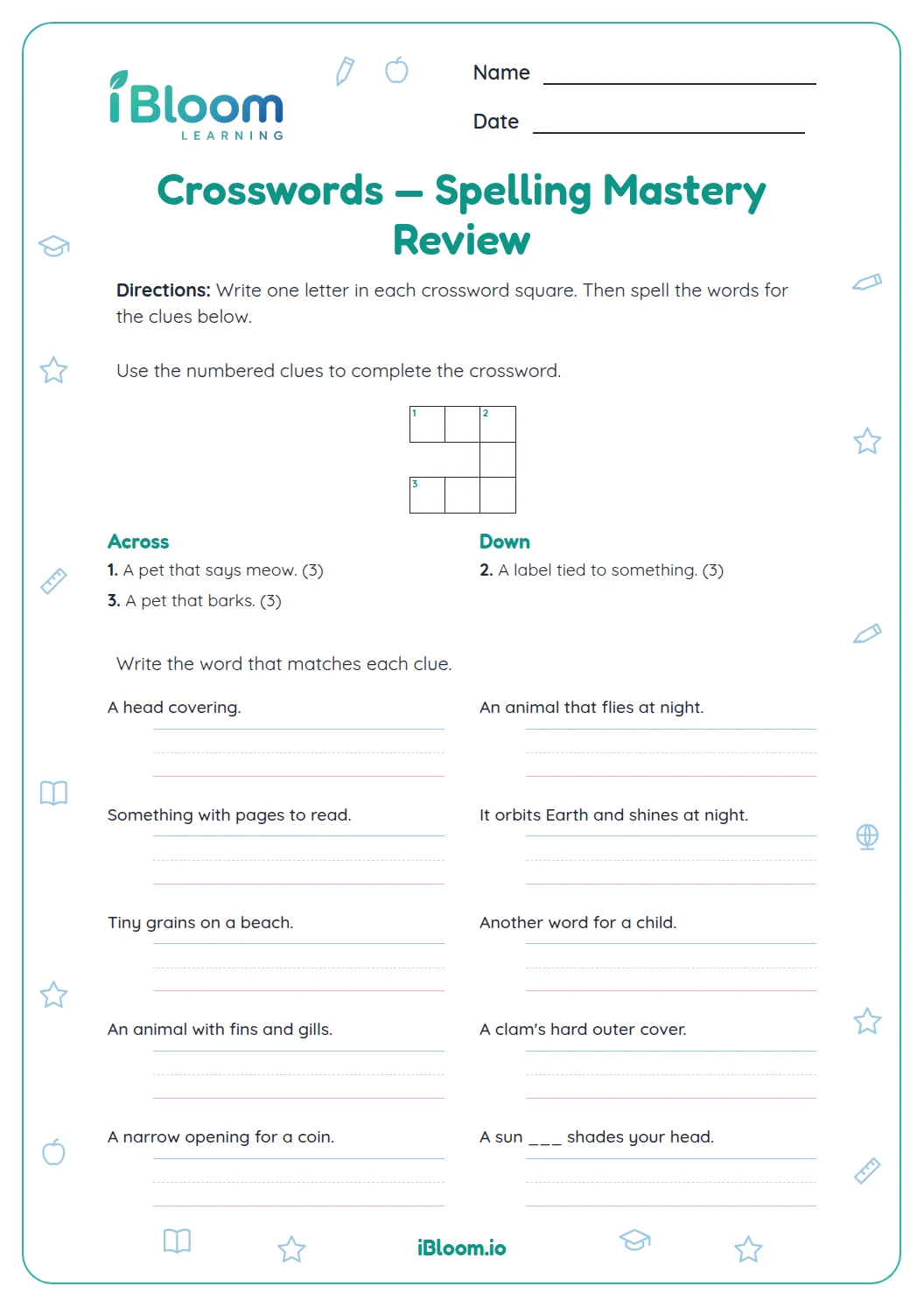
This free Grade 2 spelling worksheet combines a six-word crossword with four new sentence completions. Children use context to decide which word belongs, then check its spelling against the crossing letters. The crossword words are plant, plate, train, rain, paint, and snail. Part A supplies sentence clues; Part B reuses four answers in new situations. The work practices Common Core L.2.4a, using sentence-level context to find meaning. A separate answer key shows the completed puzzle and the missing words, so families can review both the clue and the spelling.
Aligned to L.2.4a
What makes these crossword clues useful for spelling?
Each clue is a sentence with a missing word. Children first work out the meaning, then write that word into the numbered spaces. The crossings provide a second check: two answers must share the same letter where they meet.
The six answers include the ai spelling in train, rain, paint, and snail. Plant and plate share several letters but have different endings, making careful left-to-right checking useful.
How can a child solve the shell clue?
The words slow, shell, and back narrow the meaning. Snail names the animal in that clue, and its five letters can be checked against the spaces in the puzzle.
- 1Clue: The slow ___ carries a shell on its back.
- 2Answer: snail
- 3Spell and check: s-n-a-i-l
Why reuse the words after the puzzle?
Part B asks for four of the same words in different sentences. A train leaves a station, red and white paint are mixed, a plant is watered in its pot, and clouds bring heavy rain.
Children can look back at the grid for spelling, but they still need to read each new sentence to choose the word. Ask them to name the clue words before checking the answer key.
How to use this worksheet
- 1Read the crossword directions and find the Across and Down clue groups.
- 2Start with a clue the child can explain aloud.
- 3Write one letter in each square and check any shared letters.
- 4Complete Part B using words from the finished puzzle.
- 5Use the key to revisit a missed clue and correct the whole word.
Mistakes to check together
The mistake
Writing plate for the clue about roots.
The fix
Reread roots, stem, and leaves. Plant matches those details.
The mistake
Writing one letter in a box that conflicts with another word.
The fix
Read both crossing clues again; the shared box must work for each answer.
The mistake
Choosing paint for a sentence about a station.
The fix
Use the setting clue: a train stops at a station. Check the word before copying its letters.
Curriculum alignment
Use sentence clues to choose the word that fits each situation.
On this sheet: Children solve sentence clues and reuse crossword words in new contexts.
Show the official wordingHide the official wording
Use sentence-level context as a clue to the meaning of a word or phrase.
What to practice next
Make more practice
Further reading
Questions parents and teachers ask
Which words are in the crossword?
The six answers are plant, plate, train, rain, paint, and snail. Each comes from a short sentence clue, and the words cross in the puzzle. After completing the grid, children use train, paint, plant, and rain again in four new sentences that provide different context clues.
Can I read the clues aloud?
Yes, you can read a clue aloud while your child follows the words on the page. Ask which details suggest the answer before helping with spelling. For the snail clue, slow and shell are useful details. Your child can then say the letters and enter them independently.
What if a word fits the clue but not the boxes?
Check the word’s meaning, spelling, and number of letters before changing a crossing answer. The clue about a sandwich points to plate, and the clue about roots points to plant. Both have five letters, so children must use the whole sentence and the shared letters to choose correctly.
Why do four sentences use words from the puzzle?
The four sentences help children connect a familiar spelling to a new situation. Paint appears with a brush in the puzzle and with mixing colors afterward. Reusing the grid as a spelling reference lets children concentrate on meaning while still copying each word accurately into its new sentence.
How should I use the answer key?
Use the separate key after your child has tried both parts. Check each complete word, then inspect the crossing letters in any missed entry. For Part B, read the finished sentence aloud together. A correct spelling still needs to make sense in the sentence where it appears.