



About this worksheet
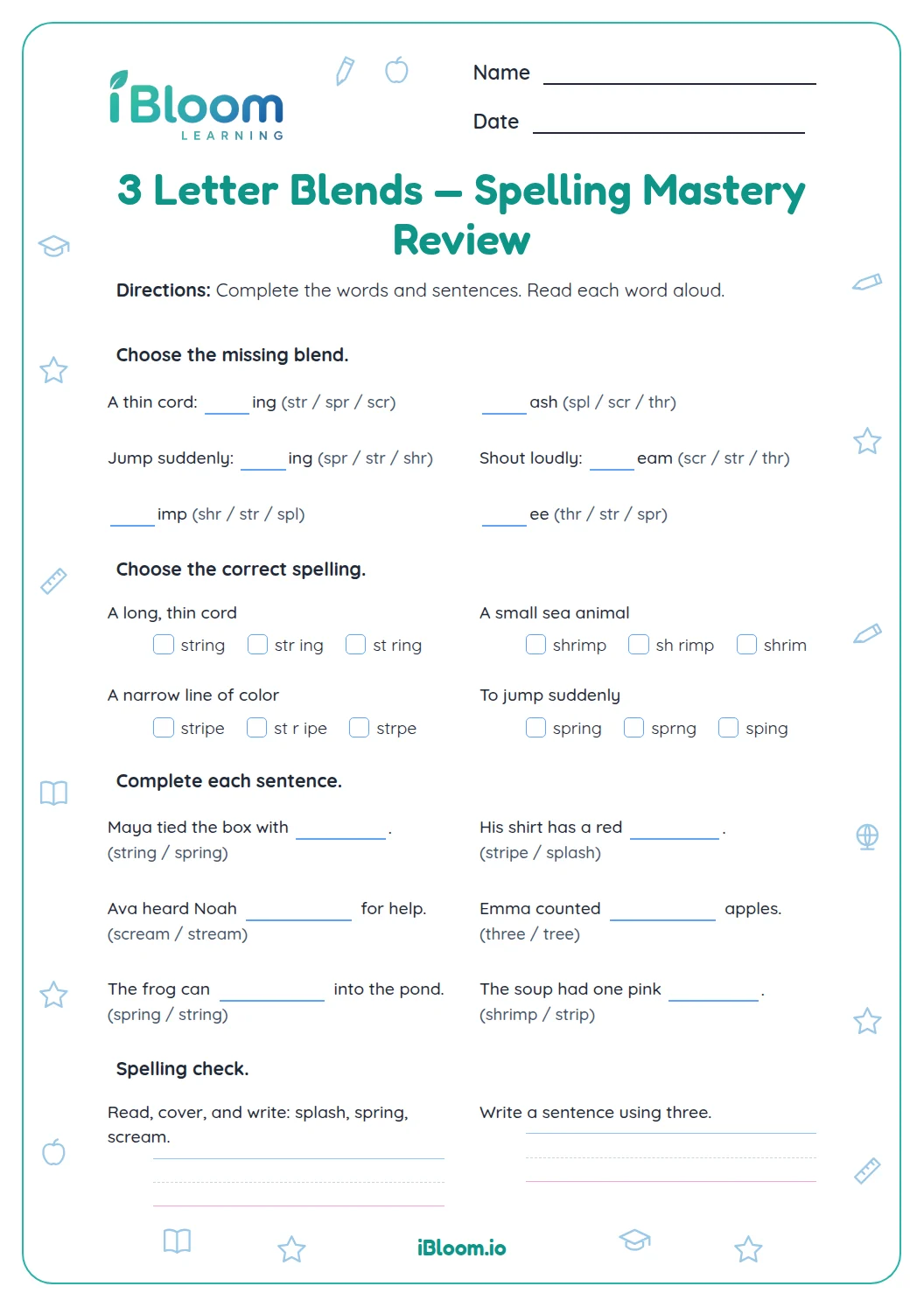
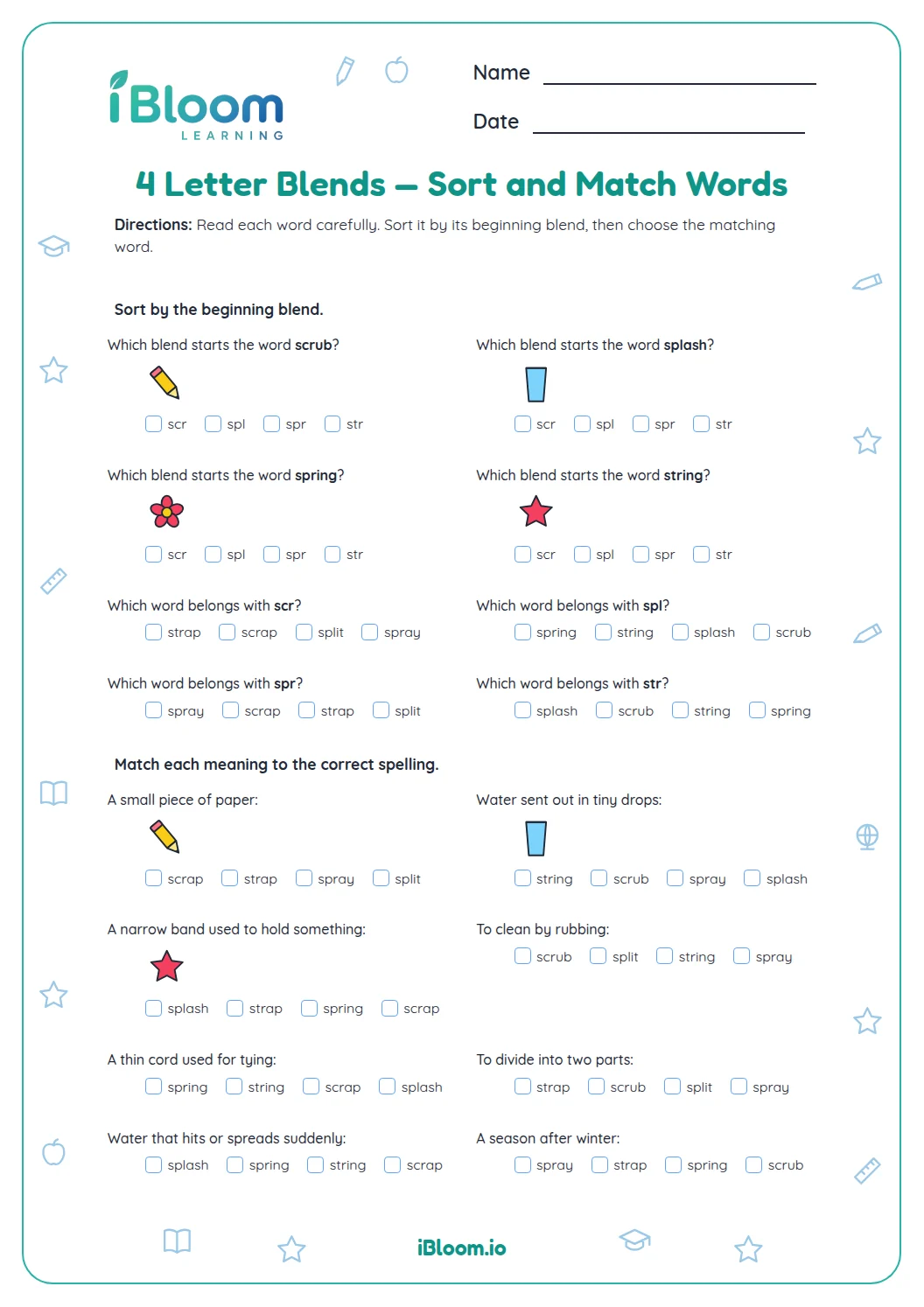
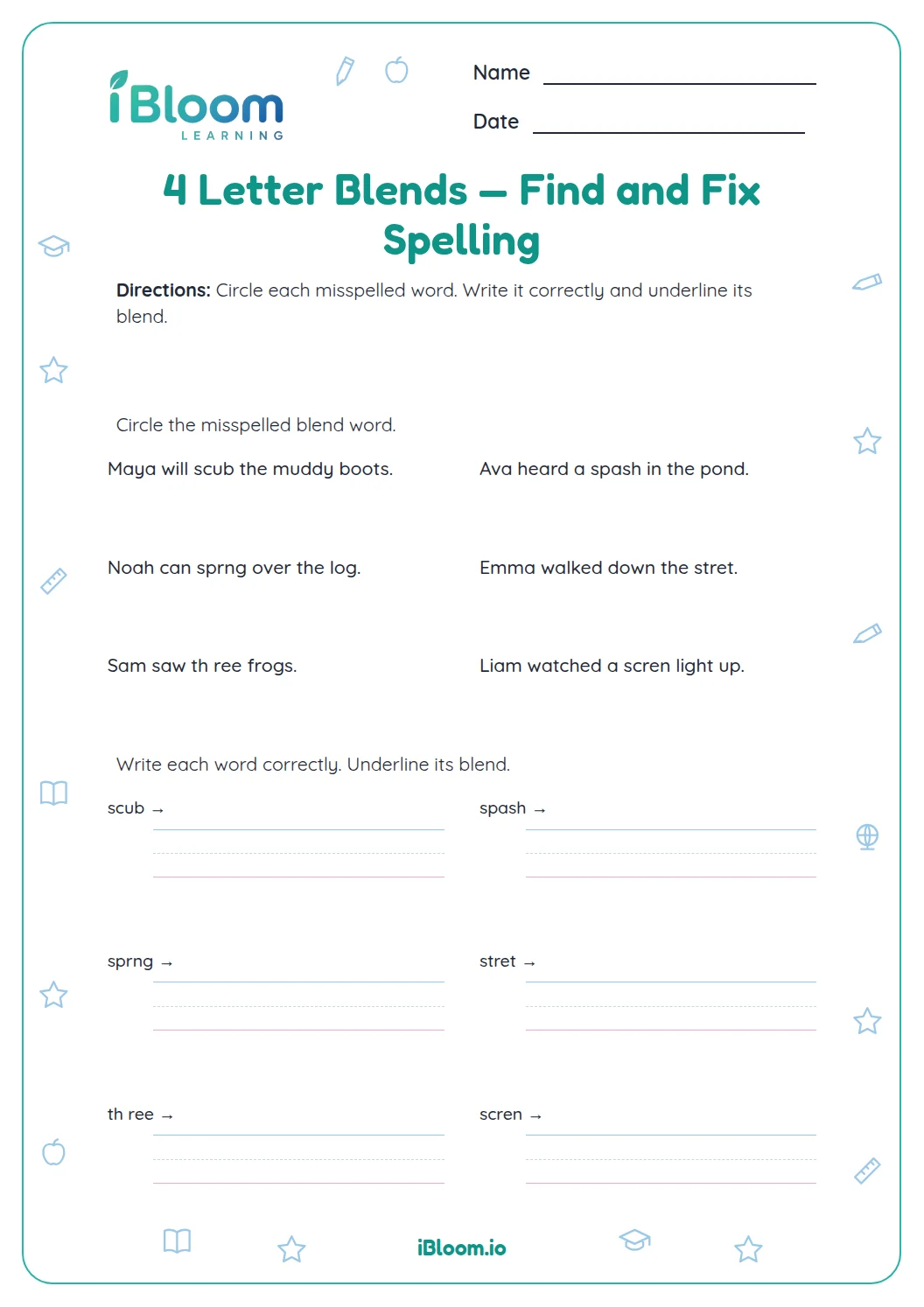
This Grade 2 spelling worksheet practices words that begin with three-letter consonant patterns. Part A asks children to choose correctly spelled words, Part B identifies the beginning blend, and Part C fixes a misspelling in a short sentence. The 15 questions include patterns such as spl, str, scr, thr, shr, and squ.
Aligned to CCSS L.2.2.d
What is a three-letter blend?
A consonant blend has two or more consonants next to each other, and each consonant keeps its sound. Three-letter blends include spl in splash, str in string, and squ in squid.
When spelling, say the word slowly and listen for each sound at the start. Then check that each matching letter is present and in the right order.
How can children find a spelling slip?
Compare each written word with the sounds you hear. A misspelled blend may leave out a consonant or switch two letters. The correction task uses familiar words so the blend is the main thing to check.
How to use this worksheet
- 1Read the direction at the start of each part before answering.
- 2Work through Part A first, then try the later parts independently.
- 3Use the separate answer key to review each response and talk through any missed item.
Common mistakes and quick fixes
The mistake
Leaving out one consonant in a blend, such as writing “splash” as “spash.”
The fix
Say the beginning slowly and listen for each consonant sound.
The mistake
Switching the order of letters in a blend.
The fix
Check the letters from left to right against the sounds in the word.
Curriculum alignment
This worksheet practices a foundational skill commonly taught in Grade 2.
Generalize learned spelling patterns when writing words.
On this sheet: Each part asks children to notice the letters in a three-consonant beginning and apply the pattern when correcting a spelling.
Show the official wordingHide the official wording
Generalize learned spelling patterns when writing words.
What to practice next
Make more practice
Further reading
Questions parents and teachers ask
What is a three-letter consonant blend?
A blend places consonants next to one another while keeping each sound audible. In splash, the beginning letters s, p, and l each contribute a sound. Other examples on the worksheet include str, scr, thr, shr, and squ.
How can a child spell a blend word?
Say the word slowly and listen for each consonant at the beginning. Write the matching letters in order, then reread the word to check that no sound or letter was skipped. It can help to point under each sound as the child says it.
What kinds of errors should children look for?
A spelling slip may leave out a consonant or place two letters in the wrong order. Comparing the written word with the sounds heard at the beginning helps children find and repair those errors. After correction, reread the whole sentence to confirm the word fits.
Are the blend words suitable for Grade 2?
The words are familiar, concrete examples selected to make the consonant pattern easy to hear and check. The worksheet keeps attention on the blend spelling rather than on advanced vocabulary. An adult can read a word aloud if a child has not met it before.
How many items are included?
The page has 15 questions: six spelling choices, five blend-identification choices, and four corrections in sentence context. The answer key shows the correct spelling for each item so children can compare the letters and check the blend pattern.