



About this worksheet
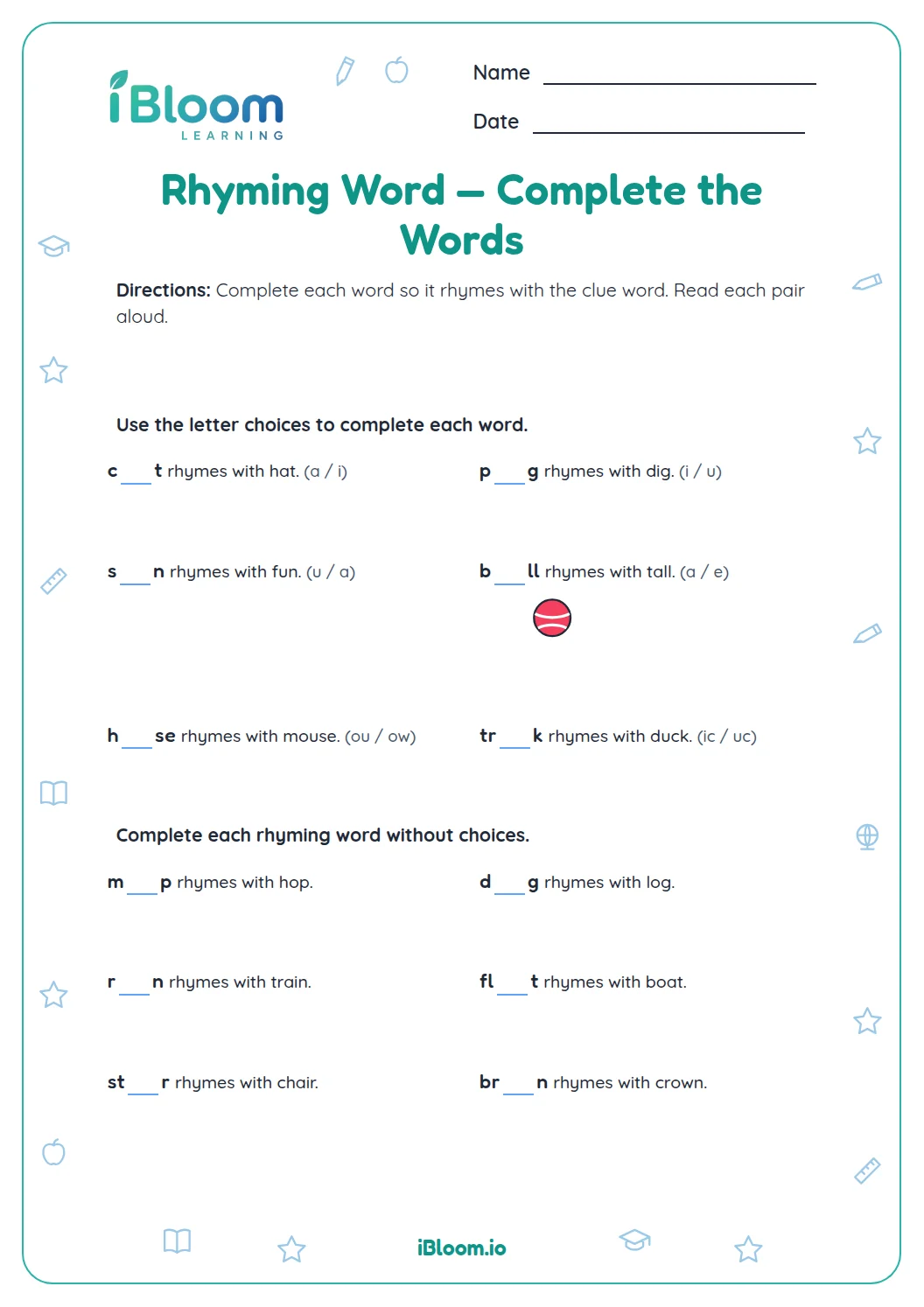
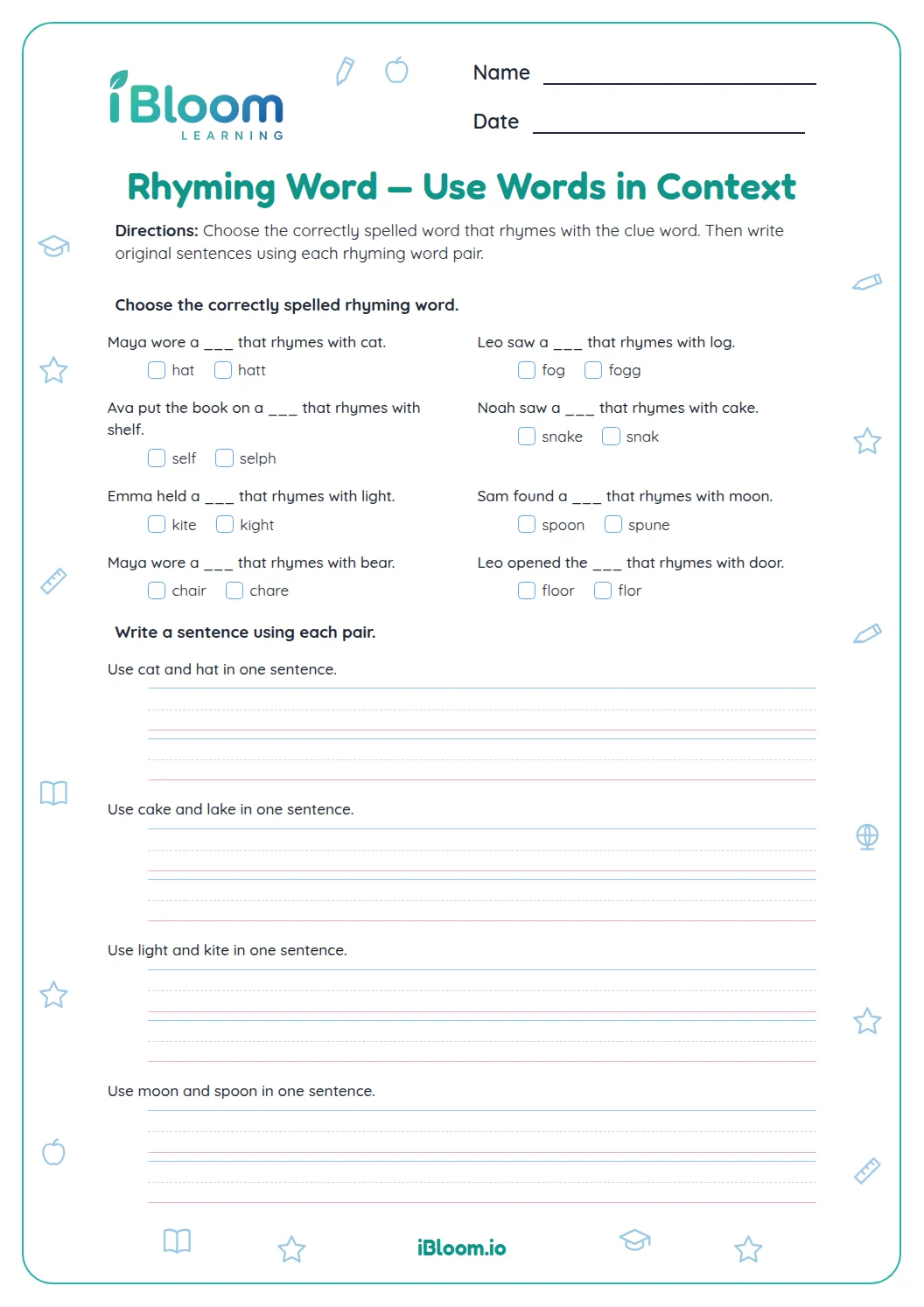
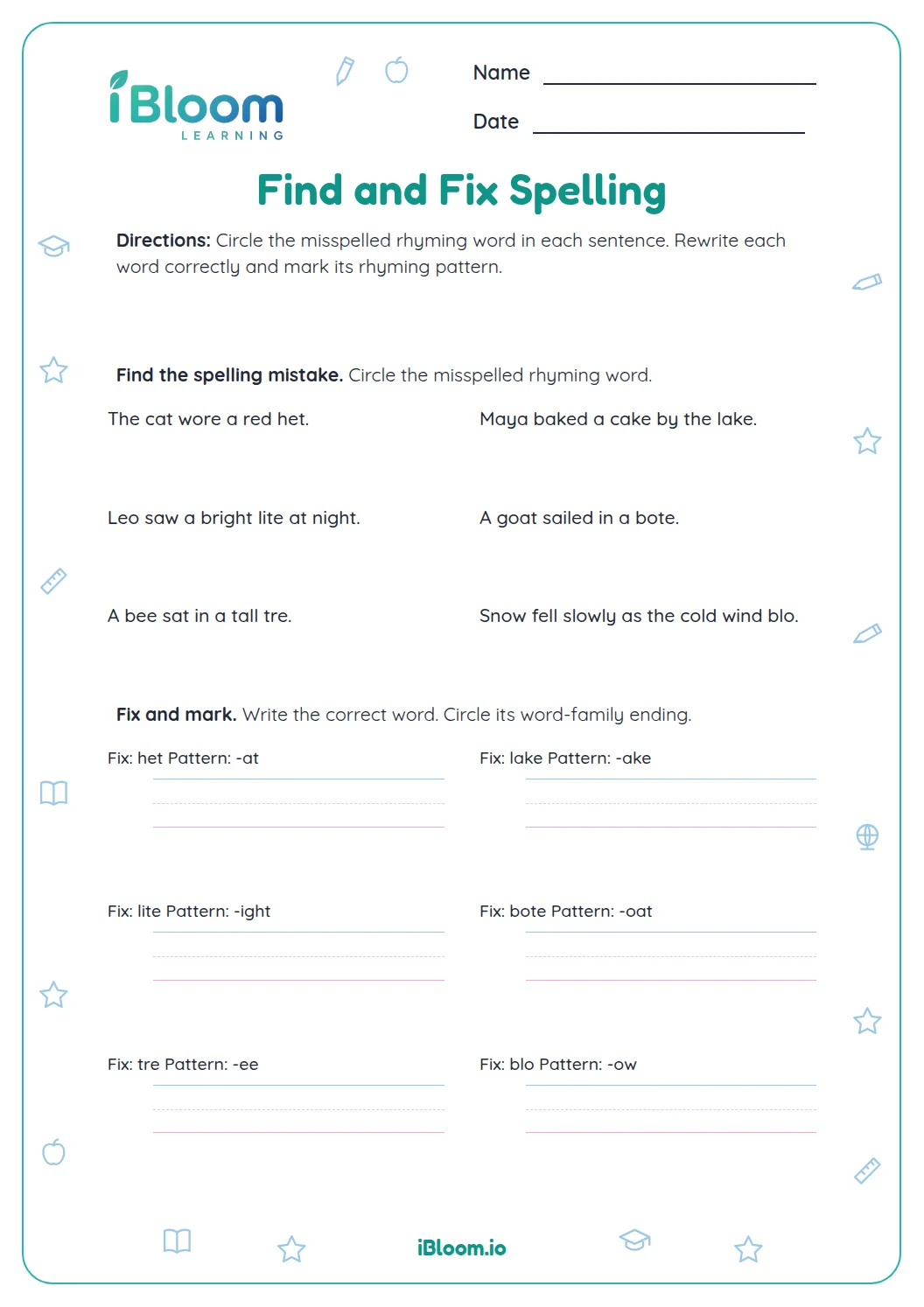
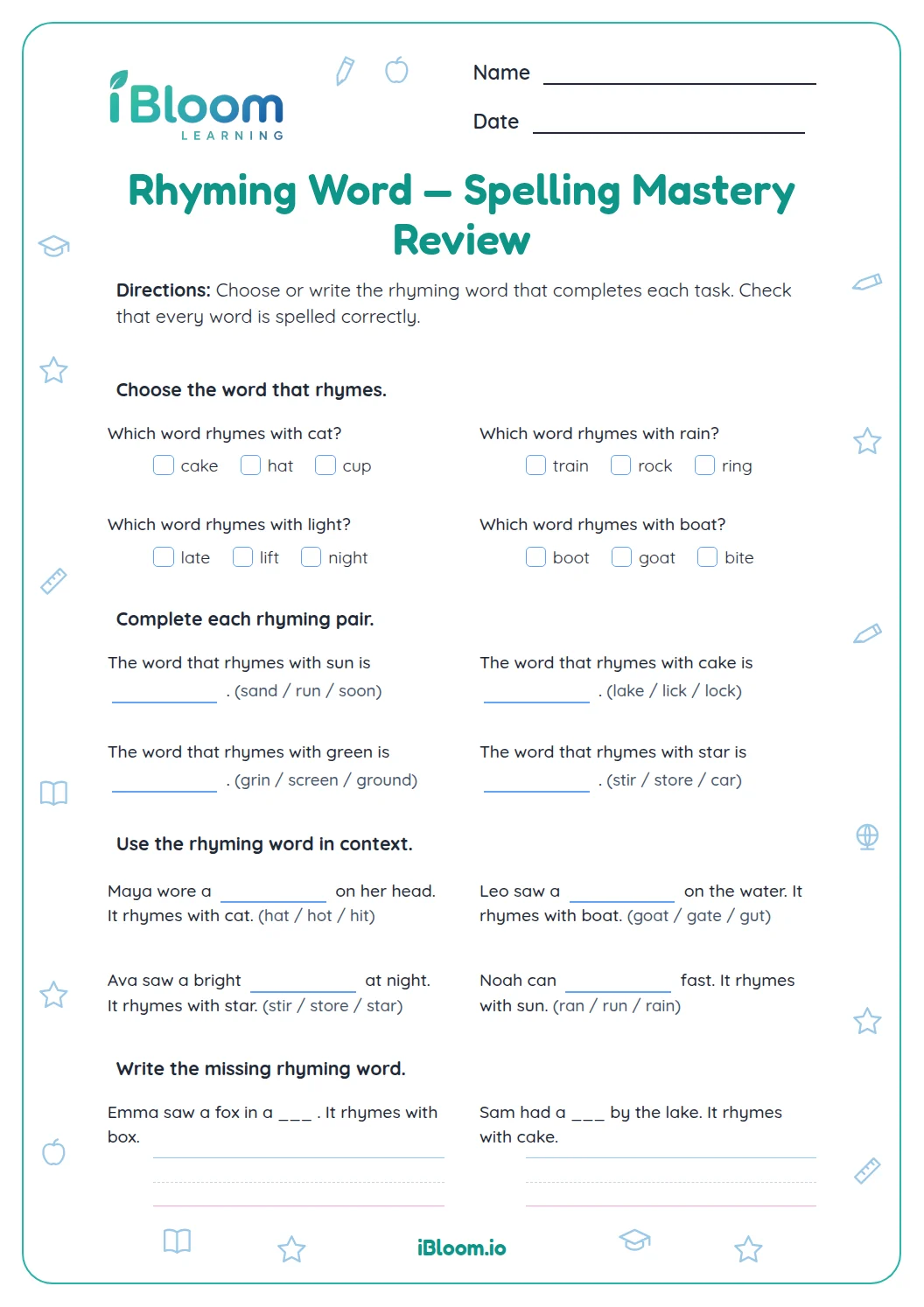
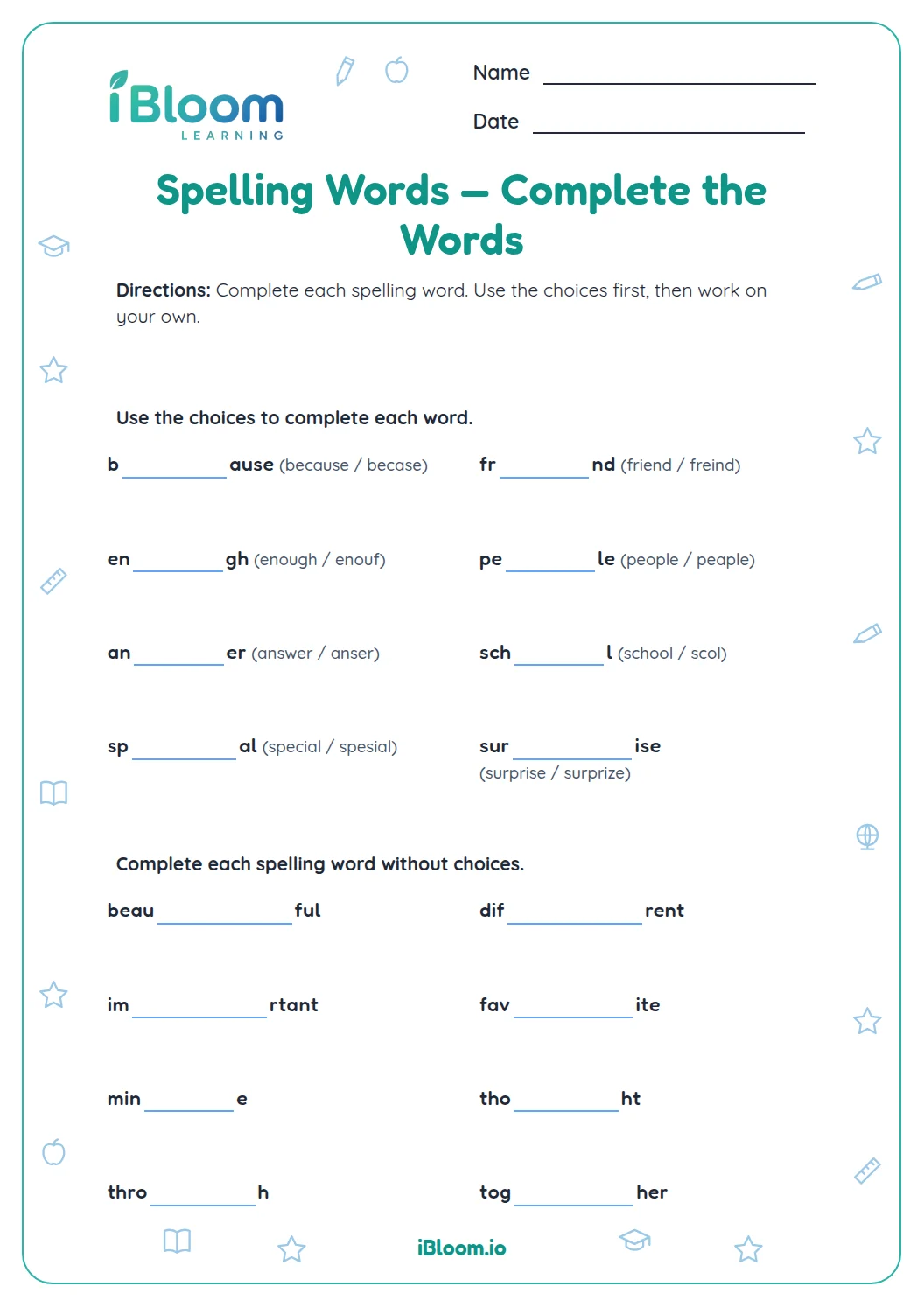
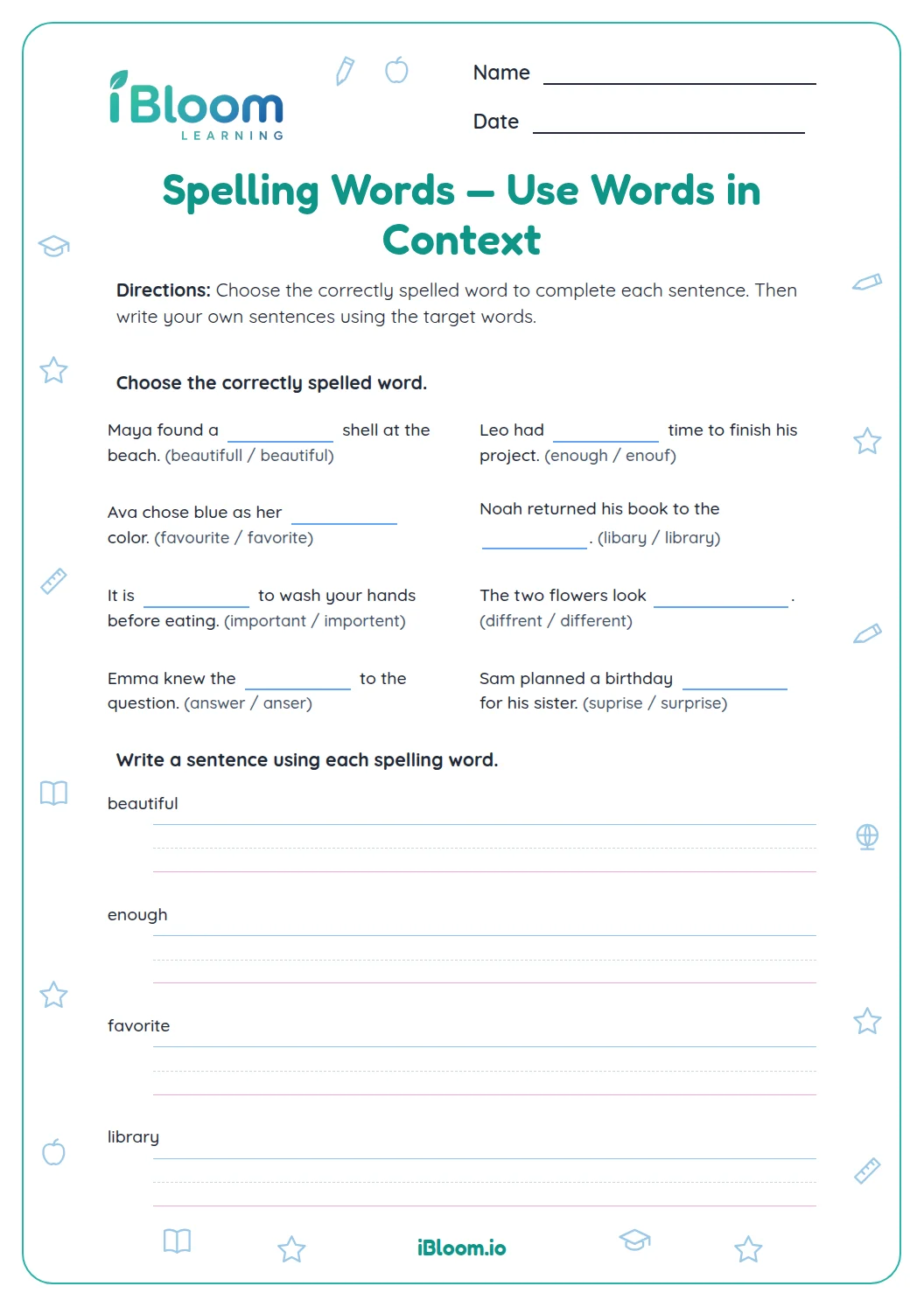
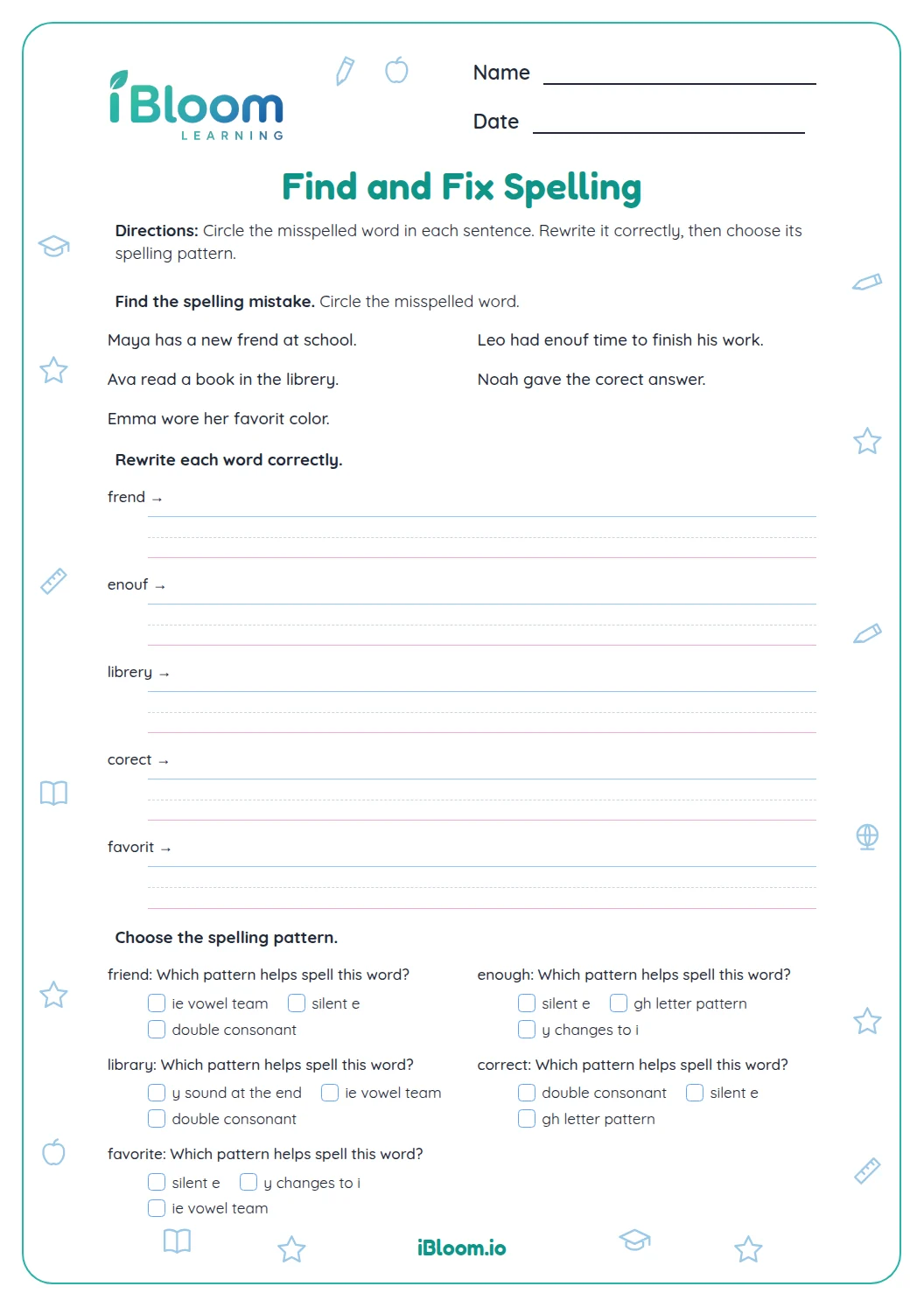
This Grade 3 printable focuses on hearing and recognizing rhyme, then using that sound pattern while reading and spelling words. Learners choose rhyming matches, sort word families, complete a sentence, and identify rhyming pairs. The 16 questions move from recognition toward using rhyme patterns, with a separate answer key.
Aligned to L.3.2f
What makes two words rhyme?
Words rhyme when their ending sounds match, as in light and bright. The first sounds can differ. Say each pair aloud and listen from the vowel sound to the end.
How can sorting reveal a spelling pattern?
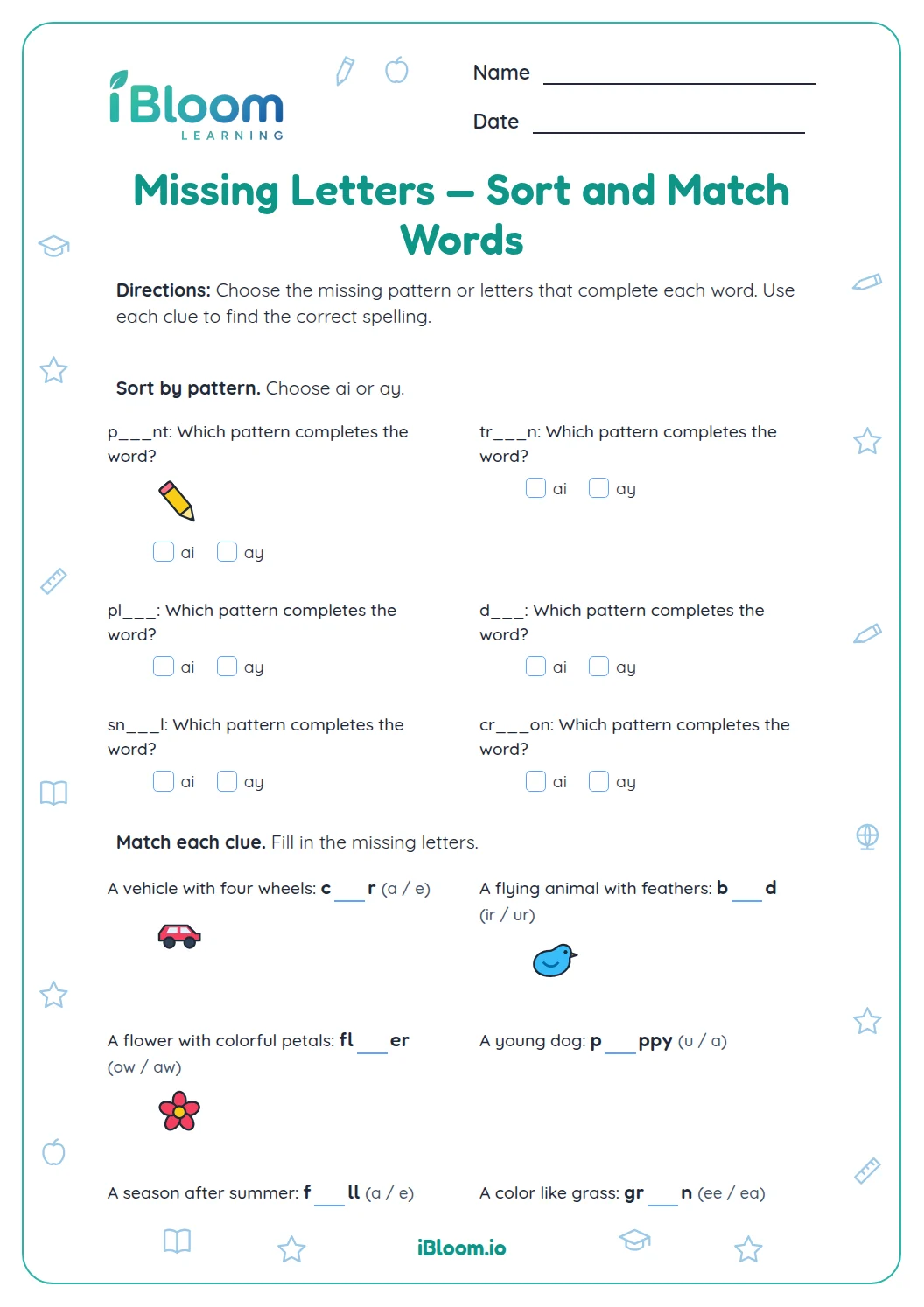
A group such as bake and shake shares the -ake spelling and sound. Sorting helps learners notice a pattern they can use when reading or spelling related words.
- 1Trail and sail end with the /ail/ sound.
- 2Bake and shake end with the /ake/ sound.
- 3Answer: -ake: bake, shake; -ail: trail, sail
How does rhyme help with spelling?
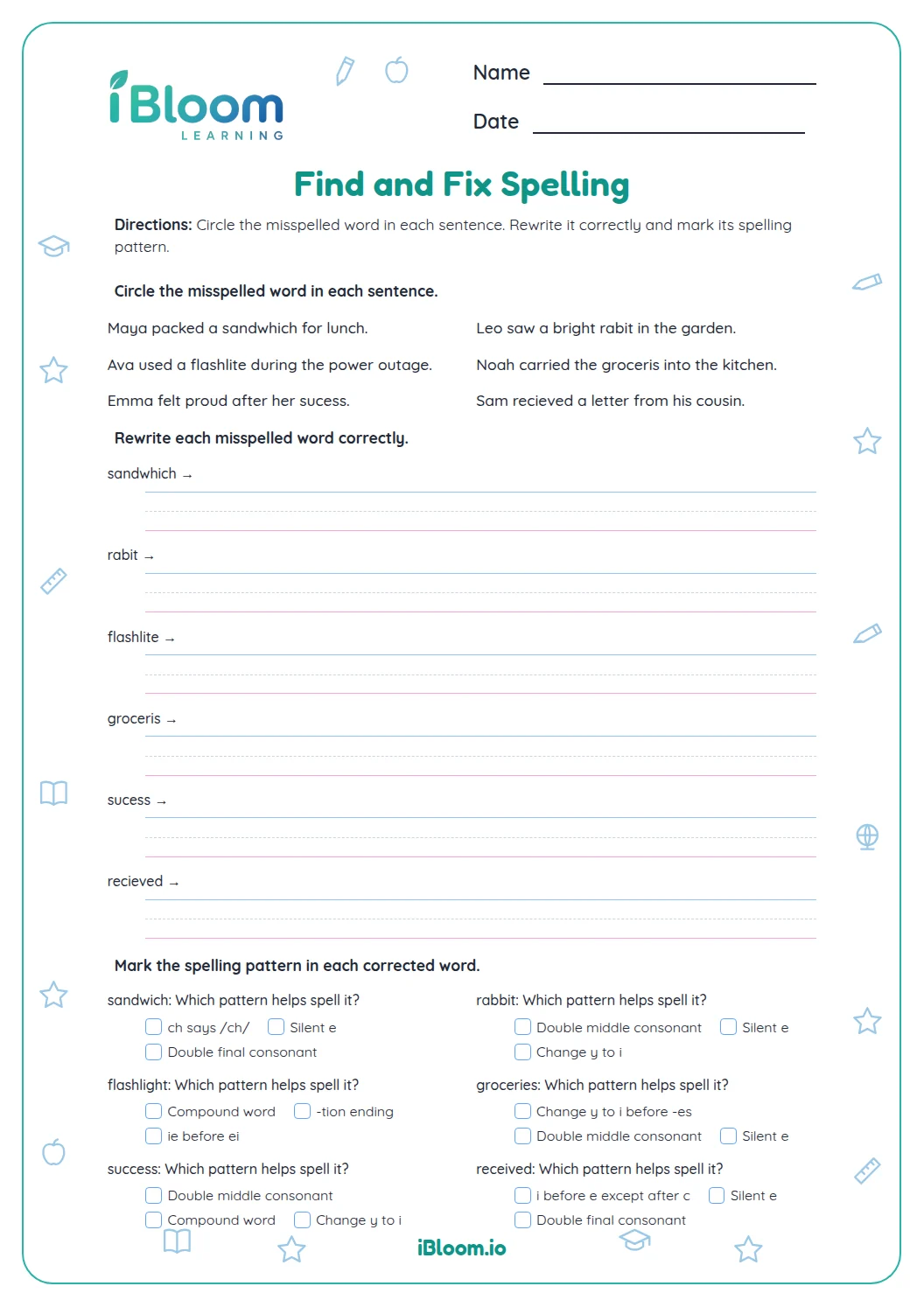
A rhyme can help a learner remember a familiar ending, but the words still need to be spelled carefully. Read the whole word after matching its rhyme.
How can you use this worksheet?
- 1Read each word aloud, or listen as someone reads it.
- 2Compare the ending sounds rather than the first sounds.
- 3For sorting, place words with the same rhyme pattern together.
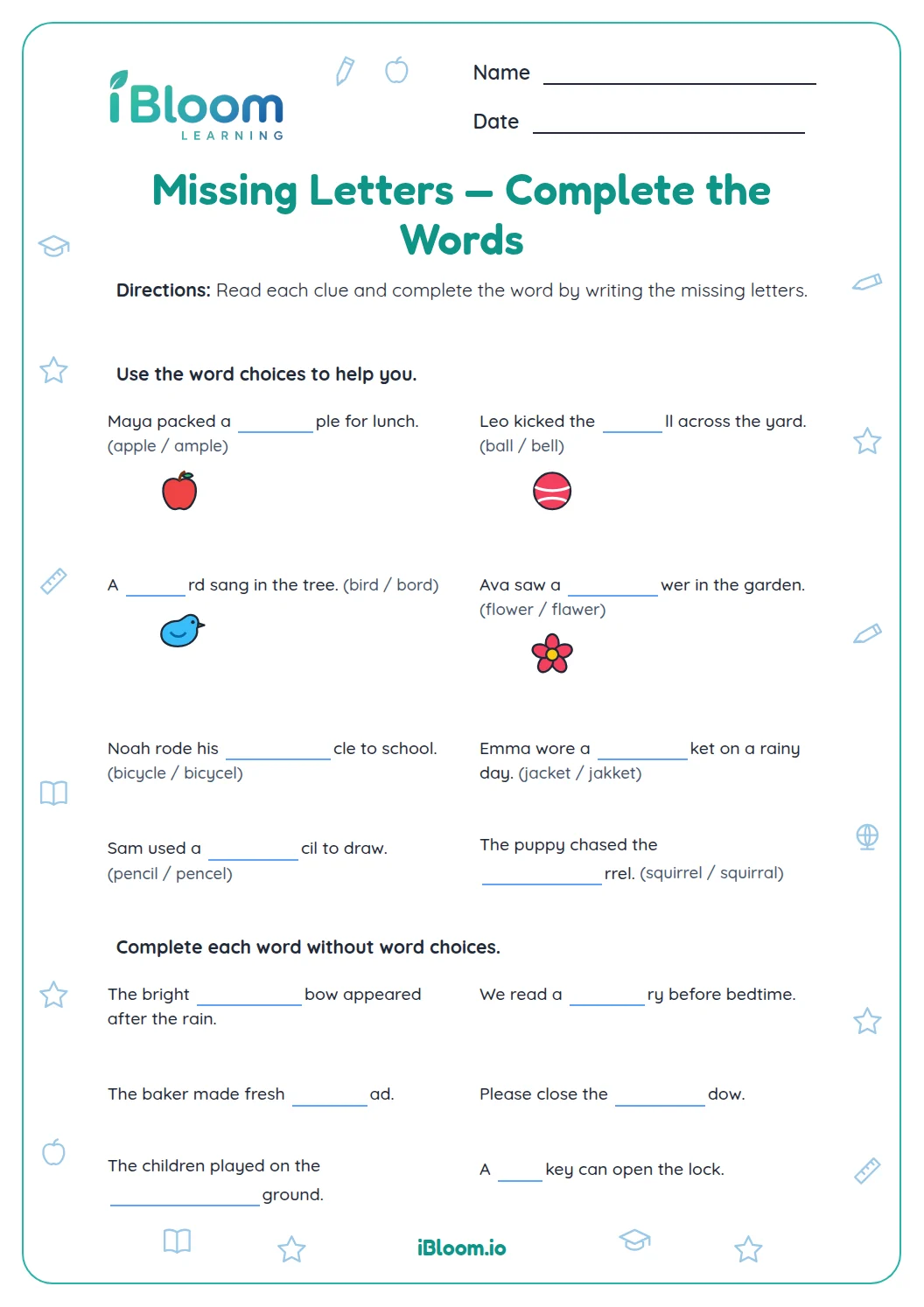
- 4Complete the sentence with a word that makes sense and rhymes.
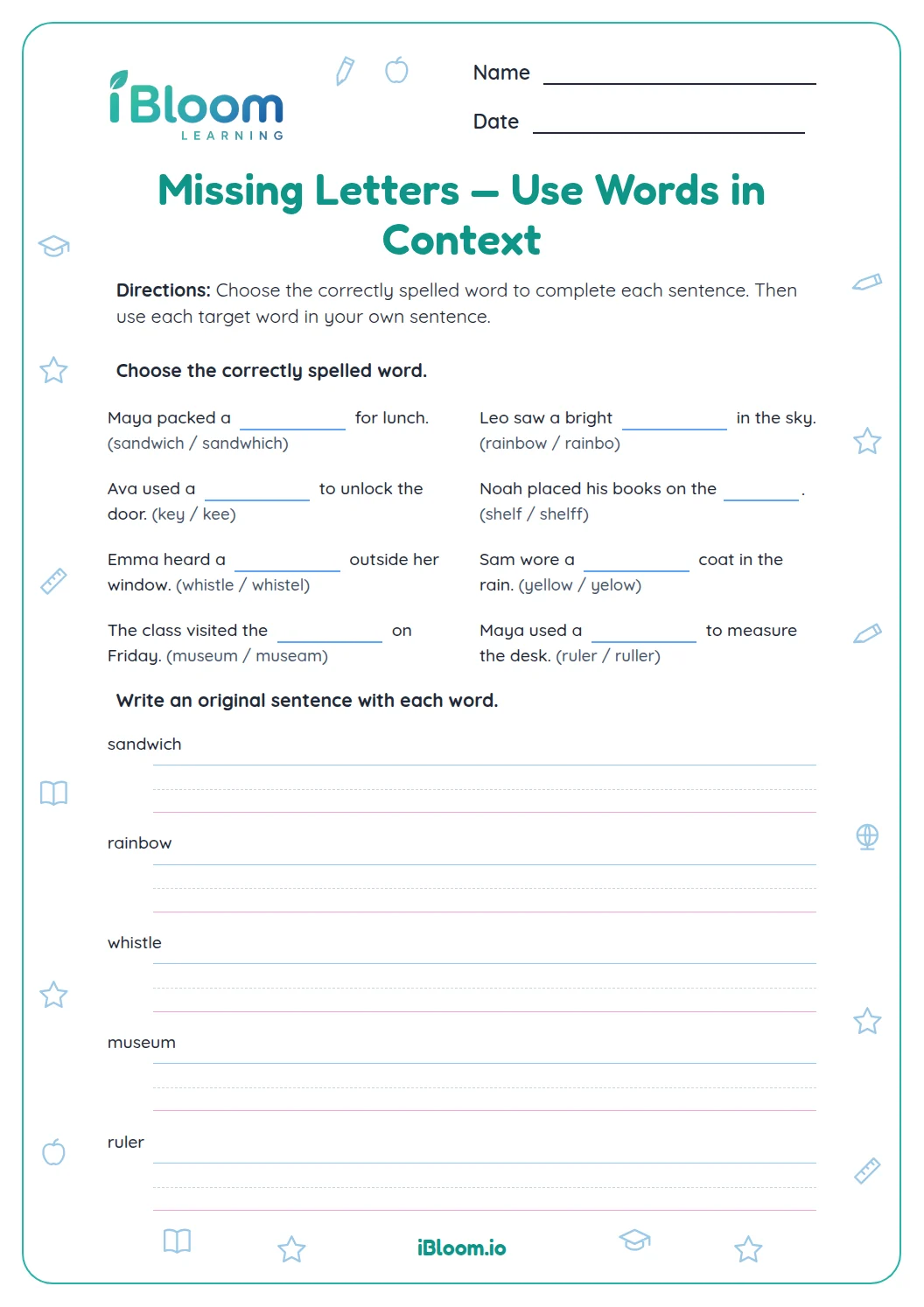
- 5Check written pairs by saying both words aloud.
What mistakes should learners watch for?
The mistake
Matching words that start alike but end differently.
The fix
Listen to the whole ending, not just the first sound.
The mistake
Sorting by spelling alone.
The fix
Say the words aloud to confirm the ending sounds match.
The mistake
Choosing a word that rhymes but does not fit the sentence.
The fix
Check both the sound and the sentence meaning.
Common Core alignment
This worksheet supports Grade 3 attention to spelling patterns and word relationships.
Use spelling patterns and generalizations when writing words.
On this sheet: Learners sort and write words with shared rhyme and spelling patterns.
Show the official wordingHide the official wording
Use spelling patterns and generalizations (e.g., word families, position-based spellings, syllable patterns, ending rules, meaningful word parts) in writing words.
What to practice next
Make more practice
Further reading
Questions parents and teachers ask
What is a rhyming word?
A rhyming word has the same ending sound as another word, such as light and bright. The beginning sounds may differ, so say both words aloud and compare from the vowel to the end. The key lists the intended match and sample responses for open-ended tasks.
Do rhyming words always have the same spelling?
No. Words can rhyme even when their spellings differ. Listening for the ending sound is the first check; when spelling, look carefully at the letters in each word too. Ask learners to explain which ending sounds match. The varied words help children practice beyond one memorized example.
What is a word family?
A word family is a group with a shared spelling pattern and sound, such as bake and shake. Sorting examples helps learners notice a pattern that they can use when reading or spelling related words. The varied words help children practice beyond one memorized example.
Can more than one word rhyme with a target?
Yes, many words may rhyme. The multiple-choice items have one matching choice. For open-ended items, the key gives a sample answer, and another word that correctly rhymes and fits the prompt can work too. The answer key supports checking without replacing the sound-aloud strategy.
How many questions and pages are included?
There are 16 questions across three worksheet pages, followed by a separate answer-key page. Activities include matching, sorting, sentence completion, and writing rhyming pairs. When another rhyme is accepted, confirm it fits the wording of the question. The key lists the intended match and sample responses for open-ended tasks.