




About this worksheet
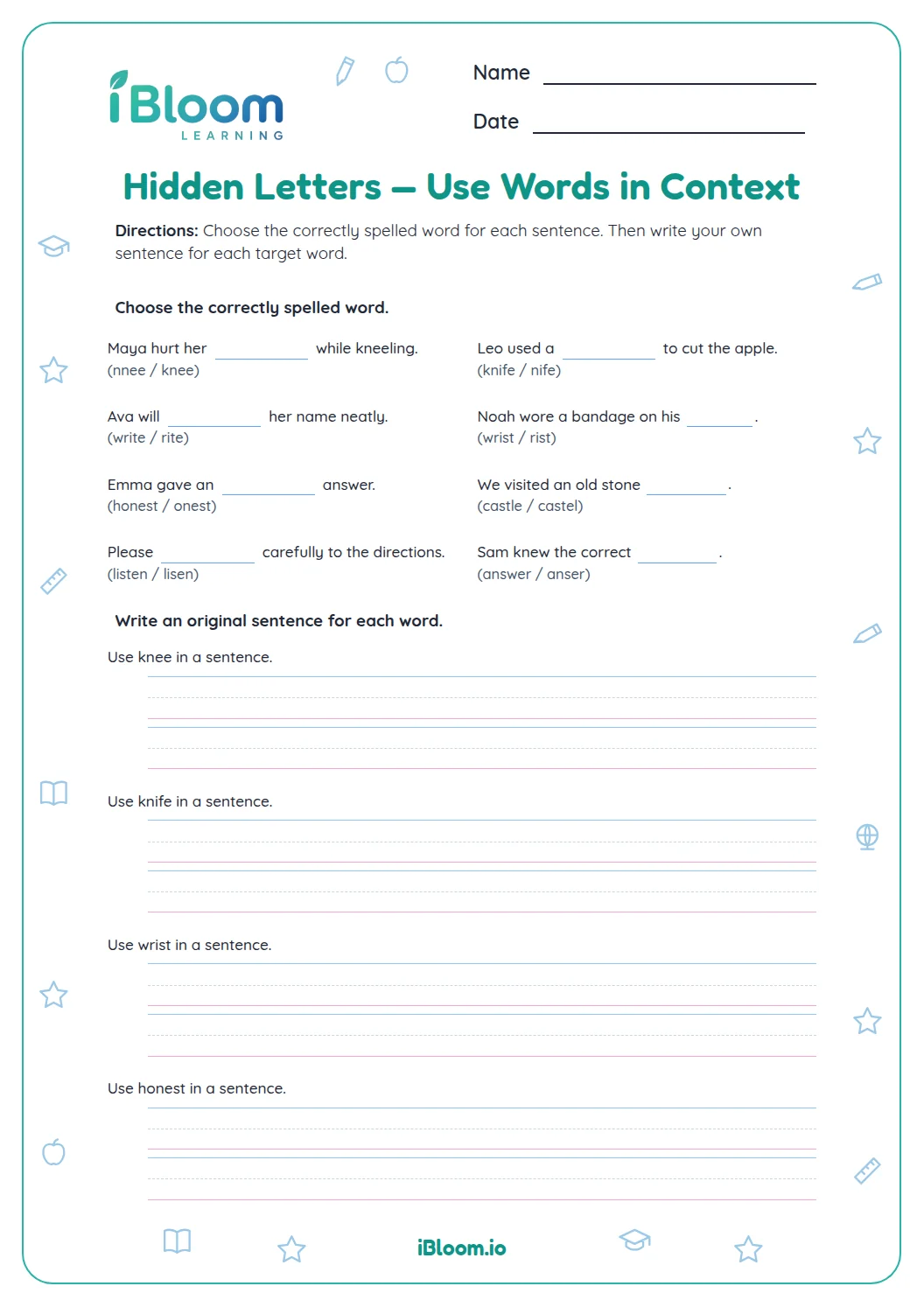
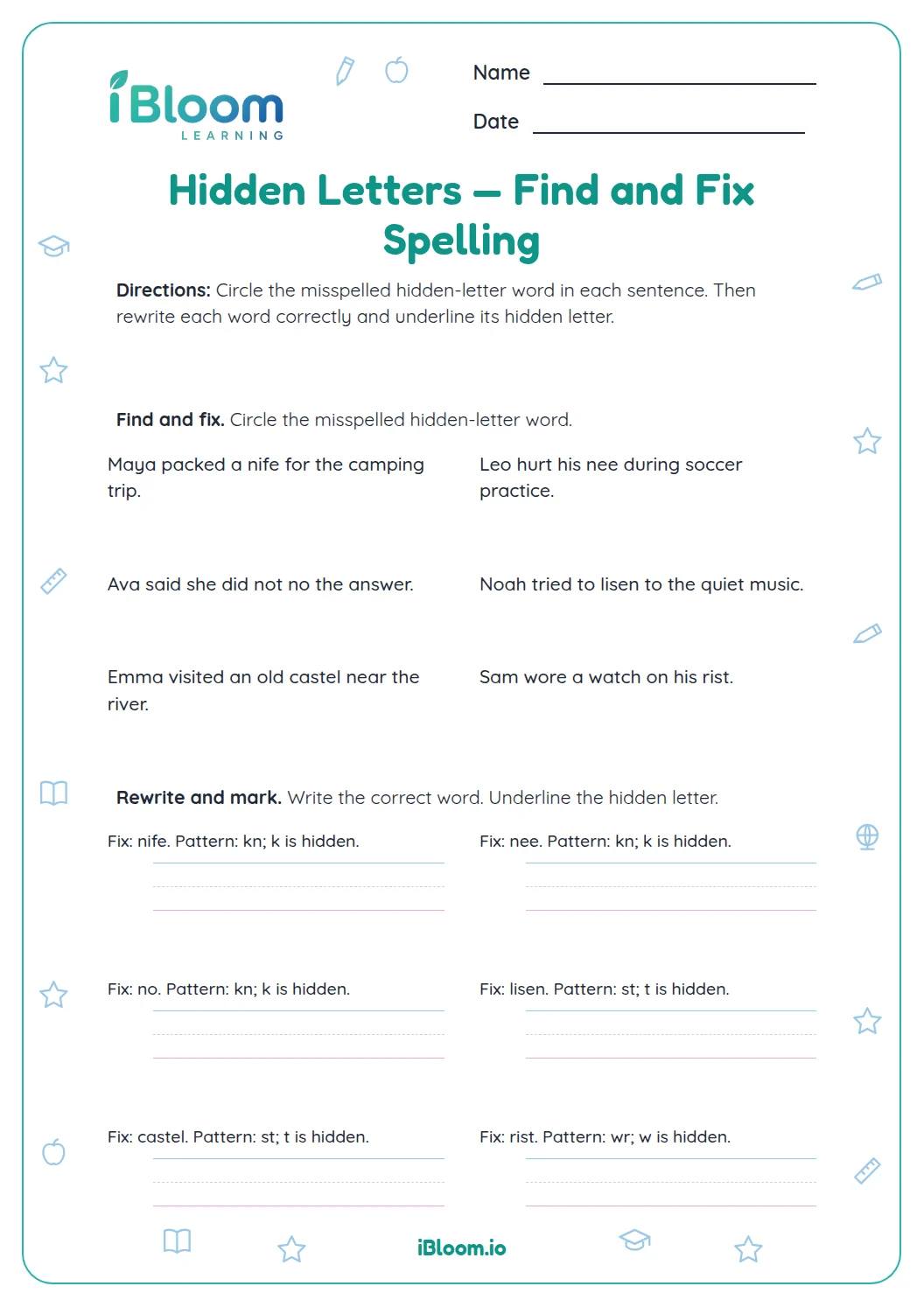
This Grade 5 spelling worksheet keeps the two activities shown on the old sheet: identify a silent letter in a word, then match a meaning to a correctly spelled word. Part A asks for the silent letter in seven examples such as kneel, thumb, and listen. Part B gives seven short clues and space to write the matching word. The 14 items practice attention to silent consonants and standard spelling, with a separate answer key. They align with CCSS L.5.2.e.
Aligned to L.5.2.e
How do you spot a silent letter?
Say the word naturally and notice which written letter has no sound. In kneel, the k is silent; in thumb, the b is silent. The spelling stays part of the written word even though the letter is not pronounced.
What are the two activities?
Part A asks students to write the silent letter in seven words. Part B gives seven meanings; write the correctly spelled word that fits each clue.
How can students check a spelling?
Read the word aloud, compare its letters with a trusted word list when needed, and check that the clue matches its meaning. For a silent-letter item, focus on the sound of the whole word rather than trying to pronounce every letter.
How to use this worksheet
- 1Read each word in Part A aloud before choosing its silent letter.
- 2In Part B, identify the meaning in the clue.
- 3Read every spelling choice carefully.
- 4Choose the word that fits and is spelled correctly.
- 5Use the separate key to review any missed patterns.
Check the work
The mistake
Choosing a letter that is pronounced.
The fix
Say the whole word normally and listen for the sounds you hear.
The mistake
Picking a misspelling that looks familiar.
The fix
Check the order of every letter against a trusted word list.
The mistake
Choosing a correctly spelled word that does not fit the clue.
The fix
Check both spelling and meaning before selecting.
Common Core alignment
This sheet gives focused practice with the listed skill.
Spell grade-appropriate words correctly, consulting references as needed.
On this sheet: Students recognize silent-letter spellings and select correctly spelled words from familiar patterns.
Show the official wordingHide the official wording
Spell grade-appropriate words correctly, consulting references as needed.
What to practice next
Make more practice
Further reading
Questions parents and teachers ask
Which silent letters appear on the worksheet?
The seven sorting words include silent k in kneel and knock, silent w in wrong and wrist, silent b in thumb and climb, and silent t in listen. Each item asks which one letter is silent in the printed word, and students write that letter on the answer line.
What does “match” mean in Part B?
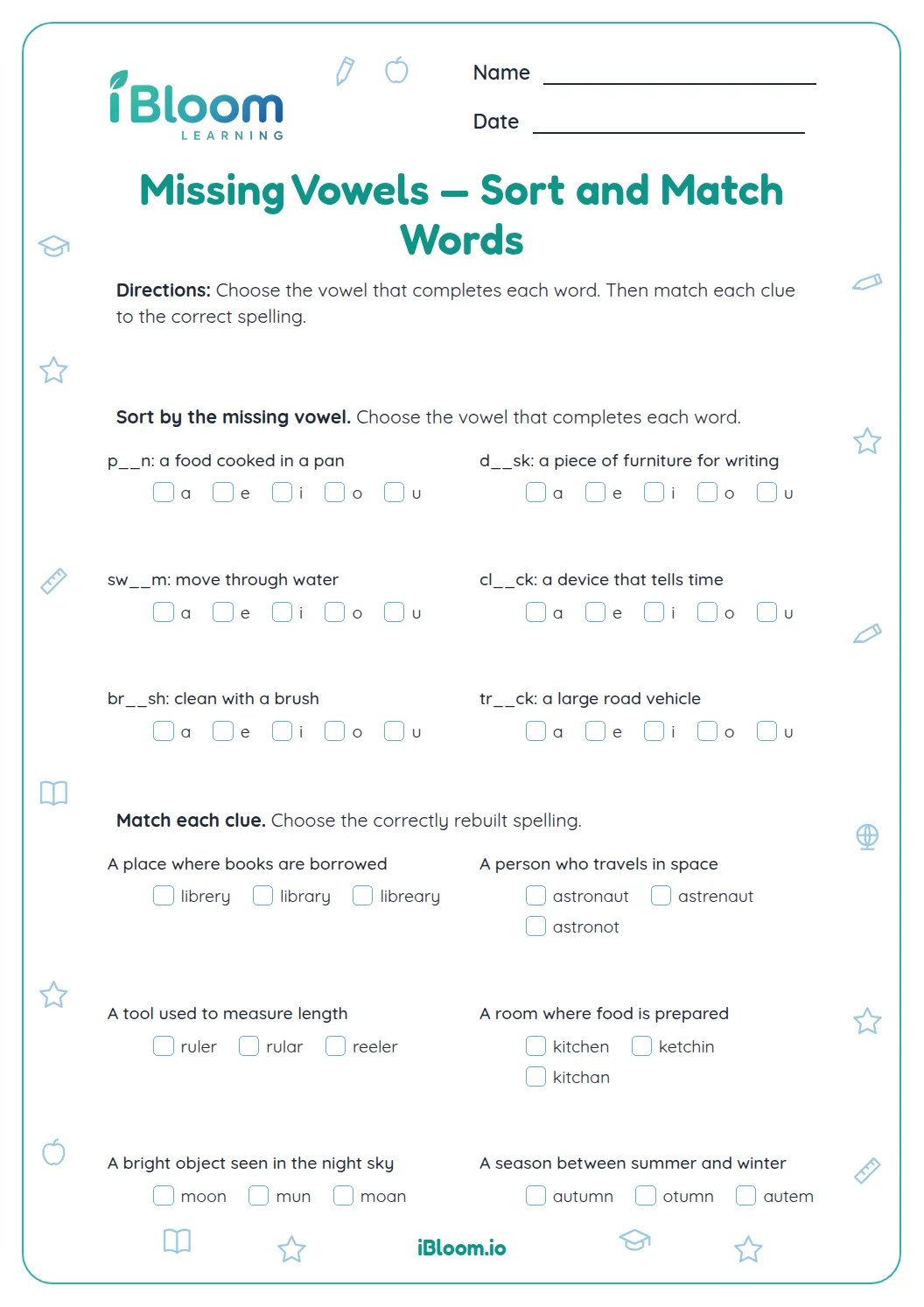
Read the short meaning and write the correctly spelled word that names it. For example, “a tool used to cut paper” matches scissors. Check both the meaning and the sequence of letters before writing your answer. This keeps spelling and meaning together.
Why is the k in kneel silent?
In kneel, the letters kn at the start represent a word that begins with the n sound. The k remains in the conventional spelling even though speakers do not say it. Part A includes other familiar silent consonants to compare.
How many questions are on this sheet?
There are 14 questions in two parts. Part A has seven silent-letter answers, and Part B has seven clue-and-spelling answers. The answer key is on a separate page so a student can complete the sheet before checking. Students may check each part separately.
How can I check a tricky spelling?
Say the word, think about its meaning, and compare the spelling with a classroom word list or dictionary. Some silent letters cannot be heard, so careful reading and reference checking help confirm the conventional spelling. This is helpful for words with silent consonants.