

About this worksheet
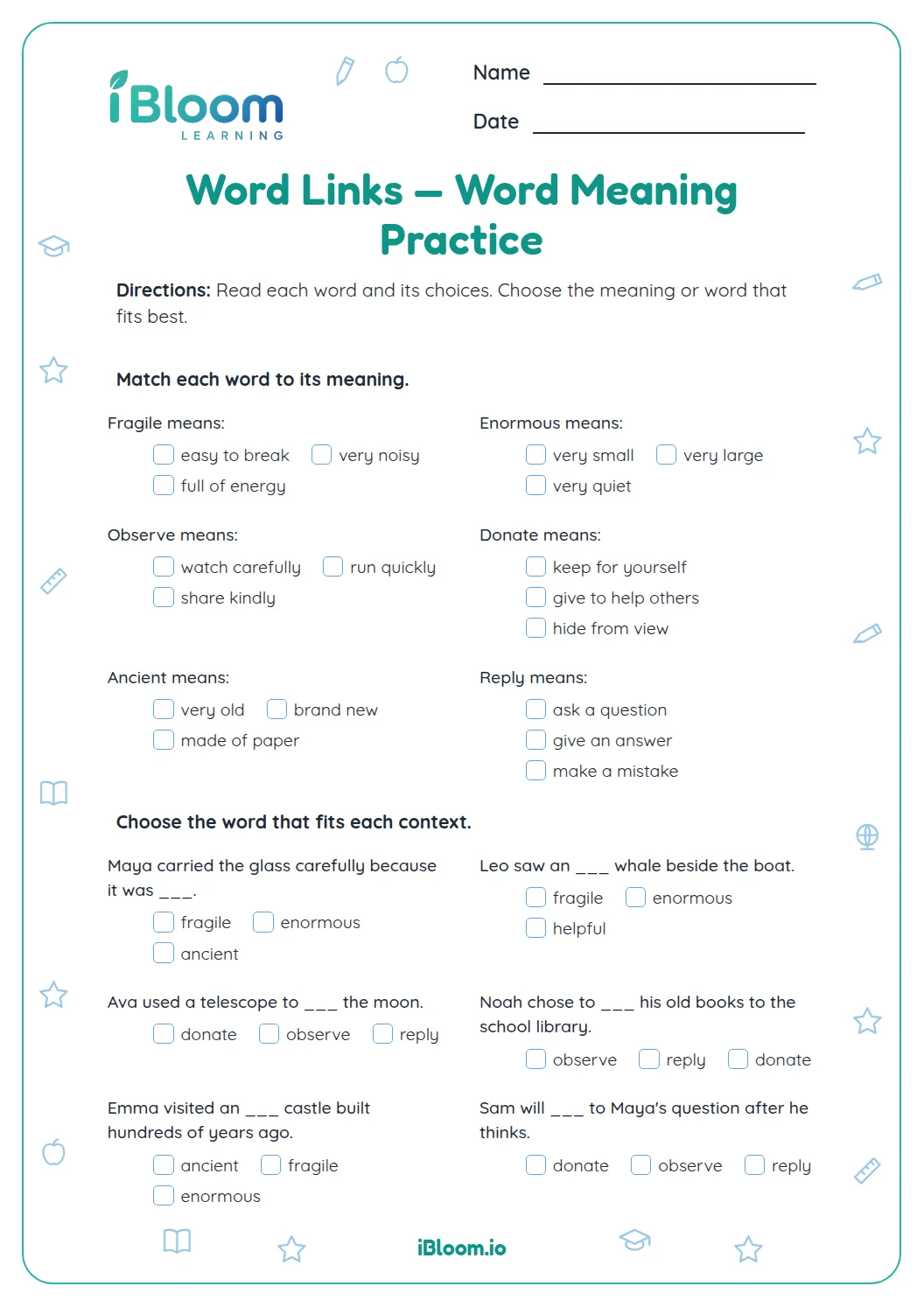
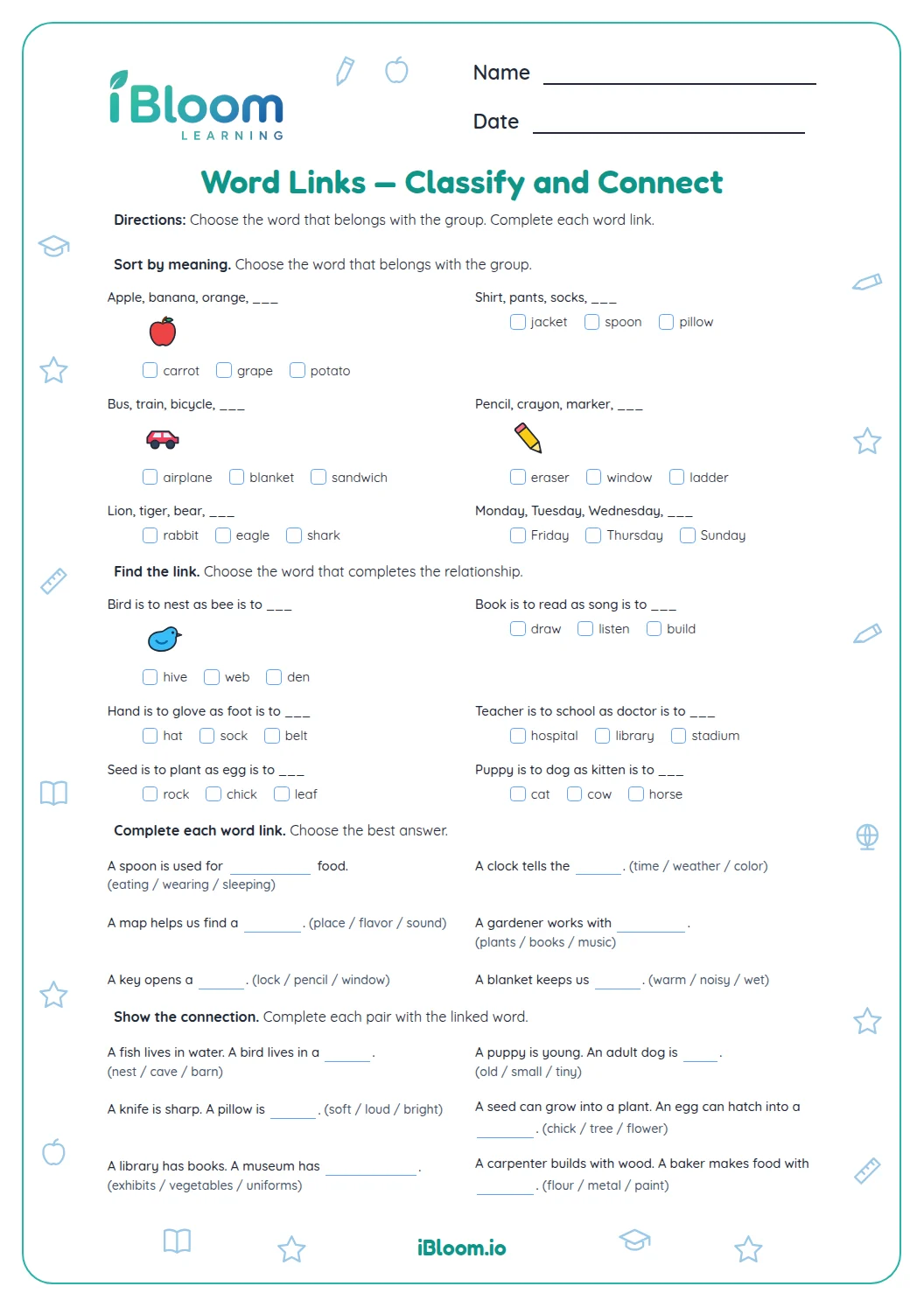
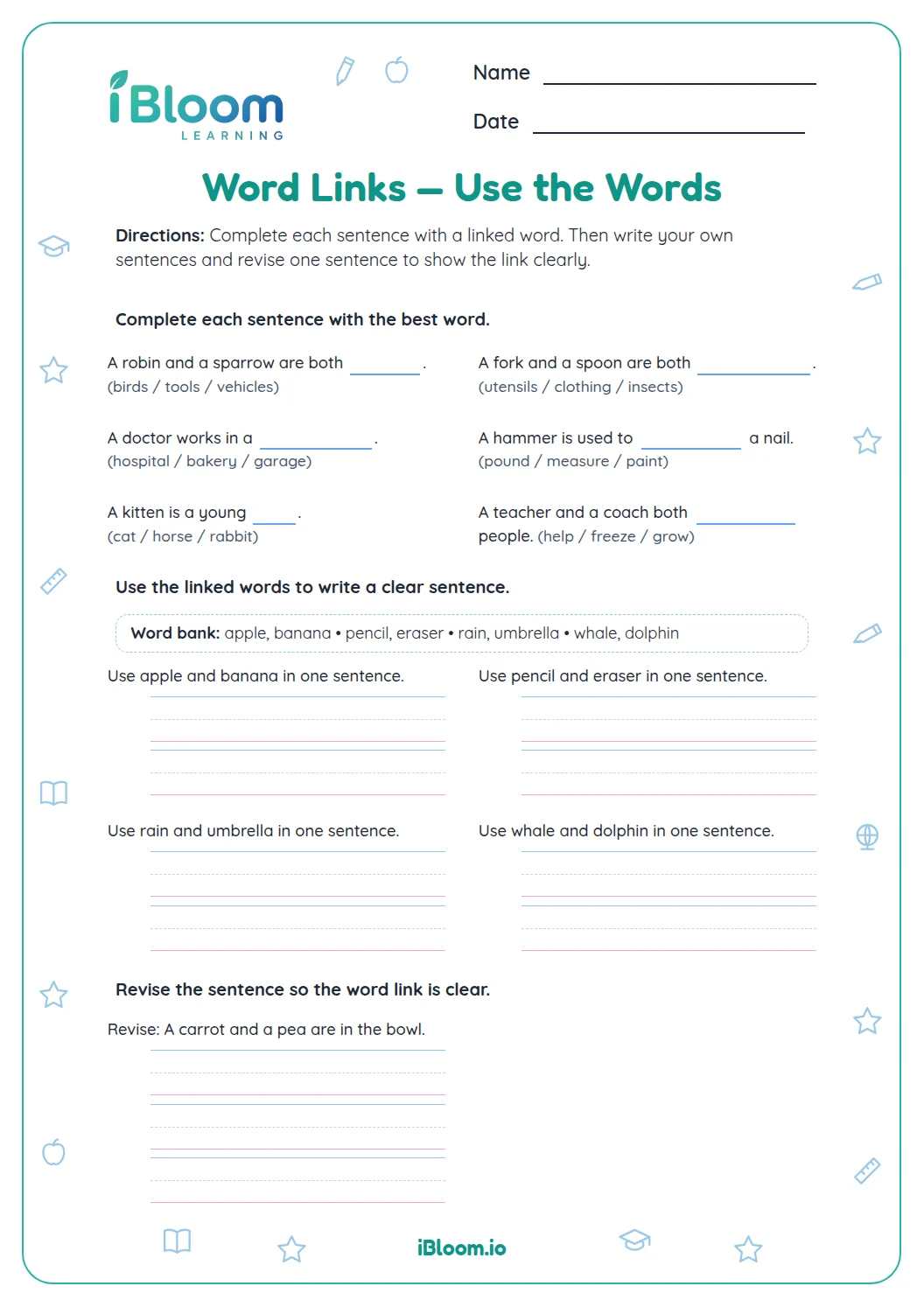
This Grade 3 vocabulary worksheet gives readers 16 original sentences and asks them to use context to work out a word’s meaning. The first part uses three choices; the second asks learners to choose or write a matching meaning. It practices CCSS L.3.4a, using sentence-level context as a clue. The separate answer key lists the target meanings.
Aligned to L.3.4a
How do context clues help?
Nearby words and details can hint at an unfamiliar word. In “The puppy was timid; it hid behind the chair when guests came,” hiding when guests arrive points to timid meaning shy.
What changes between the two parts?
Part A offers three meanings for each word. Part B gives a short sentence and asks the learner to supply or choose a meaning. Read the whole sentence, then test the meaning in place of the target word.
How can a reader test a possible meaning?
Replace the target word with the proposed meaning. If the sentence still makes sense and fits its details, the context supports that choice.
Use the sentence around the word
- 1Read the entire sentence once.
- 2Find details that describe the target word or what happens because of it.
- 3Suggest a meaning that fits those clues.
- 4Try the meaning in place of the target word.
- 5Choose or write the meaning that best fits the sentence.
Context clue checks
The mistake
Choosing a meaning from memory without using the sentence.
The fix
Point to a detail in the sentence that supports the meaning.
The mistake
Reading only the target word and skipping its context.
The fix
Read the full sentence, including what comes before and after the word.
The mistake
Picking a choice that fits one clue but conflicts with another.
The fix
Test the meaning against every detail in the sentence.
Common Core alignment
Use details in each sentence to infer a word’s meaning.
On this sheet: Every question asks children to use the surrounding sentence as a context clue.
Show the official wordingHide the official wording
Use sentence-level context as a clue to the meaning of a word or phrase.
What to practice next
Make more practice
Further reading
Questions parents and teachers ask
What is a context clue?
A context clue is a detail in a sentence that helps a reader infer a word’s meaning. In “The jar was enormous, holding enough lemonade for the whole team,” its capacity suggests enormous means very large. The worksheet uses complete sentences so learners can look for these clues.
How many context clue questions are included?
There are 16 original questions in two parts. Part A has multiple-choice meanings; Part B has sentence prompts with meanings to supply or select. A separate answer key gives the intended meaning for every item. Read one part at a time, then review the clues together.
Should children read the whole sentence?
Yes. A clue can appear before or after the target word. In the sentence about the garden being damp but not soaked, the contrast with soaked helps explain that damp means a little wet. Reading the full sentence keeps that contrast in view.
What if two choices seem possible?
Test each choice in the complete sentence and check which one fits all its details. For example, the sentence about a fragile vase being carried gently points to easy to break. The key can confirm the intended response after the learner explains the clue.
Can an adult read the sentences aloud?
Yes. An adult can read a sentence aloud while the child listens for details that suggest the target word’s meaning. The child can still do the reasoning by naming the clue and selecting a meaning. The key supports review after each part.