Free printable practice
Food Words Practice Activities
Printable food word vocabulary cards help children name, read, sort, and use everyday food words with picture-supported practice.
Free printable worksheet PDFs
Preview every available page, then download the free worksheet PDF for home, homeschool, tutoring, or classroom practice.
Preview the exact activity before downloading it.
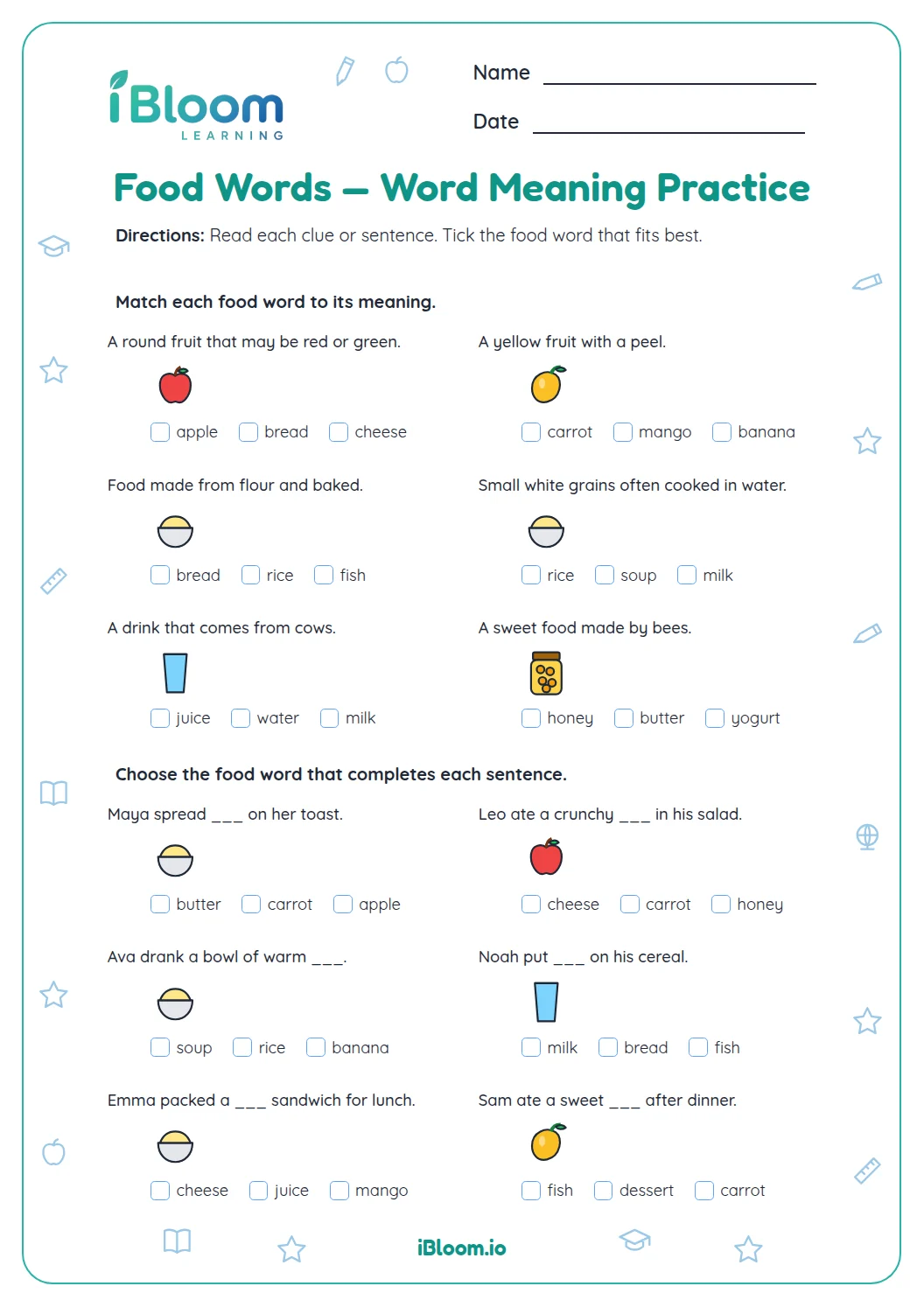 Food Words — Word Meaning PracticePrintable food word vocabulary cards help children name, read, sort, and use everyday food words with picture-supported practice. This word meaning practice worksheet provides a distinct, age-appropriate way to practise the same lesson.Grade 1, Grade 2, Grade 3, Grade 4, Grade 5Free PDF preview
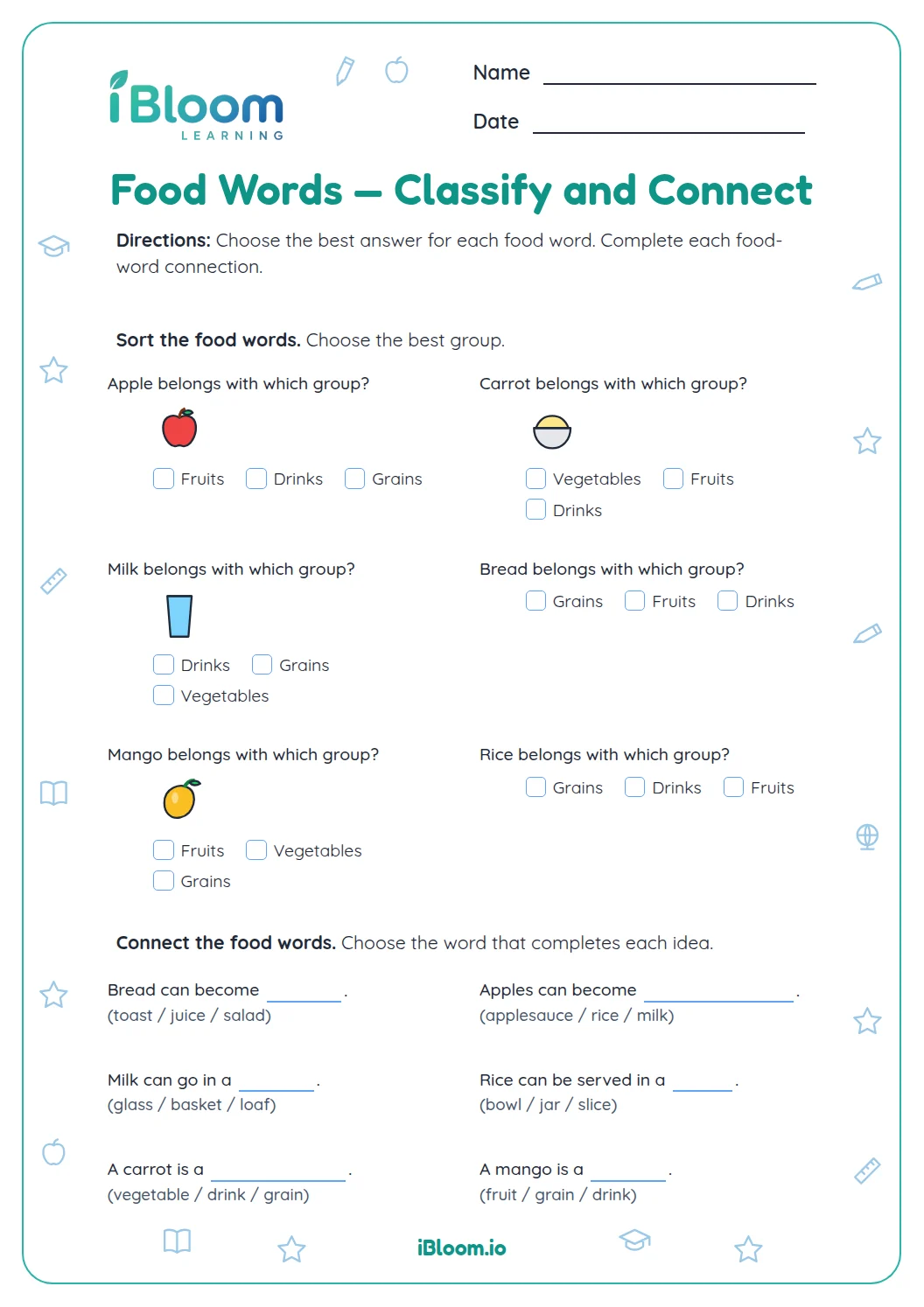 Food Words — Classify and ConnectPrintable food word vocabulary cards help children name, read, sort, and use everyday food words with picture-supported practice. This classify and connect worksheet provides a distinct, age-appropriate way to practise the same lesson.Grade 1, Grade 2, Grade 3, Grade 4, Grade 5Free PDF preview
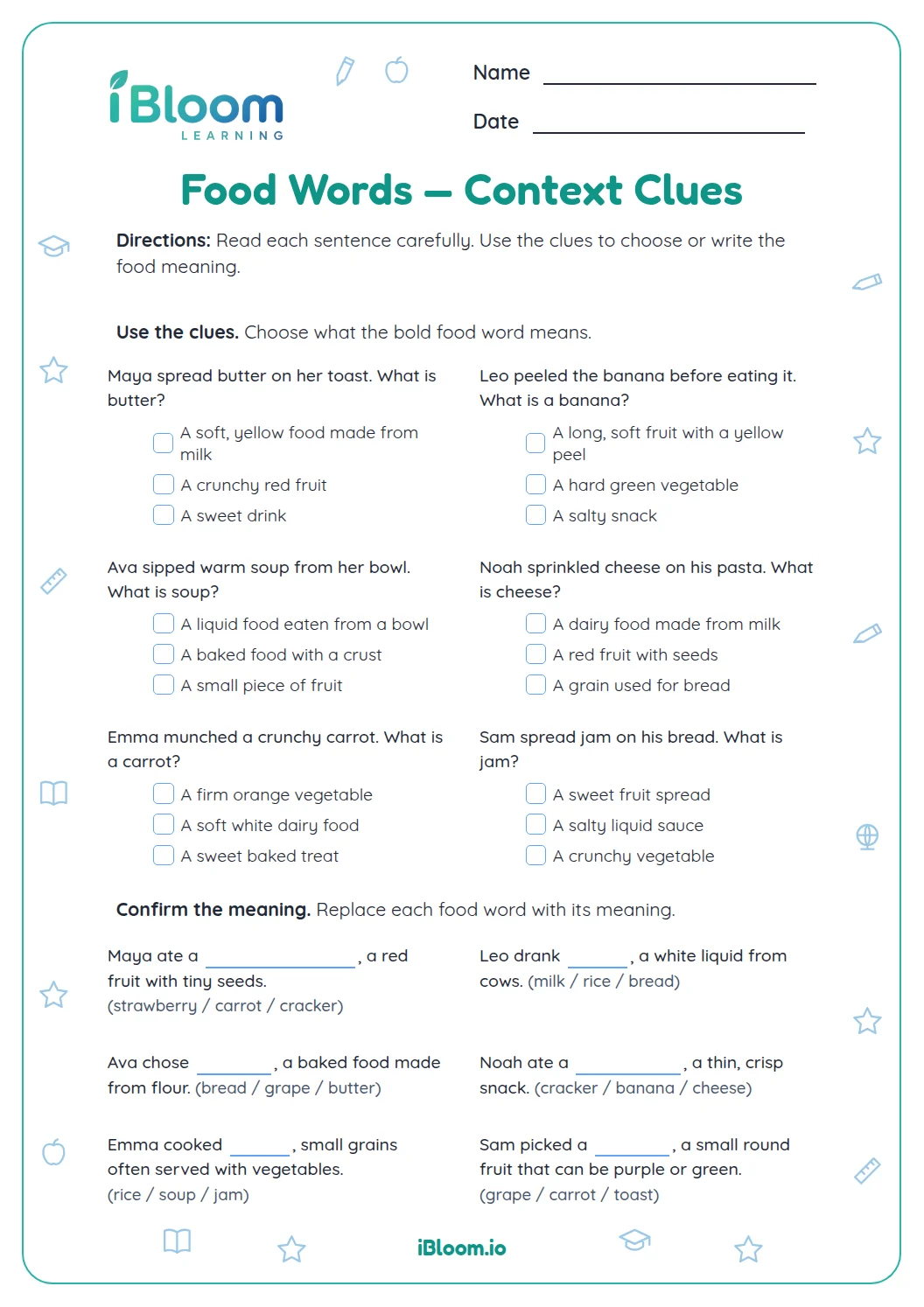 Food Words — Context CluesPrintable food word vocabulary cards help children name, read, sort, and use everyday food words with picture-supported practice. This context clues worksheet provides a distinct, age-appropriate way to practise the same lesson.Grade 1, Grade 2, Grade 3, Grade 4, Grade 5Free PDF preview
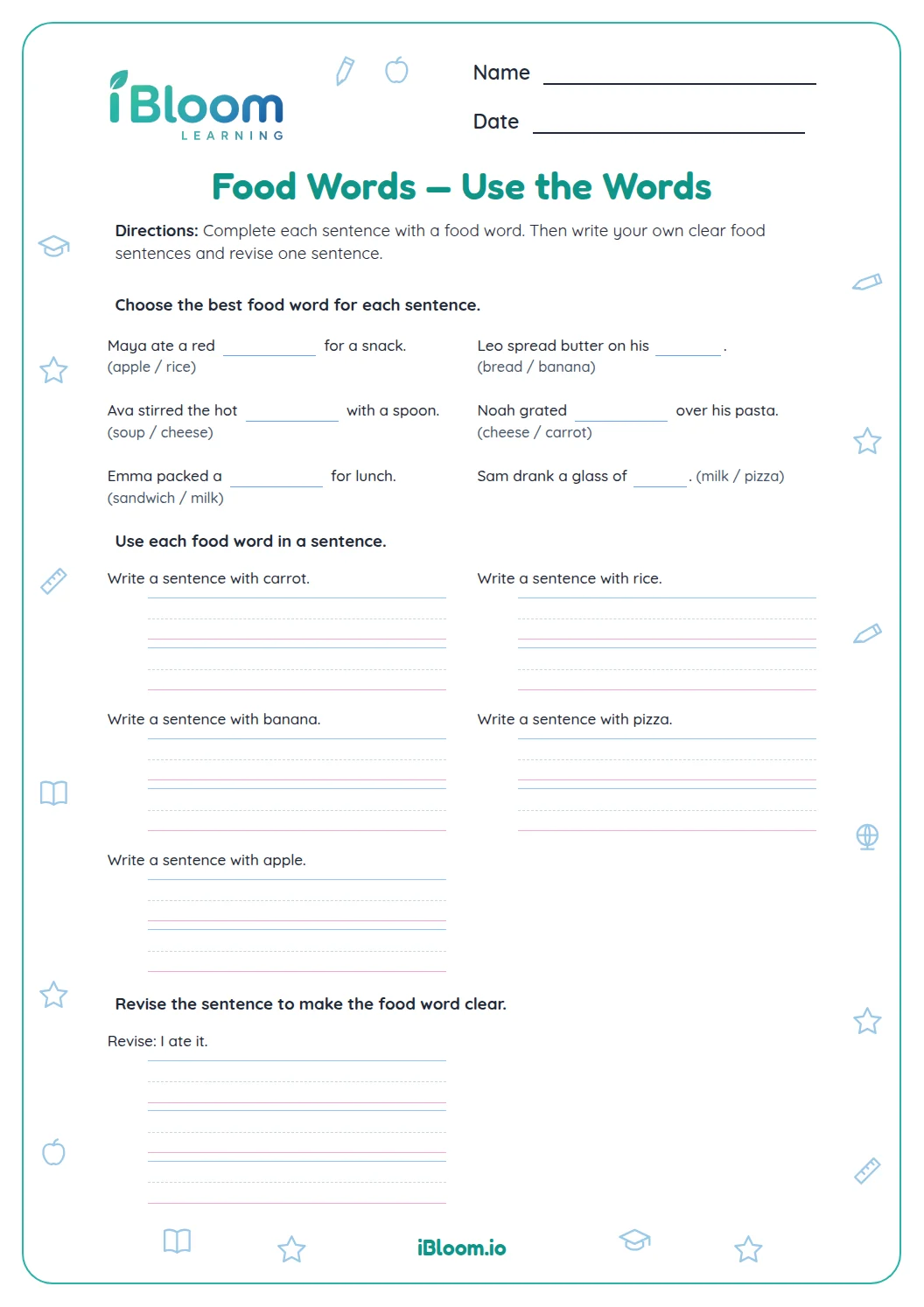 Food Words — Use the WordsPrintable food word vocabulary cards help children name, read, sort, and use everyday food words with picture-supported practice. This use the words worksheet provides a distinct, age-appropriate way to practise the same lesson.Grade 1, Grade 2, Grade 3, Grade 4, Grade 5Free PDF preview
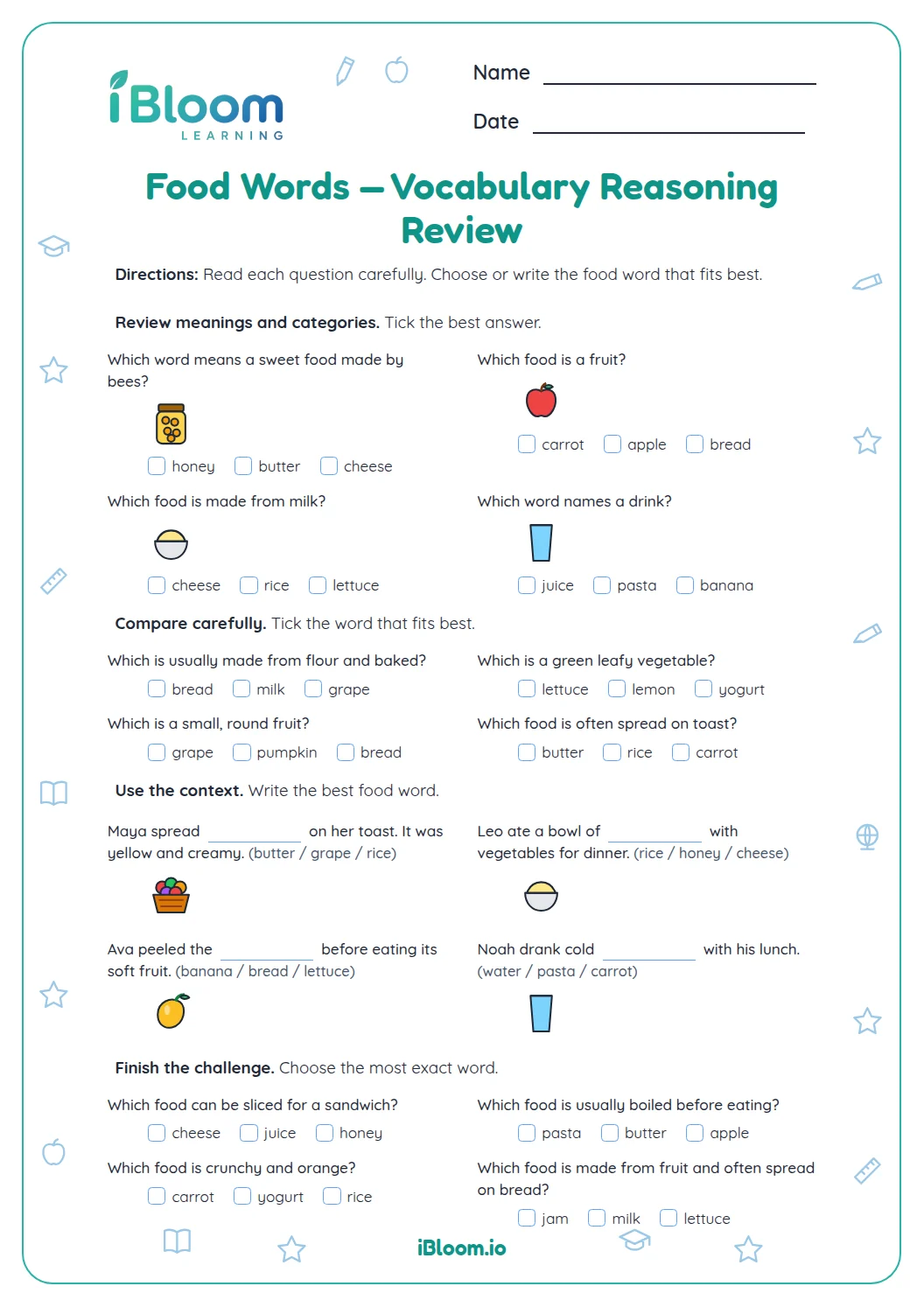 Food Words — Vocabulary Reasoning ReviewPrintable food word vocabulary cards help children name, read, sort, and use everyday food words with picture-supported practice. This vocabulary reasoning review worksheet provides a distinct, age-appropriate way to practise the same lesson.Grade 1, Grade 2, Grade 3, Grade 4, Grade 5Free PDF preview
Practice that builds confidence
Food vocabulary children meet
Food Words Practice Activities focus on everyday vocabulary children can connect to meals, snacks, grocery trips, and classroom conversations. Children practise recognizing food pictures, reading the matching words, saying the words aloud, and using them in simple spoken or written responses.
These printable vocabulary card activities may include picture-word cards, matching tasks, sorting prompts, and cut-and-use practice pages. They are designed to build confidence with common food names while strengthening attention to beginning sounds, spelling patterns, and category words.
This Vocabulary > Vocabulary Cards > Food Words collection gives children repeated exposure to familiar food names such as fruits, vegetables, drinks, snacks, and meal items. The focus is not only on naming a picture, but also on connecting the picture to a printed word and then using that word accurately in speech or writing.

From naming to using words
Children usually begin by identifying the food shown on a card. Next, they match the picture to its word, read the word with support, and sort cards into simple groups such as sweet foods, drinks, breakfast foods, or foods that need cooking. This progression helps children move from recognition to active vocabulary use. Words like apple, bread, milk, rice, carrot, and cheese become more meaningful when children compare them, describe them, or choose them for a pretend menu.
A simple parent routine
At home, choose 6 to 10 food cards at a time. Ask your child to name each food, then place the cards into two groups, such as “foods I eat often” and “foods I do not eat often.” Read the printed words together, pointing to the first letter and saying the word slowly. Finish with one sentence prompt: “I like ,” “I eat ___ for breakfast,” or “ is crunchy.” Rotate in new cards after your child can name and read the first set comfortably.

Classroom uses
Teachers can use these food word printables in vocabulary centers, small-group language lessons, morning tubs, or writing stations. Cards can support oral language practice for English learners, quick partner quizzes, picture-word matching games, menu-making activities, and category sorts. They also work well as a bridge between vocabulary and early writing because students can copy or reference the words while writing about favorite foods.

Common errors to watch for
Some children may name a related item instead of the exact word, such as saying “juice” for milk or “food” for bread. Others may rely only on the picture and ignore the printed word. Encourage careful looking: “What do you see? What sound does the word start with? Does the picture match that word?” Also watch for category confusion, such as placing a drink with fruits only because it is sweet.
Free printable PDF download
Use this food words vocabulary cards worksheet page to preview the activity, print it, or download it as a PDF for quick practice. It works well for homework, homeschool lessons, tutoring, morning work, revision, and classroom centers.
Answers and answer key support
After the child completes the worksheet independently, parents and teachers can use the answer support or answer key information to check the work, review mistakes, and choose the next practice step.
Child-friendly strategy and why iBloom worksheets help
Teach children to “look, say, read, use”: look at the picture, say the food name, read the word, and use it in a sentence. iBloom worksheets help because the card format keeps vocabulary practice hands-on and flexible. Children can cut, move, sort, match, and revisit the same words in different ways, which supports stronger word memory without making practice feel repetitive.
Helpful answers
Frequently asked questions
What skills do food word vocabulary cards build?
They help children connect food pictures with printed words, say food names clearly, sort words into categories, and use the words in simple sentences.
How can I use these food words at home?
Start with a small set of cards, name each food, read the word together, sort the cards into groups, and ask your child to complete a sentence such as “I like ___.”
Are these worksheets only for reading practice?
No. They support reading, speaking, listening, vocabulary growth, and early writing because children can discuss the foods, match them, sort them, and use the words as writing references.
How many food word cards should a child practise at once?
A small set of 6 to 10 cards is usually best for focused practice. Add more cards after the child can name, read, and use the first set with confidence.
Can teachers use these food vocabulary printables in centers?
Yes. They work well for vocabulary centers, partner matching games, category sorts, menu-making tasks, and small-group support for students who need more oral language practice.
Is this food words vocabulary cards worksheet free?
Yes. You can preview it for free and use the printable worksheet for home or classroom practice.
Can I download this food words vocabulary cards worksheet as a PDF?
Yes. Use the worksheet download option to save a printable PDF, or print the worksheet directly from the page.
Does this food words vocabulary cards worksheet include answers or an answer key?
When the activity has fixed answers, iBloom includes answer support so parents and teachers can check the completed worksheet.