



About this worksheet
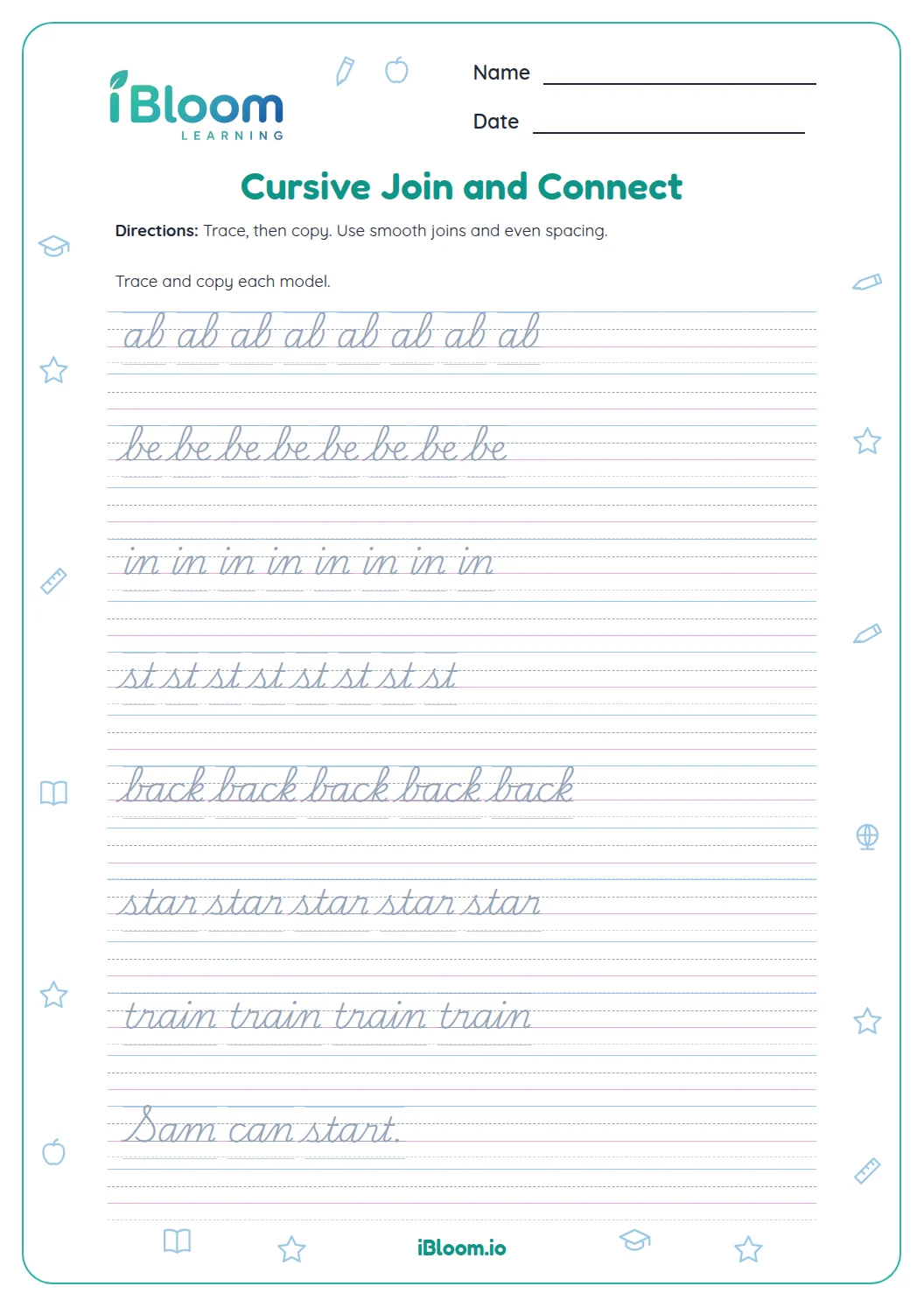
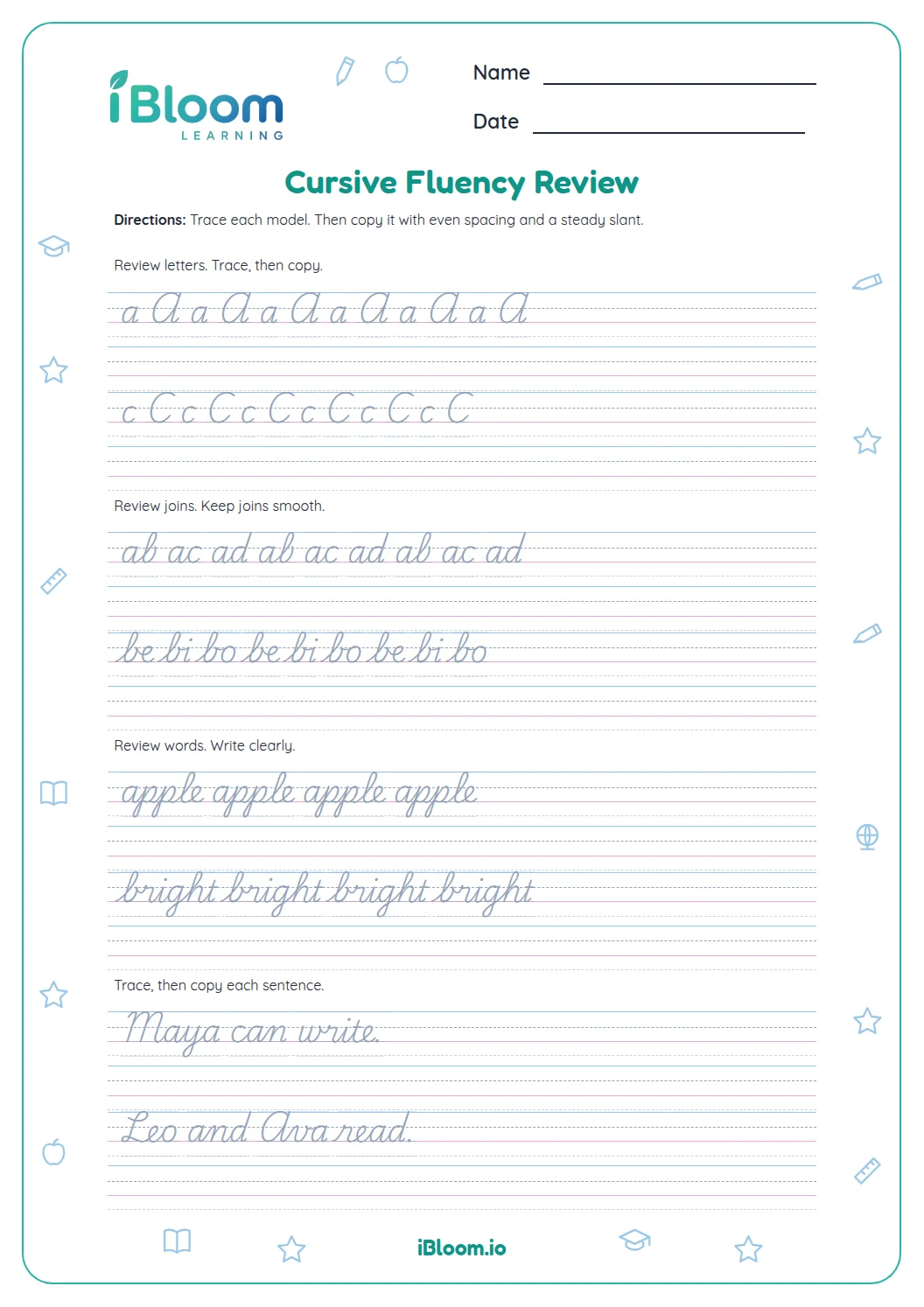
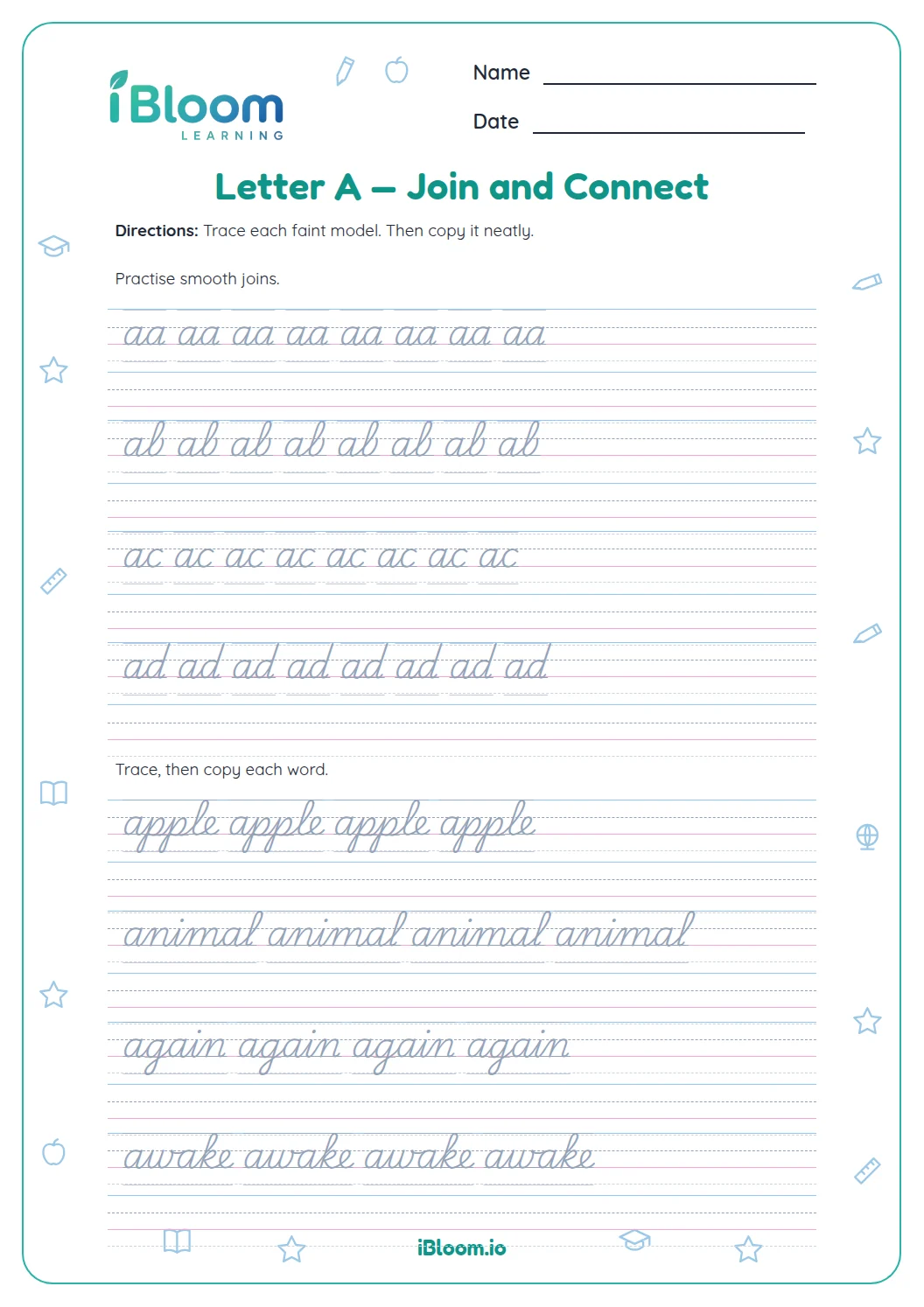
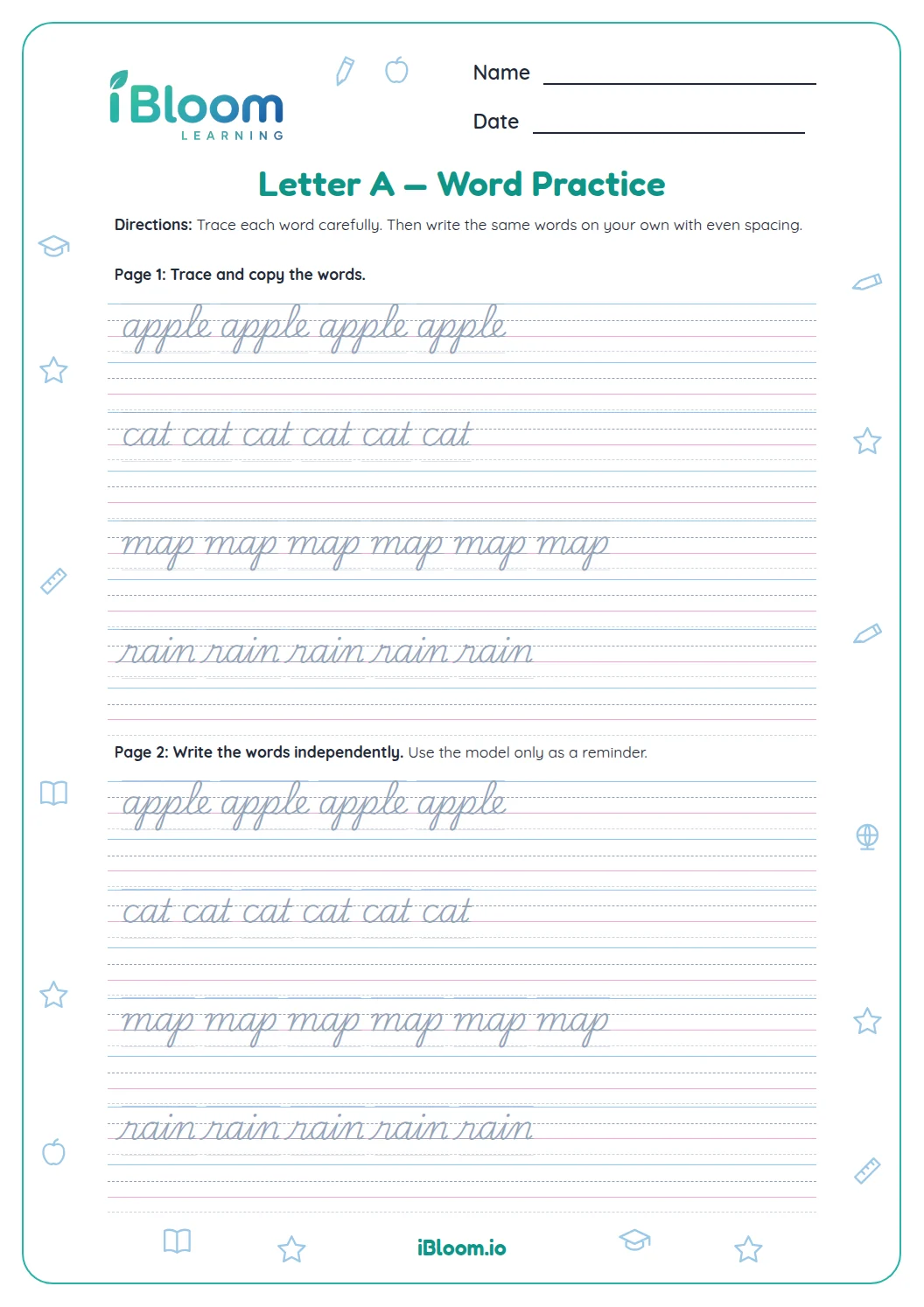
Learners trace a model, then copy it on handwriting lines. The practice moves from short, familiar words to longer words and brief sentences.
Start with short cursive words
Part A gives the hand time to settle into the slant and rhythm. Trace each gray model, then copy the same word on the blank row. Focus on smooth connections before speed.
Keep the joins steady in longer words
Part B adds more letters, so plan where each letter joins the next. Keep the lowercase letters on the baseline and let tall strokes reach the proper line.
How can children copy short sentences?
Part C includes longer words and two complete sentences. Question 15, “I can learn.”, lets the writer practice capital I, spaces between words, and sentence punctuation in connected cursive.
A useful trace-and-copy routine
- 1Sit with the page straight and hold the pencil comfortably.
- 2Trace the gray model slowly, following each connecting stroke.
- 3Copy the word once without tracing.
- 4Check slant, baseline, letter size, and spaces.
- 5Repeat a tricky join before moving to the next word.
Common cursive challenges
The mistake
Lifting the pencil between letters in a word.
The fix
Look for the connecting stroke and keep the word moving smoothly.
The mistake
Making every letter the same height.
The fix
Use the midline and top line to guide tall letters and short letters.
What to practice next
Make more practice
Questions parents and teachers ask
What should children focus on while copying?
Keep a steady slant, connect letters within each word, and leave a clear space between words. Readability matters more than speed. The worksheet gives a gray model to trace and a blank handwriting row for copying each word or sentence.
Is this worksheet for a specific cursive style?
The models use a US school cursive style. Letter shapes vary between handwriting programs, so compare the worksheet with the style your child is learning. The practice focuses on tracing and copying complete words and short sentences rather than identifying letter names.
How can I use the answer key?
The key lists the model text for each prompt. Check that the copied letters match the word or sentence, then look at connections, slant, letter size, and spacing. For a tricky join, practice that word once more before continuing.
Why does this worksheet have several pages?
Each cursive prompt needs handwriting space for a trace row and a copy row. This set has 18 prompts, including individual words and two short sentences, so the layout spreads practice across five worksheet pages and five answer-key pages.
Should children write quickly?
No. Start slowly enough to make clear letter shapes and smooth joins. Once the letters are consistent, a child can work toward a comfortable pace. The goal of this worksheet is legible trace-and-copy practice, not a timed writing drill.