Free printable practice
Letter E Practice Activities
Printable cursive Letter E worksheets help children practise uppercase E, lowercase e, smooth joins, and readable letter formation.
Free printable worksheet PDFs
Preview every available page, then download the free worksheet PDF for home, homeschool, tutoring, or classroom practice.
Preview the exact activity before downloading it.
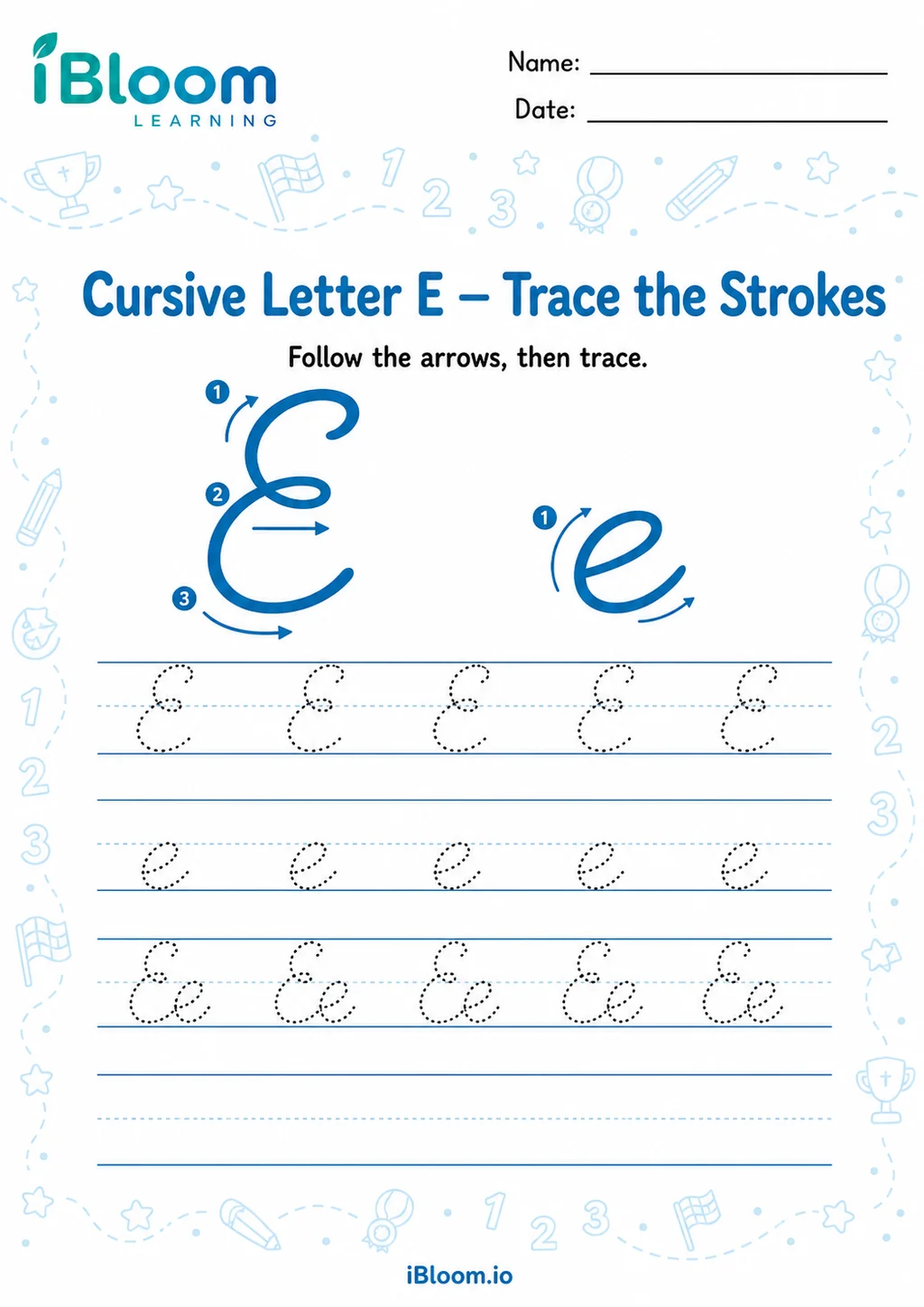 Letter E — Trace with Correct StrokesPrintable cursive Letter E worksheets help children practise uppercase E, lowercase e, smooth joins, and readable letter formation. This trace with correct strokes worksheet provides a distinct, age-appropriate way to practise the same lesson.Grade 2, Grade 3, Grade 4, Grade 5Free PDF preview
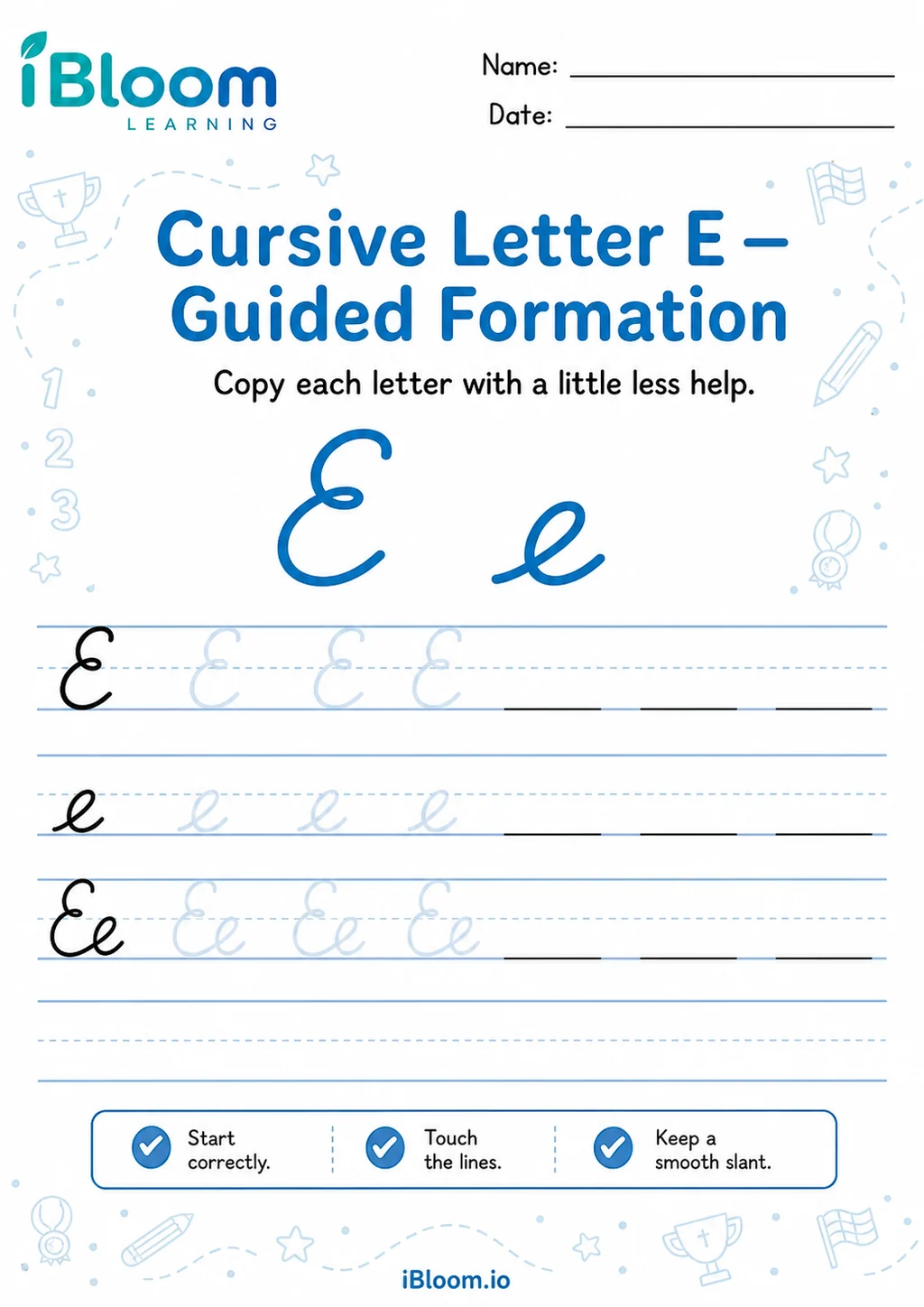 Letter E — Guided Letter FormationPrintable cursive Letter E worksheets help children practise uppercase E, lowercase e, smooth joins, and readable letter formation. This guided letter formation worksheet provides a distinct, age-appropriate way to practise the same lesson.Grade 2, Grade 3, Grade 4, Grade 5Free PDF preview
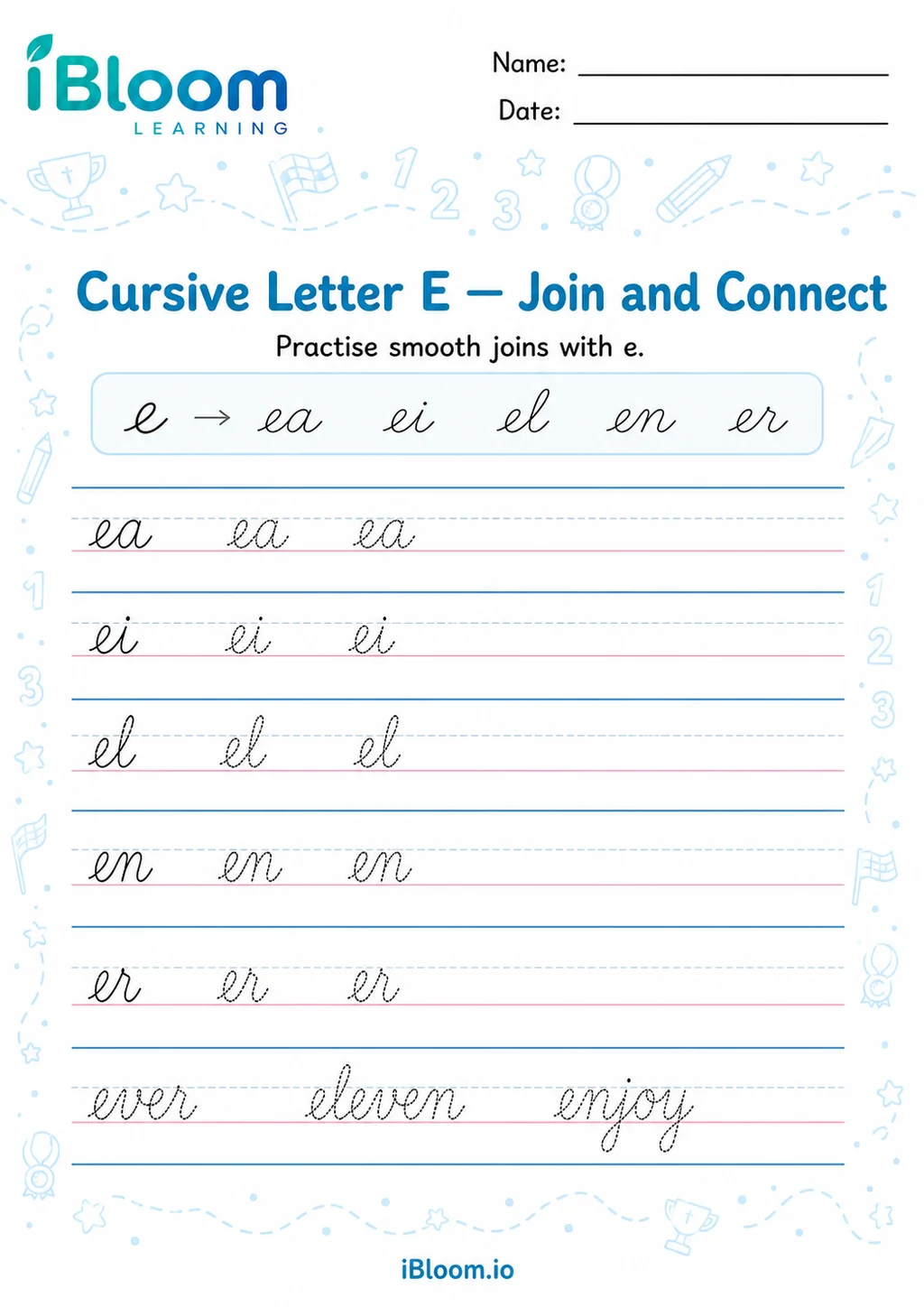 Letter E — Join and ConnectPrintable cursive Letter E worksheets help children practise uppercase E, lowercase e, smooth joins, and readable letter formation. This join and connect worksheet provides a distinct, age-appropriate way to practise the same lesson.Grade 2, Grade 3, Grade 4, Grade 5Free PDF preview
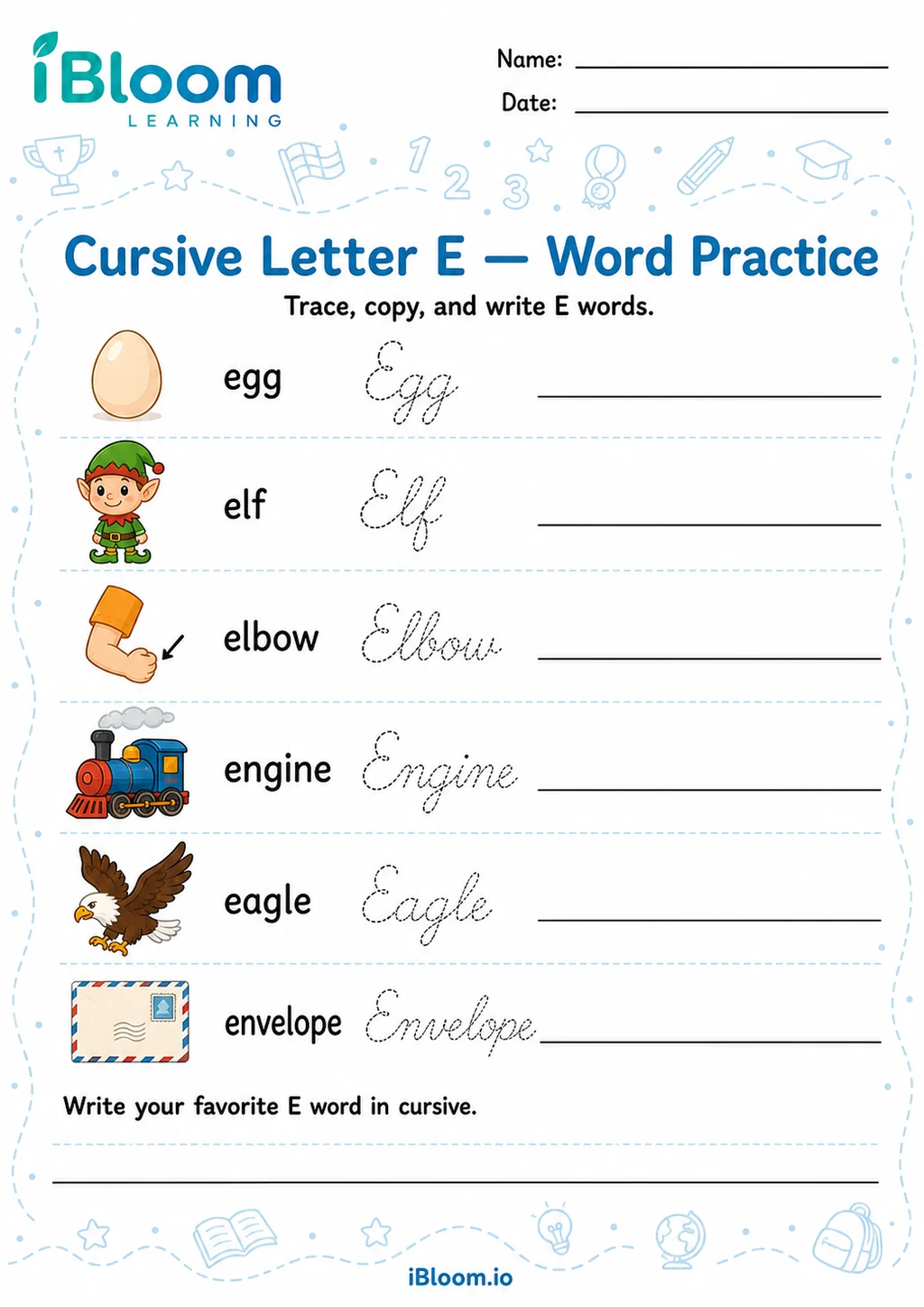 Letter E — Word PracticePrintable cursive Letter E worksheets help children practise uppercase E, lowercase e, smooth joins, and readable letter formation. This word practice worksheet provides a distinct, age-appropriate way to practise the same lesson.Grade 2, Grade 3, Grade 4, Grade 5Free PDF preview
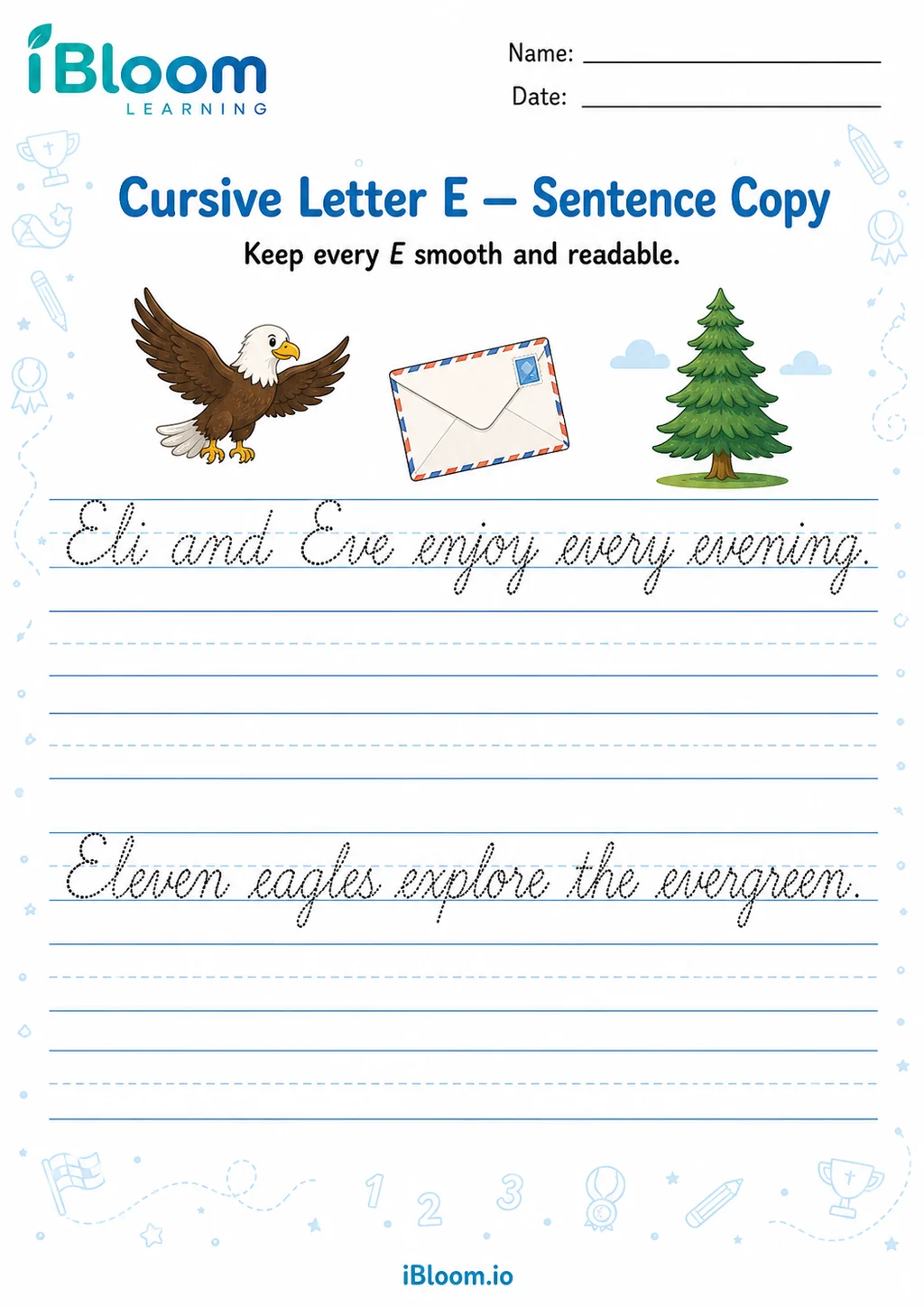 Letter E — Sentence or Passage CopyPrintable cursive Letter E worksheets help children practise uppercase E, lowercase e, smooth joins, and readable letter formation. This sentence or passage copy worksheet provides a distinct, age-appropriate way to practise the same lesson.Grade 2, Grade 3, Grade 4, Grade 5Free PDF preview
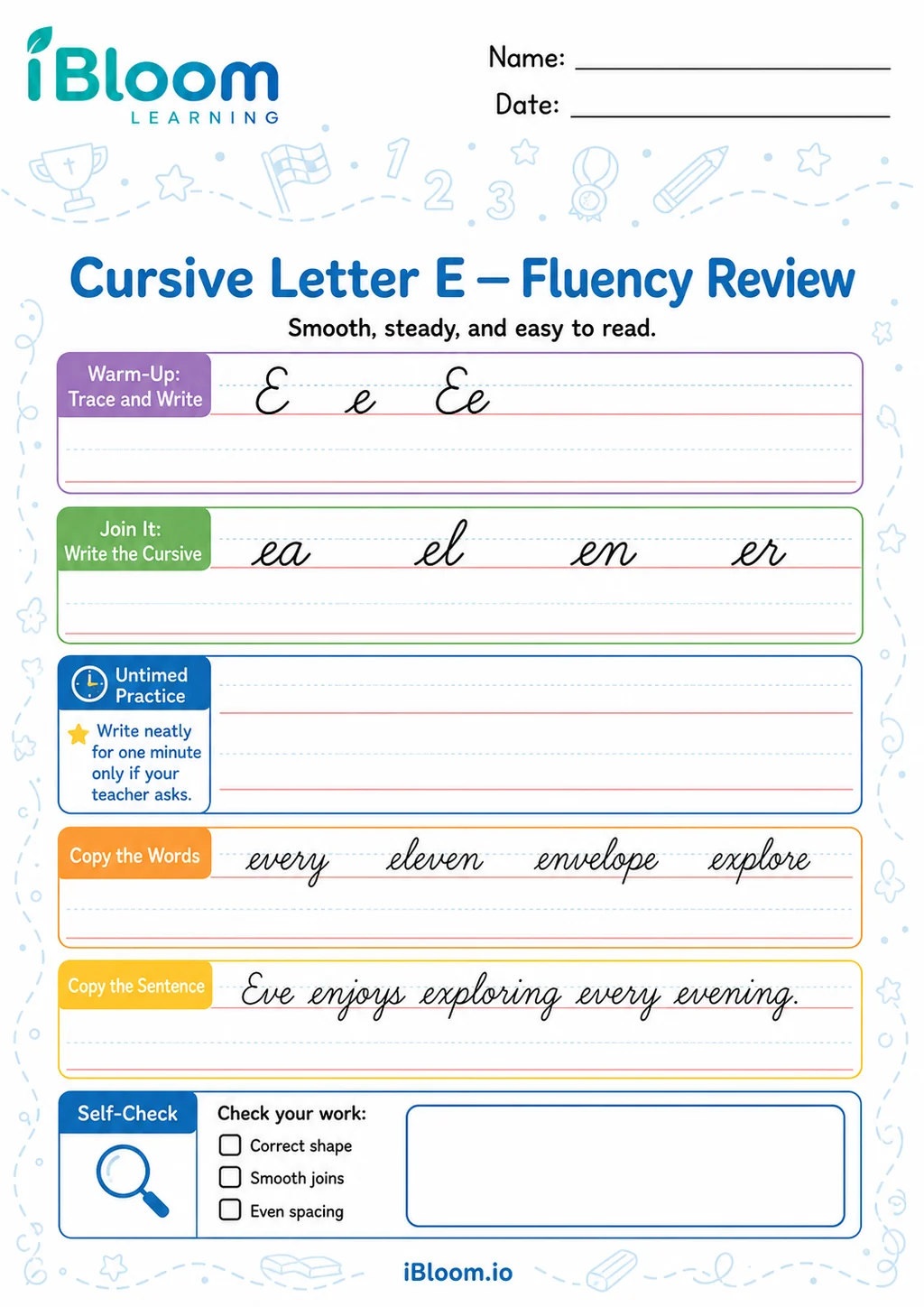 Letter E — Cursive Fluency ReviewPrintable cursive Letter E worksheets help children practise uppercase E, lowercase e, smooth joins, and readable letter formation. This cursive fluency review worksheet provides a distinct, age-appropriate way to practise the same lesson.Grade 2, Grade 3, Grade 4, Grade 5Free PDF preview
Practice that builds confidence
Building the cursive Letter E
These Letter E practice activities focus on forming cursive uppercase E and lowercase e with steady movement, correct starting points, and consistent size. Children build control as they trace, copy, and write the letter in isolation and within simple letter patterns.
The printable worksheets support the Cursive Writing > Cursive Alphabet > Letter E step of handwriting practice. Activities may include guided tracing lines, independent writing spaces, stroke direction cues, and short practice tasks that help children recognize how cursive e connects to nearby letters.
Cursive e is small but important because it appears in many words and often connects quickly to the next letter. Lowercase e usually begins with an entry stroke, loops forward, and finishes ready to join. Uppercase E has a larger, more decorative movement, so children need space to practise its height, curve, and return stroke without rushing.

Progression from tracing to writing
A helpful worksheet sequence starts with large model letters, then dotted tracing, then copy lines, and finally blank-line writing. This progression lets children feel the shape before they are expected to remember it. Encourage attention to baseline, midline, slant, loop shape, and spacing. If a page includes letter combinations, children can notice how e flows into letters such as l, n, or r.
A simple parent routine
At home, begin by asking your child to trace one model e slowly with a finger while saying the motion aloud: “up, loop, around, and out.” Then use a pencil for a short row of traced letters, followed by a few independent attempts. Circle one well-formed letter together and ask, “What made this one easy to read?” End with a word or name hunt for the letter e in a book, label, or note.

Classroom uses for teachers
Teachers can use these pages for handwriting centers, morning work, small-group reteaching, or extra practice after introducing the cursive alphabet. The Letter E sheet also works well for quick comparison: students can place a printed e beside a cursive e and discuss how the cursive version connects. For learners who need support, enlarge the model or have them trace in the air before writing on paper.

Common errors to watch for
Children may close the loop too tightly, make the letter look like an i, start from the wrong place, or lift the pencil before the exit stroke. Uppercase E can become uneven if the child focuses only on decoration instead of the main stroke path. Remind students that neat cursive is not fast cursive; smooth, readable movement comes first.
Free printable PDF download
Use this cursive letter e worksheet page to preview the activity, print it, or download it as a PDF for quick practice. It works well for homework, homeschool lessons, tutoring, morning work, revision, and classroom centers.
Answers and answer key support
After the child completes the worksheet independently, parents and teachers can use the answer support or answer key information to check the work, review mistakes, and choose the next practice step.
Why iBloom worksheets help
iBloom Letter E worksheets give children repeated, focused practice without overwhelming them with the whole alphabet at once. Clear models and writing lines help them compare their work to the target shape. A child-friendly strategy is: trace it, say it, write it, check it—then choose the best e and try to make the next one match.
Helpful answers
Frequently asked questions
What should children practise first: uppercase cursive E or lowercase cursive e?
Many children benefit from starting with lowercase e because it is used more often in words and teaches an important joining motion. Uppercase E can be practised after the child understands the basic flow and spacing.
Why does my child’s cursive e look like another letter?
This often happens when the loop is too narrow, the exit stroke is missing, or the letter is started incorrectly. Slow tracing and comparing the letter to a clear model can help the shape become more readable.
Do these worksheets help with joining cursive e to other letters?
Yes. Letter E practice supports the entry and exit strokes needed for joins. Once the single letter is comfortable, children can practise simple connections such as e to l, e to n, or e to r if included in the activity.
How can I make Letter E practice less frustrating?
Use short, focused practice. Ask your child to choose the best letter on the line instead of rewriting an entire row. Praising one clear improvement, such as a better loop or smoother exit stroke, keeps practice positive.
What handwriting details should I check on a cursive Letter E worksheet?
Look for correct starting point, smooth loop, consistent slant, proper height, and an exit stroke that is ready to connect. The letter should sit on the baseline and remain easy to read.
Is this cursive letter e worksheet free?
Yes. You can preview it for free and use the printable worksheet for home or classroom practice.
Can I download this cursive letter e worksheet as a PDF?
Yes. Use the worksheet download option to save a printable PDF, or print the worksheet directly from the page.
Does this cursive letter e worksheet include answers or an answer key?
When the activity has fixed answers, iBloom includes answer support so parents and teachers can check the completed worksheet.