
About this worksheet
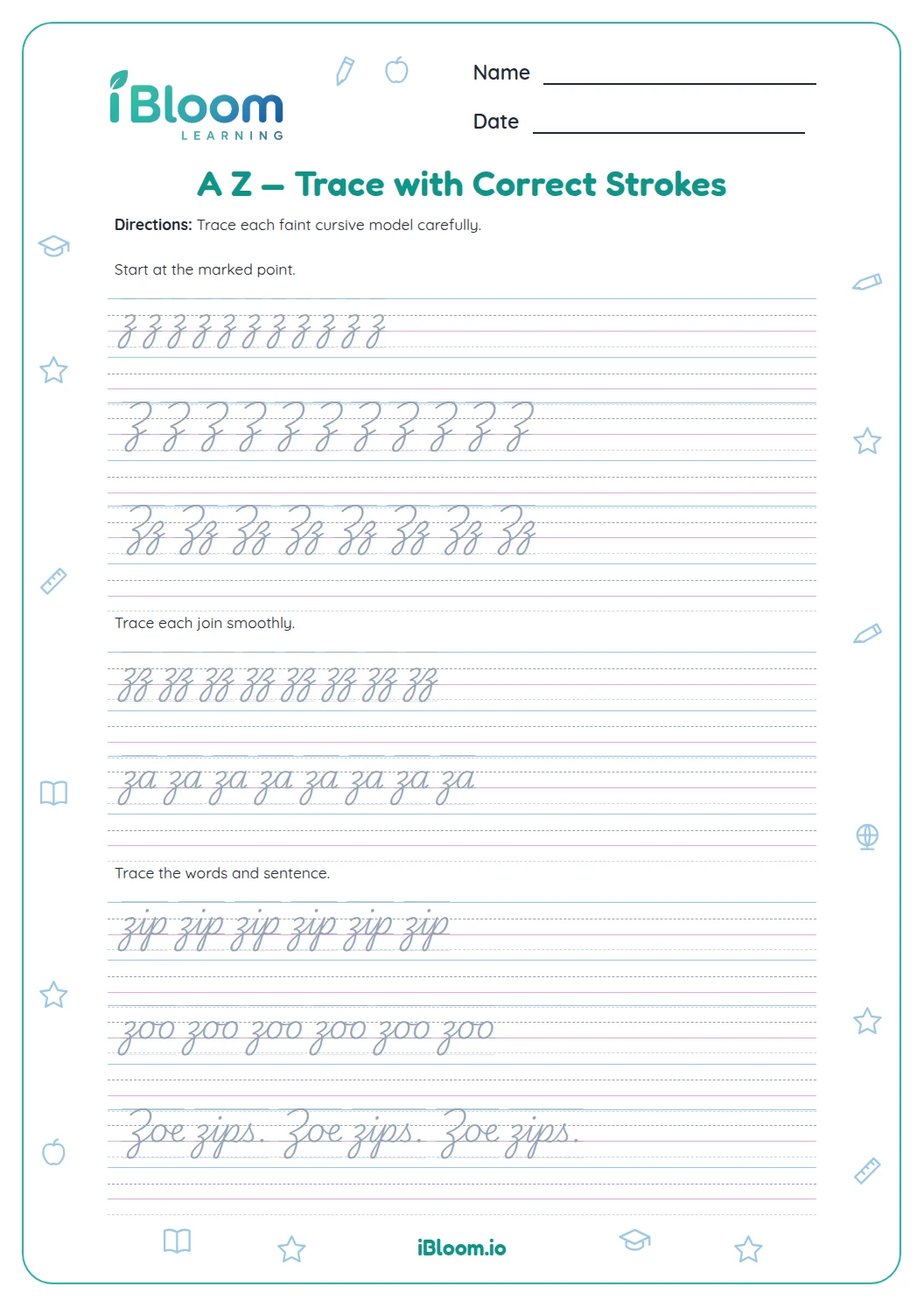
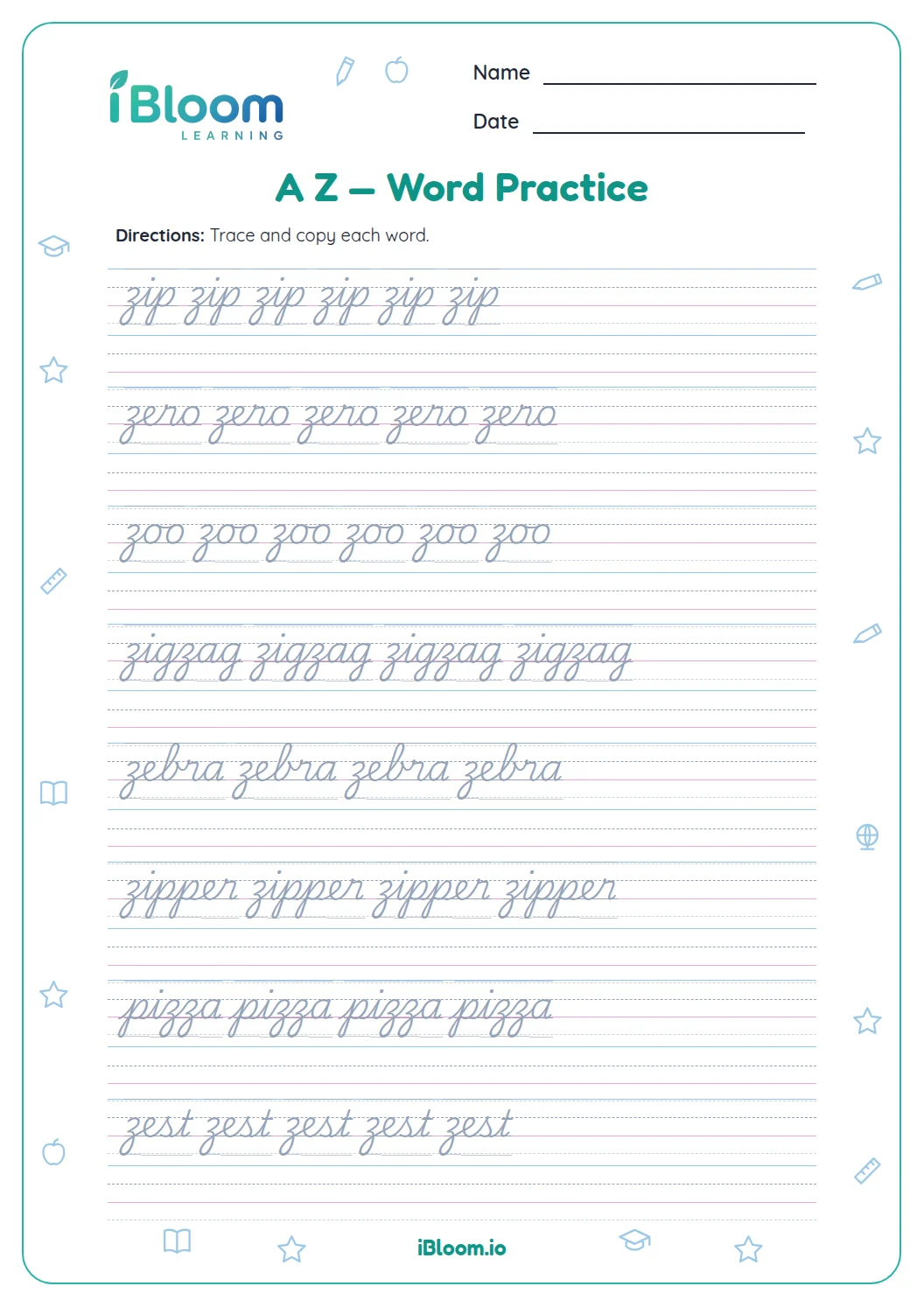
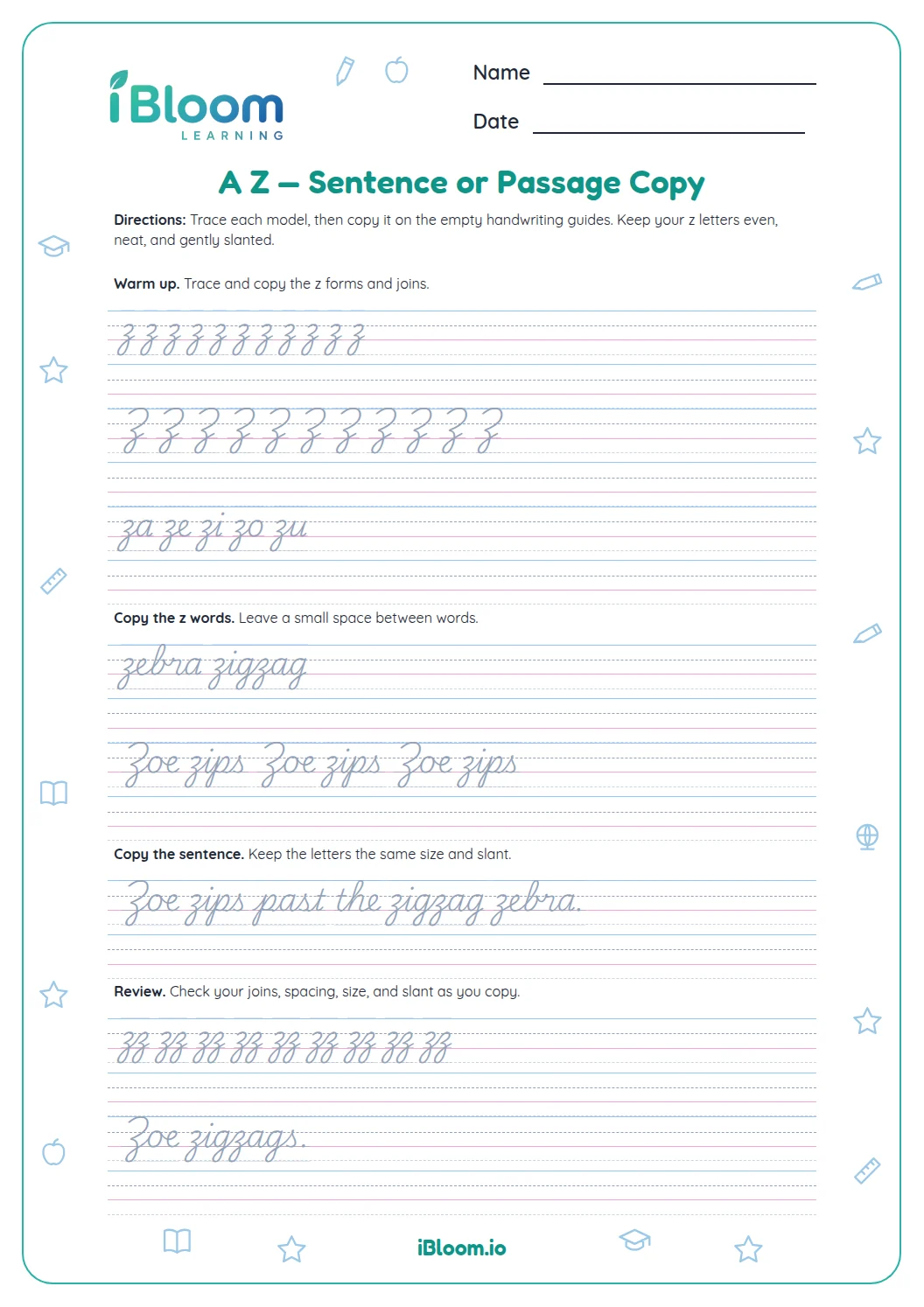
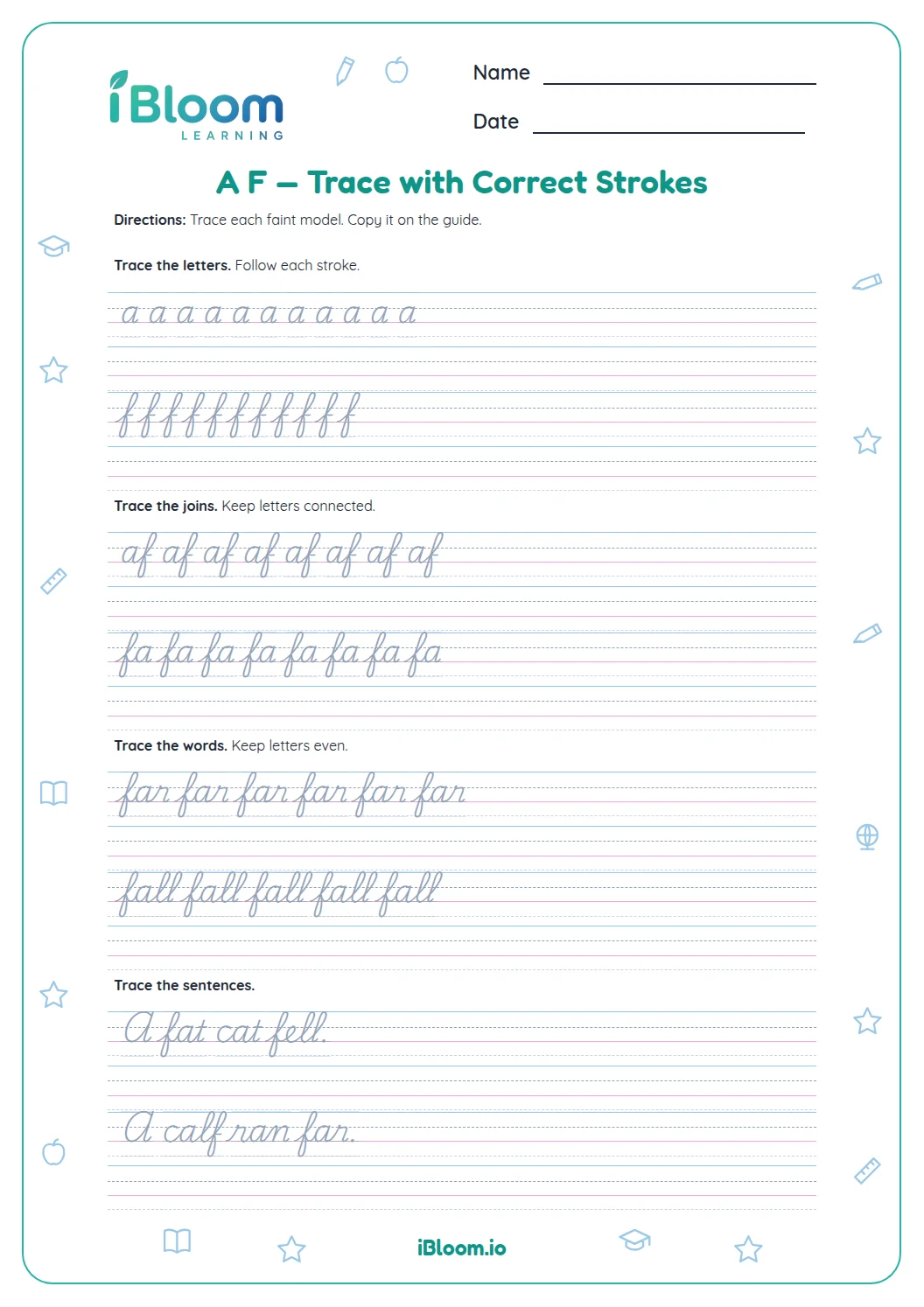
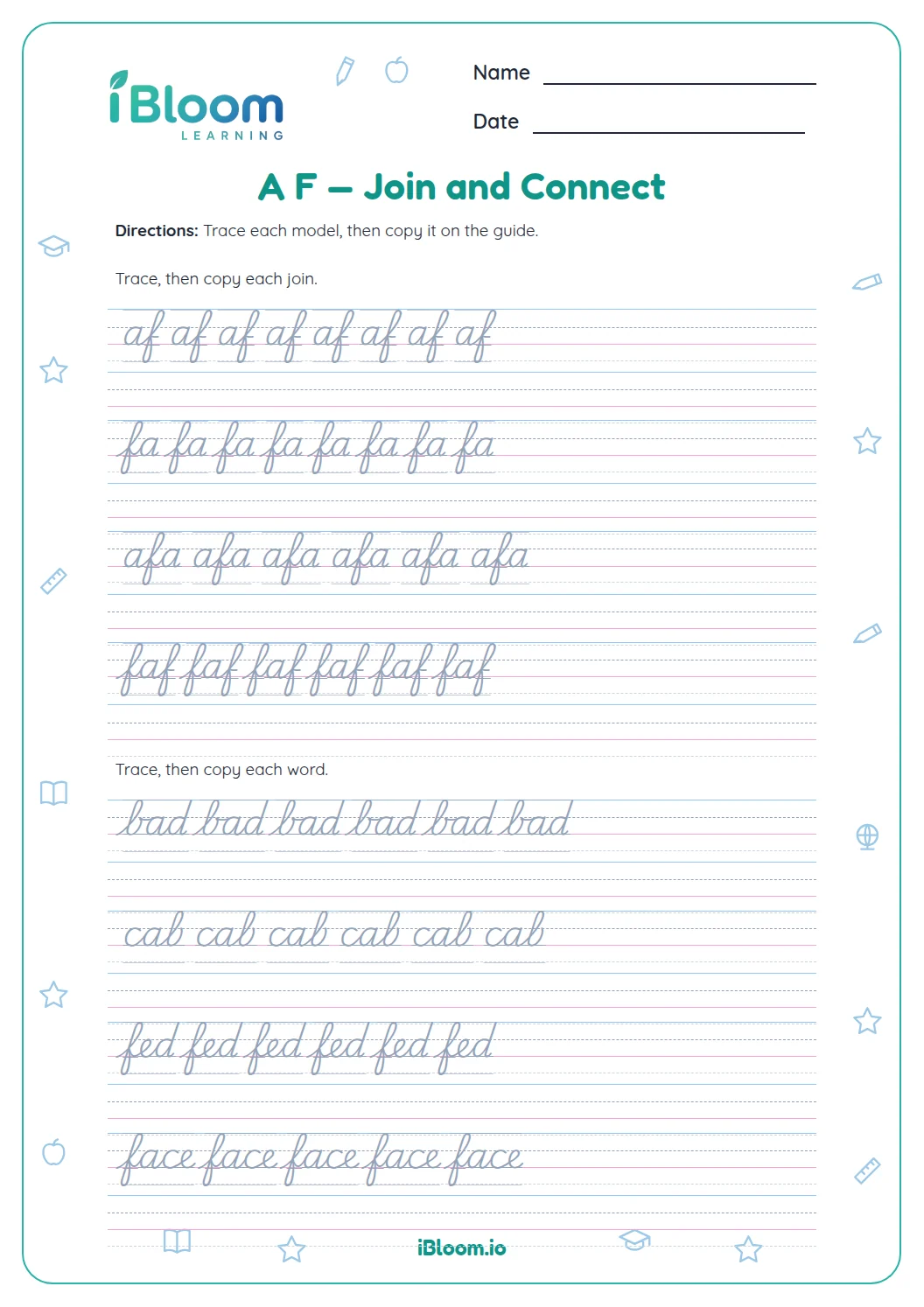
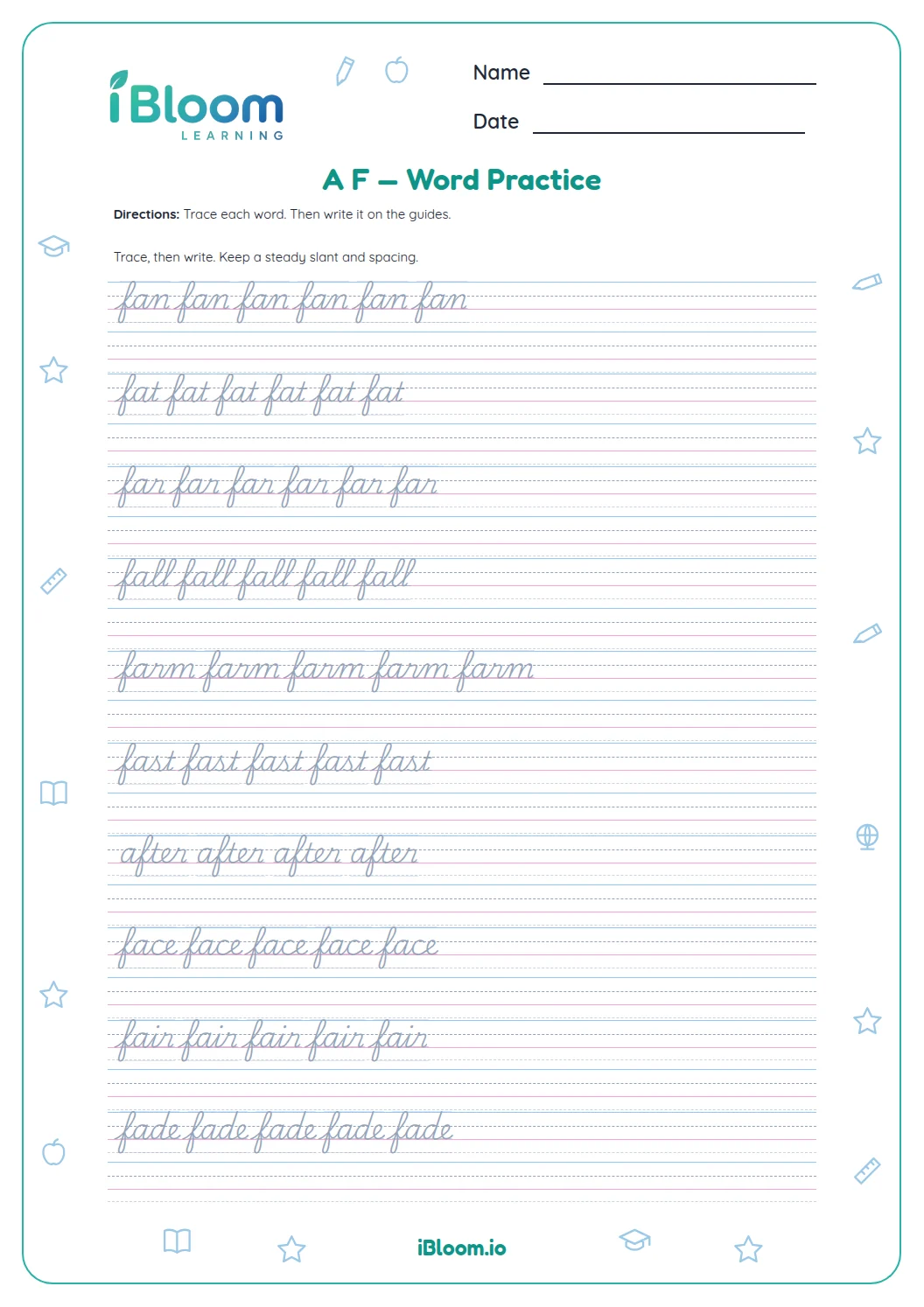
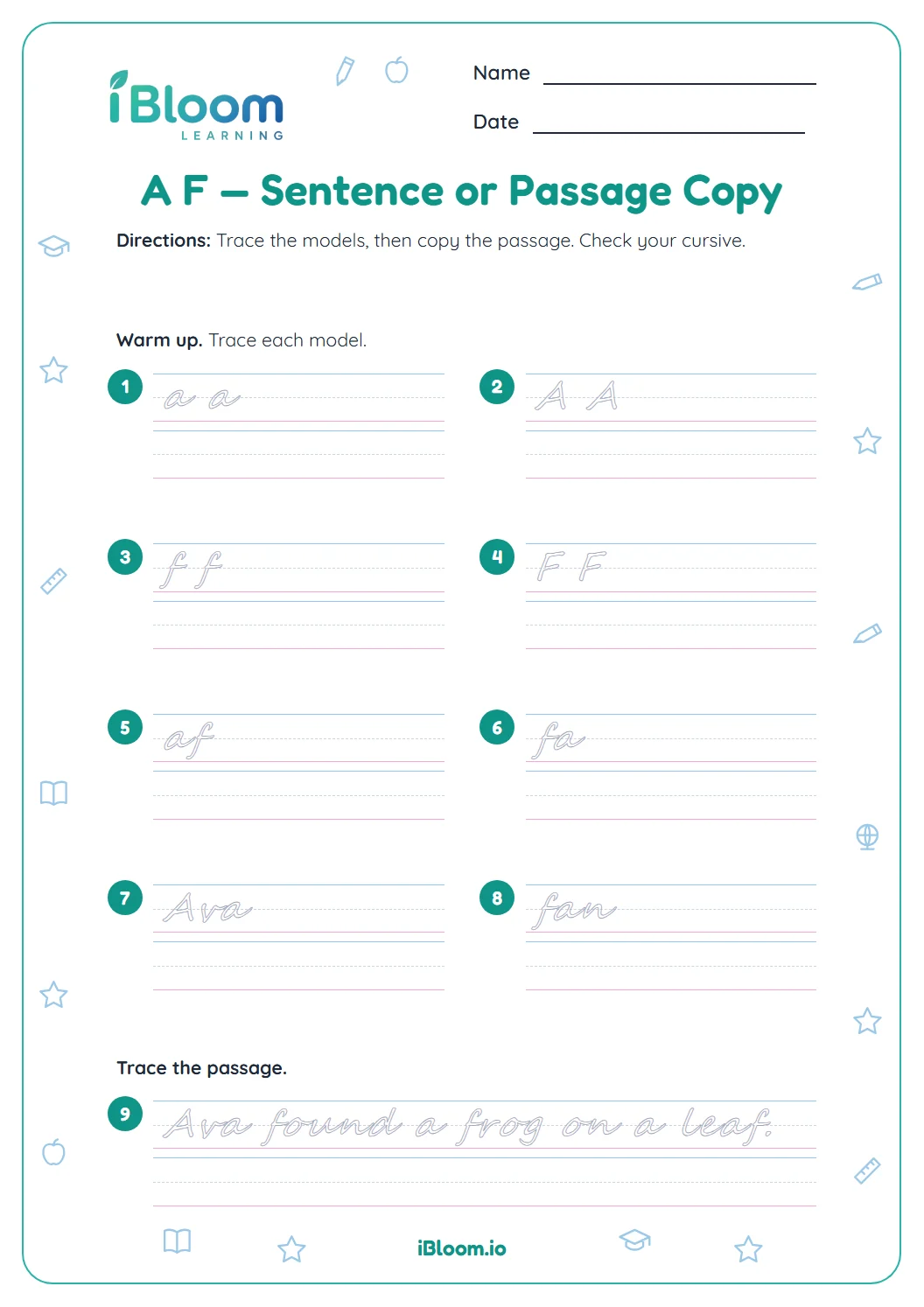
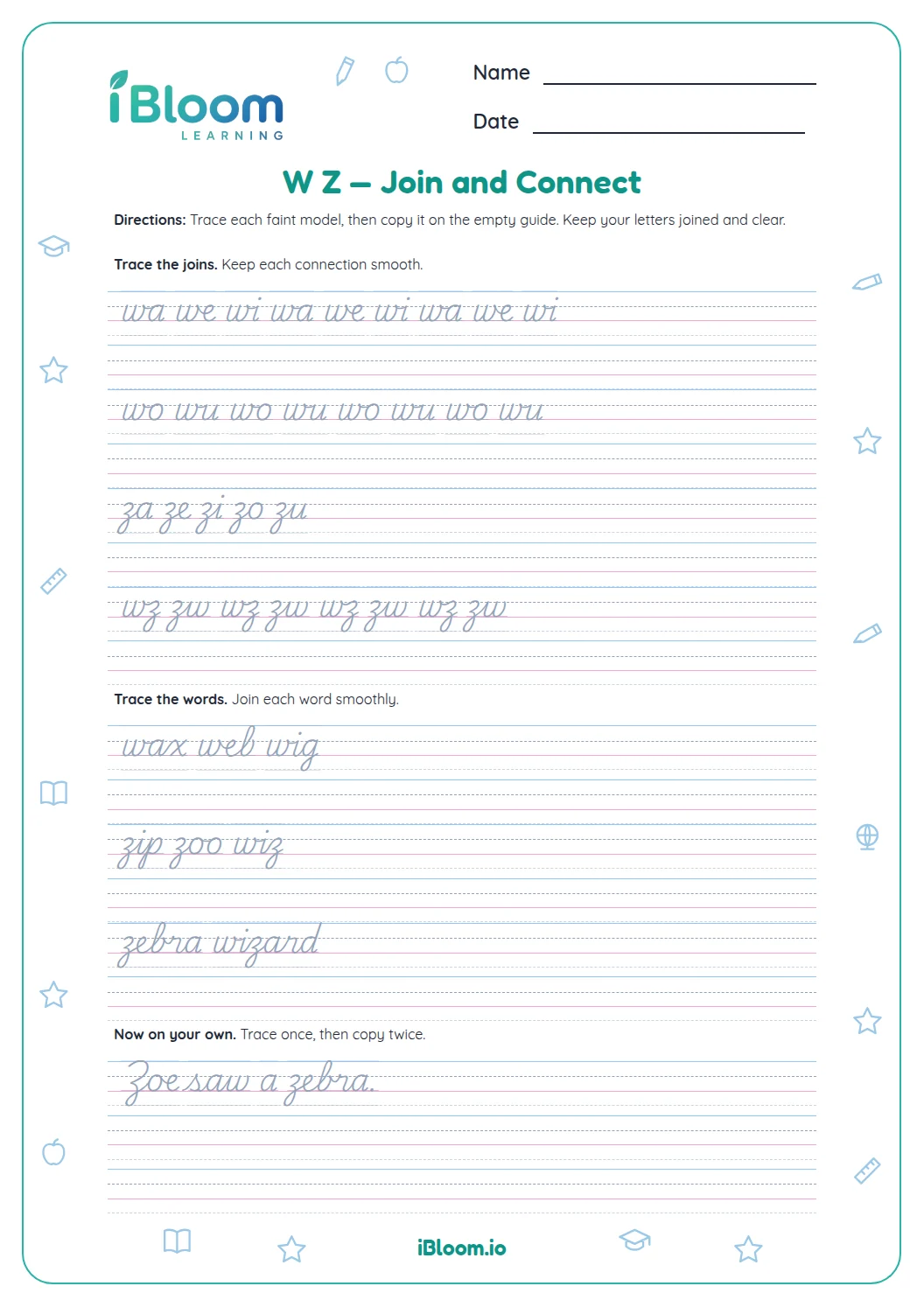
This cursive fluency worksheet gives students practice tracing and copying every uppercase and lowercase letter from A to Z. Alphabet groups are followed by familiar words and two short sentences for connected handwriting practice. The answer key shows the model text; students can compare letter forms, joins, spacing, and legibility.
Does it practice every letter?
Yes. The alphabet is divided into four short groups: a–h, i–p, q–x and y–z. Each group includes every letter in that range.
- 1Trace and copy “abcdefgh,” then check that each lowercase letter is present.
How should children use the handwriting lines?
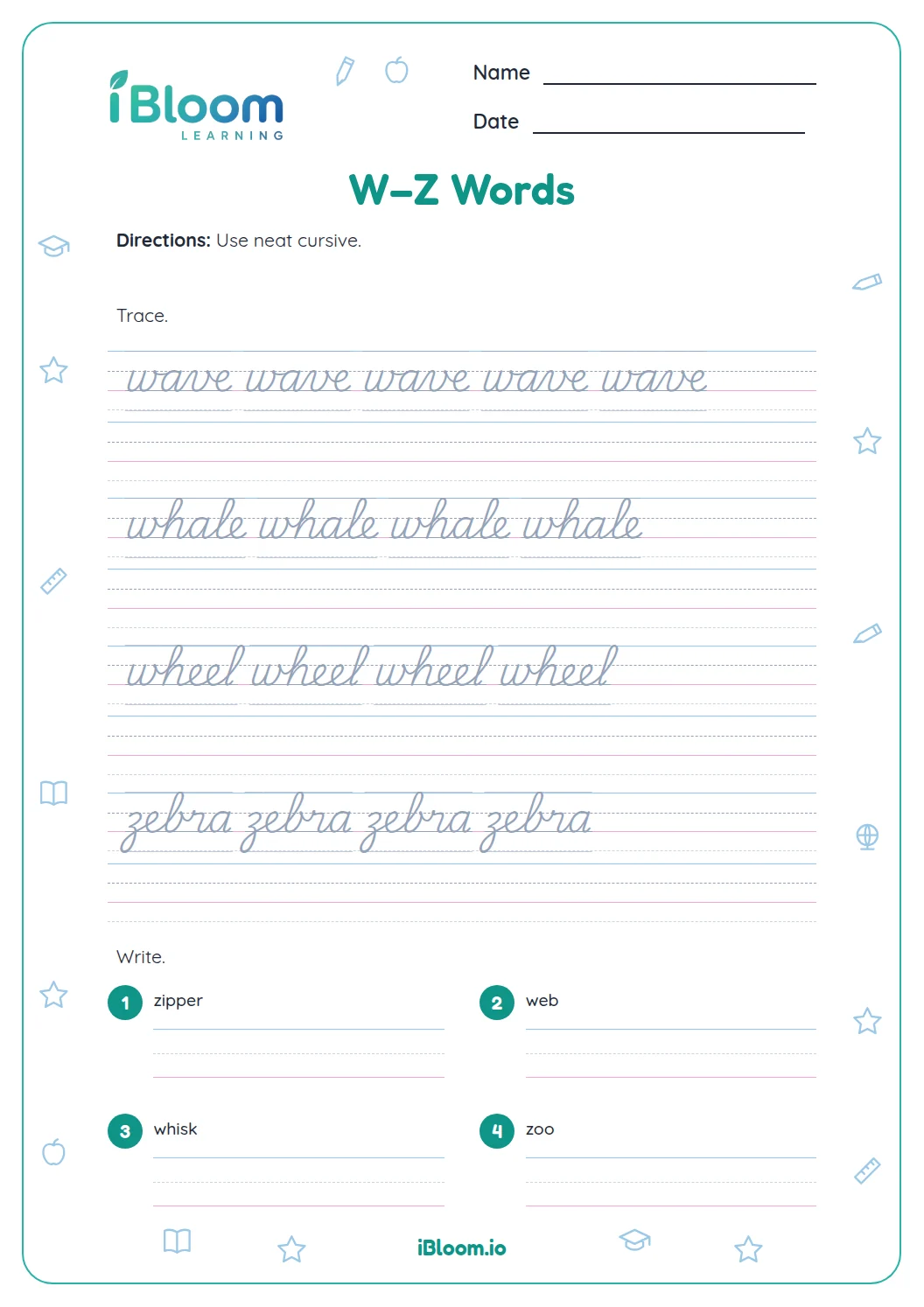
Trace the gray model first, keeping each letter on the line. Then copy the same letters without tracing and keep their size and spacing steady.
Why practice words after letters?
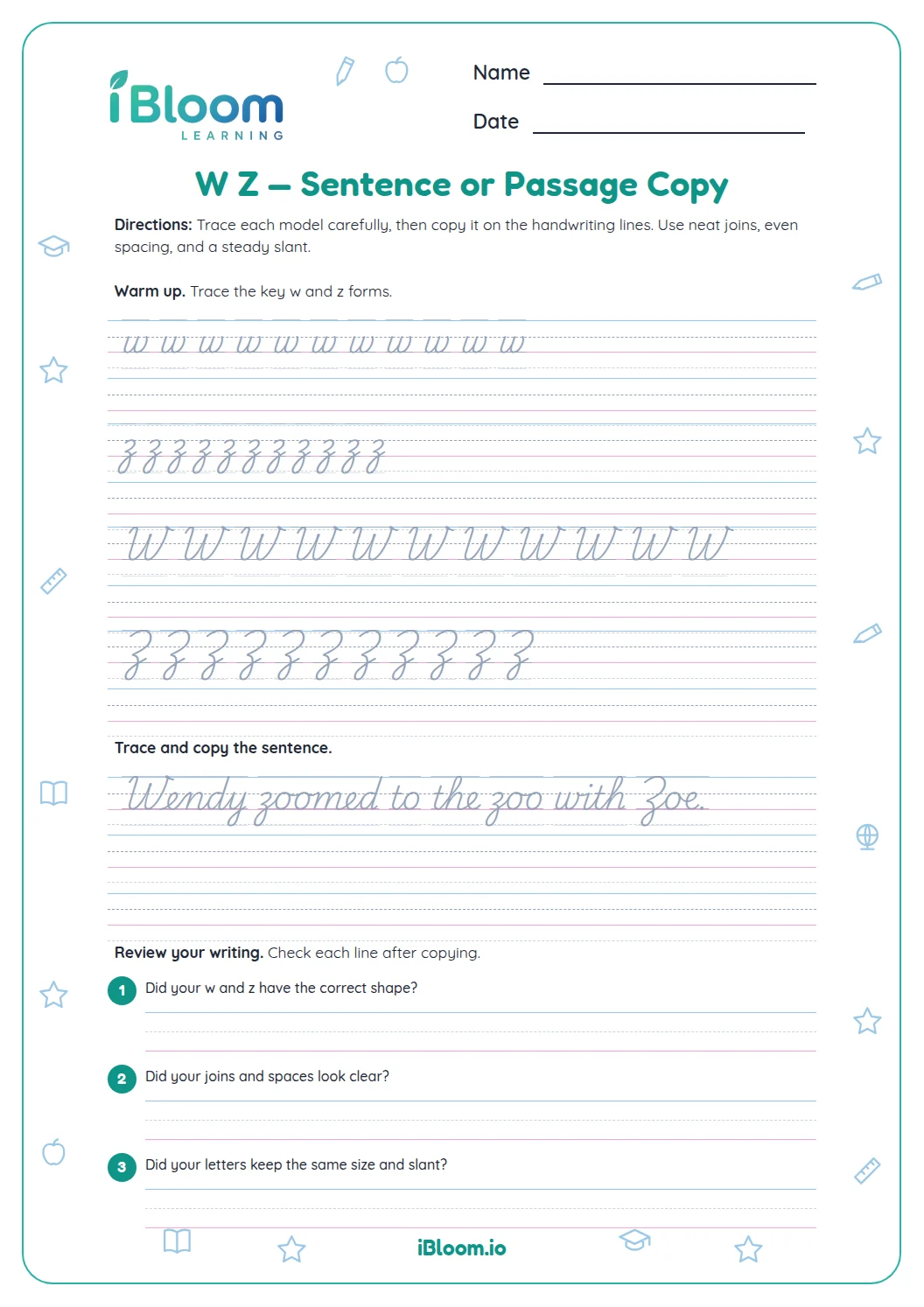
Words let children practice joining letters and moving smoothly between strokes. A short sentence adds spaces and punctuation to the task.
How to use this worksheet
- 1Sit with the paper tilted slightly toward the writing hand.
- 2Trace each model slowly, following the letter shapes.
- 3Copy the same set on the empty row.
- 4Check that letters sit on the baseline and have clear spaces between words.
- 5Repeat a difficult group before moving to a sentence.
Common mistakes and quick fixes
The mistake
Rushing and losing the shape of a letter.
The fix
Slow down and trace one letter at a time.
The mistake
Letting word letters run together.
The fix
Lift the pencil between words and leave a finger space.
The mistake
Skipping letters in a group.
The fix
Point to each letter in the model as you copy it.
What to practice next
Make more practice
Questions parents and teachers ask
Are all lowercase cursive letters included?
Yes. The first four practice items cover a through h, i through p, q through x, and y through z. Together, the sets include every lowercase letter in alphabetical order. The alphabet sets are short enough for focused practice, while the final words and sentences ask students to use the letters in connected writing.
What should students do for each practice item?
Trace the gray cursive model first, then copy the same letters or words on the empty handwriting row. Move slowly enough to keep letter shapes, size and spacing clear. A learner can pause between tracing and copying to notice where each letter begins and how it rests on the baseline.
How do the word and sentence items help?
Words let children practice connected letter joins, while sentences add spaces and punctuation. The repeated practice moves from alphabet groups to familiar words and short copywork. This routine works well for a brief handwriting session; repeat a group if the letter shapes are not yet consistent.
What is the answer key for cursive practice?
The key repeats the exact letter group, word or sentence to copy. Handwriting can vary, so compare the letters and sequence with the model rather than expecting every child’s writing to look identical. The sample key lets an adult check the sequence, while recognizing that individual cursive letterforms may vary.
Does the alphabet practice include uppercase and lowercase letters?
Yes. The first groups cover uppercase A through Z, and the next groups cover lowercase a through z. Students then trace and copy four words and two sentences, using the key as a model for letter shapes, joins, spacing, and readable writing.