


About this worksheet
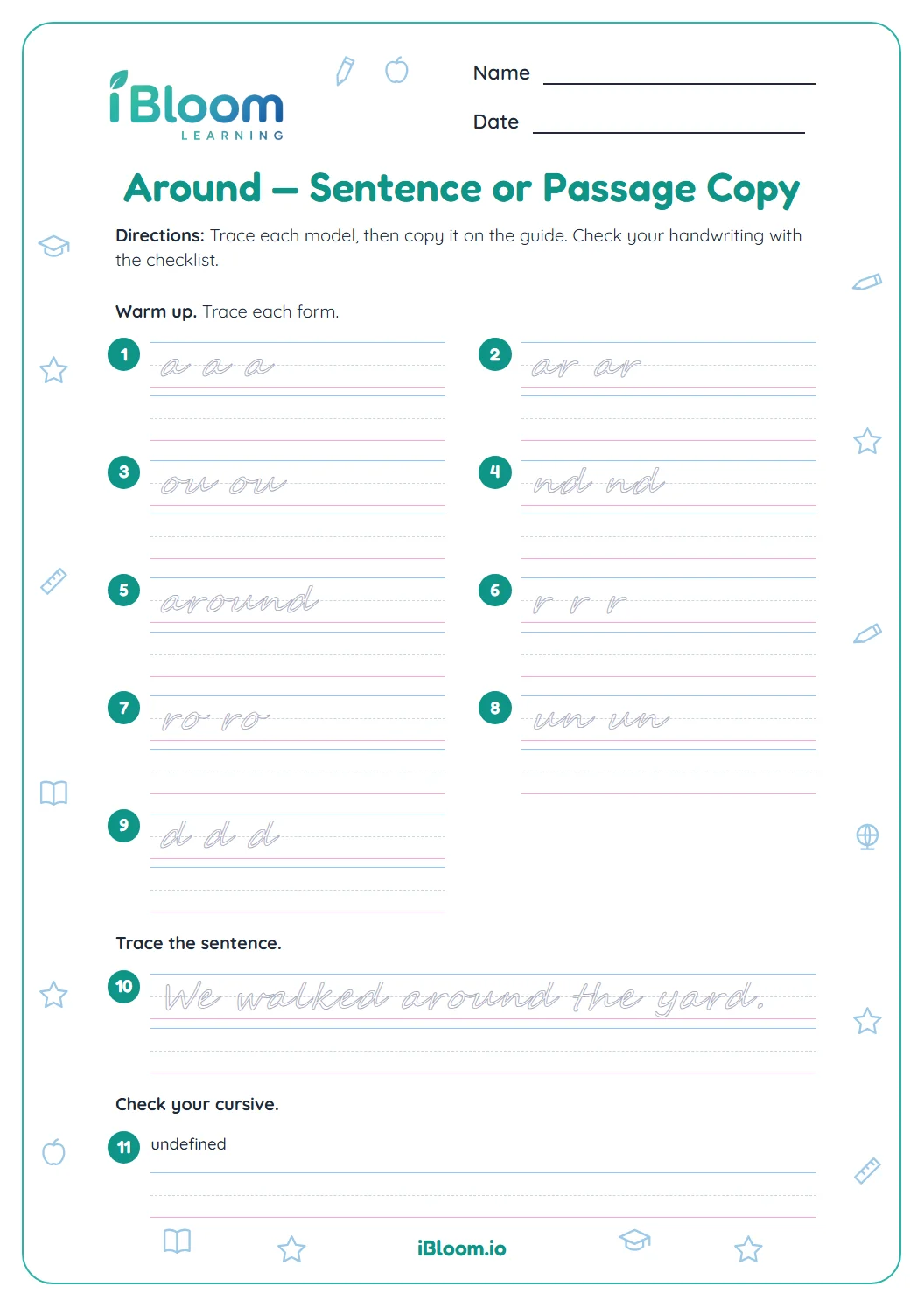
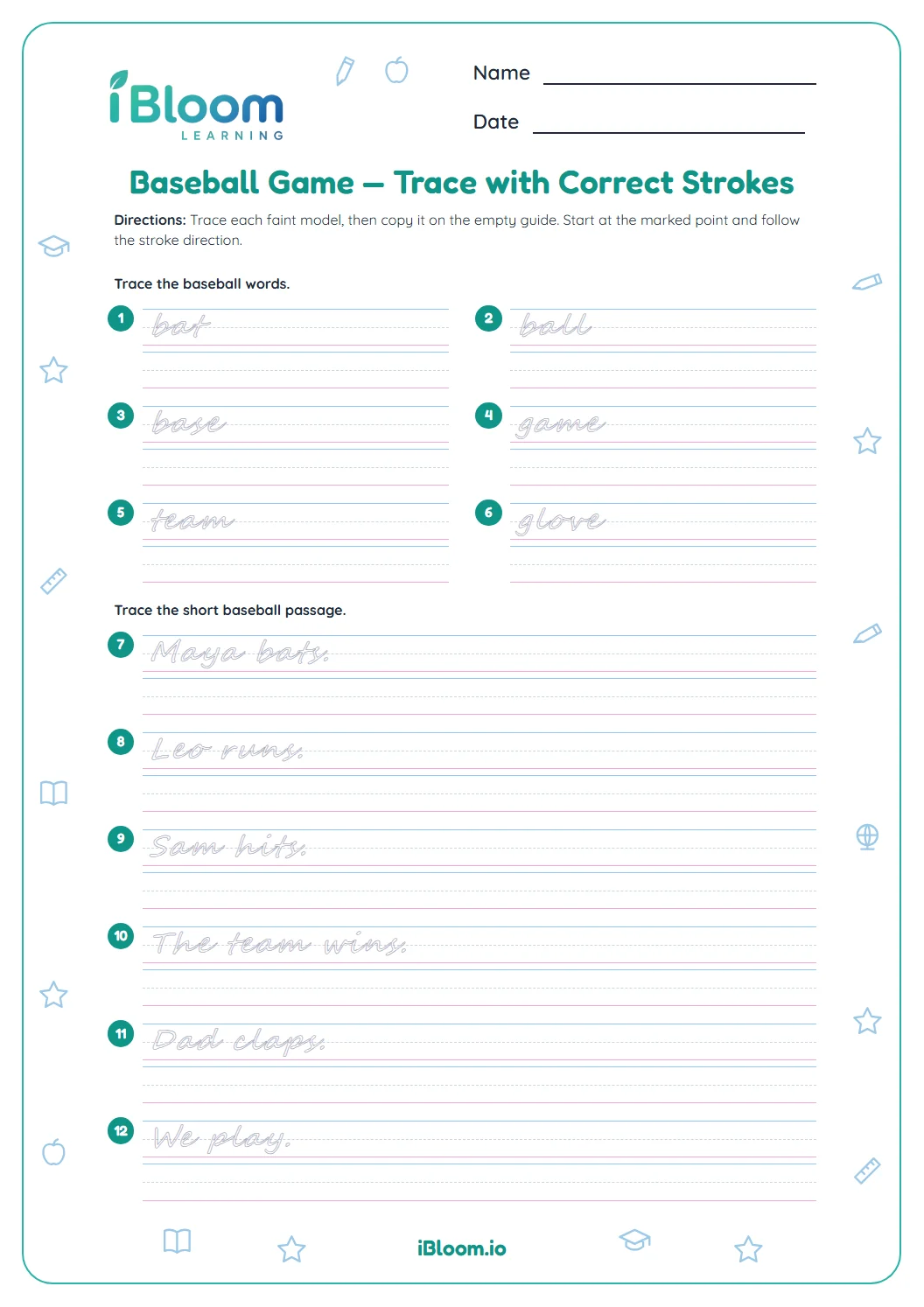
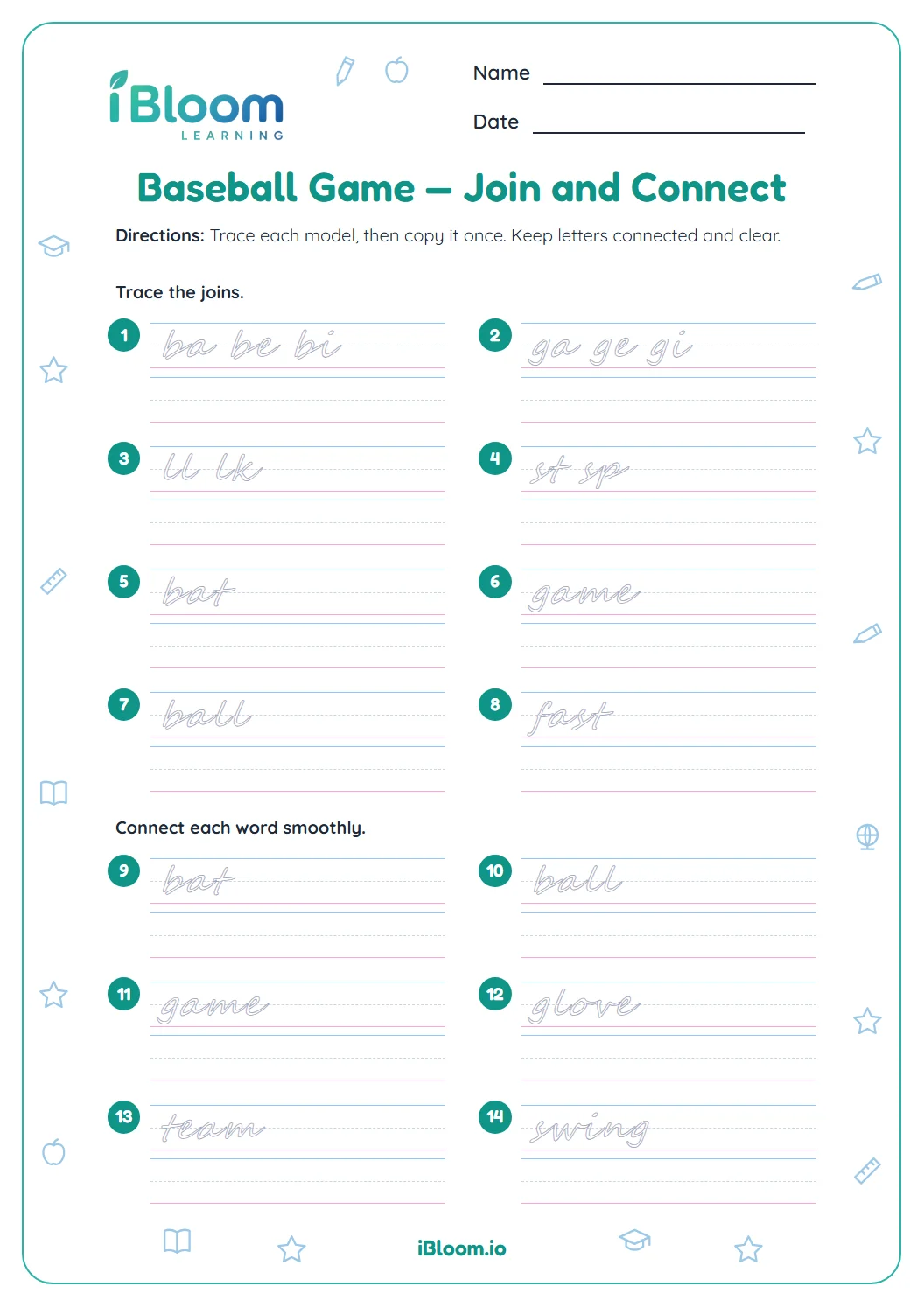
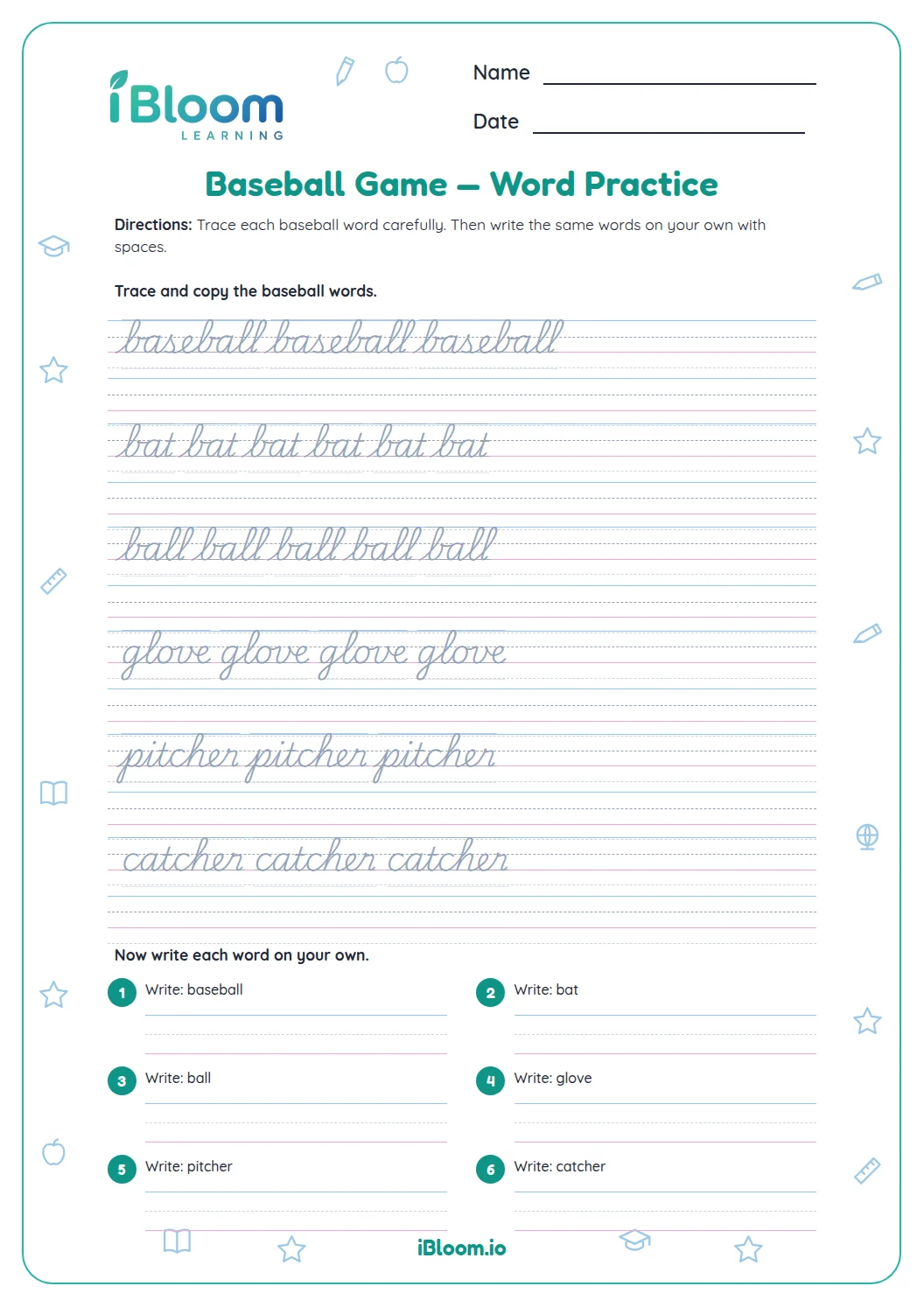
This printable cursive worksheet uses Humpty Dumpty lines and related phrases for students in Grades 2–5. Fourteen trace-and-copy prompts provide practice connecting letters, keeping word spaces clear, and following handwriting guides. The separate answer key lists each phrase. The supplied old sheet showed join drills and rhyme phrases; this replacement keeps both kinds of practice in a new sheet.
How does the rhyme help with cursive joins?
The rhyme gives students familiar words to trace while they attend to connected strokes. In “sat on a wall,” for example, students move through each word as a connected unit and leave spaces between the words.
What is the tracing routine?
Trace the model phrase once, following its letter shapes and joins. Then copy the same phrase on the blank guide row. Use the red and blue guide lines to keep letter height and spacing consistent.
What does the sheet include?
The first six prompts use lines from Humpty Dumpty. Ten shorter phrases offer additional connected writing practice drawn from the same story vocabulary. The answer key lists all 14 prompts.
How to use this worksheet
- 1Start each phrase at the first letter.
- 2Follow the printed cursive model rather than drawing separate print letters.
- 3Keep joins smooth inside a word and leave spaces between words.
- 4Compare the copied phrase with the model for letter order and spacing.
Common mistakes and quick fixes
The mistake
Leaving gaps between letters inside a word.
The fix
Follow the exit stroke into the next letter in the model.
The mistake
Joining separate words together.
The fix
Lift the pencil between words and leave a clear word space.
The mistake
Letting tall or descending letters drift off the guides.
The fix
Use the handwriting lines to keep letter height and tails consistent.
What to practice next
Make more practice
Questions parents and teachers ask
Which parts of the rhyme are included?
The worksheet uses recognizable Humpty Dumpty lines and short phrases, including “sat on a wall,” “All the king’s horses,” and “could not put Humpty together again.” Students trace each printed model and copy it on handwriting guides. The prompts preserve the rhyme’s familiar sequence.
What does “join and connect” mean?
It means following each cursive letter’s exit stroke into the next letter while leaving a readable space between words. Children should keep letters within one word connected and use the guide lines to maintain consistent height and slant. Word spaces are as important as connected strokes.
How should a child use the trace row?
Begin at the model’s starting stroke and move steadily through each letter. After tracing the phrase, copy the same words on the empty guide row. Comparing the two rows helps a child notice letter shapes, joins, and spacing. One careful comparison is more useful than rushing.
Does every prompt use cursive handwriting?
Yes. All 14 prompts use the cursive trace-and-copy format. The first six practice lines from the rhyme; the remaining eight focus on distinct join groups found in its words. This gives students both phrase copying and targeted connection practice.
How many practice prompts are included?
There are 14 cursive prompts in two parts, followed by a separate answer key. Each prompt has a tracing model and room to copy. The key shows the phrase or join group to practice, while handwriting may vary if it follows the model clearly.