

About this worksheet
This cursive handwriting page gives learners in Grades 2–5 focused practice with words from the familiar Peter Piper rhyme. Part A provides seven short words in a gray cursive model to trace and copy. Part B gives seven more words, including pepper-related vocabulary. The repeated trace-and-copy routine lets writers focus on connected letter shapes, spacing and control. A separate key confirms each target spelling.
How should a child use the cursive model?
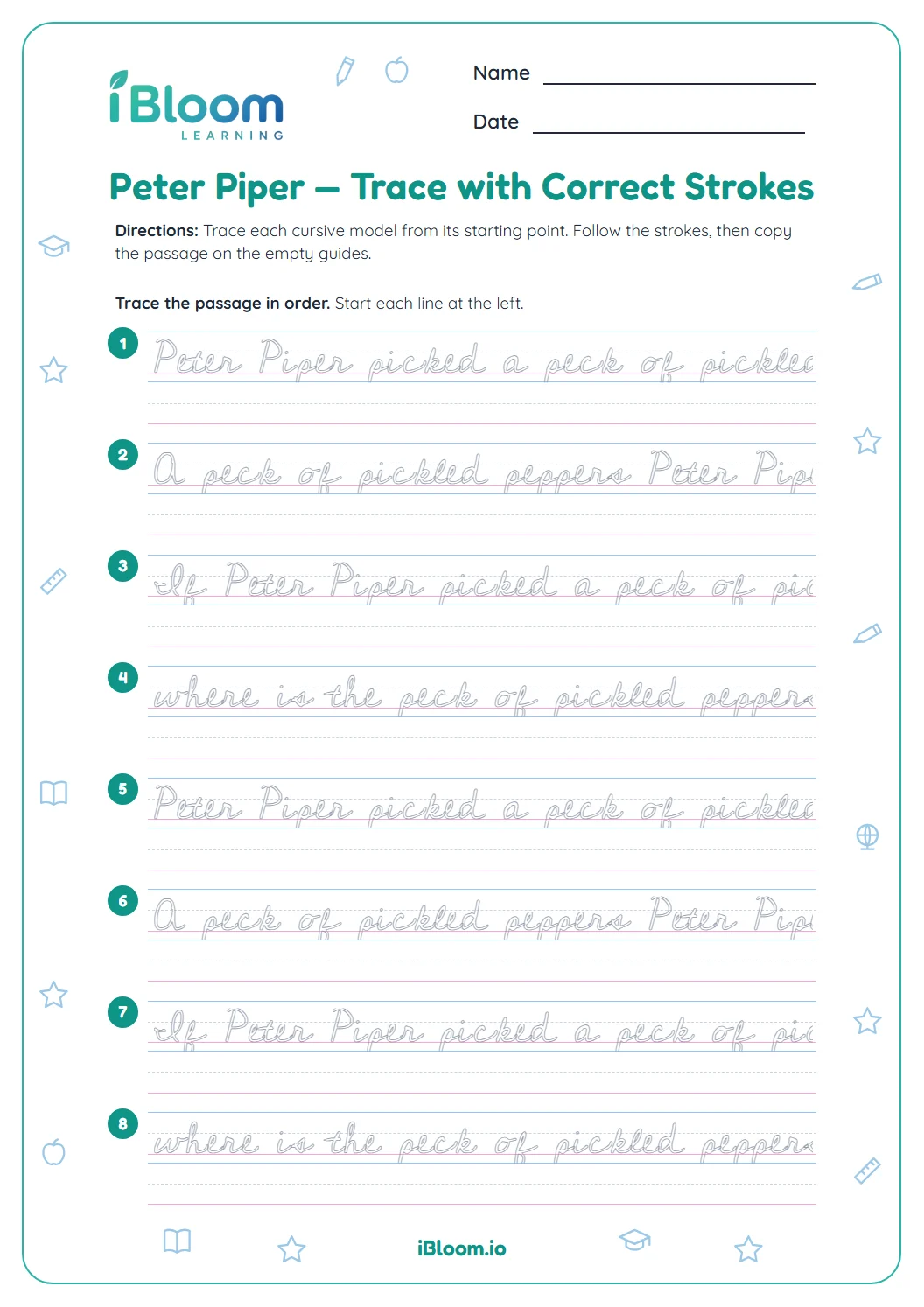
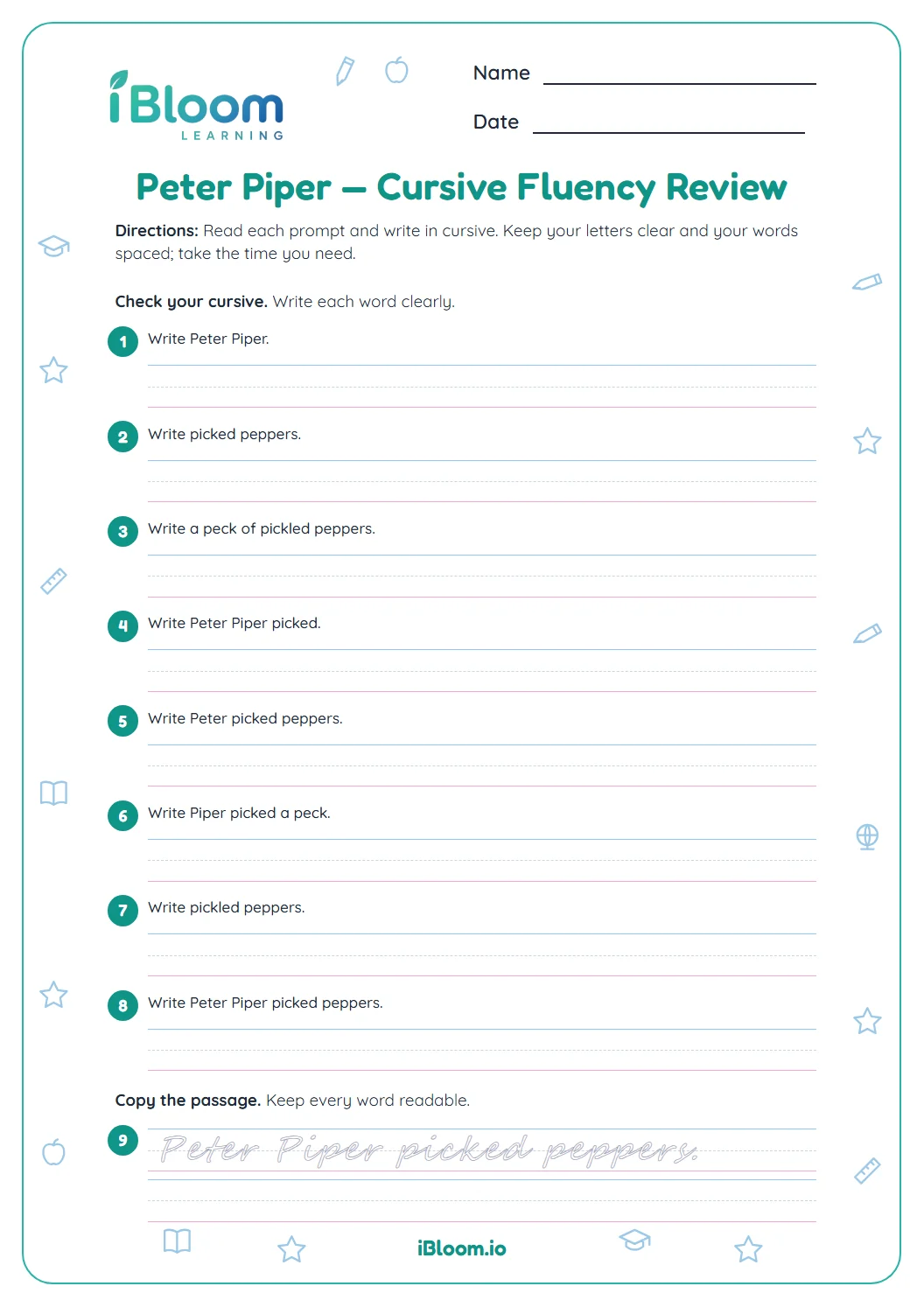
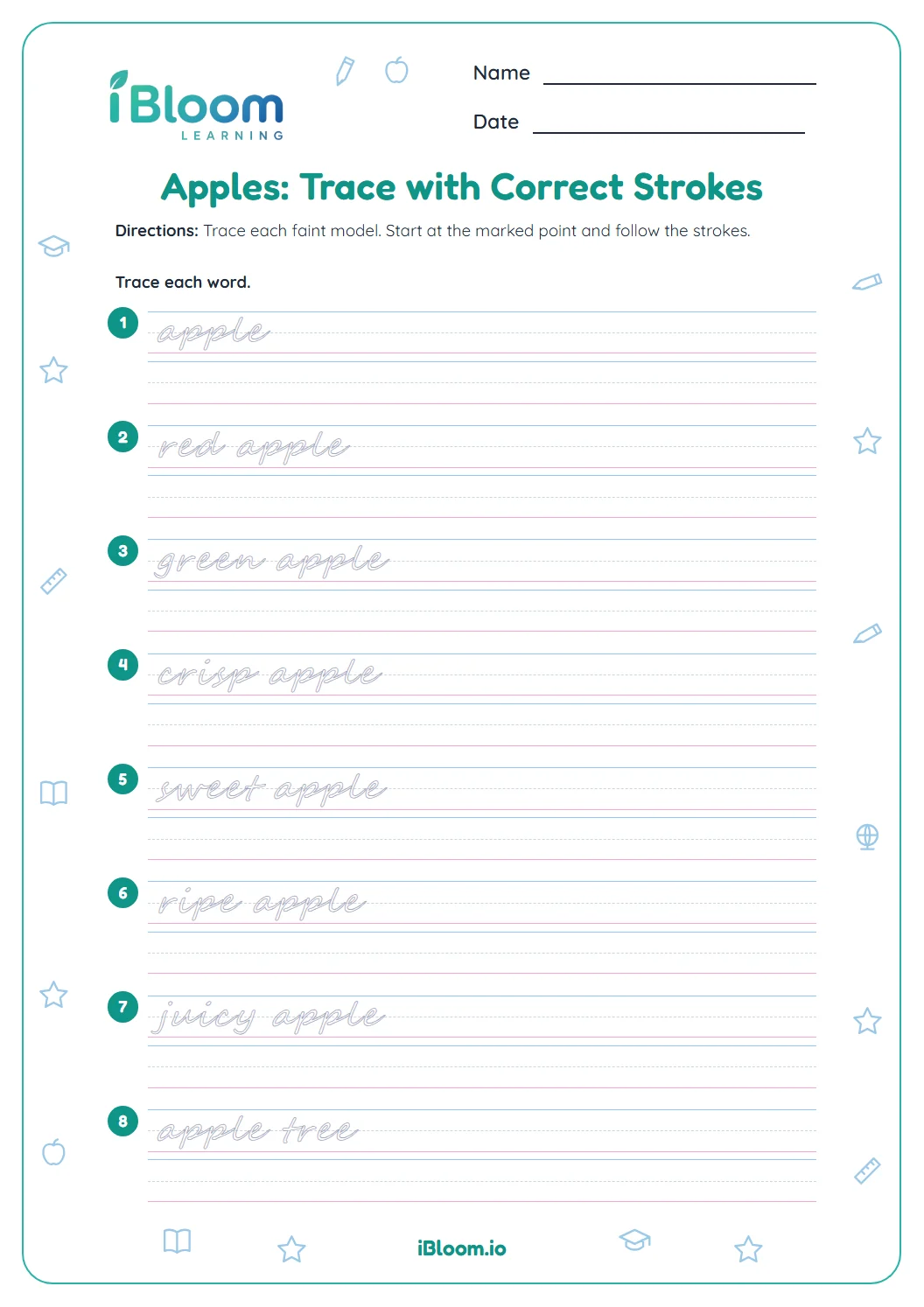
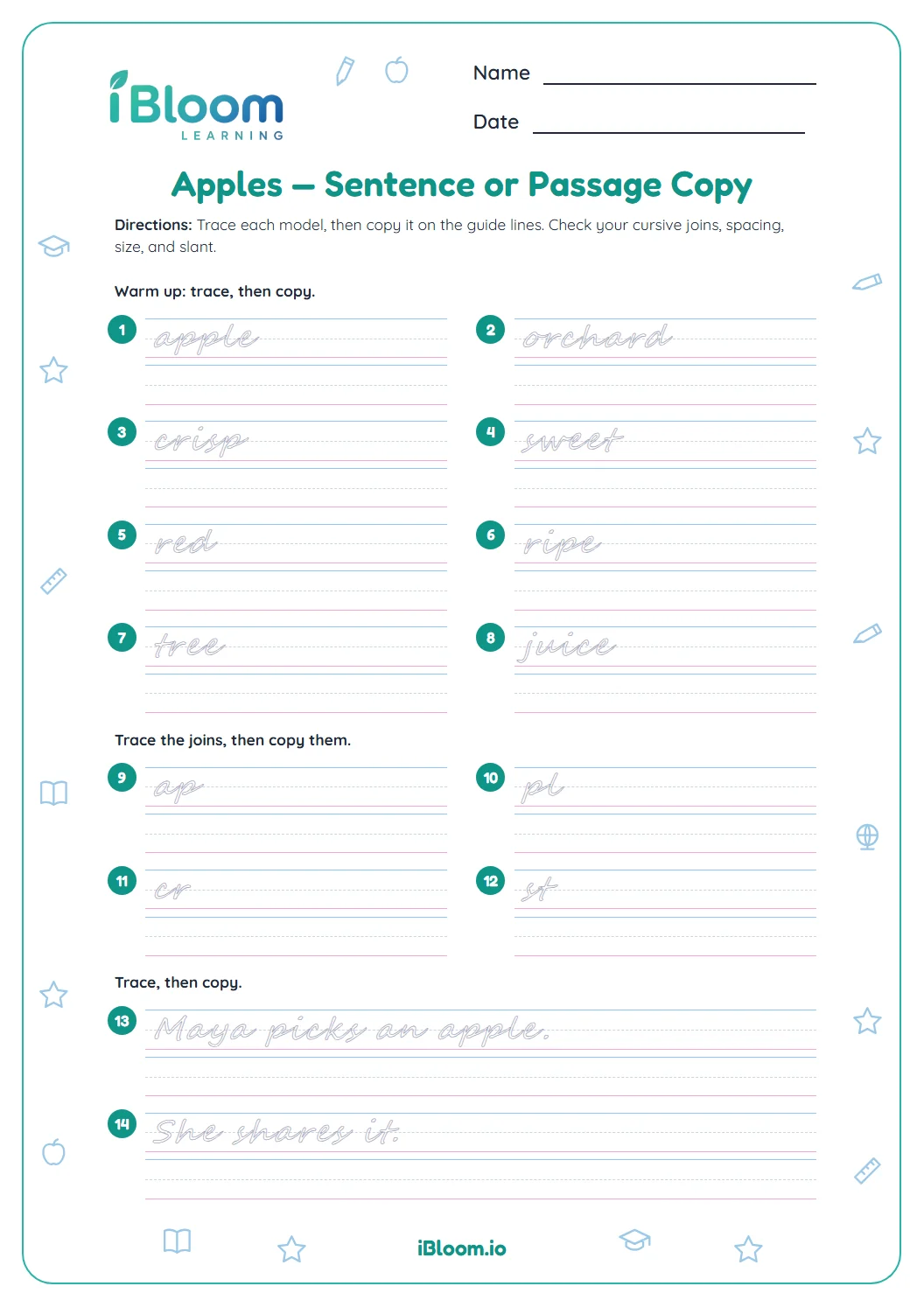
Start at the beginning of the word and follow each connected letter in the gray row. Then copy the same spelling in the empty row, keeping letters on the line and leaving a clear space before the next word.
- 1Peter → trace the gray model, then copy Peter on the empty row.
What makes cursive words easy to read?
Connected letters should keep their recognizable shapes. A smooth join helps the hand move from one letter to the next, while steady size and spacing make the whole word clear. Encourage slow, careful copying before trying to write faster.
- 1picked → keep the p, i, c, k, e and d distinct.
How can an adult check the practice?
Compare the copied word with its gray model. Check spelling first, then look for readable letter shapes, connected strokes and even spacing on the handwriting lines. The answer key confirms the target spelling.
How to use this worksheet
- 1Sit with the paper tilted slightly for the writing hand.
- 2Trace one word at a time from left to right.
- 3Copy the same spelling on the empty row.
- 4Check letter size and spacing as well as spelling.
- 5Compare the finished words with the answer key.
Common mistakes and quick fixes
The mistake
Copying the model as separate print letters.
The fix
Follow the connected cursive strokes in the model row.
The mistake
Leaving out a letter in a longer word.
The fix
Point to each model letter as you copy it, then check the whole spelling.
The mistake
Joining letters so their shapes become unclear.
The fix
Slow down and keep each letter recognizable before moving into the next join.
What to practice next
Make more practice
Questions parents and teachers ask
How many words are on the worksheet?
There are 14 cursive word items. Each item has a gray model row to trace and a blank row for copying, so children practice the same target spelling twice. The key gives the spelling for every printed word. at a steady pace.
Is the rhyme printed as a passage?
This page focuses on individual words rather than copying a full verse. It uses names and pepper words associated with Peter Piper and leaves passage copying for the companion activity. The words keep practice focused on readable cursive. Each word has its own writing row.
What should I look for in a cursive copy?
Check that the copied word has the same letters in the same order as the model. Then look for readable letter shapes, connected strokes and even spacing. Neatness grows with steady practice, so accuracy is the first check. Check each target before moving on.
Can a child use this page at different cursive levels?
Yes. A learner new to cursive can trace the model carefully. A more practiced writer can focus on consistent joins, spacing and smooth movement while still matching the printed word. The same page supports both careful tracing and independent copying.
How does the answer key help?
The key gives the exact target spelling for each item. It is useful for checking spelling; handwriting shape and flow are best reviewed by comparing the child’s writing with the gray model on the worksheet. Adults can check the letters against each printed model.