
About this worksheet
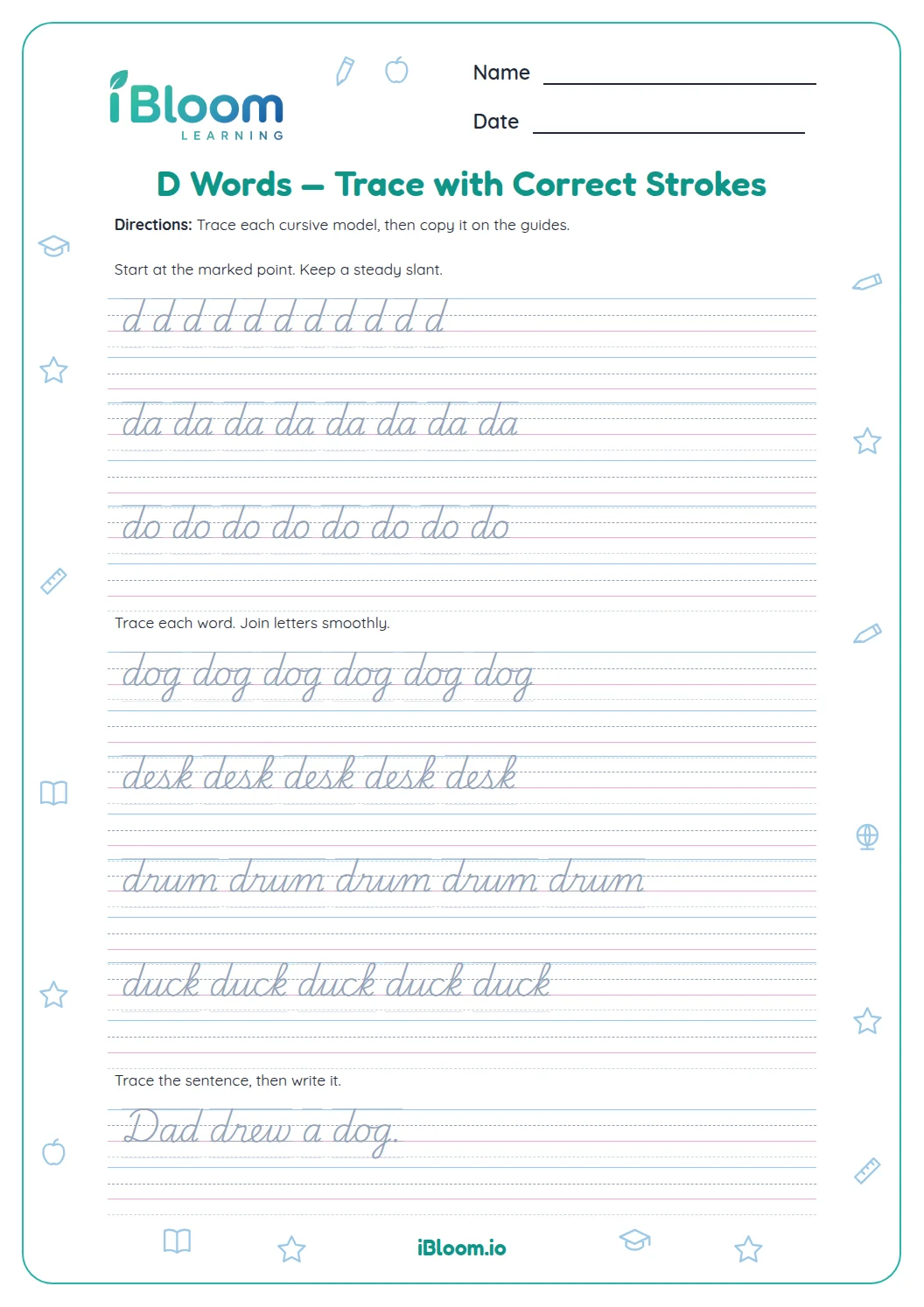
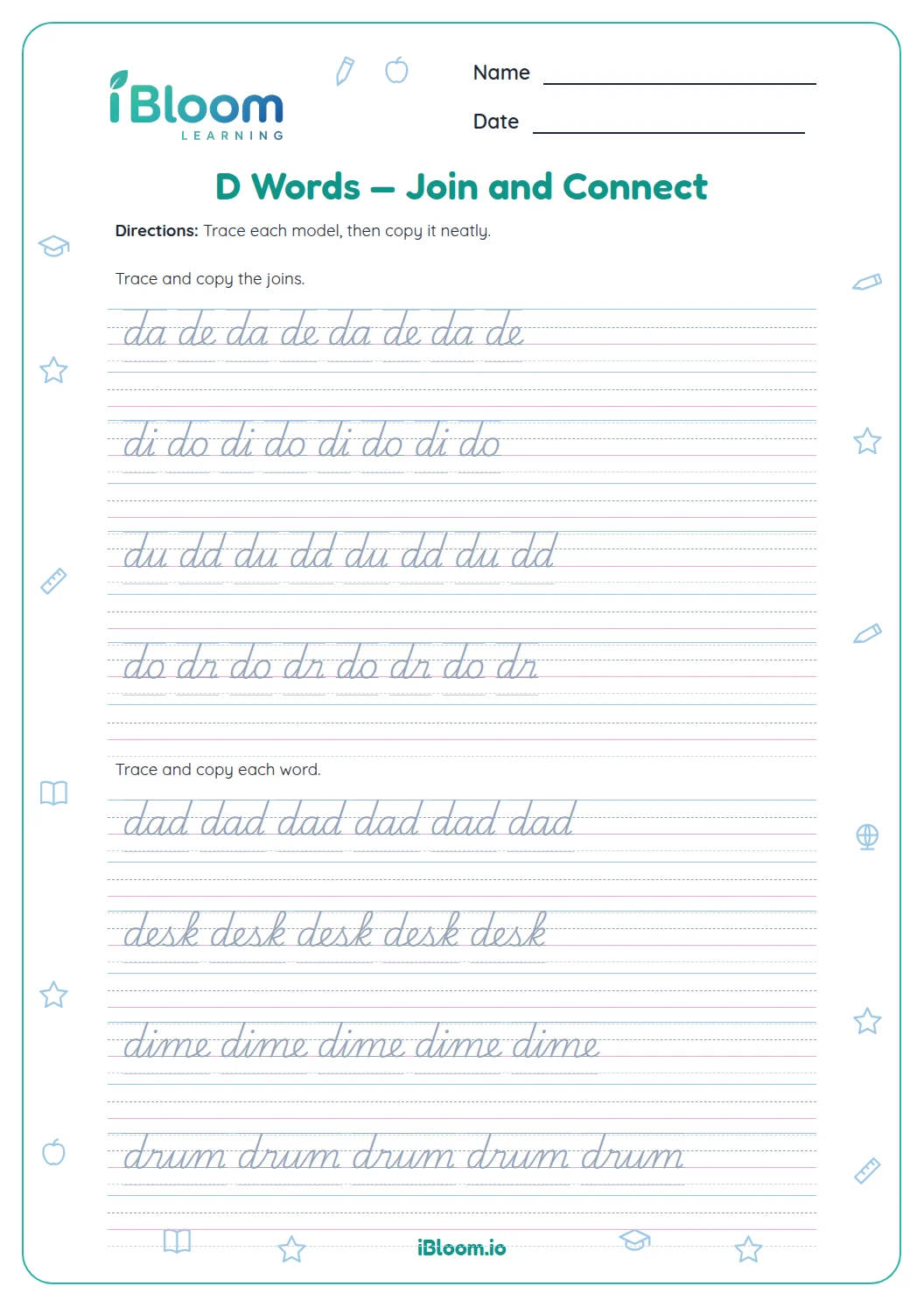
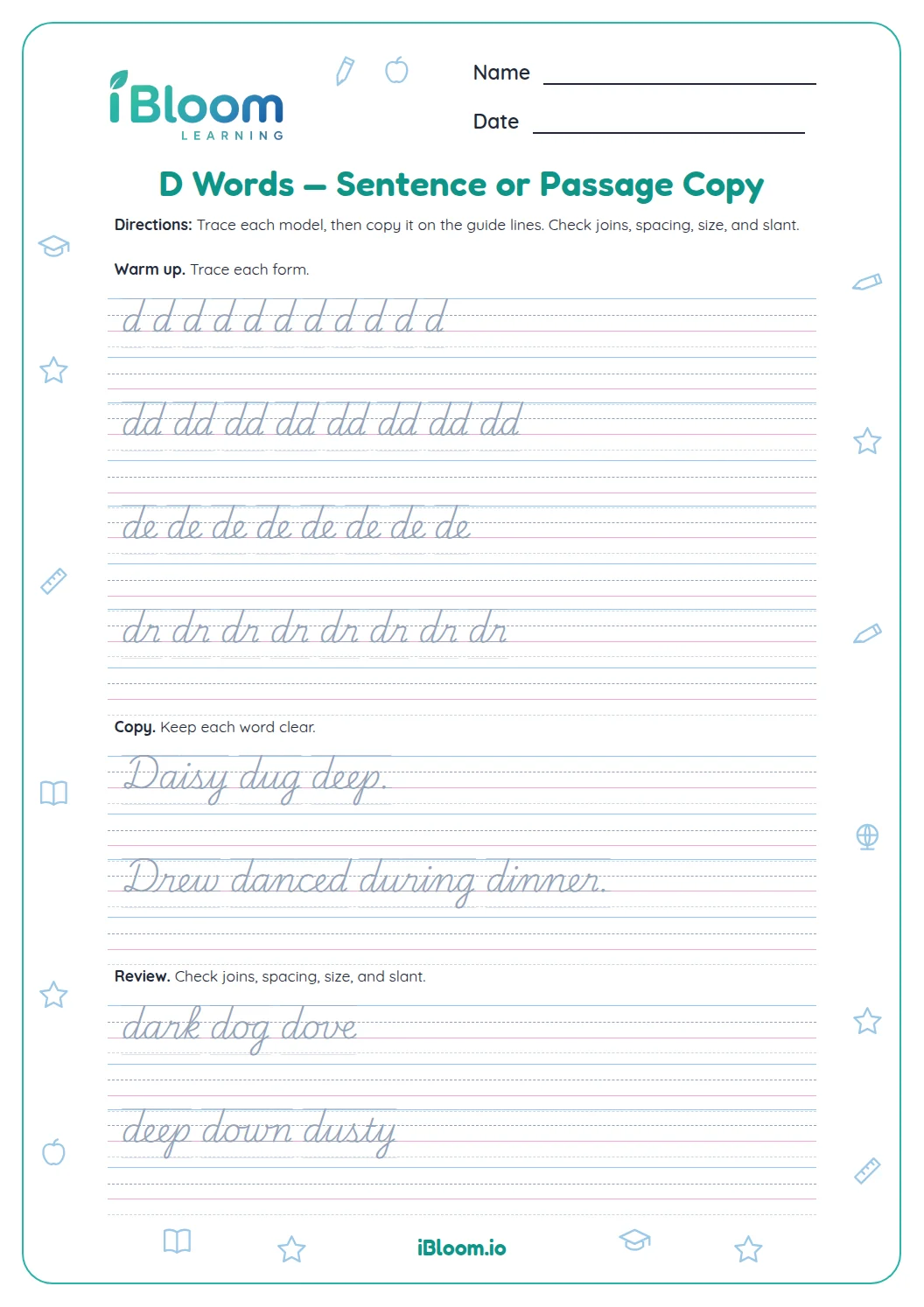
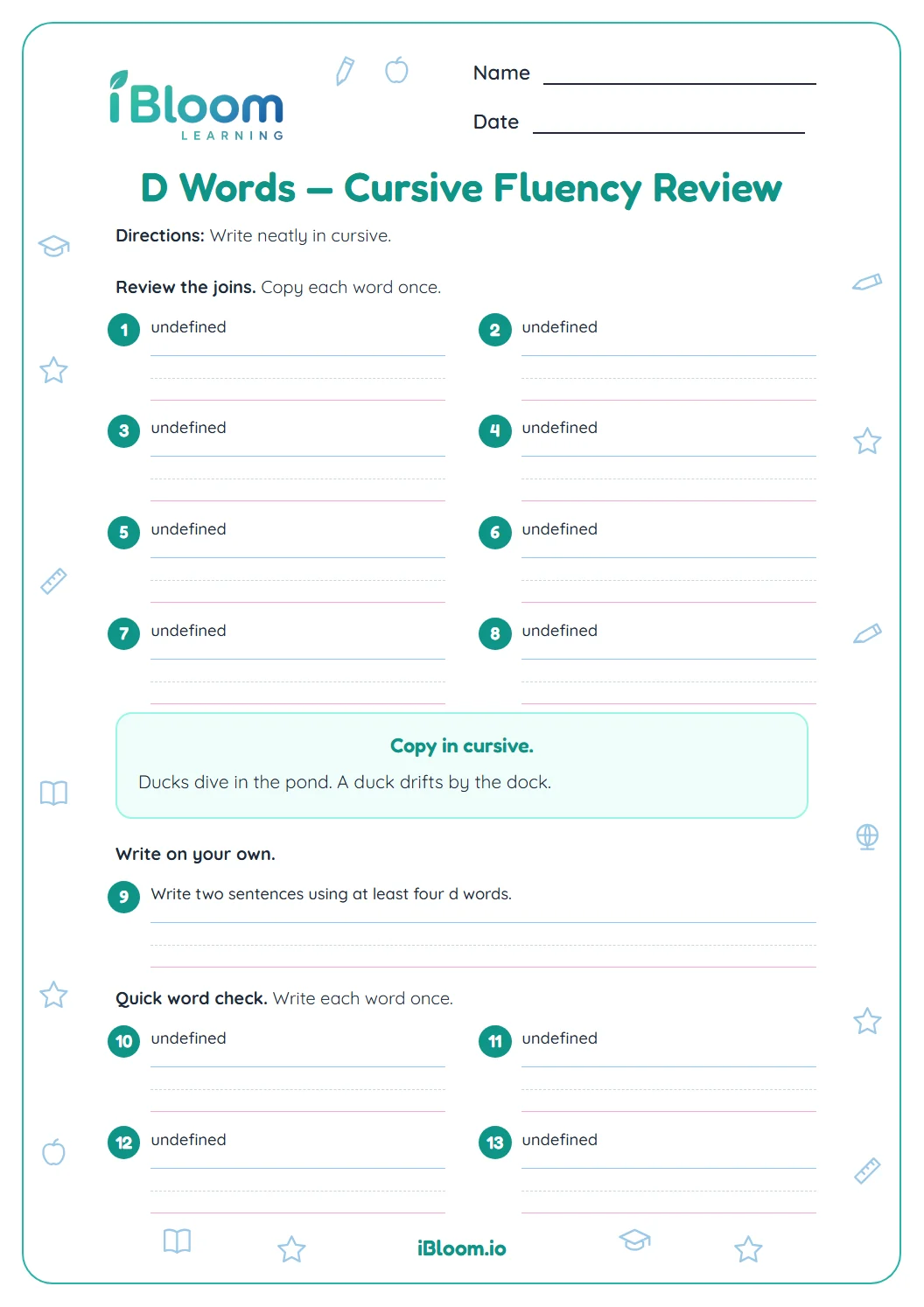
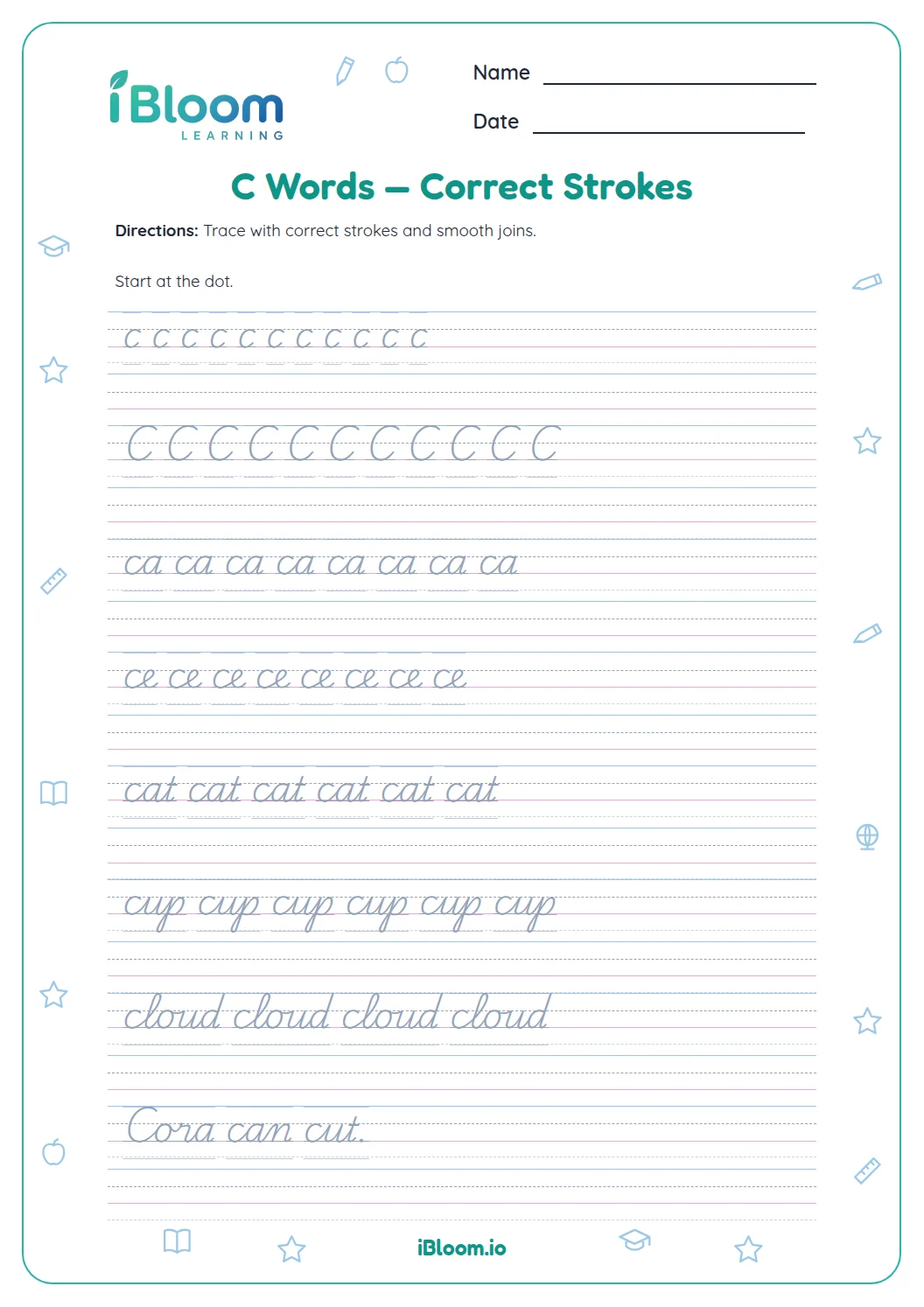
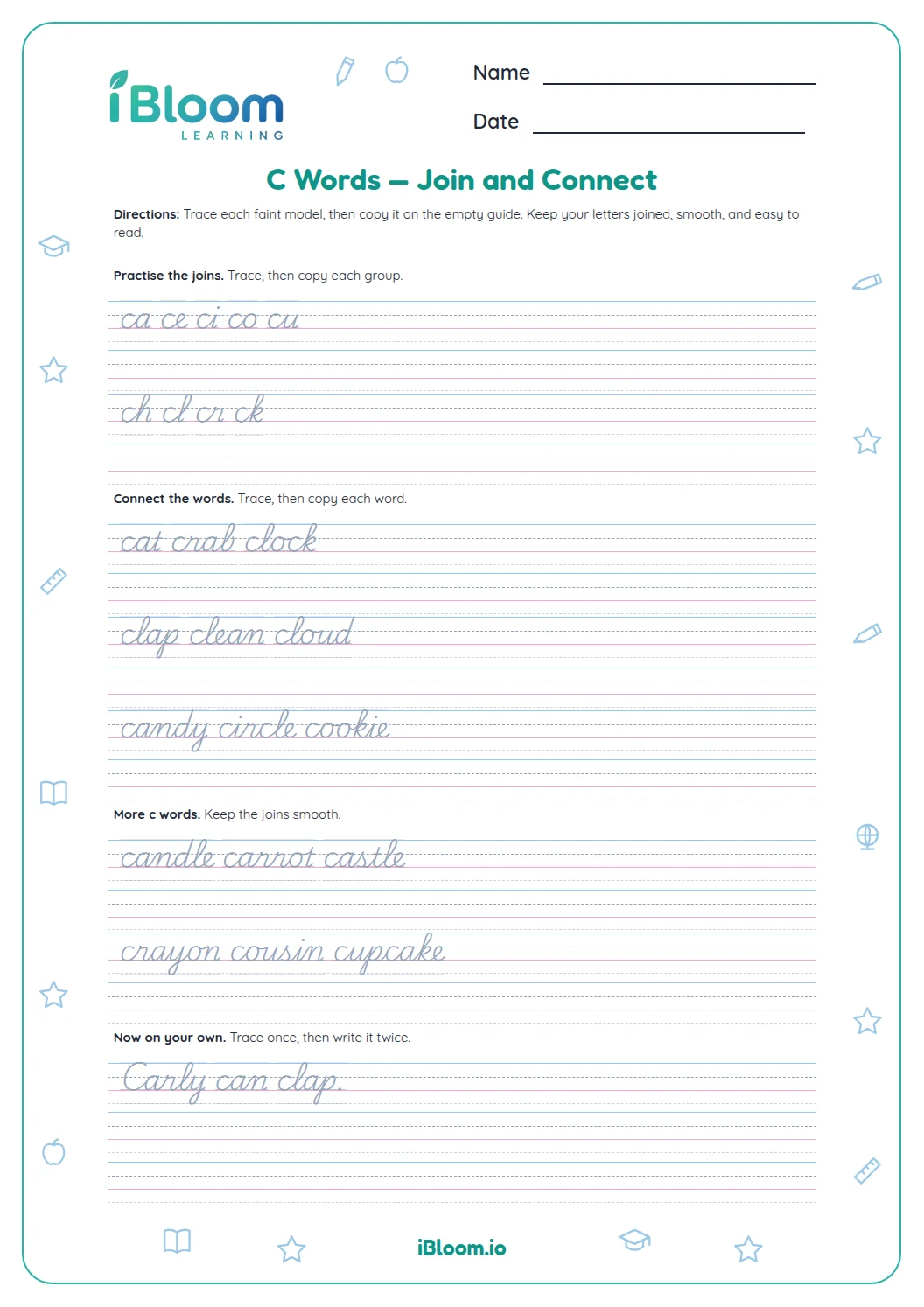
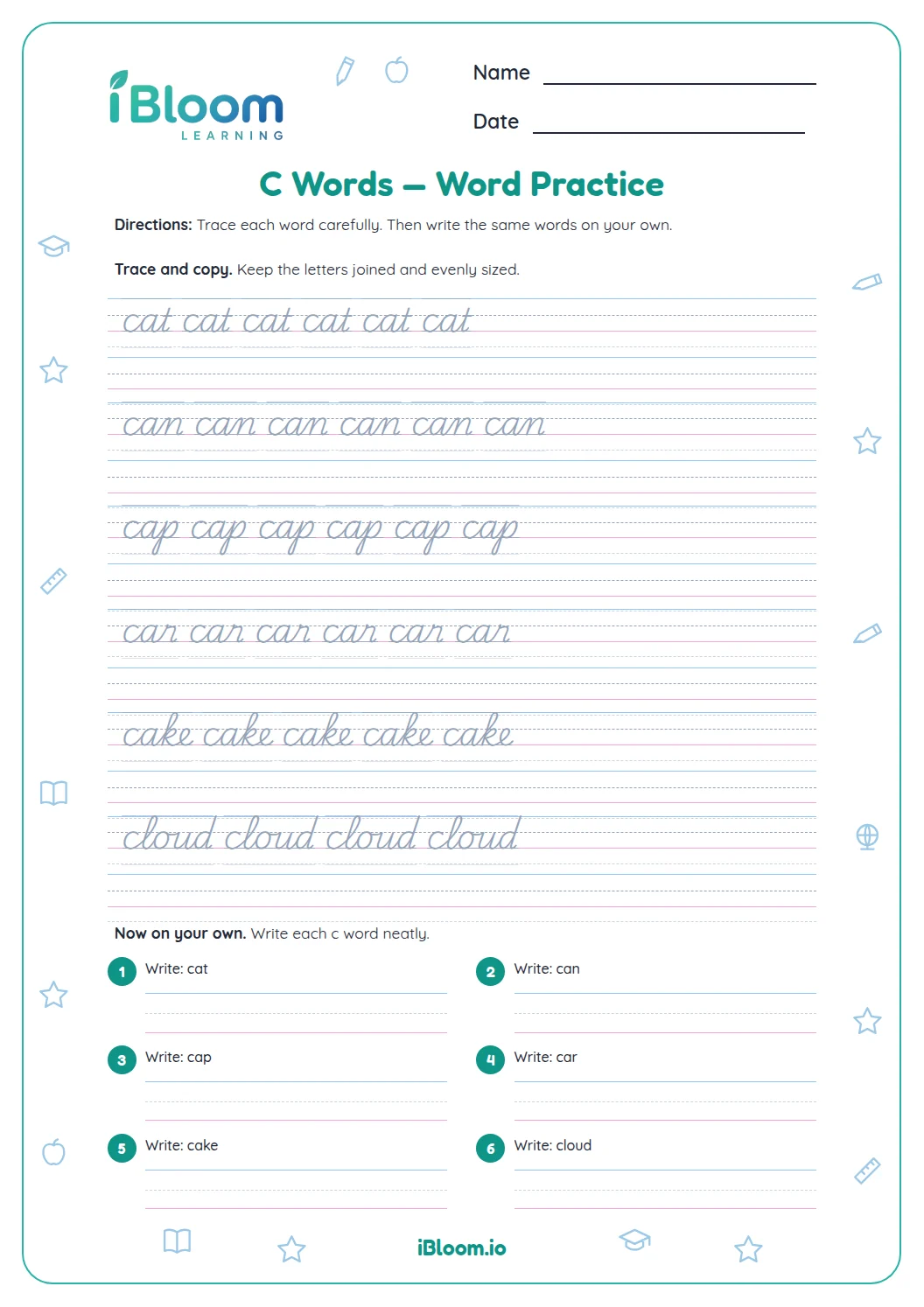
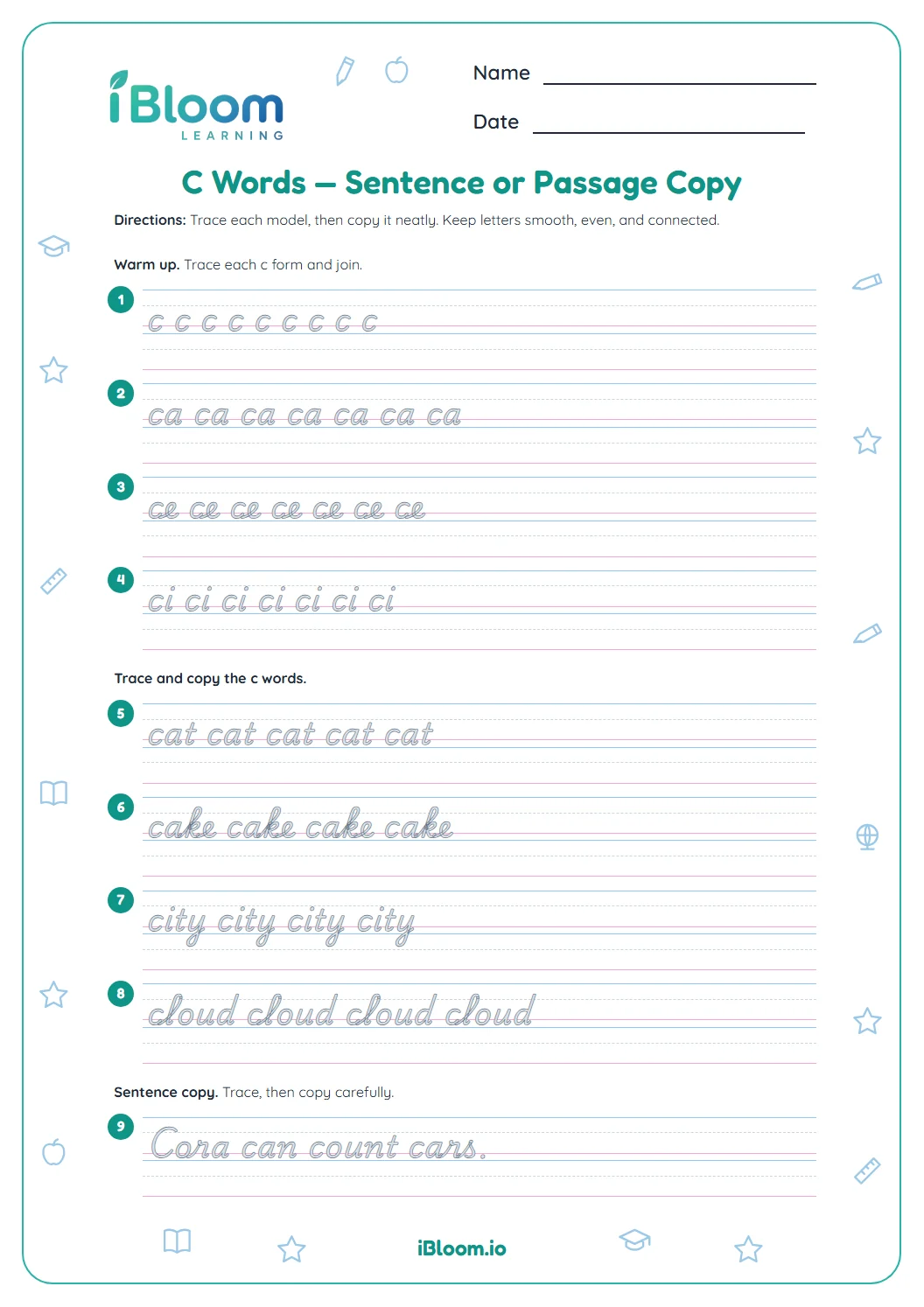
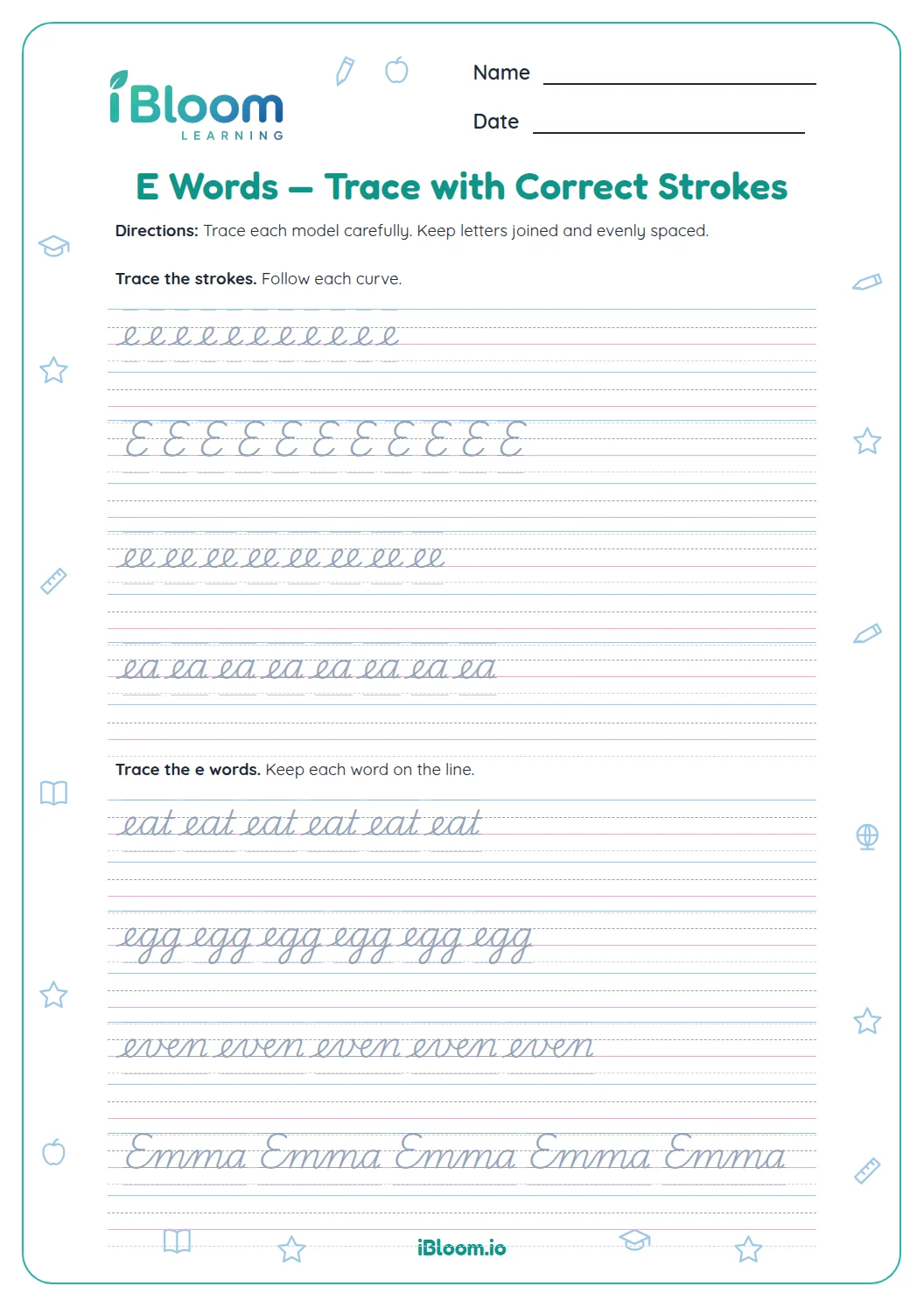
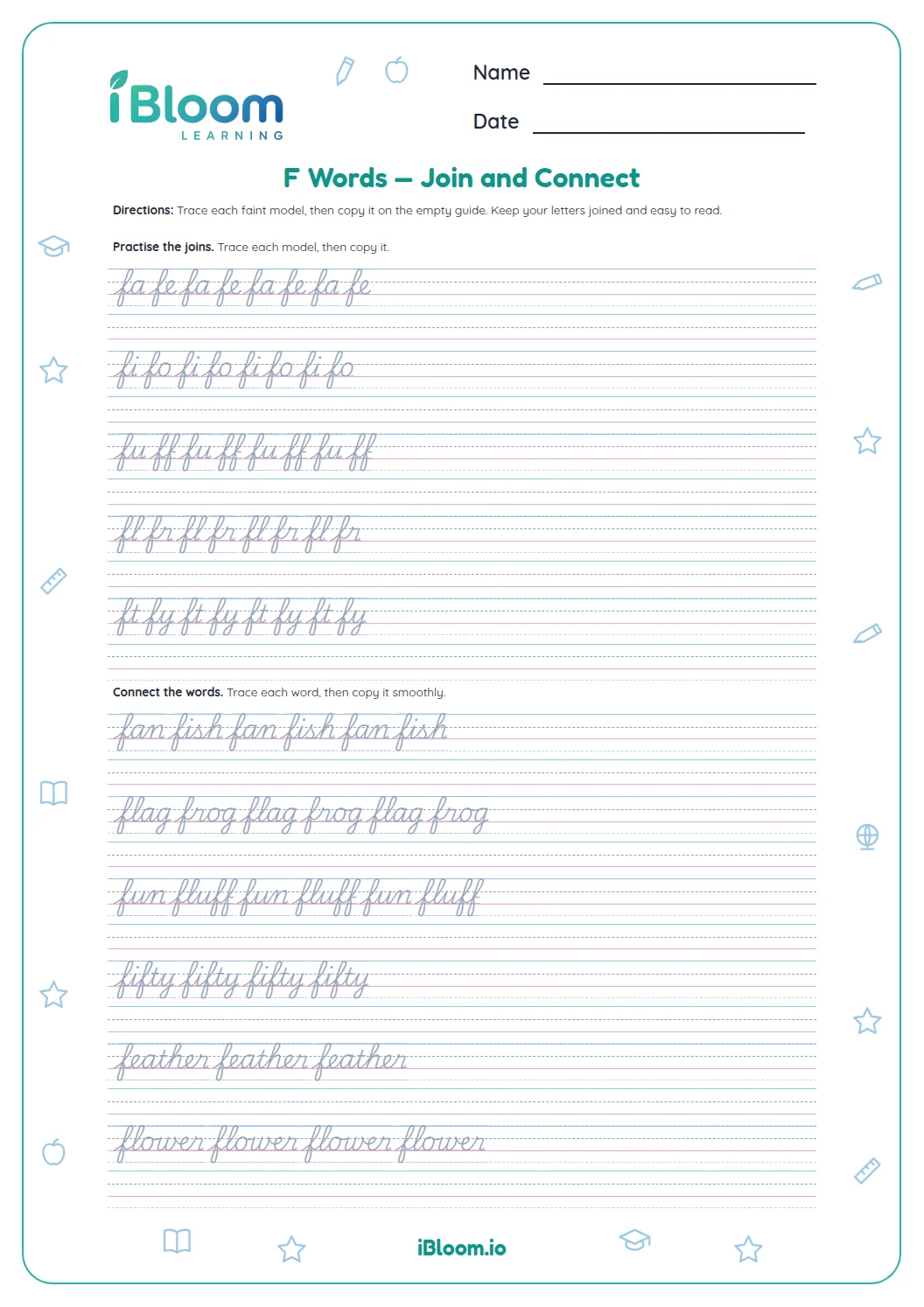
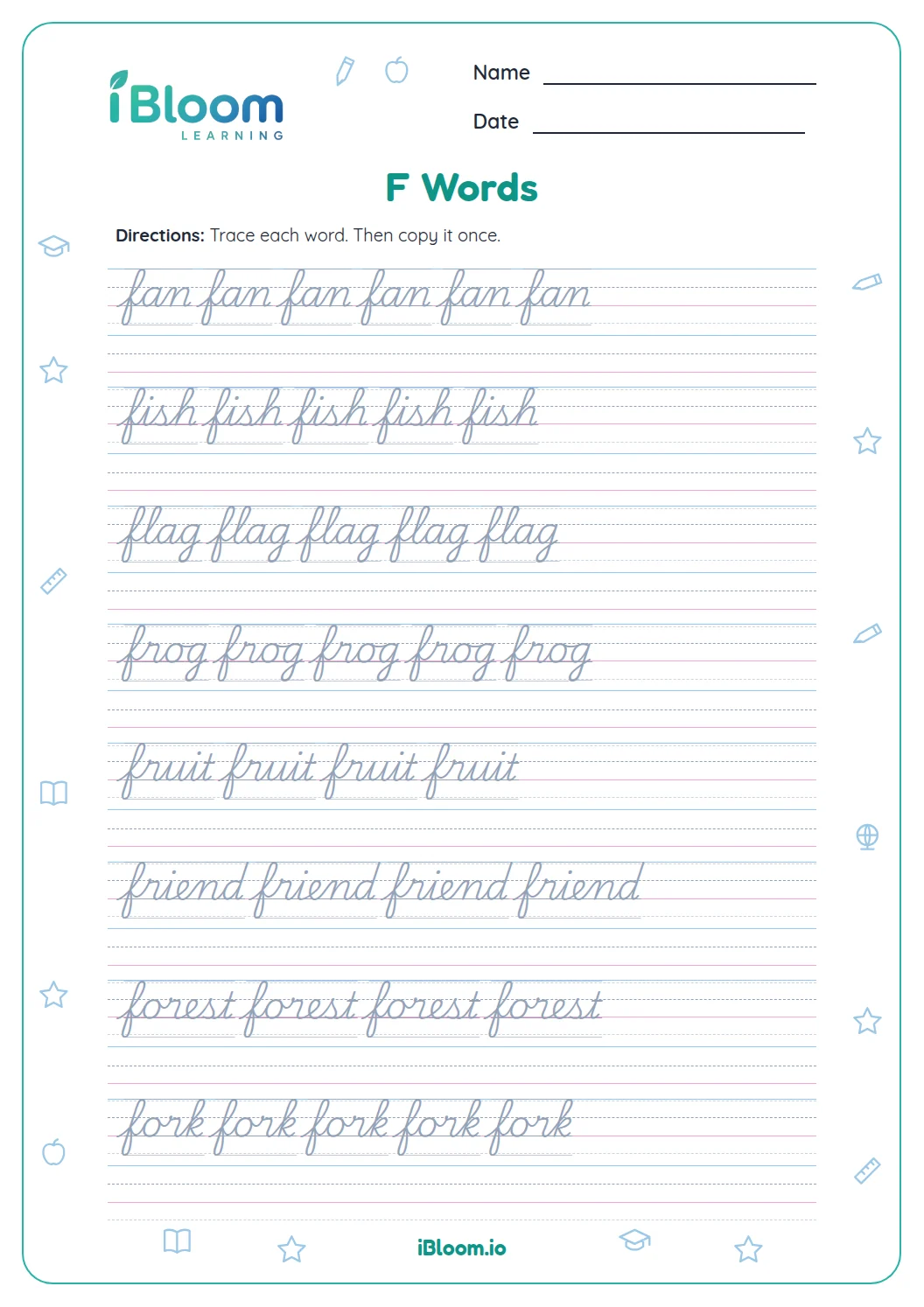
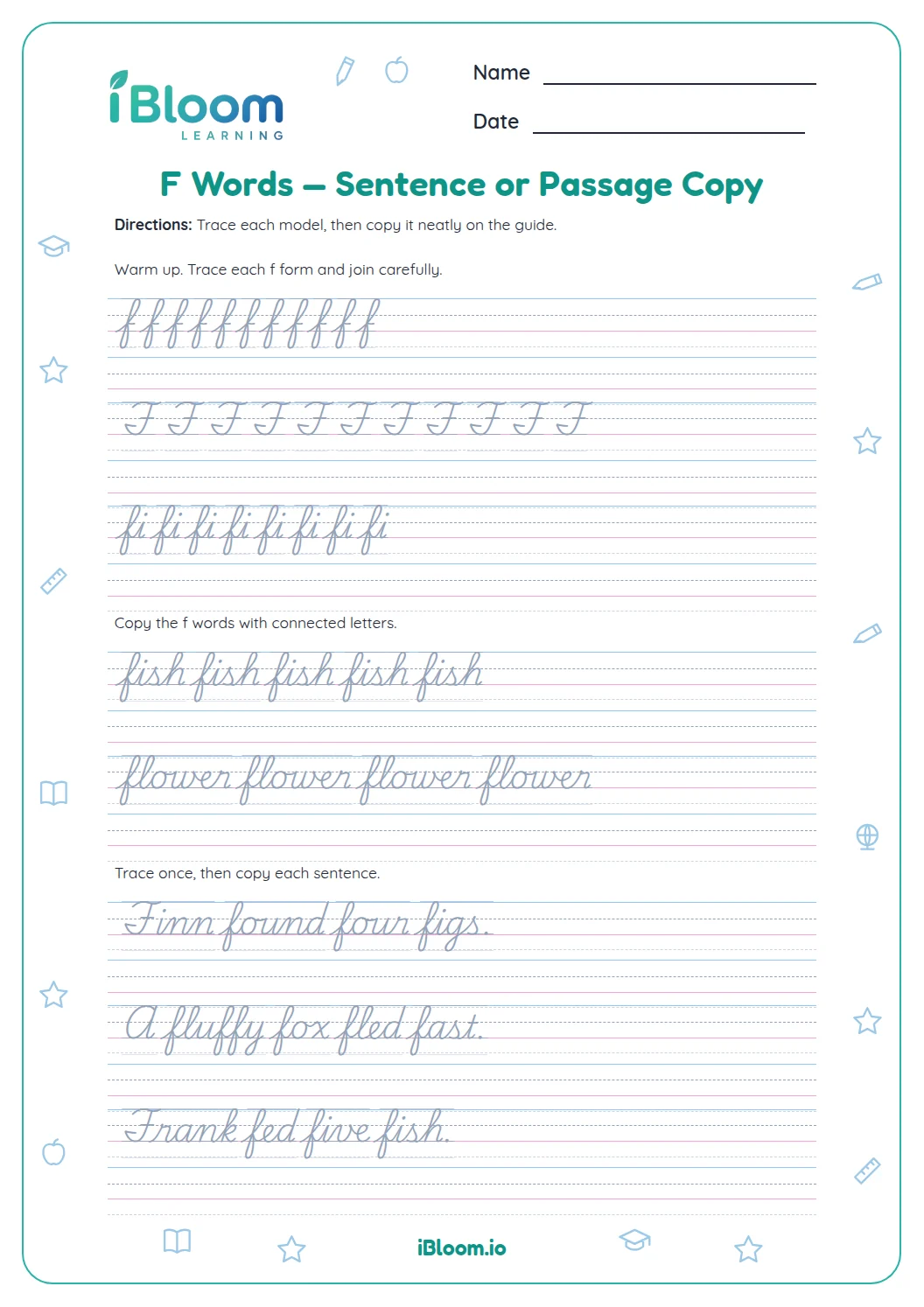
This cursive worksheet gives learners practice tracing and copying words that begin with D. It includes short words such as dog and day, longer words such as daisy and dolphin, and two short phrases. Each prompt prints a gray cursive model and an empty handwriting row for a copy. The separate key lists the target spelling for all 15 prompts.
How does the word practice progress?
The sheet begins with short words such as dog and day, then moves to longer words such as dragon and dolphin. The last prompts combine words into short phrases.
What should learners notice while tracing?
Follow the gray model from the first letter through each join. Keep letters on the handwriting lines and leave a clear space between words in the two phrase prompts.
How can learners check a copied word?
Compare the copy with the printed model, letter by letter. For example, Part A starts with dog; check the tall d and the order of o and g before moving on.
How to use this worksheet
- 1Read the word before tracing.
- 2Trace the model carefully.
- 3Notice where letters join.
- 4Copy the word on the open line.
- 5Compare the copy with the model.
Common mistakes and quick fixes
The mistake
Rushing through the joins.
The fix
Trace slowly and pause only where a letter lifts.
The mistake
Making lowercase letters too large.
The fix
Keep lowercase letters near the same height.
The mistake
Skipping the copy row.
The fix
Trace once, then write the word independently.
What to practice next
Make more practice
Questions parents and teachers ask
Which D words are included?
The list moves through dog, day, dime, doll, duck, desk, drum, dress, daisy, dinner, dragon, dolphin and David, followed by the phrases “Dear dog” and “Dance daily.” This gives practice with short and longer words. The target list also includes David, which begins with an uppercase D, and the phrase prompts include spaces.
How should a child use each model?
Trace the gray cursive model carefully on the handwriting row, then write the same word on the open row. Following the printed letter sequence helps the child preserve spelling while practicing joins. Each prompt includes both a trace model and an independent copy row, so complete both steps before continuing.
Why does the page include longer words?
Short words let learners focus on a few letters at a time. Longer words bring more joins together, and the final phrases add practice leaving spaces between words. Gradual length changes the focus from a few joins at a time to maintaining readable forms across more letters.
What should a child check after copying?
Compare the copy with the model for recognizable letters, correct spelling, consistent letter size and readable spacing. Cursive handwriting can vary, so the goal is a clear copy rather than identical pen strokes. Compare letters in sequence and check for clear spacing; the model gives a spelling reference beside the writing.
What does the answer key show?
The key lists each target word or phrase in order. An adult can use it to check that the learner copied the intended text; handwriting itself may vary. The key is for spelling and target text, while an adult can judge legibility and spacing in the handwritten copy.