

About this worksheet
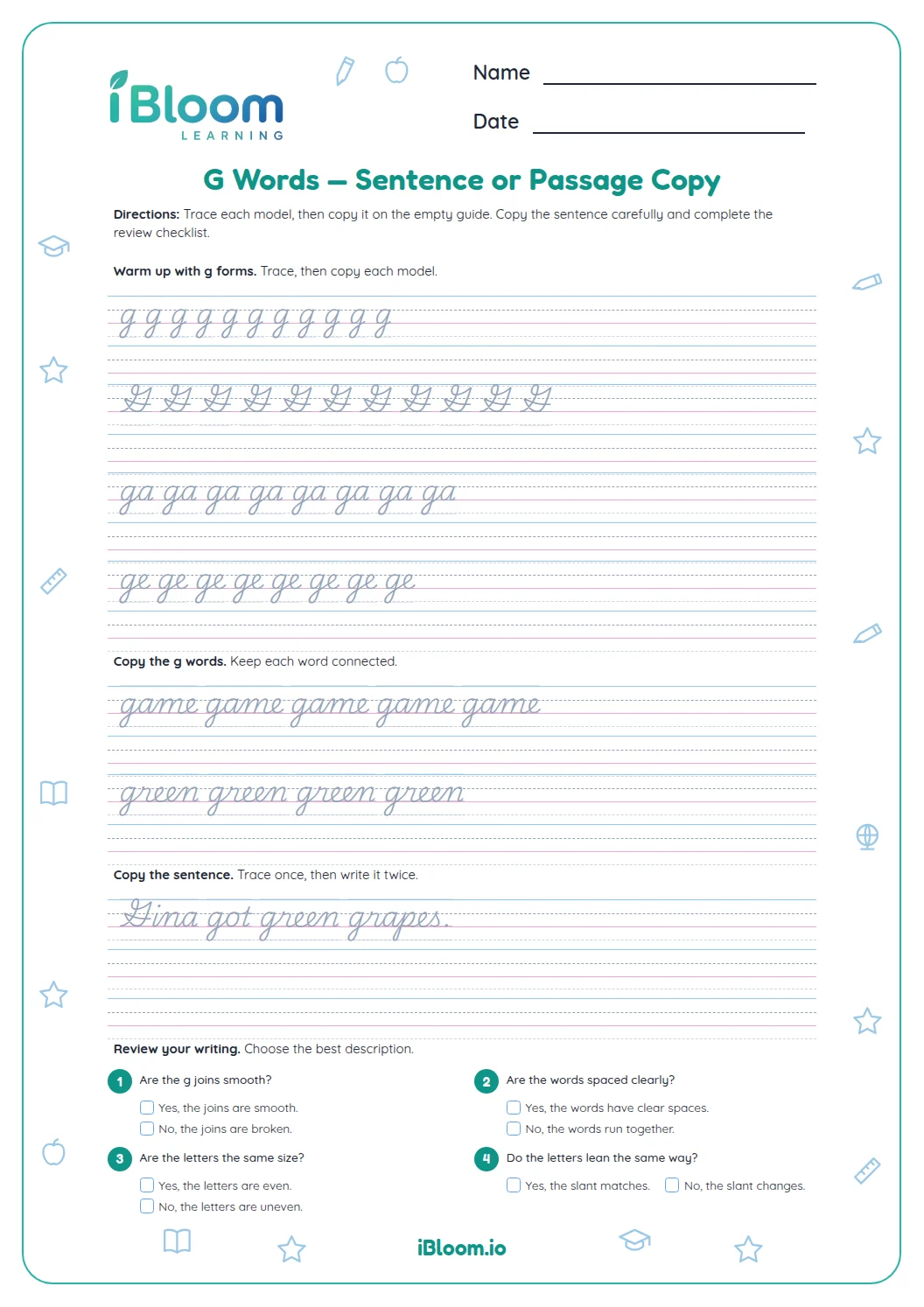
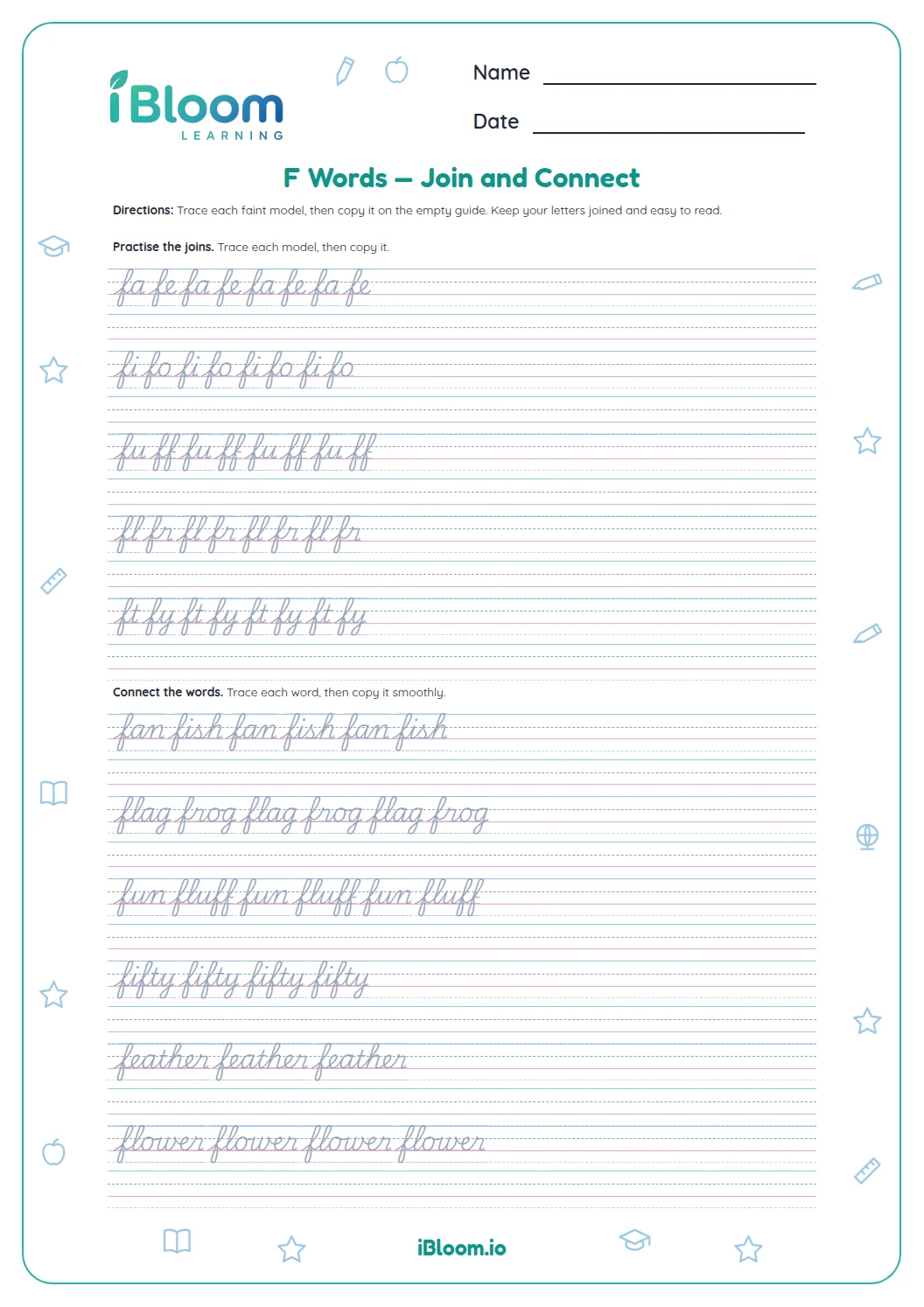
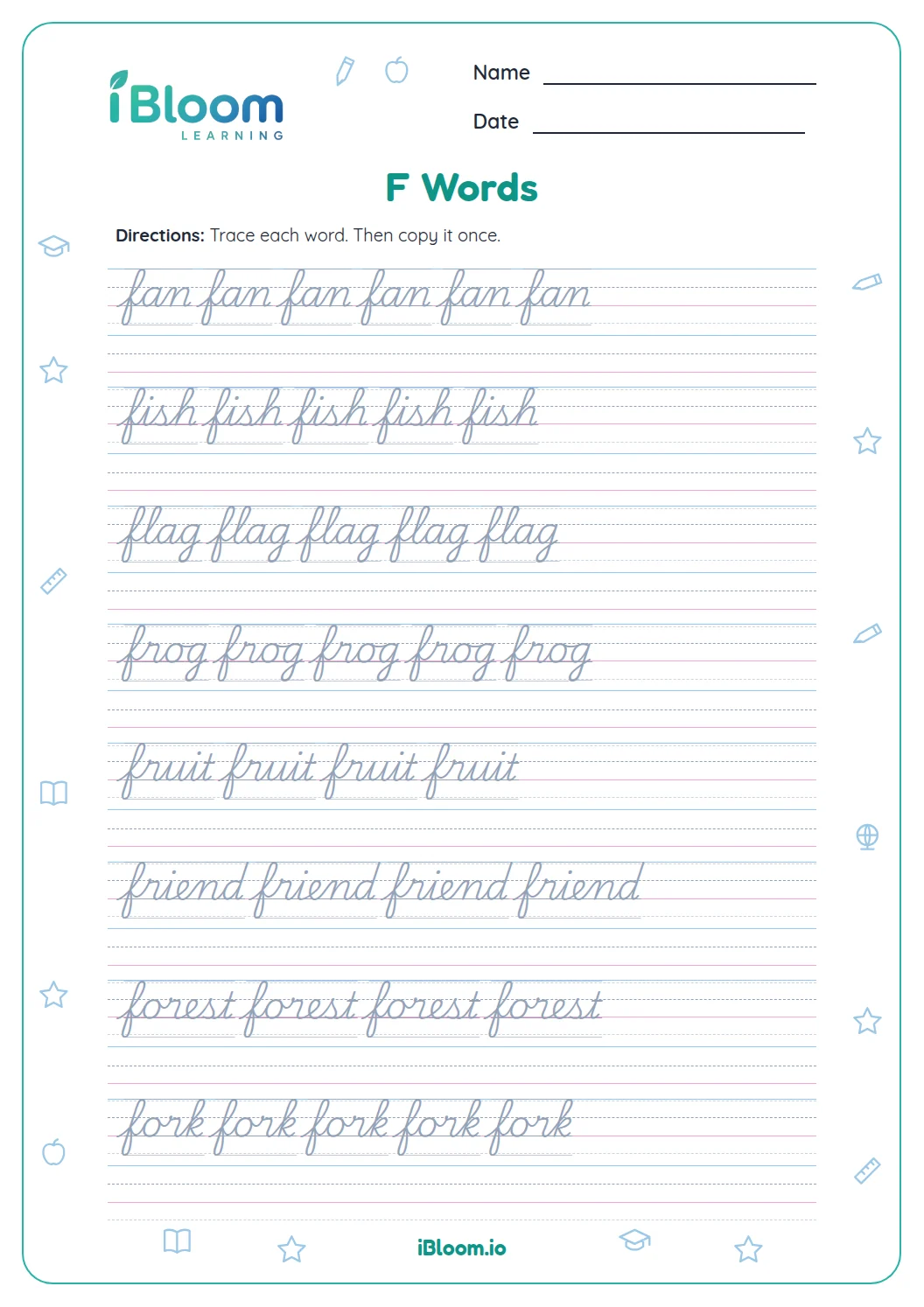
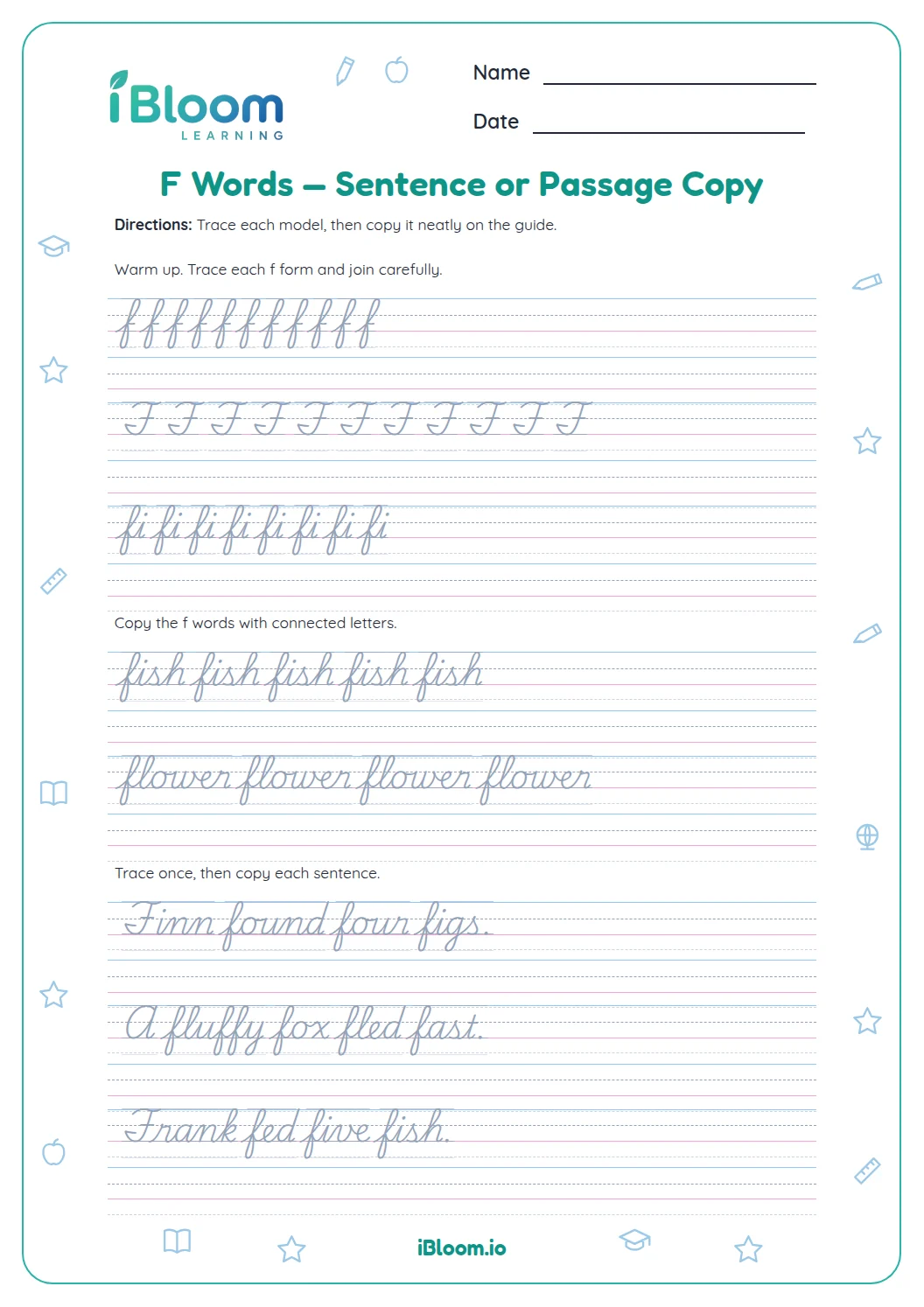
This cursive handwriting worksheet gives students 20 complete words that begin with G. Children copy short words first, then move to longer words such as “greenhouse.” Each prompt calls for cursive writing, so the practice stays focused on joining and connecting letters in real words. The answer key lists the target word for each line as a copy guide; handwriting forms can vary.
How do you begin a cursive word smoothly?
Start with a controlled entry stroke, form the first letter clearly, and continue into the next letter without lifting the pencil when the join allows it.
What should you check between letters?
Look at each connection in the word rather than making the whole word fast. Keep letters recognizable and use even spacing.
- 1Target word: garden
- 2Copy all six letters as one cursive word.
- 3Check that the a-r and d-e connections are clear.
How can you keep longer G words readable?
Write at a steady pace and leave a small space between words. Reread the printed target if a connection makes a letter hard to recognize.
How to use this worksheet
- 1Sit with the paper turned slightly toward your writing hand.
- 2Trace the printed word with your eyes before writing.
- 3Copy the whole word on the line using connected cursive letters.
- 4Keep tall and short letters at consistent heights.
- 5Compare the result with the target spelling, then try one careful rewrite.
Common mistakes and quick fixes
The mistake
Writing separate print letters instead of cursive.
The fix
Practice a slow connecting stroke between lowercase letters.
The mistake
Rushing until letters run together.
The fix
Slow down and leave clear spaces between complete words.
The mistake
Changing the target spelling while focusing on the joins.
The fix
Check every letter against the printed word before moving on.
What to practice next
Make more practice
Questions parents and teachers ask
How many words are on this page?
The sheet has 20 G words to copy. It begins with shorter words such as “glad” and includes longer words such as “greenhouse,” giving students a range of word lengths to practice at a careful pace. Students can repeat a word once if they want extra practice with a tricky join.
Does the worksheet show cursive letters to trace?
The activities ask students to copy complete words in cursive on handwriting lines. The key repeats each target word so an adult can check spelling while the child forms the letters independently and uses a familiar cursive model. The child writes the target word rather than tracing a printed cursive model.
What does “join and connect” mean here?
Students practice moving smoothly from one lowercase cursive letter into the next while keeping each letter recognizable. They also leave a small space between complete words so the writing remains easy to read and compare. The focus is on steady letter connections and readable word spacing.
Can the key show one exact handwriting form?
No single handwritten form is required. The answer key shows the printed target spelling; students can use their classroom cursive model to check letter shapes, joins, spacing, and readable formation as they compare. Compare the spelling first, then look at the handwritten letter forms.
How long should practice take?
About 15 minutes is a reasonable starting point for 20 copy prompts. Students can pause to form a difficult connection carefully, then review the printed target spelling before moving on to the next word. Consistent short practice leaves time to focus on each letter connection.