
About this worksheet
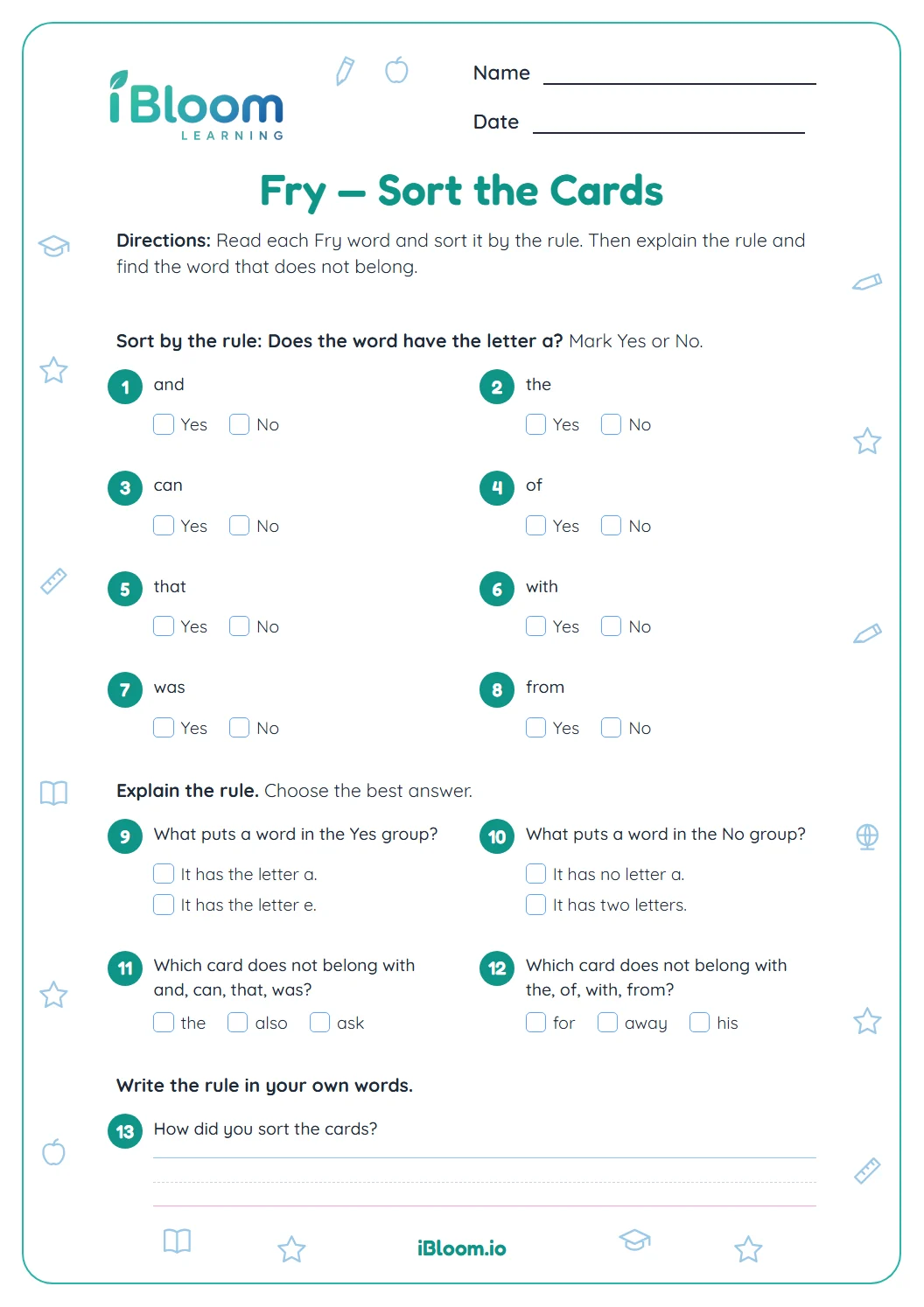
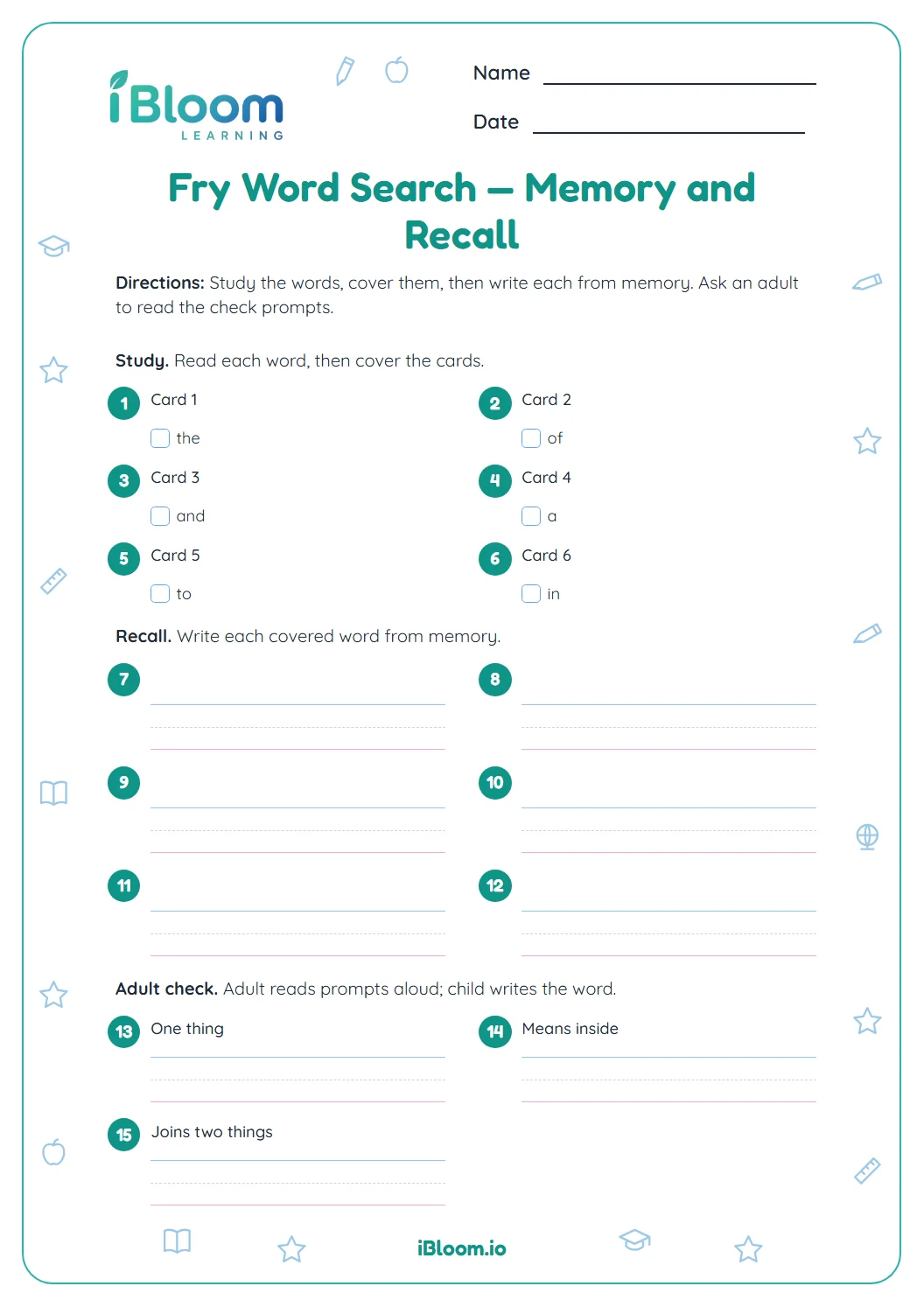
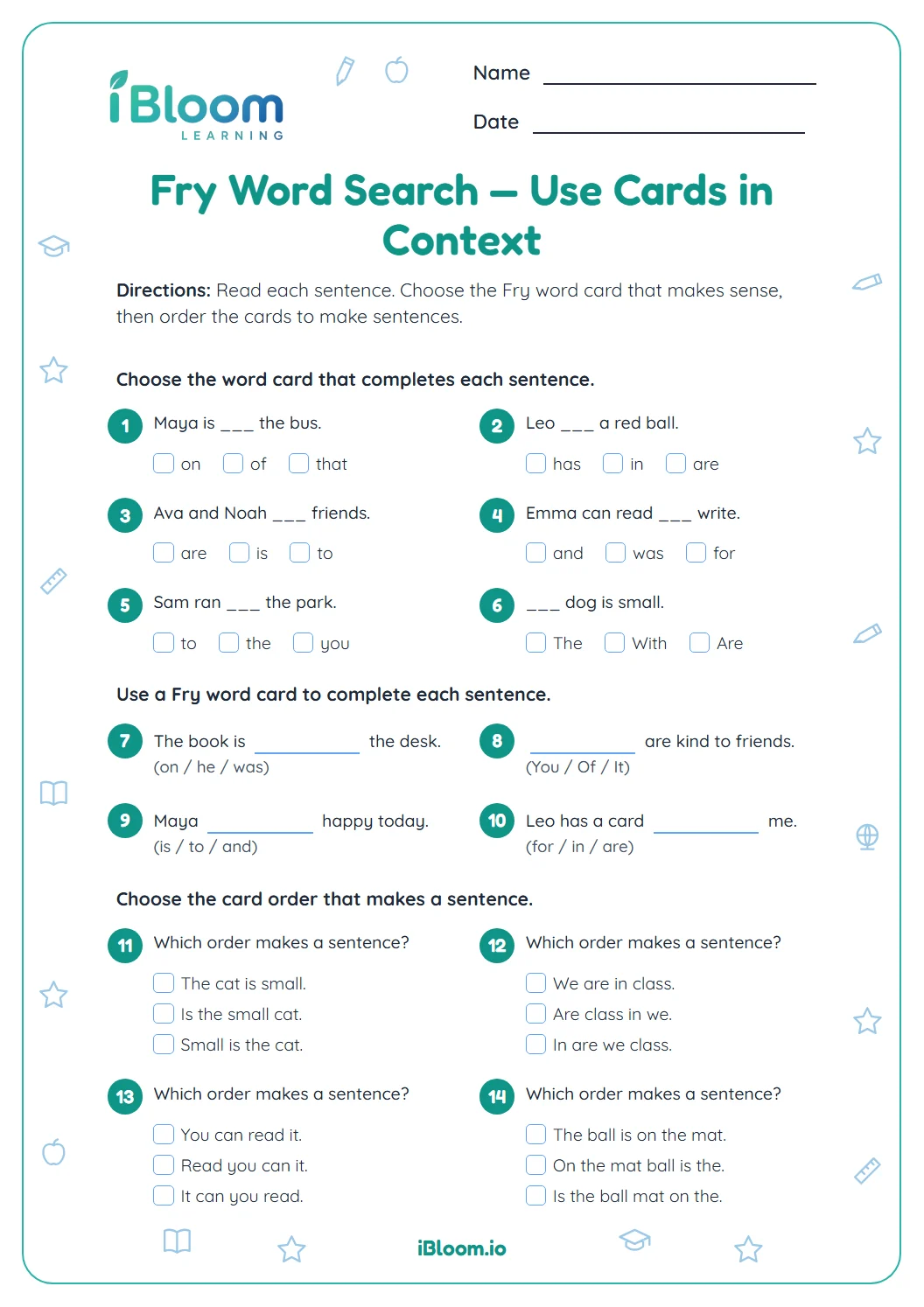
This printable Fry word recall worksheet is for learners in Kindergarten through Grade 3 who are practicing familiar high-frequency words. Meaning and sentence clues prompt learners to recall spellings without showing the target in the question. Later items use short context clues and original sentences. The 16 prompts appear in three parts, with a separate key for checking words and sample responses.
How does clue-based recall work?
Read each clue, recall the target Fry word, and write it from memory. Sentence blanks and new-sentence prompts give more chances to retrieve familiar words without printing the target in the question.
- 1Clue: the bright star that gives Earth daylight
- 2Recall the word from memory
- 3Check the spelling with the answer key
How can a sentence help recall a word?
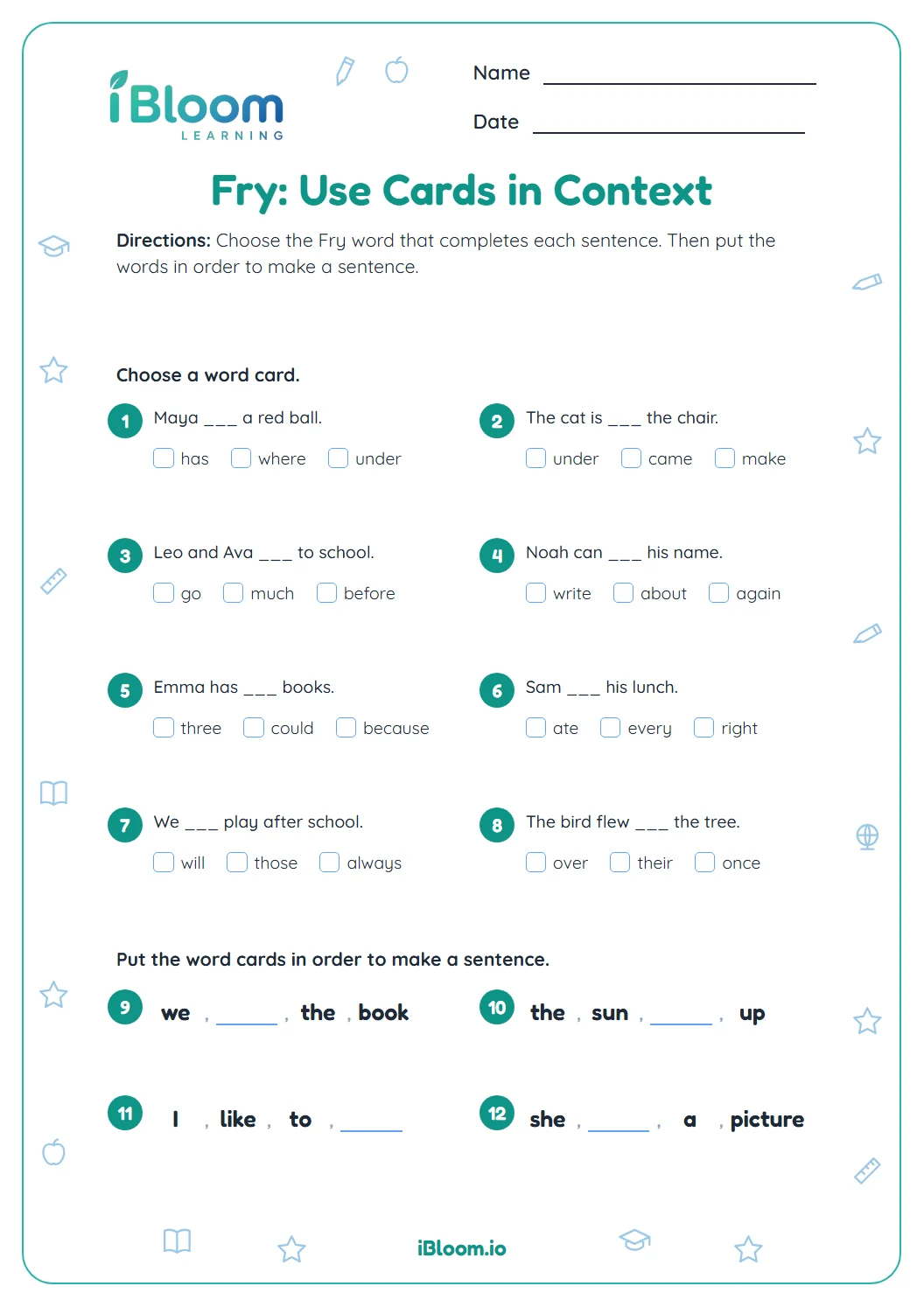
A sentence gives meaning clues. In “The dog ran ___ the gate,” the missing word is “to.” Read the whole sentence aloud after filling the blank so the target word is heard and understood in context.
Why write a new sentence?
Using a target word in a sentence helps move beyond copying its shape. A response can be different from the sample as long as it uses the named word correctly.
- Part A: look, cover, and recall six words.
- Part B: fill a word into a simple context sentence.
- Part C: make original sentences using a target word.
How to use this worksheet
- 1Choose a quiet moment and keep the answer key out of sight.
- 2Invite the learner to study one target word for a few seconds.
- 3Cover the model and let the learner write what they remember.
- 4Compare letters together, then invite a second attempt if needed.
- 5Read the context sentence or new sentence aloud to connect print with meaning.
Common mistakes and quick fixes
The mistake
Guess from the first letter without checking the rest.
The fix
Compare every letter with the model after writing.
The mistake
Copying while the word is still visible during recall.
The fix
Cover the model for the first try, then uncover it to check.
The mistake
Treating a missed spelling as a failure.
The fix
Use the model to notice one letter, then try the word again later.
What to practice next
Make more practice
Questions parents and teachers ask
What is a Fry word?
The sheet practices 16 Fry words, including sun, the, and, to, you, and said, among others. Clues prompt learners to recall words, complete sentences, or use a word in a new sentence. A separate answer key gives target words and sample responses.
How should I use the cover-and-write activity?
Have the learner look carefully at one word, cover it with a card or hand, and write what they remember. Uncover the model afterward to compare letters. If the spelling differs, look again briefly and try the same word later.
Does this worksheet test reading speed?
No timer is needed. The focus is remembering a familiar word and writing its letters in order. Give the learner time to think, then uncover the model and compare spellings. A second try after a short pause gives another chance to retrieve the same word.
What should I do if a word is misspelled?
Point to the model word and compare it with the written attempt, one letter at a time. Say the word, notice the first and last letters, then cover it and try again. Keep the correction calm and let the learner make the next attempt.
How can I make the sentence prompts easier?
Read the sentence aloud and let the learner say the missing word before writing. The context helps narrow the choices, while the blank still asks the learner to retrieve the spelling. You may also write the target word on a card for a quick preview. After the learner says the word, cover the card and invite a written recall attempt.
What is included in the answer key?
The key lists the six target words and gives sample answers for the sentence clues and original sentences. Because a learner’s sentence can vary, accept any clear sentence that uses the requested word correctly. Check spelling against the word practiced in Part A.