
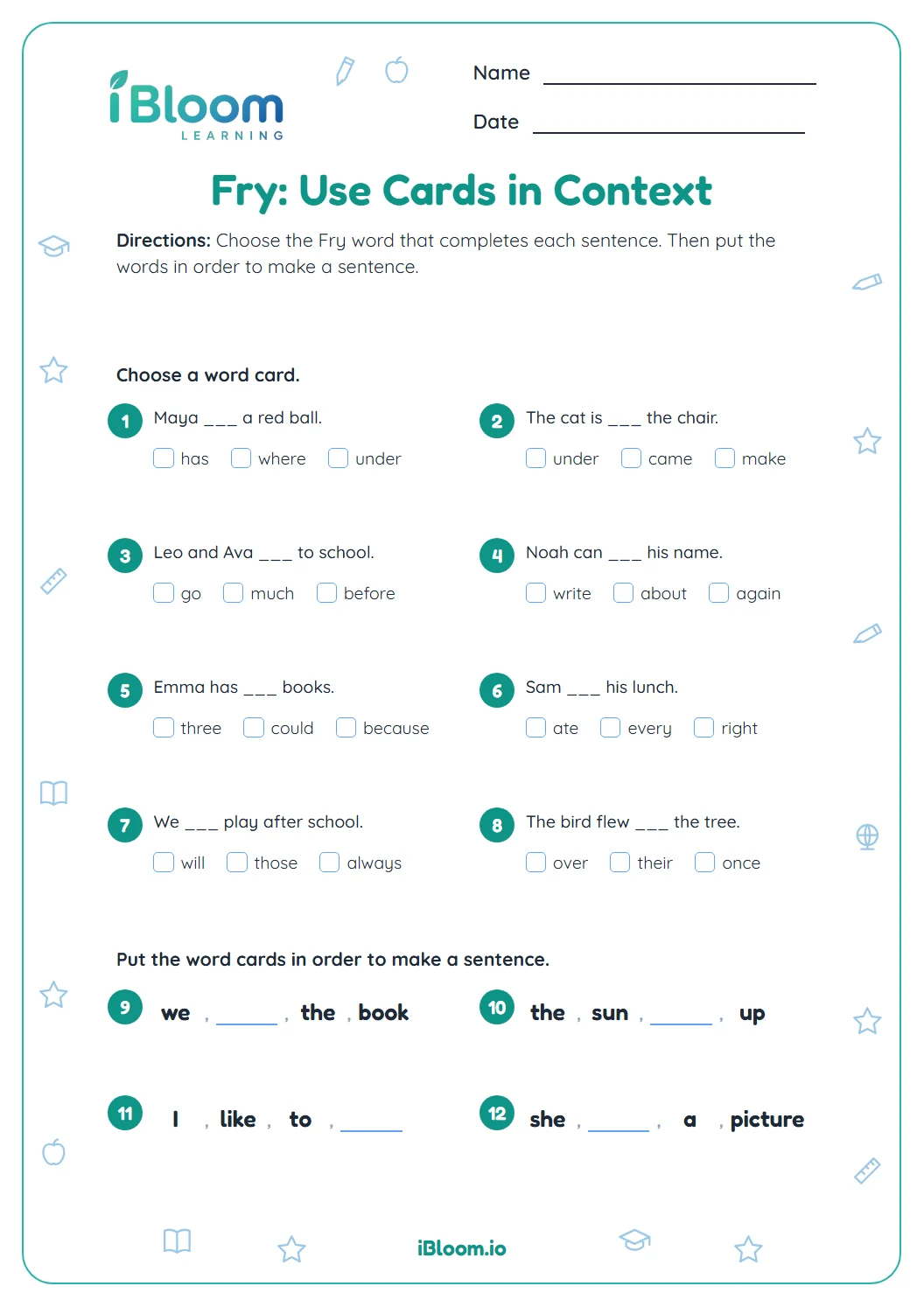
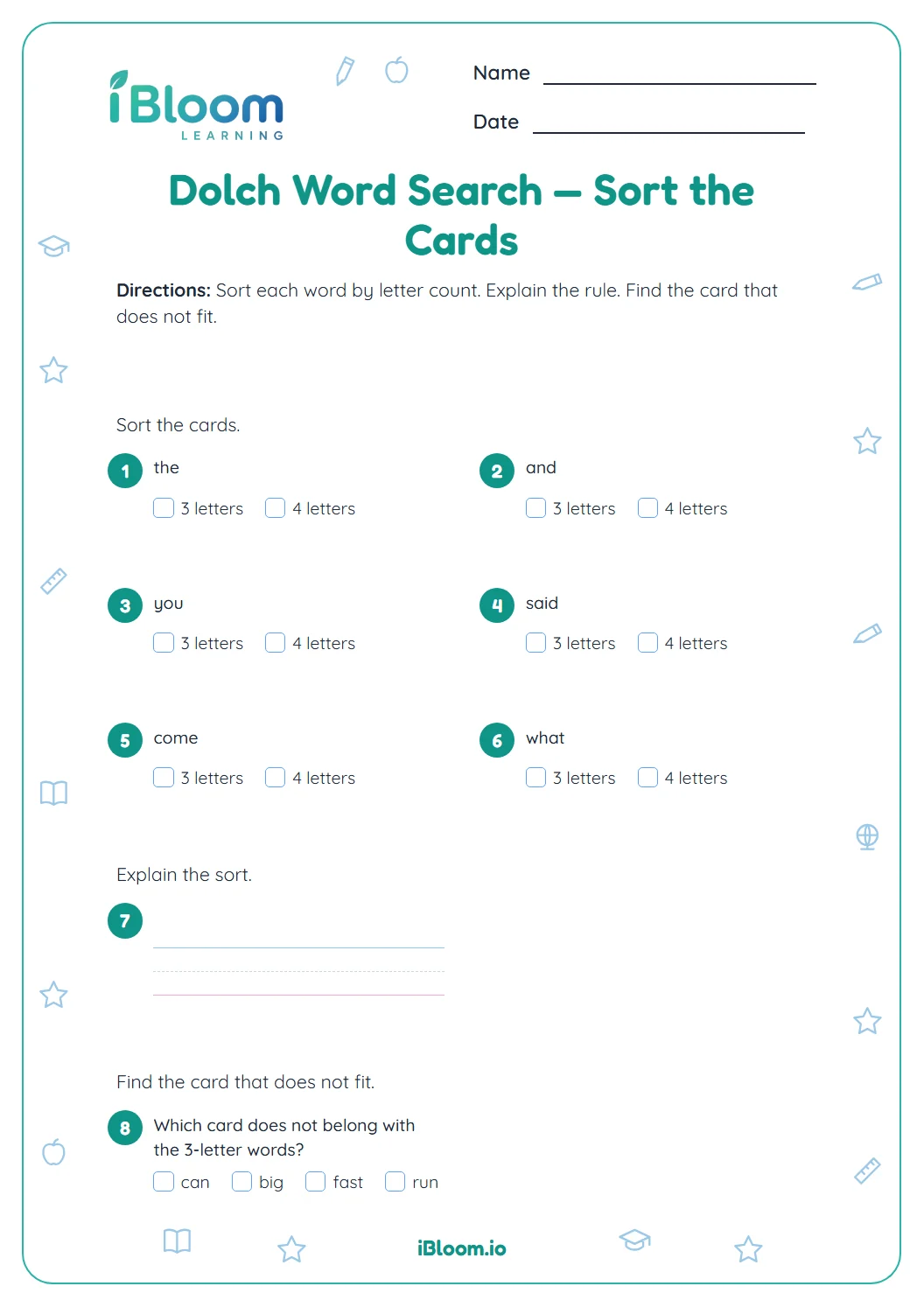
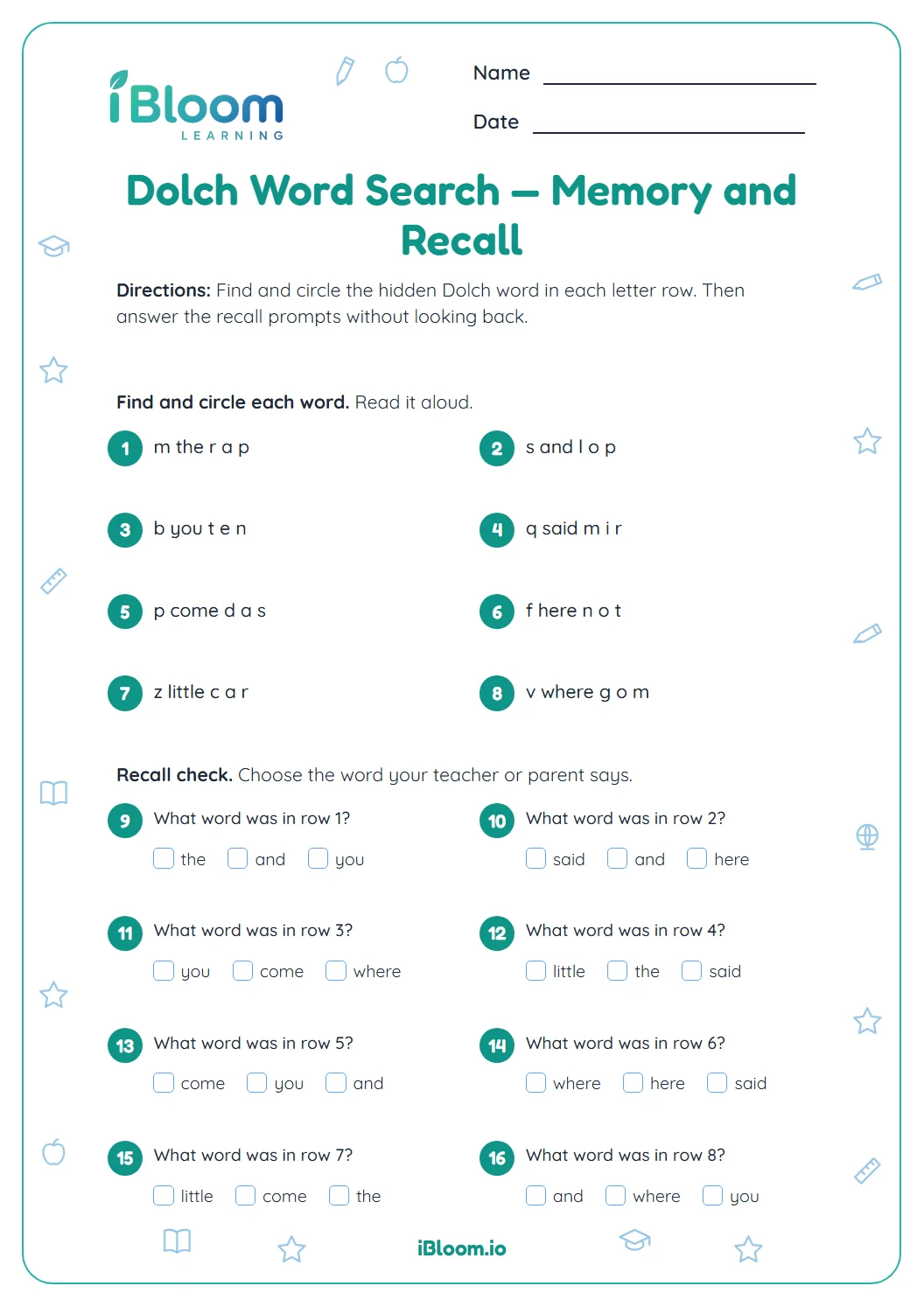
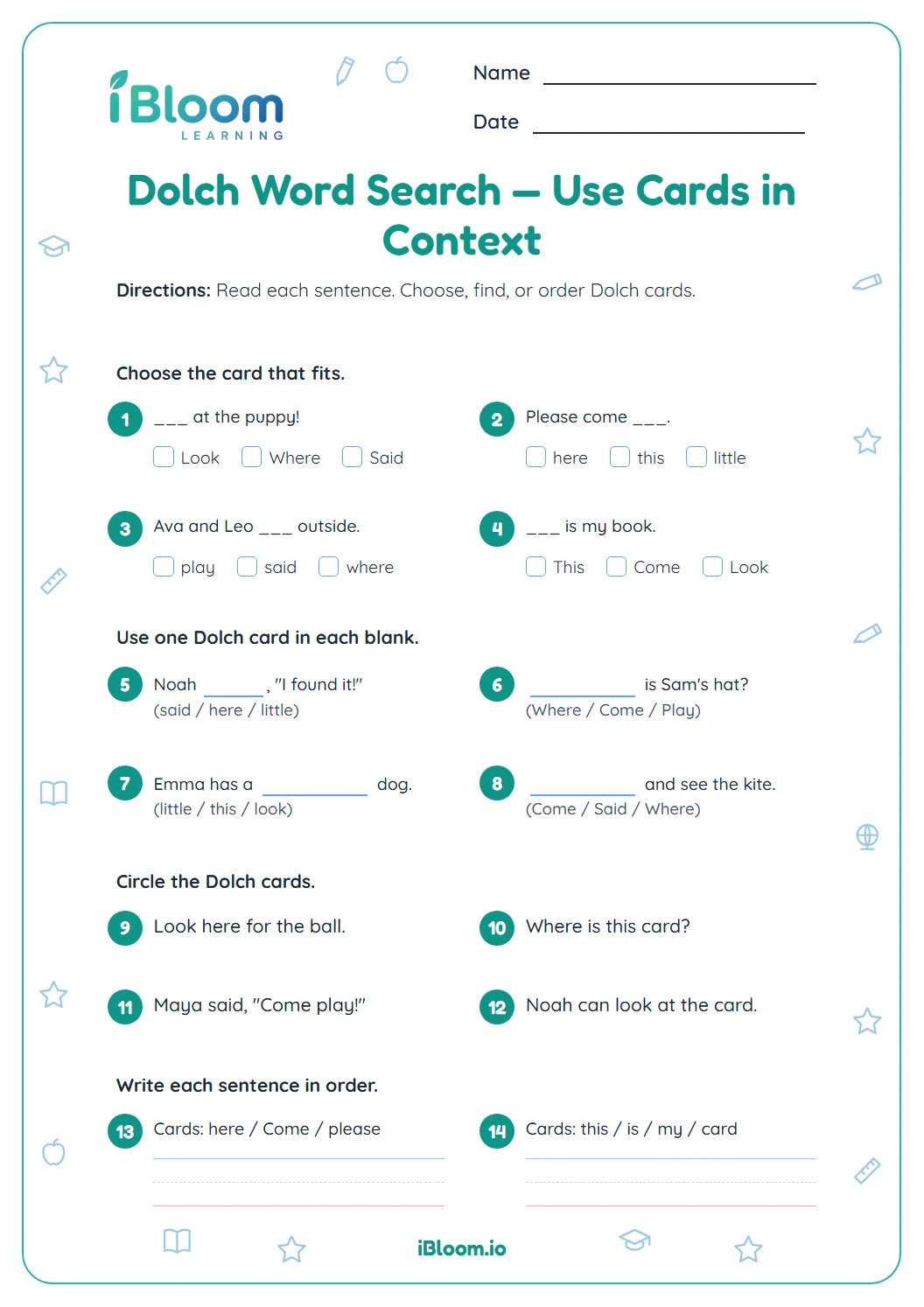
About this worksheet
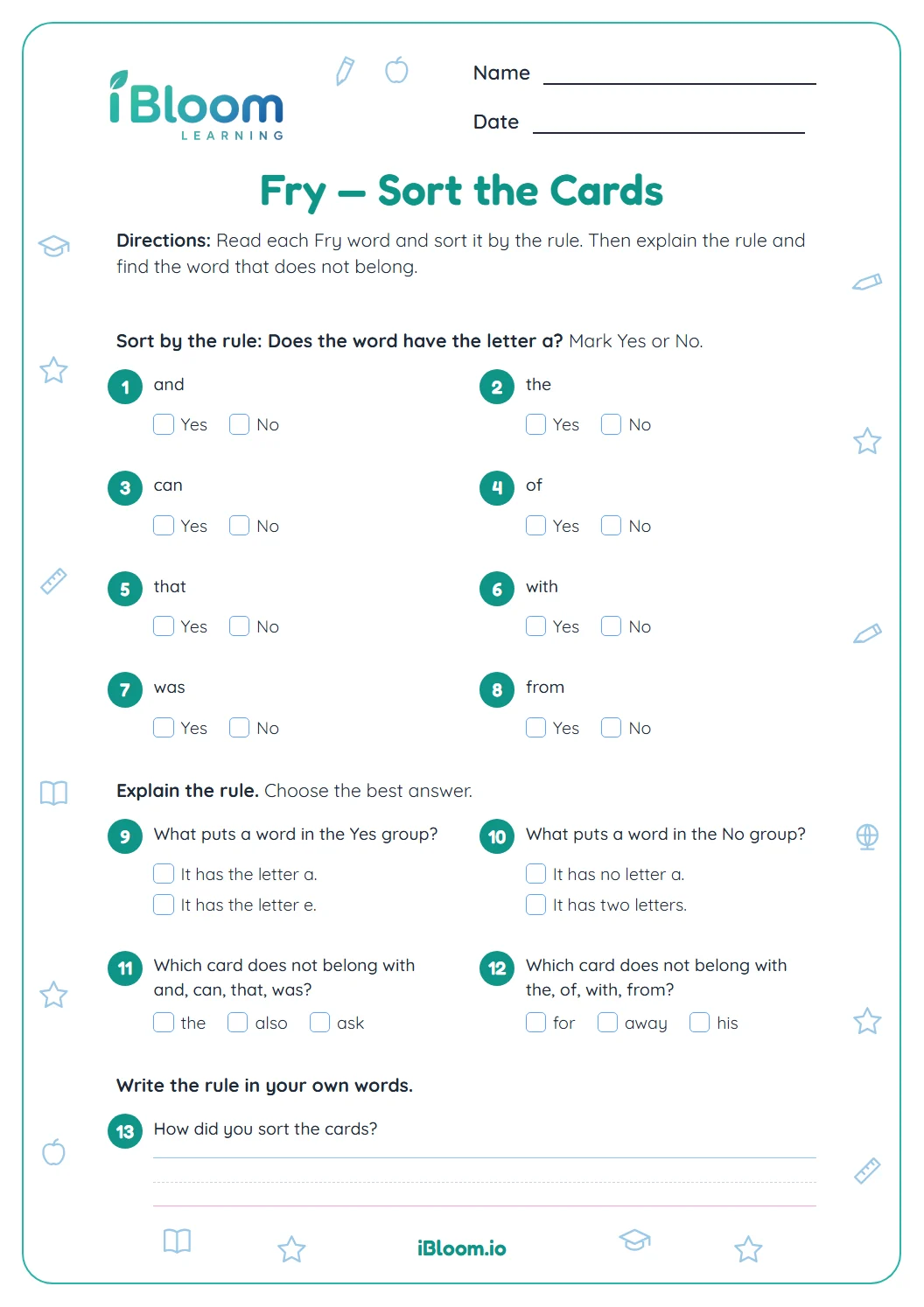
This free printable worksheet turns Fry word practice into a sorting game. Children look closely at word cards from the first 100 Fry words and group them by a rule: the first letter, the last letter, or the number of letters. Part A has five quick sorts, Part B has three group questions where children name the rule or find the odd one out, and Part C has three short rows where they circle every word that begins with th. It supports Common Core RF.K.3.c and RF.1.3.g. A two-page answer key follows the sheet.
Aligned to RF.K.3.c and RF.1.3.g
What are Fry words, and why do children learn them?
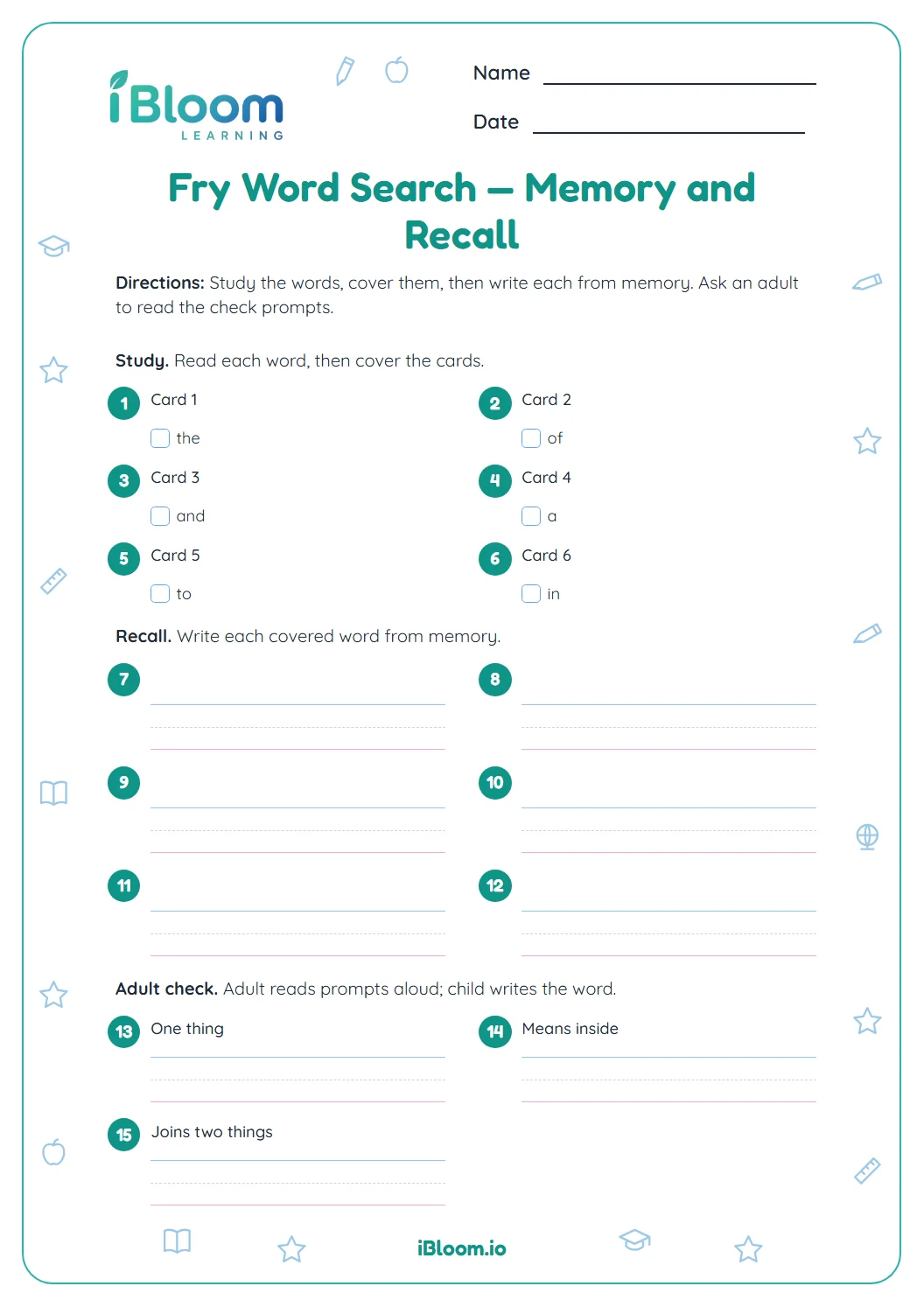
Fry words are very common English words, ranked by how often they show up in print. Edward Fry first published his Instant Words in 1957 and updated the list in 1980; the first 100 include the, of, and, a, to and is. Many of them are not spelled the way they sound (said, was, people), so children need to meet them again and again before they can read them without sounding out.
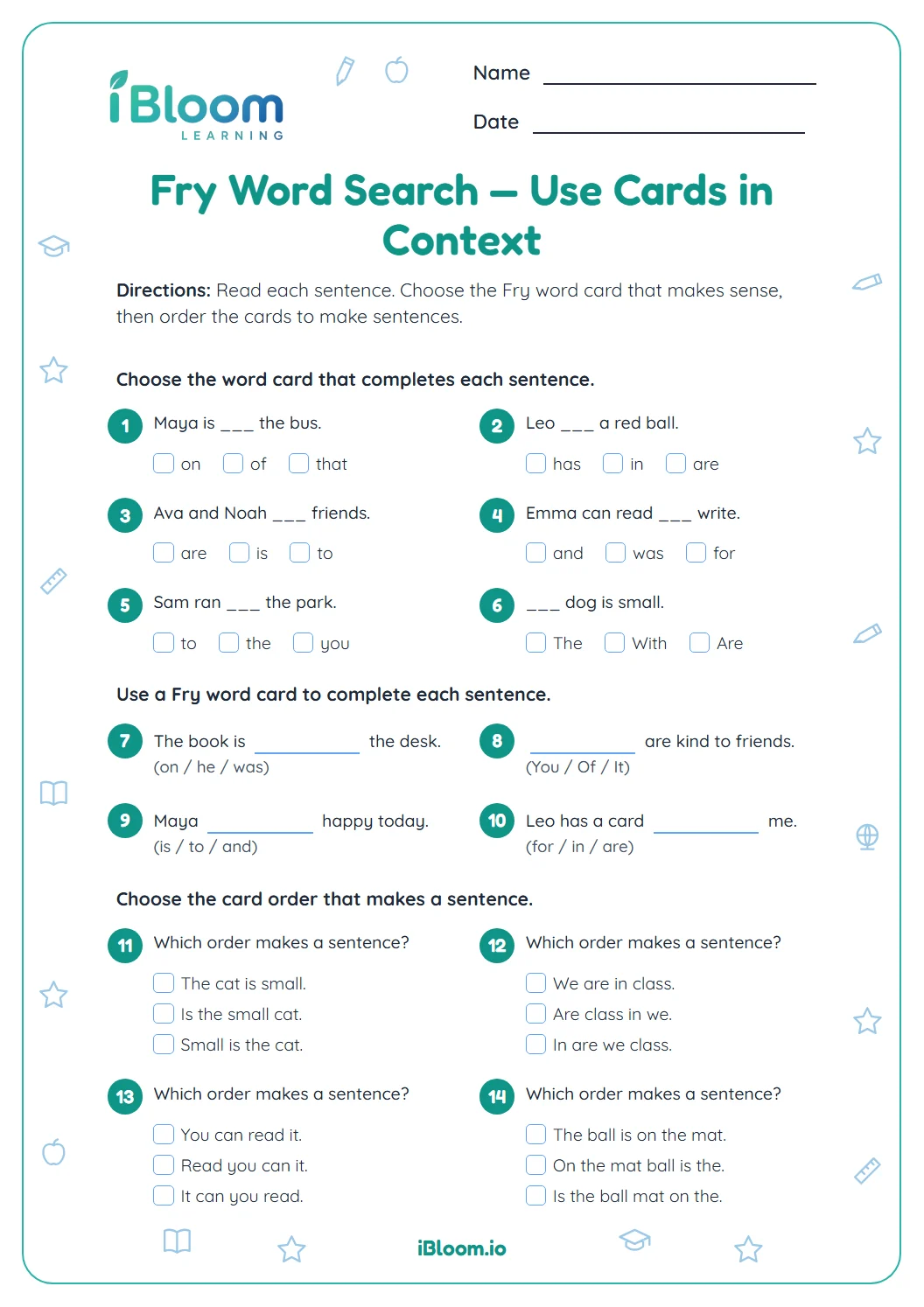
This sheet uses only words from the first 100, so every card is one your child is likely to see in early readers. The new part is the job: instead of reading the cards, children sort them.
Why sort Fry words instead of only reading them?
A child can read a familiar word from the shape alone. Sorting asks for more. To decide whether said ends with e, a child has to check the letters one at a time, and to find the longest word on a list, they have to count the letters in each one.
Sorting also shows that words come in groups. They, them, then and these all begin with th, and the, she, he and we all end with e. Seeing the group makes the next word in it easier to remember.
- 1then, them, they, these
- 2First two letters: th, th, th, th. They match.
- 3Last letters: n, m, y, e. These are all different.
- 4Letters in each word: 4, 4, 4, 5. Not the same.
- 5Rule: They begin with th.
What is on this Fry word sort worksheet?
Eleven questions in three parts, from easy to harder. Part A sorts single words by the letters they have. Part B moves to groups, where children work out the rule or the card that does not belong. Part C is a quick hunt for words that begin with th inside short sentences.
- Part A, Look at the letters: first letter, last letter, vowels, fewest letters and most letters (questions 1 to 5)
- Part B, Find the rule: two "which rule sorts these?" questions and an odd one out (questions 6 to 8)
- Part C, Circle the th words: three short sentences made of Fry words (questions 9 to 11)
- A matching two-page answer key
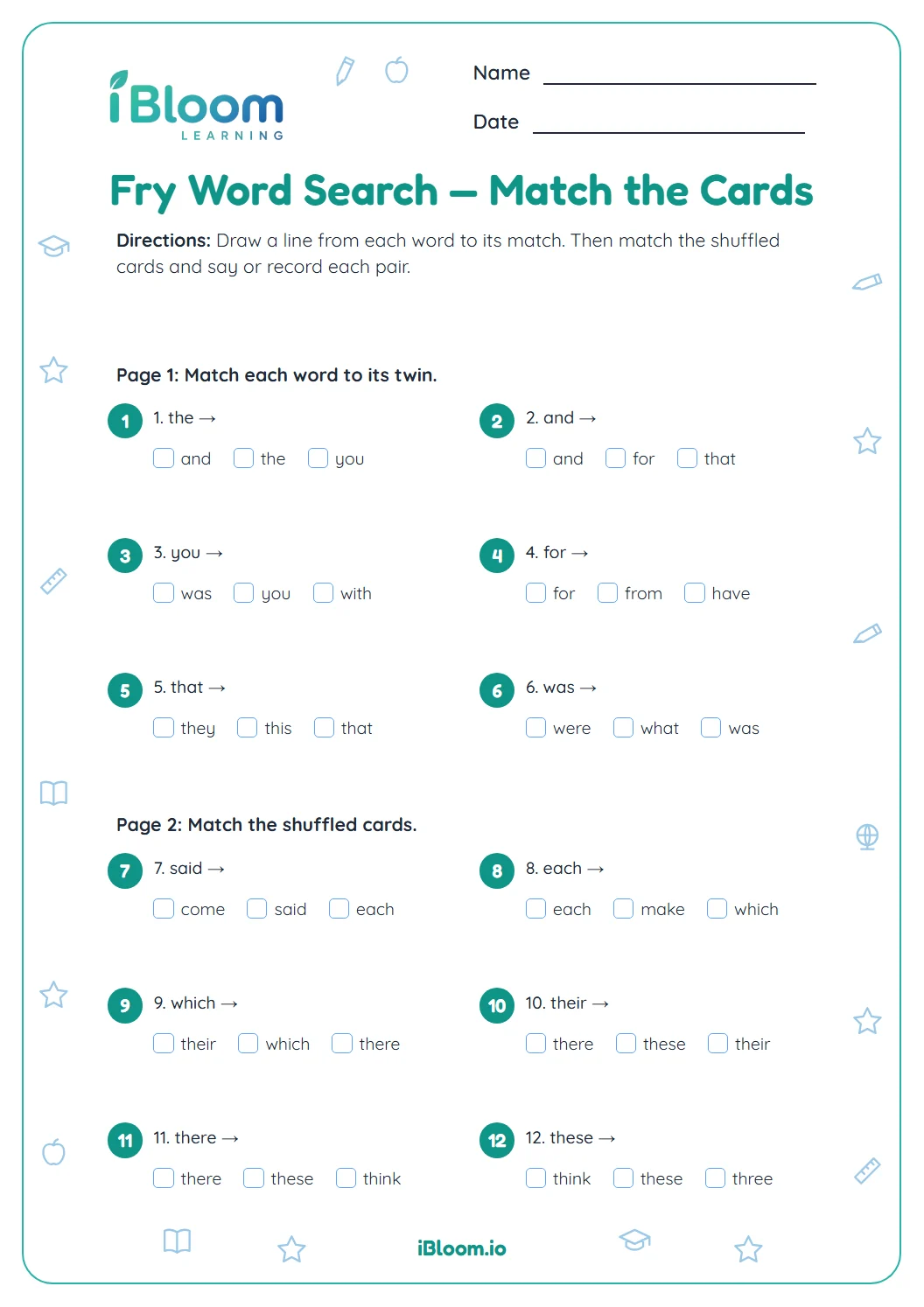
Can we make real word cards or a word search to go with it?
Yes. Write 12 to 20 Fry words on index cards, deal them out, and sort them into piles by a rule you choose. Then change the rule, from first letter to length, and sort again. Children often notice things the worksheet did not ask about.
This sheet is the sorting activity from the Fry word search set, so it has no letter grid. If your child likes puzzles, the free word search generator can build a grid from the same words.
How to use this worksheet at home or in class
- 1Warm up with real cards: write the, she, he and we on four cards and ask, "What is the same about all four?"
- 2Read question 1 together. Run a finger under each card and say the rule slowly before choosing.
- 3Let your child finish Part A alone. Ask them to touch the letter that decides each answer.
- 4In Part B, read each group aloud first and ask your child to say the rule in their own words before looking at the choices.
- 5In Part C, read each sentence together, then circle every word that begins with th, including the ones with a capital T.
- 6Check with the answer key. For any miss, write the word on a card and test the rule letter by letter.
Common mistakes and quick fixes
The mistake
Guessing length by how a word sounds in question 5. First and people both sound short, so a child may pick either one without counting.
The fix
Touch each letter and count out loud: from has 4, first has 5, people has 6. The rule asks about letters, not sounds.
The mistake
Picking an odd one out in question 8 for a reason that fits only one card, such as this having an i or they ending in y.
The fix
First find what three cards share: they, this and them all begin with th. The card without th, said, is the one that does not belong.
The mistake
Skipping the capital letters in Part C. They, That and Then each begin with th, but a capital T can look like a different word.
The fix
Point out that a capital T is still the letter t. Read the word, then check its first two letters.
Common Core alignment
Most US states use the Common Core reading standards or a close state version. These two Foundational Skills standards name the high-frequency and irregular words that Fry words include.
Look closely at common words like the, was and they until they can be read by sight.
On this sheet: Main standard: every card is a high-frequency word, and sorting makes children look at it closely.
Show the official wordingHide the official wording
Read common high-frequency words by sight (e.g., the, of, to, you, she, my, is, are, do, does).
Notice the letters in words that do not follow spelling patterns, like said and people.
On this sheet: Several cards are irregular, such as said, was, people and who, and children work with their letters here.
Show the official wordingHide the official wording
Recognize and read grade-appropriate irregularly spelled words.
What to practice next
Make more practice
Further reading
Questions parents and teachers ask
What are Fry words?
Fry words are the most common words in English print, ranked by how often they appear. Edward Fry first published the list in 1957 and updated it in 1980. Many, like said and was, do not follow spelling patterns. This sheet uses only the first 100, which include the, of, and, was, they and people.
Which grade is this Fry word sort for?
It suits Kindergarten through Grade 2. Kindergarteners can do Part A with a grown-up reading the questions aloud, first graders can usually do Parts A and C alone, and Part B, which asks children to name a rule, is a good challenge for confident first graders and for Grade 2.
Is this a word search with a letter grid?
No. It is the sorting activity from the Fry word search set, so there is no grid to hunt through. If your child enjoys puzzles, the free word search generator can build a grid from the same words, and the two activities work well one after the other.
My child cannot read every word yet. Should I wait?
You do not need to wait. Read the questions aloud, and let your child look at the letters on the cards and mark the answer. Sorting by first or last letter does not need fluent reading. Try Part A together first, and save Parts B and C for later.
What are the answers to Part B?
The two rules are: they begin with c, and they begin with th. In the odd one out, they, this and them all begin with th, so said is the card that does not belong. The answer key lists all eleven answers in order, with the circled words for Part C.
How long does it take, and is there an answer key?
Most children finish in about 15 minutes, longer if you talk through each rule. Yes. The two-page answer key comes after the worksheet, so you can print the worksheet alone or with the key. Sorting real cards afterwards is a good extra.