
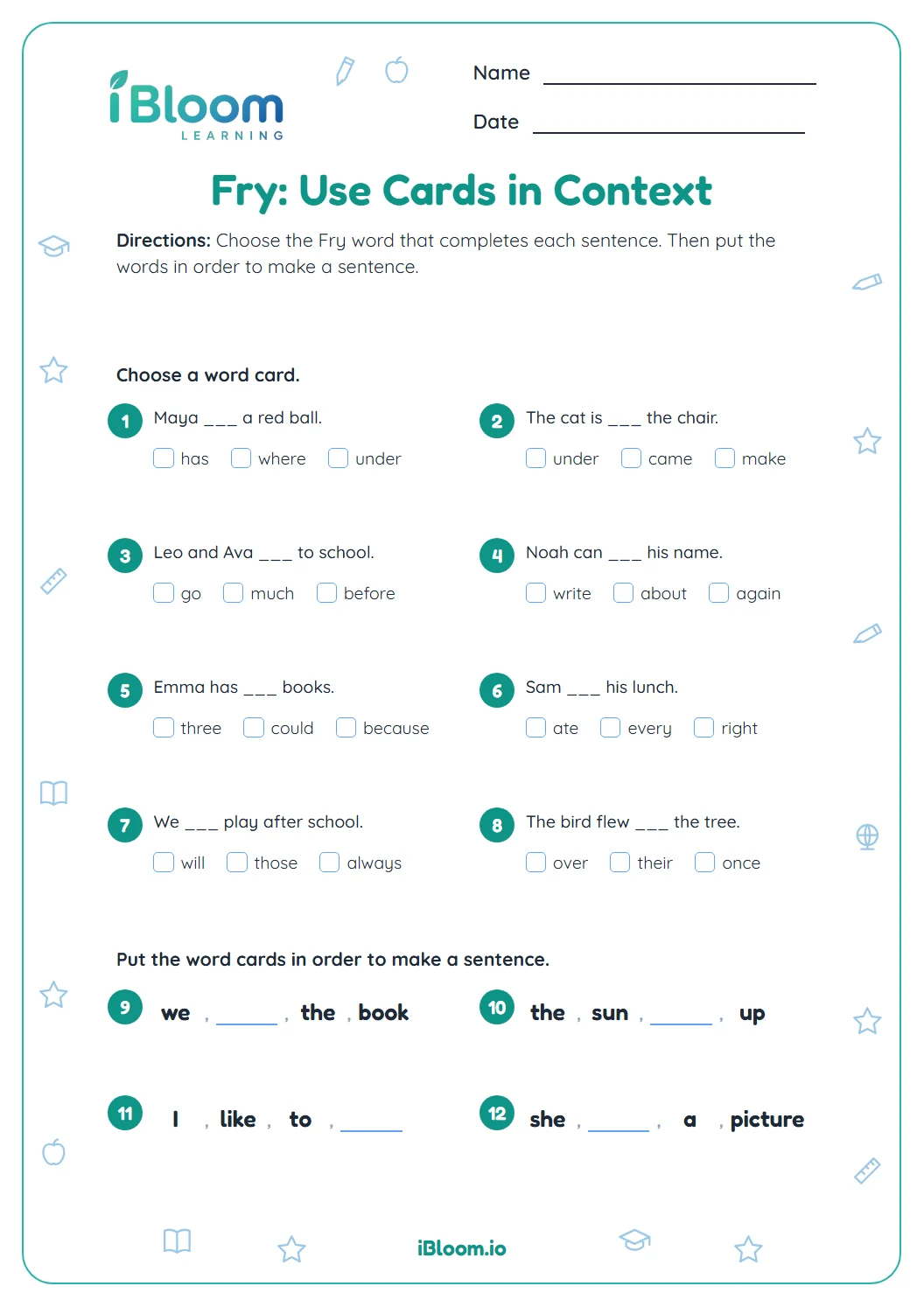
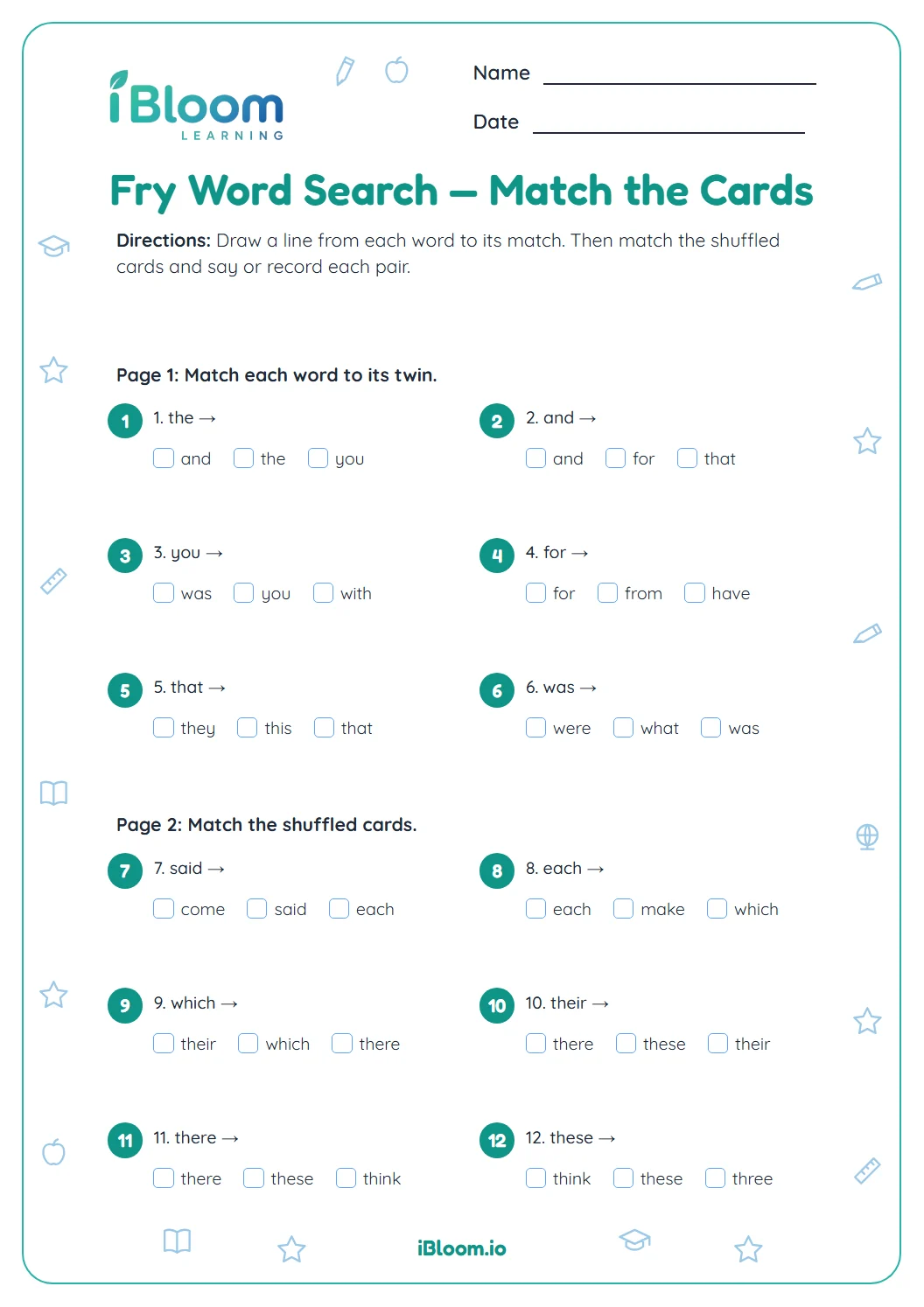
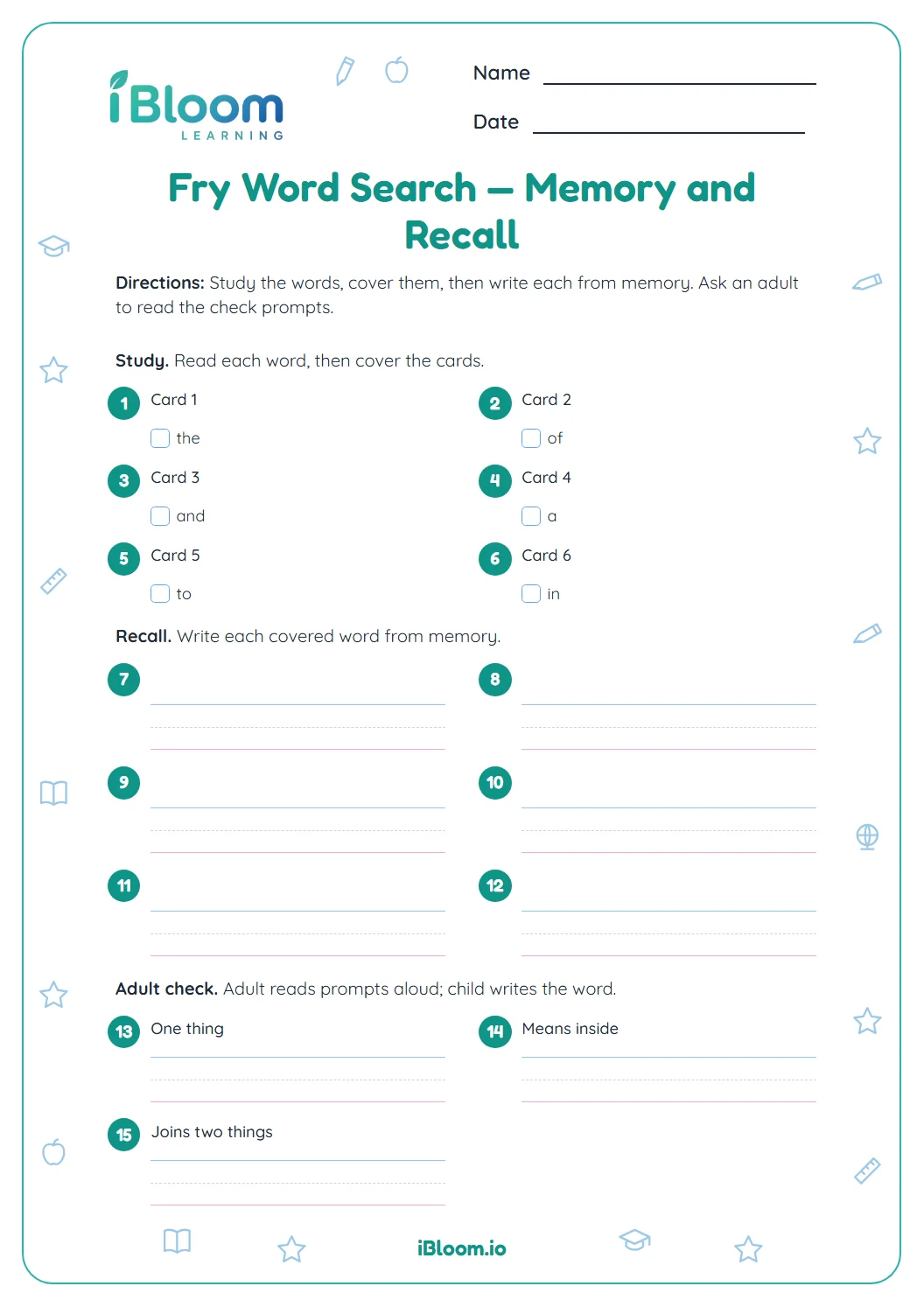
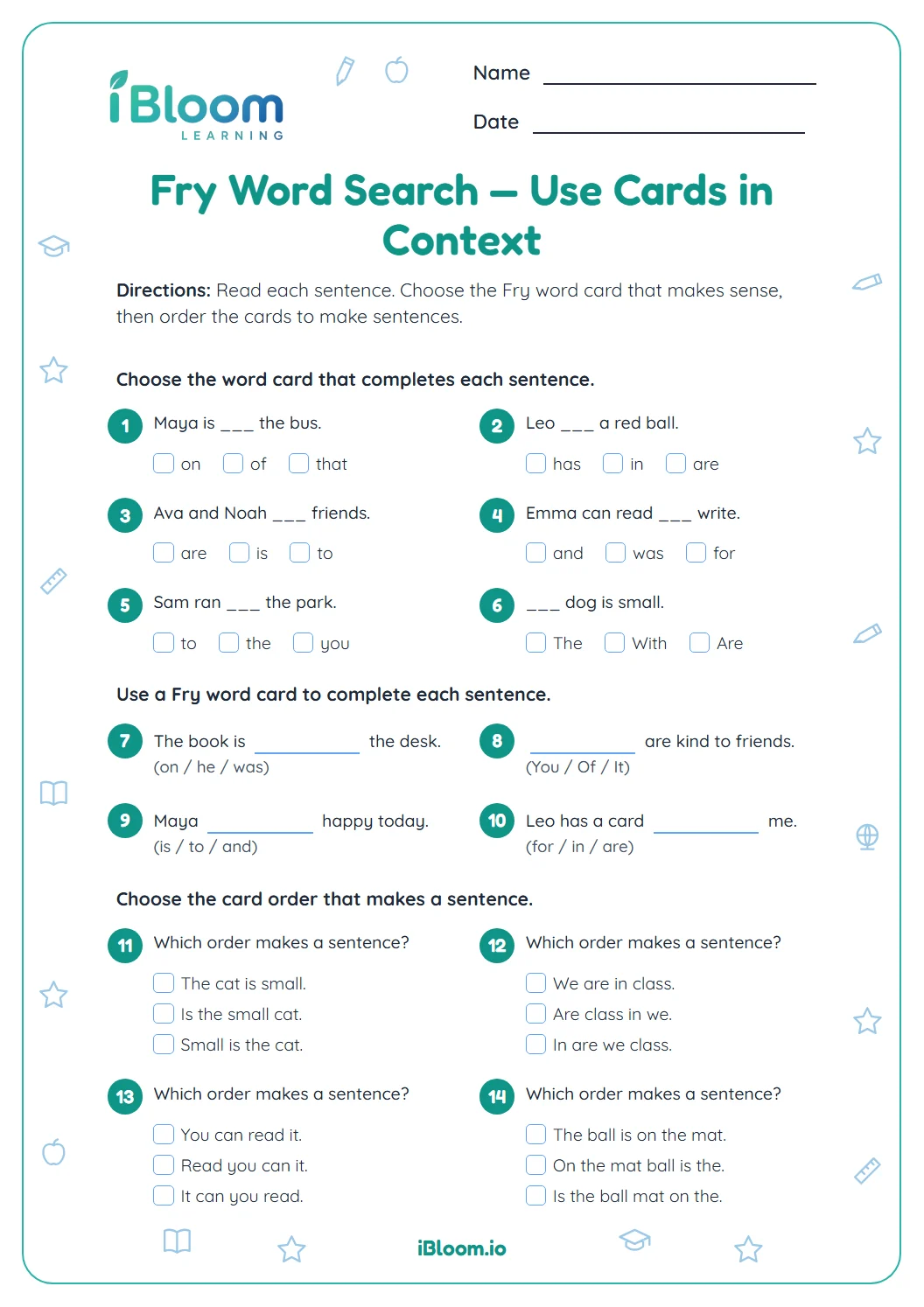
About this worksheet
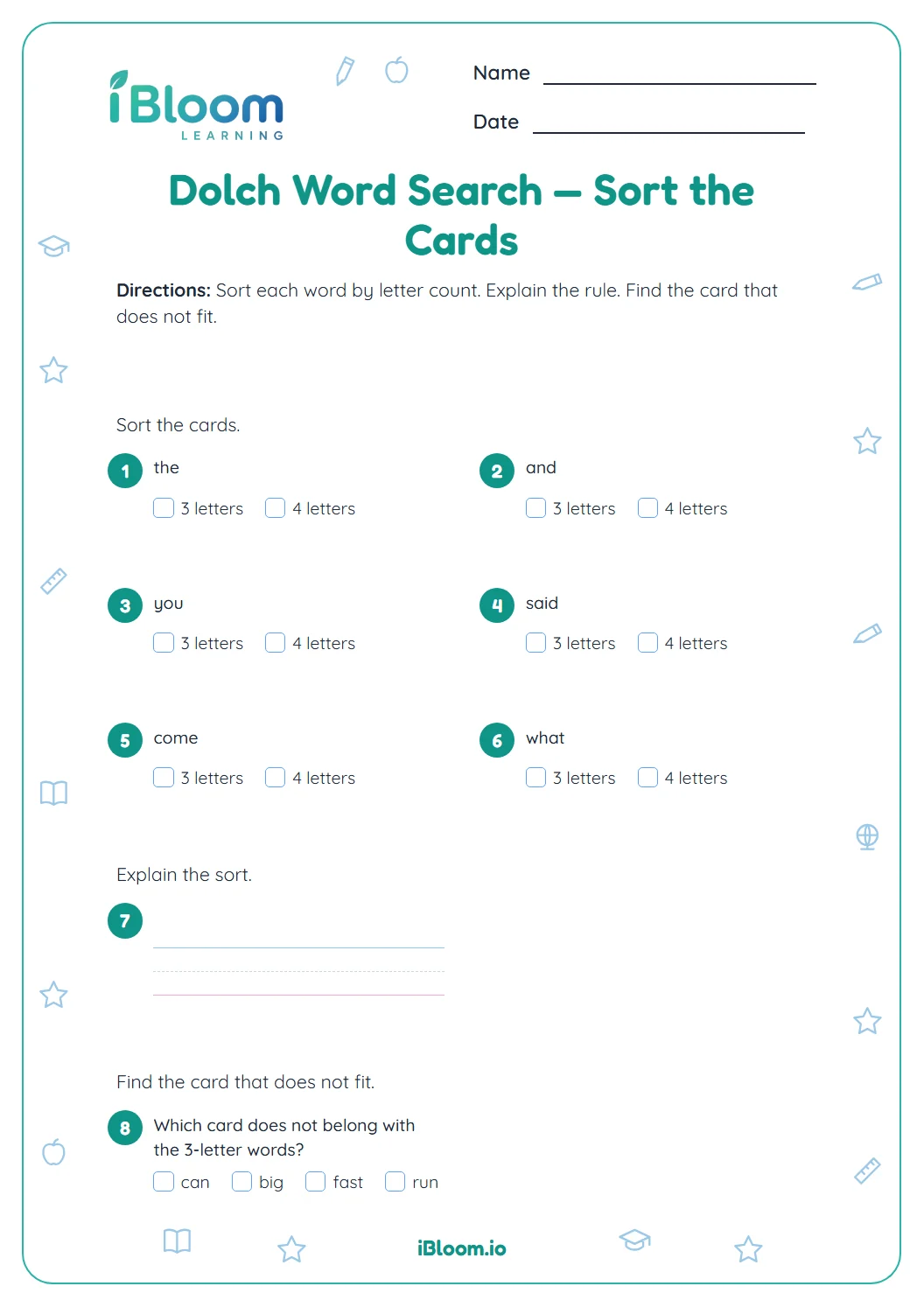
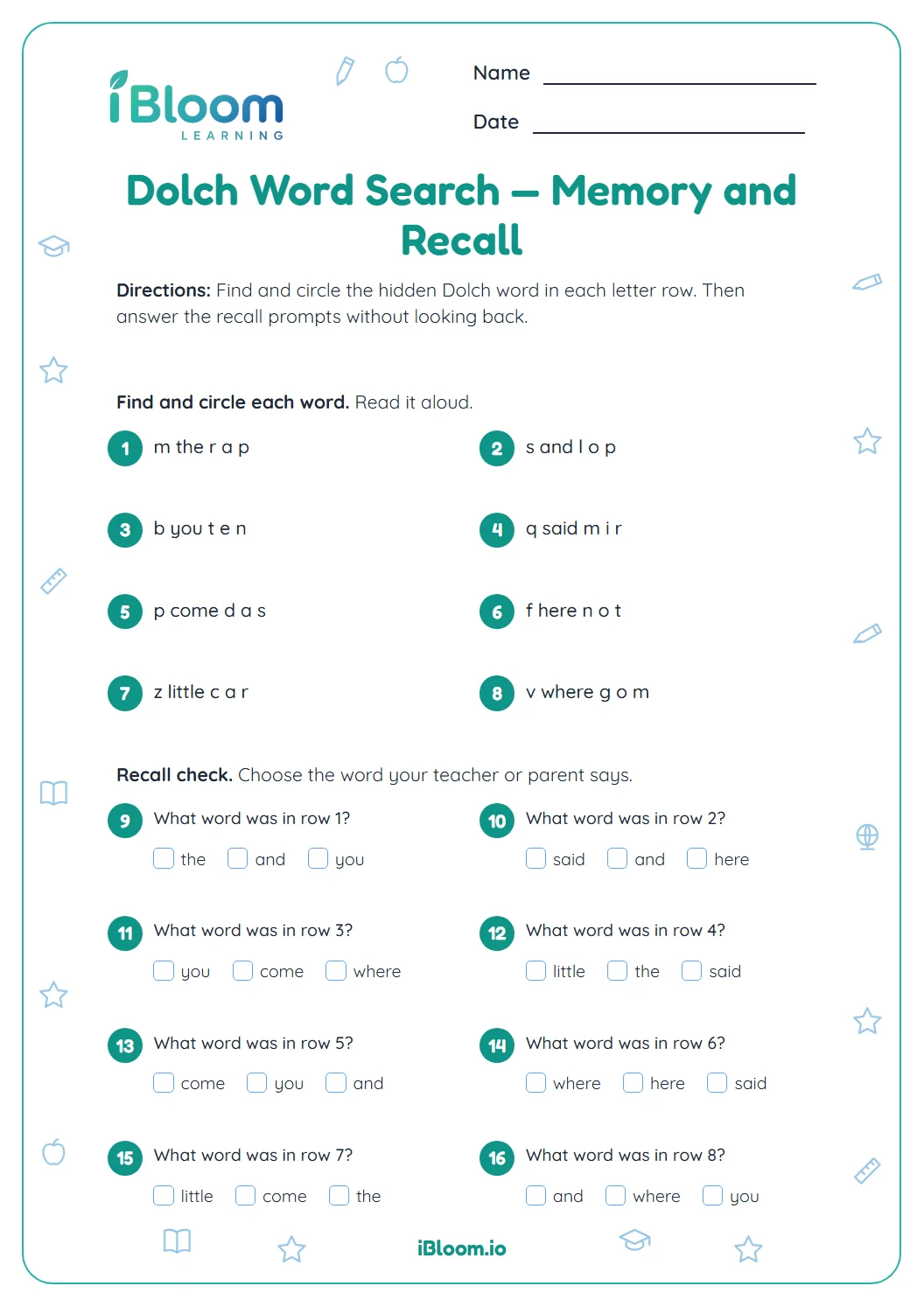
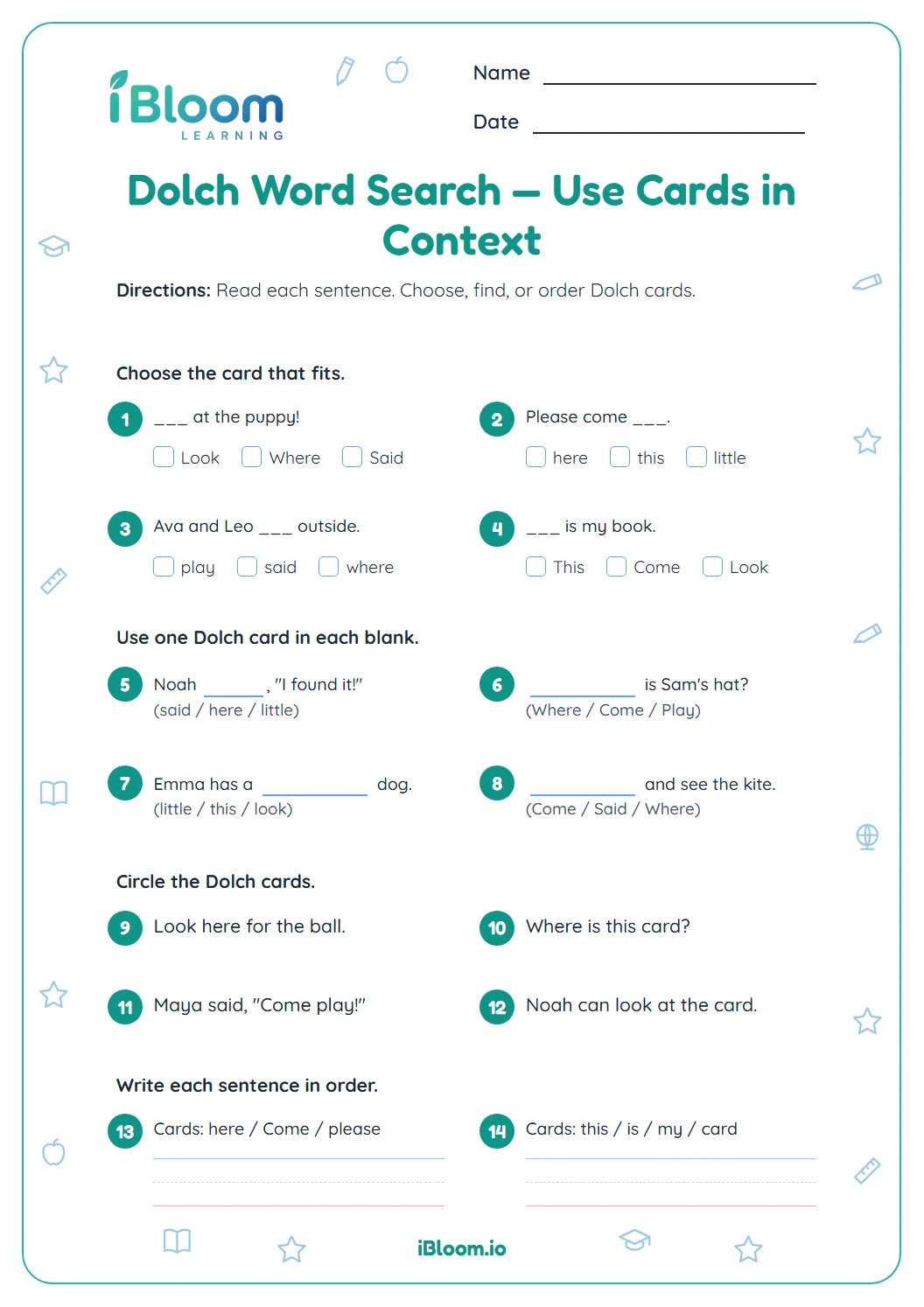
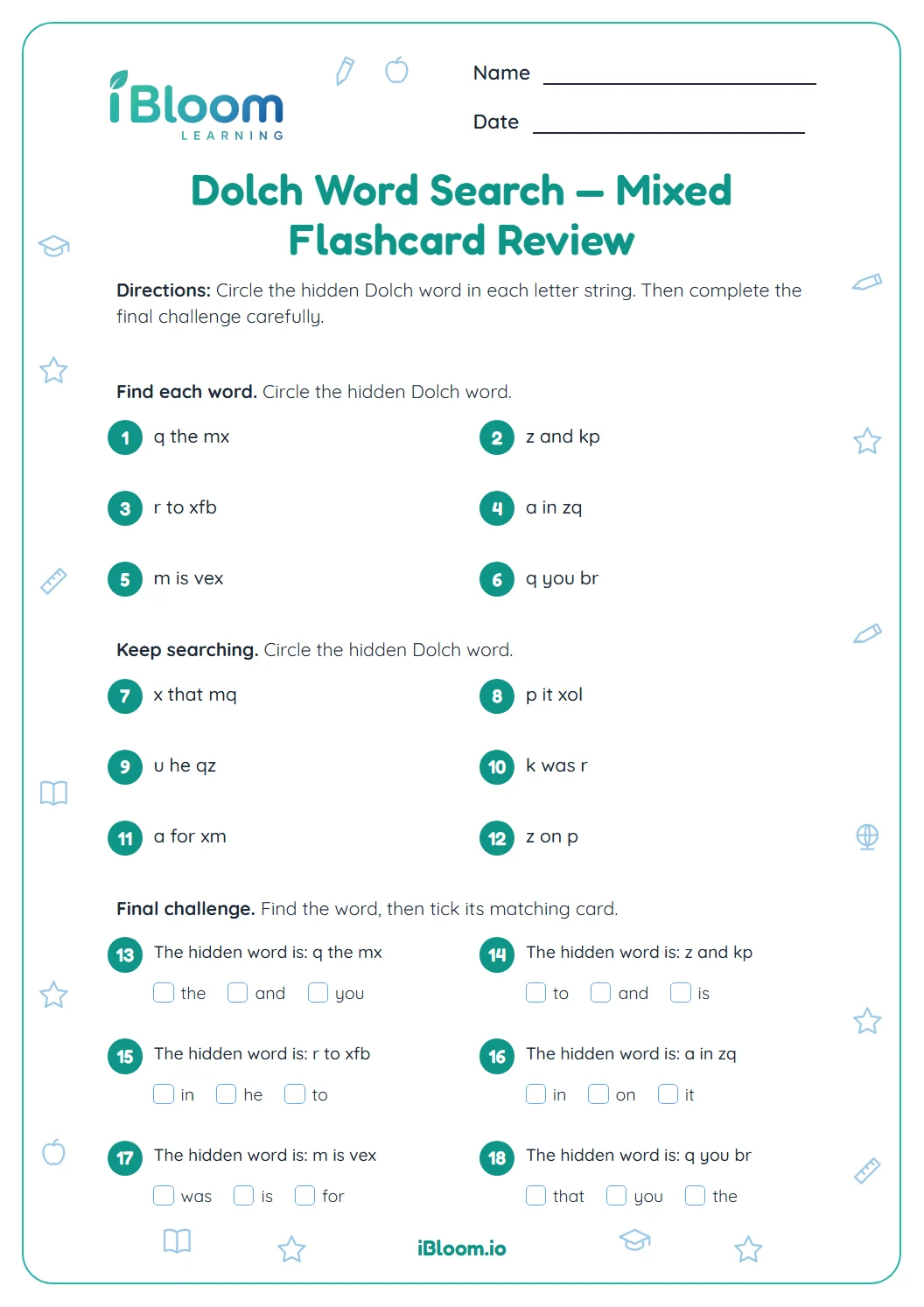
This printable Dolch worksheet gives children practice recognizing the 12 high-frequency words from the original card activity: the, you, said, where, little, come, make, here, have, look, down, and one. Students find those words in a word search, match each printed card to the same word, and complete two short sentences. The practice supports CCSS RF.1.3.g, recognizing and reading grade-appropriate irregularly spelled words. A separate answer key lists the search targets and responses.
Aligned to RF.1.3.g
How can children find Dolch words in a grid?
Part A uses the same 12 words as the original card sheet. Children can read the word list first, then scan the grid one row at a time and circle each word in order.
- 1Find THE across the first row: T → H → E
- 2Then find the other words from the printed list.
How does matching a word card work?
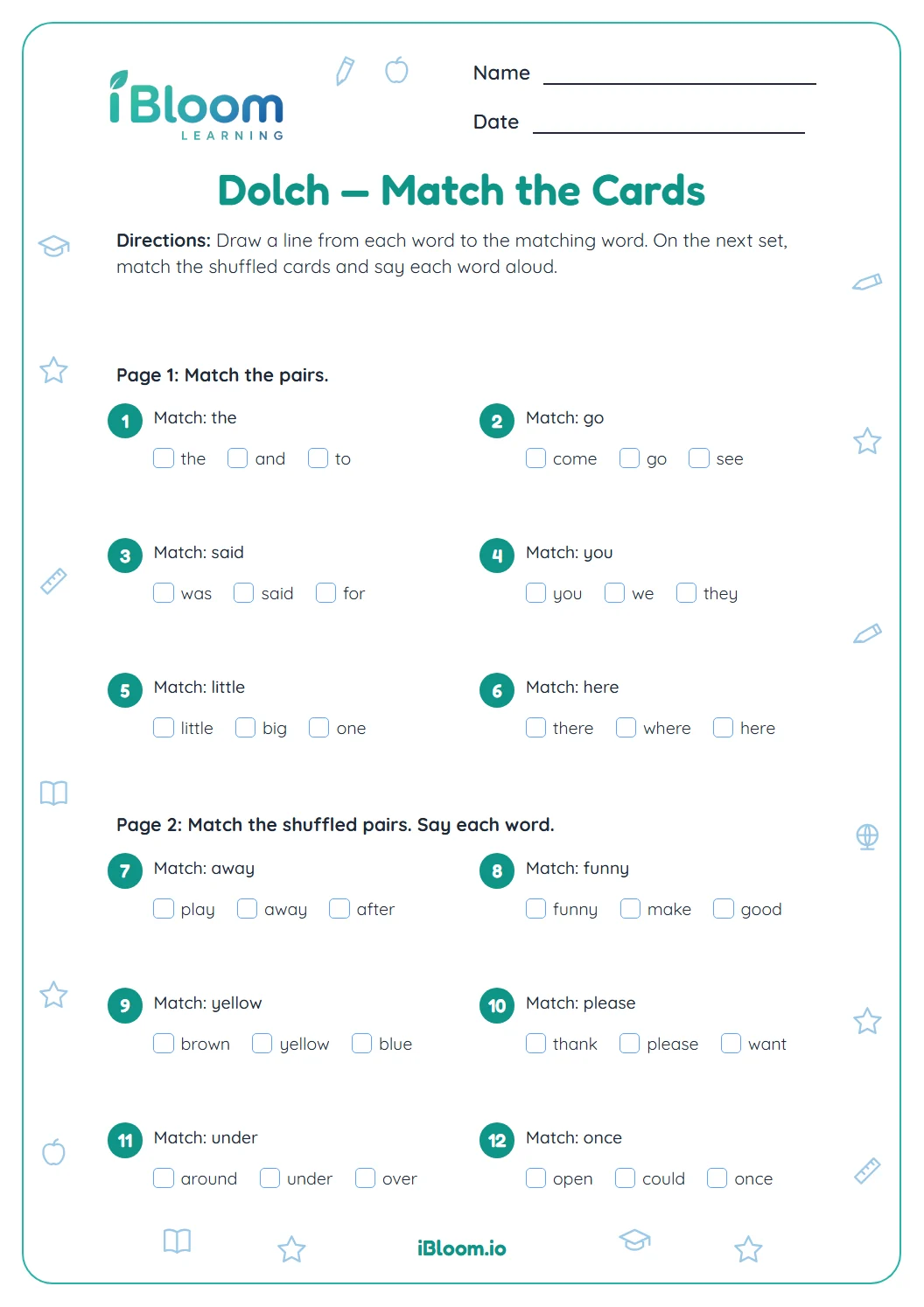
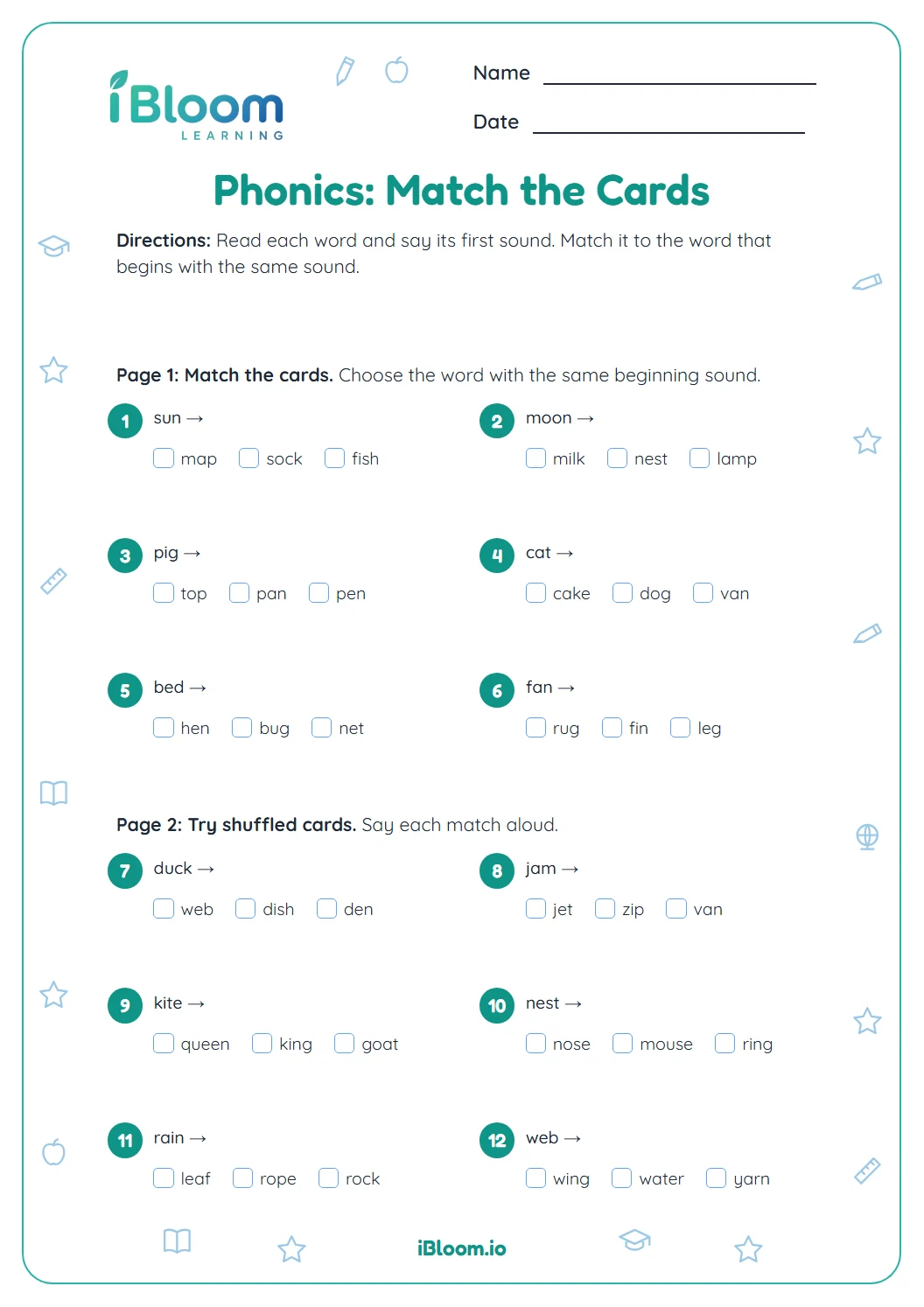
Part B shows one Dolch word as a card prompt and offers three printed choices. Children compare every letter and choose the identical word, just as they would match two physical cards.
How does a sentence help check a word?
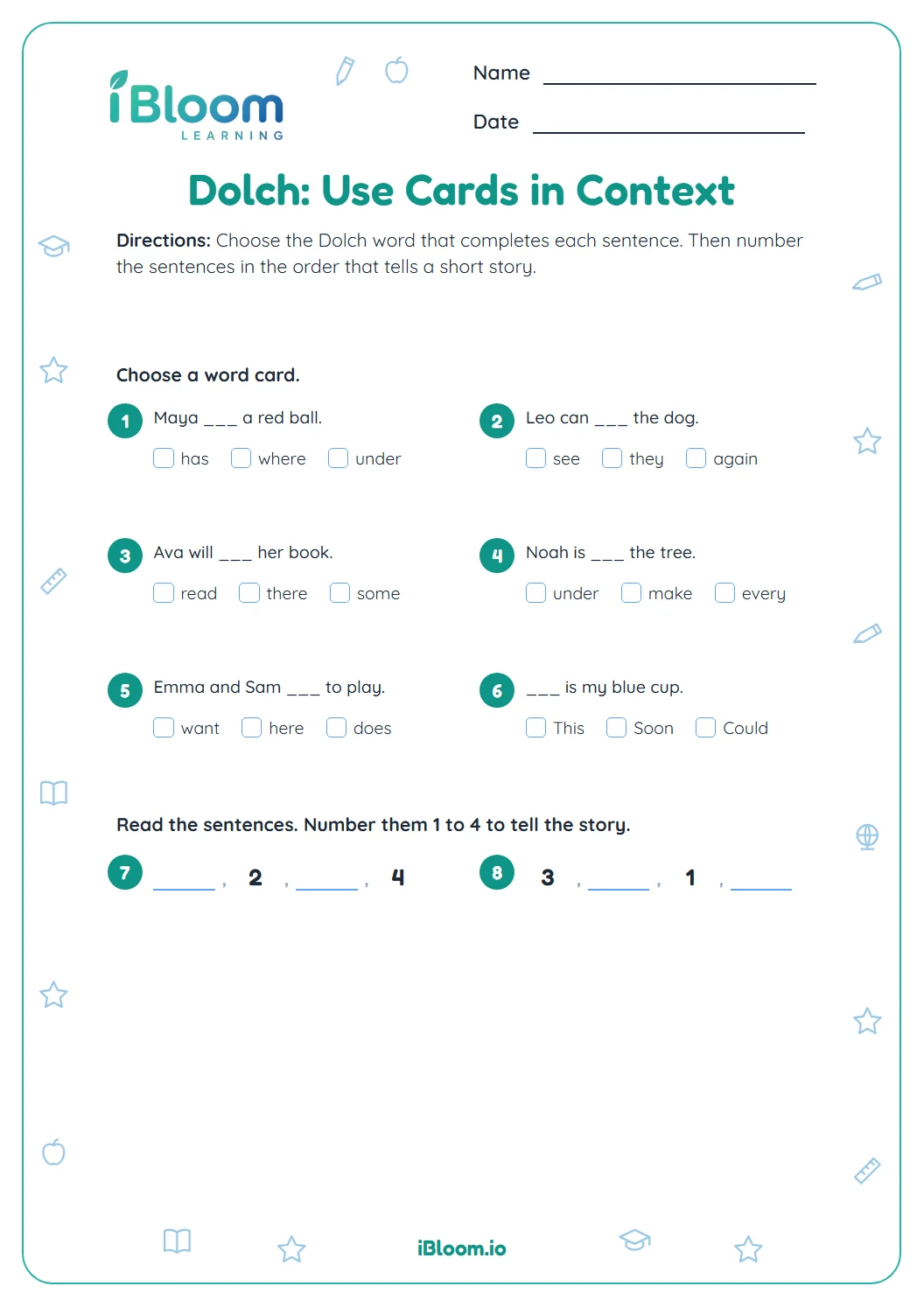
The last two items use said and here in short sentences. Students read the whole sentence, choose the matching Dolch word, and reread to check that it makes sense.
How to use this worksheet
- 1Read the 12 target words aloud before starting.
- 2Scan each grid row and circle a target when its letters appear in order.
- 3For each card, compare every letter with the three choices.
- 4Read both sentence choices in context before selecting a word.
- 5Use the answer key to check the search words and each response.
Common mistakes and quick fixes
The mistake
Choosing a word with only the same first letter.
The fix
Compare all the letters from left to right before choosing.
The mistake
Skipping a word in the grid.
The fix
Use the printed word list and check off each target after circling it.
The mistake
Choosing a card word that almost matches.
The fix
Look for every letter in the same order; “the” and “then,” for example, are different words.
Common Core alignment
The activities provide repeated practice recognizing and reading familiar high-frequency words.
Read familiar, grade-appropriate words that are spelled irregularly.
On this sheet: Students recognize Dolch high-frequency words in a search, picture-to-word choices, and sentence contexts.
Show the official wordingHide the official wording
Recognize and read grade-appropriate irregularly spelled words.
What to practice next
Make more practice
Further reading
Questions parents and teachers ask
Which Dolch words are in the search?
The grid includes the, you, said, where, little, come, make, here, have, look, down, and one. These are the same 12 words printed as cards on the earlier activity. Children can read the list first and check off each word as they find it.
How many questions are on the worksheet?
There are 15 questions across two worksheet pages, followed by a separate answer key. One activity asks children to find 12 words in a grid, 12 items match a word card to an identical choice, and two sentences use target words in context.
Can a younger child use this page?
The page is labeled Grades K–3 to match the source activity. An adult can read a card aloud or help a child track the letters in the word search. Children who are ready can work through the matches independently and check the completed sentences.
Why does the worksheet include both a search and card matches?
The search asks children to notice a word among other letters, while the card matches ask them to compare the printed word with three choices. Both activities use the same 12 Dolch words, so children can recognize each word in more than one layout.
How can I help if a child cannot find a word?
Ask the child to find the first letter, then move across the row while checking the remaining letters in order. The words are placed horizontally in the grid. Point to each letter on the target list and grid to keep the sequence clear.
What can children try next?
Dolch flashcards provide another way to review the same high-frequency words. Fry word practice introduces a different word set, while phonics pages offer practice sounding out less familiar words. Choose the next page based on which kind of reading practice the child is ready to do.