Free printable practice
Informative Writing Practice Activities
Class 3 printable worksheets for writing clear informative paragraphs using facts, details, comparisons, biographies, prompts, and simple research notes.
Explore Informative Writing
Free printable worksheet PDFs
Preview every available page, then download the free worksheet PDF for home, homeschool, tutoring, or classroom practice.
Preview the exact activity before downloading it.
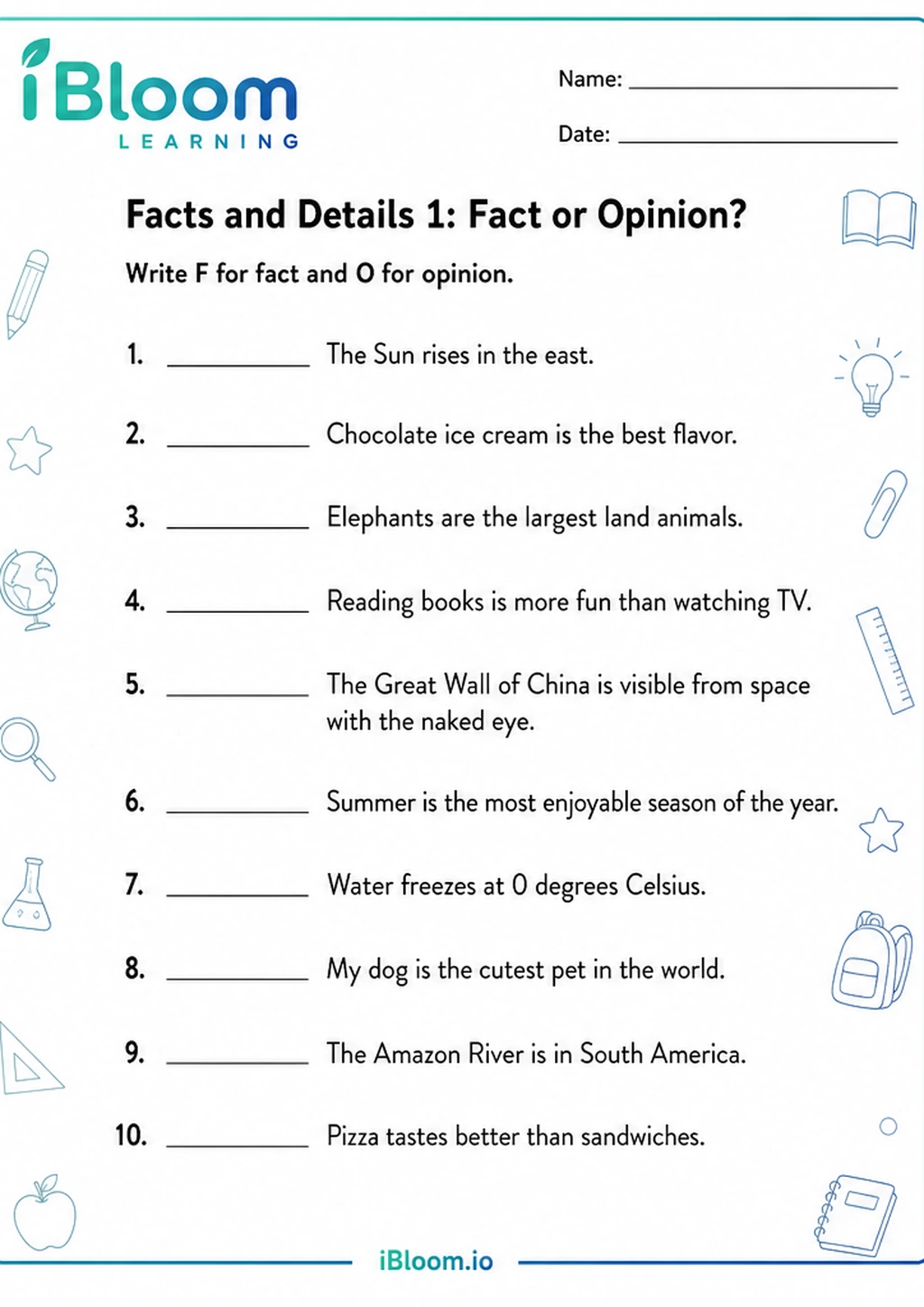 Facts and Details 1: Fact or Opinion?Class 3 printable practice for Facts and Details.Class 3Free PDF preview
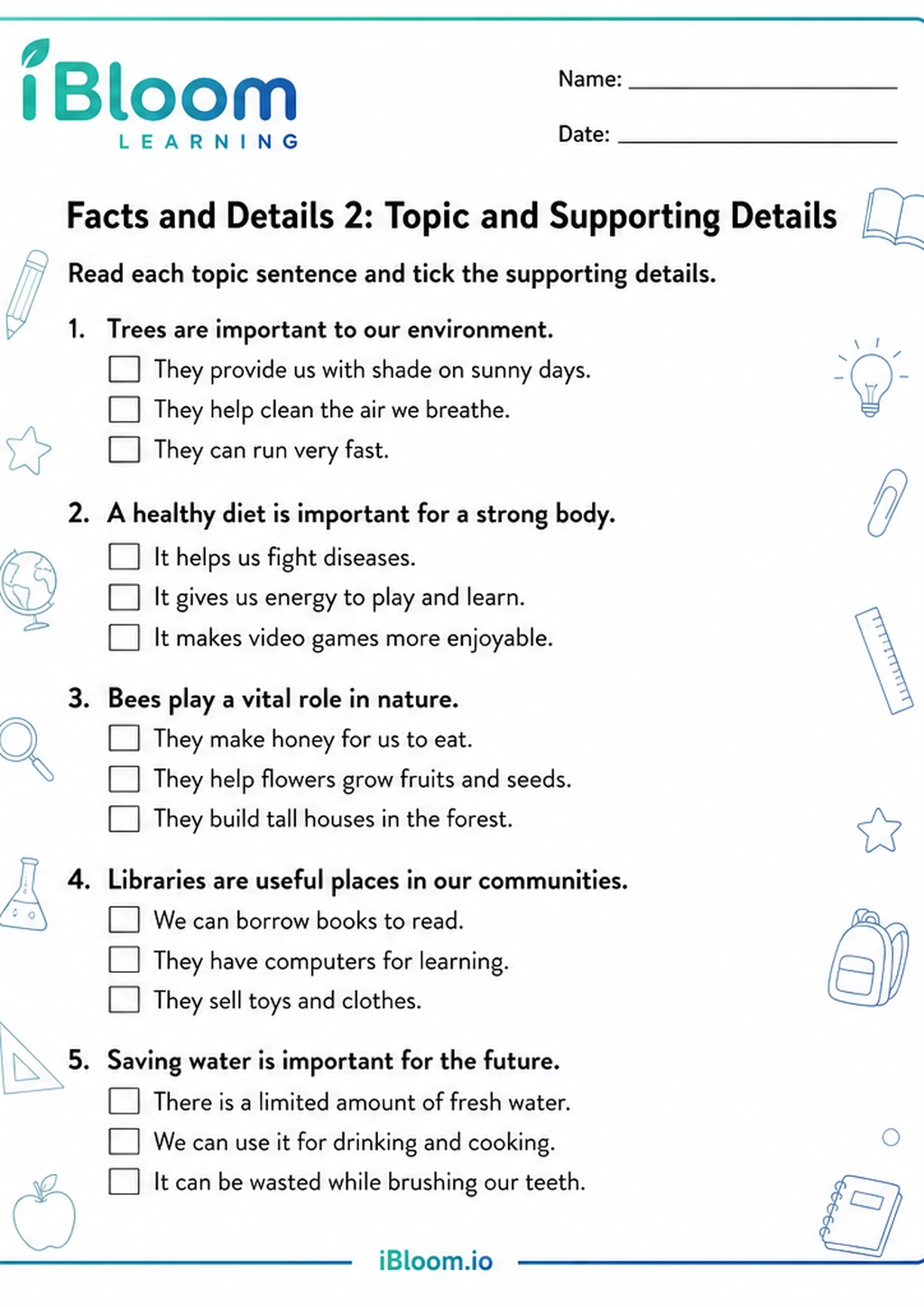 Facts and Details 2: Topic and Supporting DetailsClass 3 printable practice for Facts and Details.Class 3Free PDF preview
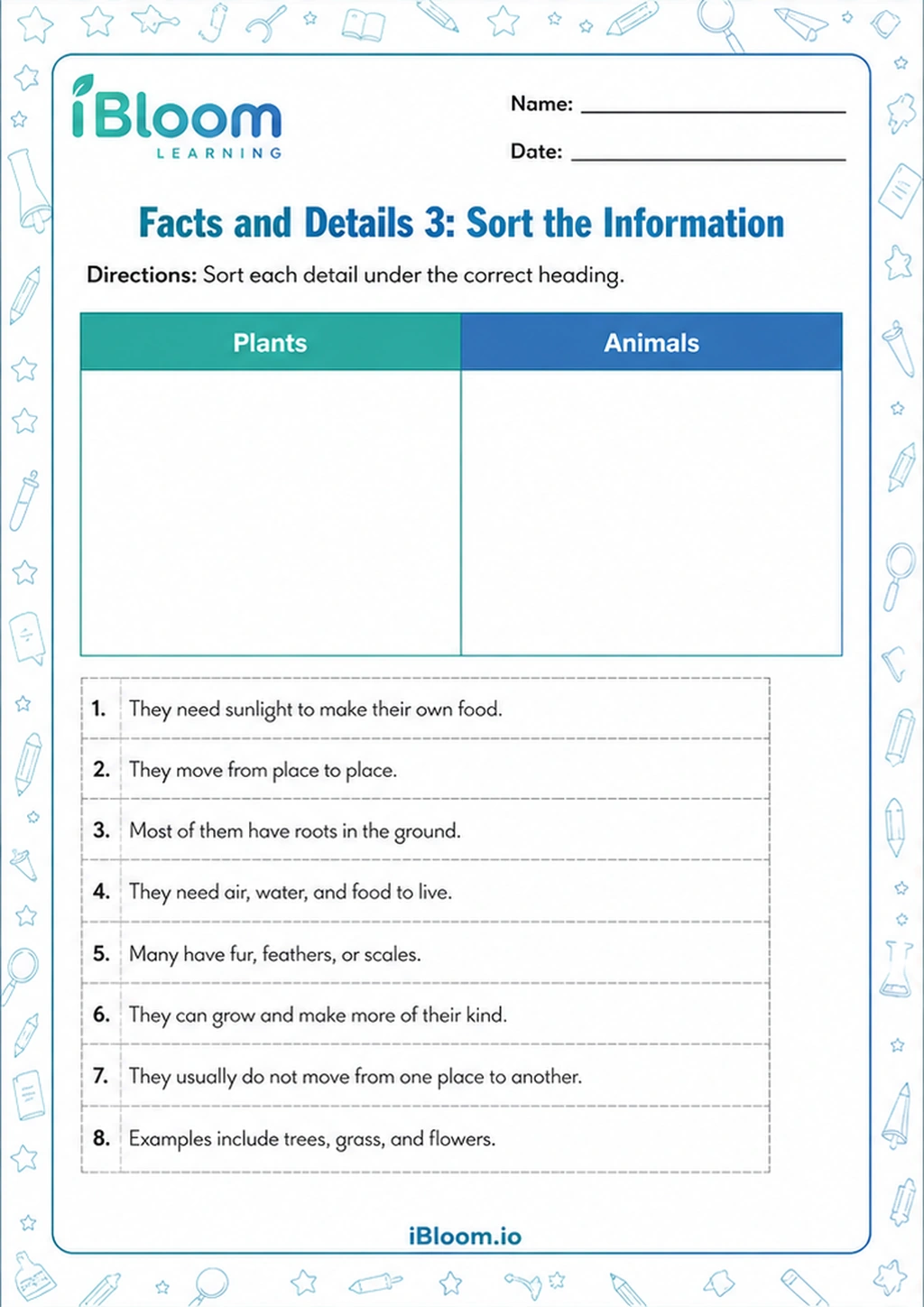 Facts and Details 3: Sort the InformationClass 3 printable practice for Facts and Details.Class 3Free PDF preview
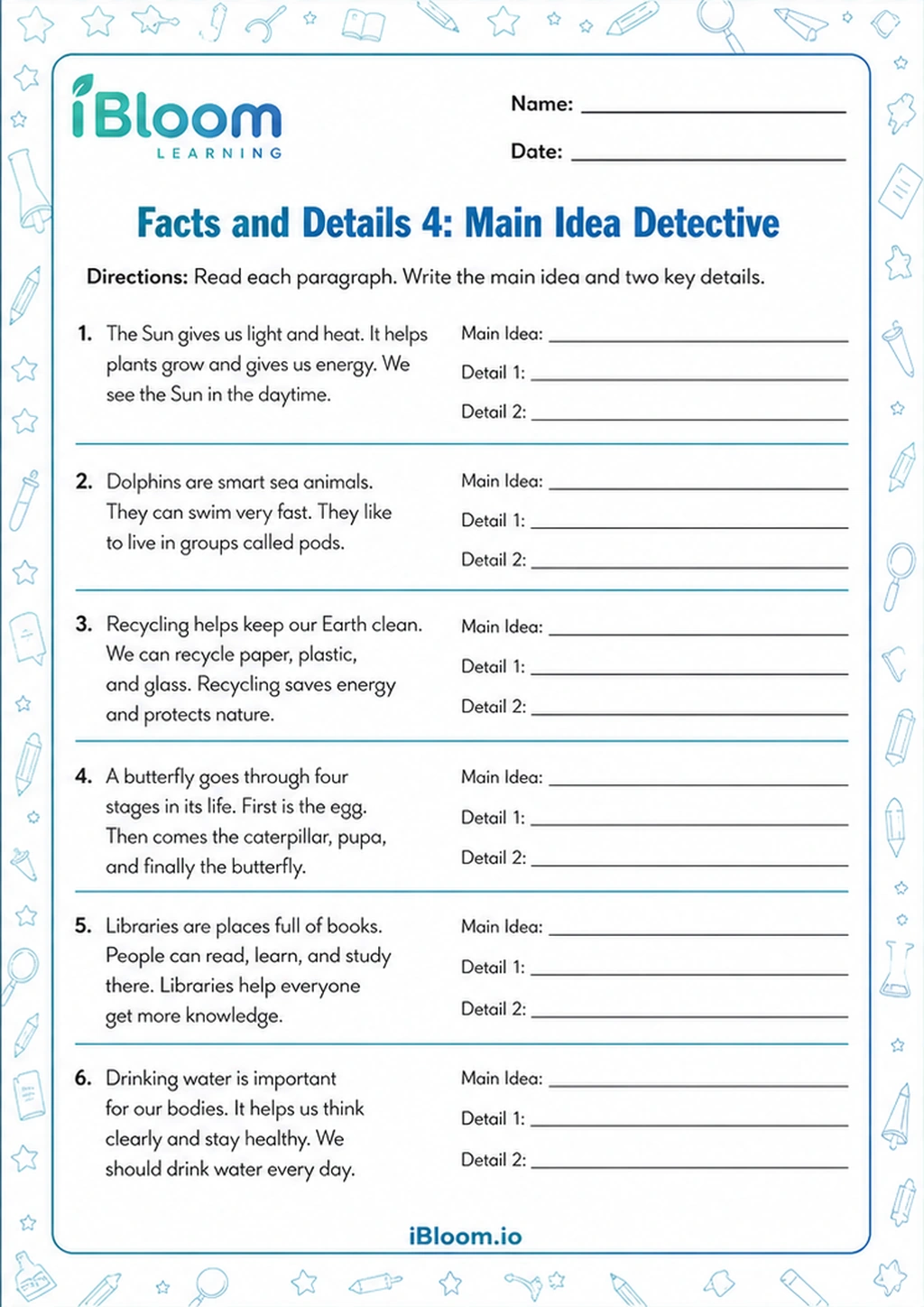 Facts and Details 4: Main Idea DetectiveClass 3 printable practice for Facts and Details.Class 3Free PDF preview
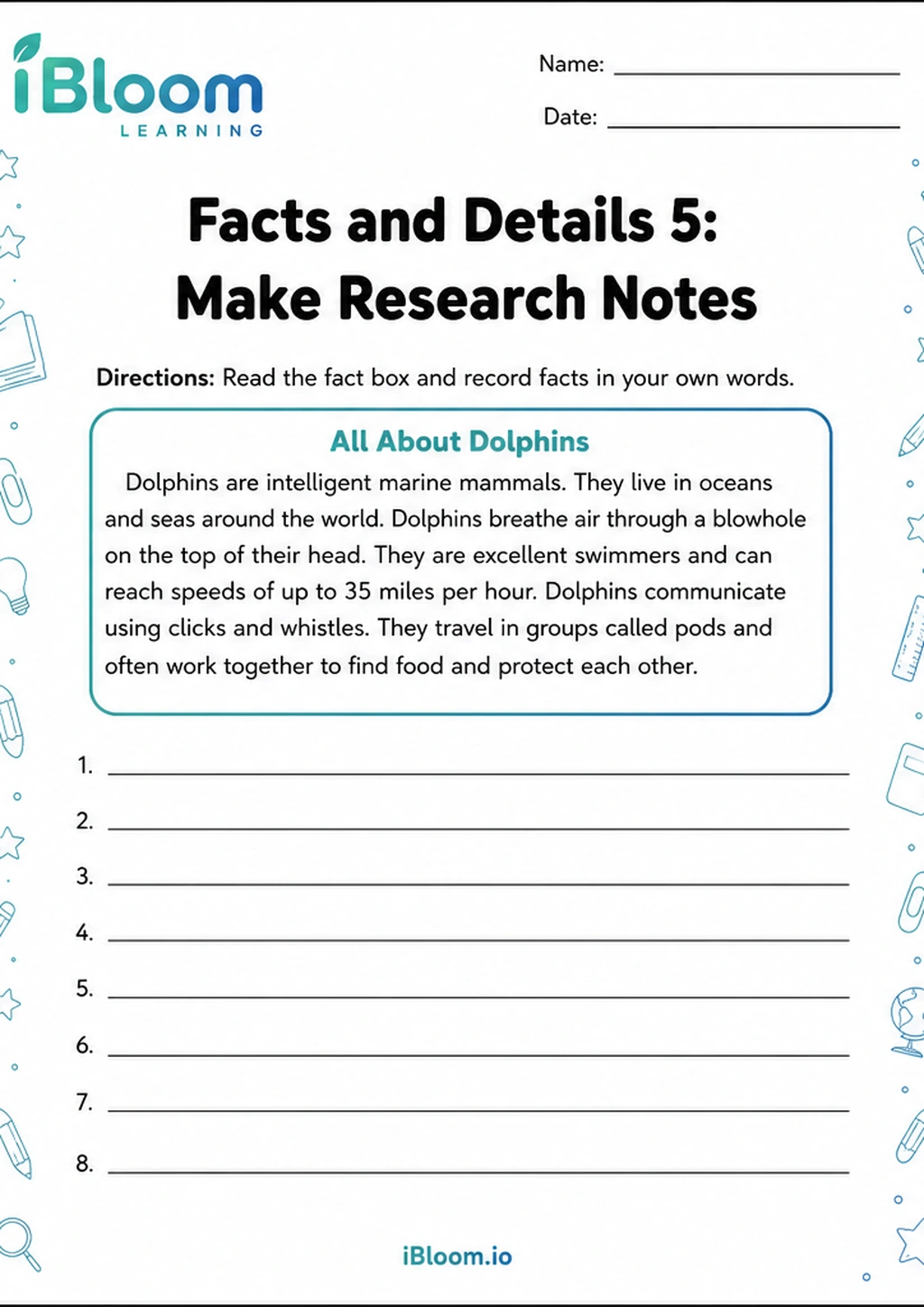 Facts and Details 5: Make Research NotesClass 3 printable practice for Facts and Details.Class 3Free PDF preview
 Facts and Details 6: Build an Informative ParagraphClass 3 printable practice for Facts and Details.Class 3Free PDF preview
Practice that builds confidence
From facts to details
These Class 3 Grammar and Writing worksheets help children practise informative writing: explaining a topic clearly, using facts, adding helpful details, and keeping opinions separate from information. Children learn to write about real people, places, events, objects, and ideas in an organised way.
The printable activities include fact-and-detail tasks, compare and contrast writing, guided practice paragraphs, prompts, biography work, research note-taking, and short research writing. Each worksheet supports children as they move from collecting information to shaping it into a readable paragraph.
Informative writing begins with noticing the difference between a fact and a personal feeling. In these worksheets, children identify useful facts, choose supporting details, and remove sentences that do not help the reader learn. A topic such as an animal, a festival, a sport, or a famous person can be developed with simple details like what it is, where it is found, what it does, or why it is important.

Organising Class 3 paragraphs
The practice paragraphs guide children to write a clear topic sentence, add two or more related details, and finish with a closing sentence. Prompts give a starting point, while compare and contrast activities help children use words such as both, similar, different, however, and unlike. Biography tasks build sequencing skills by focusing on a person’s life, work, and achievements.
Research and research writing
For research pages, children learn to gather small pieces of information, not copy long sentences. They may record key words, sort facts under headings, and then turn notes into their own sentences. This progression is important for Class 3 learners because research writing should sound like the child understands the topic, not like a copied passage.
A simple parent routine
At home, ask your child to read the topic and say three facts aloud before writing. Then help them underline the main idea, circle the best details, and check whether every sentence teaches the reader something. After writing, let them read the paragraph aloud and ask, “Did I explain the topic clearly?” This routine works well for prompts, biography worksheets, and short research tasks.

Classroom uses and errors to watch
Teachers can use these printables for writing periods, small-group practice, grammar and writing revision, or display-board drafts. Common errors include mixing opinions with facts, repeating the same detail, writing sentences in a random order, and copying research text word for word. Encourage children to use headings, note boxes, and paragraph frames to keep ideas connected.

Free printable PDF download
Use this class 3 informative writing worksheet page to preview the activity, print it, or download it as a PDF for quick practice. It works well for homework, homeschool lessons, tutoring, morning work, revision, and classroom centers.
Answers and answer key support
After the child completes the worksheet independently, parents and teachers can use the answer support or answer key information to check the work, review mistakes, and choose the next practice step.
Why iBloom worksheets help
The iBloom activities break informative writing into manageable steps: find facts, add details, compare ideas, plan a paragraph, and write from simple research. The child-friendly prompts reduce blank-page anxiety, while the variety of biography, research, and paragraph practice helps children see that informative writing is used for many real topics.
Helpful answers
Frequently asked questions
What is informative writing for Class 3?
Informative writing is writing that explains a real topic using facts and clear details. In Class 3, children usually practise short paragraphs about people, animals, places, events, objects, or simple ideas.
How do these worksheets teach facts and details?
Children practise choosing true information, adding details that explain the topic, and leaving out unrelated or opinion-based sentences. This helps them build stronger informative paragraphs.
Are biography activities included?
Yes. The collection includes biography writing practice where children write about a person’s life, important work, and achievements using organised facts.
How can my child avoid copying during research writing?
Ask your child to write short notes or key words first, close the source, and then make their own sentences. The research worksheets support this note-to-sentence process.
Can teachers use these pages for writing practice in class?
Yes. Teachers can use them for whole-class modelling, small-group writing support, independent paragraph practice, research lessons, or prompt-based writing tasks.
Is this class 3 informative writing worksheet free?
Yes. You can preview it for free and use the printable worksheet for home or classroom practice.
Can I download this class 3 informative writing worksheet as a PDF?
Yes. Use the worksheet download option to save a printable PDF, or print the worksheet directly from the page.
Does this class 3 informative writing worksheet include answers or an answer key?
When the activity has fixed answers, iBloom includes answer support so parents and teachers can check the completed worksheet.