Free printable practice
Facts Details Practice Activities
Class 3 informative writing worksheets that help children choose clear facts, add useful details, and build better explanatory paragraphs.
Free printable worksheet PDFs
Preview every available page, then download the free worksheet PDF for home, homeschool, tutoring, or classroom practice.
Preview the exact activity before downloading it.
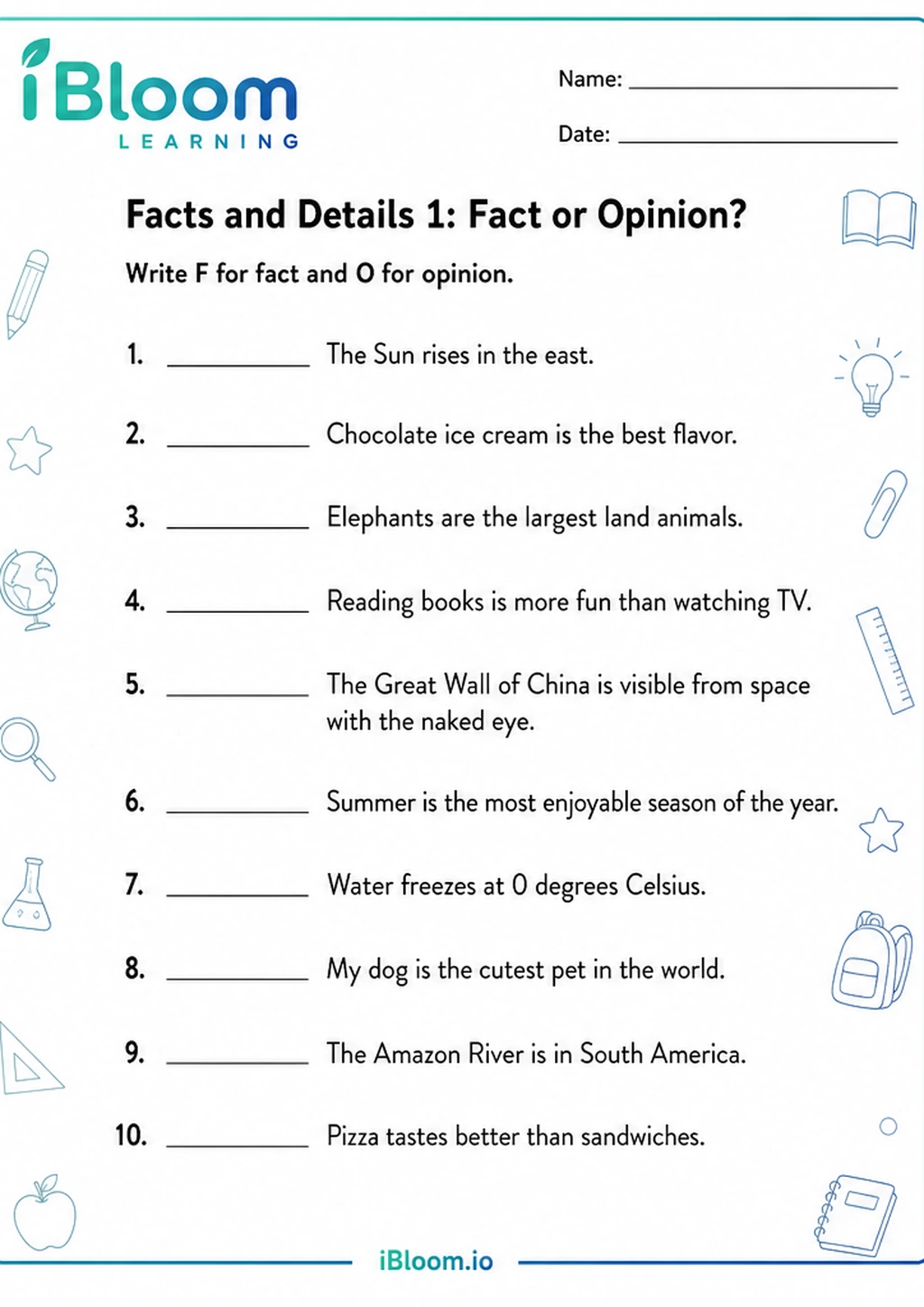 Facts and Details 1: Fact or Opinion?Class 3 printable practice for Facts and Details.Class 3Free PDF preview
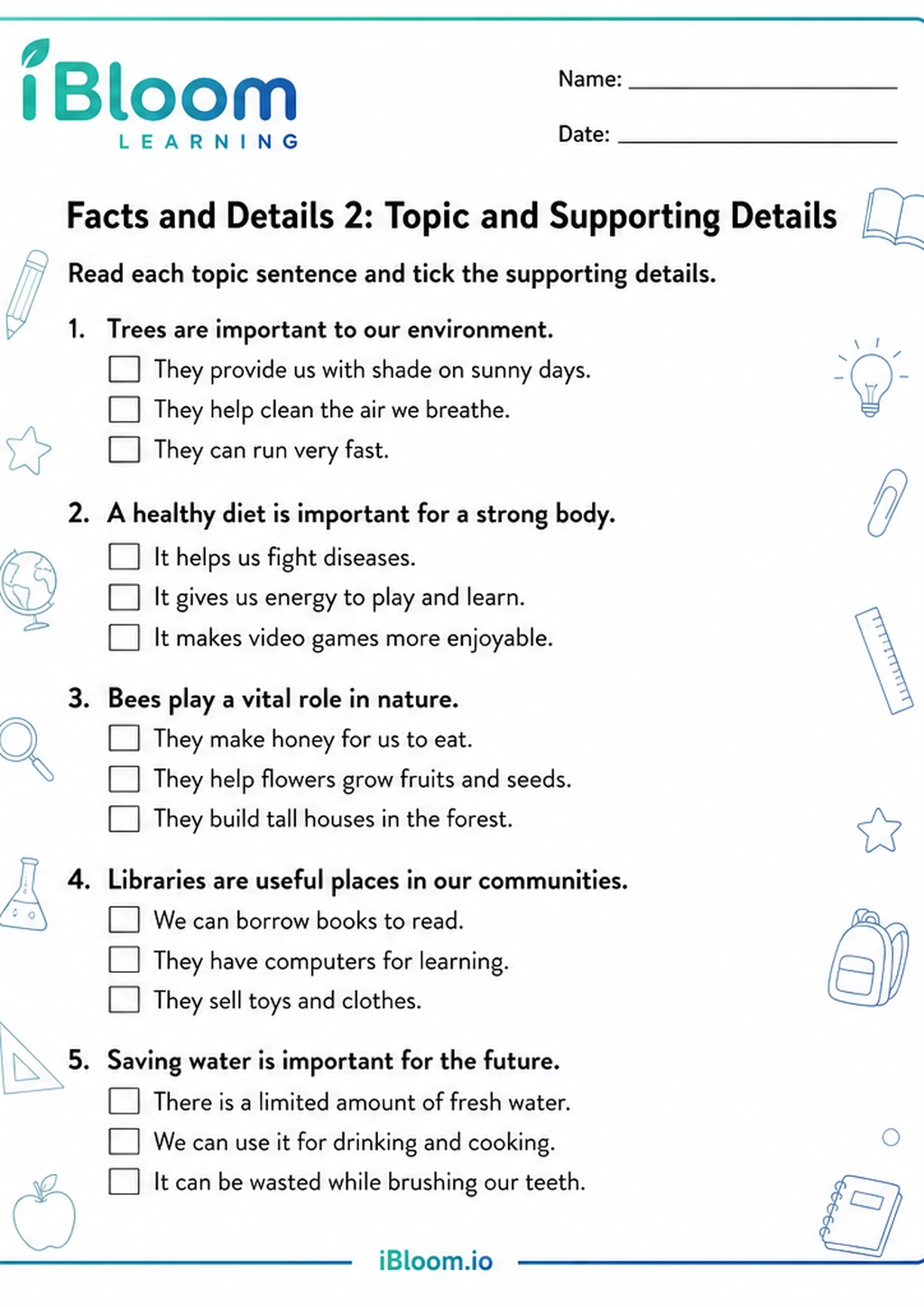 Facts and Details 2: Topic and Supporting DetailsClass 3 printable practice for Facts and Details.Class 3Free PDF preview
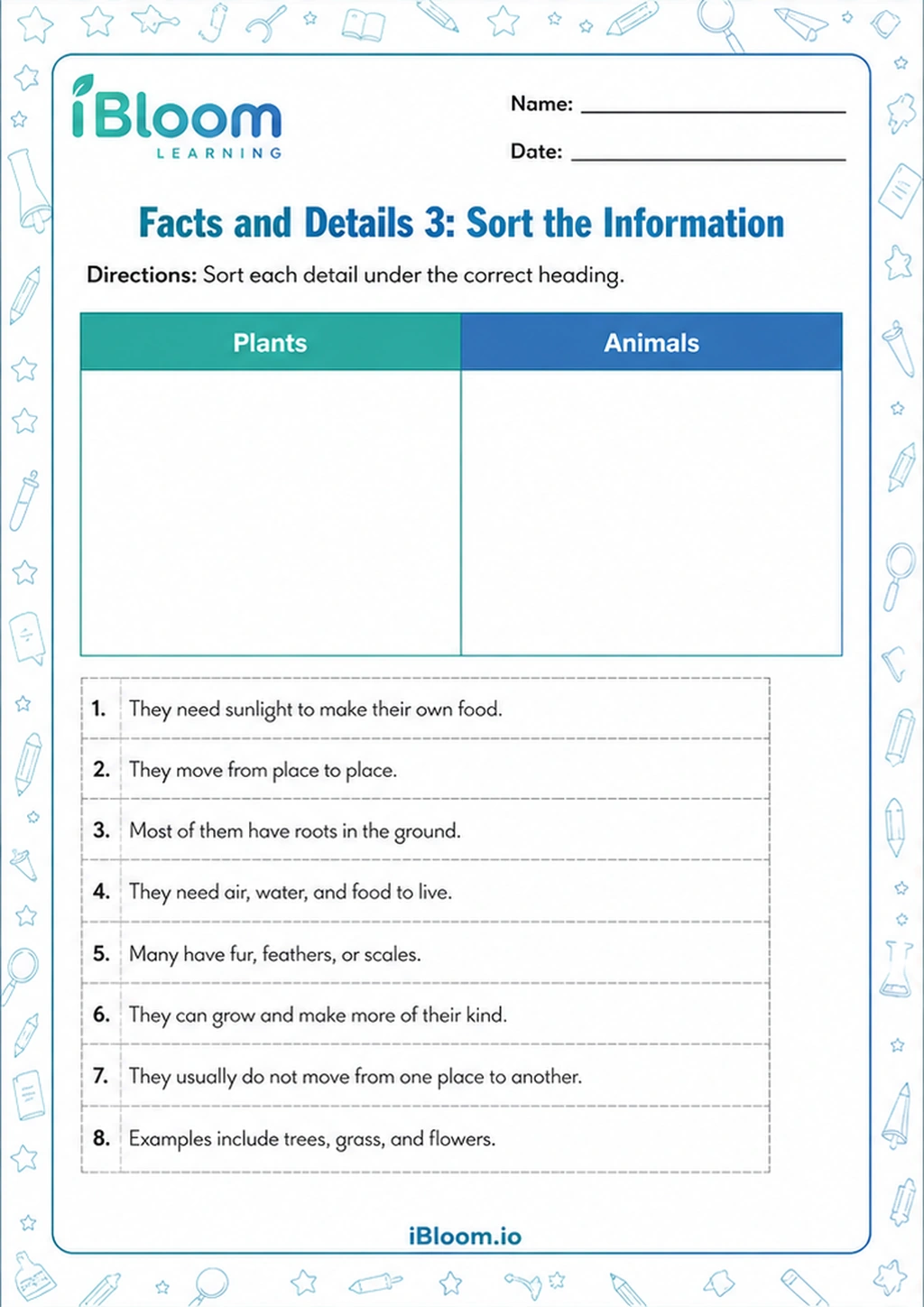 Facts and Details 3: Sort the InformationClass 3 printable practice for Facts and Details.Class 3Free PDF preview
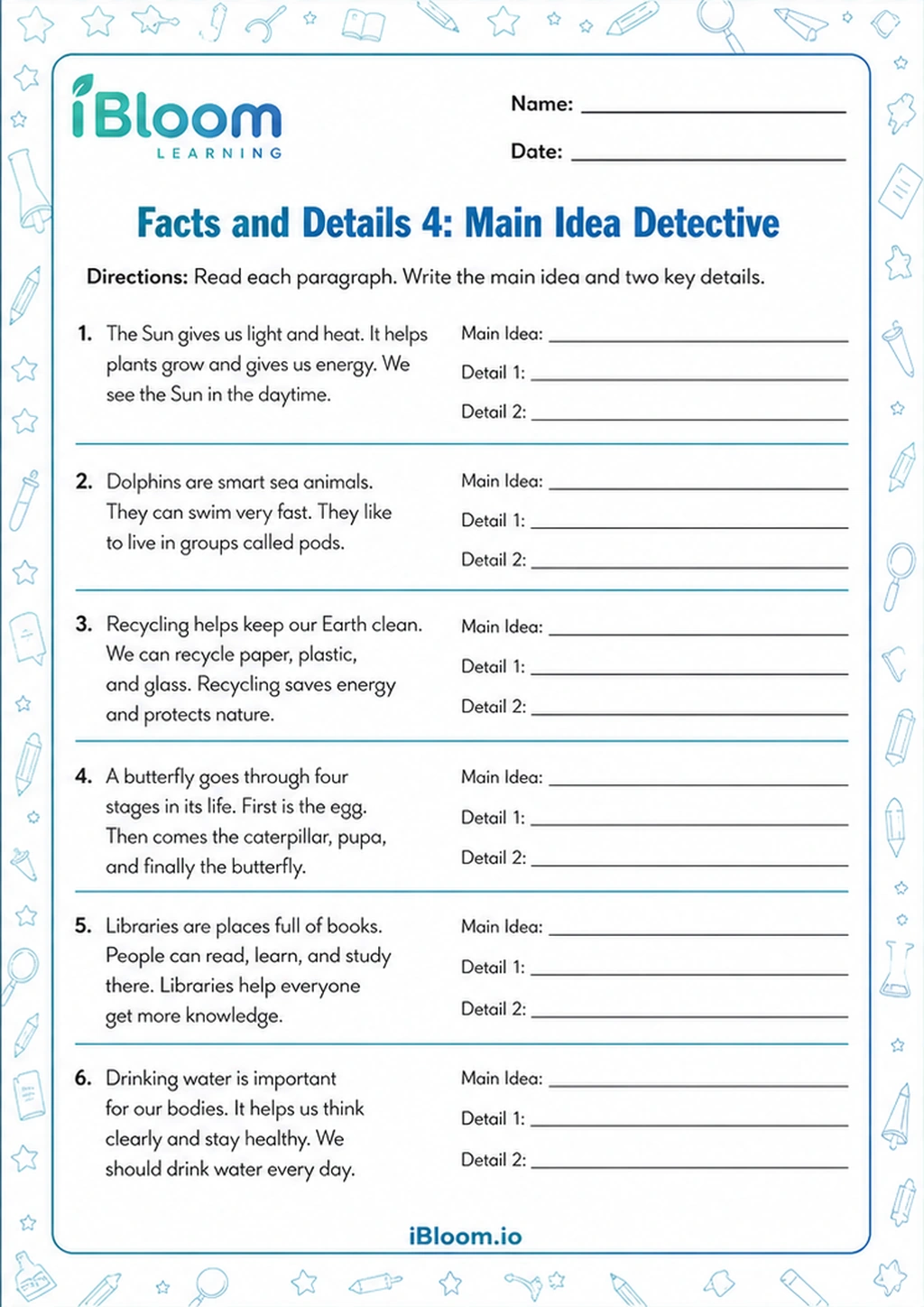 Facts and Details 4: Main Idea DetectiveClass 3 printable practice for Facts and Details.Class 3Free PDF preview
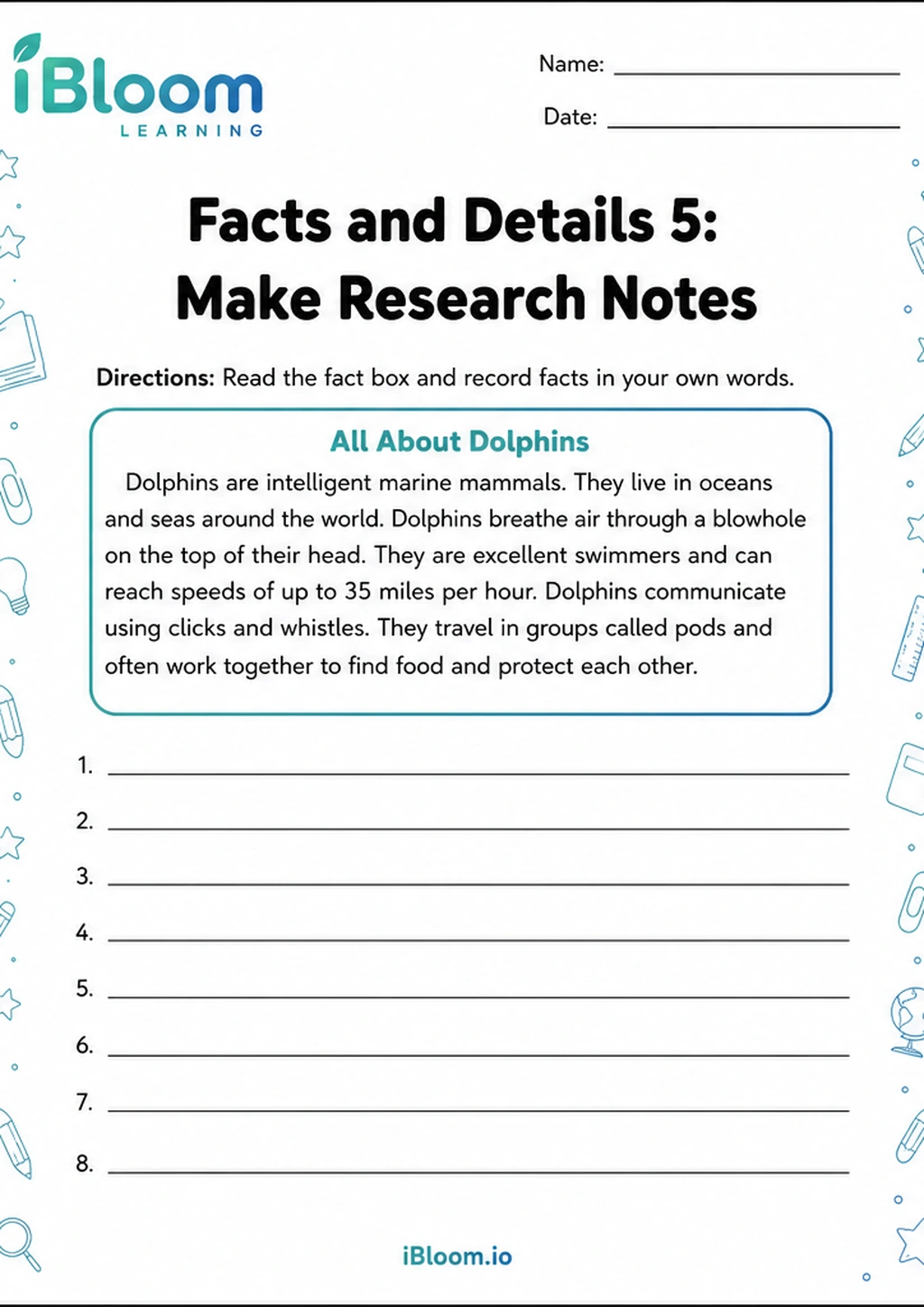 Facts and Details 5: Make Research NotesClass 3 printable practice for Facts and Details.Class 3Free PDF preview
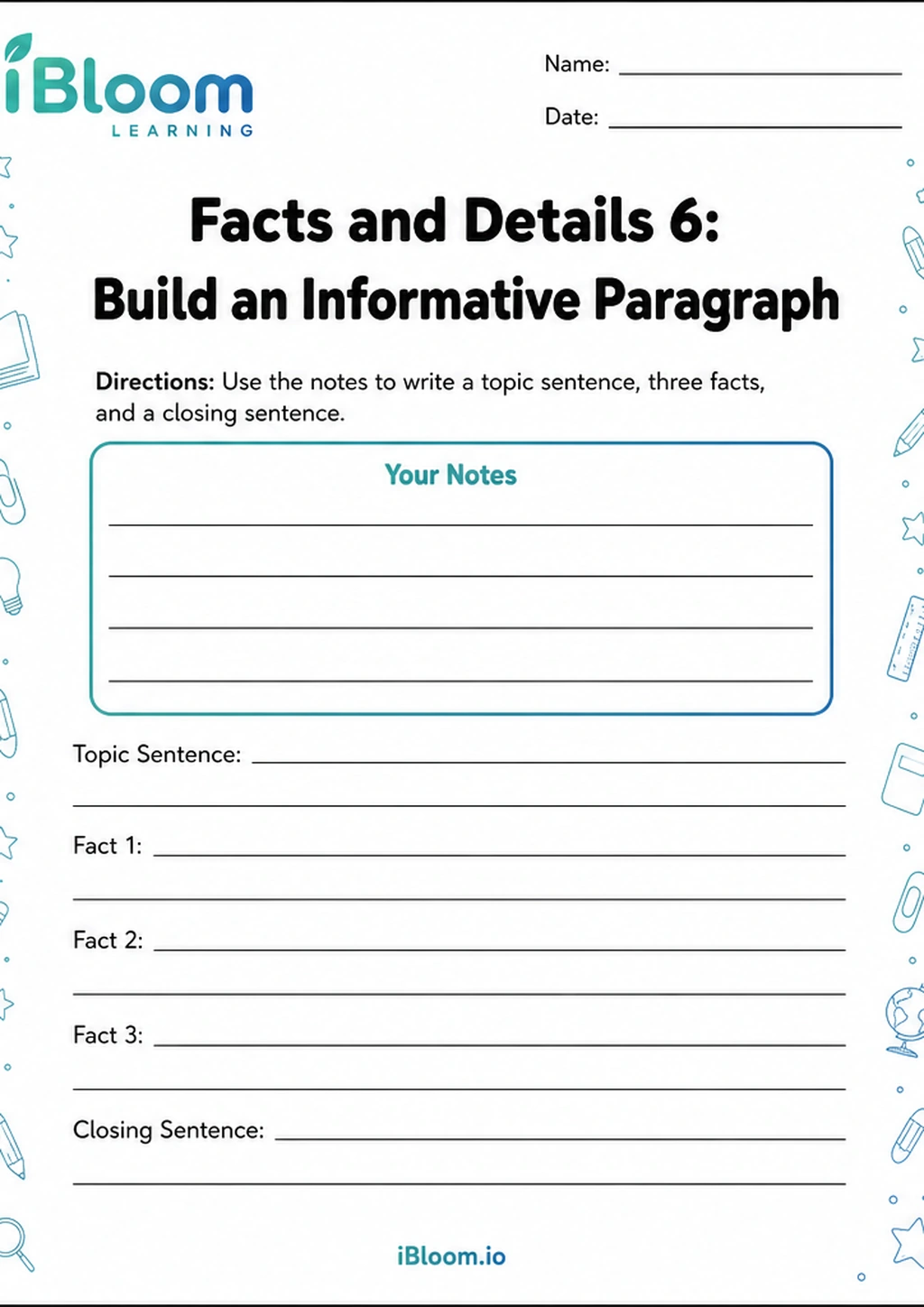 Facts and Details 6: Build an Informative ParagraphClass 3 printable practice for Facts and Details.Class 3Free PDF preview
Practice that builds confidence
Understanding facts and details
These Class 3 facts and details practice activities help children understand how informative writing is built from true, relevant information. Learners practise spotting facts, choosing details that explain them, and avoiding sentences that do not belong.
The printable worksheets include child-friendly prompts, short passages, matching tasks, sentence-building practice, and paragraph activities. They guide pupils from recognising useful information to writing clearer explanations in their own words.
In informative writing, a fact tells the reader something true about a topic, while a detail explains, describes, or supports that fact. For example, “Camels live in deserts” is a fact; “Their humps store fat, which helps them survive when food is scarce” is a useful detail. These worksheets help Class 3 children see how details make information clearer instead of simply making writing longer.

How the practice progresses
The activities begin with simple recognition: identifying factual sentences and selecting details that match a topic. Children then move to sorting relevant and irrelevant information, adding missing details, and expanding short factual sentences. Later tasks encourage them to write a few connected sentences about a familiar subject such as animals, places, seasons, food, or daily routines.
A simple parent routine
At home, ask your child to choose one topic, such as “rainy season” or “the post office”. Say one fact aloud, then ask, “What detail helps the reader understand this better?” Encourage answers that are specific: what it looks like, what it does, where it is found, or why it is useful. After completing a worksheet, let your child read the paragraph aloud and check whether every sentence teaches the reader something about the topic.

Classroom uses for teachers
Teachers can use these printables for writing practice, small-group support, morning work, or language centres. They work well before paragraph writing because pupils learn to gather information before drafting. The sheets can also be used after a lesson on topic sentences, as children practise choosing details that stay connected to the same main idea.

Common errors to watch for
Some children add opinions such as “It is very nice” when the task asks for facts. Others repeat the same idea in different words or include an interesting sentence that does not fit the topic. Watch for vague details like “It is good” and guide pupils towards clearer information such as size, colour, use, place, action, or reason.
Free printable PDF download
Use this Class 3 facts and details worksheet page to preview the activity, print it, or download it as a PDF for quick practice. It works well for homework, homeschool lessons, tutoring, morning work, revision, and classroom centers.
Answers and answer key support
After the child completes the worksheet independently, parents and teachers can use the answer support or answer key information to check the work, review mistakes, and choose the next practice step.
Why iBloom worksheets help
iBloom worksheets break the skill into manageable steps, so children do not have to write a full paragraph before understanding what belongs in it. A child-friendly strategy is: Fact first, detail next, check the link. If the detail answers “how?”, “where?”, “what kind?”, or “why?” about the fact, it probably belongs.
Helpful answers
Frequently asked questions
What do Class 3 children learn in facts and details worksheets?
They learn to identify true factual statements, choose details that support a topic, remove unrelated information, and write clearer informative sentences.
How is a fact different from a detail in informative writing?
A fact gives true information about the topic. A detail supports the fact by explaining more about it, such as where it happens, what it looks like, why it matters, or how it works.
Can these worksheets help with paragraph writing?
Yes. They prepare children for paragraph writing by teaching them to keep sentences connected to one topic and to add meaningful information instead of random extra sentences.
What mistakes should I look for when my child writes details?
Look for opinions, repeated ideas, vague words, and details that do not match the topic. Ask your child to explain how each detail supports the fact.
Are these activities suitable for Indian Class 3 learners?
Yes. The language level and writing tasks are designed for Class 3 grammar and writing practice, with clear instructions and familiar informative writing skills.
Is this Class 3 facts and details worksheet free?
Yes. You can preview it for free and use the printable worksheet for home or classroom practice.
Can I download this Class 3 facts and details worksheet as a PDF?
Yes. Use the worksheet download option to save a printable PDF, or print the worksheet directly from the page.
Does this Class 3 facts and details worksheet include answers or an answer key?
When the activity has fixed answers, iBloom includes answer support so parents and teachers can check the completed worksheet.