
About this worksheet
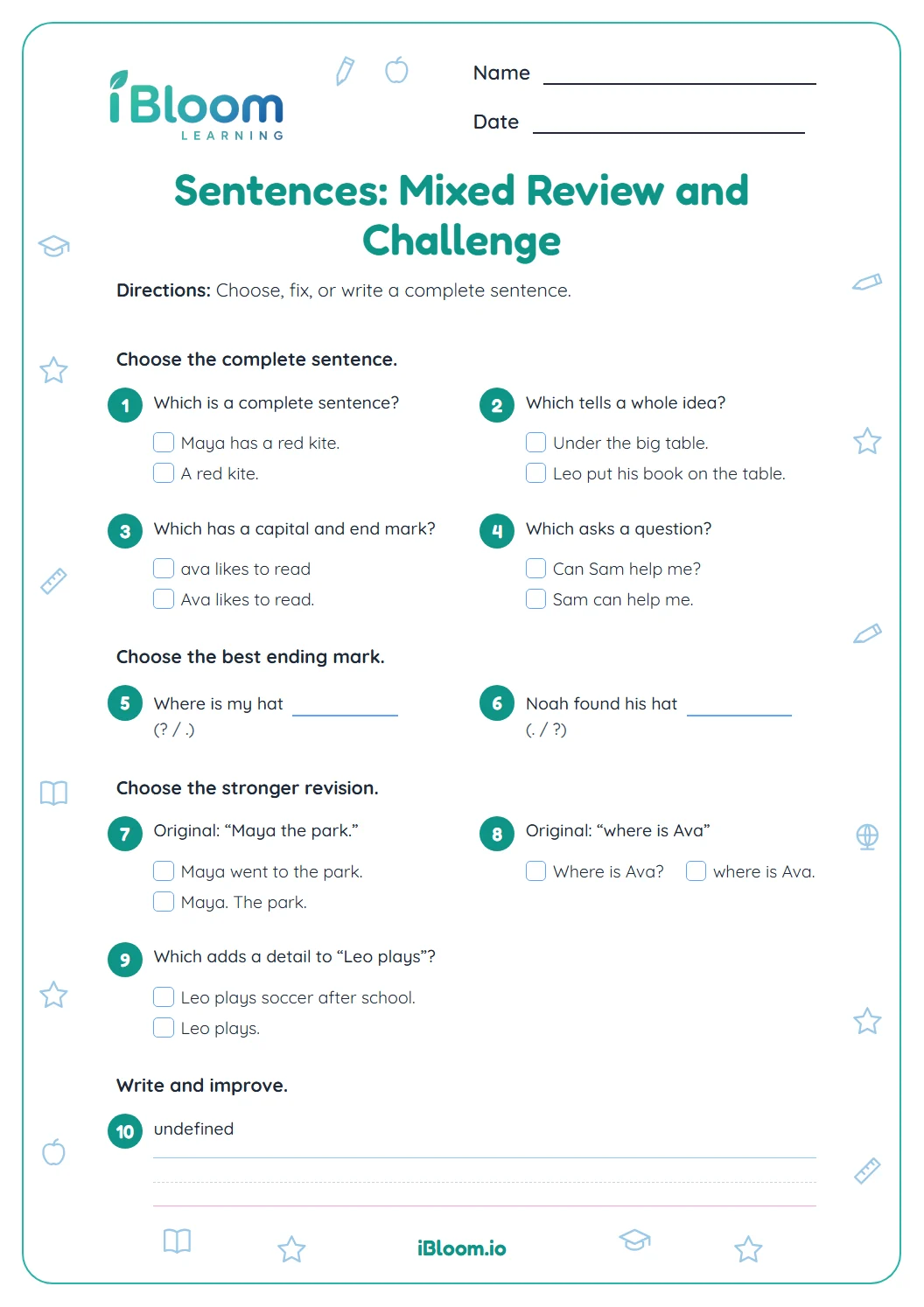
This free Grade 1 worksheet gives children guided practice completing simple sentences. First, they choose a word that fits the meaning and grammar of a sentence. Next, they distinguish a complete thought from a fragment. In the final part, they write an ending of their own. The sequence supports CCSS L.1.1j: producing and expanding complete sentences in response to prompts. A separate answer key includes sample endings for open responses.
Aligned to L.1.1j
What will children practice?
The worksheet has three parts that move from guided choices to independent writing. Part A asks children to complete sentences with a word that fits. Part B asks them to tell a full sentence from a fragment. Part C gives sentence beginnings for children to finish in their own way.
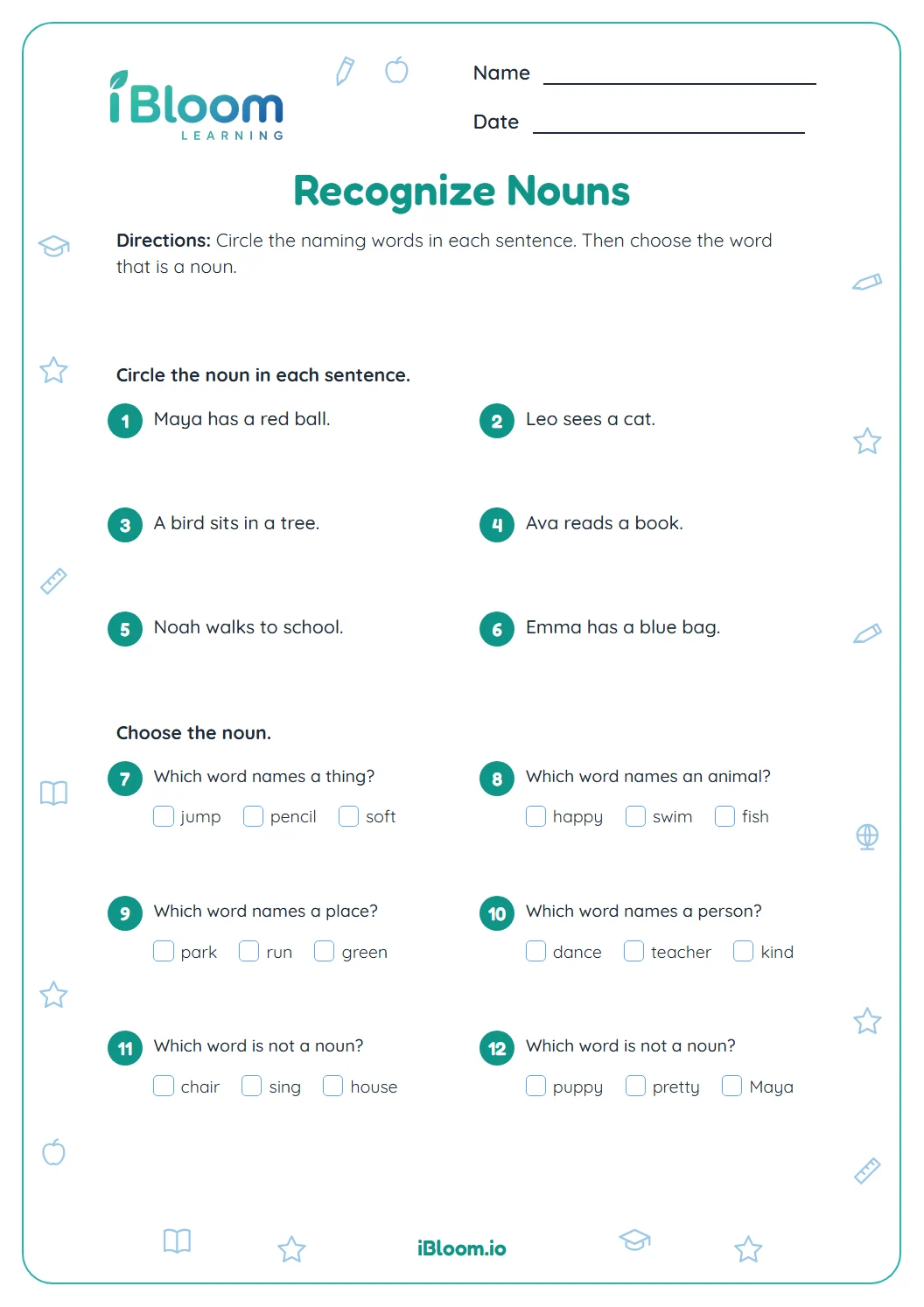
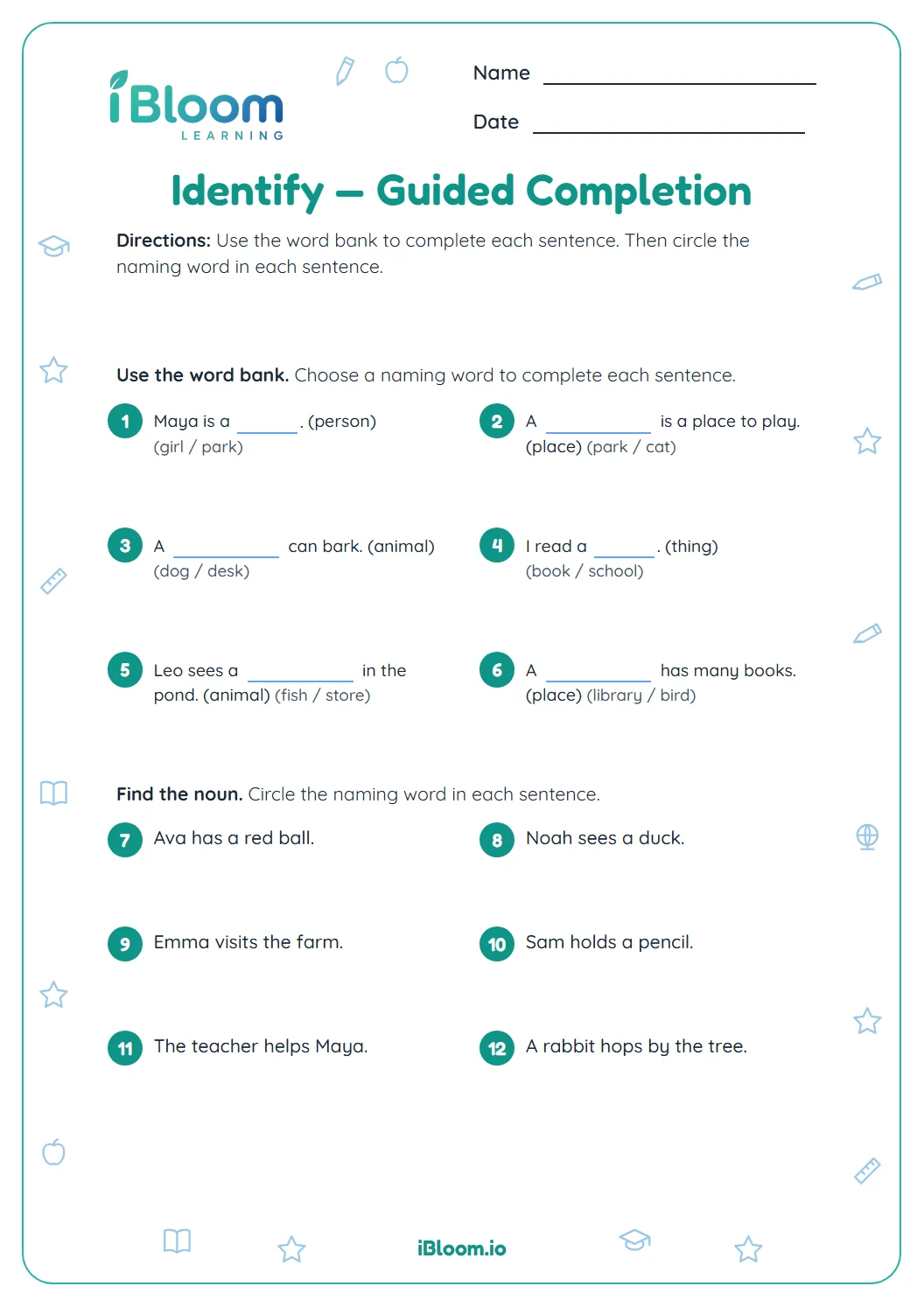
The word choices include naming words and action or describing words. Children also see that a sentence needs a subject and a matching verb, as in “The dogs play.”
- Part A: 8 choices for completing short sentences
- Part B: 4 choices between a complete thought and a fragment
- Part C: 4 open sentence endings
How can a child choose an ending?
Read the whole sentence, including the words after the blank. Those words often give a clue. Then try each choice aloud and check whether the sentence sounds complete and makes sense.
- 1The dogs ___ in the yard.
- 2Try each choice: runs, is, play.
- 3“The dogs play in the yard” makes sense and matches dogs, so play completes the sentence.
How can you spot a complete sentence?
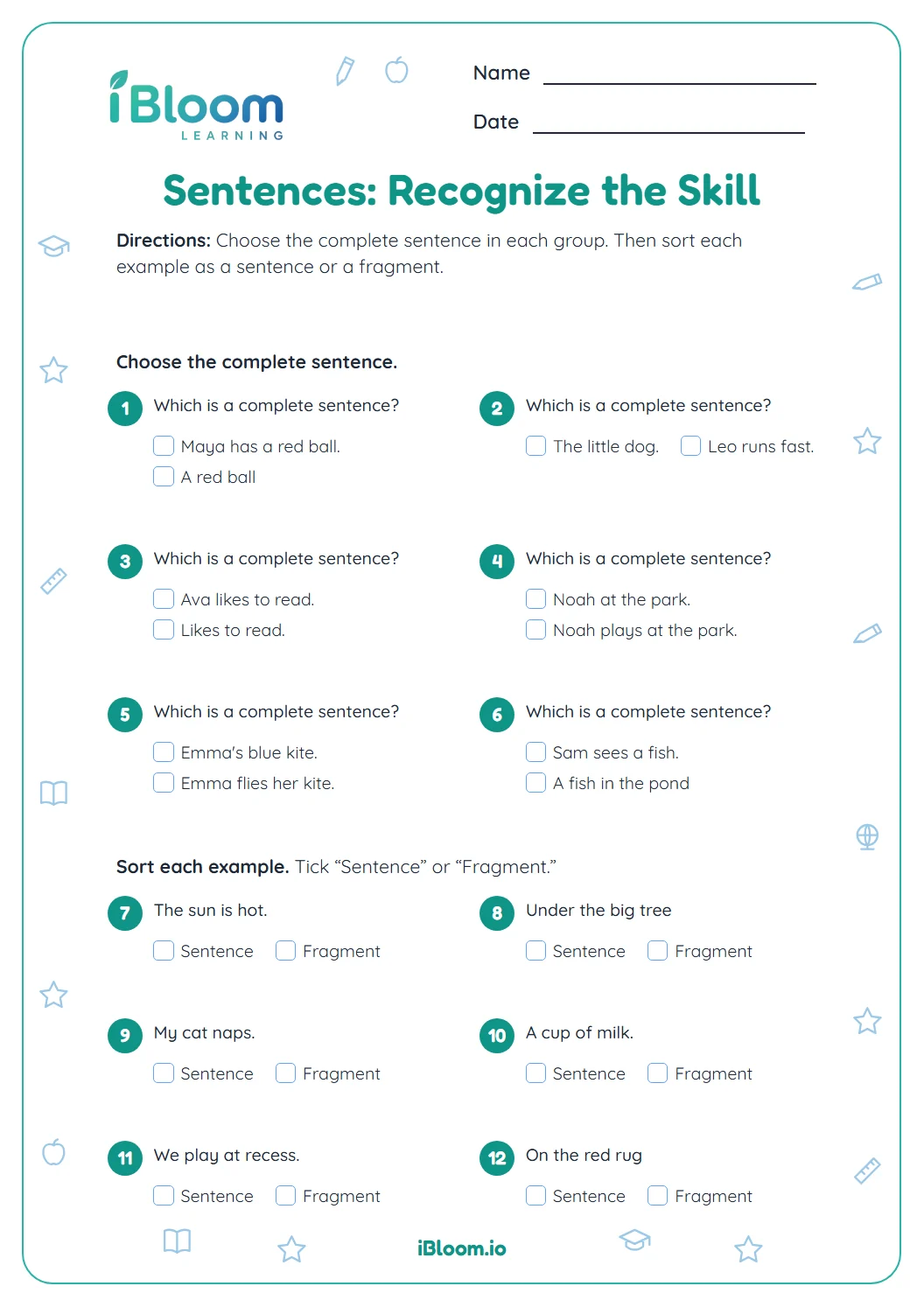
A complete sentence tells who or what and what happens or what it is like. “The little cat naps.” gives both pieces. “The little cat” names something but does not tell what it does, so it is a fragment.
In Part B, read each choice as a whole. Look for the one that gives the reader a complete idea.
What makes a good sentence ending?
In Part C, more than one answer may work. The answer key gives a sample, but a child’s different answer is also correct if it makes a complete, sensible sentence. For “I can ___ a song,” sing is one possible ending.
How to use this worksheet
- 1Read the directions and say the first sentence aloud together.
- 2In Part A, try each word choice in the sentence and listen for a phrase that makes sense.
- 3For Part B, check that the choice tells a whole idea, not only who or what.
- 4In Part C, ask your child to say the whole sentence before writing the ending.
- 5Read each finished sentence once more to check that it sounds complete.
- 6Use the answer key for Parts A and B; accept other sensible, complete endings in Part C.
Common sentence-completion slips
The mistake
Choosing a verb that does not match its subject, such as “The dogs runs.”
The fix
Say the subject and verb together. With dogs, choose play; with one dog, choose plays.
The mistake
Choosing a word that fits the blank but not the rest of the sentence.
The fix
Read all the words after the blank too, then test each choice in the complete sentence.
The mistake
Writing only a word that does not finish the thought, such as “I can the song.”
The fix
Read the beginning and ending together. Add an action or idea that makes the whole sentence clear.
Common Core alignment
This practice moves from choosing sentence completions to producing complete sentences in response to prompts.
Complete sentence starters with words that make a whole, sensible thought.
On this sheet: Part C asks children to complete sentence starters; Parts A and B provide guided practice recognizing complete ideas.
Show the official wordingHide the official wording
Produce and expand complete simple and compound declarative, interrogative, imperative, and exclamatory sentences in response to prompts.
What to practice next
Make more practice
Further reading
Questions parents and teachers ask
How many questions are on this worksheet?
There are 16 questions across three parts. Children answer 8 multiple-choice sentence completions, choose between complete thoughts and fragments 4 times, and write endings for 4 sentence starters. A separate answer key gives the choices and sample written endings.
What does a complete sentence need?
A complete sentence shares a whole idea. It tells who or what the sentence is about and says what happens or what it is like. “Birds build nests” is complete; “The birds in spring” names a subject but does not say what the birds do.
Can my child write a different answer from the key?
Yes. The four Part C prompts invite children to create their own endings, so the key lists samples rather than the only acceptable words. Accept an answer when it makes sense with the beginning and the full sentence tells a complete idea.
Why does Part A include both one and more than one subject?
The choices let children notice how a verb fits its subject. For example, “Leo reads” uses reads with one person, while “The dogs play” uses play with more than one dog. Encourage your child to say the subject and verb together before choosing.
How should we use the answer key?
Use the key after your child has tried the worksheet. Parts A and B have one intended choice for each item. For Part C, compare the child’s response with the sentence starter and accept another ending when it forms a sensible, complete sentence.
What can we practice next?
Ask your child to say a sentence about a familiar person, animal, or toy, then name the subject and the action or description. The linked noun pages offer practice finding and using nouns, which gives children more material for building sentences.