





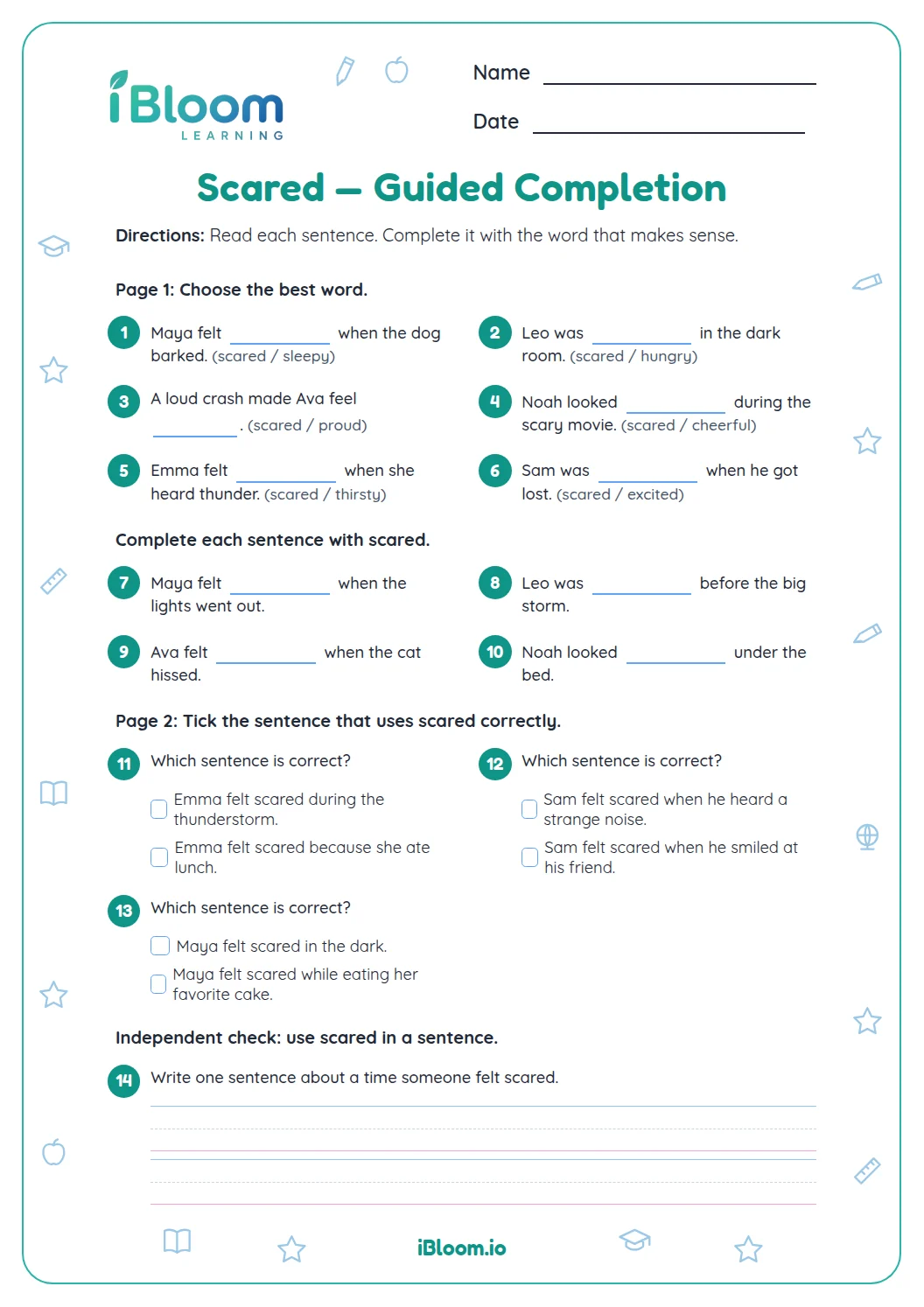
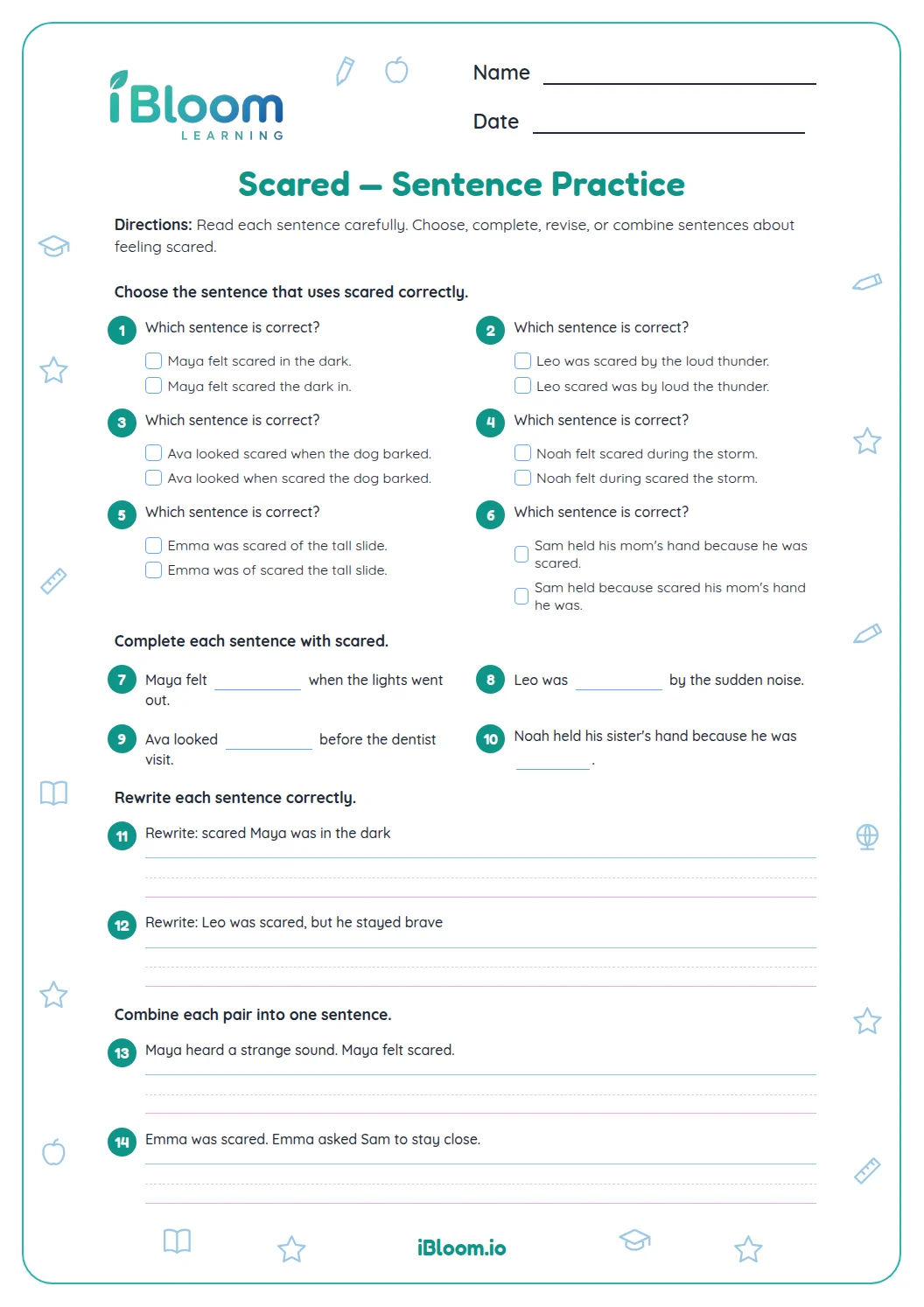
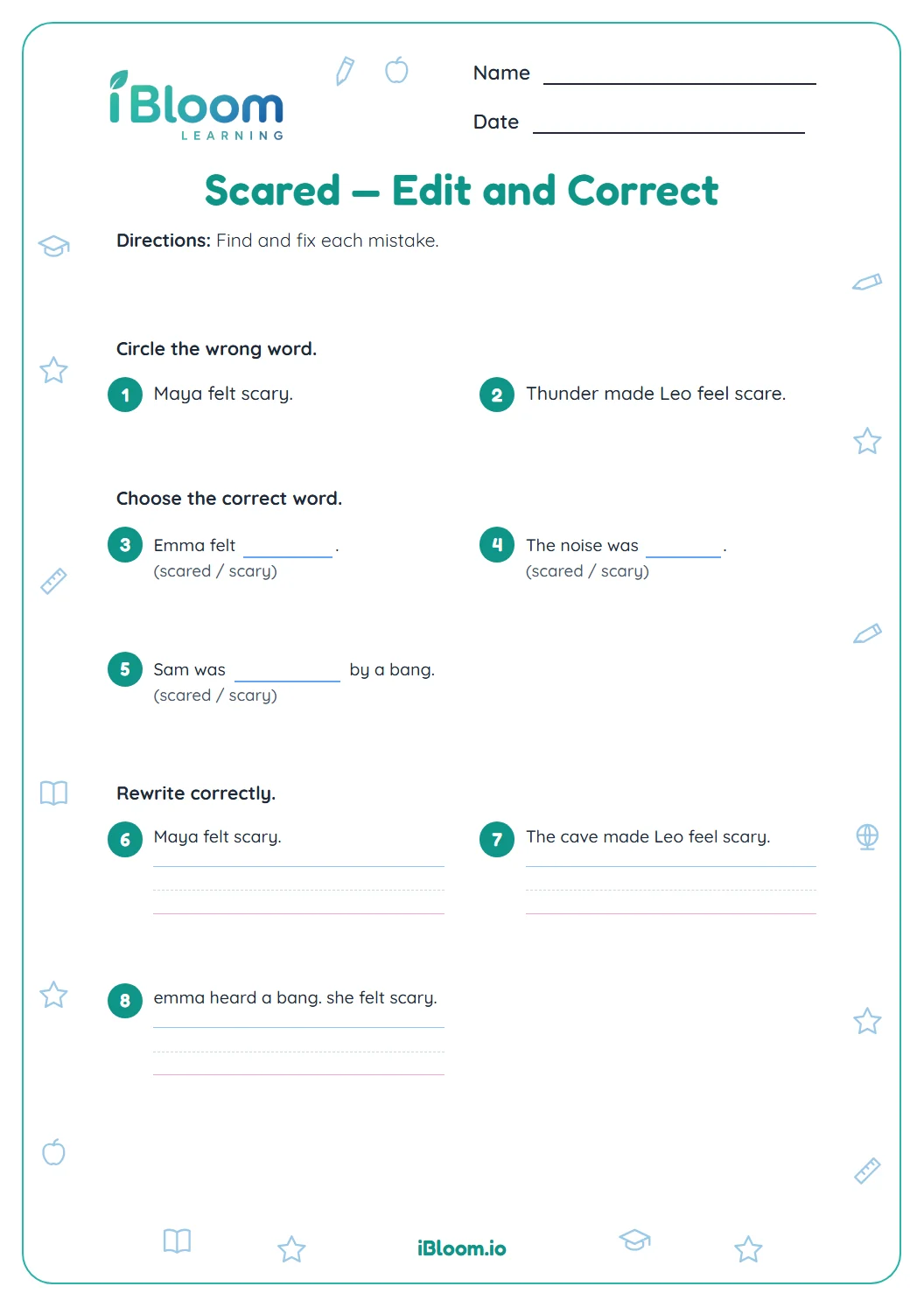
About this worksheet
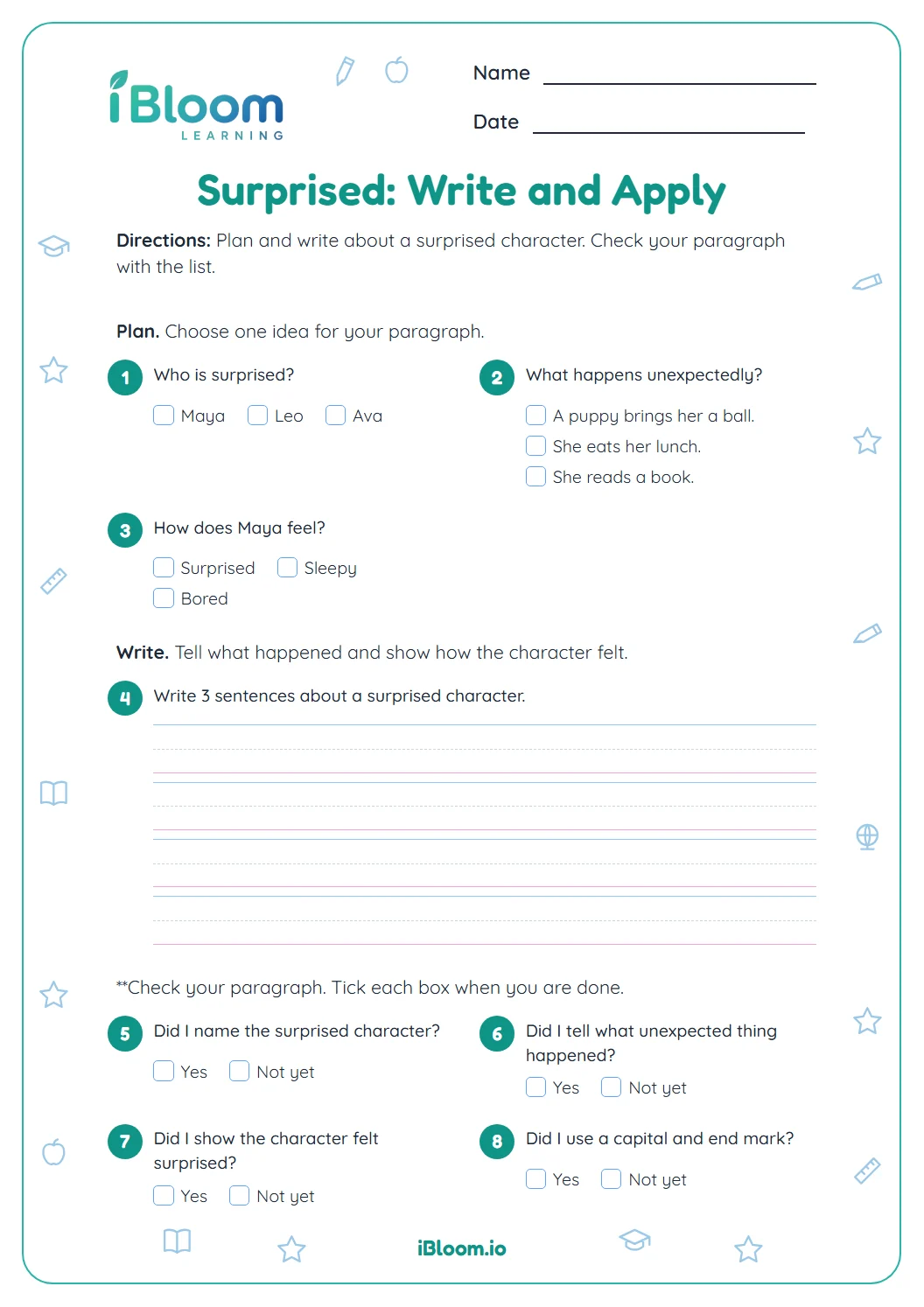
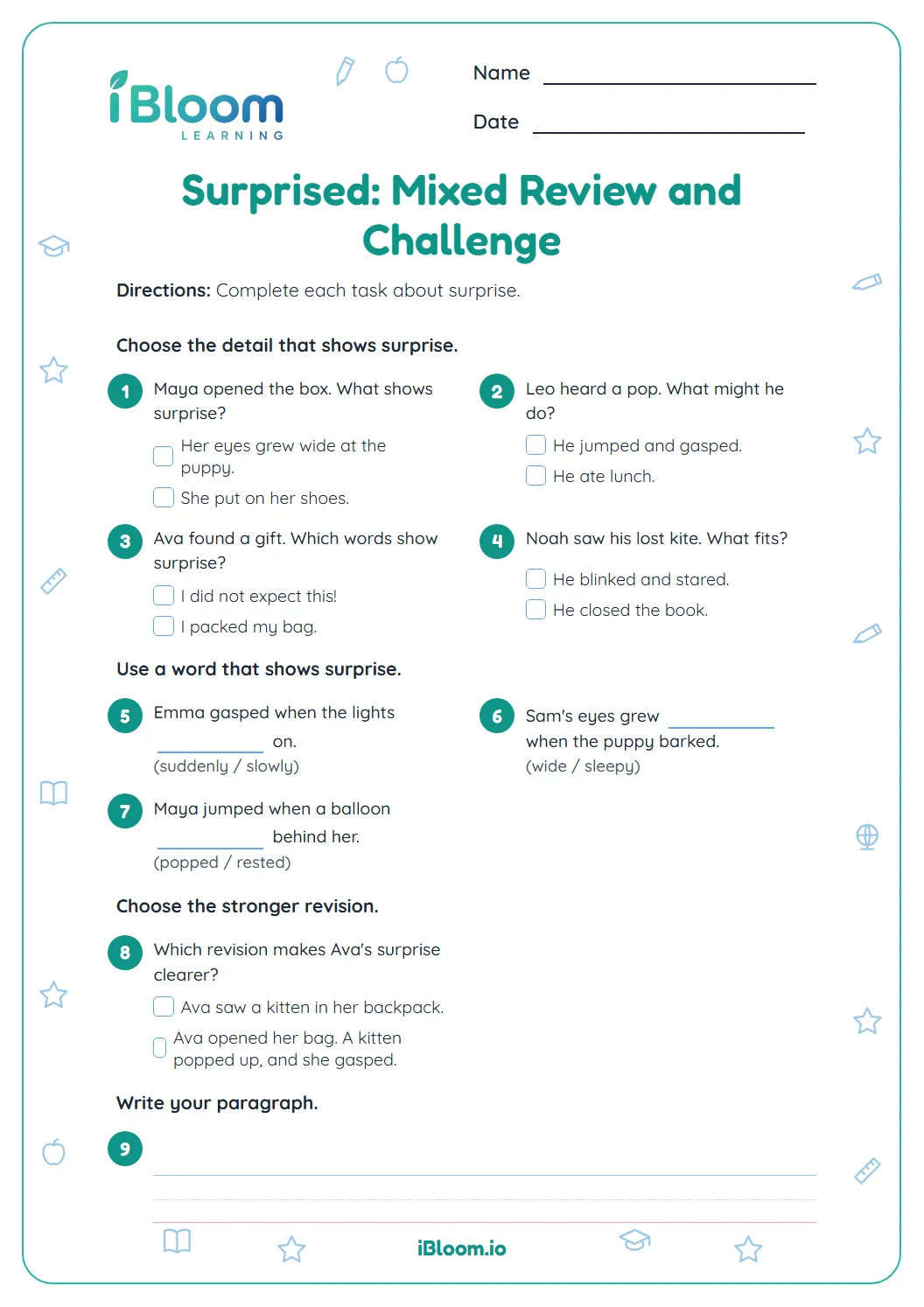
This free Grade 1 worksheet helps children recognize surprise and use the feeling in a short narrative. Eight multiple-choice clues contrast surprise with feelings such as boredom, pride, calm, and sleepiness, matching the recognition practice on the original sheet. In Part A, children choose a feeling for six short situations. Part B offers two more clues to sort. Part C asks them to write two events with First and Then, followed by an ending that names a feeling. The writing practice aligns with Common Core W.1.3. A separate answer key marks the choices and gives sample sentences.
Aligned to W.1.3
What clues show that someone feels surprised?
Surprise follows something unexpected. A gasp, jump, wide eyes, or a quick turn can show that a person did not expect what happened. A yawn during a familiar show may point to boredom instead.
In question 1, Maya opens a box and sees a puppy. Her gasp follows an unexpected discovery, so “surprised” fits. Compare the event and reaction before choosing.
- 1Clue: Maya opens a box and sees a puppy. She gasps.
- 2Answer: surprised
- 3Check: The puppy was an unexpected discovery, and Maya gasps.
How can children tell surprise from another feeling?
Read the whole clue, then ask whether the event is unexpected and which reaction the sentence gives. A person waiting calmly for a usual bus is not showing surprise; someone turning quickly after an unexpected sound may be.
Part A has six short situations, and Part B has two more clues. The answer choices include other feelings so children must use each clue rather than mark “surprised” every time.
How does the worksheet connect feelings to a narrative?
Questions 13 and 14 move from recognizing a feeling to writing about one. In question 13, children tell two events in order with First and Then and include what they find in the bag. Question 14 adds an ending sentence about the feeling.
The key gives a toy car as one example. Other discoveries work when the two events make sense in order and the ending closes the same experience.
Read the clue, name the feeling, and write
- 1Read each situation all the way through before choosing a feeling.
- 2Look for an unexpected event and the person’s reaction.
- 3Compare the clue with both choices in Parts A and B.
- 4For question 13, say two events aloud using First and Then, and include the discovery.
- 5Write a closing feeling for question 14, then compare the choices with the key.
Mistakes to notice and fix
The mistake
Choosing surprised whenever a person reacts strongly.
The fix
Check whether something unexpected happened; a smile can also show pride or happiness.
The mistake
Calling a familiar, repeated event a surprise.
The fix
Use the sentence’s clue: waiting for the usual bus or watching a known show is expected.
The mistake
Writing events without showing which came first.
The fix
Use First and Then, and finish with one sentence that tells how the discovery felt.
Common Core alignment
Write two sequenced surprise events with time words, a detail, and an ending.
On this sheet: Questions 13–14 ask children to sequence two events with First and Then, include a discovery detail, and provide closure with a feeling.
Show the official wordingHide the official wording
Write narratives in which they recount two or more appropriately sequenced events, include some details regarding what happened, use temporal words to signal event order, and provide some sense of closure.
What to practice next
Make more practice
Further reading
Questions parents and teachers ask
What does the worksheet mean by surprise?
Surprise is a feeling that follows something unexpected. The clues on this page include a puppy appearing in a box, a loud pop, and a tiny frog in a shoe. Children use the event and the person’s reaction to tell surprise from feelings such as boredom, pride, or calm.
How many questions are on the page?
There are 10 questions across two worksheet pages. The first eight are multiple-choice feeling clues, and the last two ask children to write a short narrative. The separate answer key also has two pages with the correct choices and sample written responses.
Why are other feelings included as choices?
The other choices help children read the whole clue instead of selecting surprise every time. A person who yawns during a familiar show may feel bored, while someone who gasps at an unexpected gift may feel surprised. Ask your child to point to the event that supports the choice.
What should my child write for the last two questions?
Question 9 asks for two events about finding a surprise, in order, using First and Then. It also asks what the child finds. Question 10 adds a closing sentence that names a feeling. The key uses a toy car, but another discovery and sensible ending can work.
Does the answer key allow different stories?
Yes. The key gives sample sentences, not the only possible story. Accept two connected events with First and Then, a discovery that fits the bag, and an ending feeling that belongs to the same experience. If events are out of order, help your child switch them and reread the story.