






About this worksheet
Children identify opinions and supporting reasons, connect ideas with because, and write a short opinion response with a closing. The examples use familiar topics such as recess, books, food, and games. The answer key includes sample responses for open-ended prompts.
Aligned to W.1.1
How can a child spot an opinion?
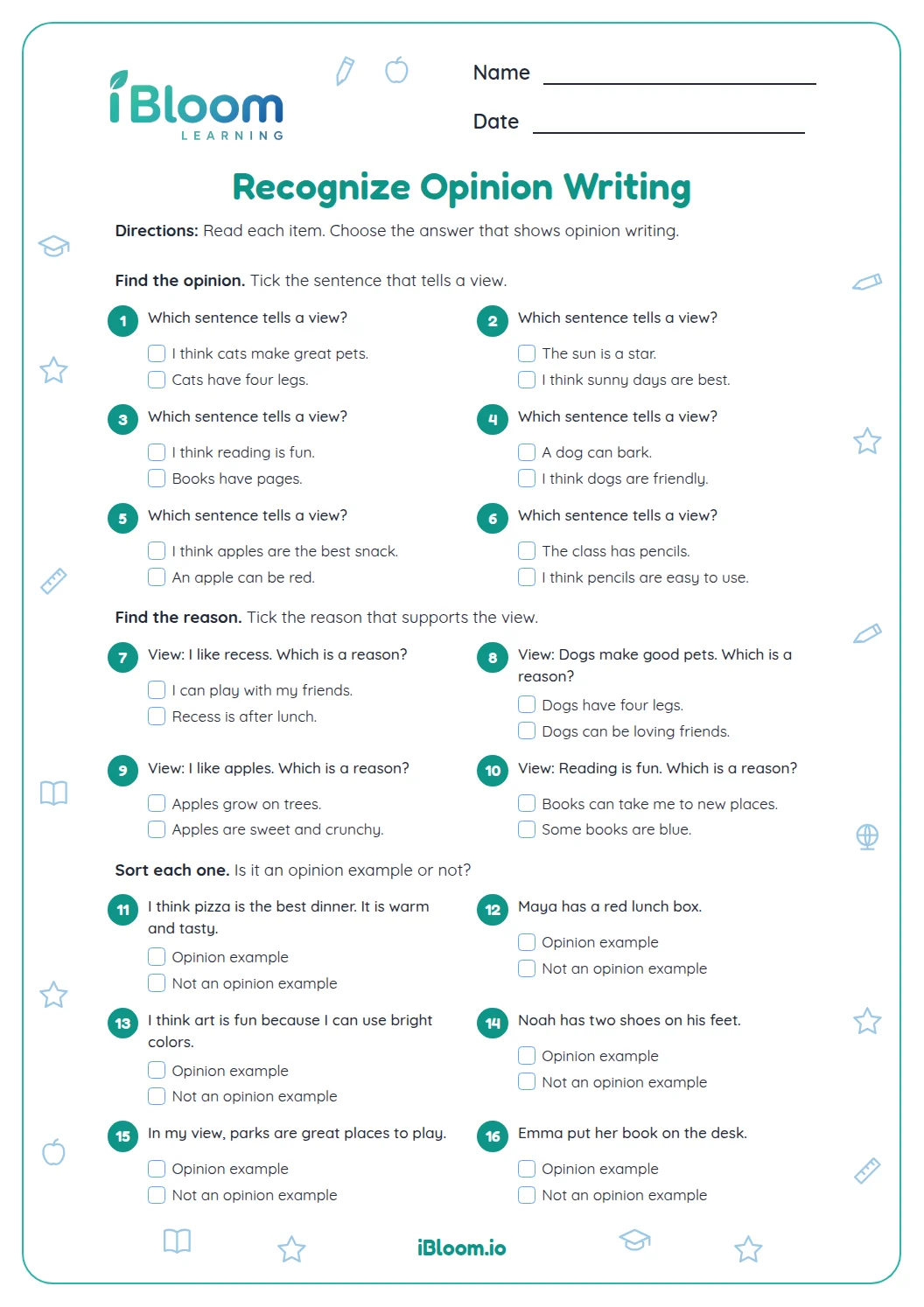
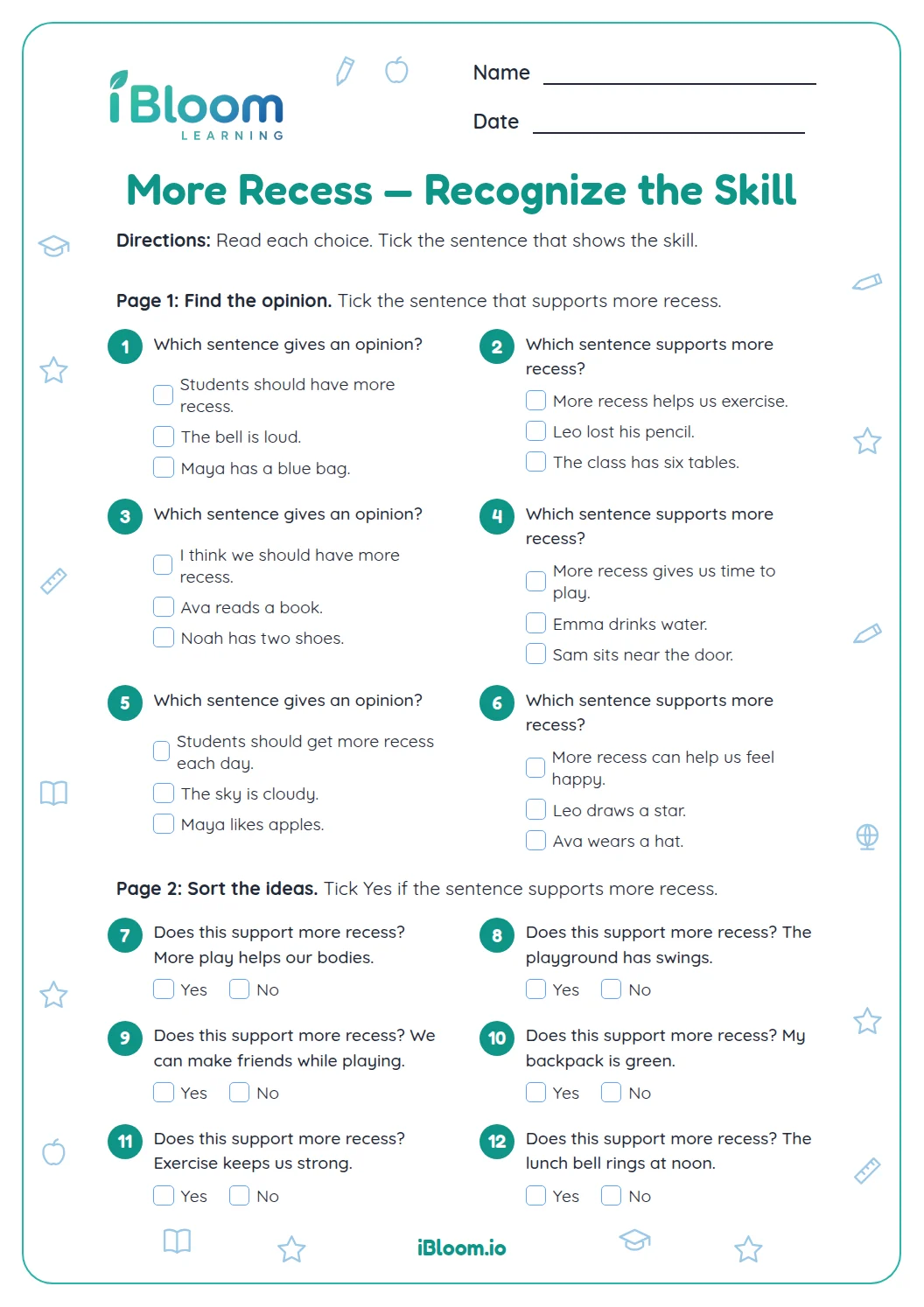
An opinion tells what someone thinks or prefers. “I like recess best” shares a preference; “The bell rang” reports an event. Part A asks students to identify opinions, reasons, and details that support a viewpoint.
- 11) “I like recess best” shares a preference.
- 25) Choosing a new book explains why someone might like the library.
What makes a reason support an opinion?
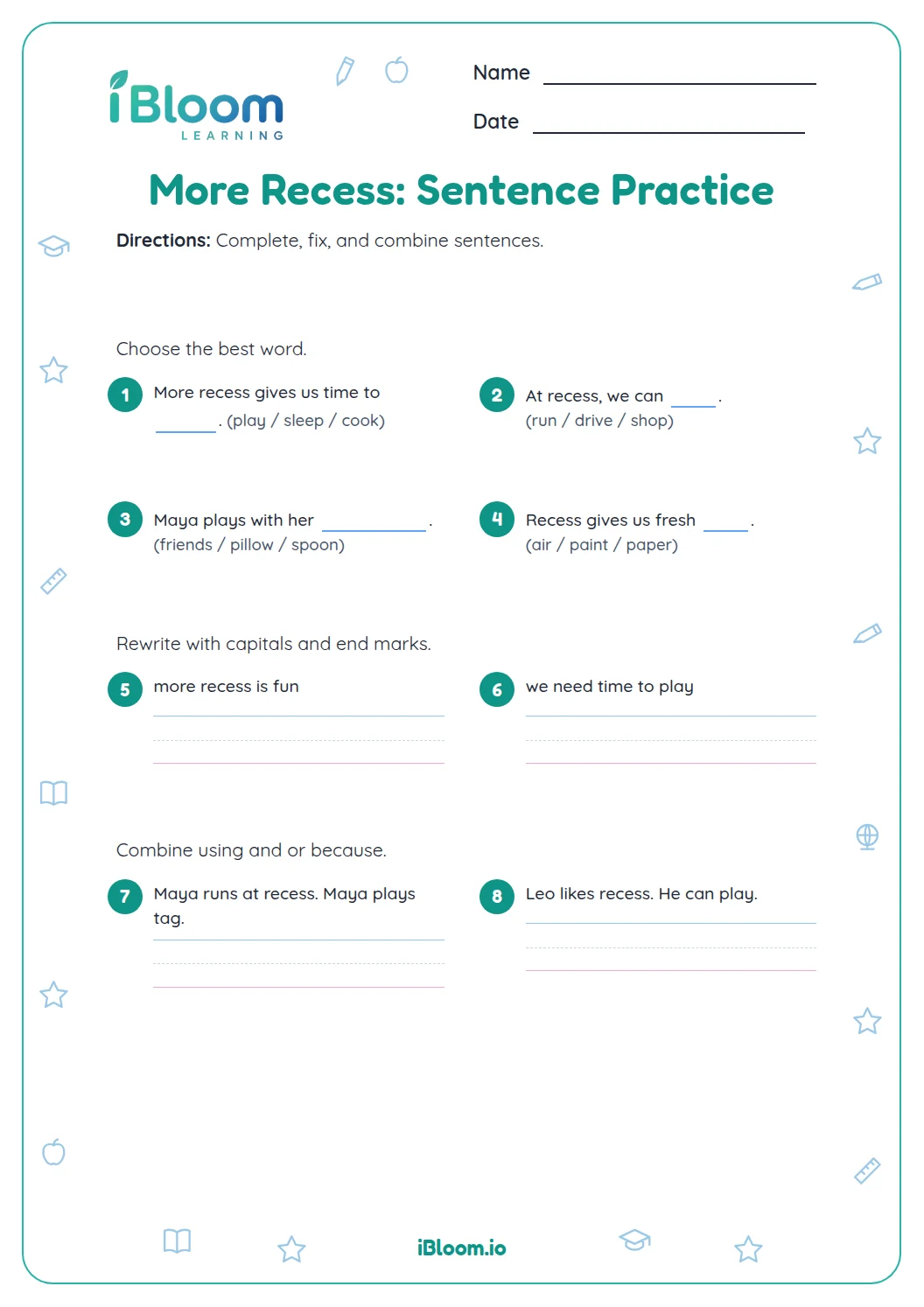
A reason explains why the writer holds an opinion. A linking word such as “because” connects the opinion to its reason. Part B asks students to choose words and details that make this connection clear.
How do the parts make a short paragraph?
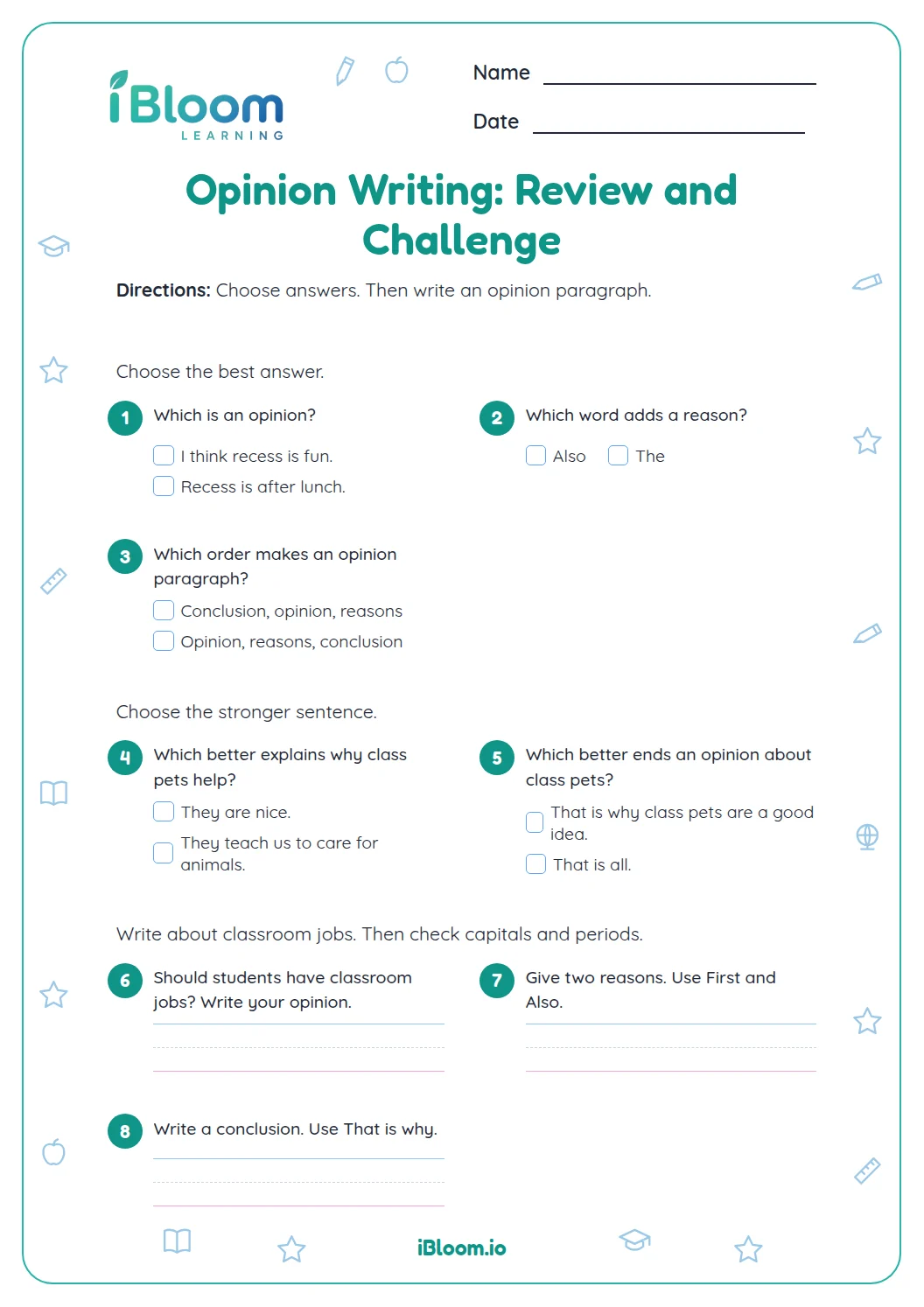
A short opinion response can state a viewpoint, give a reason, and end with a closing sentence. Part C gives students room to put these pieces together in their own words.
How to use this worksheet
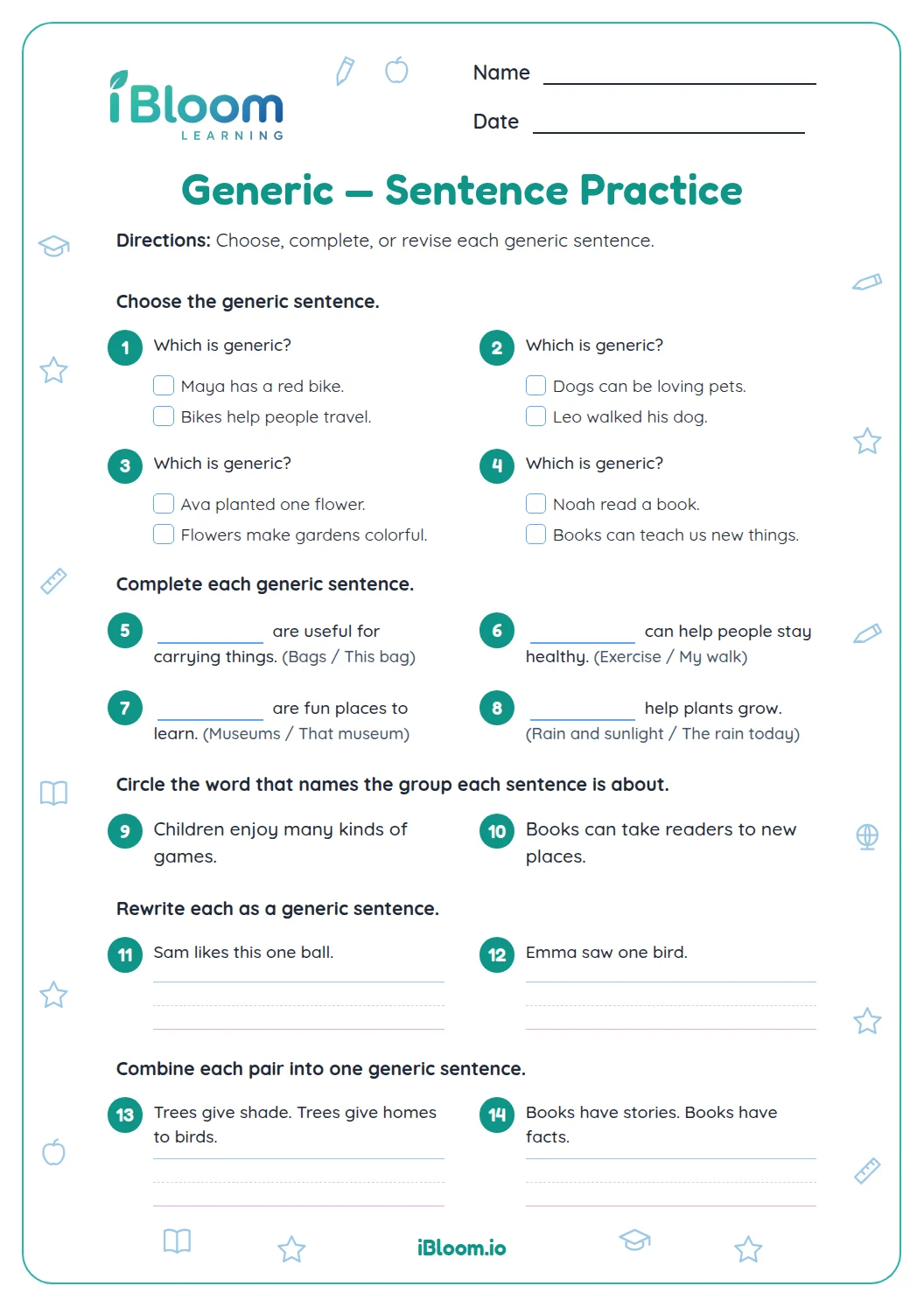
- 1Read each sentence and ask whether it tells a thought or a checkable fact.
- 2Underline the opinion words, such as “like,” “think,” or “best.”
- 3Choose a reason that explains why the opinion makes sense.
- 4Use “because” to connect the opinion and its reason.
- 5End with a sentence that reminds the reader of the opinion.
Common mistakes and quick fixes
The mistake
Giving a detail that does not explain the opinion.
The fix
Ask “Why do I think this?” and use that answer as the reason.
The mistake
Writing a fact when asked for an opinion.
The fix
Add a phrase such as “I think” or “I like.”
The mistake
Stopping after the reason.
The fix
Add a closing sentence that restates the main idea in fresh words.
These activities connect classroom practice to the stated learning goal.
State an opinion, give a reason, and end with a closing.
On this sheet: The written responses practice stating an opinion, supporting it with a reason, and adding a closing.
Show the official wordingHide the official wording
Write opinion pieces in which they introduce the topic or name the book they are writing about, state an opinion, supply a reason for the opinion, and provide some sense of closure.
What to practice next
Further reading
Questions parents and teachers ask
What is an opinion?
An opinion tells what a person thinks, feels, or prefers. Question 1, “I like recess best,” shares a preference. “The bell rang” reports an event. Ask your child which words show the speaker’s viewpoint, then compare that sentence with one that can be checked as a fact.
What is a supporting reason?
A supporting reason explains why a writer holds an opinion. In question 5, choosing a new book supports liking the library because it names something enjoyable a reader can do there. Ask whether the detail answers “Why?” before deciding that it supports the opinion.
How does because help in opinion writing?
“Because” connects an opinion to its reason. In question 7, it links liking music with singing together. Read the sentence aloud and ask what the words after “because” explain. A strong reason answers why the writer likes music rather than adding an unrelated detail.
Does every written answer need to match the key exactly?
The key gives sample responses for questions that invite a child’s own ideas. A different answer can work when it forms a complete thought and responds to the prompt. For choice questions, compare the response with the best answer shown in the key.
How can a paragraph have a clear ending?
A closing sentence reminds the reader of the main opinion. “That is why I enjoy making art” wraps up an opinion about art. Question 6 asks students to choose a fitting ending, and question 13 asks them to write one of their own.
What comes after this worksheet?
Continue with a topic page such as Best Food or More Recess. Those pages give children a focused subject for practicing the opinion and reason structure. They can reuse the skills from this worksheet while choosing ideas that fit the new topic.